Famous Japanese Myths Explained: Creation, Gods, and Heroes
Before emperors ruled and samurai walked the land, Japan was shaped by gods, storms, and sacred battles.
Famous Japanese myths tell how the islands were formed, why the sun rises, and how heroes faced monsters and demons. These stories are not just legends. They explain nature, power, honour, and divine ancestry.
From the creation of Japan itself to a boy born from a peach, these myths blend beauty and violence, light and chaos. Some are cosmic. Some are deeply human. All helped shape Japanese identity for centuries.
Here are five powerful Japanese myths.
Izanagi and Izanami Create Japan
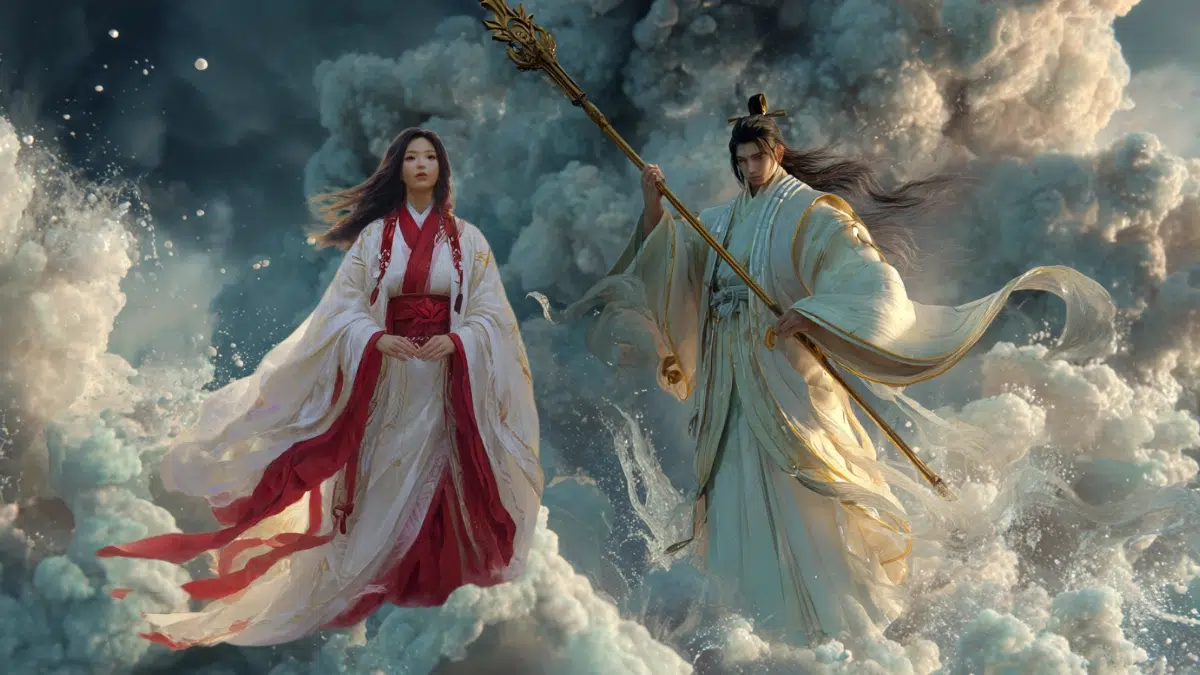
Before Japan had mountains, forests, or even solid ground, the world was a swirling ocean of chaos. The early gods of heaven chose two divine beings to bring order to it: Izanagi and Izanami.
They stood together on the Floating Bridge of Heaven and were given a jeweled spear. Izanagi lowered it into the watery abyss and stirred. When he lifted the spear, drops of saltwater fell and hardened into the first island. This was Onogoro, the beginning of Japan.
The two descended and performed a marriage ritual. From their union came the islands of Japan and the gods of wind, sea, rivers, and trees. But creation came at a cost. Izanami died giving birth to the fire god.
Grief consumed Izanagi.
He refused to accept her death and traveled to Yomi, the dark land of the dead, to bring her back.
What he found was decay. Izanami’s body had already begun to rot. Horrified, he fled, sealing the entrance between the living world and the underworld forever.
After escaping death, Izanagi purified himself in a river. As he washed away the corruption of Yomi, new gods were born from his cleansing.
- From his left eye came Amaterasu, the sun goddess
- From his right eye came Tsukuyomi, the moon god
- From his nose came Susanoo, the storm god
Through Izanagi’s creation, loss, and purification, the world gained both life and the balance between light and darkness.
Amaterasu in the Cave

Amaterasu, the sun goddess, ruled the heavens with warmth and order. Her light nourished the earth. Crops grew. The world thrived.
But her brother Susanoo, the storm god, brought chaos wherever he went.
After being banished from heaven, Susanoo returned in a rage. He destroyed rice fields, trampled sacred lands, and threw a flayed horse into Amaterasu’s weaving hall. The violence shocked her. One of her attendants died from fear.
Overwhelmed and humiliated, Amaterasu retreated into a cave and sealed the entrance with a massive stone.
The world fell into darkness.
Without the sun, crops withered. Cold spread across the land. Spirits stirred restlessly. Even the gods felt fear. If Amaterasu refused to return, life itself would fade.
The gods gathered outside the cave to devise a plan. Force would not work. Instead, they chose cleverness.
They hung a sacred mirror and jewels from a tree. Then the goddess Ame-no-Uzume began to dance wildly, stamping her feet and laughing. The other gods roared with laughter.
Inside the cave, Amaterasu grew curious. How could they laugh without her light?
She opened the stone slightly and peered outside. The mirror caught her reflection. For a moment, she saw a radiant goddess shining back at her. Curious and drawn forward, she stepped out.
The gods quickly pulled the stone aside and restored light to the world.
This myth explains more than sunrise. It speaks of balance. Even the brightest light can withdraw when wounded. And sometimes, joy and unity restore what force cannot.
Susanoo and the Eight Headed Serpent
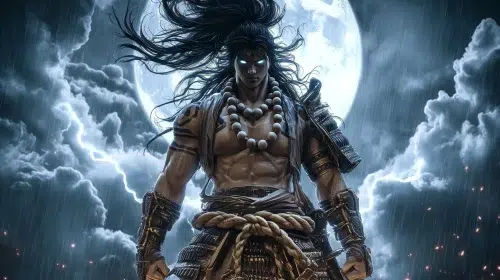
Susanoo, the storm god, was wild and unpredictable. After causing chaos in heaven and driving his sister Amaterasu into hiding, he was cast down to earth.
There, he met an elderly couple weeping beside their last surviving daughter.
Each year, they explained, a monstrous serpent called Yamata no Orochi came from the mountains.
It had eight heads, eight tails, and eyes that burned like fire. Its body stretched across valleys and hills.
For seven years, it devoured one daughter at a time. Only one remained.
Susanoo did not flee.
Instead, he made a plan.
He told the couple to brew eight vats of strong sake and place them behind eight gates. When the serpent arrived, each head found a vat and drank deeply. Soon, the beast grew drunk and collapsed.
Susanoo seized his sword and attacked. He hacked through scales and flesh, cutting the monster apart.
When he sliced into one of the serpent’s tails, his blade struck something hard. Hidden inside was a divine sword.
This blade, later known as Kusanagi, would become one of Japan’s most sacred treasures and a symbol of imperial authority.
Susanoo gave the sword to Amaterasu as an offering of peace. In that act, the storm god shifted from reckless destroyer to protector.
The myth shows more than a monster slain. It reveals transformation. Chaos can become courage. And even a god cast out can reshape destiny with strategy instead of rage.
Yamato Takeru’s Campaigns
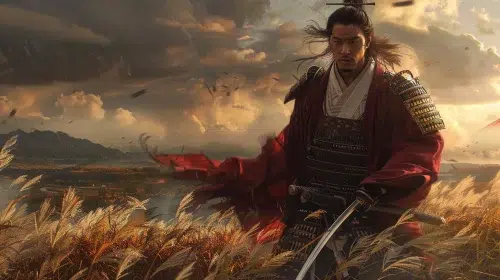
Yamato Takeru was not a god, but he carried divine blood.
He was a prince of the Yamato court, sent by his father to subdue distant people who resisted imperial rule. From a young age, he showed ruthless determination. When ordered to eliminate rival leaders, he used disguise instead of brute force.
In one famous tale, he dressed as a woman to gain access to enemy chiefs. Once close, he struck swiftly and without hesitation.
Later, he received the sacred sword Kusanagi, the very blade Susanoo had pulled from the body of the great serpent. The weapon symbolized divine authority and protection.
During one campaign, his enemies set fire to the grasslands around him, hoping to trap and burn him alive. Yamato Takeru did not panic. Using Kusanagi, he cut down the burning grass and turned the wind against his attackers. The flames consumed them instead.
From that moment, the sword became known as the “Grass Cutter.”
Yet his victories did not protect him from fate. On a later journey, he fell ill far from home. Ignoring warnings to respect local spirits, he pushed forward and paid the price.
As he died, legend says his spirit rose as a white bird and flew into the sky.
Yamato Takeru’s story blends conquest and tragedy. He represents courage, strategy, and imperial expansion but also the cost of pride and relentless ambition.
The Tale of Momotaro
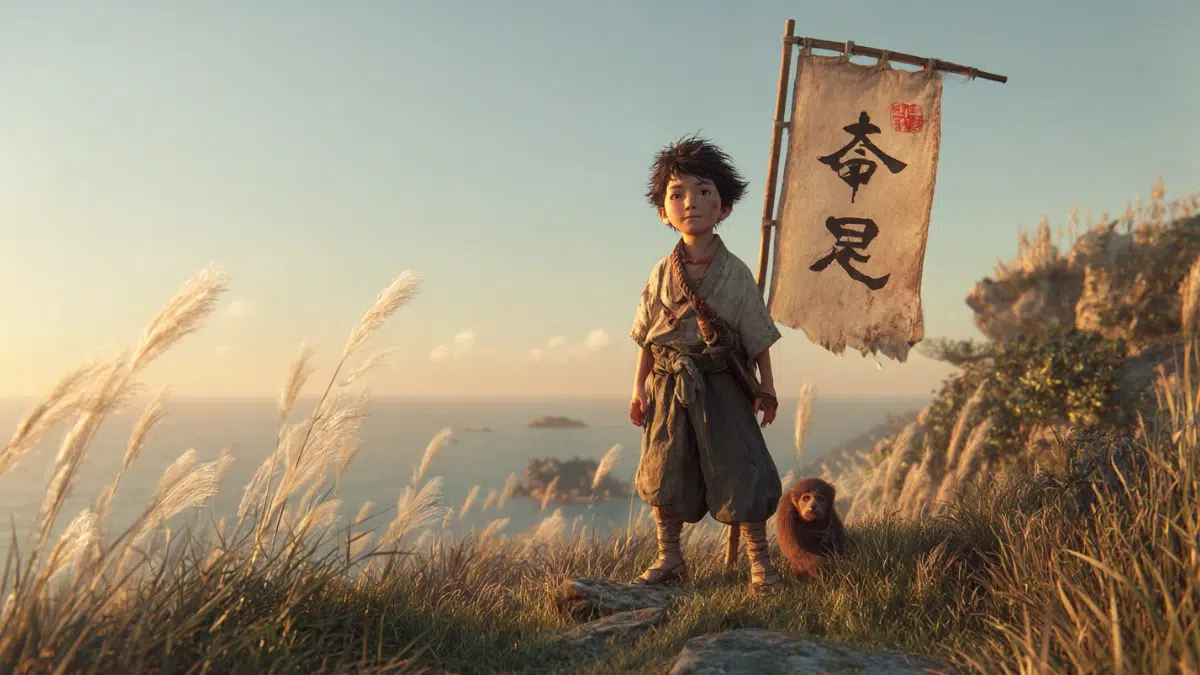
Not all Japanese myths begin in heaven or end in battlefields of fire.
Some begin with a peach.
One day, an elderly woman found a giant peach floating down the river. She carried it home to share with her husband. When they cut it open, a baby boy emerged from inside.
They named him Momotaro, Peach Boy.
As he grew, Momotaro became strong, brave, and kind.
He learned that demons, called oni, were terrorizing nearby villages from their stronghold on Onigashima, the Island of Demons. They stole food, treasure, and peace.
Momotaro decided to stop them.
Before leaving, he was given special millet dumplings. On his journey, he met a dog, a monkey, and a pheasant. Each agreed to help him in exchange for a dumpling. Together, they formed an unlikely but loyal team.
They sailed to Onigashima, stormed the demon fortress, and defeated the oni. The demons surrendered and returned what they had stolen.
Momotaro and his companions came home as heroes.
Unlike the darker myths of gods and underworld journeys, Momotaro’s story celebrates cooperation over dominance. Strength alone does not win. Loyalty and unity do.
The tale remains one of Japan’s most beloved folktales. It is told to children not as a warning, but as encouragement even an ordinary village boy, born from something unexpected, can rise and protect others.
Hope, not vengeance, drives this legend.
Why Japanese Myths Still Matter
Japanese myths are not just stories about gods and heroes. They explain balance. Light and darkness. Chaos and order. Pride and humility.
From Izanagi’s creation to Amaterasu’s return of sunlight, Japanese mythology reflect a world shaped by harmony and consequence. Storm gods can become protectors. Warriors can rise and fall. Even a boy born from a peach can defeat demons.
These myths shaped ritual, imperial identity, and cultural values for centuries. And they continue to inspire art, film, and storytelling today.
In every version, one truth remains: power alone is never enough. Wisdom, restraint, and unity decide the outcome.