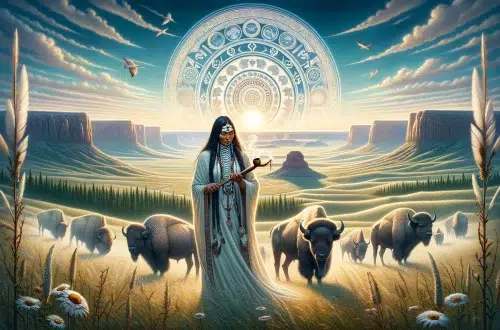
Changing Woman: Sacred Mother in Navajo Mythology
Changing Woman is one of the most important figures in Navajo (Diné) mythology. She is not a warrior or a trickster.
She is the source of life, renewal, and balance.
Changing Woman is known as Asdzą́ą́ Nádleehi, meaning Woman Who Changes. Her name reflects the natural cycles she represents. Like the seasons or the phases of the moon, she grows older and then becomes young again.
Through her, life continues.
In Navajo tradition, Changing Woman creates the Diné people and teaches them how to live in harmony with the land. Her story explains the origins of the clans, the sacred cycles of nature, and many of the teachings that guide Navajo life today.
More than a mythological figure, she represents the power of renewal itself.
Birth of Changing Woman
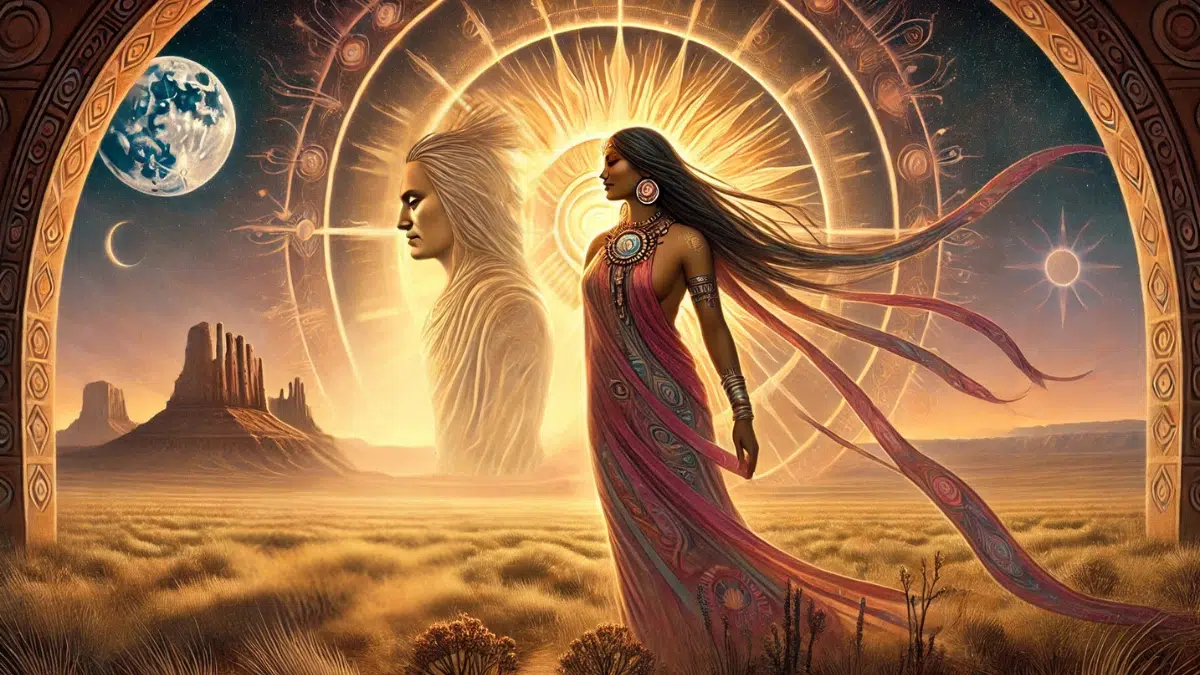
In Navajo tradition, Changing Woman is born of spiritual forces, not human parents.
According to Navajo tradition, she is born from sacred forces during the early days of the world. Her birth takes place on Governance House, also known as Huerfano Mesa, a sacred location in present day New Mexico.
The Holy People breathe life into her.
In some versions of the story, she is formed from turquoise and abalone shell, two sacred materials connected to beauty, protection, and life. The sunlight touches these elements and brings them to life.
Other versions describe her appearing from a cloud or mist as the young world begins to take shape.
The Sun, known in Navajo tradition as Jóhonaaʼéí, becomes her protector. He builds her a beautiful home on the western ocean where sky and water meet.
There, Changing Woman grows and matures under the watch of the Holy People.
From her own skin, Changing Woman created the first Navajo people: four pairs of twins, who would become the ancestors of the clans.
She gave them teachings to live in harmony with nature, one another, and the sacred laws of balance and change.
When she experiences her first menstruation, it marks an important moment. In Navajo culture, this stage of life represents transformation and readiness. It is a sacred passage into womanhood.
From this moment, Changing Woman begins shaping the world.
How Changing Woman Created the Diné People
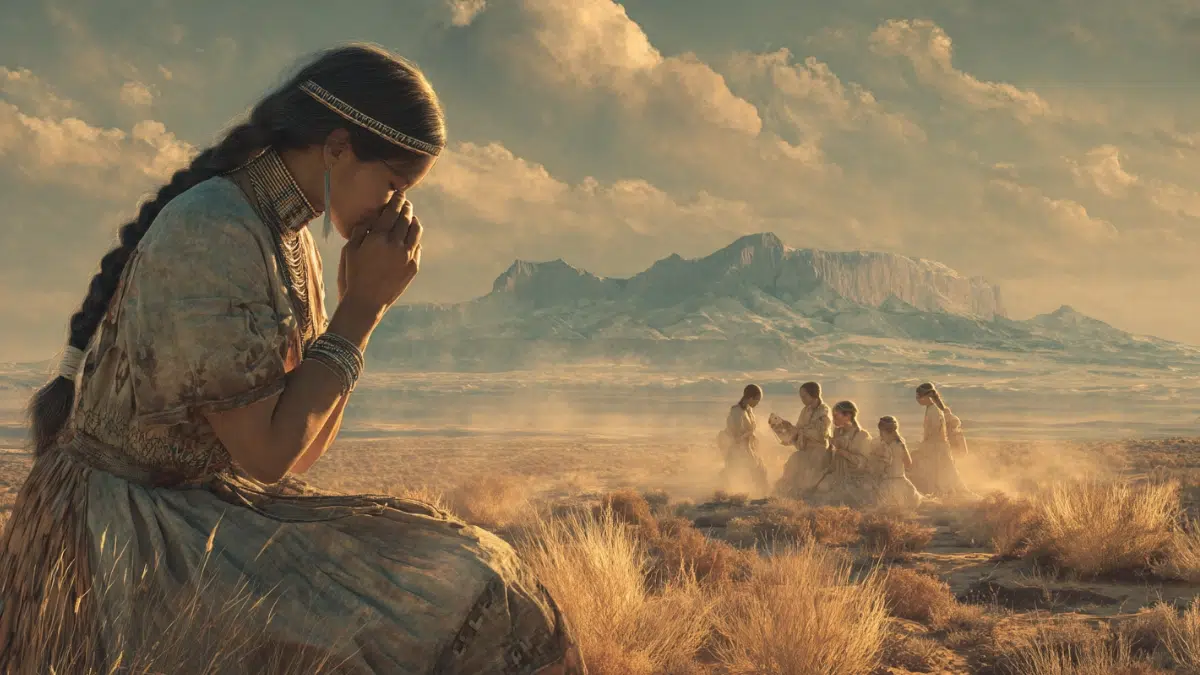
As Changing Woman grows older, she begins to feel a deep sense of purpose. She wishes to bring people into the world.
Using the skin from her chest, she rubs and shapes it until it forms human beings. From this act, four pairs of twins emerge.
These eight beings become the ancestors of the first Navajo clans.
Rather than ruling over them, Changing Woman becomes their teacher. She shows them how to live with the land and respect the balance of the natural world.
She teaches them:
- how to grow and honour corn
- how to perform sacred ceremonies
- how to live in harmony with nature
Her teachings emphasize balance between people, the land, and the spiritual world.
Through these first clans, the Diné people spread across the land.
Changing Woman remains their guiding mother.
The Cycle of Aging and Renewal
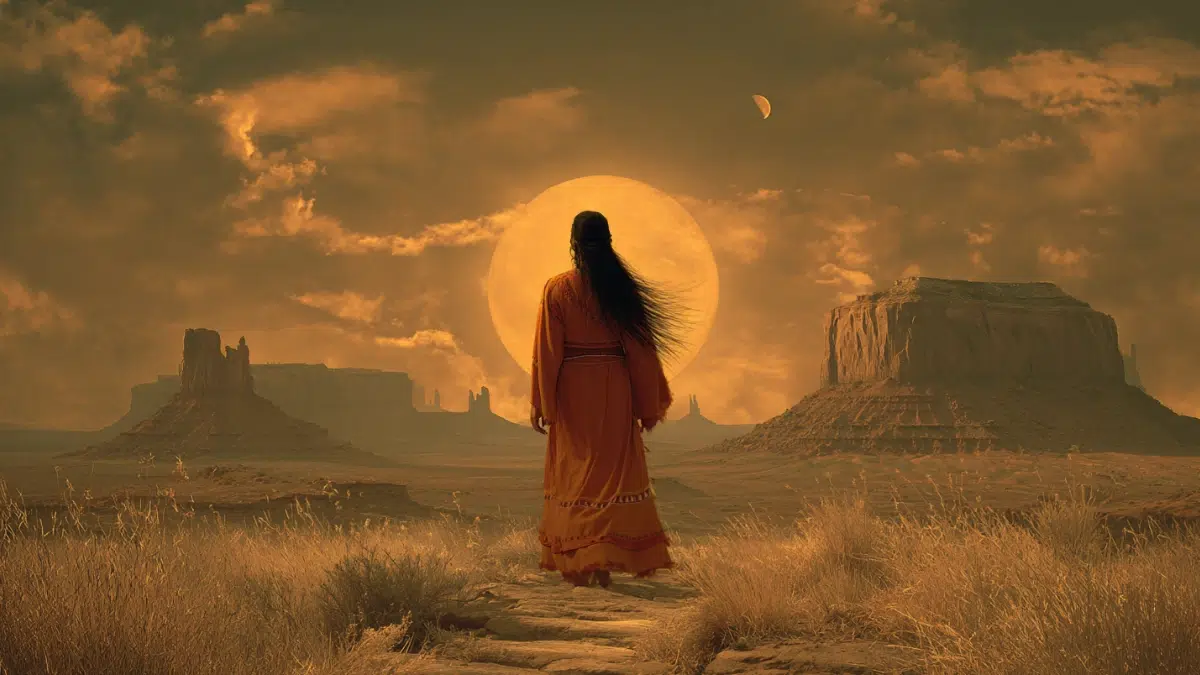
Changing Woman’s most powerful gift is transformation.
Unlike humans, she does not grow old and die. Instead, her life follows a sacred cycle.
As she ages, she eventually walks toward the east, where the sun rises. There she disappears.
Later she returns again as a young woman.
This cycle mirrors the rhythms of the natural world. Just as winter gives way to spring, Changing Woman renews herself again and again.
For the Navajo people, this cycle reflects an important truth.
Life is always changing, but change does not mean an ending. It means renewal.
The Gifts of Changing Woman
Changing Woman does more than create the Diné people.
She also gives them the knowledge needed to live in harmony with the world.
Among her most important gifts are corn, songs, and sacred ceremonies. Corn becomes a central part of Navajo life, providing food and spiritual meaning.
She also helps establish the Blessingway, one of the most important ceremonial traditions. Blessingway ceremonies bring harmony, healing, and balance to individuals and communities.
Through these teachings, Changing Woman becomes more than a creator.
She becomes a guide.
Her presence lives in the mountains, the seasons, and the land itself.
Four Pairs of Twins and the First Clans
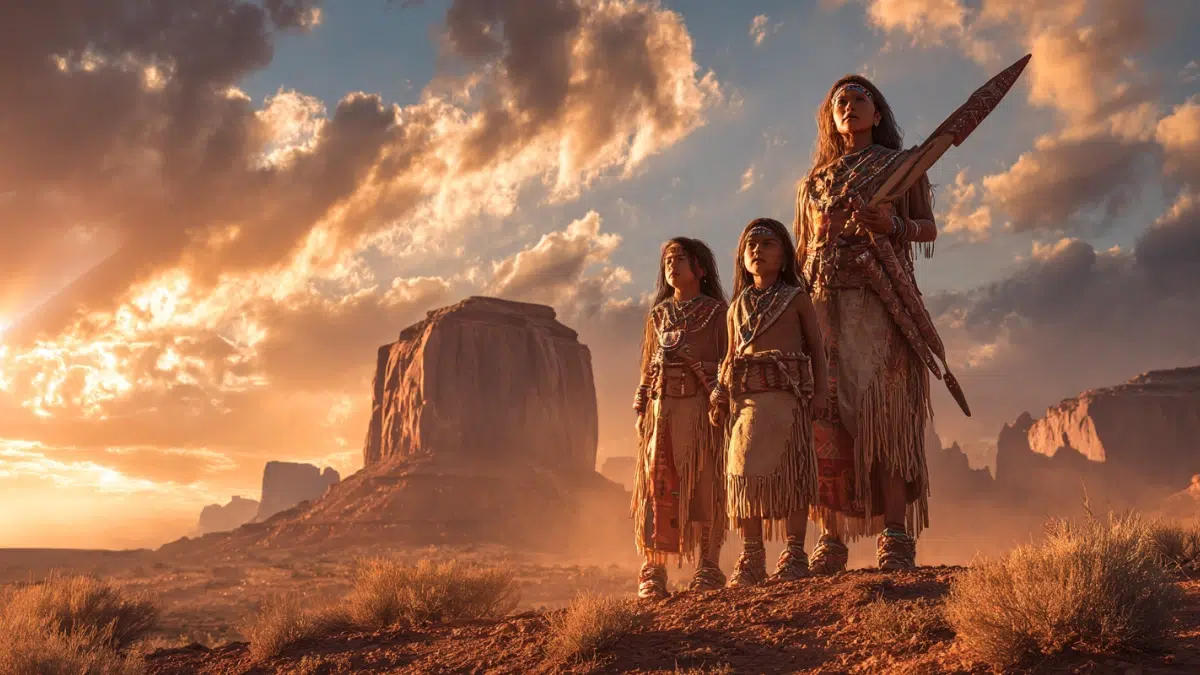
In Navajo mythology, Changing Woman created four pairs of twin beings. These became the ancestors of the original Navajo clans.
Each pair of twins is connected to one of the four sacred directions:
- East
- South
- West
- North
Each pair of twins was created from the rubbing of her skin and was imbued with knowledge, power, and a purpose.
Changing Woman sent them out to form the original four Navajo clans, which then grew into the many clans that make up the Navajo Nation today.
These directions are deeply important in Navajo belief. They are also connected to the Four Sacred Mountains, which define the traditional homeland of the Diné.
Through these clans, the Navajo people are linked to the land, the sky, and the spiritual world.
Changing Woman becomes the shared ancestor of the Diné people.
Each pair symbolizes balance, harmony, and the sacred structure of the Navajo world, rooted in the:
- Four Sacred Directions
- Four Mountains
- Four Elements
This connection reinforces the idea that the Navajo people come from the earth, sky, and spirit through Changing Woman herself.
Changing Woman and the Birth of the Hero Twins
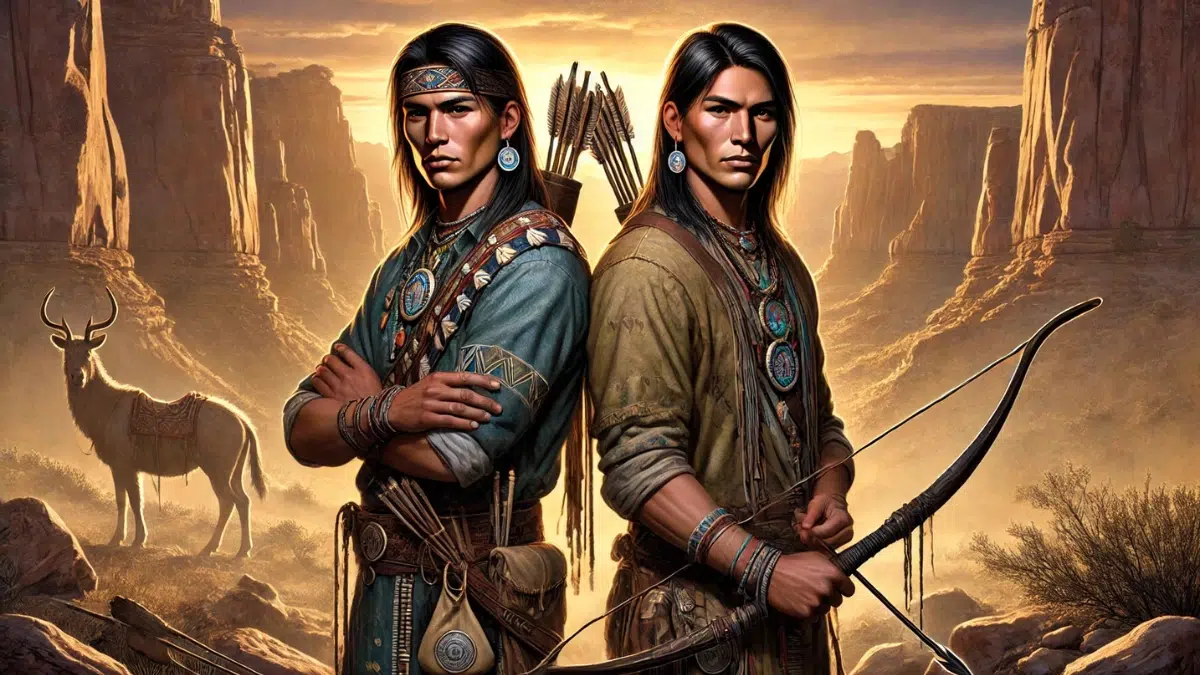
One of the most famous stories involving Changing Woman is the birth of the Hero Twins.
According to Navajo mythology, Changing Woman becomes pregnant through the power of the Sun. The sun’s light touches her skin, and from this sacred union she gives birth to twin sons.
They are known as Monster Slayer and Born for Water.
The twins grow quickly. As they become older, they learn that dangerous monsters still roam the world. These creatures threaten the First People and make the land unsafe.
Determined to protect their people, the twins decide to confront the monsters.
Before they begin their journey, they travel across the land to find their father, the Sun. When they finally reach him, he tests their courage and determination.
Once he sees their strength, the Sun gives them powerful weapons and guidance.
Armed with these gifts, Monster Slayer and Born for Water return to the earth and begin defeating the creatures that threaten humanity. One by one, the monsters fall.
Because of their bravery, the world becomes a safer place for the Diné people.
In Navajo tradition, the Hero Twins are remembered as protectors of humanity. Their strength comes from the sacred connection between the Sun and Changing Woman.
Through them, Changing Woman not only creates life. She also helps bring balance and protection to the world.
FAQs About Changing Woman
Who is Changing Woman in Navajo mythology?
Changing Woman is a central figure in Navajo (Diné) mythology. She represents life, renewal, and the natural cycles of the world. According to tradition, she created the Diné people and taught them how to live in harmony with the land.
What does Changing Woman represent?
Changing Woman represents growth, renewal, and the cycles of life. Her ability to grow old and become young again reflects the changing seasons, the phases of the moon, and the natural rhythms of the world.
Where was Changing Woman born?
In Navajo tradition, Changing Woman was born on Huerfano Mesa, also called Governance House, in present day New Mexico. The Holy People brought her to life using sacred materials and the power of the sun.
Who are the children of Changing Woman?
Changing Woman is the mother of the Hero Twins, Monster Slayer and Born for Water. According to Navajo mythology, they are the sons of the Sun and become famous for defeating dangerous monsters that threatened humanity.
Why is Changing Woman important to the Navajo people?
Changing Woman is important because she represents the origins of the Navajo people and their connection to the land. Her teachings about balance, renewal, and harmony continue to influence Navajo ceremonies and cultural traditions today.
Other Mother Goddesses & Life-Givers
Greek Mythology: Gaia and Demeter
Like Changing Woman, Gaia represents the Earth itself—life-giving, nurturing, and powerful. Demeter, goddess of harvest and seasons, reflects the same cycle of life and renewal.
Changing Woman’s creation of seasons through her own transformations mirrors Demeter’s grief and joy at Persephone’s descent and return from the underworld.
Hindu Mythology: Parvati/Durga
Parvati represents feminine energy, motherhood, and cosmic balance. Like Changing Woman, she undergoes transformations (as Durga or Kali) to protect her people or restore balance.
Both figures embody strength, maternal love, and the ability to change form depending on what their people need.
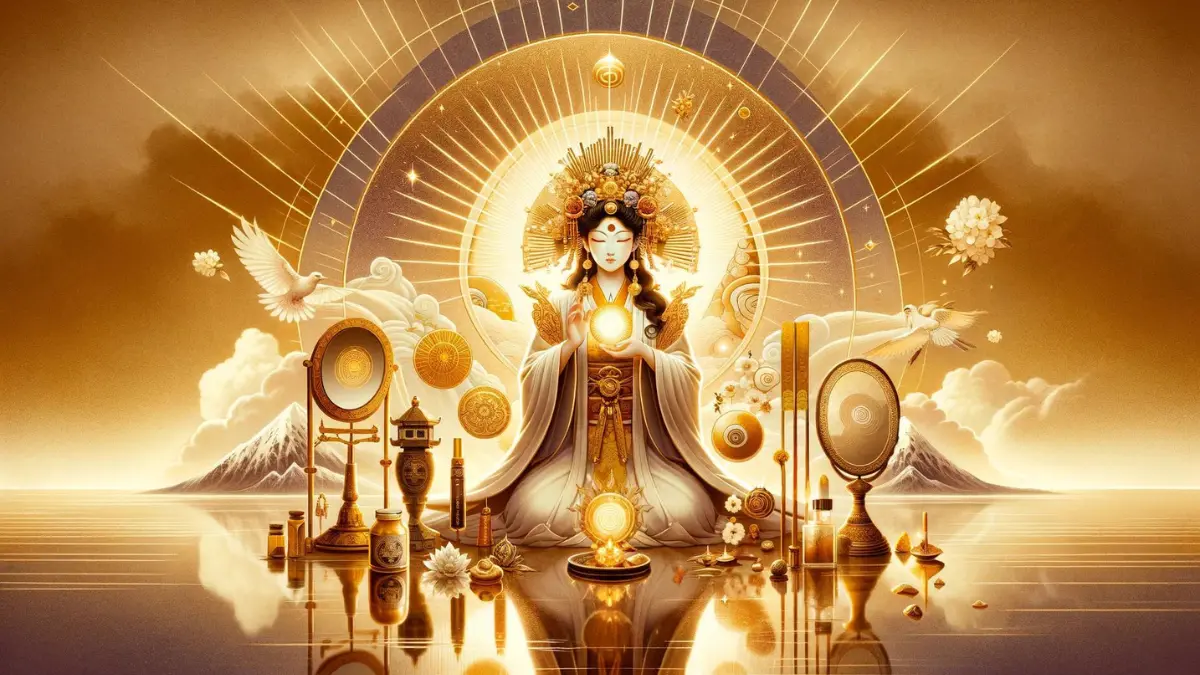
Japanese Mythology: Amaterasu
Amaterasu, the sun goddess, is the source of light and life. Her emergence from a cave restores the world’s balance similar to Changing Woman’s role in keeping harmony in the seasons and nurturing the people.
Both are central to their cultures’ ideas of order, rebirth, and cosmic importance.
Celtic Mythology: Brigid
Brigid governs fertility, healing, and renewal. Like Changing Woman, she represents cycles of nature and feminine strength.
Brigid’s connection to spring and new life aligns with Changing Woman’s creation of the seasons and food.
Aztec Mythology: Coatlicue
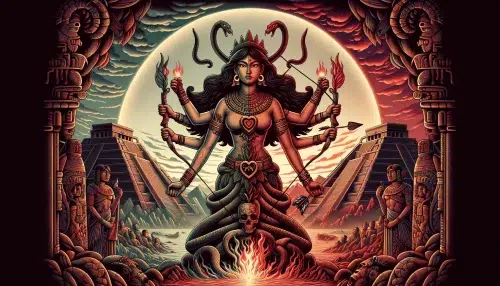
Coatlicue is an earth goddess who gives birth to gods and humans. Her story blends creation and destruction.
Though more fearsome, she, like Changing Woman, ties womanhood to the power of life, death, and rebirth.
These mythological women reflect Changing Woman’s essence: life-bringers, nurturers, and guardians of balance. They represent the divine feminine’s many faces: kind, fierce, enduring, and always connected to the land and people.
Changing Woman’s Enduring Power
Changing Woman stands as one of the most powerful symbols in Navajo mythology. She is not just a creator, but a nurturer, a teacher, and a guide through life’s cycles. Her ability to renew herself with the seasons reflects deep spiritual wisdom.
This reminds people that growth, change, and rebirth are natural and sacred.
Through her, the Navajo world gains order, nourishment, and hope.
Across the world, many cultures share similar figures. Goddesses who shape nature, embody womanhood, and pass down vital teachings. These stories highlight the shared human belief in the divine feminine as a source of balance, renewal, and life itself.
Changing Woman’s story is both uniquely Navajo and part of a larger, universal truth: that women, through their strength and spirit, hold the power to shape the world.