
The Crane Wife: Japanese Myth of the Bird Who Became a Woman
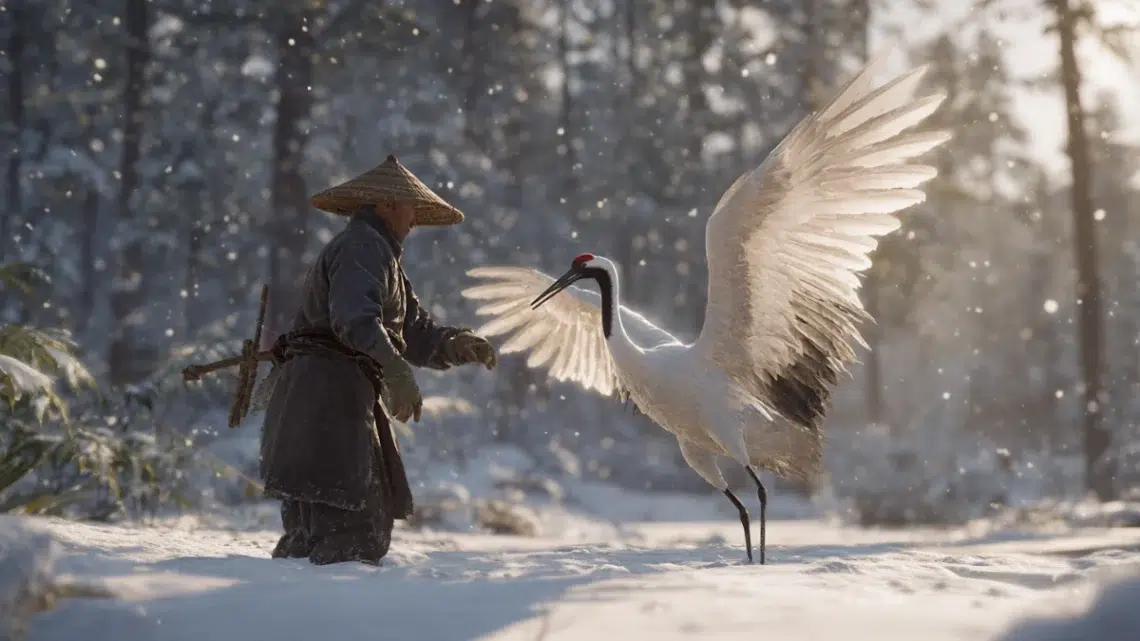
One winter day, a poor man walks through the snow and hears a cry and finds a crane caught in a hunter’s trap.
The bird struggles, its wing twisted in the metal snare. The man gently frees the crane and watches it fly back into the sky.
That night, a strange visitor appears at his door and a young woman stands outside in the falling snow.
Soon they marry. But the woman hides a secret.
The Man Who Saved the Crane

The story of the Crane Wife comes from Japanese folklore. It appears in several versions, but the central events remain the same.
A poor man lives alone in a small house. One day he finds a crane trapped in a snare set by hunters.
The bird is frightened and injured.
Instead of leaving it, the man carefully opens the trap and frees the crane. The bird spreads its wings and flies away.
The man returns home and soon forgets about the incident.
That evening, however, someone knocks on his door.

A beautiful young woman stands outside in the snow. She says she has nowhere to go and asks for shelter.
The man allows her inside.
Over time, they fall in love and decide to marry.
Their quiet life seems like a blessing.
But strange things begin to happen.
The Mysterious Weaving

The woman soon offers to help her husband.
She tells him she knows how to weave beautiful cloth that could bring money to their household.
But she asks for one important promise.
When she works at the loom, he must never look inside the weaving room.
The man agrees.
The woman locks herself in the room and begins weaving.
Days later she emerges with a piece of cloth so beautiful that the man has never seen anything like it.
The silk shines like moonlight.
When he sells the cloth in town, he receives a great price.
Soon the couple has enough money to live comfortably.
But weaving the cloth leaves the woman pale and weak.
Still, she agrees to weave again.
And again.
Each time she finishes, she grows thinner and more exhausted.
The Secret Revealed
Eventually the man becomes worried.
How could weaving simple cloth leave his wife so sick?
One day, unable to control his curiosity, he quietly opens the door to the weaving room.
Inside, he sees something impossible.
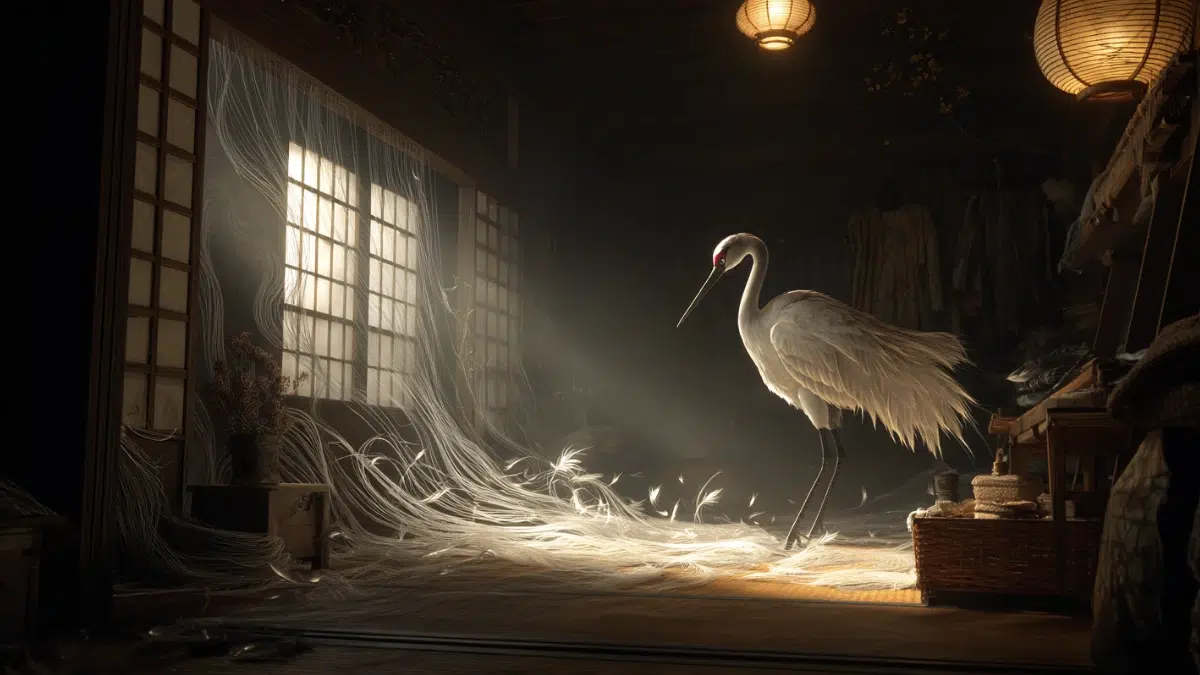
A crane stands at the loom.
The bird plucks its own white feathers and weaves them into the shining cloth.
Each thread comes from its own body.
The crane notices the door open. The secret has been revealed.
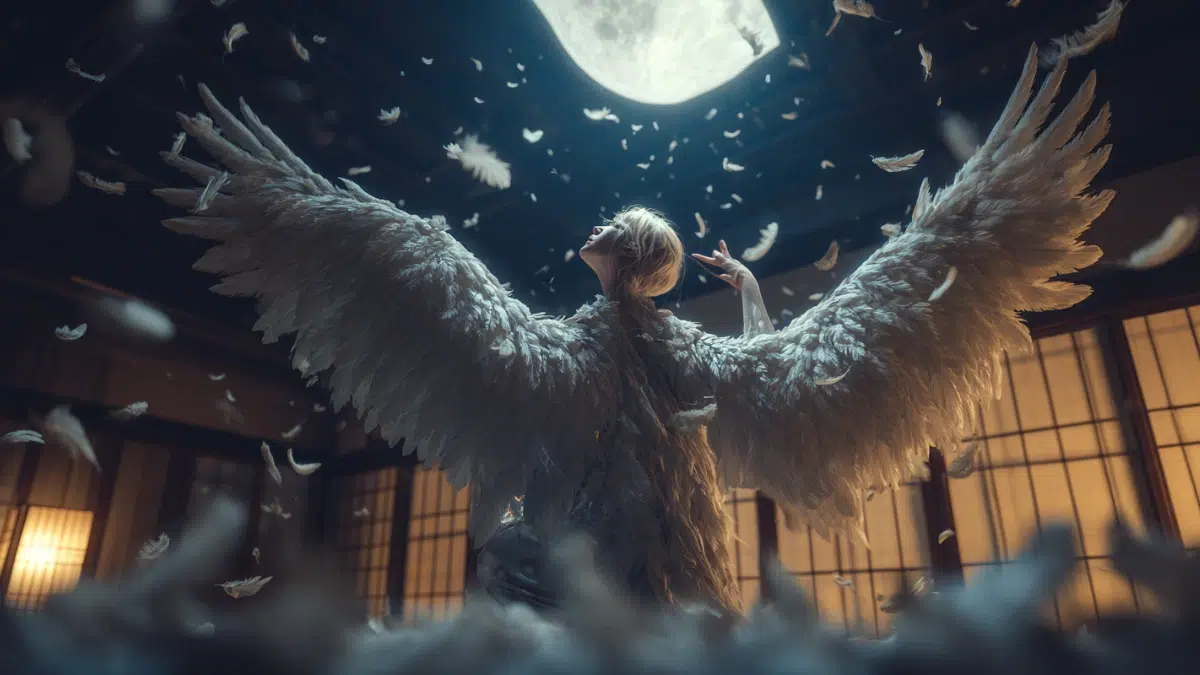
The bird transforms back into the woman.
She explains the truth.
She was the crane he once saved from the trap returned to repay his kindness.
But now that her true form has been seen, she cannot remain in the human world.
With sadness, she spreads her wings.
The crane flies away into the sky.
The man is left alone.
Meaning Behind the Crane Wife Story
The myth of the Crane Wife carries several important themes found in Japanese folklore.
One theme is gratitude. The crane returns to repay the kindness shown by the man who saved her life.
Another theme is sacrifice. The crane weaves cloth from her own feathers, slowly weakening herself to support the man she loves.
But the most powerful message concerns trust and curiosity.
The man promised not to look inside the weaving room.
His curiosity breaks that promise.
In many folktales, breaking trust leads to loss.
Once the secret is revealed, the magical relationship cannot continue.
Similar Myths of Animal Brides

The Crane Wife belongs to a group of folktales often called animal bride stories.
These myths appear in many cultures.
Selkies (Scottish and Irish Folklore)
Selkies are seals that can remove their skins and become human. Many stories tell of men who marry selkie women, only to lose them when the seal skin is found again.
Swan Maidens (European Folklore)
In these legends, swan maidens remove feather cloaks to bathe. A man hides the cloak and forces one of them to marry him. Eventually she recovers the cloak and returns to the sky.
The Celestial Maiden (Chinese Mythology)
The story of the Weaver Girl and the Cowherd also features a heavenly woman who falls in love with a mortal man but is later forced to return to the heavens.
These stories often explore the fragile boundary between the human world and the supernatural.
Conclusion
The story of the Crane Wife is one of the most beautiful and tragic tales in Japanese folklore.
It begins with kindness.
A man saves a wounded crane.
That simple act brings love, comfort, and prosperity into his life.
But curiosity breaks the promise that held the magic together.
When the truth is revealed, the crane must return to the sky.
The story leaves a quiet reminder.
Some gifts are fragile.
And sometimes the greatest kindness is learning when not to look behind the curtain.