
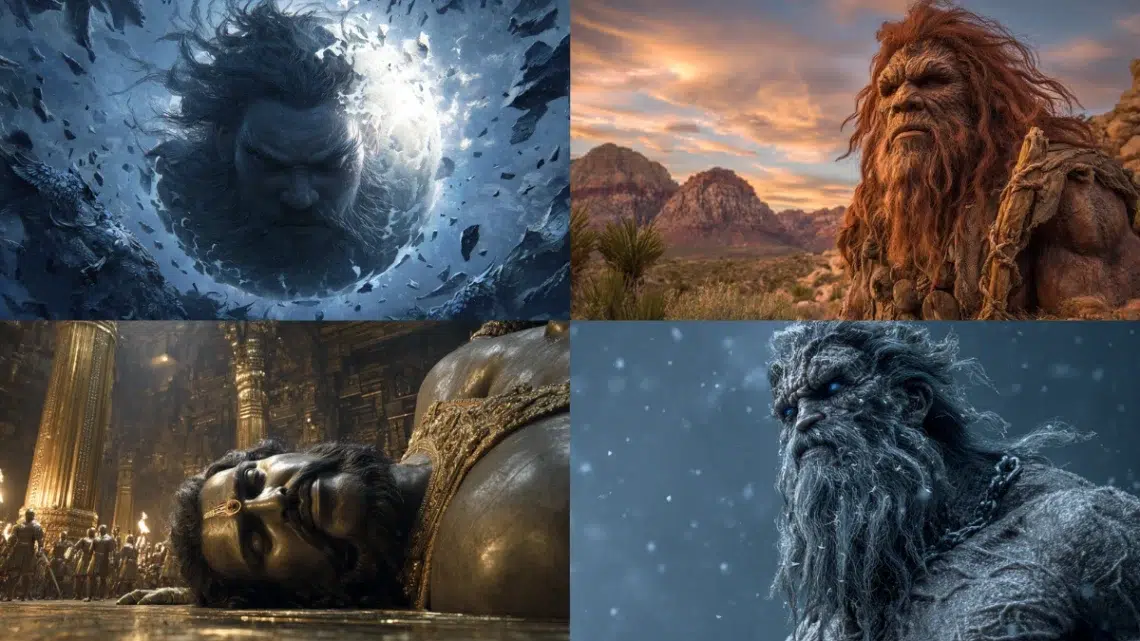
Giants in Mythology: 10 Legendary Giants from Around the World
Giants appear in many mythologies around the world.
Some create the universe. Others destroy armies or battle the gods themselves. A few even shape the landscape we see today.
Ancient cultures often used giants to explain natural disasters, strange landforms, and the struggle between order and destruction.
Many of the most famous myths begin with giants. In Norse legend, the body of a giant becomes the world. Chinese stories describe a giant separating heaven and earth. Irish folklore even credits giants with building one of the most unusual coastlines in Europe.
Stories like these have survived for thousands of years.
Below are ten of the most fascinating giant in mythology. Each reveal how different cultures imagine the power of giants and their place in the universe.
Famous Giants in Mythology
Stories about giants appear in cultures across the world. These massive beings often represent the raw forces of nature, chaos, or the ancient powers that existed before humans.
In Norse mythology, giants are known as jotnar. These beings frequently oppose the gods of Asgard, yet they also share family connections with them. One of the most famous examples is Ymir, the first giant whose body becomes the earth, mountains, and oceans after the gods defeat him.
Greek mythology also features many giant figures. One well known example is Polyphemus, the one eyed Cyclops who traps Odysseus in a cave. Greek myths also describe the Gigantes, a powerful race of giants who fight against the Olympian gods.
Irish mythology includes several giant legends tied to the landscape itself. The story of Benandonner explains the unusual stone formations of the Giant’s Causeway in Northern Ireland. The tale also features the hero Fionn mac Cumhaill, who outwits the larger giant through clever disguise.
African folklore contains giant figures as well. Zulu mythology describes enormous sky beings called Amabedle, who are associated with thunder and lightning. These giants represent the immense power of storms.
Across cultures, giants often appear during the earliest stages of mythic history. Many stories portray them as ancient beings who existed before the rise of gods or humans.
Their enormous size reflects the scale of the natural forces they represent.
1. Ymir – The Giant Whose Body Became the World (Norse)
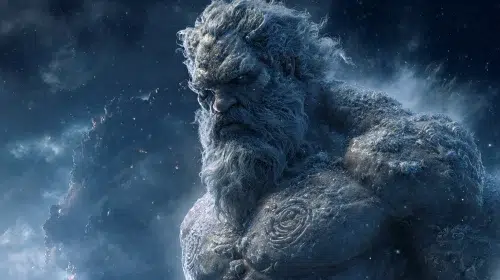
In Norse mythology, Ymir is the first living being and the ancestor of the frost giants. His story begins in the empty void known as Ginnungagap, where ice from the north meets fire from the south. From that clash of elements, Ymir emerges.
He is not simply another giant. All other giants descend from him.
Later, the gods Odin, Vili, and Ve decide that the chaotic world must be reshaped. They kill Ymir and transform his enormous body into the structure of the cosmos. His flesh becomes the earth. Bones turn into mountains. Blood forms the seas and rivers.
The transformation continues. His skull becomes the sky, while sparks from the fiery realm become the stars.
This myth reveals how Norse culture imagined creation. Order does not appear peacefully. Instead, the universe forms through the death of a primordial giant whose body becomes the foundation of the world.
2. Pangu – The Giant Who Split Heaven and Earth (Chinese)
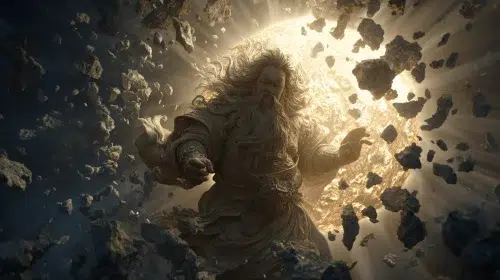
Chinese mythology tells a striking story about the origin of the universe. In the beginning, heaven and earth exist inside a giant cosmic egg. Everything remains mixed together in darkness.
Inside that egg sleeps Pangu.
After thousands of years, he awakens and breaks the shell apart. Light rises upward to form the sky, while heavier elements sink downward to become the earth.
Pangu grows larger every day. Each time he grows, the sky rises higher and the earth settles further below. This separation continues for thousands of years until the universe stabilizes.
Eventually, Pangu dies from exhaustion. His death creates the natural world. Mountains form from his bones. Rivers flow from his blood. Wind comes from his breath.
Even the sun and moon appear from his eyes.
The myth emphasizes transformation. A giant’s life becomes the structure of the entire universe.
3. Balor – The Giant with the Deadly Eye (Celtic)
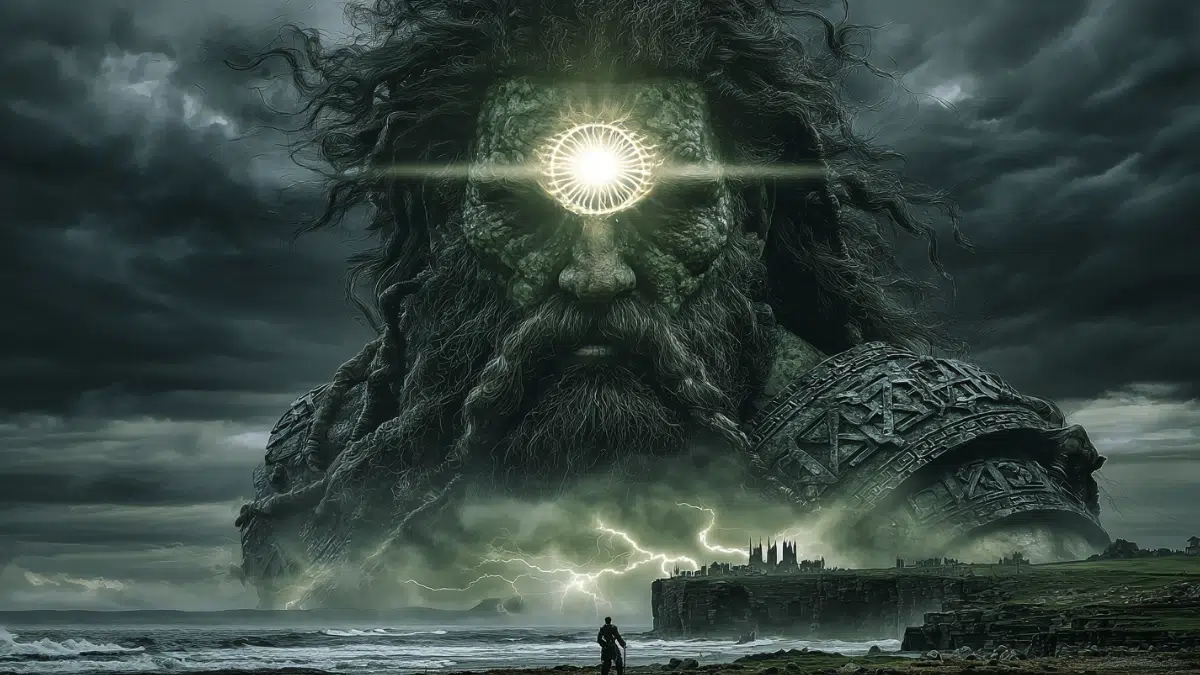
Balor is one of the most terrifying figures in Irish mythology. He leads the Fomorians, a race of powerful beings often associated with chaos and destruction.
His most dangerous weapon is a single massive eye. That eye carries deadly power capable of destroying armies. Because the energy is so destructive, several warriors must lift the eyelid before Balor can use it.
A prophecy predicts Balor will be killed by his own grandson. Hoping to prevent this fate, he locks his daughter away so she can never have children.
The plan fails.
His grandson Lugh eventually grows into a powerful hero. During the legendary Battle of Mag Tuired, Lugh faces Balor in combat. With a perfectly aimed sling stone, he strikes the giant’s deadly eye.
The stone sends the destructive power back through Balor’s own army.
The prophecy is fulfilled.
4. Antaeus – The Giant Who Could Not Be Defeated on Earth (Greek)
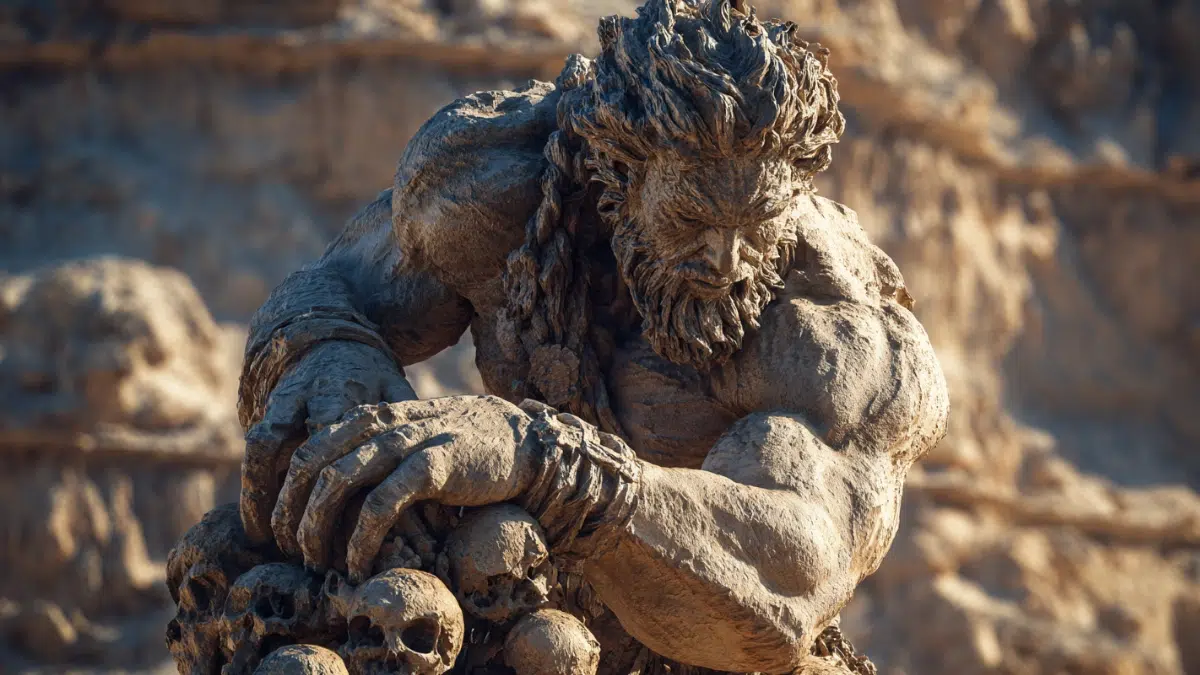
Greek mythology tells of Antaeus, a giant who lives in the deserts of Libya. Travellers who pass through his territory face a deadly challenge.
Antaeus forces them into wrestling matches.
Defeat always ends the same way. He kills his opponents and adds their skulls to a growing monument honouring his father, the sea god Poseidon.
Many heroes fall before him because Antaeus possesses a secret advantage. His strength comes from his mother, Gaia, the earth itself. Whenever his body touches the ground, he regains his power.
That ability makes him nearly impossible to defeat.
The hero Heracles eventually discovers the secret. Instead of wrestling normally, he lifts Antaeus into the air and crushes him while holding him off the ground.
Without contact with the earth, the giant’s strength disappears.
5. Polyphemus – The Cyclops Who Trapped Odysseus (Greek)

Polyphemus is one of the most famous giants in Greek mythology. He belongs to the race of Cyclopes, enormous beings known for their single eye.
The hero Odysseus encounters Polyphemus while travelling home from the Trojan War. Curious about the island, Odysseus and his crew explore a large cave filled with food and supplies.
The cave belongs to Polyphemus.
When the giant returns, he blocks the entrance with a massive stone and begins eating the trapped sailors. Escape seems impossible.
Odysseus eventually devises a clever plan. First, he tricks the giant into drinking strong wine. Once Polyphemus falls asleep, the crew drives a burning stake into his eye.
Blinded and enraged, the giant cannot see them escape. Odysseus and his men hide beneath the giant’s sheep as they leave the cave.
6. Hrungnir – The Giant Who Challenged Thor (Norse)
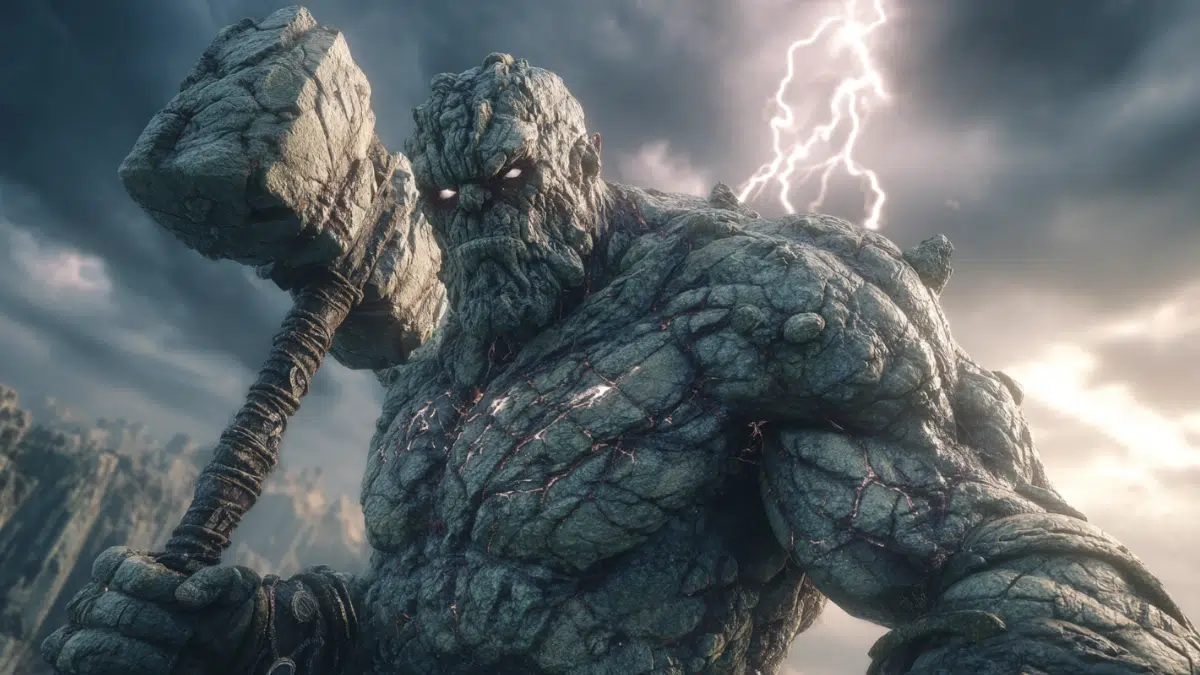
Hrungnir is one of the strongest giants in Norse mythology. His body is said to be made partly of stone, giving him enormous durability in battle.
Trouble begins when Hrungnir rides his horse into Asgard after a drinking contest with Odin. While there, he boasts loudly that he could destroy the gods and carry off the goddess Freyja.
Such threats cannot go unanswered.
Thor eventually returns and challenges the giant to a duel. Hrungnir prepares for the fight with a massive whetstone weapon and a shield of stone.
The battle ends violently.
Thor throws Mjölnir, his legendary hammer. Hrungnir hurls the whetstone at the same moment. The weapons collide in midair. Thor’s hammer shatters the whetstone and continues forward, striking the giant’s skull.
Hrungnir collapses, though a fragment of the whetstone becomes lodged in Thor’s own head.
7. Kumbhakarna – The Sleeping Giant of the Ramayana (Hindu)
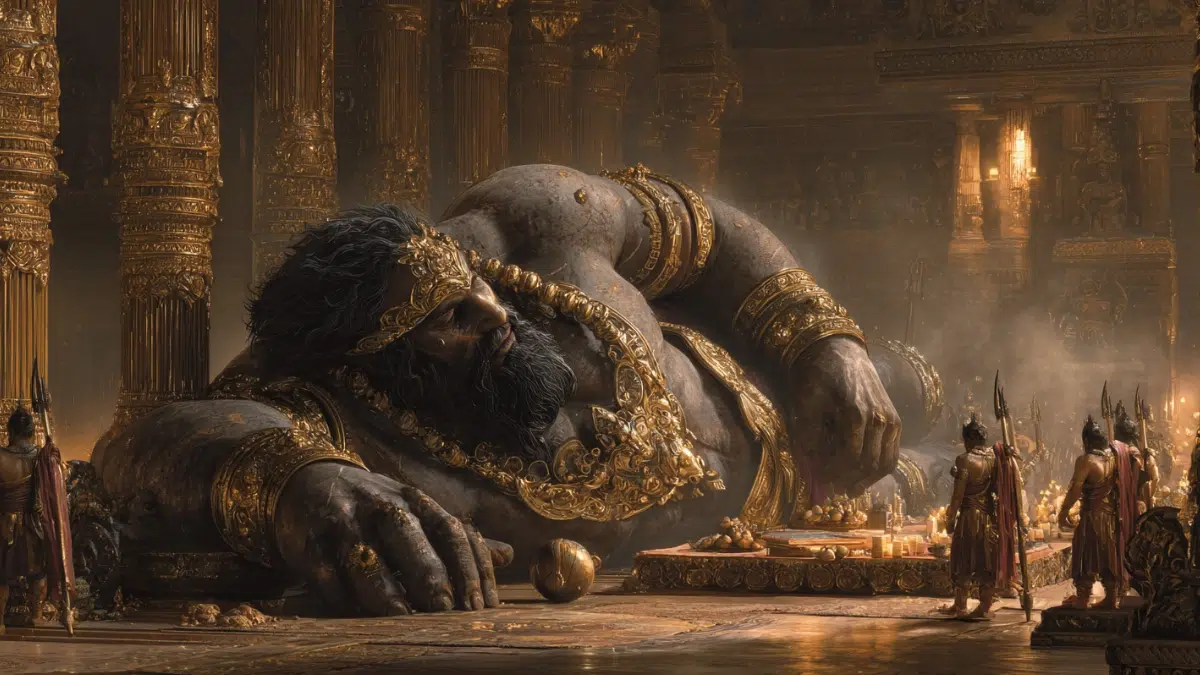
Kumbhakarna appears in the Indian epic Ramayana as the enormous brother of the demon king Ravana.
Despite his frightening appearance, the story surrounding him begins with a mistake. When asking the gods for a blessing, a slip of the tongue results in a curse instead. Instead of gaining great power, Kumbhakarna falls into deep magical sleep for months at a time.
When he finally awakens, his hunger becomes legendary.
Entire herds of animals and mountains of food disappear in a single meal.
Later in the epic, Ravana wakes him to help defend Lanka during the great war against the hero Rama. Kumbhakarna enters battle with tremendous strength and courage.
Many versions portray him as surprisingly honourable. Even though he knows his brother’s actions caused the conflict, loyalty drives him to fight anyway.
8. Si-Te-Cah – The Red Haired Giants (Paiute)
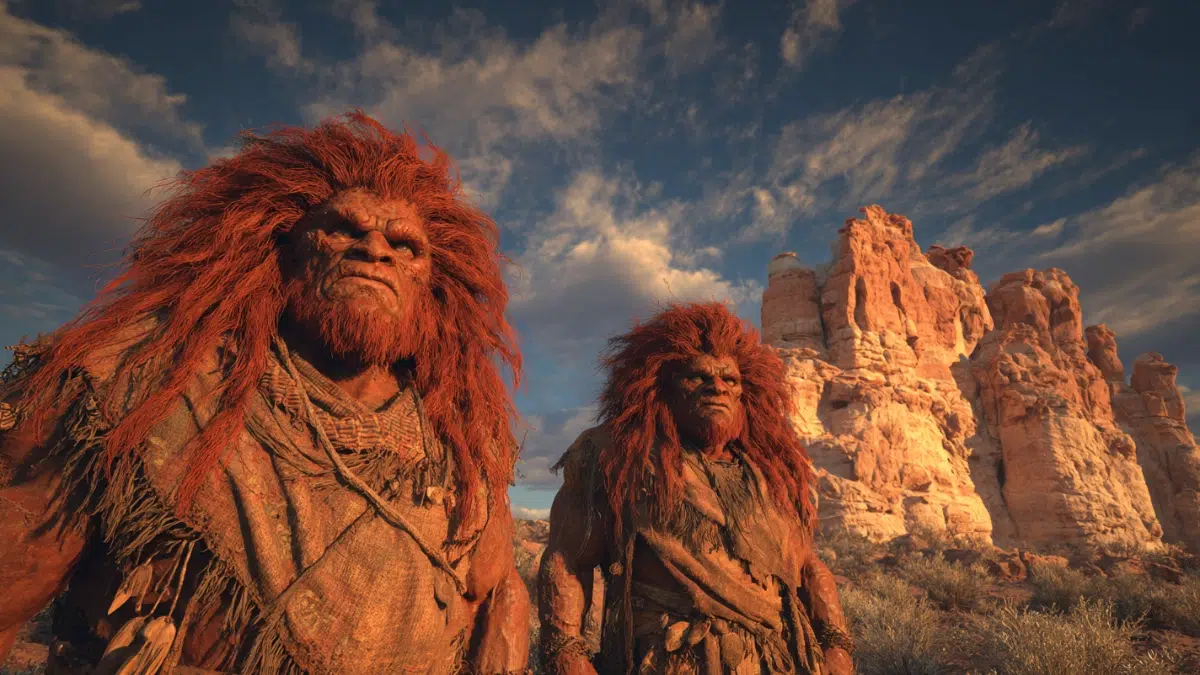
Stories from the Paiute people of Nevada describe a mysterious race of giants known as the Si-Te-Cah. According to legend, these giants had red hair and enormous strength.
Conflict quickly developed between the giants and surrounding tribes.
The Si-Te-Cah reportedly attacked villages and sometimes practiced cannibalism. Local tribes eventually united to defeat them.
The final confrontation took place near a cave. Warriors forced the giants inside and set fires at the entrance. Smoke filled the cavern, trapping the creatures within.
The story explains the discovery of ancient remains in Lovelock Cave, Nevada.
While historians debate the literal truth of the legend, the tale remains an important part of Paiute oral tradition.
9. Enceladus – The Giant Beneath the Mountain (Greek)
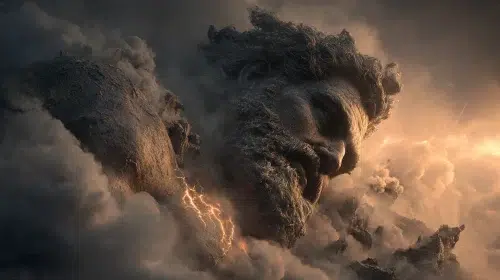
Enceladus is one of the giants who rise against the Olympian gods during the legendary Gigantomachy.
These giants attempt to overthrow the rule of Zeus and the other Olympians. Enceladus becomes one of the most dangerous opponents.
The goddess Athena eventually confronts him during the battle.
According to myth, she crushes the giant beneath a massive mountain. Some traditions identify that mountain with Mount Etna in Sicily.
Ancient Greeks believed earthquakes and volcanic eruptions occurred when Enceladus struggled beneath the earth.
The myth offers an imaginative explanation for natural disasters. Trembling ground and erupting volcanoes become signs that the giant still moves below the surface.
10. Benandonner – The Giant of the Giant’s Causeway (Irish)
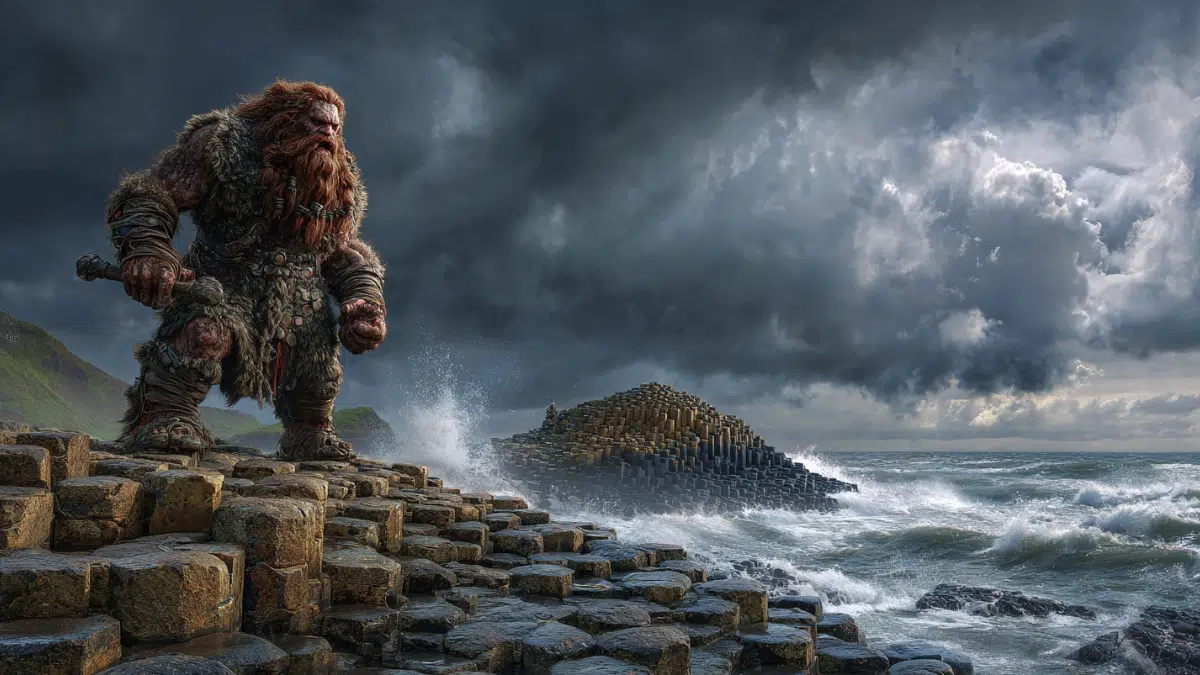
Irish folklore tells a humorous giant story involving Fionn mac Cumhaill and the Scottish giant Benandonner.
Fionn builds a massive stone causeway across the sea so he can challenge Benandonner to battle. When the Scottish giant approaches, however, Fionn realizes his opponent is far larger than expected.
Fear replaces confidence.
Fionn retreats to his home, where his clever wife devises a plan. She disguises him as a giant baby and places him in a cradle.
When Benandonner arrives, he sees the enormous infant and imagines how gigantic the father must be.
The sight terrifies him.
Benandonner runs back to Scotland, tearing up the causeway behind him so Fionn cannot follow.
The legend explains the unusual stone columns of the Giant’s Causeway in Northern Ireland.
Frequently Asked Questions About Giants in Mythology
Are giants common in mythology?
Yes, giants appear in many mythologies around the world. Ancient cultures often used giants to represent powerful forces of nature such as mountains, storms, or earthquakes. In many stories, giants challenge the gods or threaten human civilization.
Other myths portray them as primordial beings who help create the world itself. Because giants are larger than life, they serve as powerful symbols of chaos, strength, and the unknown.
Who are the giants in Norse mythology?
Norse mythology contains many giants known as jotnar. These beings often oppose the gods of Asgard. One of the most famous examples is Ymir, the first giant whose body becomes the world after the gods defeat him.
Another well known figure is Hrungnir, who challenges Thor to a legendary duel. Norse giants are not always simple monsters. Some possess great wisdom, and several even marry into the families of the gods.
Who are the giants in Greek mythology?
Greek mythology includes several types of giants and giant like creatures. One famous example is Polyphemus, the one eyed giant who traps Odysseus in a cave.
Another notable figure is Antaeus, a powerful wrestler who gains strength whenever he touches the earth. Greek myths also describe the Gigantes, a race of giants who fight the Olympian gods in the legendary Gigantomachy.
Are there giants in Irish mythology?
Irish folklore features several powerful giants. One of the most feared is Balor, a giant whose destructive eye can wipe out entire armies.
Irish legend also includes the giant Benandonner, who battles the hero Fionn mac Cumhaill. Their rivalry becomes part of the famous story explaining the creation of the Giant’s Causeway.
Are there giants in African mythology?
Yes, several African traditions include giant figures. One example appears in the folklore of the Zulu people with Amabedle, enormous beings associated with storms and thunder. These giants are believed to live in the sky and sometimes descend to earth during lightning storms.
Why do so many myths include giants?
Giants often symbolize forces too large for humans to control. Ancient people used these figures to explain earthquakes, volcanic eruptions, storms, or unusual landforms. Myths about giants also highlight the struggle between order and chaos. When heroes defeat giants, the stories show how balance and civilization overcome destructive power.
Giants appear in myths for a reason
Their enormous size represents forces far greater than ordinary life. Sometimes they embody chaos and destruction. Other stories portray them as creators who shape the world itself.
Across cultures, these figures help explain how the universe came to be. Norse myths describe a giant whose body becomes the earth. Chinese legends tell of a giant who separates heaven from the sky. Greek stories often place giants in battles against the gods.
Despite their differences, these myths share a common theme. Giants represent power beyond human control.
They remind us that ancient people looked at the world around them and imagined forces large enough to move mountains, shake the earth, and shape the very structure of reality.
Even today, those stories still capture the imagination.


