Draupadi: The Fire Born Queen of the Mahabharata
Who Is Draupadi?
A princess rises from sacred fire. There is no cradle and no gentle beginning.
Destiny claims her from the first moment. Conflict shadows her path long before battle begins.
Draupadi is one of the central figures in the ancient Indian epic the Mahabharata. She is a queen, a wife to five brothers, and a woman whose humiliation sparks one of the greatest wars in mythology.
Many know her as the wife of the Pandavas. Others remember her as the woman who stood in a royal court and refused to bow her head. Her story shapes the entire arc of the epic.
Strength defines her. So does dignity.
Understanding Draupadi means understanding honour, fate, and the cost of silence in the face of injustice.
How Was Draupadi Born?
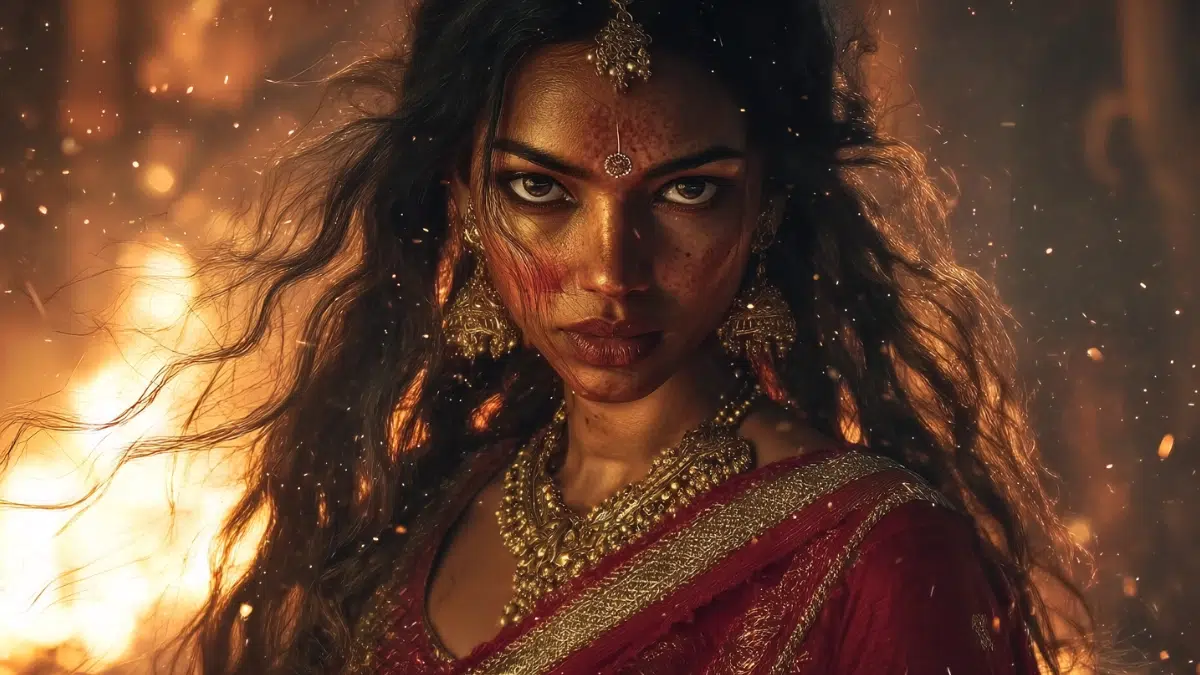
Draupadi is not born in the usual way.
Her father, King Drupada of Panchala, performs a sacred fire ritual called a yajna. He seeks revenge against his rival Drona. From the flames emerge two children:
- a son, Dhrishtadyumna and
- a daughter, Draupadi
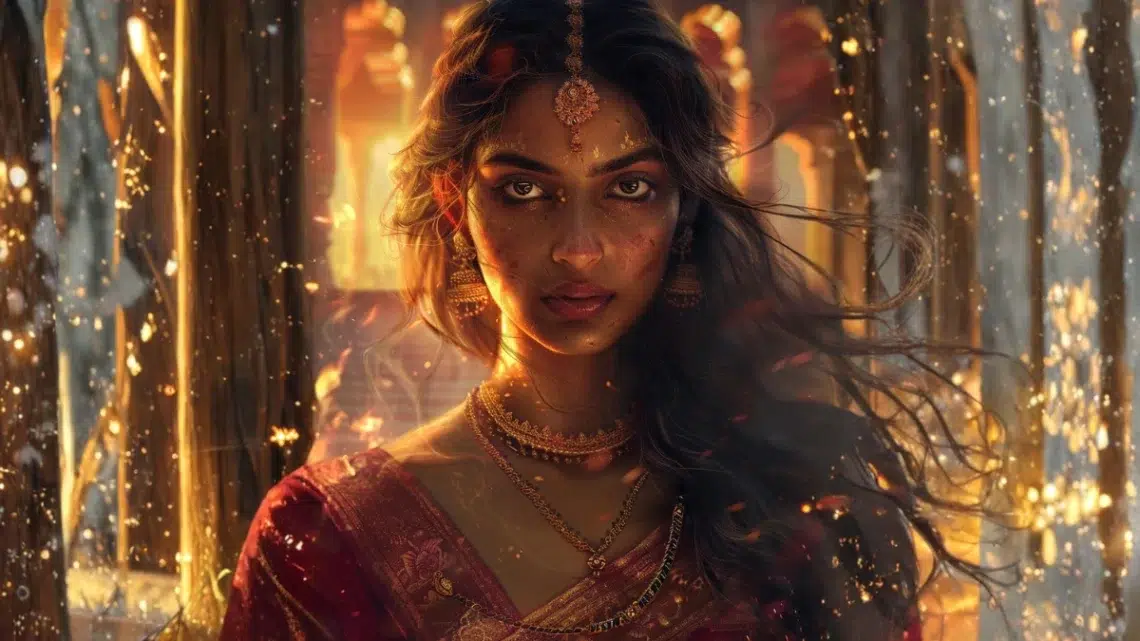
Draupadi rises fully formed from the fire.
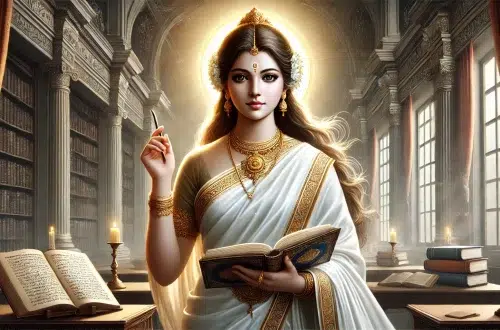
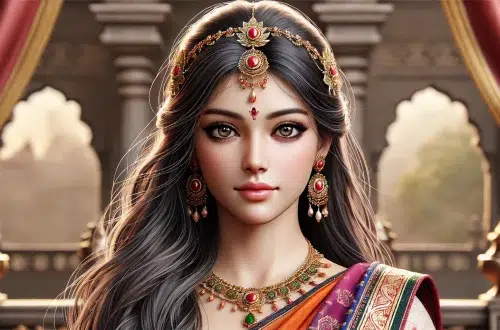
Legends describe her as radiant, with dark hair and eyes like lotus petals. Because she comes from flame, she is sometimes called “Yajnaseni,” meaning daughter of sacrifice.
Fire symbolizes purification, transformation, and destiny. Her birth signals that she carries divine purpose. She is not an accident of history. She is a turning point.
Why Did Draupadi Marry Five Pandavas?
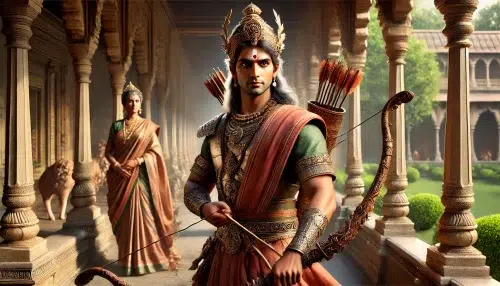
Her marriage shocks many readers.
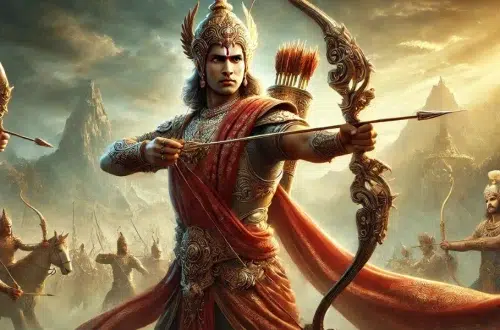
At her swayamvara, a royal contest for her hand, kings and warriors gather from across India. The challenge is nearly impossible. A massive bow must be strung. Then the suitor must shoot a rotating target by watching only its reflection in water below.
Princes attempt the feat and fail. Even powerful warriors struggle to lift the bow.
A disguised Arjuna steps forward dressed as a humble brahmin. Calm focus guides him. The bow bends. The arrow flies. The target falls.
Draupadi places the wedding garland around his neck, believing she has chosen one husband.
Victory leads them back to a modest dwelling where the Pandavas are staying in disguise. Arjuna calls out to his mother, Kunti, telling her he has brought home a great prize. Without turning to look, she instructs her sons to share whatever they have received.
Those words carry sacred authority.
Duty to one’s mother stands at the centre of dharma. Once spoken, the command cannot simply be ignored. The brothers hesitate, yet they obey.
As a result, Draupadi becomes the wife of all five Pandavas:
- Yudhishthira – the embodiment of righteousness
- Bhima – fierce and protective
- Arjuna – master archer and warrior
- Nakula – known for beauty and skill
- Sahadeva – wise and thoughtful
This arrangement is unusual, yet the epic treats it as divinely sanctioned.
Some traditions explain the marriage through karma from a previous life. In one story, Draupadi prays for a husband with five specific qualities.
No single man possesses them all, so fate grants her five husbands instead. Other interpretations see the marriage as a symbol of unity. Sharing one queen prevents rivalry and binds the brothers together.
Rather than a romantic choice, her marriage reflects destiny, obedience, and the weight of spoken words.
The Dice Game and the Humiliation of Draupadi
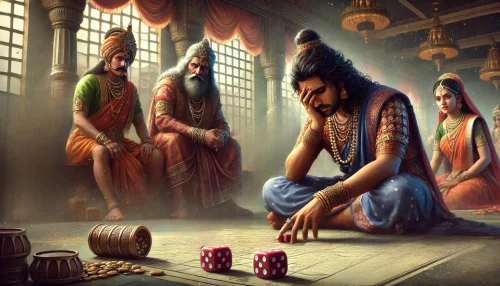
This is one of the most dramatic moments in the Mahabharata.
Yudhishthira, the eldest Pandava, accepts an invitation to gamble against his cousin Duryodhana. The dice are rigged. One by one, he loses his wealth, his kingdom, his brothers, and finally himself.
Then he wagers Draupadi.
She is dragged into the royal court by her hair. She stands before elders, warriors, and kings. No one speaks in her defence.
Duryodhana commands that she be disrobed.
Draupadi refuses to accept this fate quietly. She questions the legality of the wager. If her husband had already lost himself, how could he stake her?
Her voice challenges the entire assembly.
As her sari is pulled, she prays to Krishna. In many retellings, the fabric becomes endless. No matter how much is pulled, more cloth appears.
Humiliation turns into miracle.
That moment changes everything. Draupadi vows that she will not tie her hair until it is washed in the blood of the man who insulted her. Her humiliation becomes a driving force behind the great war of Kurukshetra.
Did Draupadi Love Karna?
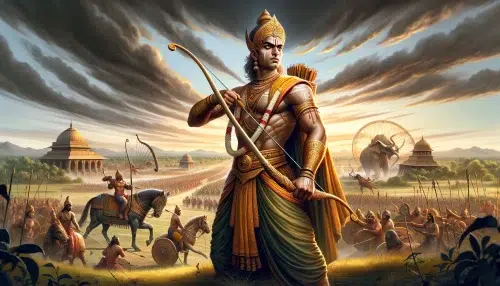
At her swayamvara, Karna attempts to compete. Some versions say Draupadi rejects him because he is believed to be of lower birth. The moment creates deep resentment.
Did she secretly admire him? Ancient texts do not clearly confirm romantic love. Later interpretations and modern retellings explore the idea of hidden tension between them.
Karna himself remains loyal to Duryodhana, Draupadi’s enemy. During the dice game, he speaks harshly against her. His words contribute to her humiliation.
That detail complicates any idea of romance.
The epic does not present a clear love story between Draupadi and Karna. Instead, it presents conflict, pride, and missed possibilities.
Who Did Draupadi Love the Most?
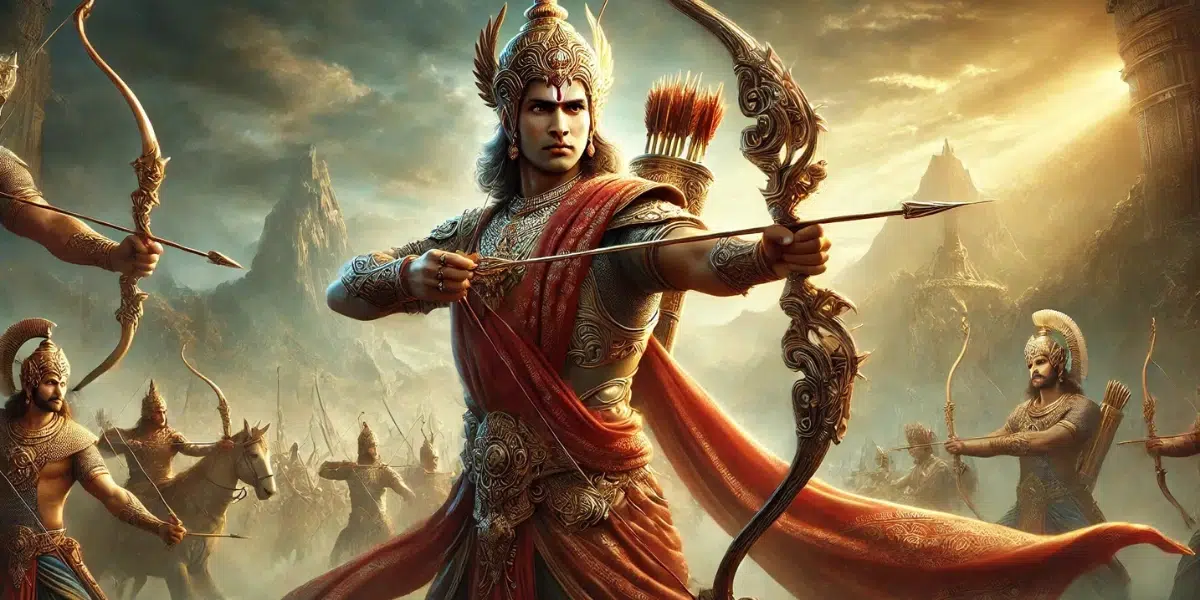
Many readers assume she loved Arjuna most because he won her hand. Some traditions support that view.
However, Draupadi maintains dignity and loyalty toward all five husbands. Each relationship reflects a different dynamic:
- Yudhishthira represents duty
- Bhima offers protection and fierce loyalty
- Arjuna shares martial skill and destiny
- Nakula and Sahadeva bring grace and wisdom
The epic focuses more on duty than romantic preference. Draupadi’s life centres on dharma, honour, and survival.
Rather than asking who she loved most, it may be more accurate to ask how she upheld balance among five powerful warriors.
Draupadi and the Kurukshetra War
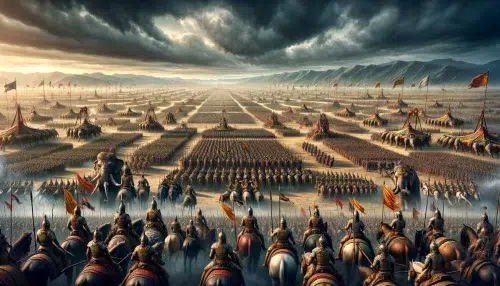
Her humiliation in the dice hall does not fade quietly. Years later, the Pandavas demand the return of their kingdom. Negotiations would fail and war becomes inevitable.
Draupadi’s vow fuels the determination of her husbands. The great battle of Kurukshetra unfolds, reshaping the world of the Mahabharata.
Bhima ultimately fulfils her vow by defeating Dushasana. Justice, in epic terms, arrives through bloodshed.
Her story shows how personal injustice can ignite global conflict while honour, once broken, demands restoration.
How Does Draupadi Compare to Other Mythological Women?

Draupadi stands alongside powerful women in other traditions.
She shares strength with Boudica’s revolt begins when her family suffers injustice. Draupadi’s fury also rises from humiliation in a royal court. Both women turn personal insult into political upheaval. Their anger does not stay private. It reshapes nations.
Endurance connects her to Penelope. While Penelope waits for Odysseus, she protects her household with patience and intelligence. Draupadi survives exile, loss, and betrayal with similar resilience. Neither woman controls armies directly, yet their influence guides events behind the scenes. Strength does not always require a weapon.
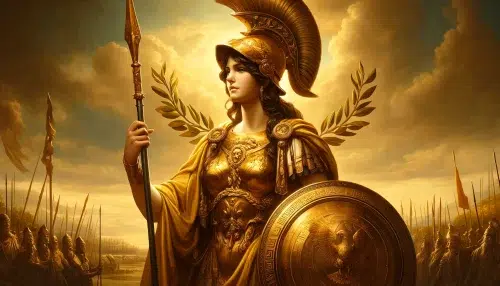
Her fiery birth recalls Athena, who also enters the world in extraordinary fashion. Athena springs fully formed from Zeus’s head, already armed and wise. Draupadi rises from sacred fire, already bound to destiny. Both arrive with purpose rather than innocence. Their origins signal that their lives will not follow ordinary paths.
Courage also links Draupadi to Sita from the Ramayana. Sita endures exile and public doubt while holding to her sense of honour. Draupadi faces humiliation in the Kuru court and refuses to accept silence. Each woman becomes a measure of dharma in her own story.
Across cultures, these women influence history not through submission, but through resolve. Their stories remind us that dignity under pressure can alter the course of kingdoms.
Final Thoughts
Draupadi is not a background character. She is the spark.
Fire gives her life, injustice fuels her voice and war follows her humiliation.
The question “who is Draupadi” does not have a simple answer. She is a queen, a wife, a symbol of honour, and a catalyst for change.
Her story remains powerful because it speaks to dignity under pressure.
Flame creates her. History remembers her.
Learn more about women in Hindu Mythology: