Set Egyptian God: Chaos, Storms, and the Rival of Osiris
Who Is Set in Egyptian Mythology?
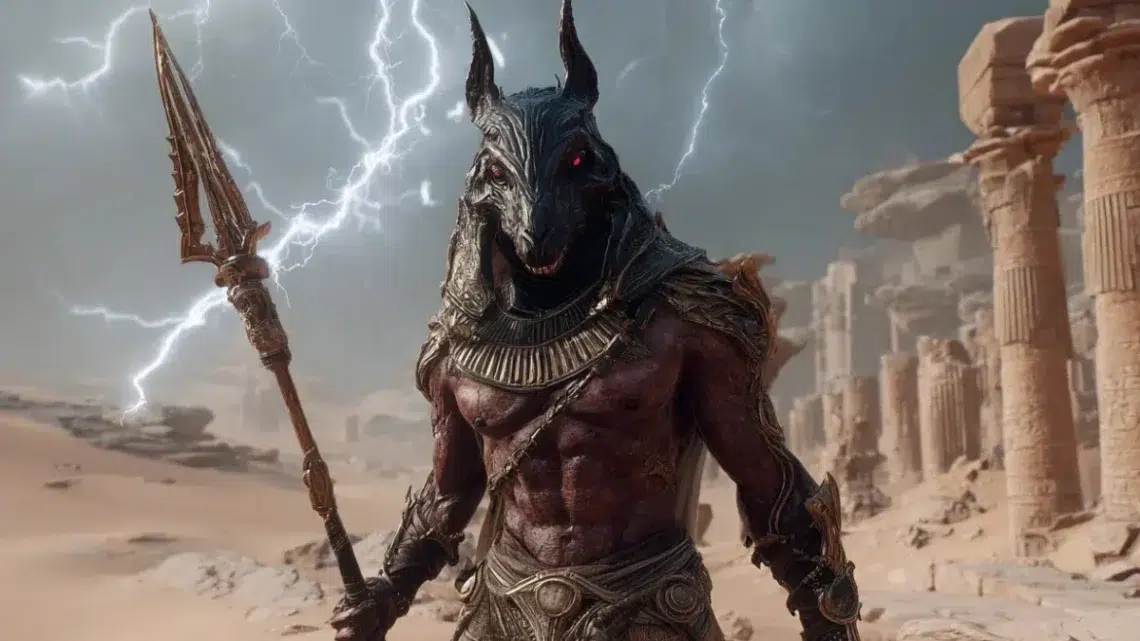
A violent storm rises in the desert. Thunder cracks. Sand blinds the sky.
That force has a name.
Set Egyptian God stands for chaos, storms, deserts, and conflict. He is one of the oldest and most complex gods in ancient Egypt. Some fear him. Some respect him. Few ignore him.
Set is not a simple villain. He protects the sun god Ra at night. He battles monsters and also betrays his own brother.
Ancient Egyptians did not see the world as good versus evil. They saw balance. Order had a name: Ma’at. Chaos also had a name: Set.
Understanding Set Egyptian God means understanding how the Egyptians viewed danger, power, and survival in a harsh land.
What Is the Egyptian God Set the God Of?
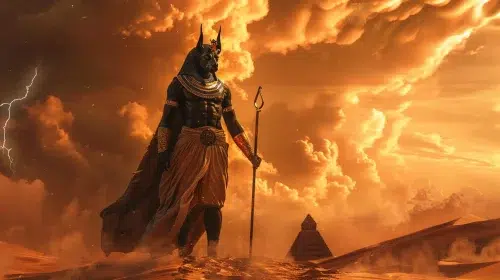
Set rules over:
- Storms
- Deserts
- Foreign lands
- Violence
- Disorder
- Strength
The Nile valley gives life but the desert threatens it. Set belongs to the desert.
He represents heat, drought, and the unknown. Yet he also represents raw strength. Egyptian kings once used his power as protection in battle.
In early periods, some pharaohs even honoured Set as a chief god. During certain dynasties, especially in Upper Egypt, he was respected as a guardian of royal authority.
Set Egyptian God is not only destruction. He is necessary chaos. Without tension, there is no balance.
When Was the Egyptian God Set Born?
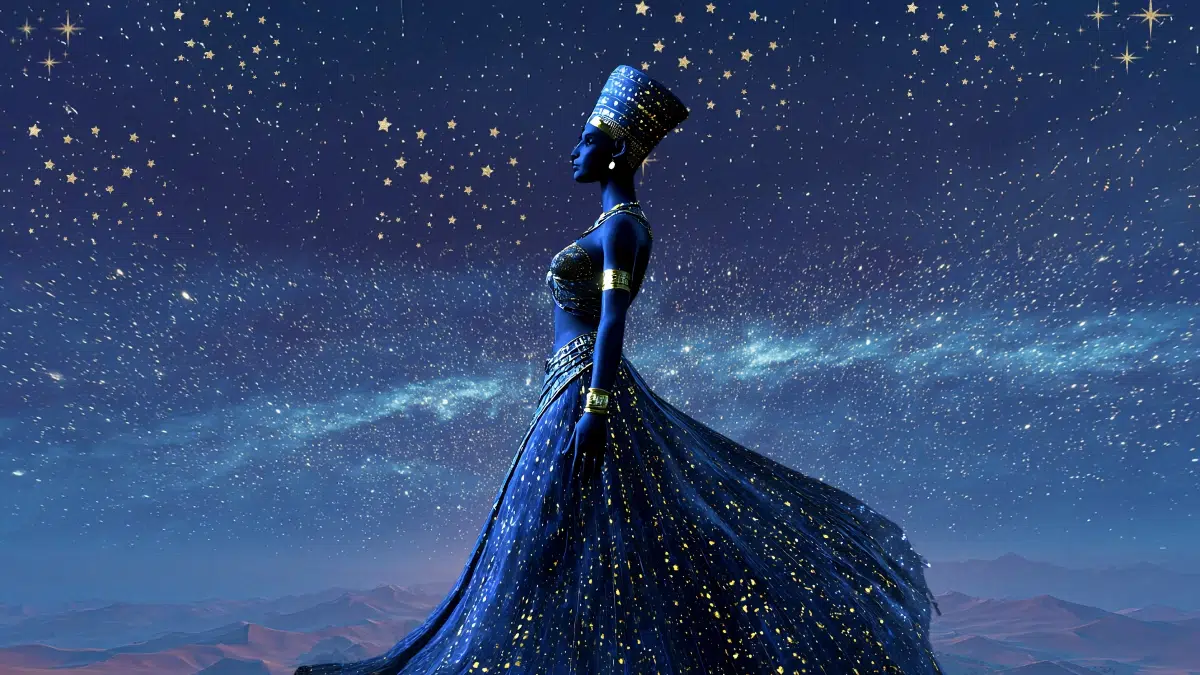
In myth, Set is born to Nut and Geb.
His siblings include:
- Osiris
- Isis
- Horus the Elder
- Nephthys
According to temple traditions, Nut could not give birth on any day of the year. The god Thoth won extra days through a gamble with the moon. On these five added days, the great gods were born.
https://youtube.com/watch?v=OchWi1vWv1o%3Fsi%3DHFS8QmFzp914GKPc
Set’s birth is not gentle. Some stories say he tears himself from Nut’s side violently. That detail matters. From the beginning, he disrupts order.
His birth takes place in mythic time, long before human history. Egyptian religion formed over 4,000 years ago, and Set appears in some of the earliest inscriptions. He is ancient even by Egyptian standards.
What Animal Is Set Egyptian God?
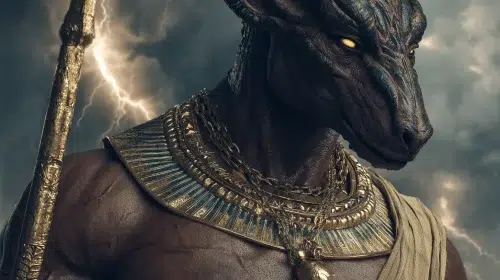
Set is often shown with the mysterious “Set animal.”
It has:
- A long curved snout
- Tall square ears
- A forked tail
No one knows exactly what animal it is. Some scholars suggest:
- A desert fox
- An aardvark
- A donkey
A mythical composite creature
The truth may be symbolic. The animal looks unfamiliar because Set represents what is unfamiliar.
His symbol often includes the was scepter, a sign of power and dominion. The strange head makes him instantly recognizable in temple art.
When people search “what animal is Set Egyptian God,” the answer is simple: a unique creature called the Set animal, possibly inspired by desert species but ultimately symbolic of chaos.
Set Egyptian God Symbol: What Do His Symbols Mean?
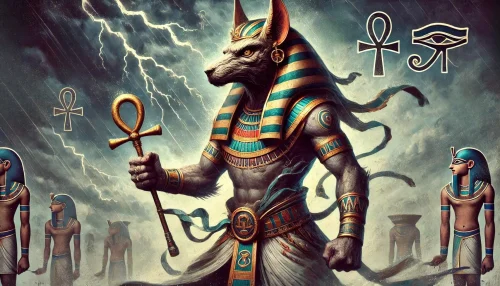
Set’s main symbols include:
- The Set animal
- The was scepter
- The desert
- Storm imagery
The was scepter represents authority and control over chaos. Ironically, Set holds the symbol of power while embodying disorder.
Desert landscapes often connect to him. In Egyptian thought, the fertile Nile valley stood for life. The red desert stood for danger. Even the colour red became associated with Set.
Yet red also symbolizes strength and vitality. The same colour means both threat and power. That dual meaning defines Set Egyptian God.
What Is the Was Scepter?
The was scepter is an ancient Egyptian symbol of power and authority. Gods and pharaohs are often shown holding it in temple carvings and statues.
It is a long staff with:
- A forked base at the bottom
- A straight shaft
- The head of the mysterious Set animal at the top
That animal head connects the symbol strongly to Set Egyptian God, but many other gods also carry it.
The word was means “power” or “dominion.” Holding the was scepter shows control over chaos, strength, and rule. It represents authority over both the natural world and the unseen forces beyond it.
Interestingly, even though Set embodies disorder, he carries a symbol of structured authority. That contrast reflects how Egyptians saw balance. Chaos must exist, but it must also be controlled.
The Murder of Osiris: Set’s Most Famous Myth
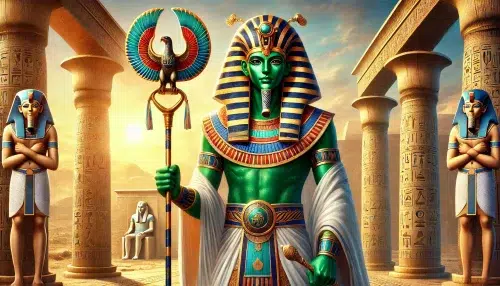
Osiris rules Egypt wisely. The land prospers. Crops grow. People thrive. Set grows jealous and wants power.
Set builds a beautiful chest and promises to gift it to whoever fits perfectly inside. At a feast, Osiris lies down in the chest. It fits him exactly. That is no accident.
Set slams the lid shut. He seals it and throws it into the Nile.
Osiris drifts away, and Egypt falls into grief. Isis searches for her husband across the world. She finds the chest. She hides it. Set discovers it again and takes further revenge.
In some versions, he cuts Osiris into pieces and scatters them across Egypt.
This act is more than murder. It is the triumph of chaos over order.
But the story does not end there.
Isis gathers the pieces. She restores Osiris long enough to conceive Horus. Osiris becomes ruler of the afterlife. Horus grows and eventually challenges Set.
Set Egyptian God becomes the archetype of the usurper. Yet his actions also lead to transformation. Death becomes rebirth. The afterlife becomes central to Egyptian belief.
Without Set, Osiris would never become lord of the dead.
Chaos creates change.
The Battle Between Set and Horus: Who Should Rule Egypt?
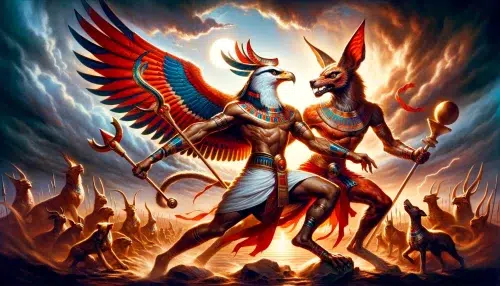
After Osiris dies, Horus claims the throne. Set refuses.
What follows is one of the longest mythic conflicts in Egyptian tradition.
The gods hold trials. They debate. They test the rivals. The struggle lasts years.
Set challenges Horus to contests of strength. They transform into animals and fight in the water as hippos tearing at each other.
In one version, Set rips out Horus’s eye. In another, Horus injures Set.
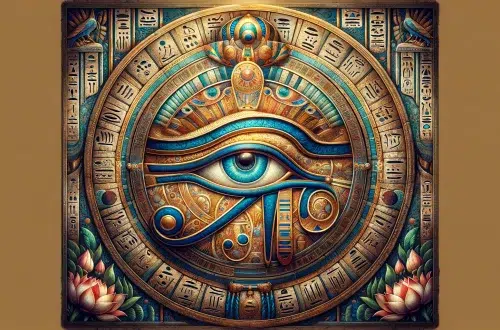
The famous Eye of Horus later becomes a symbol of protection and healing.
The Ennead, the council of gods, struggles to decide. Set argues he is stronger and more experienced. Horus argues he is the rightful heir.
At times, even Ra hesitates.
Eventually, Horus wins the throne and Set is punished or exiled in many versions. Yet he is not destroyed.
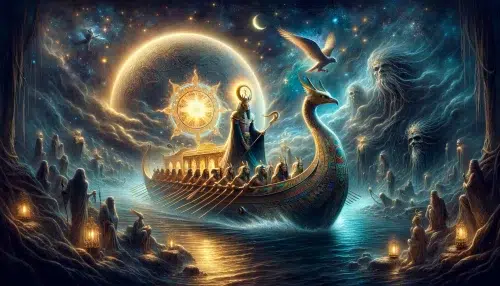
Instead, he becomes a defender of Ra’s solar boat. Each night, as Ra travels through the underworld, Set stands at the prow and fights the chaos serpent Apophis.
The irony is powerful.
The god of chaos protects the sun from greater chaos.
Set Egyptian God loses the throne but gains a cosmic role. He remains necessary.
Why Was Set Sometimes Worshipped?
Set was not always hated.
In certain regions, especially during the Second Intermediate Period, some rulers favoured him. The Hyksos, foreign kings in Egypt, identified with Set’s power over storms and foreign lands.
Even earlier, some Upper Egyptian kings linked themselves to him. He represents strength in war and the harsh desert that surrounds Egypt.
People respected what they feared.
How Is Set Different From Other Mythological Gods?

Set Egyptian God often gets compared to trickster or chaos gods in other cultures.
He shares traits with:
- Loki – A disruptive force in Norse myth who causes both harm and necessary change
- Ares – A god tied to violence and conflict
- Eris – A force of chaos who sparks conflict
Yet Set is different.
Loki often works through deception. Set uses force.
Ares represents battle rage. Set represents cosmic imbalance.
Eris spreads discord for its own sake. Set’s chaos becomes part of a larger balance.
Unlike pure villains, Set defends Ra from Apophis. That makes him more complex than many Western interpretations suggest.
Final Thoughts: Is Set Evil or Essential?
Set Egyptian God is not purely evil.
Although he kills his brother, fights his nephew and brings storms and disorder, he also protects the sun.
He represents the desert that surrounds and defines Egypt.
Ancient Egyptians understood something important: chaos is part of life. Without conflict, there is no growth. Without desert, there is no Nile.
Set reminds us that power can destroy. It can also defend. He is not a simple villain but rather the storm that tests the world.
And in Egyptian mythology, the storm always matters.