
The Legend of the Horned Serpent in Native American Mythology
The Horned Serpent is one of the most powerful and mysterious beings in Native American mythology. Appearing in the traditions of many from the Cherokee to the Lakota, Choctaw, and Ojibwe. It is almost always tied to water, storms, and the hidden forces of the natural world.
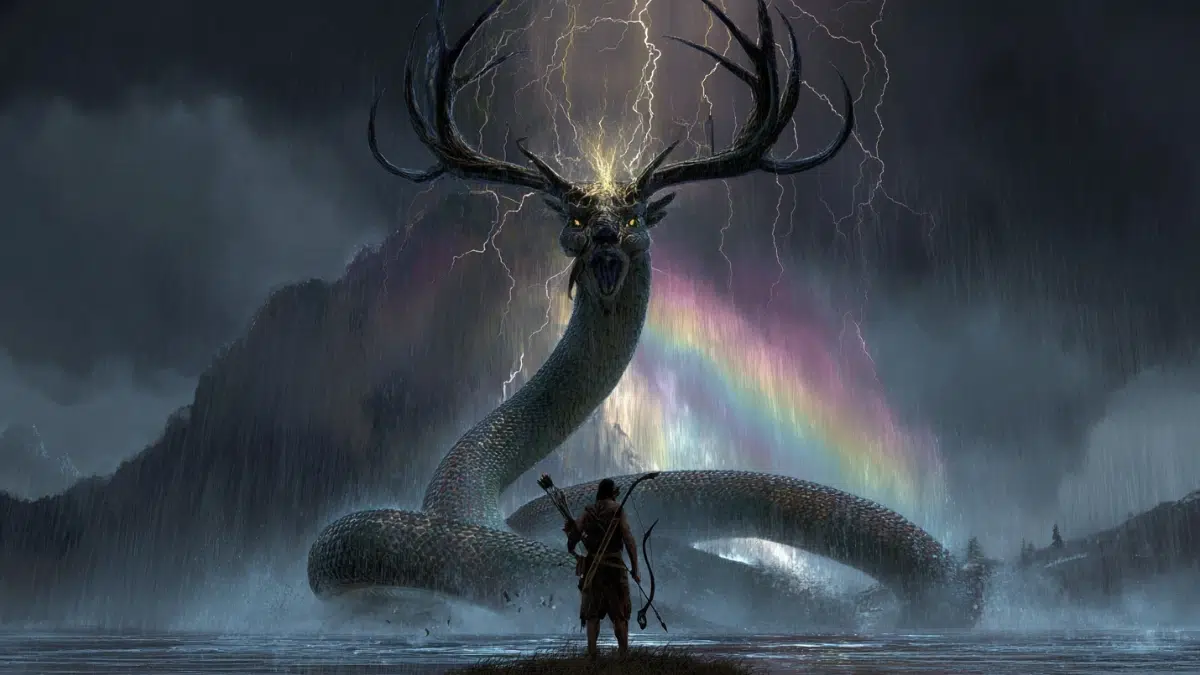
Described as a massive serpent crowned with horns or antlers, sometimes with scales that glisten like rainbows, it is both feared and revered.
To some, the Horned Serpent is a deadly monster, a guardian of rivers and lakes whose gaze can bring destruction. To others, it is a keeper of wisdom and a path to hidden knowledge, its presence a test of courage and respect.
In every story, the Horned Serpent reflects the awe and danger of nature. It’s a reminder that water gives life, but also holds great power.
Origins and Description

The Horned Serpent is not bound to one single story or people but appears across many Native American traditions, each shaping its image in unique ways. Despite these differences, certain features remain constant. It is described as a massive serpent, large enough to coil through rivers or lie across mountain ridges.
Its most striking feature is the set of horns or antlers rising from its head, marking it as something more than an ordinary snake.
In many stories, its scales shimmer with dazzling colours, sometimes said to shine like rainbows or flash like lightning. Some traditions add fiery eyes or a glittering crystal in its forehead, a source of supernatural power. The serpent is often linked to storms, thunder, and heavy rains, with its movements stirring up whirlpools and floods.
While its appearance is terrifying, the Horned Serpent is not always depicted as purely evil. In some myths, it guards rivers and lakes, ensuring balance in the natural world.
To encounter it is to face danger, but also the possibility of transformation or hidden knowledge. In this way, the Horned Serpent reflects the double-edged nature of water itself — a giver of life that can also sweep it away.
The Horned Serpent in Cherokee Mythology (Uktena)

Among the Cherokee, the Horned Serpent is known as Uktena, one of the most terrifying beings in their traditions. Described as a giant snake with horns on its head and glittering, fiery scales, Uktena was so dangerous that even to look upon it was said to bring death.
Legends describe it as vast enough to encircle a mountain and strong enough to crush warriors with its coils.
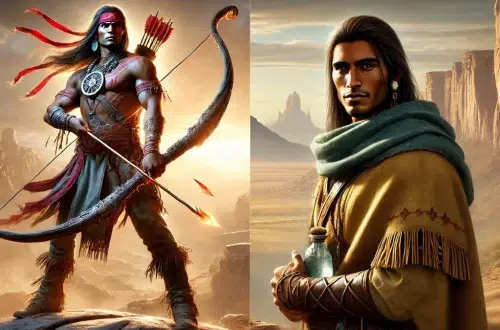
One of the most famous Cherokee stories tells of a warrior tasked with killing Uktena to obtain its magical crystal, the Ulunsuti, set into its forehead. This stone was said to hold immense power — granting wisdom, vision, and strength to anyone who possessed it. Yet the quest was perilous.
Many who sought the Ulunsuti were destroyed by Uktena’s gaze or crushed beneath its immense body. Only a few stories tell of successful hunts, and those who survived carried both great power and a lifelong burden, as the serpent’s spirit could linger to haunt them.
Uktena was not simply a monster but a guardian of sacred knowledge, tied to rivers, caves, and the deep places of the earth. Its stories carry warnings about greed and ambition — those who pursued its power without respect often met a terrible end.
At the same time, the myth of Uktena reflects the Cherokee understanding of the natural world: powerful, beautiful, and deadly if approached carelessly.
Other Cherokee stories:
The Horned Serpent in Other Traditions

The Horned Serpent is not unique to the Cherokee — stories of this powerful being stretch across many Native American nations, each shaping it to reflect their own relationship with the land and waters.
Among the Lakota and Dakota, the Horned Serpent is linked to Unktehi, a great water spirit that dwells in lakes and rivers. Unktehi could cause floods and storms but was also seen as a guardian of the waters, demanding respect from those who lived nearby.
In some stories, it was a foe of the Thunder Beings, whose lightning strikes battled against it during storms.
The Choctaw and Creek peoples also told of horned serpents that lived in rivers and deep pools.
These beings were often feared, their sudden appearances seen as omens of death or disaster. Yet at the same time, they commanded respect as keepers of balance, embodying the danger of disrespecting water and its spirits.
Among the Ojibwe, a similar figure appears in the form of Mishipeshu, the Underwater Panther. Though not always depicted as a serpent, Mishipeshu shared the same traits: horns, scales, a fearsome presence, and dominion over the waters.
Mishipeshu was a guardian of copper deposits and was both feared and honoured as a source of spiritual power.
Across these traditions, the Horned Serpent represents more than a monster. It is a reflection of nature’s awe-inspiring forces — the rivers that sustain life, the storms that destroy, and the mysteries hidden beneath the water’s surface.
Though the details shift, the message remains the same: water is sacred, and its guardians must be respected.
Symbolism and Meaning of the Horned Serpent
The Horned Serpent is one of the most symbolic figures in Native American mythology, embodying both the awe and the fear inspired by the natural world.
At its core, the serpent represents water — rivers, lakes, storms, and rainfall — forces that bring life to crops and people, but which can also destroy through flood and tempest. In this sense, the serpent is a mirror of nature’s dual character: nurturing yet dangerous.
Its horns or antlers distinguish it from ordinary snakes, marking it as a sacred and supernatural being. Horns are often symbols of power, wisdom, and spiritual authority, suggesting that the serpent is not merely a threat but also a keeper of knowledge.
In Cherokee stories of Uktena, its crystal, the Ulunsuti, grants vision and insight to those brave enough to claim it. Across traditions, this theme repeats: to face the Horned Serpent is to confront danger in pursuit of wisdom.
The serpent also symbolizes transformation and testing. To encounter it is often a turning point in myth, separating those who act with respect and humility from those consumed by greed or arrogance.
Those who survive or appease the serpent may gain blessings, while those who challenge it carelessly face ruin.
Above all, the Horned Serpent reflects a worldview where humans are not masters of nature but part of it, bound by respect for the powerful forces that sustain and shape life. Its myths remind us that wisdom often comes at a cost, and that balance with the natural world is essential for survival.
The Horned Serpent in Modern Culture

The Horned Serpent continues to hold meaning today. Many Indigenous nations share its stories in ceremonies, art, and oral tradition. It connects generations to water, balance, and respect for nature.
Artists show the serpent in carvings, paintings, and beadwork. Storytellers remind listeners of its power and warning. For many, it stands as a living spirit, not a legend.
Outside of Indigenous culture, the serpent appears in books, games, and films. These versions often focus on its monster-like form. They show it as fearsome, but they often lose its deeper meaning.
For Indigenous peoples, the Horned Serpent is not only a beast. It is a guardian, a teacher, and a force of balance. Respect for the story matters. Its image belongs to living cultures, not just fantasy.
Modern uses must carry care. The Horned Serpent holds lessons about power, humility, and respect. These lessons remain as urgent as ever.
Conclusion
The Horned Serpent stands as one of the most powerful beings in Indigenous myth. It inspires both fear and respect. To some, it appears as a destroyer. To others, it offers wisdom and strength.
The serpent reflects the dual nature of water. Rivers and lakes give life, yet storms and floods threaten it. Its horns and glowing features mark it as sacred. Its presence reminds people to honour the balance of nature.
From the Cherokee Uktena to the Ojibwe Mishipeshu, many nations carry this story. Each shares the lesson of respect for the waters. The serpent tests those who seek power. Those who act with greed find danger. Those who act with humility find guidance.
Today, the Horned Serpent still holds meaning. It lives in oral traditions, ceremonies, and art. It remains a symbol of strength, transformation, and mystery.