

Kvasir: The Wisest Norse Being Murdered for Mead
The gods once created the most intelligent being to ever exist.
He could answer any question. Solve any riddle. Understand every secret.
So naturally… he was murdered.
Kvasir, born from divine unity, becomes the embodiment of wisdom itself. But in true Norse fashion, knowledge does not stay pure.
His blood is turned into something far more powerful, the Mead of Poetry.
And from that moment on, inspiration comes at a price.
Who Was Kvasir?
Kvasir comes from Norse mythology. He was not born like other gods.
The Aesir and Vanir, two powerful god tribes, ended their war by spitting into a jar. From this mixture, Kvasir was formed carrying the wisdom of both sides.
Unlike other gods who ruled or fought, Kvasir walked the world.
He answered hard questions and helped mortals. He spoke with kindness and clarity. People said no one was wiser. His story does not end with peace, though. It turns dark.
Kvasir’s tale shows how wisdom can be both a gift and a danger.
Common Questions About Kvasir

How do you pronounce Kvasir?
It is usually pronounced: KVAH-seer or KVAH-sir. The “Kv” sound is sharp, like saying “kv” in “quick,” but tighter.
What two things made Kvasir the wisest of the gods?
Kvasir is the creation from the combined essence of both the Aesir and Vanir gods. He spent his existence traveling and sharing knowledge, growing even wiser.
What Is the Mead of Poetry?
The Mead of Poetry is a magical drink in Norse mythology that gives wisdom, poetic skill, and deep knowledge to anyone who drinks it.
Where Was the Mead of Poetry Stored?
In the original Norse myth, the Mead of Poetry was stored in three large vessels. According to the Prose Edda, Kvasir’s blood was mixed with honey and placed into three containers named:
- Óðrerir
- Boðn
- Són
Who killed Kvasir?
Kvasir is murdered by two dwarves: Fjalar and Galar. They invite him in, kill him, then drain his blood.
Where can you read about Kvasir?
Kvasir appears in:
- Prose Edda is the main source for his story
- Specifically in the section called Skáldskaparmál
The Prose Edda was written by Snorri Sturluson in the 13th century.
Who is the smartest Norse god?
This depends on how you define “smart.” If you mean strategic intelligence and cunning, Odin likely wins. But if you mean pure, flawless knowledge, Kvasir holds that title.
- Kvasir is often called the wisest being
- Odin sacrifices an eye for knowledge and constantly seeks wisdom
- Mimir holds ancient understanding
What Is Kvasir the God Of?
Kvasir is not the god of thunder, war, or the sea but represents wisdom and knowledge.
He is sometimes called a god, but more accurately, he is a being created by the gods. He becomes the embodiment of understanding. No question can stump him. No riddle confuses him.
After his death, his blood becomes the Mead of Poetry. Because of this, he is also connected to poetry, inspiration, and creative genius.
So while he does not rule a domain like Odin or Thor, he symbolizes wisdom itself.
What Made Kvasir the Wisest of the Gods?
Two things make Kvasir unique:
1. His Creation
Kvasir is not like other Norse gods. He was not born of a single god or goddess. Instead, he came from peace.
After a long war between the Aesir and Vanir gods, both sides met to end the fighting. To seal their truce, they each spat into a sacred vessel to seal their peace. From that mixture, Kvasir is formed.
He carries the knowledge of both groups of gods. That means he holds the combined wisdom of two divine worlds.
He became the living symbol of peace and unity. Since he came from all the gods, he carried unmatched wisdom. He understood both the ways of war and the value of harmony.
2. His Nature
Kvasir travels across the Nine Realms, answering questions, sharing knowledge and offering guidance. His words never confused or tricked.
He spoke with clarity. People trusted him.
But not all wanted peace. Not all welcomed his wisdom. His pure gift made him a target.
This rare origin and the idea of wisdom born from unity makes Kvasir stand apart in Norse lore.
He is not a warrior or ruler. His entire purpose is understanding. He seeks learning. He shares insight.
Who Is Mimir?
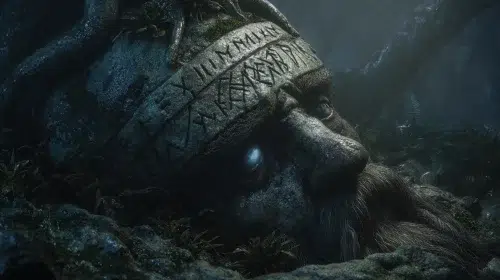
Mímir is one of the wisest beings in Norse mythology. He is the guardian of the Well of Wisdom, located beneath one of the roots of the world tree, Yggdrasil.
He is also known for immense wisdom and advises Odin, the Allfather.
Odin wants wisdom so badly that he sacrifices one of his eyes to drink from Mimir’s well.
Mimir represents deep, ancient, cosmic wisdom. Not cleverness. The kind of knowledge tied to fate, creation, and the structure of the universe.
Is Kvasir Smarter Than Mimir?
Kvasir is described as the wisest being ever created. No one can answer questions like he can.
But Mimir possesses ancient, deep knowledge tied to the Well of Wisdom.
Many scholars would argue:
- Kvasir represents pure intellectual wisdom being created from both divine tribes
- Mimir represents ancient cosmic knowledge from the Well of Wisdom
They are different kinds of wisdom.
The Murder of Kvasir

Kvasir was not born from gods or mortals, but from peace itself.
After a long war between the Aesir and Vanir gods, they sealed their truce by spitting into a vat. From this spit, Kvasir emerged, a being of pure wisdom.
He wandered the world, sharing knowledge with anyone who asked. No question stumped him. No answer lacked depth.
But not everyone loved his wisdom.
Two dwarfs, Fjalar and Galar, grew jealous of Kvasir’s fame.
They invited him in, pretending to seek counsel. Instead, they killed him.
The Creation of the Mead of Poetry

After Kvasir is killed by two dwarves, his blood is mixed with honey and brewed into a powerful drink.
From this gruesome blend, they brewed the Mead.
The Mead of Poetry is a magical drink in Norse mythology that gives wisdom, poetic skill, and deep knowledge to anyone who drinks it.
According to the Prose Edda, the mead is created from the blood of Kvasir and anyone who drank it gained the power of poetic speech and wisdom.
The dwarfs kept the mead hidden, but the story didn’t end there.
Odin Steals the Hidden Mead
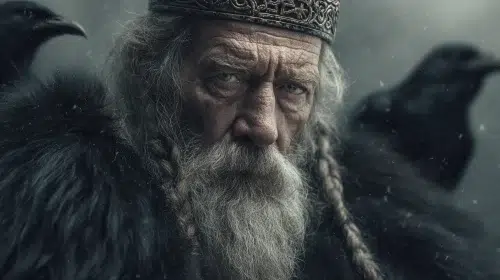
Eventually, a giant named Suttung took it from them. He would store it in a mountain, guarded by his daughter, Gunnlöd.
Odin, ever hungry for knowledge, learned of the mead and devised a plan.
He worked his way into Suttung’s trust and sneaked into the mountain. There, he seduced Gunnlöd and drank all the mead over three nights.
He transformed into an eagle and escaped back to Asgard. But not all the mead made it. Some spilled into the world.
That spilled portion?
It’s said to inspire average poets and storytellers, while the true mead remains with the gods.
Kvasir never returned, but his wisdom lived on through the drink made from his blood.
His story is a blend of peace, betrayal, and poetry. It shows how even the purest creation can be twisted—and how knowledge, once spilled, can never be fully contained.
Symbolism and Interpretation
Kvasir represents the value of knowledge as a divine gift, but also a warning: even wisdom cannot protect you from envy.
His creation from spit, a mix of both Aesir and Vanir, makes him a symbol of unity. A child of peace forged from former enemies.
His death, then, becomes a tragedy of misused trust and the vulnerability of wisdom in a world ruled by power.
The Mead of Poetry, made from Kvasir’s blood, ties creativity and intellect to sacrifice.
Great inspiration doesn’t come easily. It’s often born from loss, pain, or struggle. Odin’s desire to steal the mead shows how knowledge can be hoarded, controlled, or given only to the few.
Yet the spilled drops remind us that inspiration escapes control. It touches both the gifted and the foolish alike.
Kvasir’s story also challenges Norse ideals.
Unlike other gods who wield strength or trickery, he uses only words. His murder reflects a deeper truth: in violent worlds, wisdom is often the first to fall.
Still, from that fall came something lasting, the power of poetry and art.
Similar Myths like Kvasir in Other Mythologies
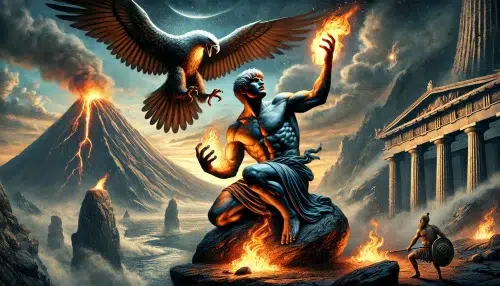
Kvasir’s story blends wisdom, death, and transformation, common themes across global mythologies.
Greek Mythology: Prometheus
Prometheus steals fire and gives it to humanity, symbolizing stolen divine knowledge.
Like Kvasir, Prometheus pays a price for helping mortals. Both figures show how sharing wisdom can be an act of sacrifice.
Hindu Mythology: Soma
Soma is both a god and a sacred drink that grants insight and immortality.
Much like the Mead of Poetry, Soma connects the divine to the human through ritual and inspiration. Both drinks are linked to enlightenment and access to higher truths.
Egyptian Mythology: Thoth
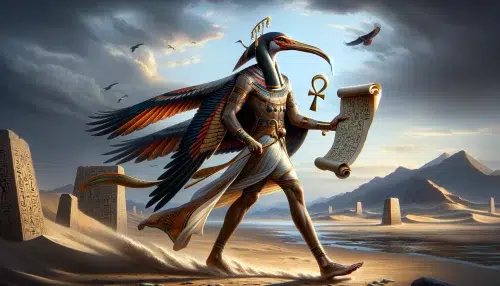
Thoth, god of writing and knowledge, guides both gods and humans.
Though unlike Kvasir he is not killed, he represents how wisdom transcends life and death. His role in judging souls mirrors the weight of knowledge in moral decisions.
Celtic Mythology: The Salmon of Knowledge
In Irish myth, eating the Salmon of Knowledge gives one complete understanding.
Like Kvasir’s blood becoming mead, the salmon holds wisdom in physical form. Both stories reflect the idea that knowledge must be earned or consumed to be passed on.
Mesopotamian Mythology: Enki and the Me
Enki, the god of wisdom, distributes the me, the divine decrees that govern civilization.
These tablets carry knowledge much like Kvasir’s mead. In both cases, divine understanding is passed from gods to mortals, shaping culture and society.
Conclusion
Kvasir’s story is a cautionary tale, one that mixes brilliance with betrayal.
Born from peace, he lived to spread wisdom. But even the wisest god could not escape envy. His death and transformation into mead remind us that knowledge is often stolen, hoarded, and fought over.
Yet his essence endures. Every poet who finds the right words, every thinker who shares truth, they sip from Kvasir’s mead.
His wisdom didn’t die. It flows through stories, speeches, and songs across the world.
Kvasir is gone, but his voice still echoes whenever truth is told with heart, courage, and clarity.