Who is the God of Archery in Mythologies
Who Is the God of Archery?
Many cultures have a god of archery.
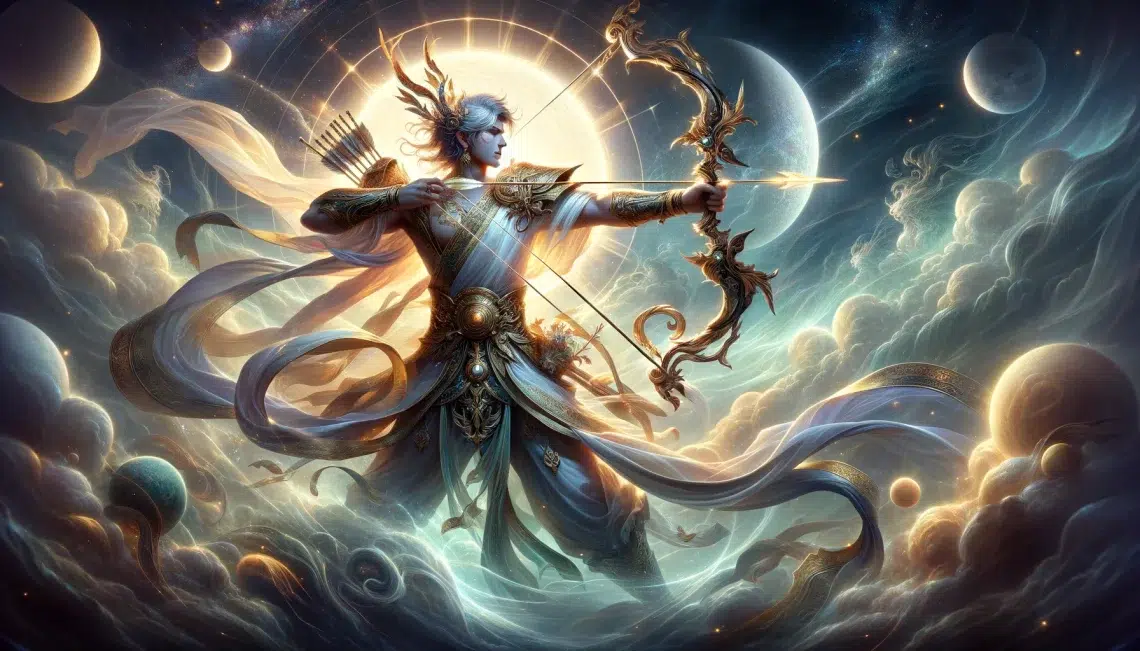
In Greek mythology, Apollo and Artemis both wield powerful bows.
In Norse myth, Ullr is the god most closely tied to archery and hunting.
In Roman tradition, Diana carries the bow as goddess of the hunt.
But which one is the true god of archery?
The answer depends on the culture. Across mythologies, divine archers represent protection, skill, prophecy, and deadly precision.
Frequently Asked Questions About the God of Archery
Who is the Greek god of archery?
Apollo is the primary Greek god of archery. His twin sister Artemis is also associated with the bow and hunting.
Is Artemis a god of archery?
Yes. Artemis is the Greek goddess of the hunt and one of the most skilled divine archers in mythology.
Who is the Norse god of archery?
Ullr is the Norse god most closely linked to archery. He is associated with hunting, winter, and mastery of the bow.
Is there a Roman god of archery?
Yes. Diana, the Roman goddess of the hunt, is the main Roman deity connected to archery.
Who is the strongest archery god?
There is no single strongest archery god. Apollo, Artemis, and Ullr are each powerful within their own mythological traditions.
The Bow in Ancient Mythology
Symbolism and Significance
In ancient mythology, the bow embodies precision, might, and the ability to strike from afar.
Gods who wield it, such as the Greek Apollo and the Roman Diana, often symbolize purity, protection, and the hunt.
Moreover, the Norse god Ullr, associated with prowess in archery, highlights the bow’s role in winter survival and warfare.
- Purity and Purification: Apollo, with his silver bow, represents the purifying nature of sunlight, banishing darkness and disease.
- Protection and Providence: Diana, the huntress, exemplifies the bow as a tool of nurturing through hunting, providing for her followers.
- Warfare and Skill: Ullr’s bow showcases the importance of archery in battle, representing strategic might and the respected skill of archers in Norse society.
In these myths, the bow symbolizes life’s light, sustenance, and warfare. It’s deeply embedded in ancient beliefs.
The Norse Masters of the Bow
Odin God of War
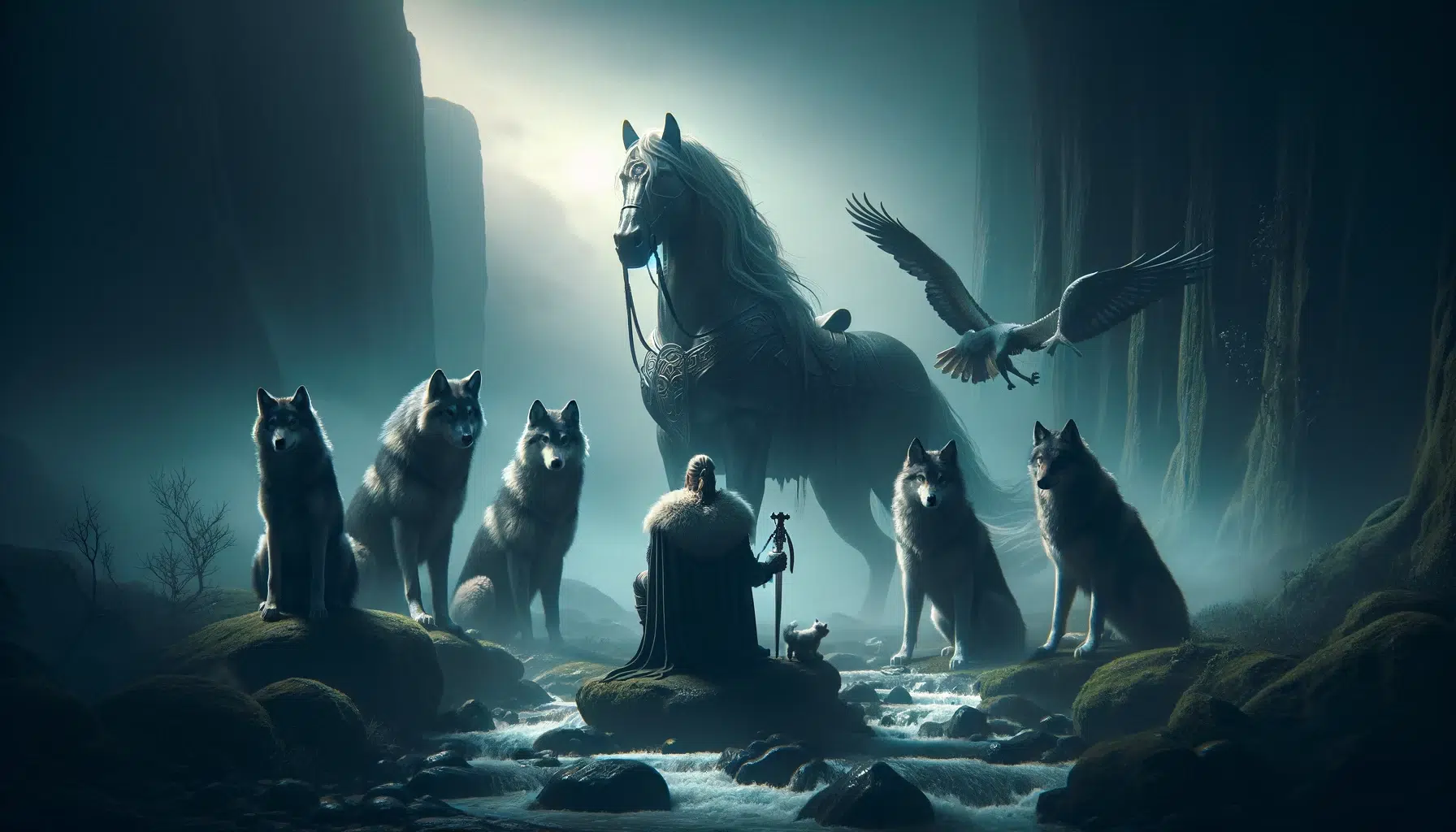
Odin excelled in wisdom, hunting and bow proficiency. As a god in Norse mythology, his archery skills were formidable. He embodied a divine marksman’s traits with his spear, Gungnir, becoming famous.
Norse God of Archery
Odin’s stepson Ullr was the god of hunt, winter, and duels. Known for unparalleled bow mastery, people sought Ullr’s help in archery. He protected those in the cold wilderness, reflecting his winter domain.
Odin and Ullr showcased the strength and precision esteemed in Norse archers.
Apollo and Artemis: Greek Gods of Archery
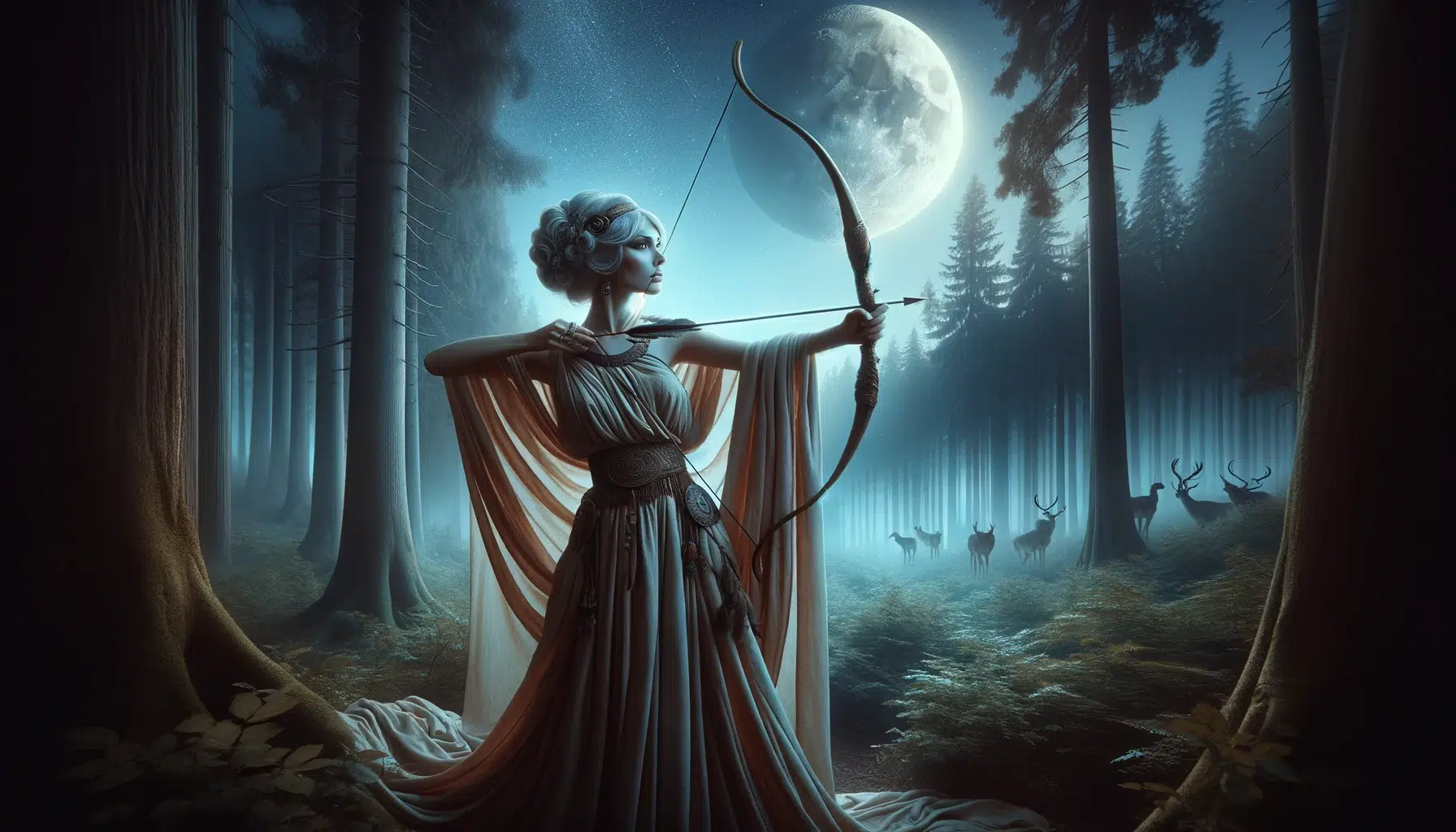
Apollo the Sun God
Apollo and Artemis, twins in Greek mythology, were formidable archers and Zeus and Leto’s celebrated offspring. They embodied contrasting yet complementary forces.
Apollo, the sun god, stood for healing, prophecy, and arts, especially music.
His archery highlighted his power to bring sudden plagues and death.
His arrows symbolized the sun’s piercing rays.
Artemis the Moon Goddess
Artemis, the moon and hunt goddess, protected wildlife and chastity. Her unmatched huntress skills came from her signature bow. She fiercely protected her domain and her followers’ purity with it.
Apollo and Artemis represent balance—male and female, sun and moon, art and nature—as eternal archers on Mount Olympus.
Together, Apollo and Artemis symbolize balance—between male and female, sun and moon, art and nature—each an eternal archer on Mount Olympus.
Roman Gods with Quivers Aflame
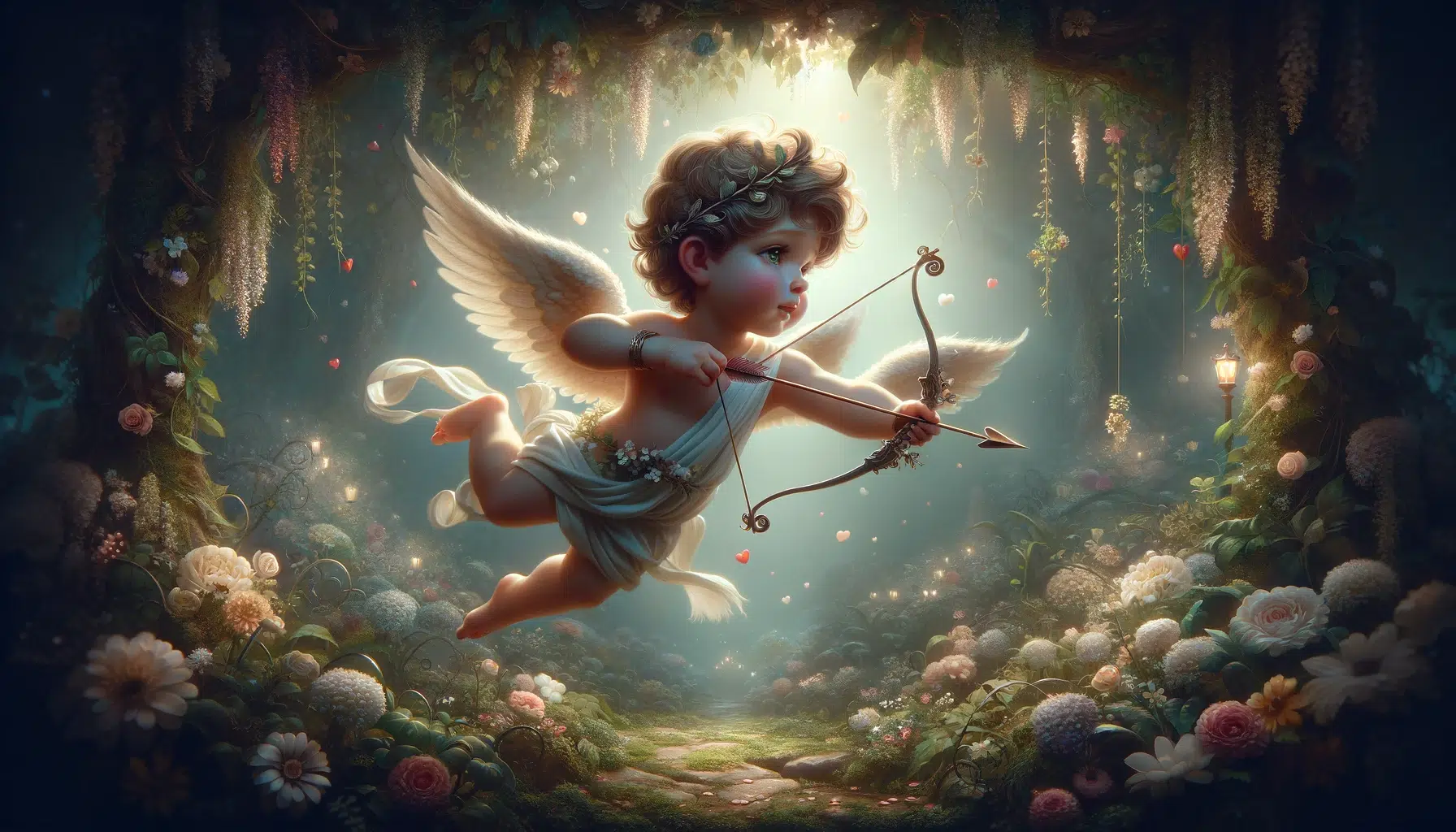
Cupid and Diana
In Roman mythology, Cupid and Diana were deities of significant prowess in archery, with differences in their divine domains.
Cupid, often depicted with wings and a quiver of arrows, is the god of desire, love, attraction, and affection.
His arrows could compel love or disdain in gods and mortals alike, rendering him an unpredictable deity with the power to influence the passions of the heavens and earth.
Diana, the goddess of the hunt, wild animals, and the moon, was revered as a master huntress.
She is typically portrayed with a bow and quiver, her arrows sharp as her focus, symbolizing both her independence and her protective nature over virgins and the wilderness.
Unlike Cupid’s more whimsical appeal, Diana’s archery skills were associated with the solemnity of nature’s cycle and the dignity of self-reliance.
Legendary Feats of Divine Marksmen
Divine marksmen in mythology are renowned for their otherworldly skills:
- Odin (Norse): Not only a supreme deity but also an incredibly skilled archer. His prowess was such that he could strike any target he chose, no matter the distance or conditions.
- Ullr (Norse): He is reputed to be an unbeatable archer, with his bowmanship so precise that he could split a single strand of hair midair.
- Artemis (Greek): The goddess of the hunt possessed a bow crafted by the Cyclopes. Her arrows could bring sudden death to mortals and creatures alike.
- Apollo (Greek): Twin brother of Artemis, renowned for his skill in archery which was integral in his role as a bringer of pestilence, shooting arrows that spread disease.
- Cupid (Roman)/ Eros (Greek): Though not typically seen as a formidable archer in terms of martial prowess, his magical arrows incited love and desire, altering human fates dramatically.
God of Archery in Myths: Reflecting the Human Condition
In mythologies worldwide, archery often symbolizes virtues such as focus, judgment, and the triumph of mind over matter.
This symbolism reflects the human condition, embedding cultural values and the essence of human struggles within stories of divine archers.
Norse tales of Ullr highlight the survival skills vital in harsh climates. Greek legends of Apollo emphasize the pursuit of knowledge and truth through clear-sightedness.
Roman myths of Diana represent the duality of nurturing and protective instincts, mirroring societal roles that humans navigate.
Archery, as depicted in myths, thus becomes a metaphor for life’s various battles, from internal conflicts to external challenges.
The Sacred Bows and their Powers

In Norse mythology, Ullr, the god of hunting and winter, wielded a mighty bow made from yew, considered sacred and imbued with resilience and death-bringing capabilities.
In Greek lore, Apollo, the god of prophecy and plague, carried a silver bow representing purity and divine retribution, capable of casting disease or healing with its arrows.
His twin sister, Artemis, goddess of the hunt, possessed a golden bow symbolizing her imperishable nature and precision.
Roman mythology venerates Diana, equivalent to Artemis, whose bow was a token of her sovereignty over nature and her role as protectress of childbirth and the untamed.
Each divine archer’s bow reflects their attributes, emphasizing the ethereal link between these deities and their role as cosmic archers.
The Art of Archery: Cultural Impact through the Ages
From the murals of ancient Egypt showcasing archery skills to the Japanese tradition of Kyudo, archery has made profound cultural imprints across civilizations.
In Medieval Europe, archery featured prominently in both warfare and sport, exemplifying chivalry and skill.
Native American mythology, people employed bows for sustenance and defense, with archery deeply woven into their rituals.
Furthermore, archery’s impact persists in modern cultural expressions, from Olympic sports to the film industry, where archetypal figures like Robin Hood and Katniss Everdeen draw their bows, symbolizing justice and resilience.
This enduring heritage reflects humanity’s perpetual fascination with the bow as a tool for survival, a competitive instrument, and a metaphorical representation of precision and focus.
Rituals and Worship: Honouring the Divine Archers
In ancient times, honouring divine archers involved elaborate rituals.
Norse societies esteemed Ullr, organizing winter festivities that likely included archery contests to pay tribute to his skill.
In Greek tradition, worshipers of Artemis attended festivals such as Brauronia, where young girls engaged in rites simulating wild animals, symbolizing the goddess’s domain over hunting and wilderness.
Roman followers of Apollo paid their respects through musical performances and offerings at the temple of Apollo or during the Apollonian Games.
Such ceremonial activities served not just to honor these celestial marksmen but also to invoke their favor and benevolence.
Archetypal Influence: The Archer in Modern Storytelling
In modern storytelling, the archer archetype resonates with themes of focus, freedom, and precision.
From the silver screen to pages of novels, archers like Marvel’s Hawkeye and The Hunger Games’ Katniss encapsulate the struggle for justice and self-reliance.
They symbolize the solitary hero, often with a backstory of tragedy or isolation, honing their skills to perfection.
In a broader sense, the archer signifies a bridge between human limitations and divine aspiration, echoing the ancient myths where gods of archery represented mastery and power.
Their presence in contemporary tales continues to inspire and intrigue audiences, underscoring humanity’s enduring fascination with the figures who wield the bow with otherworldly prowess.
Why Archery Gods Appear in So Many Cultures
The divine archers of Norse, Greek, and Roman mythologies reflect cultural exchanges and universal archetypes. For example:
- Norse: Odin, the Allfather of the Norse pantheon, is a divine figure associated with wisdom, healing, and, importantly, the runic alphabet. He wields a spear rather than a bow, but his martial prowess and leadership in battle echo traits of master archers.
- Greek: Apollo, the Greek god of the sun, healing, and prophecy, is renowned as an unparalleled archer. His affinity for the bow symbolizes clarity, precision, and the pursuit of truth.
- Roman: Diana, the Roman goddess of the hunt, also embodies the skill and agility of divine archery. Her virginal aspect highlights the independence and purity often ascribed to hunter deities.
These archetypal figures, despite cultural distinctions, reveal common motifs of power, precision, and providence, underlying a shared human reverence for the mastery of the bow.
The mythological archer captures the human imagination, transcending time and culture.
In the skilled hands of Norse, Greek, and Roman deities, the bow symbolizes strength, precision, and divine intervention. From Odin’s quest for wisdom to Artemis’s fierce independence and Apollo’s prophetic insights, these beings weave stories of heroism, justice, and balance.
They remain emblematic of human struggles and aspirations, continuously inspiring literature, art, and folklore.
Ultimately, the archer’s arrow pierces the veil between mortal and the divine, leaving an indelible mark on the collective psyche.