50 Unique Myths from Around the World Across Mythologies
Every culture tells stories.
Some explain how the world began. Others describe heroes, monsters, or strange events that shaped the past.
These stories are myths, and they appear in nearly every civilization on earth.
Myths appear in civilizations across every continent. Although the cultures that created them are different, many stories explore similar themes.
- Ancient Greeks told stories about gods who punished arrogance and rewarded wisdom
- Norse myths describe giants, tricksters, and heroes struggling against chaos
- African traditions often highlight clever figures who use intelligence to overcome powerful enemies
- Asian mythologies frequently explain natural events such as the movement of the sun, the changing seasons, or the origin of rivers and mountains
These stories helped people understand a world that once seemed mysterious and unpredictable.
Myths also carried important lessons. They warned against pride, praised courage, and explained the consequences of human actions.
Below are fifty unique and interesting myths from global mythology. Each story offers a glimpse into the imagination of the cultures that created them.
Phaethon – The Boy Who Drove the Sun (Greek Mythology)
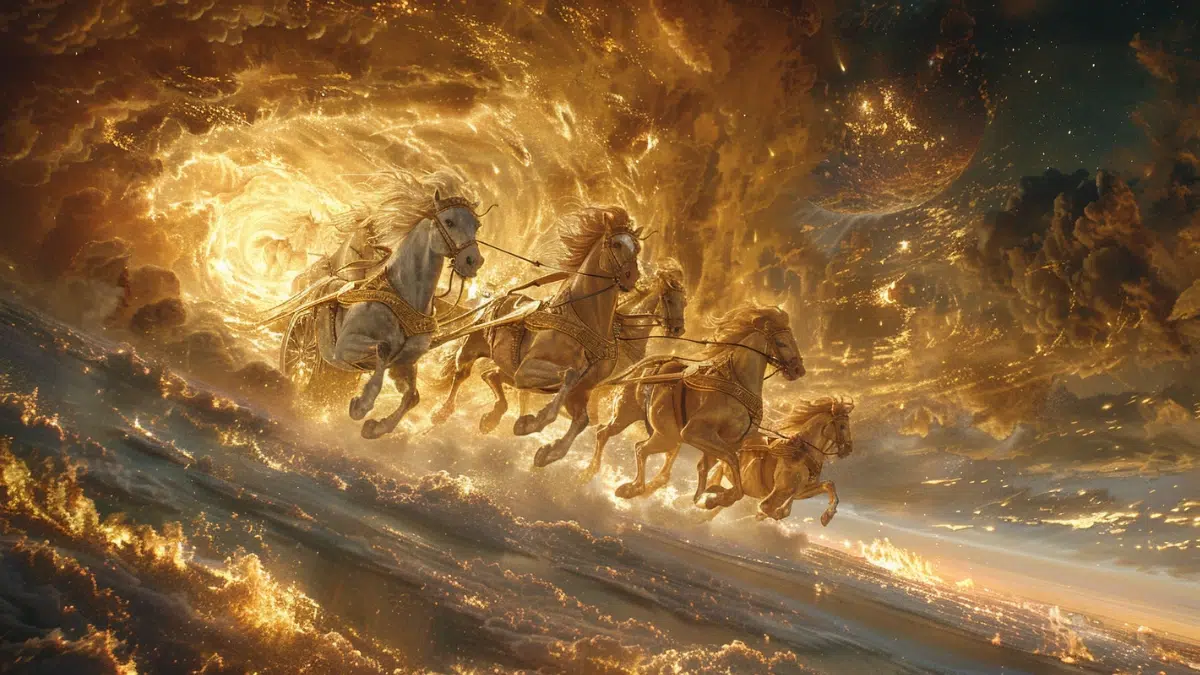
A reckless ride across the sky nearly burns the world.
Phaethon is the son of the sun god Helios. Wanting proof of his divine parentage, he asks his father for a favour.
Helios reluctantly agrees to let the boy drive the chariot that carries the sun across the sky. The task proves far too dangerous.
Phaethon cannot control the fiery horses, and the chariot veers wildly across the heavens. At times it flies too high, freezing the earth.
Then it plunges too low, scorching forests and deserts. To stop the destruction, Zeus strikes Phaethon down with a thunderbolt, ending the chaos before the world burns.
Erysichthon – The Man Who Ate Himself (Greek Mythology)
Endless hunger becomes the punishment for greed.
Erysichthon, a king of Thessaly, commits a terrible act when he cuts down a sacred oak tree belonging to Demeter.
The tree is holy ground, and Demeter punishes the crime with a cruel curse. She sends the spirit of famine to give him endless hunger. No amount of food can satisfy him.
Erysichthon devours his wealth, sells his possessions, and even sells his own daughter to buy more food. The hunger only grows stronger.
In the end, with nothing left to consume, he turns on himself and dies by eating his own flesh.
Arachne – The Weaver Who Challenged a Goddess (Greek Mythology)
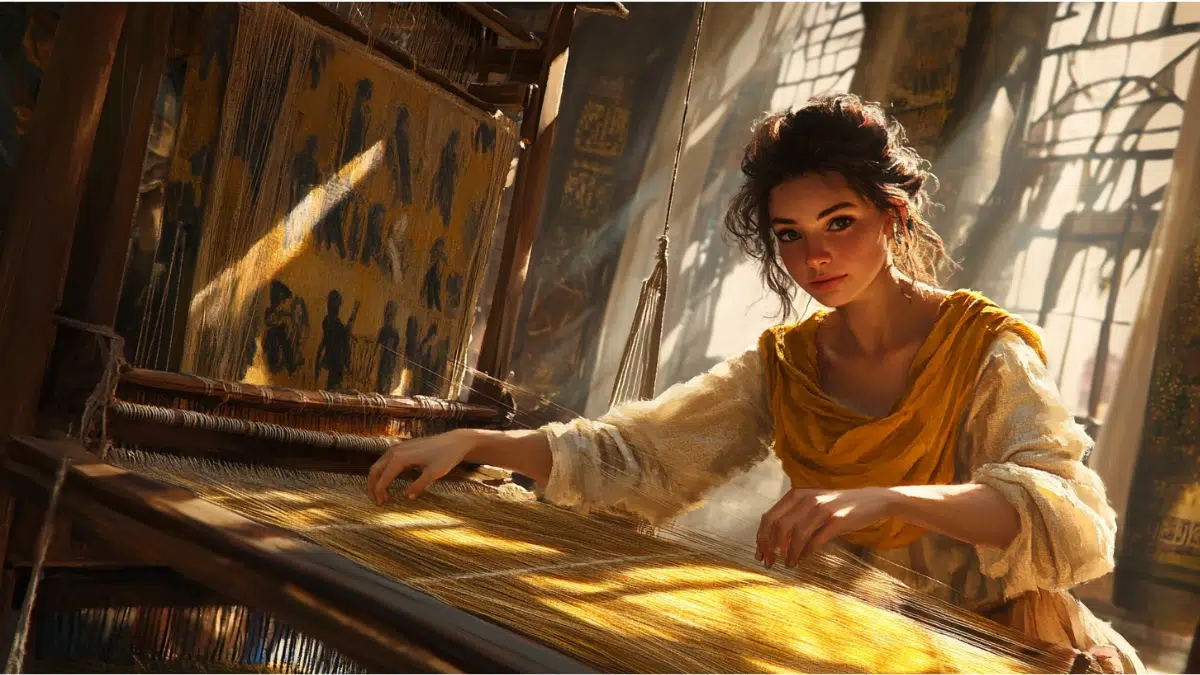
Pride in skill leads to a curse that lasts forever.
Arachne is a talented mortal weaver whose skill becomes famous across Greece. Pride soon follows her success.
She begins claiming her weaving is greater than that of Athena, the goddess of wisdom and crafts.
Athena challenges her to a contest. Both create magnificent tapestries, but Arachne’s work boldly shows the mistakes and misdeeds of the gods. The goddess cannot tolerate such defiance.
Enraged, Athena destroys the tapestry and punishes the mortal weaver. Arachne transforms into a spider, doomed to weave forever as a reminder of the danger of pride before the gods.
Leuce – The First Love of Hades (Greek Mythology)

A quiet love story remembered in a sacred tree.
Leuce is a beautiful nymph loved by Hades, ruler of the Underworld.
He carries her away to his dark kingdom, where she lives beside him for many years. Unlike many tragic figures in Greek myth, Leuce eventually dies peacefully. Hades mourns her deeply.
To honour her memory, he transforms her spirit into a white poplar tree that grows in the Elysian Fields, the peaceful region of the afterlife reserved for heroes and the blessed.
Ancient Greeks later connected the white poplar with victory and the Underworld. Its pale leaves were said to reflect both life and death, symbolizing Leuce’s eternal presence in Hades’ realm.
Niobe – The Mother Who Mocked a Goddess (Greek Mythology)
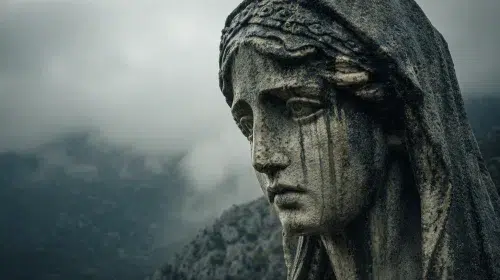
She turned to stone after angering Leto.
Niobe is a proud queen who boasts about her many children. Her happiness soon turns to arrogance.
She mocks Leto, claiming she deserves greater honour because she has far more children than the goddess. Leto’s children, Apollo and Artemis, punish the insult.
Apollo strikes down Niobe’s sons, while Artemis kills her daughters. Overcome with grief, Niobe turns to stone. Even in this form she continues to weep. Some ancient Greeks believed a mountain in Anatolia represented her petrified body, forever mourning her lost children.
Cadmus and the Dragon’s Teeth – Warriors Born from the Earth (Greek Mythology)
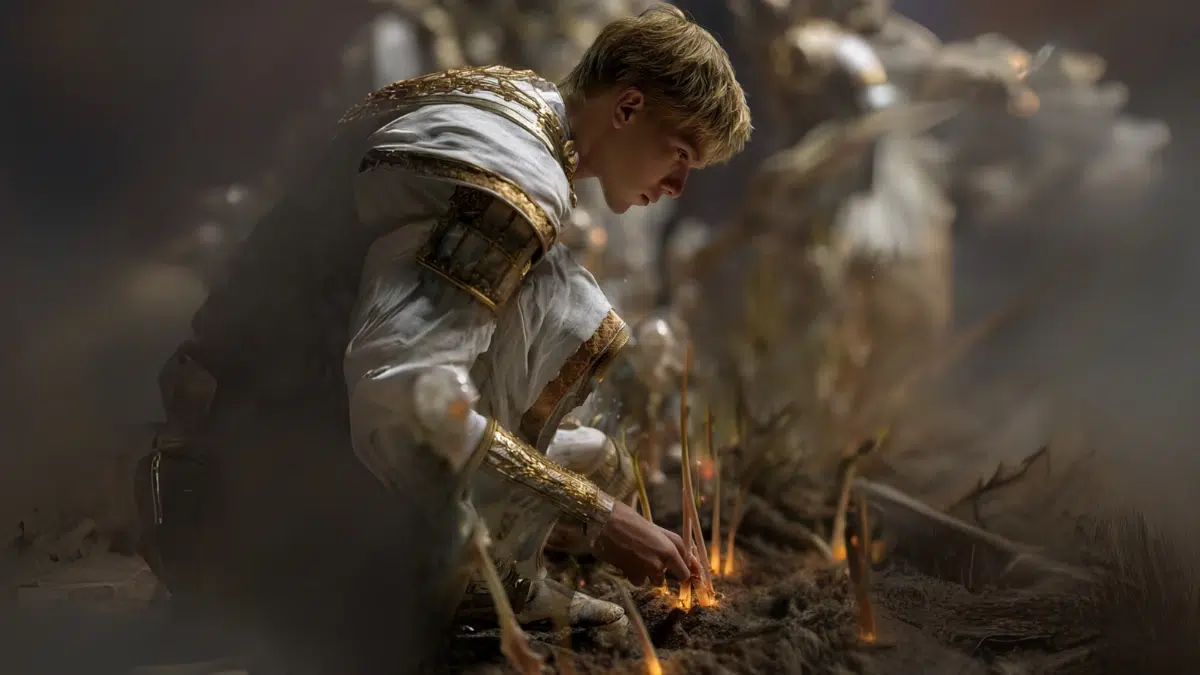
Warriors rise from the earth to found a legendary city.
Cadmus, a Phoenician prince, searches across the world for his sister Europa.
During his journey he arrives in a new land and encounters a fierce dragon guarding a sacred spring. With courage and determination, Cadmus kills the creature.
The goddess Athena then gives him unusual advice. She tells him to plant the dragon’s teeth in the soil.
When Cadmus obeys, armed warriors suddenly rise from the ground. These warriors immediately begin fighting one another. Only a few survive the battle.
The remaining warriors become Cadmus’s allies and help him found the city of Thebes, one of the great cities of Greek legend.
Kvasir – The God Made From Spit (Norse Mythology)

A god born from spit becomes the source of all poetry.
After a long war, the Aesir and Vanir gods decide to make peace.
To seal their truce, they spit into a shared vessel. From this strange mixture the gods create Kvasir, a being of extraordinary wisdom who can answer any question.
Two dwarves later kill Kvasir and collect his blood. They mix it with honey to create the legendary Mead of Poetry.
Anyone who drinks this magical brew gains the gift of poetry, wisdom, and inspired speech.
Skrymir – The Giant Who Tricked Thor (Norse Mythology)
Even the mighty Thor can be fooled.
During a journey to the land of giants, Thor meets a massive traveler named Skrymir. The giant seems harmless but proves impossible to defeat.
Thor tries to strike him with his hammer during the night, yet Skrymir barely notices the blows.
Later, the travelers reach a fortress where Thor faces several strange challenges. Only afterward do the gods learn the truth.
Skrymir is actually the powerful giant Utgard Loki, who used illusions to trick Thor. The hammer strikes were so strong they carved valleys into the earth itself.
Skadi – The Giantess Who Married for Revenge (Norse Mythology)

A giantess arrives in Asgard seeking vengeance, not peace.
After the gods kill her father, the giant Thjazi, Skadi marches to the halls of the gods demanding justice.
Instead of war, the gods offer compensation. They promise she may choose a husband from among them, but she must select him by looking only at his feet.
Skadi hopes to marry Baldr, whose beauty is famous. The most attractive feet belong to another god, however.
Skadi unknowingly chooses Njord, beginning a marriage that soon proves difficult between the mountains and the sea.
Ran – The Sea Goddess Who Catches the Drowned (Norse Mythology)
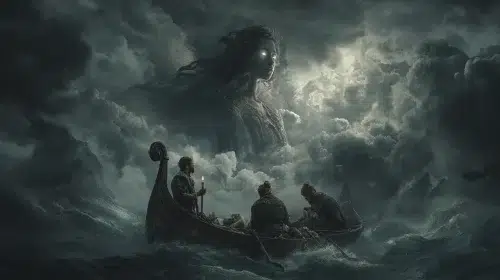
Not every sailor lost at sea simply drowned.
In Norse belief, some were claimed by Ran, a mysterious goddess who rules the dark depths of the ocean.
Ran carries a wide net which she casts into the waves to capture those who fall into the sea. Storms and shipwrecks were often blamed on her reach beneath the water.
Sailors feared her power but also respected it. Many carried gold when traveling across the sea, hoping that if Ran captured them. The treasure might earn them a more peaceful welcome in her underwater hall.
Hymir – The Giant Who Went Fishing with Thor (Norse Mythology)
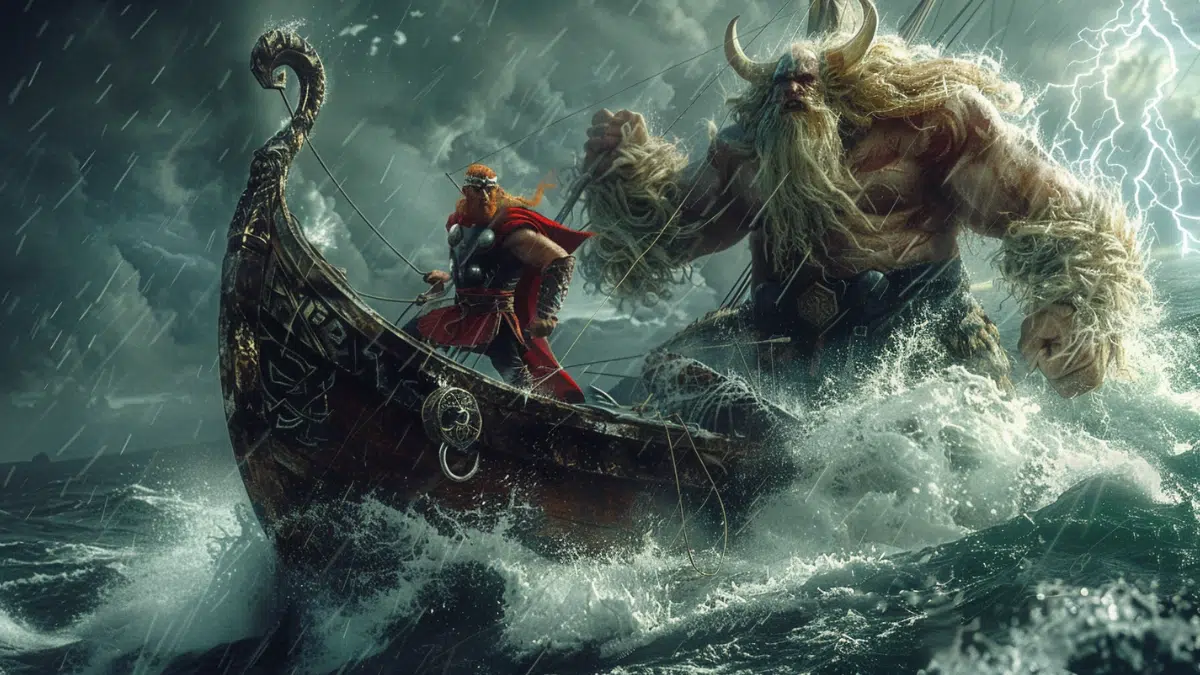
One fishing trip nearly drags the end of the world to the surface.
The thunder god Thor visits the giant Hymir and insists on joining him at sea. Thor prepares a massive bait by using the head of a giant ox.
When the line sinks deep into the ocean, something enormous takes the hook. Rising from the water comes Jormungandr, the gigantic serpent that circles the world.
Thor pulls with all his strength, ready to strike the monster with his hammer.
Hymir panics at the sight and cuts the line, sending the serpent back into the depths. The world survives, but the final battle waits for Ragnarök.
Freyja’s Falcon Cloak – The Feathered Cloak of Shapeshifting (Norse Mythology)
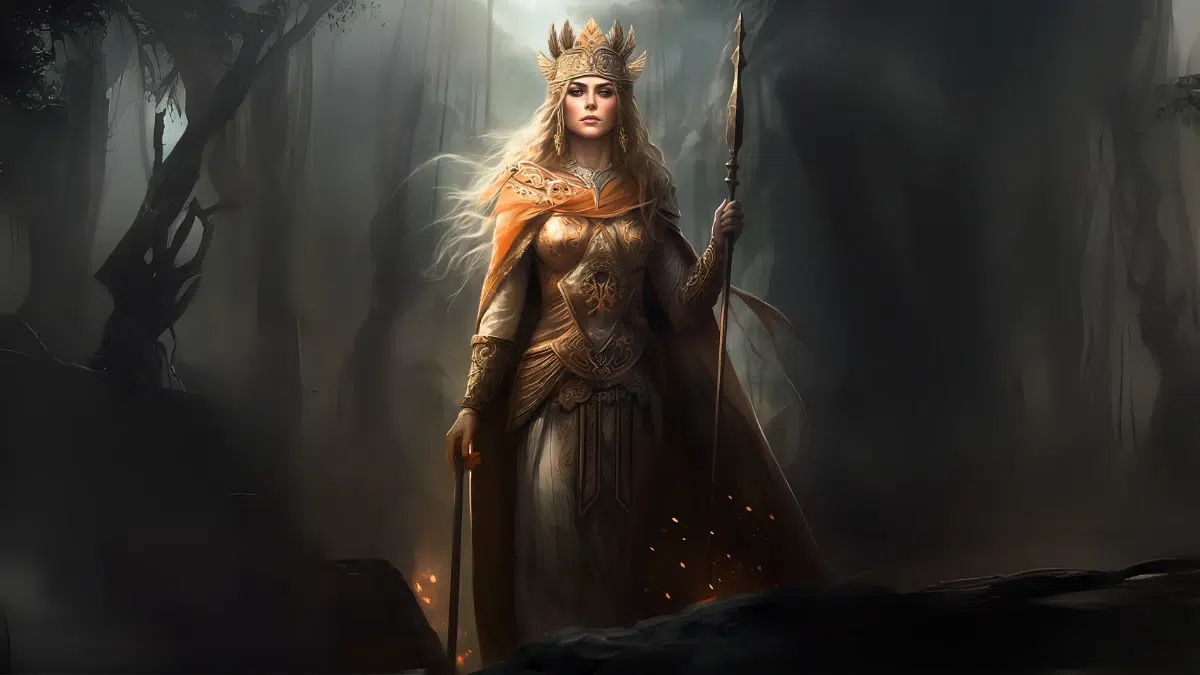
A magical cloak allows a trickster god to fly between worlds.
The goddess Freyja owns a remarkable feathered cloak that grants the power of flight. When worn, the cloak transforms the wearer into a falcon. The trickster Loki often borrows this cloak during dangerous missions.
In one famous tale, Loki uses it to rescue the goddess Idunn after a giant kidnaps her.
By flying swiftly across the skies, Loki manages to escape with Idunn and return the life giving apples to the gods, saving them from growing old and weak.
Macha – The Pregnant Woman Who Cursed a Kingdom (Celtic Mythology)
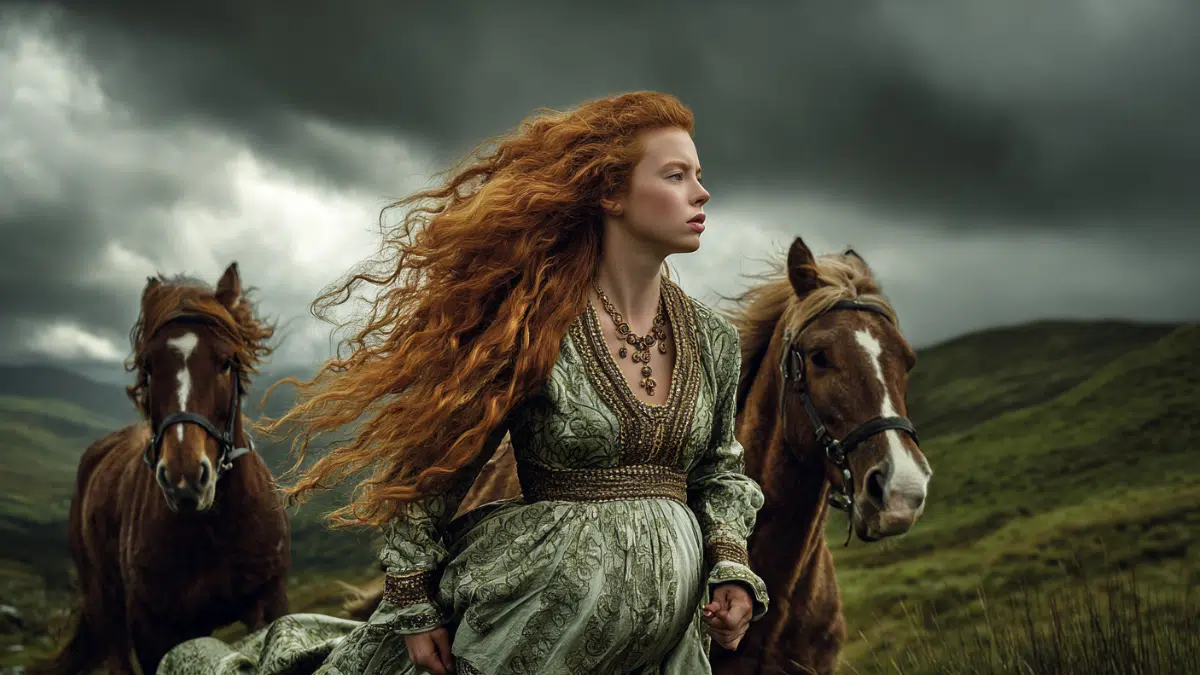
A king’s cruel demand brings a terrible curse upon his warriors.
The mysterious woman Macha lives quietly with her mortal husband in Ulster. Trouble begins when the king boasts that his wife can outrun the royal horses.
The king forces Macha, who is heavily pregnant, to prove it. She races the horses and wins, but the effort causes her to give birth at the finish line.
Furious at the humiliation, Macha curses the men of Ulster. In times of greatest danger, they will suffer the pains of childbirth.
The curse weakens the kingdom for generations, leaving it vulnerable when enemies attack.
Blodeuwedd – The Woman Made of Flowers (Celtic Mythology)
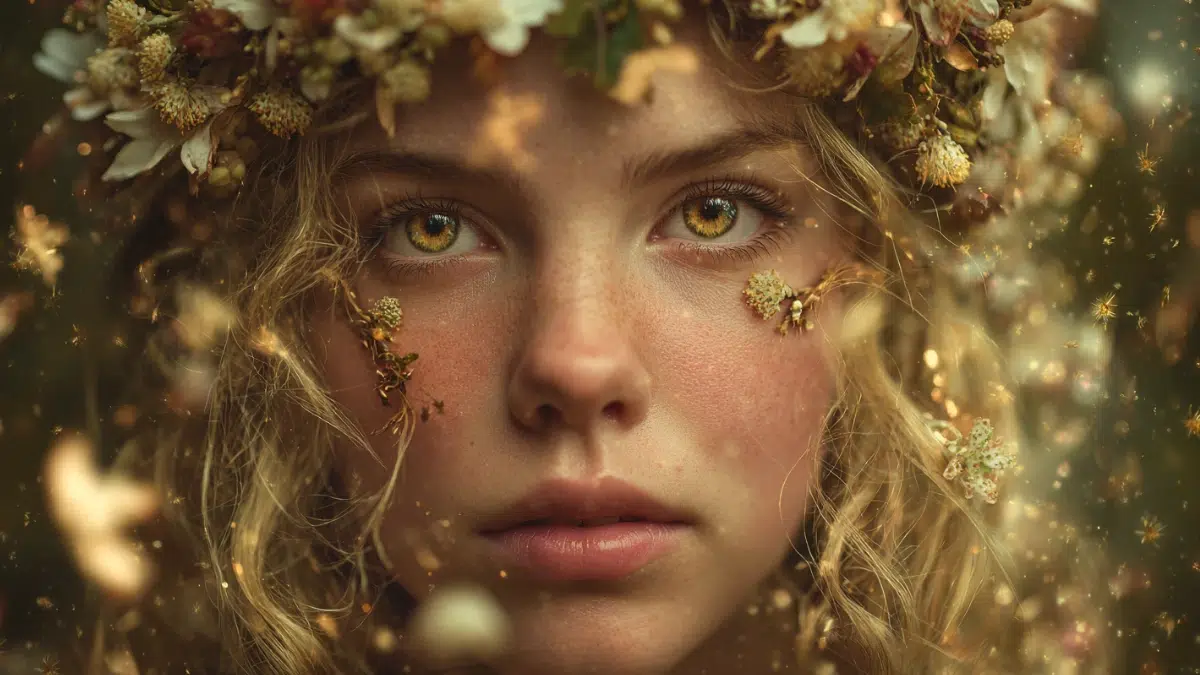
Created by magic and later turned into an owl.
A woman created from flowers becomes the centre of betrayal and transformation.
In Welsh legend, the hero Lleu Llaw Gyffes cannot marry a human woman because of a powerful curse.
To solve this problem, the magicians Gwydion and Math create a wife for him using blossoms from oak, broom, and meadowsweet. They name her Blodeuwedd, meaning “flower face.”
Despite her magical origin, Blodeuwedd falls in love with another man and plots to kill Lleu. The plan fails.
As punishment, Gwydion transforms her into an owl, condemning her to live in darkness, feared and shunned by other birds.
Arawn – The King of the Otherworld (Celtic Mythology)
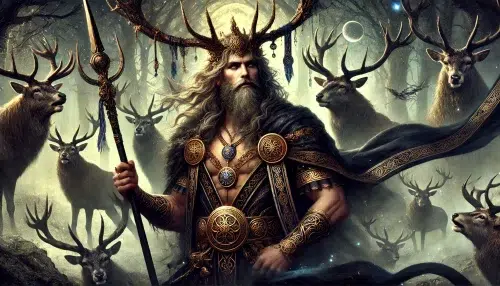
A mysterious king offers a mortal prince a strange bargain.
The ruler of the Otherworld, Arawn, encounters the mortal prince Pwyll while hunting in the forest.
Instead of fighting, Arawn proposes an unusual agreement. The two men exchange places for a year and a day. Pwyll rules the Otherworld while Arawn lives among humans. During that time, Pwyll must defeat Arawn’s rival in battle.
He succeeds and proves himself honourable by respecting Arawn’s queen.
When the year ends, the two rulers part as trusted allies, and Pwyll earns the title “Prince of Annwn.”
The Dagda’s Magic Harp – Music That Commands Emotion (Celtic Mythology)
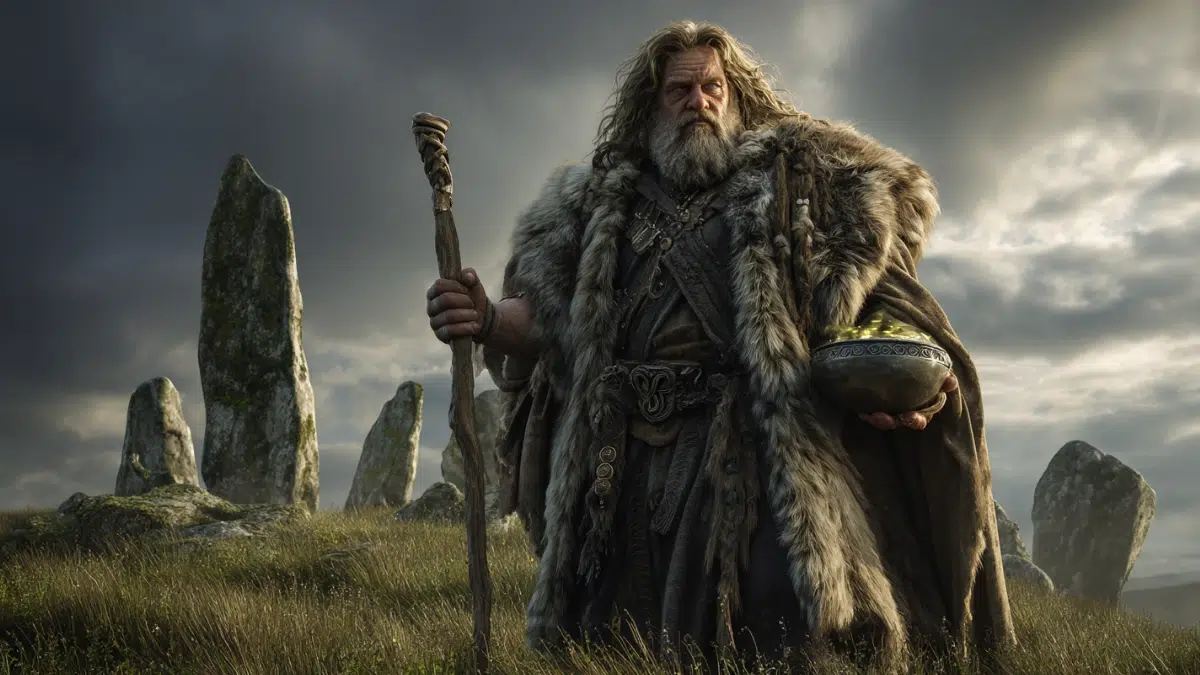
A single harp can command laughter, tears, and sleep.
The powerful god The Dagda owns a magical harp known as Uaithne. This instrument is no ordinary harp. Its music controls the emotions of anyone who hears it.
When enemies steal the harp during a battle, the Dagda tracks it to their hall. He calls the harp back to him, and it flies through the air to his hands.
Once recovered, the Dagda plays three sacred melodies. One brings laughter, another brings sorrow, and the last sends listeners into deep sleep.
Through music alone, the Dagda restores order and defeats his enemies.
The Cailleach – The Winter Hag (Celtic Mythology)

An ancient hag roams the mountains, shaping the land itself.
The powerful figure known as The Cailleach appears across Irish and Scottish folklore as a bringer of winter and storms.
Legends say she forms mountains by dropping stones from her apron while traveling across the land. Rivers and valleys also take shape under her influence.
During the colder months she rules the world with frost, wind, and harsh weather.
When spring arrives, however, her power fades.
Some stories claim she transforms into stone until winter returns, waiting patiently for the season when the land once again falls under her icy control.
Oya – Goddess of Storms and the Marketplace (Yoruba Mythology)
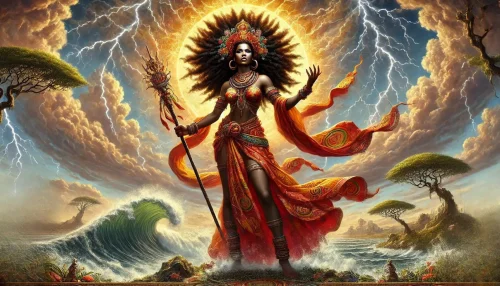
A sudden storm often signals the presence of a powerful goddess.
The fierce deity Oya rules the winds, lightning, and violent storms that sweep across the land. She is also the guardian of cemetery gates, standing between the world of the living and the spirits of the dead.
Oya’s power represents transformation. Storms clear the air, and endings often lead to new beginnings.
In Yoruba belief, she is also closely connected to marketplaces, places where life, trade, and community gather.
Her energy reflects movement and change, reminding people that destruction can sometimes lead to renewal.
Ogun – The God Who Cleared the Path of Creation (Yoruba Mythology)
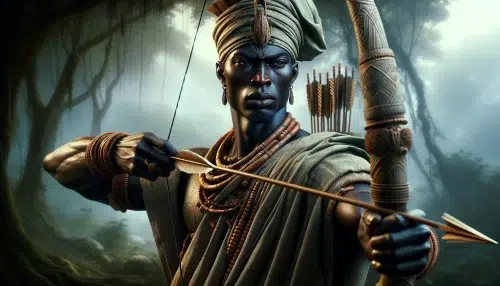
Before the world could take shape, someone had to cut a path through chaos.
That task fell to Ogun, the powerful deity of iron, metal, and craftsmanship. When the gods descended from the heavens to create the world, dense wilderness blocked their way.
Ogun used his iron tools to cut through the tangled forests and clear a path for creation to begin. Because of this act, he became deeply connected to blacksmiths, warriors, and builders.
Iron represents strength, progress, and the ability to shape the world. Ogun’s role reminds people that creation sometimes requires force, courage, and the tools to transform raw nature.
Anansi – The Spider Who Stole Stories (West African Mythology)

Once, all the stories in the world belonged to a single god.
The clever spider Anansi wants those stories for himself and for humanity.
The sky god Nyame agrees to give them to Anansi, but only if he completes several impossible tasks. Anansi must capture dangerous creatures including a powerful python, a fierce leopard, and a swarm of hornets.
Instead of strength, Anansi uses wit and trickery. One by one he outsmarts the creatures and delivers them to Nyame.
Impressed by his cleverness, the sky god grants Anansi ownership of all stories, which is why many West African folktales are still called “Anansi stories.”
Mawu and Lisa – The Twin Creators (West African Mythology)

Creation begins with balance between light and darkness.
In the beliefs of the Fon people of West Africa, the divine twins Mawu and Lisa work together to shape the world.
Mawu represents the moon, gentleness, and cool wisdom.
Lisa embodies the sun, strength, and fiery energy. Together they create harmony in nature.
Some traditions say the twins travel across the sky on a cosmic serpent, forming rivers, mountains, and valleys along the way. Their partnership reflects an important idea in many African traditions: the universe remains stable only when opposing forces remain in balance.
Eshu – The Trickster at the Crossroads (Yoruba Mythology)
A mysterious figure waits where every path meets.
The clever spirit Eshu stands at crossroads, places where choices must be made. Known for mischief and unpredictability, Eshu often creates confusion between people to reveal hidden truths.
In one famous story he walks between two farmers wearing a hat that is red on one side and black on the other. Each farmer later argues about what colour they saw.
Their disagreement proves Eshu’s lesson: people often believe they are right while seeing only part of the truth.
Through trickery and chaos, Eshu reminds humans that perspective and wisdom matter.
Princess Bari – The Abandoned Daughter Who Saved Her Parents (Korean Mythology)
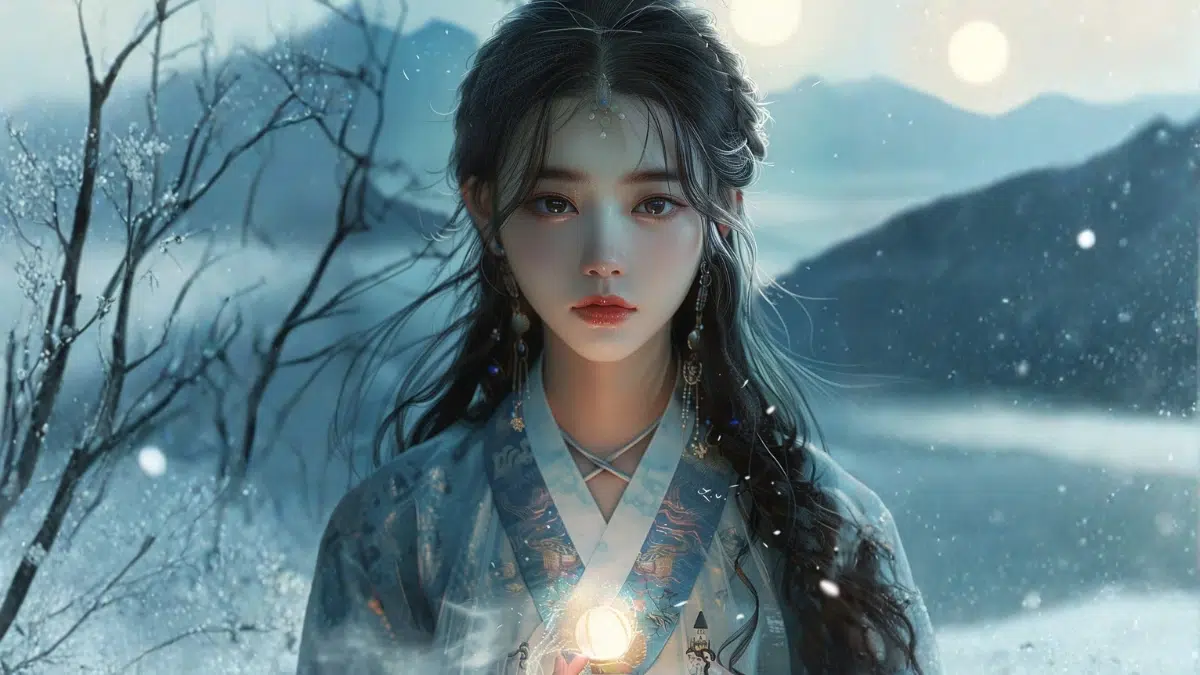
A rejected daughter becomes the hero her family never expected.
In Korean myth, Princess Bari is the seventh daughter of a royal family.
The king wanted a son, so the newborn princess is abandoned shortly after birth. Bari survives and grows into a brave young woman.
Years later, the king and queen fall gravely ill. Only a sacred medicine from the realm of the dead can save them.
None of the other children dare attempt the journey.
Bari travels alone through dangerous lands and the spirit world to obtain the cure. Her sacrifice restores her parents’ lives, and she later becomes a guiding spirit for souls traveling to the afterlife.
Haemosu – The Sun Prince Who Descended from Heaven (Korean Mythology)
A radiant prince descends from the heavens to shape the destiny of a kingdom.
In Korean legend, Haemosu is a divine figure connected to the power of the sun. He arrives from the heavens in a shining chariot drawn by dragons, bringing authority and celestial power to the earth.
Haemosu later meets Yuhwa, the daughter of a river god.
Their union produces Jumong, a legendary hero who becomes the founder of the Goguryeo kingdom.
Through this lineage, Haemosu represents divine ancestry and the belief that great rulers may descend from the heavens themselves.
Dalnim – The Moon Goddess in Isolation (Korean Mythology)
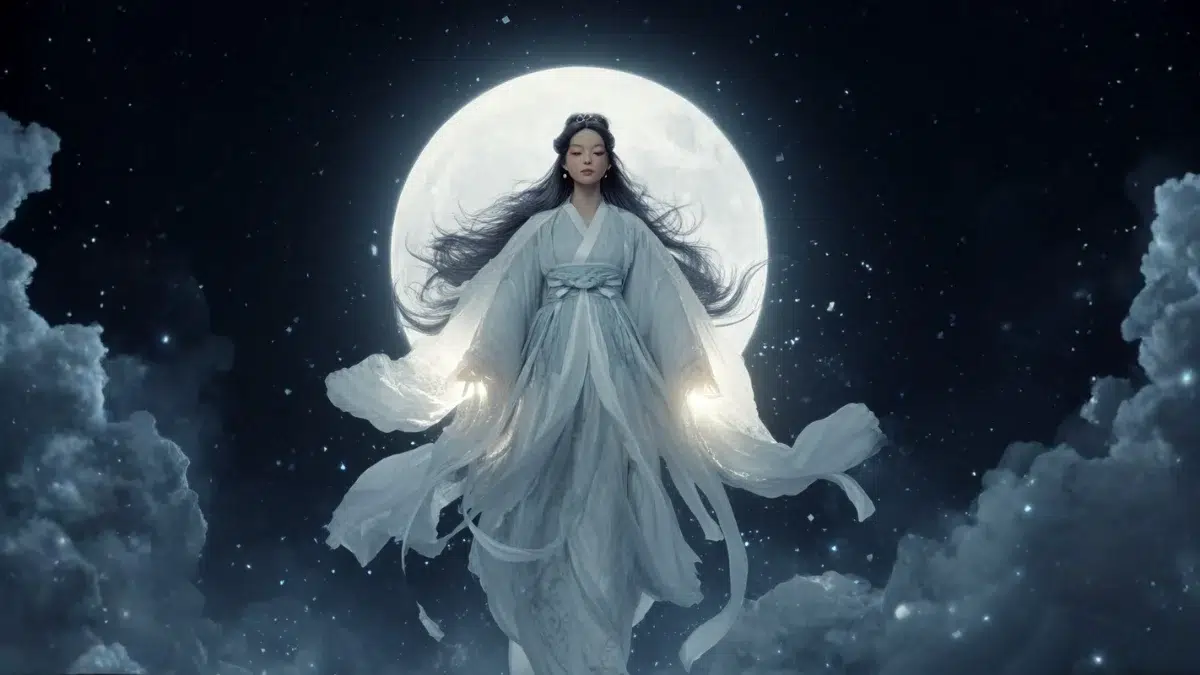
Some gods rule from grand palaces. Others live in quiet solitude.
The mysterious moon goddess Dalnim is said to dwell far from the noise of the world.
Her light shines gently across the night sky, guiding travelers and watching over the earth below. Unlike many mythological figures who seek power or attention, Dalnim remains distant and calm.
The moon’s steady glow reflects patience, reflection, and quiet strength.
In Korean tradition, the moon often symbolizes balance and contemplation. Dalnim’s presence reminds people that not all power is loud.
Sometimes the greatest influence comes from quiet observation and enduring light in the darkness.
Jacheongbi – The Agricultural Goddess Who Revived Her Love (Korean Mythology)
Love and determination turn a mortal woman into a goddess.
The legendary figure Jacheongbi appears in Korean myths connected to farming and fertility.
As a young woman, she falls deeply in love with a man named Mun Do Ryeong. Their relationship faces many trials, including betrayal and death.
When her beloved dies, Jacheongbi refuses to accept the loss. She journeys through the spirit world and confronts powerful forces to restore his life. Her courage and devotion impress the gods.
Because of her determination and connection to the cycles of life, Jacheongbi later becomes a goddess associated with agriculture and the renewal of crops.
Dokkaebi – The Mischievous Goblins (Korean Mythology)

Strange laughter in the night might belong to something not entirely human.
In Korean folklore, Dokkaebi are playful goblin-like spirits known for tricks and strange magic.
Unlike evil monsters, Dokkaebi often enjoy confusing people rather than harming them.
Many stories say they appear carrying magical clubs that can grant wishes or produce treasure. They also challenge travelers to wrestling matches or games.
Honest people may receive rewards, while greedy or dishonest individuals often face humiliation.
Dokkaebi represent the unpredictable side of the spirit world, where luck, wit, and character can change the outcome of an encounter.
The White Hare of Inaba – Saved by the Kindness of Okuninushi (Japanese Mythology)
A wounded rabbit becomes the test of a god’s kindness.
In a famous Japanese tale, the injured White Hare of Inaba is tricked by sea creatures and left suffering on the shore. Several proud princes pass by but offer cruel advice that only worsens the hare’s pain.
The compassionate god Okuninushi treats the animal with kindness. He instructs the hare to bathe in fresh water and rest in soft pollen. The creature heals quickly and rewards Okuninushi with a prophecy.
One day, the god will marry a beautiful princess and become a great ruler of the land.
Konohanasakuya-hime – Burned to Prove Fidelity (Japanese Mythology)
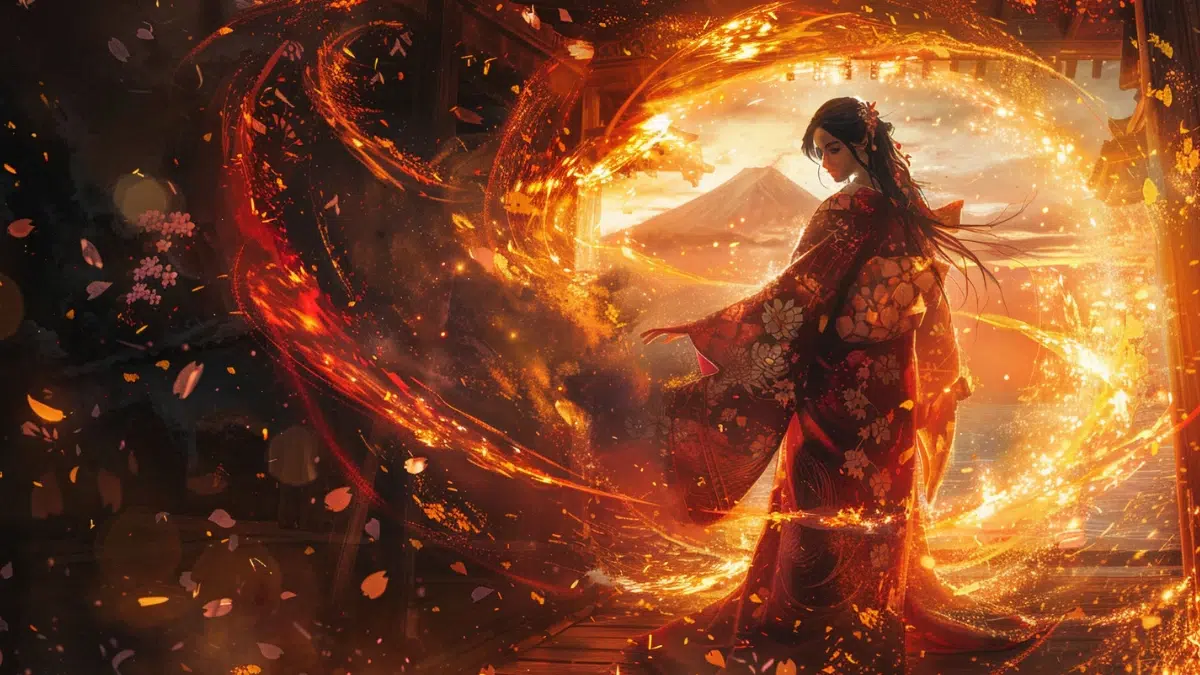
A goddess walks into fire to prove the truth of her child.
The beautiful goddess Konohanasakuya-hime marries the heavenly prince Ninigi.
Soon after their union she becomes pregnant. Ninigi begins to doubt whether the child is truly his.
Deeply offended, Konohanasakuya-hime decides to prove her innocence in a dramatic way. She seals herself inside a hut and sets it on fire while giving birth.
Flames engulf the building, yet she survives and safely delivers her children. The miracle proves her faithfulness.
In Japanese tradition, she becomes closely linked with Mount Fuji and the fragile beauty of cherry blossoms.
Tsukuyomi – Banished for Killing the Food Goddess (Japanese Mythology)
A single act of violence divides the sun and moon forever.
The moon god Tsukuyomi once travels as an emissary for his sister, the sun goddess Amaterasu.
During the visit he meets Uke Mochi, who prepares a feast in an unusual way. She produces food directly from her mouth and body. Tsukuyomi finds the method offensive and reacts in anger.
He kills the goddess on the spot.
Amaterasu is horrified when she learns what happened. Furious at the senseless act, she refuses to ever see Tsukuyomi again. From that moment forward, the sun and moon travel separate paths across the sky, never sharing the same place.
Izanagi – The God Who Journeyed into the Land of the Dead (Japanese Mythology)
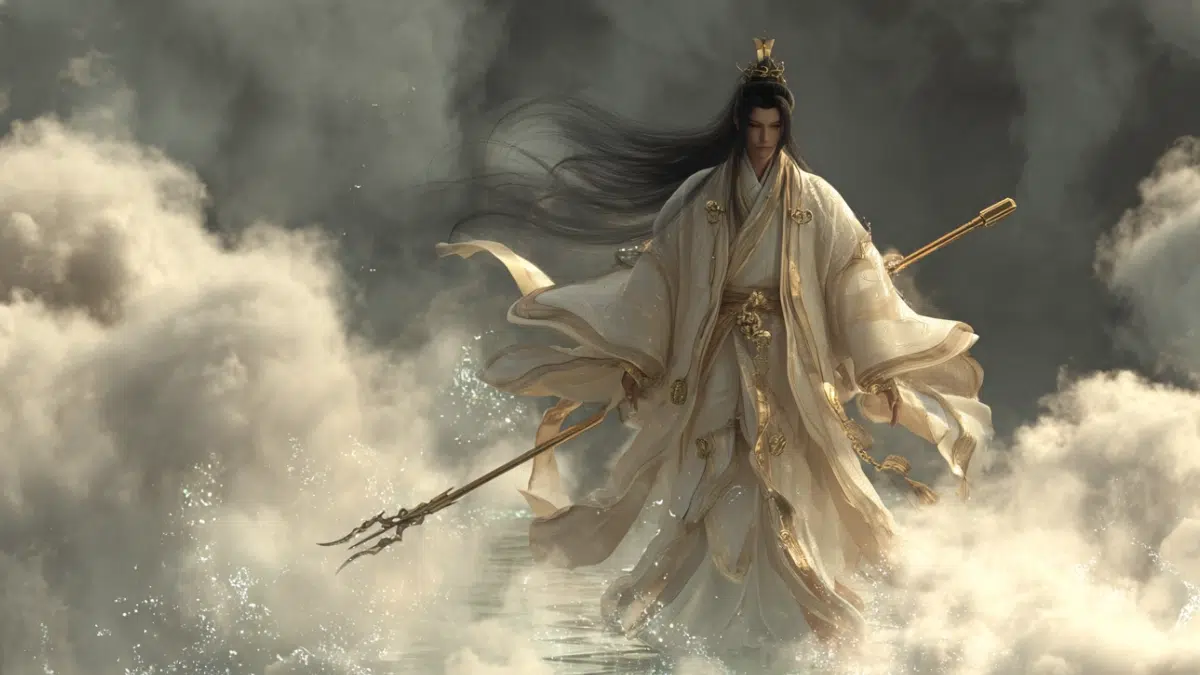
A grieving god travels to the land of the dead and sees something no living being should witness.
After the death of his beloved wife, the creator god Izanagi descends into Yomi, hoping to bring her back.
His wife Izanami warns him not to look at her, but curiosity overcomes him.
When Izanagi lights a torch, he discovers that Izanami’s body has already begun to decay. Horrified, he flees the underworld while angry spirits chase him toward the surface.
After escaping, Izanagi seals the entrance to Yomi with a massive stone. This moment permanently separates the worlds of the living and the dead in Japanese mythology.
The Crane Wife – The Bird Who Became a Woman (Japanese Folklore)
A poor man rescues an injured crane from a trap.
Later, a mysterious woman appears and asks to become his wife. She warns him of one rule: he must never watch her while she weaves.
Soon she begins weaving beautiful cloth that sells for great wealth. But the husband grows curious and secretly looks inside the room.
There he sees not a woman, but the crane he once saved, plucking her own feathers to weave the fabric.
Her secret revealed, she can no longer stay.
The crane spreads her wings and flies away, leaving the man with the memory of the kindness that once brought her to him.
Jingwei – The Bird Who Tried to Fill the Sea (Chinese Mythology)
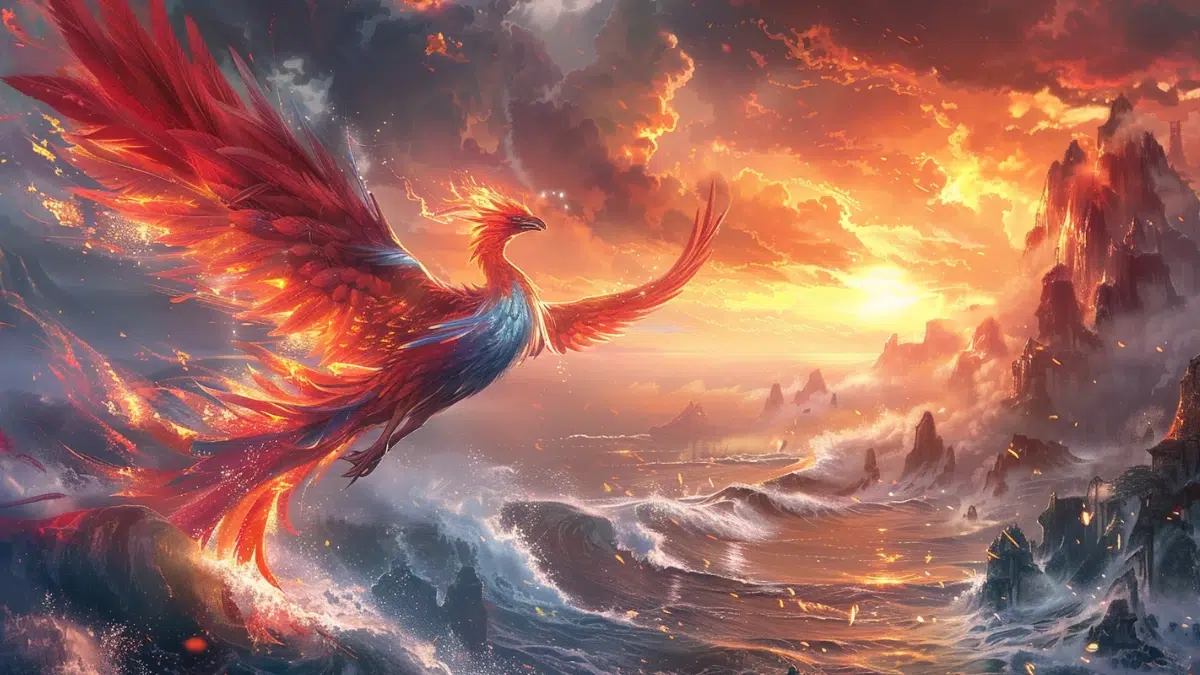
A tiny bird wages an endless battle against the sea.
In Chinese legend, Jingwei is the spirit of a young girl who drowned in the ocean.
Refusing to accept her fate, she transforms into a small bird determined to defeat the waters that took her life. Jingwei gathers twigs and pebbles from distant mountains and drops them into the sea day after day.
Her goal is simple yet impossible: fill the vast ocean until it can never claim another life.
Though the task will never truly end, Jingwei’s story symbolizes determination, resilience, and the refusal to surrender even against overwhelming odds.
The Jellyfish Who Lost Its Bones – The Sea Creature Punished for Failure (Japanese Mythology)
A sea creature once had bones, until a foolish mistake changed its fate forever.
In a curious Japanese legend, the Dragon King of the sea becomes ill and needs the liver of a monkey as medicine.
A loyal turtle is sent to bring the monkey to the underwater palace. The monkey grows suspicious and tricks the turtle by claiming it left its liver on land. The turtle returns empty handed.
Angry at the failure, the Dragon King punishes a messenger, the Jellyfish.
As punishment, the jellyfish has its bones removed. From that moment on, the creature drifts through the ocean soft and shapeless.
Nuwa – The Goddess Who Repaired the Sky (Chinese Mythology)
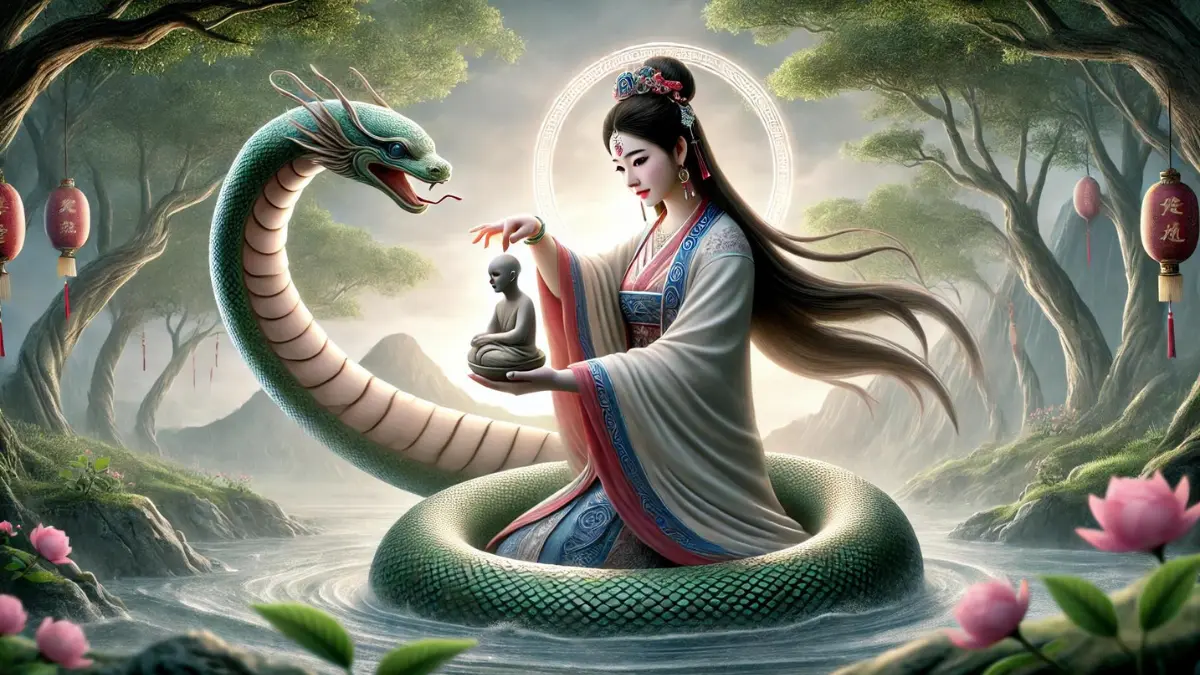
When the heavens shattered, a goddess rebuilt the sky itself.
In Chinese mythology, the creator goddess Nuwa steps in after a cosmic disaster tears the world apart.
A violent battle between powerful beings breaks one of the pillars that holds up the heavens. The sky cracks open and floods pour across the earth.
Determined to save creation, Nuwa melts stones of many colours and uses them to patch the broken sky. She then cuts off the legs of a giant turtle to rebuild the pillars supporting heaven.
Through her actions, balance returns to the world and life continues beneath the restored sky.
Erlang Shen – The God with a Third Eye (Chinese Mythology)
A warrior god sees truths hidden from ordinary eyes.
The powerful deity Erlang Shen is famous for the third eye on his forehead. This supernatural eye allows him to see through illusions and recognize demons hiding among humans.
Erlang Shen serves as a protector who hunts dangerous spirits and restores order when chaos spreads. Many legends also describe his loyal celestial hound that helps him track enemies.
With divine strength, sharp vision, and unwavering discipline, Erlang Shen represents justice and vigilance in Chinese mythology.
Hou Yi – The Archer Who Shot Down Nine Suns (Chinese Mythology)

Ten blazing suns once rose into the sky at the same time.
Their combined heat scorched forests, dried rivers, and threatened to destroy the world.
The gods called upon the legendary archer Hou Yi to restore balance.
Standing on a high mountain, Hou Yi draws his powerful bow and aims at the burning sky. One arrow flies, then another.
Nine suns fall from the heavens, often described as three legged crows that lived within the sun. Only one sun remains to light the world. The land cools, rivers flow again, and humanity survives thanks to the skill of a single archer.
White Buffalo Woman – The Sacred Teacher of the Lakota (Native American Tradition)
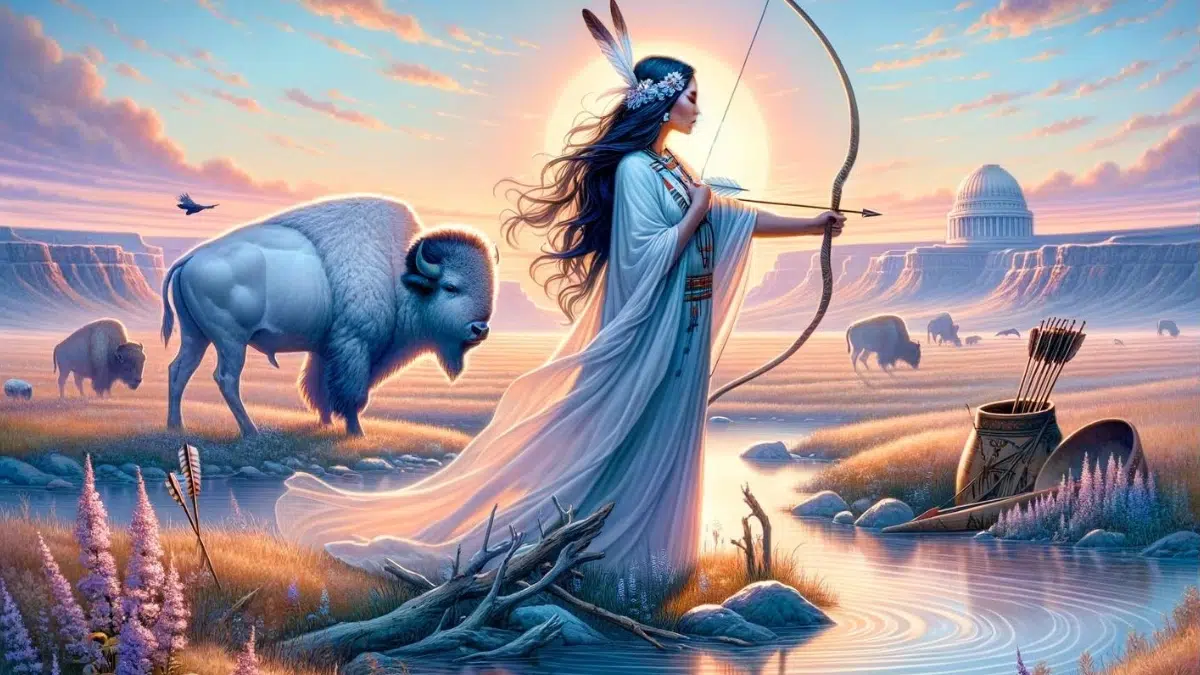
A mysterious woman arrives carrying sacred knowledge for humanity.
In Lakota tradition, White Buffalo Woman appears to a group of hunters during a time of hardship.
One man approaches her with disrespect and is destroyed for his arrogance. The other treats her with honour.
White Buffalo Woman then teaches the people important spiritual ceremonies and gives them the sacred pipe, a symbol of harmony between humans, nature, and the spirit world.
After sharing her wisdom, she transforms into a white buffalo and disappears across the plains. Her story continues to represent renewal, balance, and sacred teachings within Lakota culture.
The Piasa Bird – The River Monster Legend (Native American Tradition)
High on the cliffs above the Mississippi River, a terrifying creature once ruled the skies.
In the legends of the Piasa Bird, this monstrous being is described as a winged creature with a dragon like body, sharp claws, and the head of a predator. According to tradition, it preyed upon people living near the river.
A brave warrior eventually devised a plan to defeat the beast. He allowed himself to be used as bait while hidden hunters waited nearby.
When the Piasa Bird swooped down to attack, the warriors struck it with poisoned arrows, ending the creature’s reign of terror.
Sedna – The Goddess of the Sea and Betrayal (Inuit Mythology)

A betrayed daughter becomes the ruler of the ocean’s depths.
In Inuit tradition, Sedna begins life as a young woman who suffers terrible betrayal.
In many versions of the story, her father throws her into the freezing sea during a desperate escape. As she clings to the side of the boat, he cuts off her fingers to force her back into the water.
The severed fingers transform into seals, whales, and other sea animals. She sinks to the ocean floor and Sedna becomes the powerful goddess of the sea.
Hunters must respect her spirit, because she controls the creatures that sustain life in the Arctic.
Hiawatha – The Hero Who Brought Peace to Five Nations (Native American Tradition)
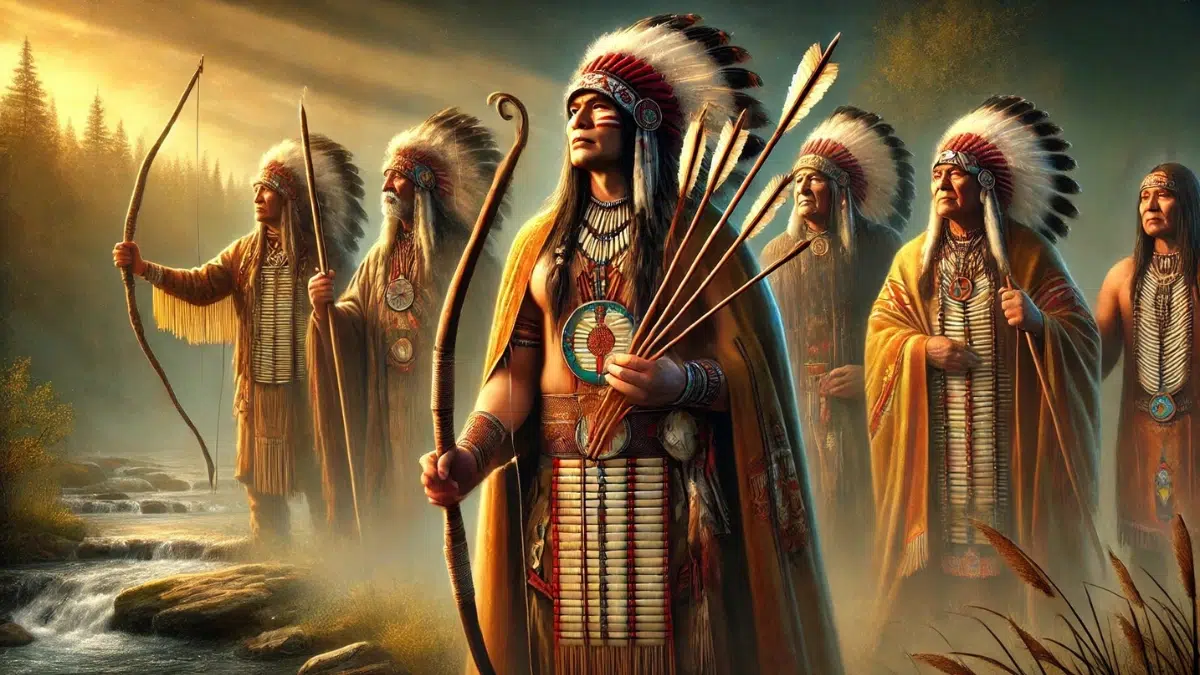
A grieving man becomes the voice of peace for warring nations.
In the traditions of the Haudenosaunee (Iroquois), Hiawatha plays a key role in ending cycles of violence between rival peoples.
Guided by the visionary leader Deganawida, Hiawatha helps unite several nations under a new system known as the Great Law of Peace. His powerful speeches convince leaders to abandon revenge and embrace cooperation.
The alliance eventually forms the Haudenosaunee Confederacy. Through wisdom and diplomacy rather than warfare, Hiawatha becomes remembered as a symbol of unity, healing, and lasting peace.
Chhinnamasta – The Self Decapitated Goddess (Hindu Mythology)
A goddess performs a shocking act to feed those who depend on her.
In Hindu tradition, Chhinnamasta represents sacrifice, power, and the balance between life and death.
In one striking myth, her attendants beg for food while traveling with the goddess.
Without hesitation, Chhinnamasta cuts off her own head. Streams of blood flow from her neck, feeding both attendants while the goddess herself drinks from another stream. Despite the violent image, the story carries deep symbolism.
Chhinnamasta represents the cycle of creation and destruction, showing that life often depends on sacrifice and transformation.
Kartikeya – The Six Headed God of War (Hindu Mythology)
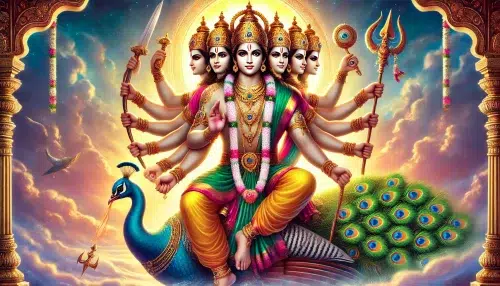
A divine warrior is born to defeat a demon no other god can conquer.
In Hindu mythology, Kartikeya is the powerful son of Shiva and Parvati.
His birth serves a single purpose: defeat the dangerous demon Tarakasura, who can only be killed by Shiva’s son.
Kartikeya appears with six heads, allowing him to see in every direction during battle. Raised among divine beings and trained for war, he becomes a brilliant commander of the gods’ armies.
In the final battle, Kartikeya confronts the demon and defeats him, restoring balance and protecting the heavens.
Shani – The Planet Who Brings Justice (Hindu Mythology)
A silent god watches human actions and delivers justice without mercy.
In Hindu tradition, Shani represents discipline, karma, and the consequences of human behaviour.
Associated with the planet Saturn, Shani moves slowly across the sky, symbolizing the gradual but unavoidable arrival of justice. His influence is often feared because he brings hardship, delays, and difficult lessons. Yet his role is not cruelty.
Shani ensures that actions carry consequences. Those who live honestly and patiently can emerge stronger from his trials.
In this way, Shani serves as a cosmic judge who restores balance to the universe.
Ganga – The River Who Fell from Heaven (Hindu Mythology)
A sacred river once flowed through the heavens before reaching the earth.
In Hindu tradition, the goddess Ganga descends from the sky to bring life to the world.
A king named Bhagiratha performs long penance to ask the gods for help cleansing the ashes of his ancestors.
The gods agree to release Ganga from the heavens, but her powerful waters would destroy the earth if she fell unchecked.
The god Shiva catches the rushing river in his tangled hair, slowing the flow before allowing it to descend gently to the land.
The Bennu Bird – The Prototype of the Phoenix (Egyptian Mythology)
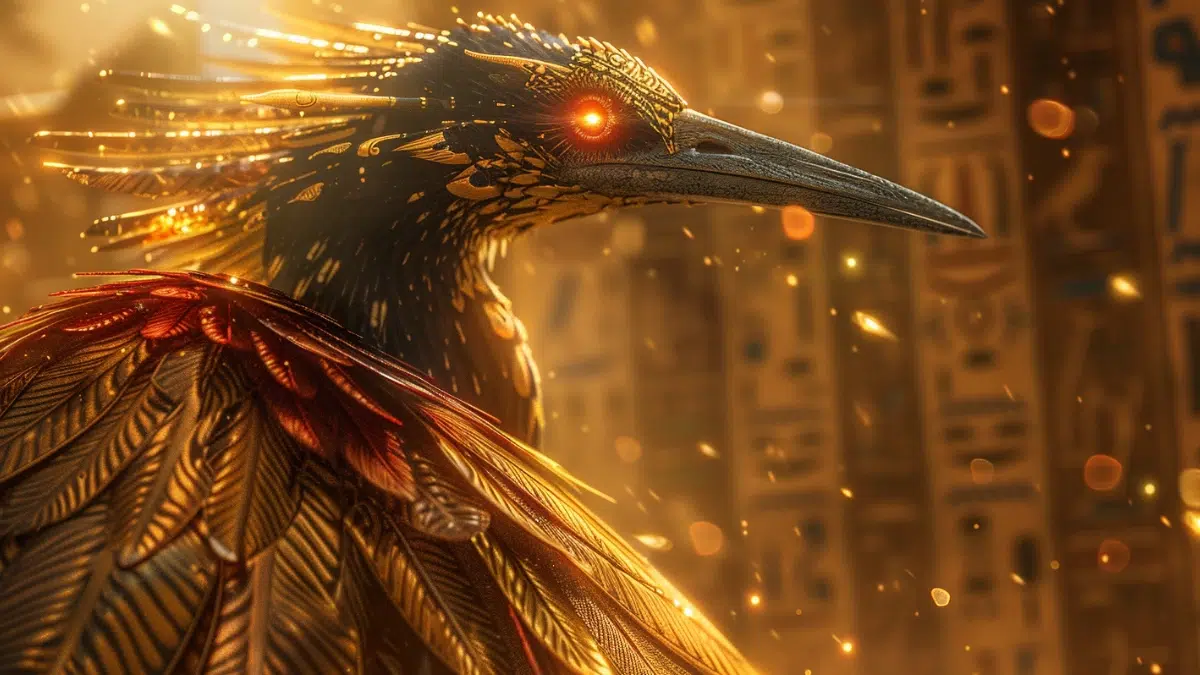
Long before the legend of the phoenix, an ancient Egyptian bird symbolized rebirth.
The sacred Bennu is closely connected to creation and renewal.
According to Egyptian belief, the Bennu appears at the beginning of the world, landing on the first mound of land that rises from the primordial waters.
The bird is often linked with the sun god Ra and the cycle of the rising sun.
Over time, stories describe the Bennu renewing itself and symbolizing rebirth after destruction.
Many historians believe this myth later influenced the famous Greek legend of the phoenix. The bird that burns and rises again from its own ashes.
Nut – The Sky Goddess Who Swallowed the Sun Each Night (Egyptian Mythology)
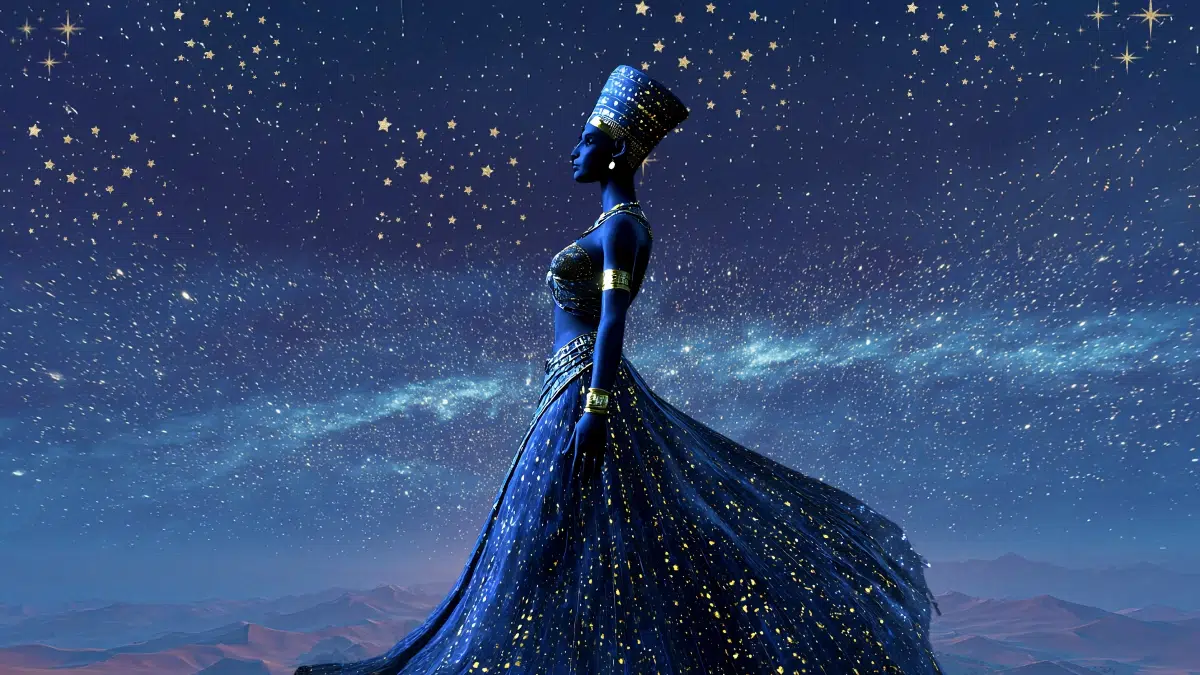
Each evening the sun disappears into the body of a goddess.
In Egyptian mythology, the sky goddess Nut stretches across the heavens, forming the arch of the sky above the earth.
As the day ends, the sun god Ra travels across the sky and enters Nut’s mouth at sunset.
Throughout the night he journeys through her body across the heavens. At dawn, Nut gives birth to the sun once again, allowing a new day to begin.
This daily cycle helped ancient Egyptians explain the movement of the sun and symbolized renewal, death, and rebirth in the natural world.
Khonsu – The Moon God Who Won a Game of Time (Egyptian Mythology)
A clever moon god once gambled with time itself.
In Egyptian myth, the moon god Khonsu plays a game of chance with the sky goddess Nut and the sun god Ra.
At the time, Nut is forbidden from giving birth on any day of the year.
Khonsu challenges the other gods to a game and wins small portions of their light. Using these winnings, he creates five additional days that do not belong to the original calendar.
Nut is finally able to give birth during these extra days.
From this clever act come several important gods, including Osiris, Isis, Seth, Nephthys, and Horus the Elder.
Set vs Horus – The Divine Court Battle (Egyptian Mythology)
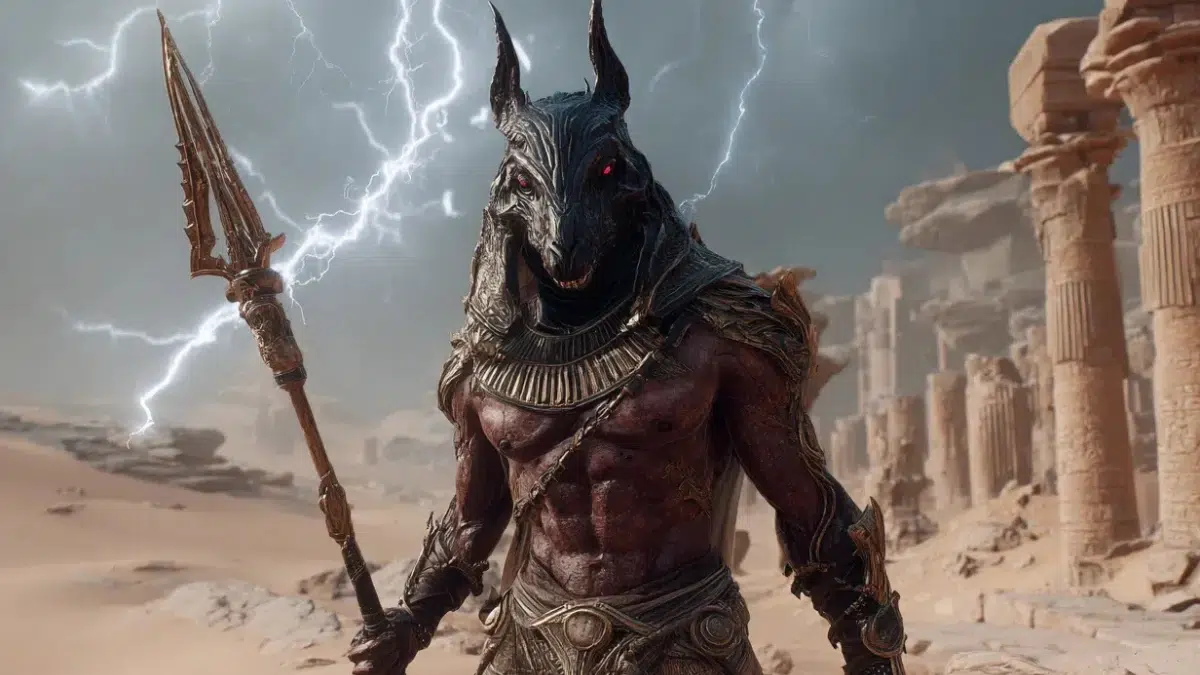
A murder leads to one of the longest rivalries in Egyptian myth.
After the god Osiris is killed by his brother Set, the throne of Egypt becomes the subject of a bitter dispute.
Osiris’s son Horus claims the throne as rightful heir. Set refuses to surrender power. The gods hold a long series of trials and contests to decide the ruler.
These challenges include battles, races, and clever tricks meant to prove strength and wisdom. Eventually the divine court rules in favour of Horus.
He becomes the rightful king of Egypt, while Set remains a powerful but dangerous force within the cosmic order.
Sekhmet – The Goddess Who Nearly Destroyed Humanity (Egyptian Mythology)
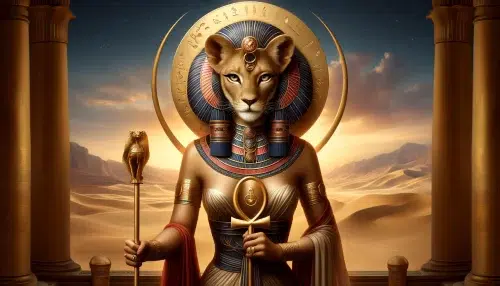
One goddess nearly wiped out humanity in a storm of divine fury.
When humans begin to rebel against the sun god Ra, he sends the fierce lion headed goddess Sekhmet to punish them.
Sekhmet unleashes terrible destruction across the land, hunting down those who defy the gods.
Her rage grows so powerful that she refuses to stop. Fearing the complete destruction of humanity, Ra devises a clever plan.
The gods pour vast quantities of beer dyed red to resemble blood across the fields.
Sekhmet drinks the liquid, becomes intoxicated, and falls asleep. Humanity survives because the goddess’s fury is finally subdued.