Women in Archery in Different Cultures
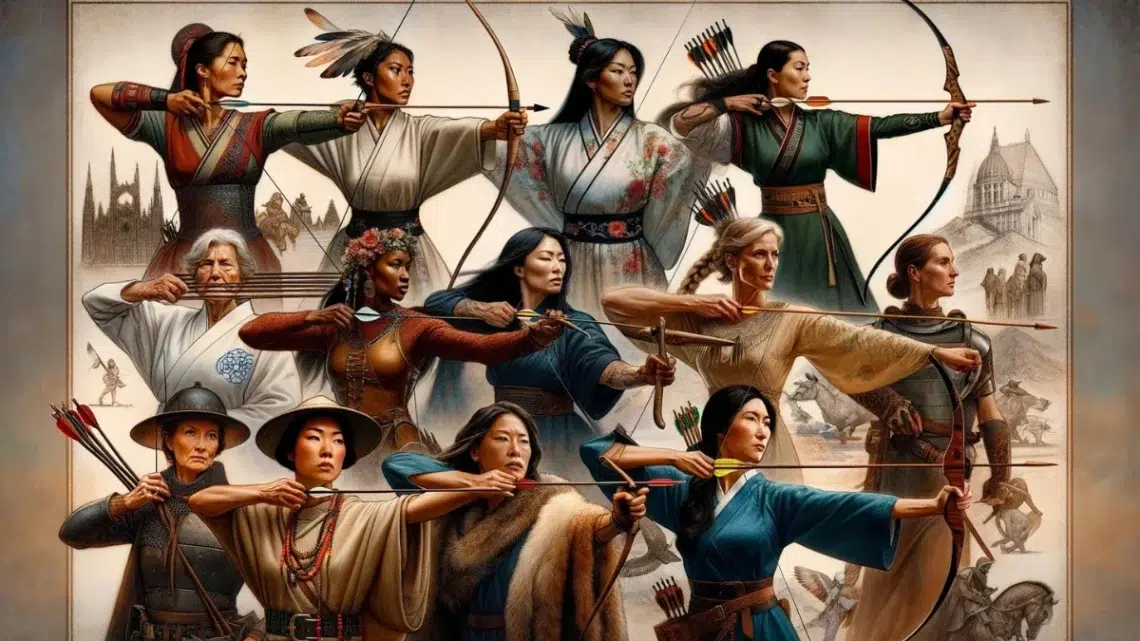
The role of women in archery, an ancient and revered sport, has long been associated with strength, skill, and precision.
While historically dominated by men, women in archery across different cultures have evolved significantly over time.
Let’s explore the multifaceted role of women in archery in history and mythology.
Introduction to Women in Archery
The role of women in archery across various cultures holds significant historical and cultural importance.
As it reflects the traditional values, gender roles, and sporting achievements within diverse societies.
Archery has deep roots in the cultural fabric of many societies. Women have played integral roles in this ancient and revered sport.
In several cultures, archery was not only a means of warfare or hunting but also a symbol of power and skill.
Women would demonstrate remarkable prowess in this discipline.
Their participation in archery not only challenges traditional gender roles but also showcases the empowerment of women archers.
Women in Archery Roles in Greek Mythology
Women’s roles in archery vary across cultures, each with unique history and importance.
They show not only archery’s sport and combat sides but also its cultural and spiritual aspects.
In ancient civilizations, archery was often a skill associated with hunting and warfare, realms typically dominated by men.
Women archers in ancient civilizations and mythology hold significant roles. Often symbolizing strength, protection, and skill.
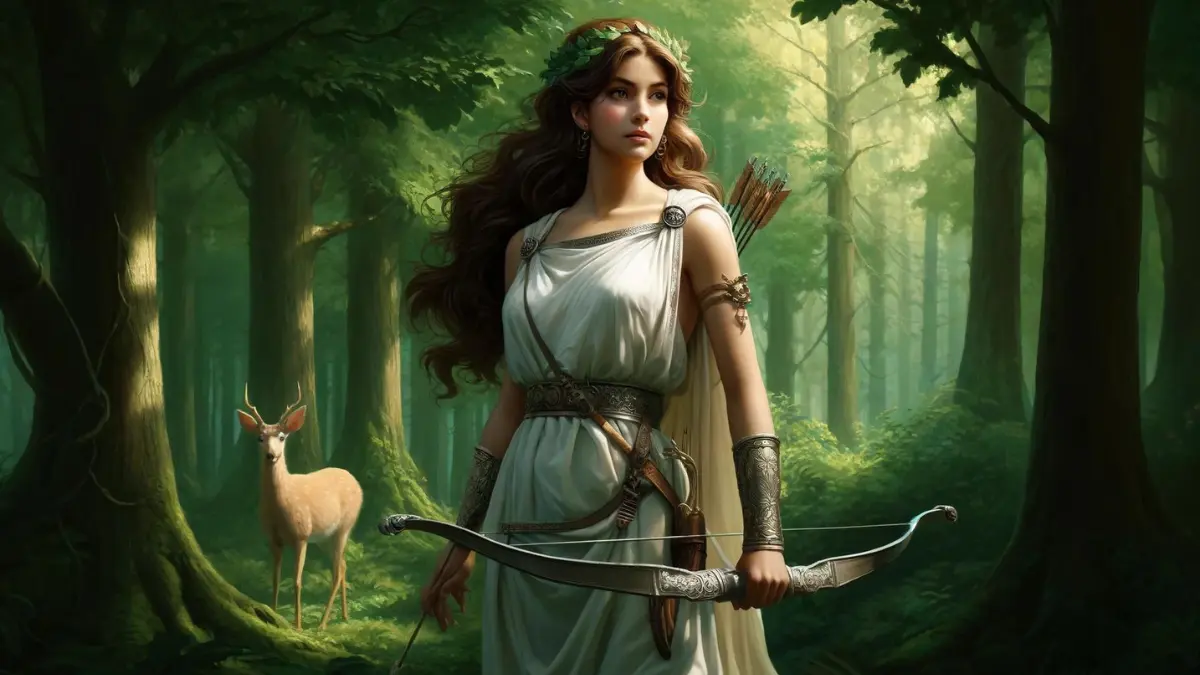
Artemis – Goddess of Hunting
As Greek goddess of the hunt and nature, is revered for her hunting prowess and connection to nature.
She always carries a bow and arrows, showing her skill in archery.
As a powerful goddess, Artemis protects animals and the wilderness. She also protects the young and vulnerable and helps women during childbirth.
Artemis leads a group of nymphs in the forest. They enjoy hunting and exploring together.
Many people see her as a symbol of strength and independence. She is a strong and influential figure who commands respect and admiration.
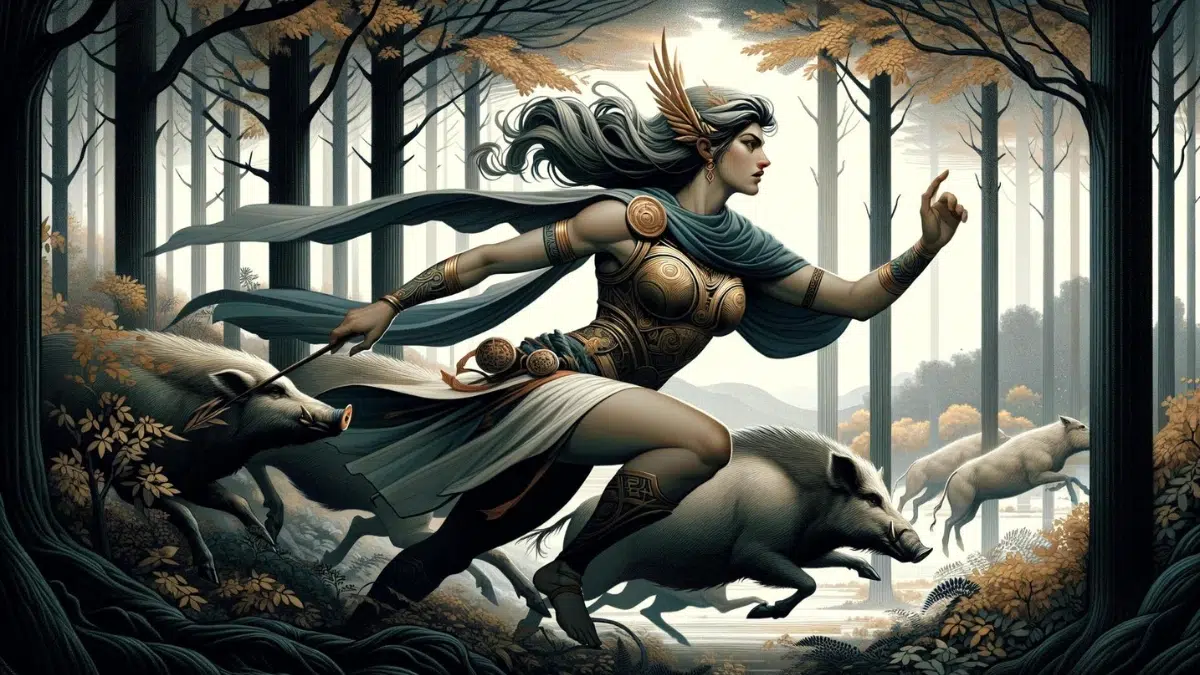
Atalanta
Atalanta is a famous mortal hunter known for her incredible skills with a bow and arrow and her exceptional athletic ability.
In one great act, she joins the hunt for the Calydonian Boar, a fierce animal that many hunters tried to capture.
Atalanta is the first to strike the boar, earning much praise.
The story highlights themes of competition, equality, and prowess in archery.
Atalanta is celebrated figure of female strength and independence.
As an exceptional runner, she would race against suitors who would want to marry her, beating them with her speed.
People admire Atalanta for her bravery, speed, and strength. She stands out as a powerful woman in Greek myths.
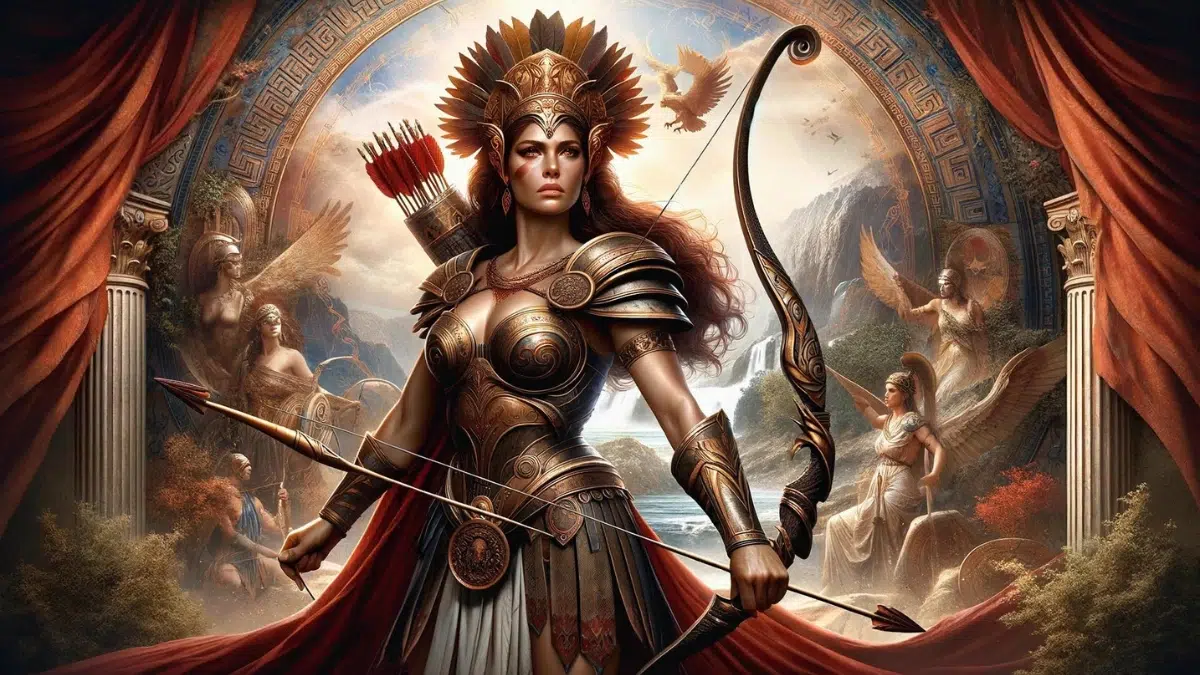
Amazon Women
In Greek mythology, Amazon women are famous warriors known for their skills with a bow and arrow.
They come from a society where women lead, fight in battles, and make important decisions.
The Amazons are brave and independent, living without the influence of men.
They show great strength and courage in many stories, fighting against Greek heroes and often earning their respect.
These powerful women symbolize freedom and strength, inspiring many with their fierce independence and mastery of archery.
Learn more about other women in Greek Mythology:
- Legacy of Archers: Women in Greek Mythology
- Hippolyta: Queen of the Amazons in Greek Mythology
- Penthesilea: Amazon Queen Who Died in Trojan War
- Antiope: Amazon Warrior & Daughter of Ares
Women in Archery in Other Mythologies
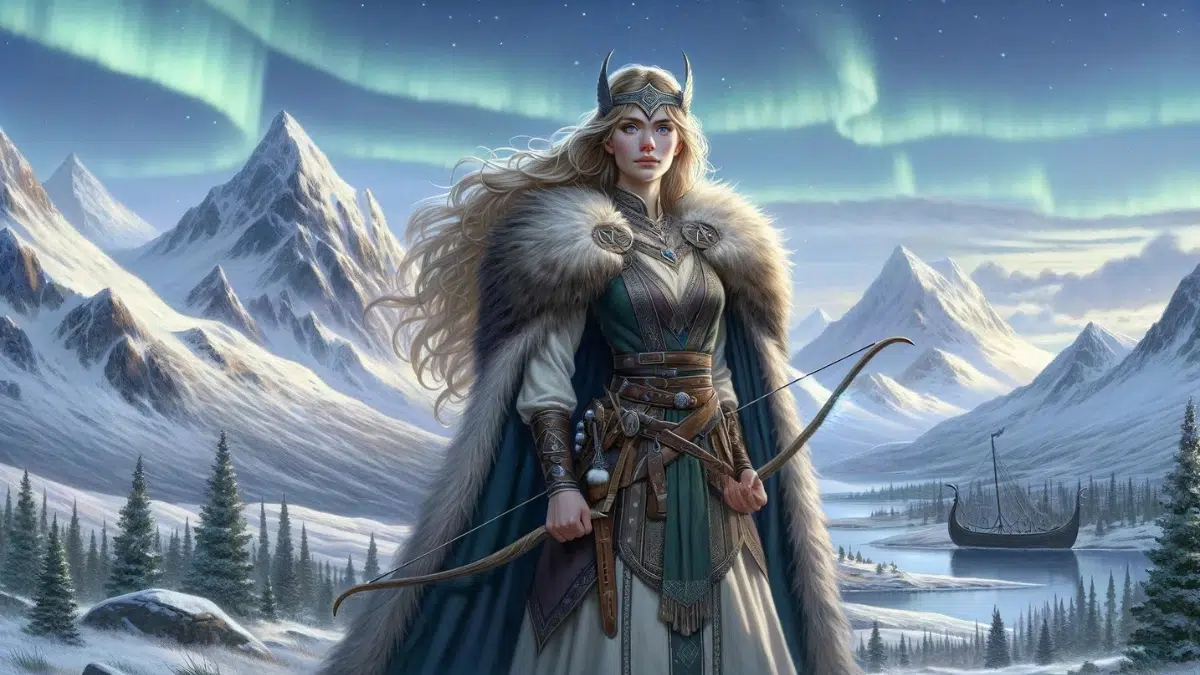
Skaði – Goddess of Winter and Hunting
Skaði is a Norse goddess known for her expertise in skiing and archery.
In Norse mythology, she is a symbol of strength and independence.
After her father’s death, Skaði picks up a bow, ready to seek justice.
This act shows her determination and bravery.
She also negotiates with the gods, proving her intelligence and strong will.
Skaði chooses to live in the mountains where she hunts with her bow.
Embracing a life that showcases her fierce independence and skills as an archer.
Learn more about other women in Norse Mythology:
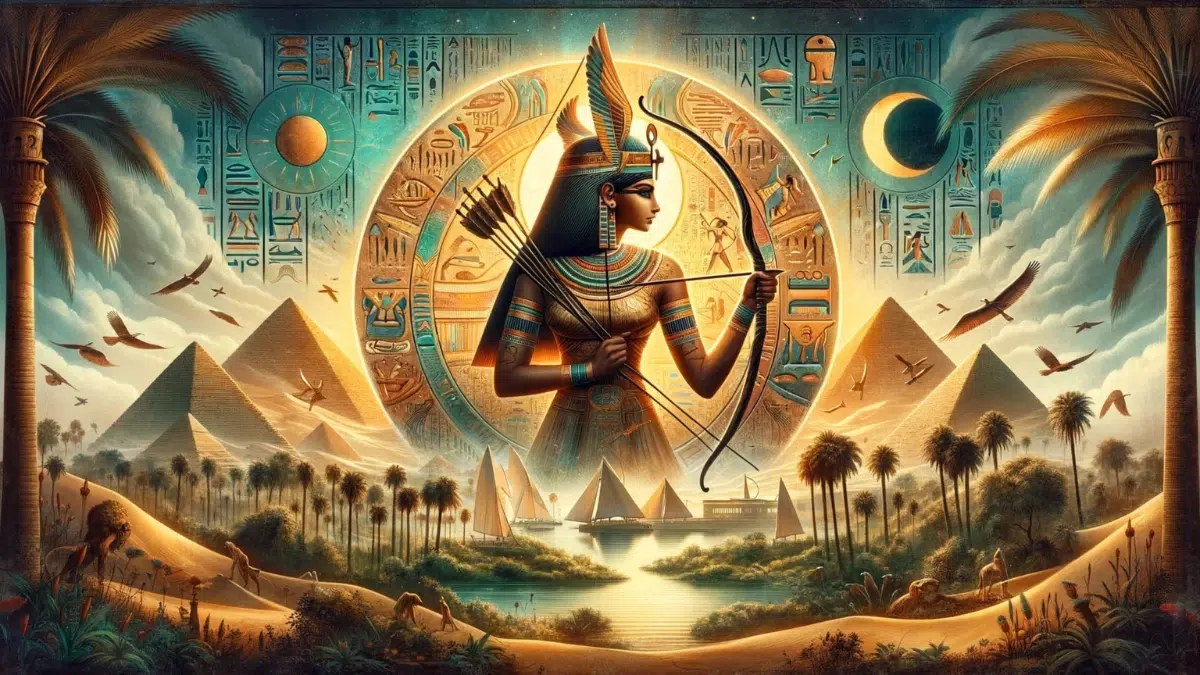
Neith – Goddess of War and Hunting
Neith is an ancient Egyptian goddess known for her skills in war and hunting with a bow and arrow.
She represents strength and protection. As a creator goddess, she made the world using her arrows of sunlight.
Neith is often shown wearing a red crown and holding a bow, ready to defend the pharaohs and their land.
People admired her as a powerful and wise woman who could handle any challenge.
Neith’s worship dates back to the early dynastic periods.
This highlights her longstanding significance as a warrior goddess.
Neith’s role as a protector and skilled archer made her a revered figure in Egyptian culture.
Learn more about women in other Mythologies:
- Diana: Goddess of Hunt in Roman Mythology
- Boudica: Celtic Warrior Queen Who Defied Rome
- Scáthach – Mystic Warrior Goddess of Celtic Lore
Asian Cultures of Women in Archery
Historical records and Asian folklore from Japan, China, Korea and India include stories of female archers.
In Japan, onna-bugeisha (female warriors) would train in kyudo (the way of the bow) and were part of Japan’s bushi (warrior) class.
They could defend their homes and honour on the battlefield.
Further showcasing the integration of martial skills and the art of war in women’s roles.
Historical Asian cultures celebrate women archers, both in legends and in actual historical records.
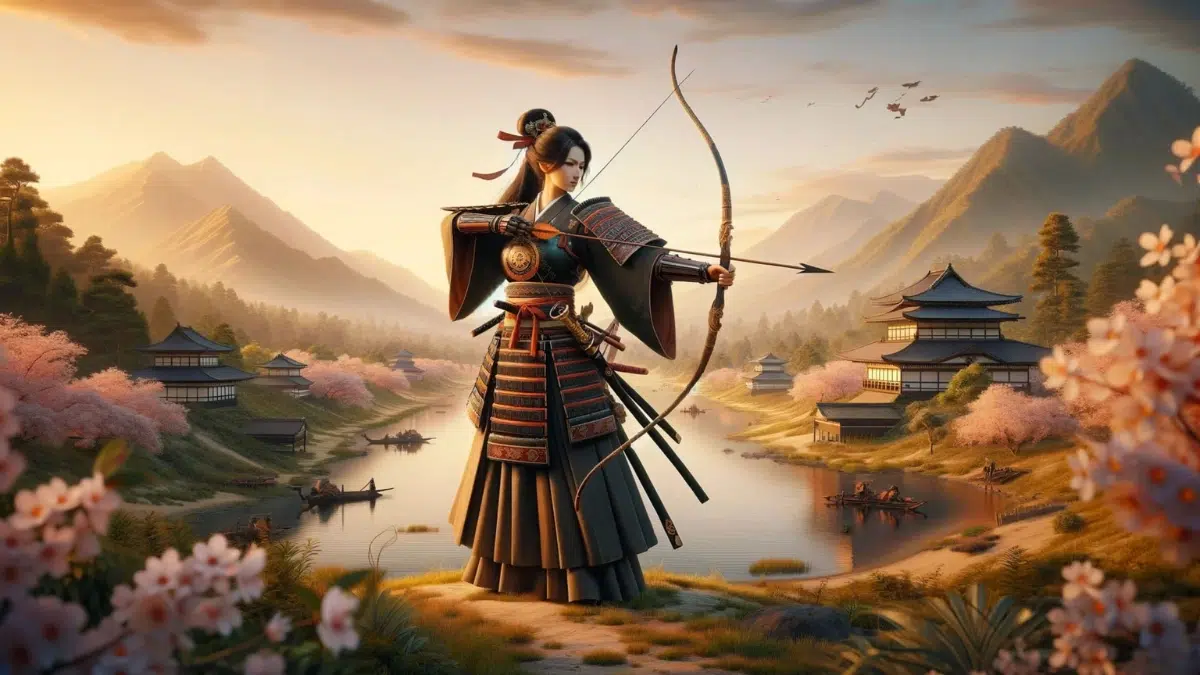
Tomoe Gozen – Legendary Samurai
Tomoe Gozen is a legendary female samurai from 12th-century Japan.
She celebrated for her mastery of the bow and arrow and the sword.
She fights in the Genpei War, a conflict between the Taira and Minamoto clans, where she is known for her incredible bravery and strength.
Tomoe leads troops into battle, often being the last to leave the field.
She is famous for her duel with a fearsome warrior, whom she defeats, proving her skill and courage.
Tomoe Gozen stands out as a powerful symbol of a strong woman excelling in a male-dominated field.
Her story inspires many with her heroic acts and leadership.
She is celebrated in the Japanese epic, “The Tale of the Heike,” for her martial prowess.
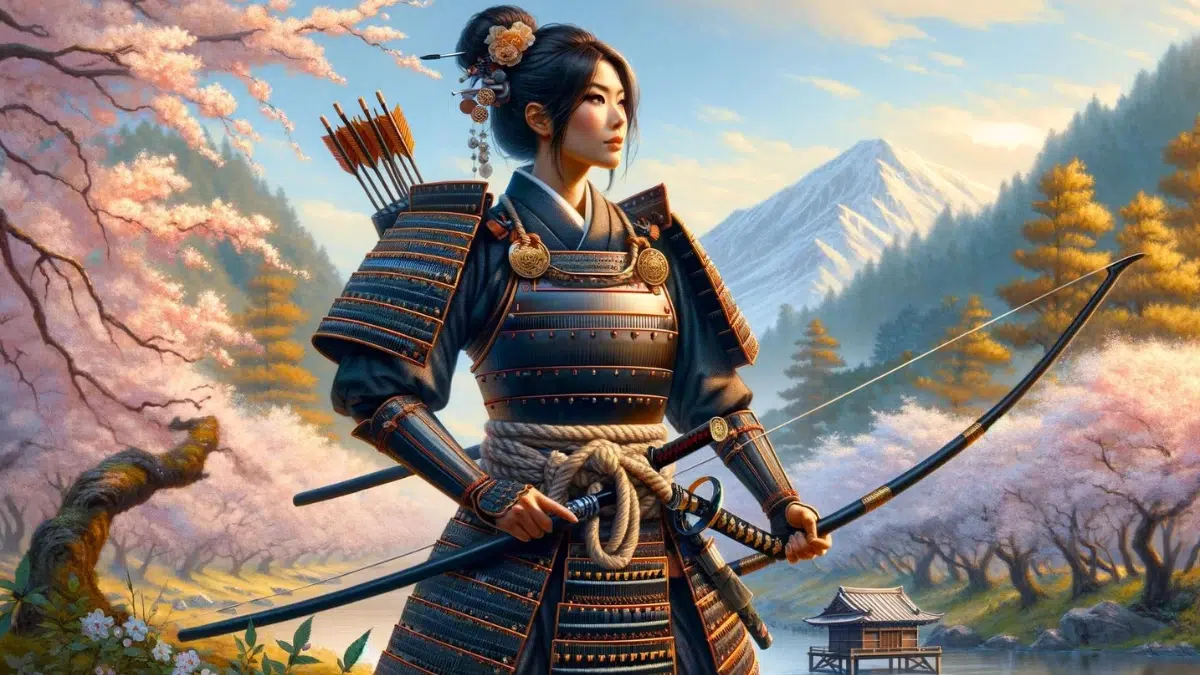
Nakano Takeko
Nakano Takeko is a female samurai in Japan, known for her exceptional skills with a bow and arrow.
During the Boshin War, she leads a group of female warriors into battle, showing remarkable bravery and leadership.
Takeko is famous for her courage, fighting fiercely to defend her clan.
She chooses to fight on the front lines, demonstrating her strength and determination.
Nakano Takeko remains a powerful symbol of female valor and skill in archery.
Her legacy inspires many, showing that women can excel in roles traditionally held by men.
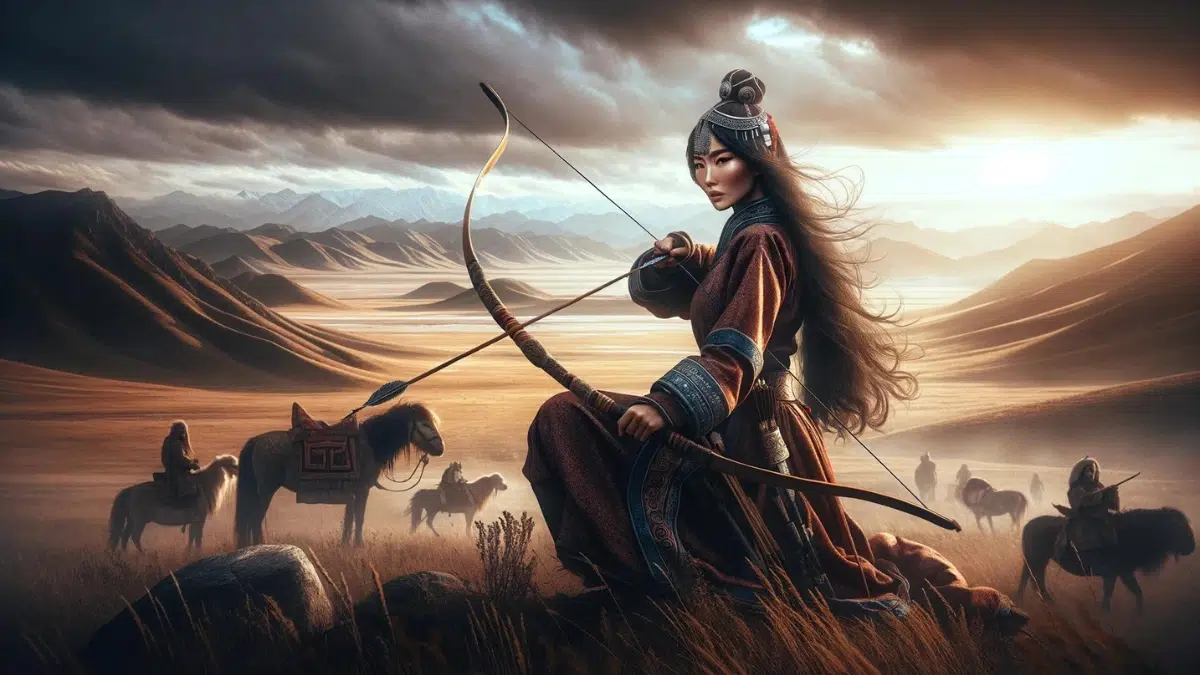
Khutulun
Khutulun is a Mongolian warrior princess and a cousin of Kublai Khan, known for her exceptional skills in wrestling and possibly archery, as common in Mongolian culture.
In the 13th century as a key military figure, she helps her father in many battles, demonstrating her strength and strategic mind.
Marco Polo and other historical accounts describe her as unbeatable in wrestling.
Khutulun insists that any man wishing to marry her must defeat her in wrestling.
She remains undefeated, winning horses from each challenger.
This powerful woman is celebrated for her physical prowess and independence, challenging traditional roles and showing that women can stand equal in strength and leadership.
Her story inspires many as a symbol of female empowerment.
This is a testament to her physical prowess and mastery in archery given its importance in Mongolian culture.
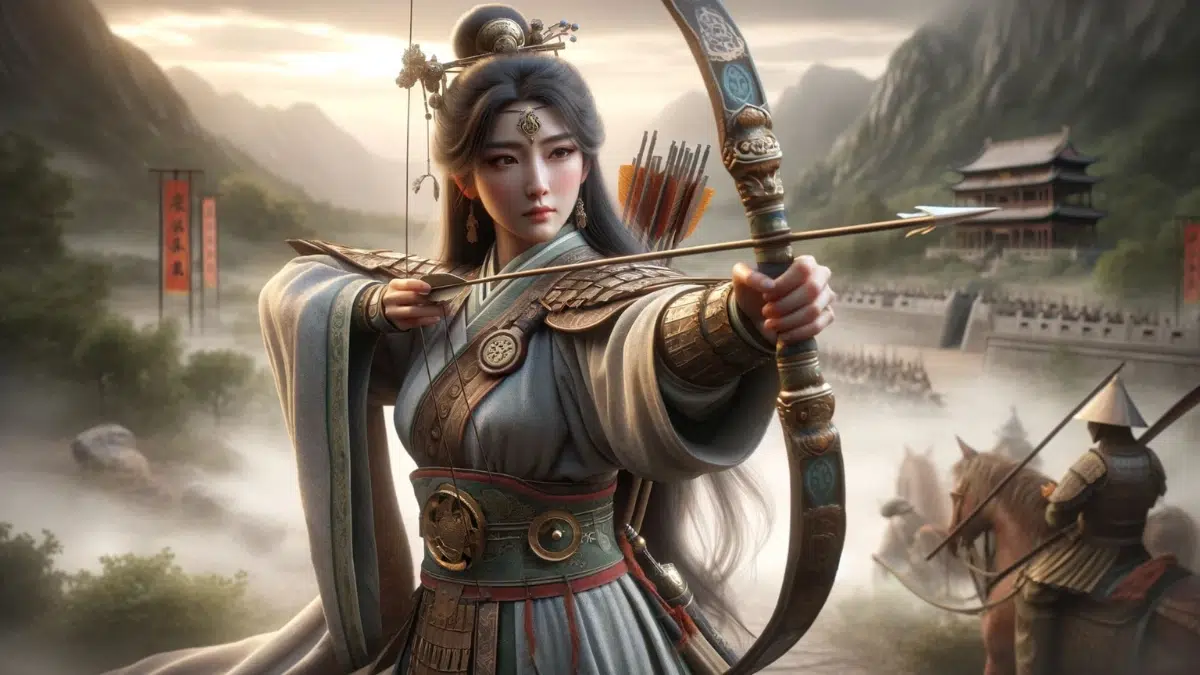
Fu Hao – Chinese Military General
Fu Hao was a queen and a military general in ancient China during the Shang Dynasty (circa 1200 BCE).
She is also an expert in archery.
Fu Hao leads many successful military campaigns, showing her leadership and strategic skills.
She commands up to 13,000 soldiers and earns respect for her bravery and strength.
As one of the first female generals known in history, Fu Hao stands as a powerful example of a strong woman excelling in roles usually held by men.
Her tomb contains weapons and artifacts, underscoring her martial prowess and as a master in warfare.
Fu Hao is one of the earliest women warriors in Chinese history on record.
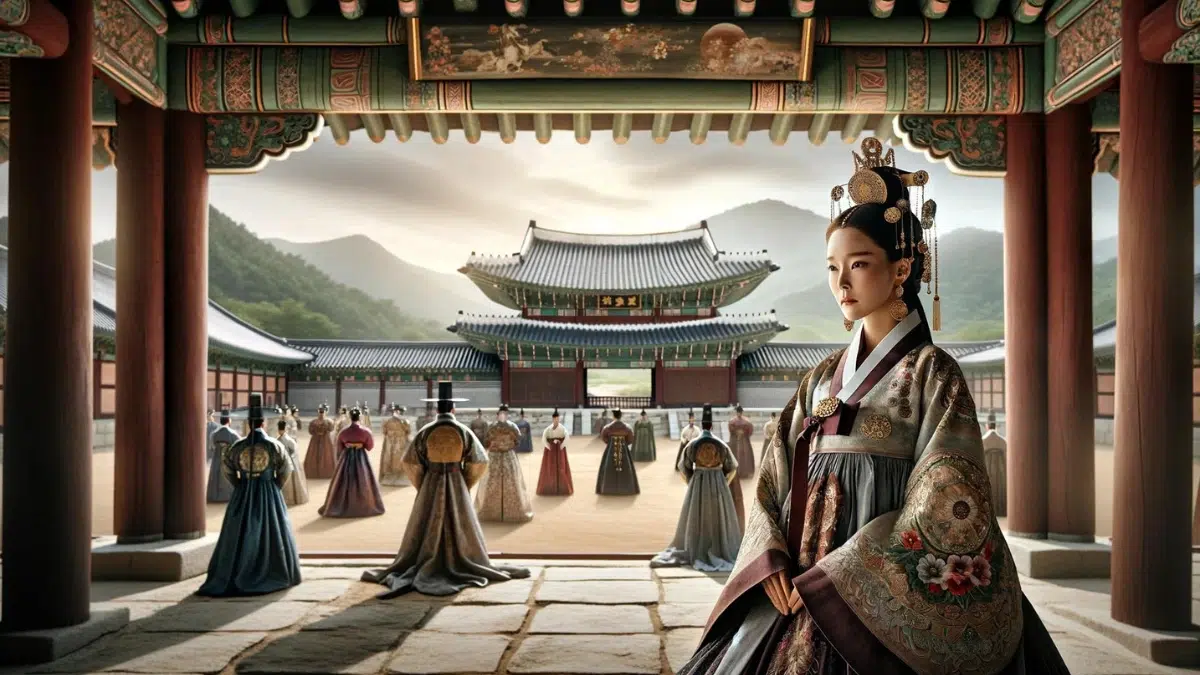
Queen Seondeok
Queen Seondeok is the first female ruler of the Silla kingdom in Korea, known for her wisdom, foresight and strong leadership.
She would embrace archery, reflecting the martial values of the Silla dynasty.
She would support advancements in science and culture, including military strategies.
Queen Seondeok’s reign is famous for encouraging education and the arts, making her kingdom stronger and more united.
Her decisive and smart leadership helps her overcome challenges and solidify her power.
Queen Seondeok stands as a powerful example of a woman excelling in a role traditionally held by men, inspiring many with her achievements and vision.
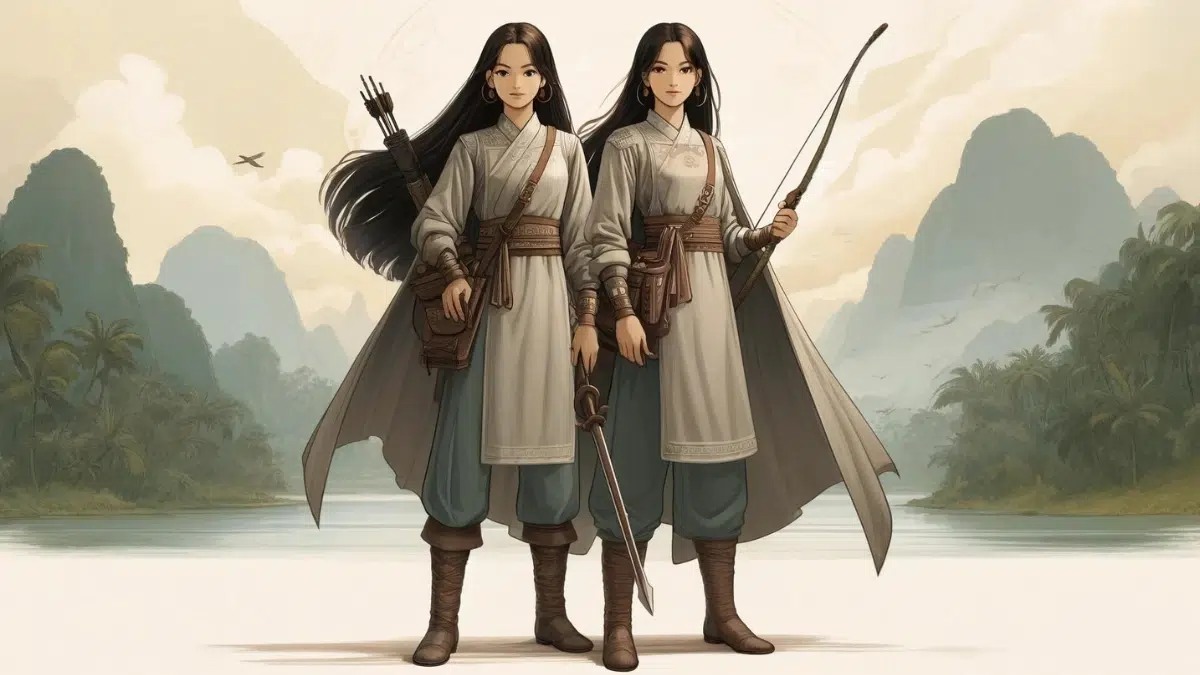
The Trưng Sisters
The Trưng Sisters are national heroines in Vietnam, famous for their rebellion against Chinese rule in the 1st century.
These sisters are skilled in archery and martial arts and use their abilities to lead a large army.
They celebrate their bravery and strength in fighting for Vietnam’s independence.
The Trưng Sisters successfully rule their region for three years before their defeat.
Their legacy inspires many, representing the power and courage of women in leadership roles.
They show that women can be both fierce warriors and wise leaders.
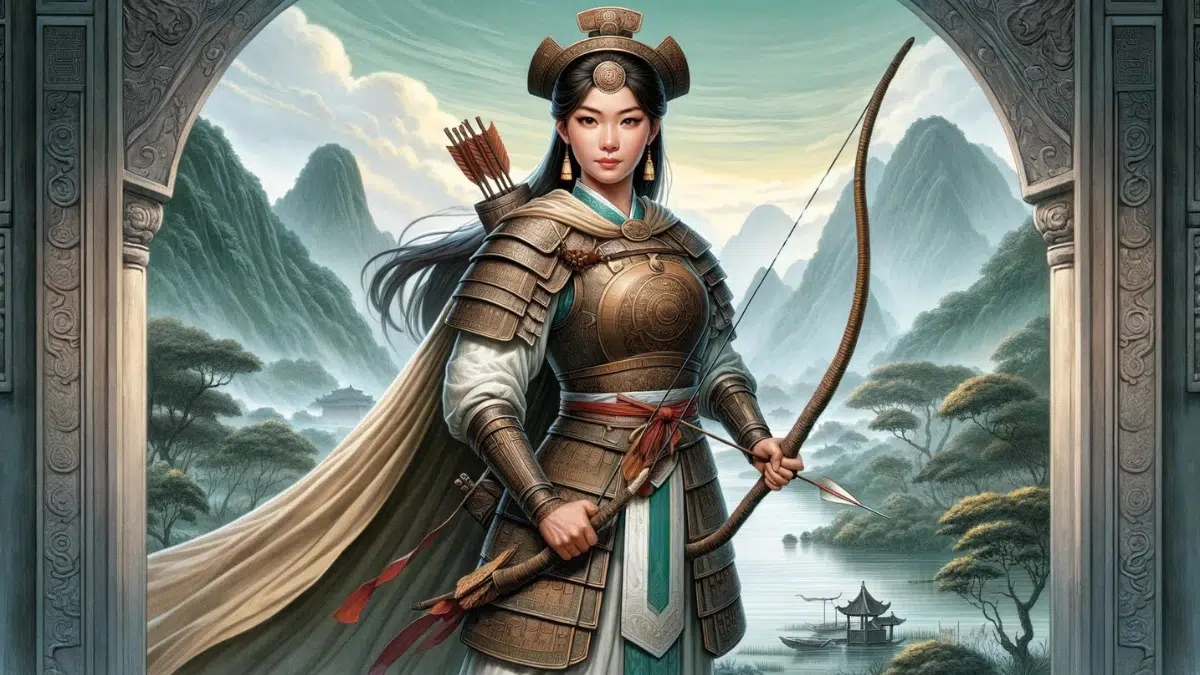
Lady Triệu – Vietnamese Warrior
Lady Triệu is a legendary warrior from Vietnam, known for her incredible height and strength.
Her proficient skills in archery would help lead a rebellion against Chinese domination and rule in the 3rd century.
Lady Triệu is famous for riding into battle on an elephant, inspiring her troops with her bravery and command.
She fought fiercely for her country’s independence and stands as a symbol of resistance and strength.
Her story encourages people to stand up for their rights and showcases the powerful role women can play in history.
Native American Women in Archery
In Native American cultures, women would often hunting and occasionally use defense with archery.
This was vital for their people’s survival.
These are accounts and legends that highlight the role of women in this regard.
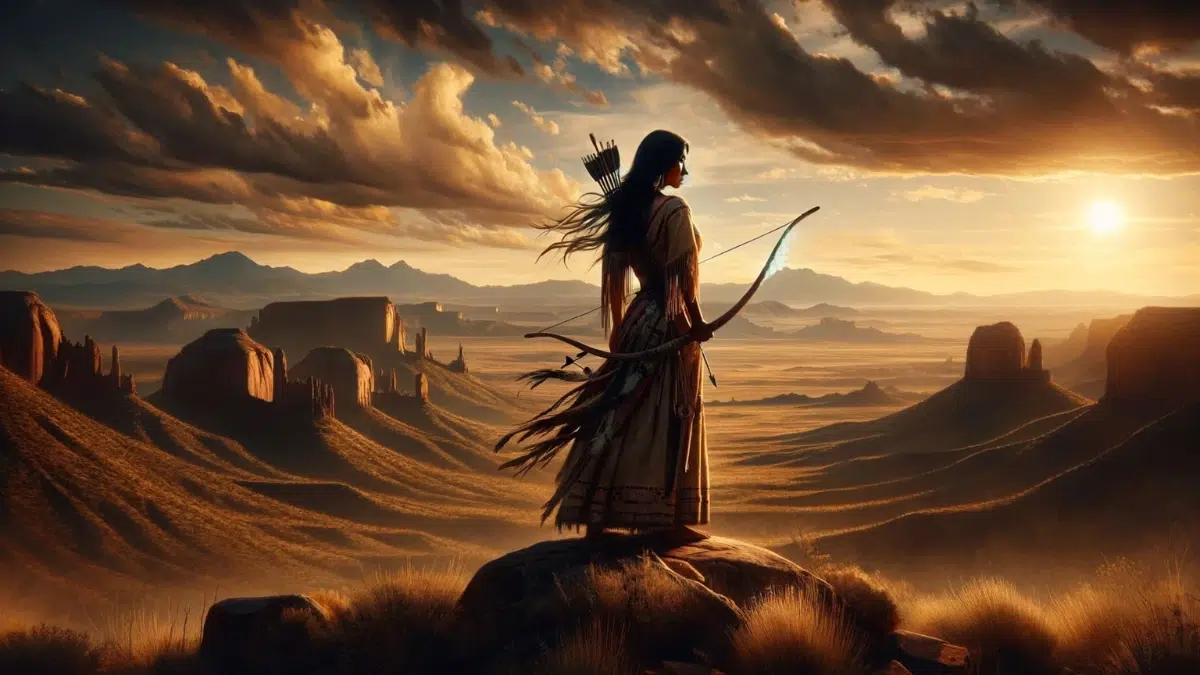
Lozen
Lozen is a warrior and prophet of the Chiricahua Apache, known for her strong spirit and strategic mind.
Her archery skills in combat were well known, a crucial tool in her battles.
Lozen fights alongside her brother, Chief Victorio, to protect her people from U.S. and Mexican armies.
She is famous for her ability to sense enemy locations, which greatly helps her people during conflicts.
Lozen represents a powerful figure of resistance and courage, showing exceptional leadership in defending her people’s rights and land.
Lozen is celebrated for her bravery and strategic prowess in battles against the U.S. and Mexican forces during the Apache Wars in the late 19th century.
Her legacy inspires many as a symbol of strength and independence.
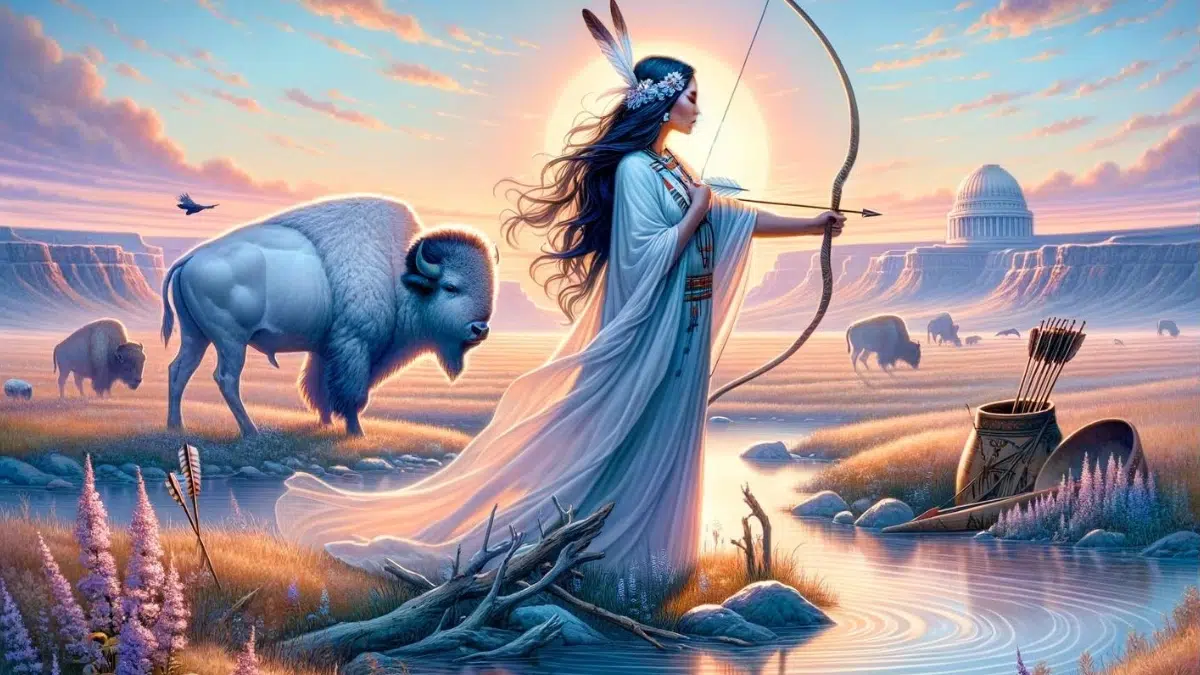
Buffalo Calf Road Woman
Buffalo Calf Road Woman is a Cheyenne warrior known for her bravery in Battle of the Rosebud in 1876.
She is famous for saving her brother, Chief Comes in Sight, at the Battle of Rosebud by charging into the fray.
Like many Native American women of her time, she would have skills in the use of weapons, including bows and arrows, for both defense and subsistence.
Her actions at the Battle of the Little Bighorn, where she fights valiantly, also make her a hero among her people.
She demonstrates her combat skills and strategic thinking in this battle and others.
Buffalo Calf Road Woman stands as a powerful example of strength and courage, showing that women can be fierce protectors and warriors.
Sacagawea
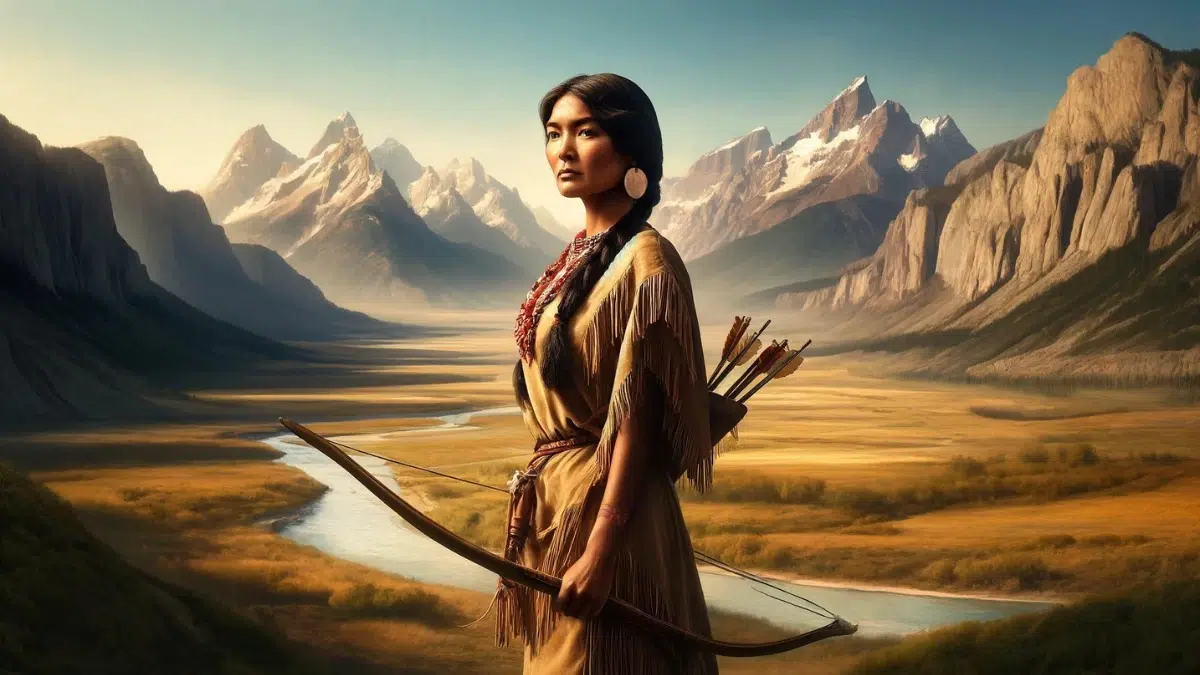
Sacagawea, a Lemhi Shoshone woman, is best known for guiding Lewis and Clark on their expedition across the American West.
Archery was a common skill among Shoshone women and proficiency with a bow would be important for hunting and protection.
Sacagawea shows great strength and intelligence by helping the expedition navigate through unfamiliar territories and by negotiating with other Native American peoples.
Her knowledge and bravery were crucial to the journey’s success.
Sacagawea stands as a symbol of courage and resilience, proving that women can be powerful contributors in challenging adventures.
African Women in Archery
Queen Nzinga
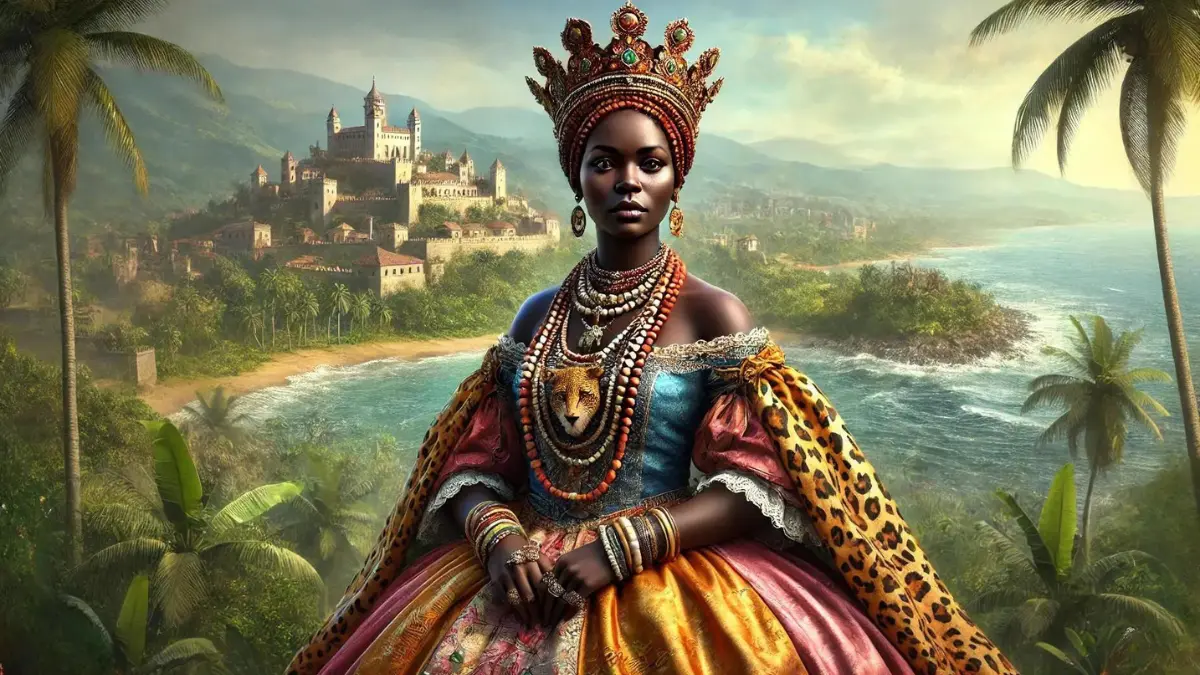
Queen Nzinga is a powerful leader of the Ndongo and Matamba Kingdoms in Angola of the Mbundu people during the 17th century.
She is skilled in using a bow and arrow and military tactics, and known for her diplomatic and military strategies.
Queen Nzinga fiercely resists the Portuguese colonization, negotiating with them as an equal and often leading her troops in battle.
She remains committed to freeing her people from European domination, showing incredible leadership and resilience.
Queen Nzinga is celebrated as a symbol of strength, intelligence, and unwavering determination, inspiring many with her legacy as a warrior queen.
Gudit – Queen of Ethiopia
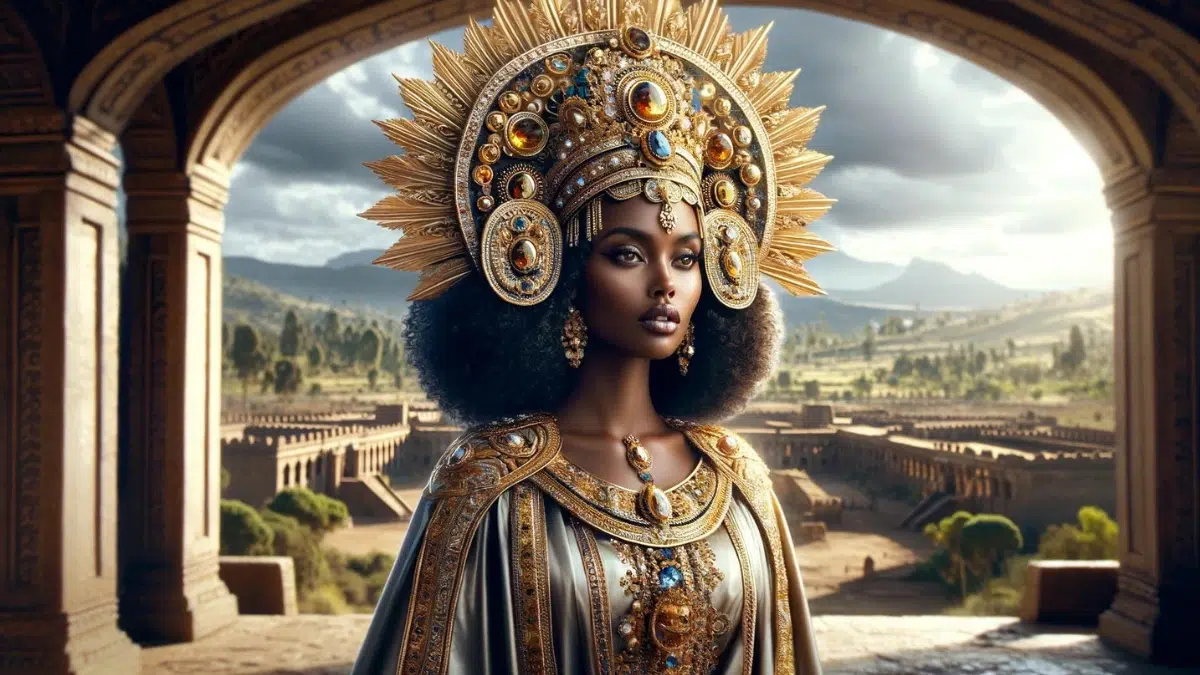
Gudit, also known as Queen Judith, is a legendary figure from Ethiopia.
She is famous for leading a rebellion that overthrows the Aksumite Empire.
Her strategic skills and military tactics in warfare suggest she knows how to handle weapons like the bow and arrow.
Gudit rules for 40 years and is remembered for her strong leadership and determination to control her destiny.
Her reign marks a significant period in Ethiopian history, showcasing her power and influence as a woman leader.
Gudit remains a symbol of rebellion and strength, inspiring many with her story.
Medieval and Renaissance Women in Archery
Noble huntresses emerged in Europe, using archery for sport and ceremony.
More commonly, women participate in archery for recreation or ceremonies.
However, during periods of conflict, such as the English Civil Wars, women would defend their homes with bow and arrow.
Thus demonstrating the universality of archery as a means of protection across genders.
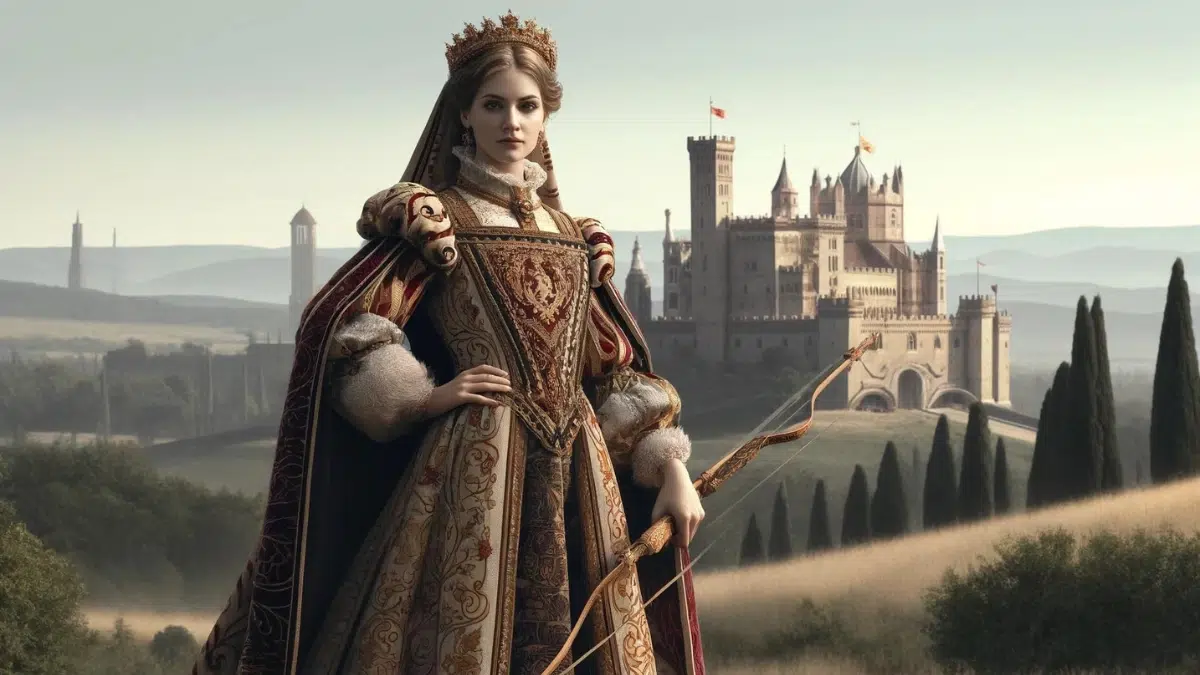
Isabella of France
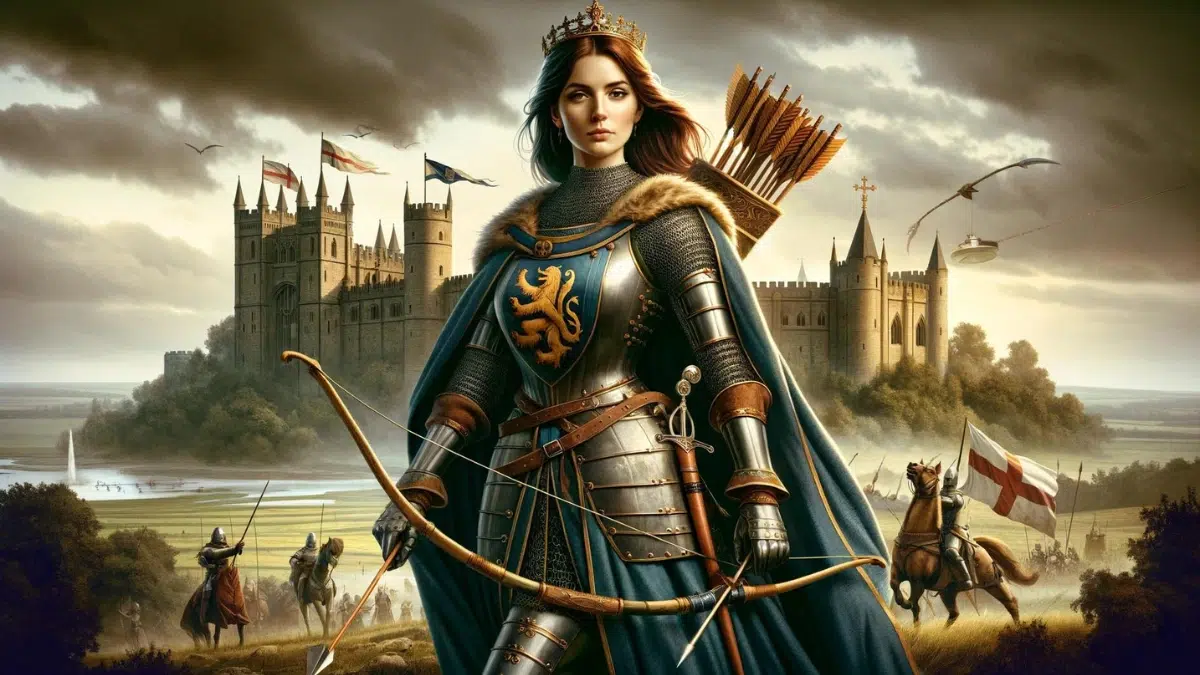
Isabella of France, known as the “She-Wolf of France,” has skills in archery and plays a commanding role in the invasion of England.
As queen she plays a pivotal role in overthrowing her husband, King Edward II of England.
While not directly associated with archery, her strategic mind and leadership in assembling an army stand out.
Isabella leads her forces with courage, decisively influencing the political landscape in England.
Her actions help install her son, Edward III, as king, demonstrating her power and determination to secure her family’s rule.
Isabella is remembered as a strong and formidable woman who shapes history through her bold decisions.
Matilda of Tuscany
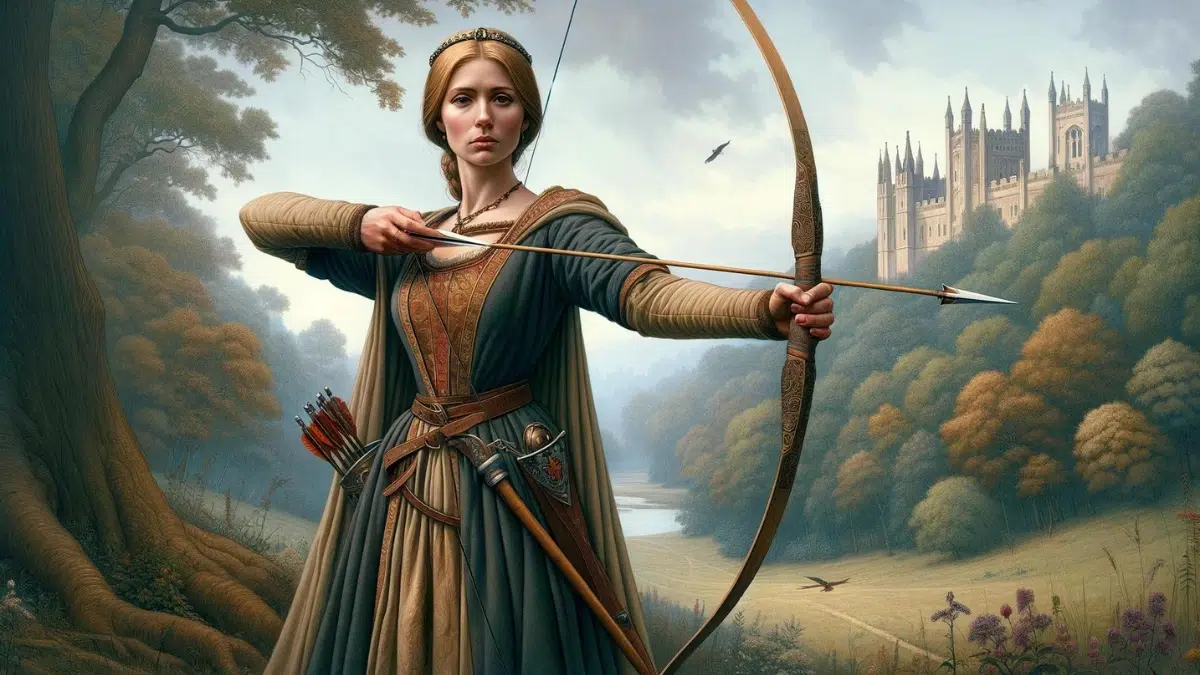
Matilda of Tuscany is a powerful medieval Italian noblewoman with military skills and strategic prowess.
She leads troops, including archers, in battles against the Holy Roman Emperors. This demonstrates her command and courage.
Matilda supports the Pope and plays a crucial role in the Investiture Controversy, a significant conflict between the church and the state.
Her leadership helps shape the political landscape of medieval Italy.
Celebrated as a strong and independent woman, Matilda defies the norms of her time to lead with authority and resilience.
Lady Agnes Hotot
Lady Agnes Hotot is a skilled archer from England, a common skill among nobility for both hunting and defense.
She is famous for her boldness and strength.
When her father falls ill, she disguises herself as him and defends their honour in a duel in the late 14th century.
Using her excellent archery skills and dressed in armour, Lady Agnes wins the contest and surprises her opponent.
Revealing her identity only after her victory by lifting her helmet and letting down her hair.
This act not only saves her family’s honour but also demonstrates her courage and independence.
Lady Agnes Hotot is a powerful woman who challenges expectations and excels in a traditionally male-dominated sport.
Black Agnes of Dunbar
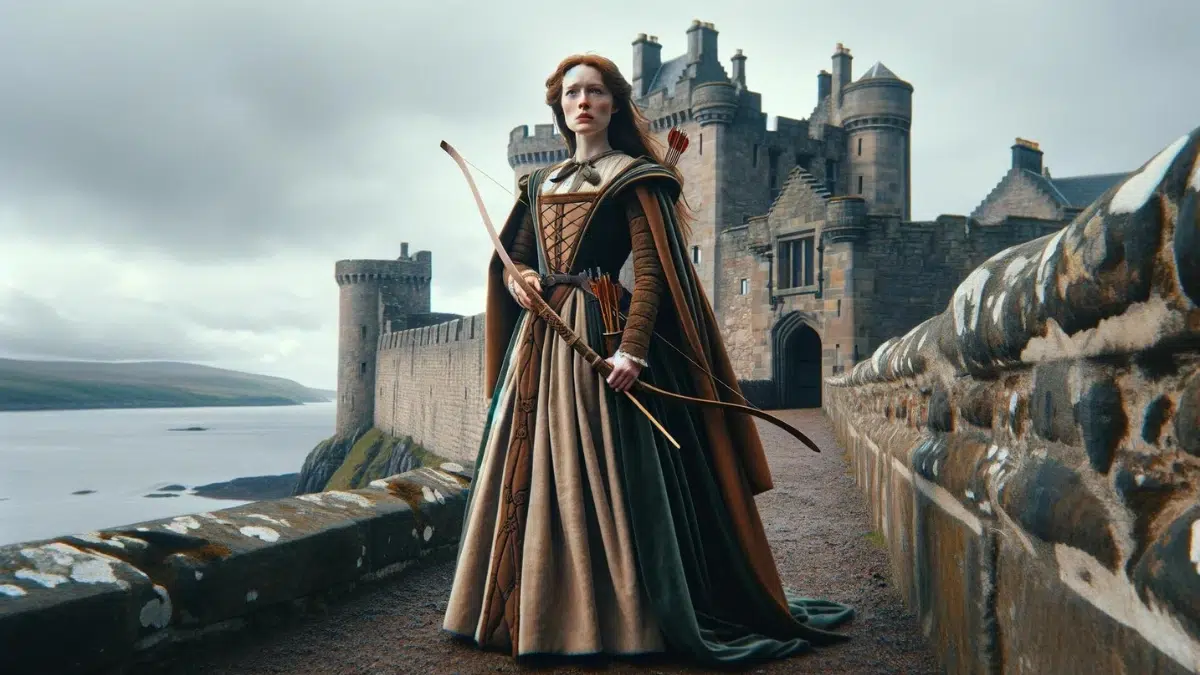
Agnes Randolph, Countess of Dunbar, is famous for her brave defense of Dunbar Castle in Scotland against English forces in 1338.
The siege scenario implies that those defending the castle, potentially including women under her command, would have used all available means of defense, including archery.
Her strategic use of weapons and bold leadership during the siege makes her a symbol of strength.
Agnes would repel the attackers with clever tactics, proving her resourcefulness and courage.
Her defiance and determination during the five-month siege earns her the nickname “Black Agnes” due to her fierce fighting spirit.
She is a powerful, strong woman who stood firm and protects her people and home.
Modern Women in Archery
In modern archery cultures, women have emerged as formidable competitors.
Today, women compete and excel in archery globally, breaking stereotypes and promoting gender equality.
Modern-day women archers continue to achieve significant recognition on the international stage, particularly in competitive archery. The Korean Women’s Archery team excels in the sport.
Kim Soo-Nyung
Hailing from South Korea, some consider Kim Soo-Nyung as one of the greatest archers of all time.
She has won numerous Olympic medals across several Games, including golds in the 1988, 1992, and 2000 Olympics.
Her precision, focus, and consistency have set a high standard in the world of competitive archery.
Ki Bo-Bae

Attribution: Korea.net / Korean Culture and Information Service
This South Korean archer has left a remarkable mark on the sport.
Ki Bo-Bae has earned multiple Olympic gold medals, including individual and team golds at the 2012 London Olympics and a team gold at the 2016 Rio de Janeiro Olympics.
Her achievements as one of the top archers in the world also serve as an inspiration for aspiring archers in South Korea and globally.
Ki Bo-Bae’s discipline, skill, and success exemplify the potential for excellence in archery, encouraging young women and girls to pursue their passion for the sport.
Deepika Kumari
Emerging from India, Deepika Kumari has become a symbol of determination and excellence in archery.
She has won gold at multiple stages of the Archery World Cup and achieved the number one ranking in the world for women’s recurve archery.
Coming from a humble background, Deepika’s journey to the top of the world archery scene is a testament to her hard work, talent, and perseverance.
Her story is particularly inspiring to many in India and around the world.
Showing that with dedication, the barriers of socio-economic status can be overcome in the pursuit of global sporting excellence.
Learn more about women and the Olympics:
The Challenges Faced by Women in Archery
Women in archery encounter various challenges, including gender stereotypes, discrimination, insufficient support, and cultural barriers.
All of which impact their pursuit of equality, representation, empowerment, and skill development within cross-cultural comparisons and the preservation of traditional practices and sporting spirit.
These challenges often stem from historical contexts where archery was predominantly perceived as a male-dominated activity, leading to lingering gender biases.
Some cultural norms may limit female participation in archery hindering their access to training facilities and competitions.
Overcoming these obstacles requires raising awareness, fostering inclusivity, and providing resources for women to thrive in this ancient skill.
Conclusion
The role of women in archery across different cultures highlights their strength, skill, and independence.
From legendary figures like Artemis and Lady Triệu to historical warriors like Nakano Takeko and the Trưng Sisters, these women demonstrate exceptional courage and leadership.
Their stories inspire us to recognize the significant contributions women have made in traditionally male-dominated fields.
As we celebrate their achievements, we acknowledge that bravery, intelligence, and resilience know no gender.
These women remind us that anyone can excel in archery and other pursuits, breaking barriers and shaping history along the way.
Thus paving the way for future women archers.