The Fates in Greek Mythology: Weavers of Birth, Life & Death
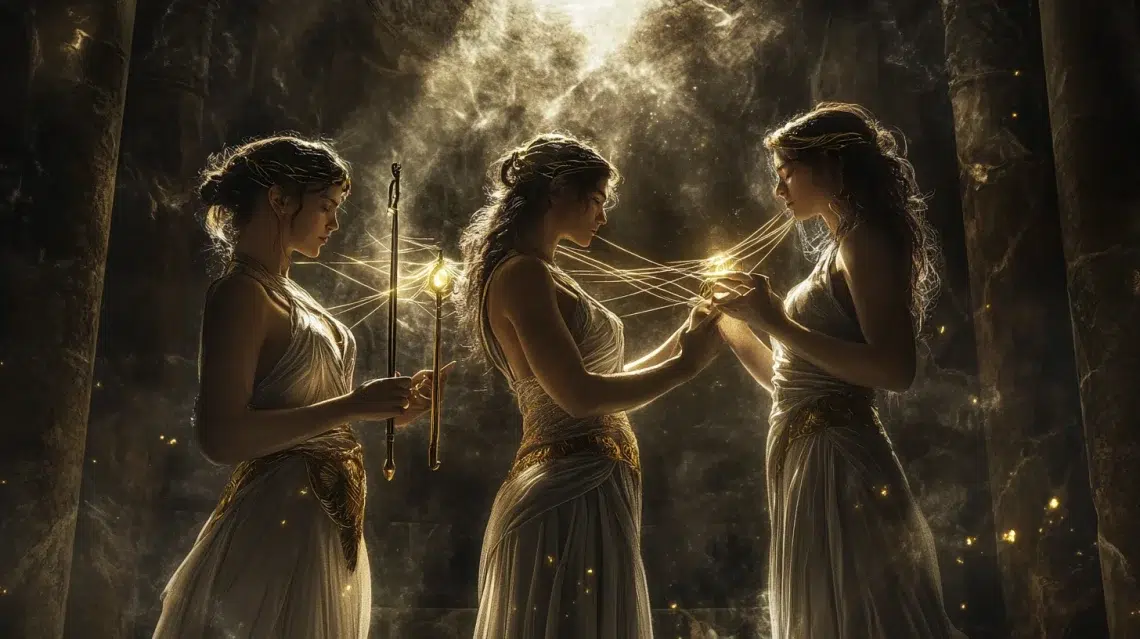
In Greek mythology, three powerful sisters hold the thread of every life—from birth to death. These sisters are known as The Fates, or The Moirai. They don’t rule the sky or the sea. They don’t throw lightning or carry weapons. But they shape the destiny of gods and mortals alike.
Each Fate has a role. One spins the thread. One measures it. One cuts it. Once they begin their work, not even Zeus can undo it. Their decisions are final.
The Fates rarely speak. They don’t chase fame or take sides. They simply do their job—calm, silent, and certain. That’s what makes them so powerful. They remind us that some things lie beyond control, no matter how strong or wise someone is.
Who Are the Fates in Greek Mythology?
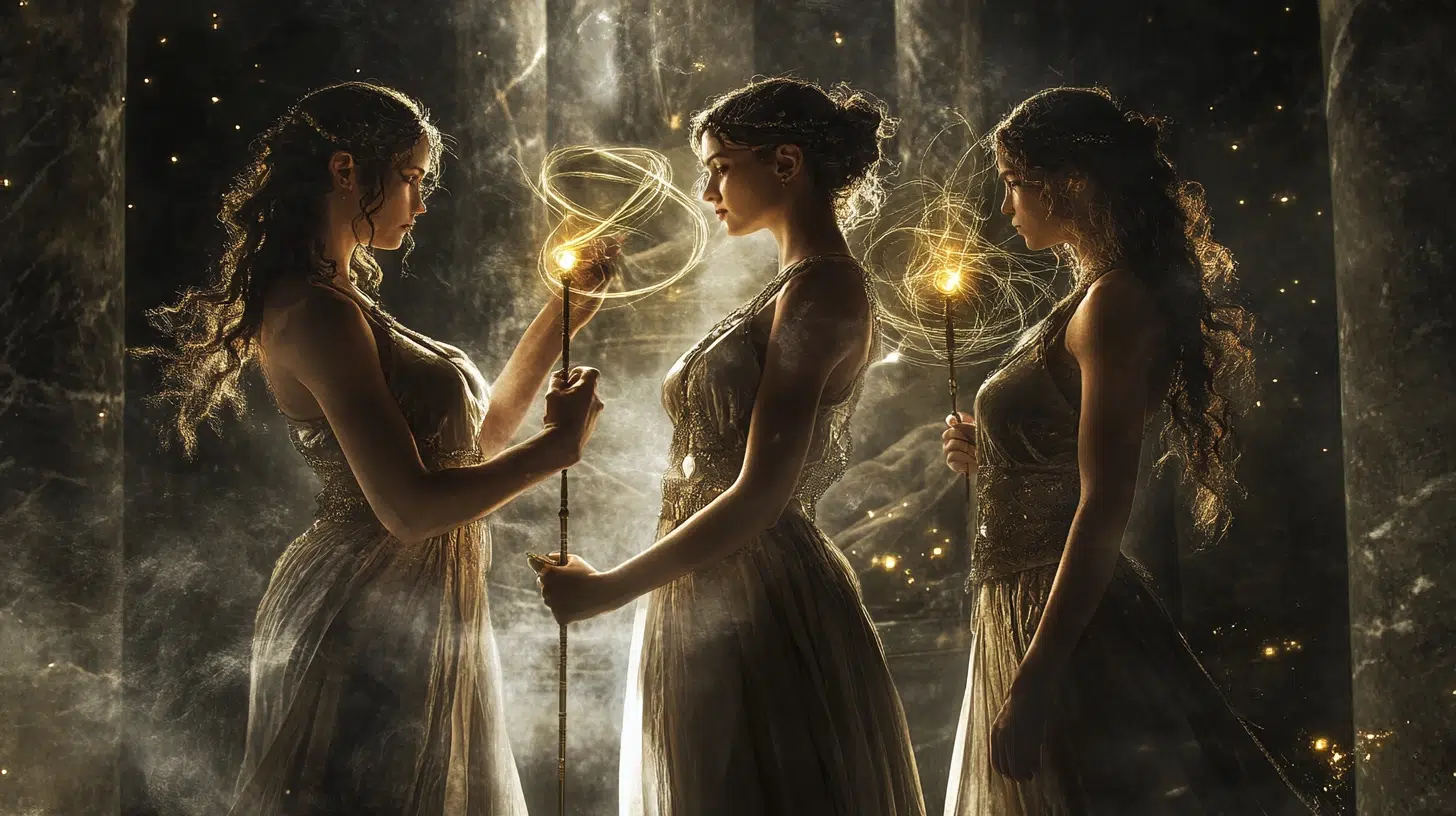
The Fates, also called the Moirai, are three sisters who control the destiny of every living being. They decide when life begins, how long it lasts, and how it ends. They don’t act out of emotion or favour, just follow the natural order of the universe. Even the gods respect them.
The Fates control every life through a single thread. This thread starts at birth, stretches through each moment, and ends at death. It’s not just a symbol—it’s the path of someone’s life. Every decision, challenge, and success happens along that thread.
Each sister has a specific role in spinning the thread of life:
-
Clotho, the spinner, starts the thread. She brings a person into the world. Her spinning starts the journey.
-
Lachesis, the measurer, decides how long the thread should be. She chooses the events, challenges, and milestones that shape each life.
-
Atropos, the cutter, ends the thread. Her shears mark the moment of death. Once she cuts, the life ends—no matter who it is.
Together, they form a complete cycle—birth, life, and death.
The thread shows that life has a beginning, a path, and an end. Some threads are long. Others are short. Some are smooth, others tangled. But all follow the same cycle. The Fates never rush. They never delay. They simply do their task.
In Greek mythology, the Fates (Moirai) are completely devoted to their role. They don’t pursue love, marriage, or family. Their job is too important—and too final. They exist outside of personal emotion, acting more like cosmic forces than typical gods.
This sets them apart from many other female figures in Greek myth, who are often involved in love stories or have children linked to heroes or gods.
Clotho the Spinner
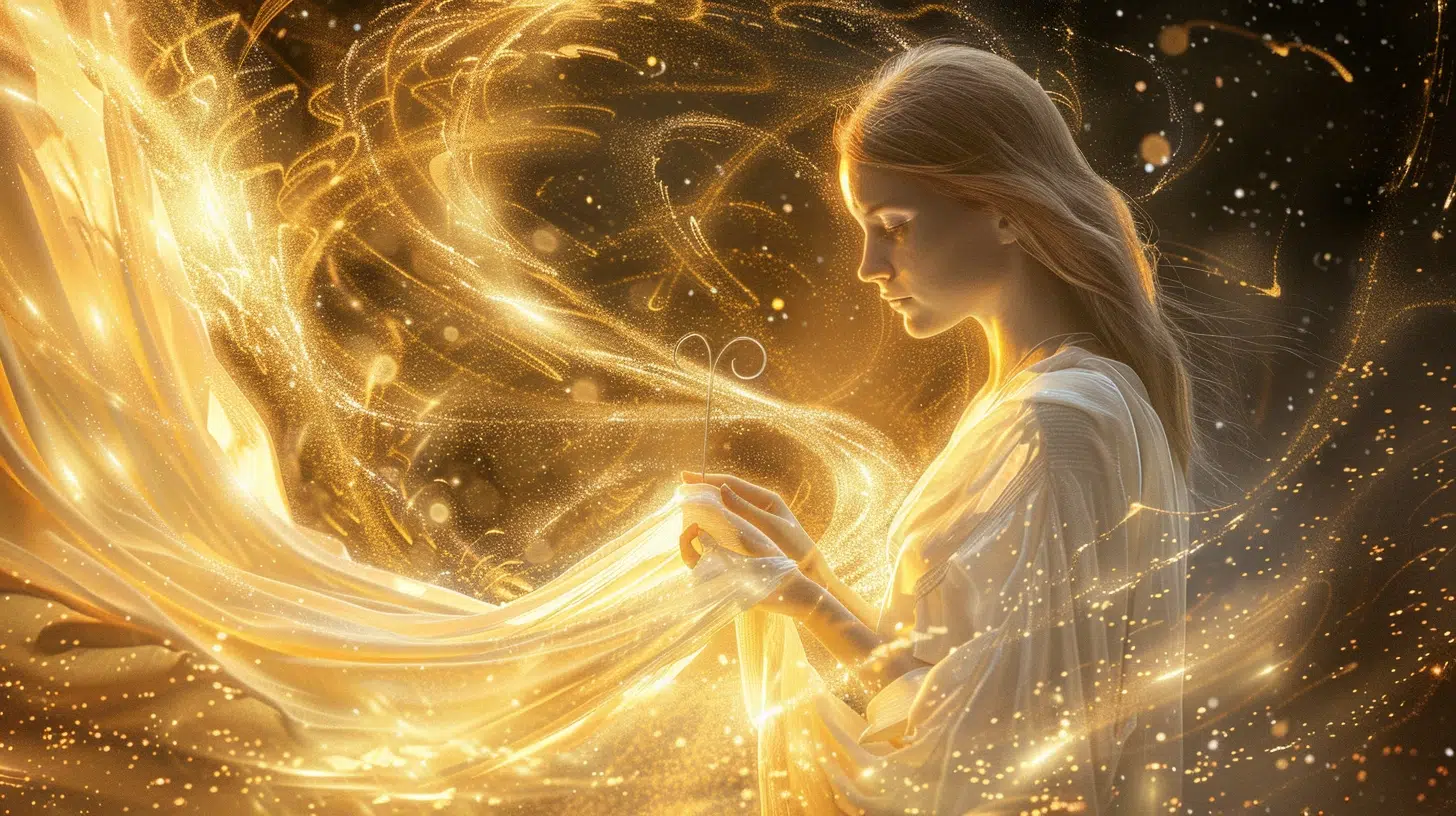
Clotho spins the thread of life, marking the beginning of each person’s journey.
She stands at the start of every story, deciding when life begins. Her spindle holds the power to bring someone into the world.
As she spins, a new thread forms—delicate, strong, and full of potential. This thread connects a person to their path, with twists and turns only the Fates know. Clotho’s role shapes destiny from the very first moment. Without her, no life can begin.
Her work links birth to fate, and every soul starts with her careful touch. Clotho weaves beginnings into the fabric of time.
Lachesis the Measurer
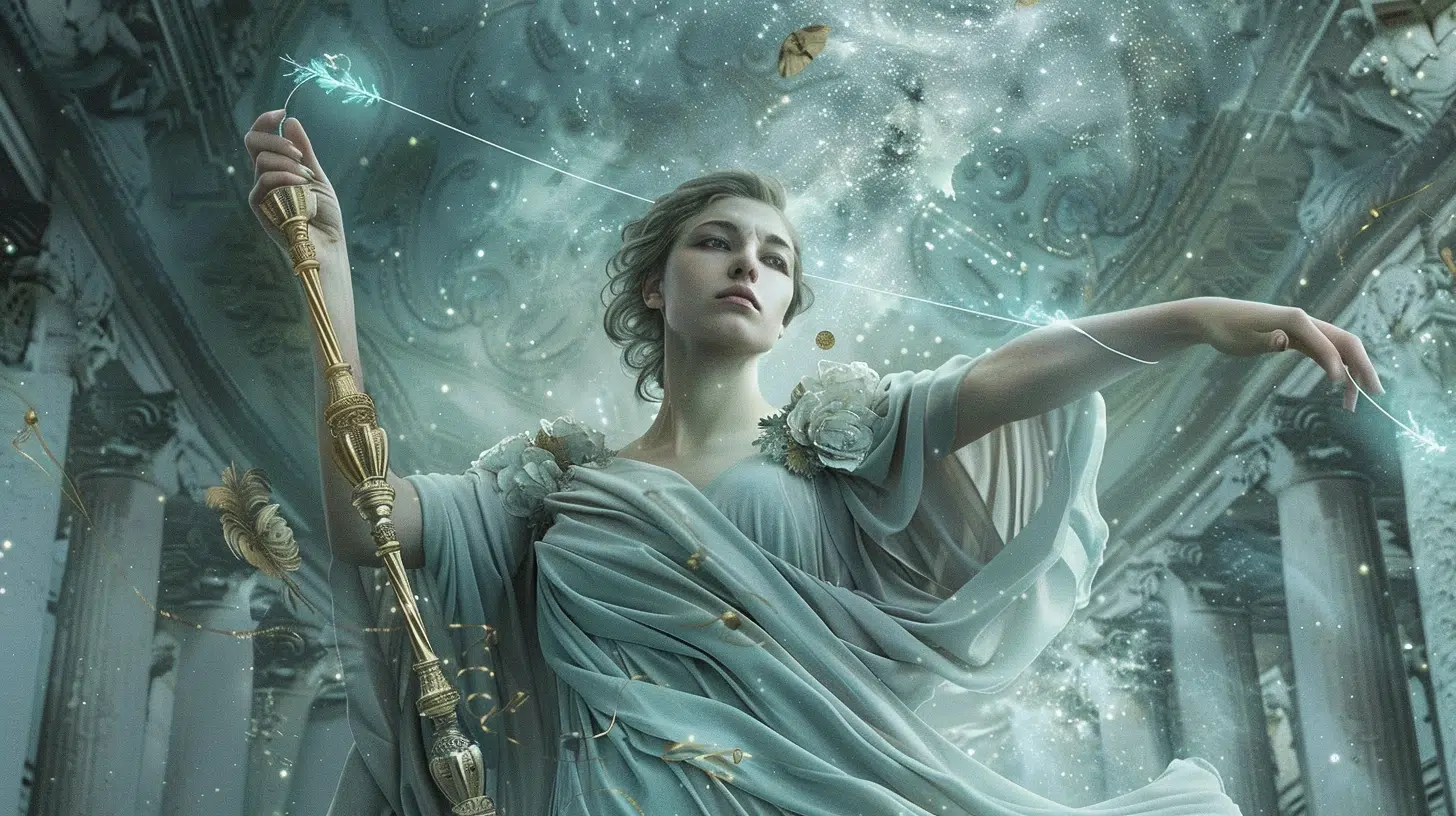
Lachesis measures the thread of life, deciding how long each person’s journey will last.
She holds the rod of fate and carefully marks each life’s length. Her choices shape the path ahead—moments of joy, sorrow, love, and growth. Lachesis does not rush.
She studies the thread and places each milestone with care. Every challenge and triumph comes from her design. She maps out the key events that give life meaning.
While Clotho begins the thread, Lachesis gives it shape. Her hands guide the flow of time, making sure each life follows its unique and purposeful path.
Atropos the Cutter
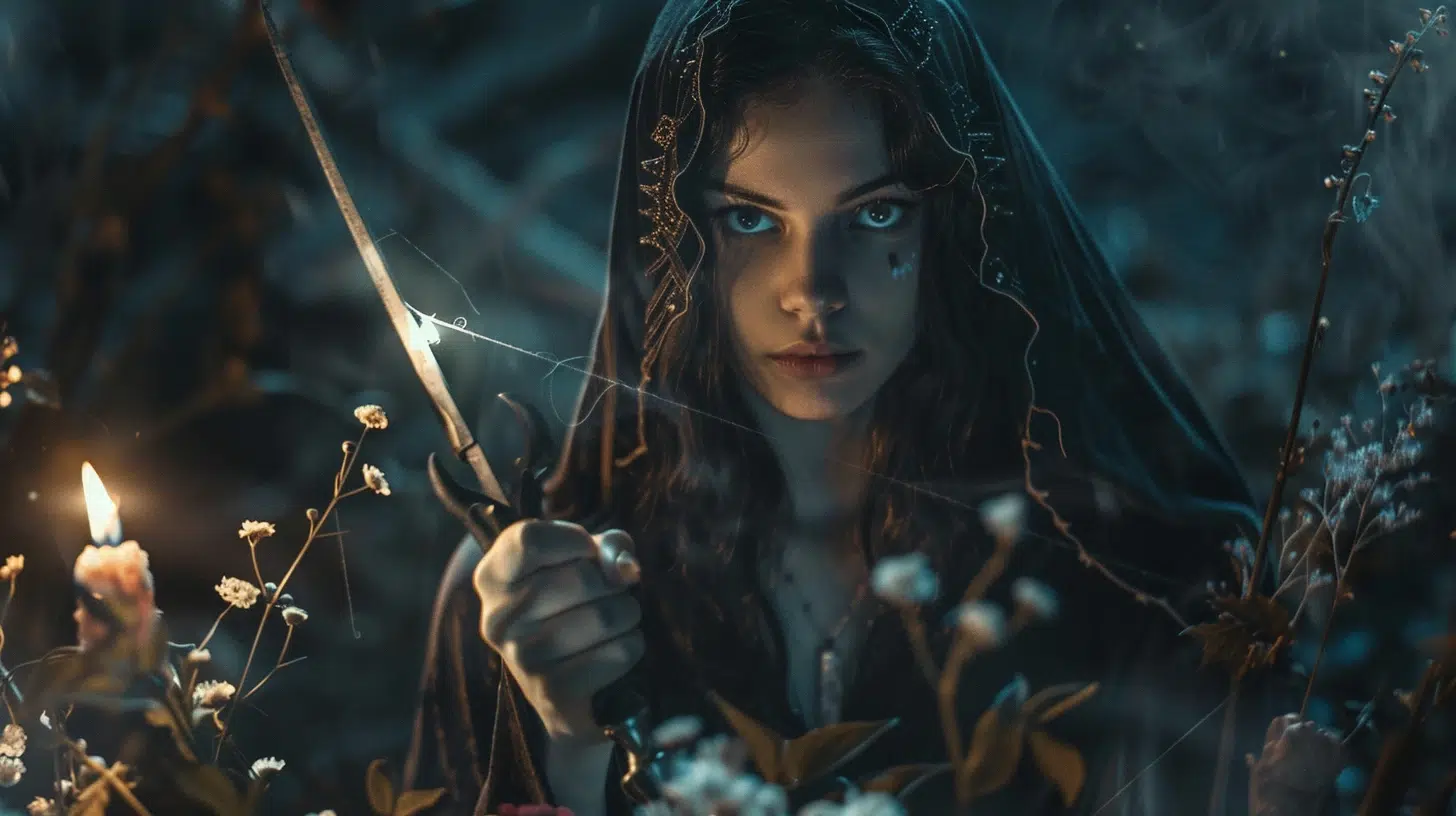
Atropos holds the power to end every life. With sharp shears in hand, she waits for the moment to cut the thread.
Her role is final and cannot be changed. When she decides it is time, the thread ends—quietly, swiftly, without pause. Atropos shows no favour.
She cuts the threads of kings and commoners alike. Her presence brings stillness, marking the end of each journey.
Where Clotho begins and Lachesis shapes, Atropos brings closure. Her cut separates the soul from the world.
Though her act seems harsh, it is part of the natural order, completing the circle of life and fate.
The Fates: Origins and Family
The Fates are ancient and powerful. But like many Greek gods, their family history varies depending on the story. In some myths, the Fates are the daughters of Nyx, the goddess of night. In others, they are the children of Zeus and Themis, the goddess of law and order.
If they come from Nyx, it shows they are even older than the Olympian gods. Nyx is one of the primordial forces, born from Chaos. Her children are deep, mysterious powers like Death (Thanatos), Sleep (Hypnos), and Darkness (Erebus). This version makes the Fates seem more cosmic and unchangeable, like natural laws that even Zeus must obey.
If they are born from Zeus and Themis, their power connects more directly to justice and divine law. Themis helps keep the gods in order, and the Fates carry out that balance through destiny. This version ties them closer to the world of gods and mortals.
No matter their origin, one thing stays the same—the Fates do not answer to anyone. Not even the gods can control them. They don’t rule through strength or fear. They simply exist, doing their work without delay or regret.
Their role is clear: fate must move forward, and every thread must one day end.
Appearance and Where They Dwell
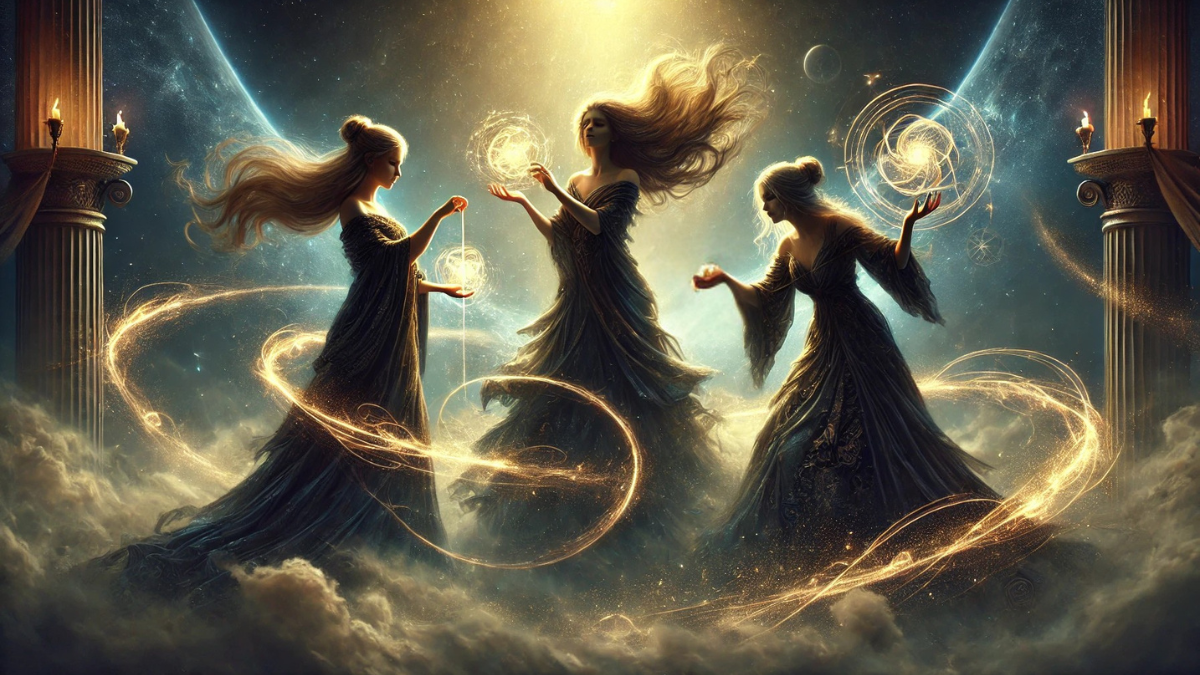
The Fates, or Moirai, don’t all look the same in every myth.
In most stories, they appear as three serious women in long robes, focused on their task. Sometimes they look old and wise, with lined faces and grey hair. Other times, they are shown as young and ageless, untouched by time—just like fate itself.
Each sister carries a tool that shows her role. Clotho holds a spindle or spinning wheel. Lachesis carries a measuring rod or scroll. Atropos holds a pair of shears, sharp and final. These symbols help people tell them apart.
The Fates rarely smile, but they do not show joy or anger. They are not cruel, but they are distant—calm, steady, and always working. They act with quiet purpose, always weaving.
As for where they live, that’s less clear. Some stories say they dwell on Mount Olympus, but they don’t often appear at the gods’ feasts or councils. Others say they live in the Underworld, working near Hades to manage the dead. A few myths place them outside time and space, sitting at the edge of the universe, weaving the threads of all things.
The Fates often appear as quiet, serious women dressed in robes. They usually work behind the scenes, never seeking attention. In many stories, they don’t speak much. Their power lies in action, not words. Once a thread is cut, nothing can undo it.
Though they are not violent or cruel, the Fates are firm. They don’t change their minds. Their job is to keep the world balanced—and they never stop weaving.
Wherever they are, the Fates are always watching—and always working.
The Fates in Greek Mythology Stories
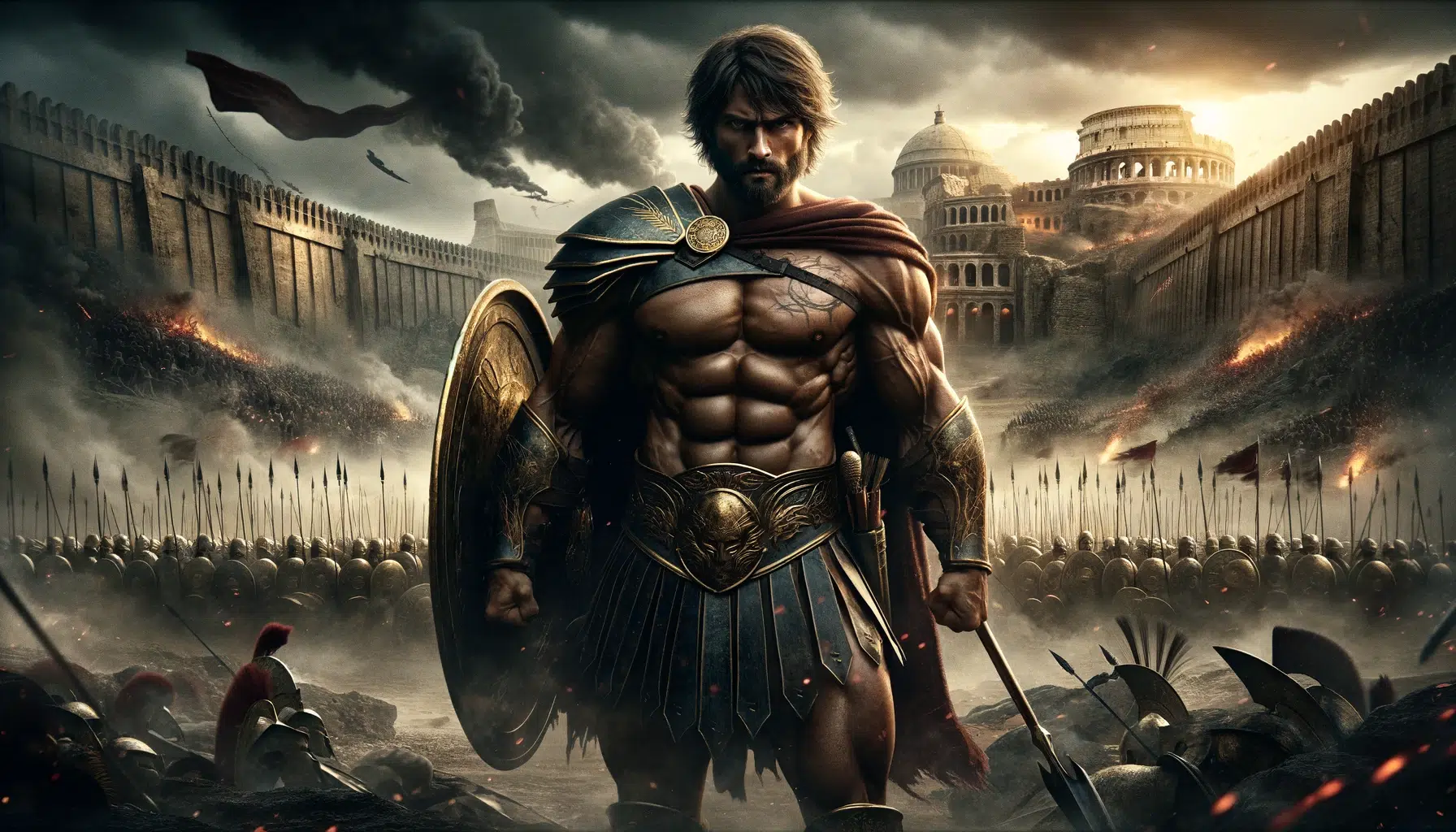
The Fates in The Iliad – Achilles’ Choice
In The Iliad, the Fates don’t appear directly, but their power shapes the entire story. One of the most famous examples is the fate of Achilles, the greatest Greek warrior. Early in the war, Achilles learns he has two paths. If he stays home, he will live a long, peaceful life—but be forgotten. If he fights in Troy, he will win glory—but die young.
This choice reflects the work of the Fates. While they measure each life, they sometimes allow a person to choose between paths. But once a choice is made, the end is fixed.
Achilles chooses glory. He returns to battle, even knowing it leads to his death. The Fates do not force him—but they honour his decision. His thread now runs short, and nothing can stop Atropos from cutting it.
This story shows how fate and free will sometimes mix. The Fates offer a path, but the hero must walk it. Once the path is taken, there is no turning back.
Even the gods can’t protect him. His death is part of the plan. In The Iliad, fate rules quietly, but completely. The thread holds firm, and the end always comes.
The Death of Meleager – The Burning Log
Meleager is a prince born into a royal family, and like all mortals, his fate is sealed at birth. When he is still a baby, the Fates appear to his mother, Althaea. They say he will live only as long as a certain log remains unburned. Once it turns to ash, his life will end.
Terrified, Althaea grabs the log from the fire and hides it in a chest. Meleager grows up strong, brave, and famous. He becomes a hero after killing the Calydonian Boar, a monster sent by Artemis to punish his people. But during a fight over who should get the boar’s prize, Meleager kills his own uncles.
Althaea is heartbroken and angry. In her grief, she takes out the hidden log and throws it into the fire. As the wood burns, Meleager weakens. When the last piece turns to ash, he dies—just as the Fates foretold.
This story shows how fate can be tied to a single object. Even though his mother tries to protect him, she cannot stop the prophecy. The Fates measure Meleager’s life not in years, but in flame. And when the fire ends, so does his thread.
Heracles and the Fates – A Hero’s Defiance
Heracles, the strongest hero in Greek mythology, is known for his great strength and courage. But even he cannot escape the power of the Fates. In one lesser-known myth, Heracles comes face to face with them—and dares to fight back.
In this story, the Fates predict that Alcestis, a noble queen, will die. Heracles learns of this and tries to stop it. He even goes to the Underworld to bring her back. In other versions, Heracles hears a prophecy from the Fates that a friend or a loved one must die. Angry, he threatens the Fates themselves.
Some say he catches them off guard, tangling their threads or grabbing Atropos’ shears. Others say he tries to force them to change a person’s destiny. But the result is always the same: he fails. The Fates may appear quiet and gentle, but they are older than the gods and stronger than any hero.
This myth shows that even a son of Zeus cannot undo fate. Heracles can defeat monsters, complete impossible tasks, and walk through the Underworld—but he cannot stop the thread from being cut. The Fates remain beyond reach, unshaken, and always in control.
Atalanta – A Life Almost Unlived
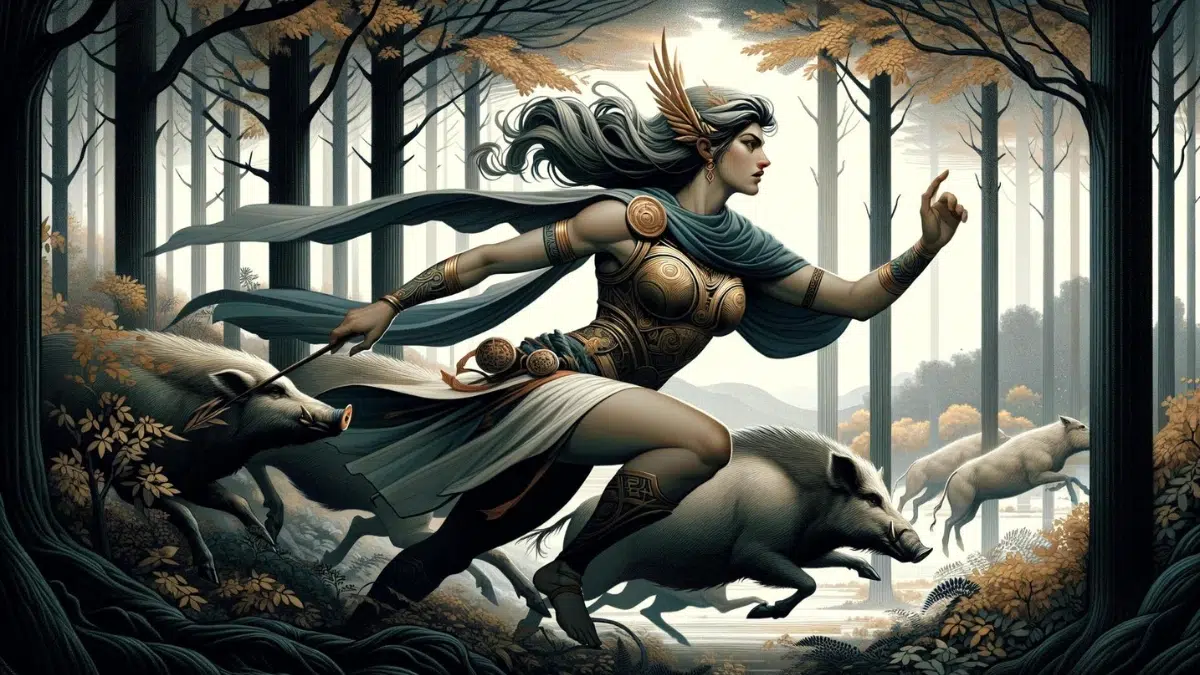
Atalanta is one of the fiercest women in Greek mythology. But she almost never lives past birth. When she is born, her father, King Iasus, wants a son. Angry and ashamed, he abandons her in the wilderness, hoping she will die. He tries to change what fate has given him.
But fate has other plans.
A she-bear finds Atalanta and raises her as her own cub. Later, hunters discover her and teach her to survive. She becomes fast, strong, and clever. Some believe the Fates protect her because she is meant for a greater purpose.
Later in her life, Atalanta hears an oracle’s warning: marriage will be her downfall. To avoid that fate, she challenges all suitors to a foot race. If they lose, they die. But fate still guides her path. A man named Hippomenes, with help from Aphrodite, defeats her using golden apples. She marries him—and the oracle’s warning comes true.
This myth shows how fate cannot be avoided. Atalanta’s father tries to end her thread early. She tries to shape her future through skill and strength. But in the end, the Fates still guide every step.
Symbolism and Meaning of The Fates
The Fates—Clotho, Lachesis, and Atropos—stand for more than just three sisters with thread. They symbolize life itself: how it begins, how it unfolds, and how it ends. In Greek mythology, they remind people that some things are beyond control.
Each sister’s task carries deep meaning. Clotho represents birth and potential. Her spinning shows how life starts from nothing. Lachesis shows how choices, actions, and events shape a life. She measures the thread carefully, showing that time is limited. Atropos, the one who cuts the thread, reminds us of death’s certainty. Her shears bring life to a close, no matter how rich or strong someone is.
The Fates also represent balance and justice. They do not punish or reward. They simply do their duty. Even gods must respect them. This makes them different from most mythological figures, who often act out of pride, love, or revenge. The Fates act without emotion. They exist to keep the world in order.
Their presence shows that fate is both mysterious and final. Humans may try to avoid it, bargain with it, or fight it—but the thread still runs. The Fates don’t chase power or fame. They just keep the world turning, one thread at a time.
Conclusion
The Fates may not speak loudly or take centre stage, but their power runs deeper than any sword or spell. They hold the thread of every life—gods, heroes, and mortals alike. While others chase glory or fight destiny, the Fates work in silence. They remind us that life has a beginning, a path, and an end.
In Greek mythology, their role is clear: no one escapes fate. Even those who try—like Achilles, Meleager, or Atalanta—end up where the thread leads. The Fates don’t punish or reward. They simply shape the flow of time.
Their story still matters today. People still ask the same questions: Do we control our future? Are some things meant to be? The Fates offer one answer—that life has a pattern, and every moment is part of it.
Whether you believe in destiny or not, the Fates leave us with a powerful image: three women, calm and focused, weaving the story of the world—one thread at a time.