Differences Between Short Bow vs Longbow
In the realm of archery, a longstanding debate centers around the merits of the short bow vs the longbow.
Each has its historical significance, distinct characteristics, and fervent adherents. The longbow, celebrated for its powerful range and storied past, stands juxtaposed to the short bow, heralded for its compactness and maneuverability.
This comparison extends beyond mere equipment preferences, delving into the nuances of technique, application in various scenarios, and cultural impact.
We embark on a journey to decode the intricacies of these two archaic weapons, offering archers a clearer perspective for choosing their ideal bow.
The Historical Significance of the Short bow vs Longbow
The longbow, a potent weapon of medieval warfare, significantly impacted European battles, notably the Hundred Years’ War.
Its long range and powerful shot allowed English archers to dominate, as seen at the Battle of Agincourt in 1415. In contrast, the short bow, known for its mobility and ease of use, was favored by many cultures.
The agile short bow proved essential for mounted units, particularly in the diverse terrains and rapid skirmishes of the ancient and medieval periods.
These bows, with their distinct advantages, played critical roles in shaping military tactics and the outcomes of historic conflicts.
Learn more about: Crossbows and Longbows – Pros and Cons
Anatomy of a Longbow: Design, Material, and Functionality
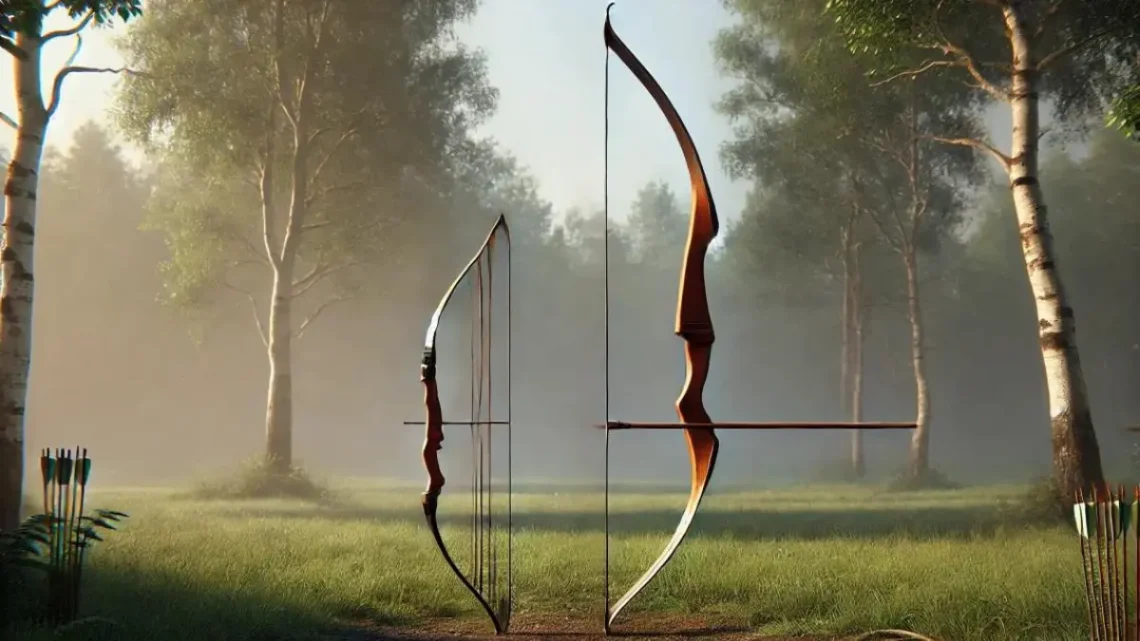
Longbows stand out with their tall, slender design, typically as tall as the archer. Crafted from a single piece of wood, such as yew or hickory, they possess a D-shaped cross-section with a flat back and rounded belly.
This simplicity allows for a smooth, gradual draw and release, making longbows less taxing on the archer during extended use. The choice of material is pivotal, as it must offer flexibility without sacrificing strength.
The design lacks significant recurve, which results in a lower projectile speed compared to short bows but offers advantages in durability and ease of use in various environments, particularly in dense woodland where longbows thrive.
Anatomy of a Short bow: Compactness, Material, and Efficiency
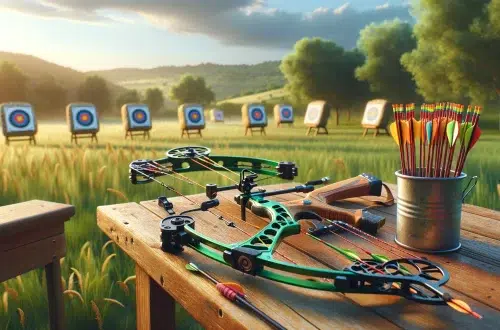
Short bows are lauded for their portability and ease of maneuverability, owed to their smaller size.
Typically ranging from three to four feet in length, short bows facilitate rapid movement and are less cumbersome than their longbow counterparts. This compactness is ideal for archers requiring mobility, especially in dense woodlands or on horseback.
The choice of material in short bow construction significantly affects performance.
Historically, these bows were crafted from yew, but modern versions use fiberglass, carbon fiber, or laminated wood composites, combining lightness with resilience.
Efficiency in a short bow is measured by how effectively it transfers energy to the arrow.
Despite the shortened limbs, well-designed short bows can propel arrows with great speed, due to the high tension in the bow’s curves. However, this efficiency comes with a trade-off, as the higher tension can make the bow harder to draw.
Shooting Mechanics: The Differences in Drawing and Shooting Each Bow
Longbows and short bows each require distinct shooting techniques due to their structural differences.
Longbows typically have a longer draw length, allowing for smoother energy transfer and generally a more forgiving shot.
They require the archer to use a straighter stance with broader arm movement.
In contrast, short bows, being more compact, necessitate a more acute draw angle and are suited for rapid, close-range shooting.
The shooting stance for short bows is more crouched, with the arms drawing the string in a shorter motion. The shooting power of short bows can be more abrupt, so it demands a quicker release to maintain accuracy.
Accuracy and Range: A Comparative Analysis
Accuracy and range mark significant differences between longbows and short bows.
Longbows, with their lengthy draw, allow archers to shoot over great distances, making them ideal for open battlefield engagements. Their size and draw weight contribute to a more stable, accurate shot over long-range.
Conversely, short bows are more maneuverable, offering quicker shots and easier handling, especially in confined spaces.
While they sacrifice range for mobility, modern materials can enhance their accuracy, making them suitable for close-quarters hunting or combat situations. In sum, the choice between a longbow and short bow significantly influences an archer’s range and accuracy capabilities.
Mobility and Handling: Assessing the Bows in Different Terrains
Longbows and short bows offer contrasting experiences when it comes to mobility and handling across varied terrains.
- In dense forests or close quarters, the short bow reigns supreme due to its maneuverability.
- Its compact size allows for easier navigation between trees and the quick release of arrows, which is essential in such constrained environments.
- On the other hand, the longbow is more suited to open fields or plains. Its length provides a mechanical advantage, allowing archers to shoot over longer distances with greater accuracy.
- However, in rough or uneven terrain, the longbow becomes cumbersome, challenging to handle, and to shoot from a position other than standing.
- Conversely, the short bow’s versatility shines, permitting shots from various positions—whether crouching, standing, or even on the move.
Mobility and effective handling are thus contingent on the terrain, significantly influencing the choice between longbows and short bows for different archery scenarios.
Learning Curve and Skill Requirements
Success in archery, irrespective of the bow type, demands dedication and practice.
Mastery of the longbow requires acknowledgment of its:
- Significant draw weight
- Considerable arm strength
- Steady anchoring skills
- Enhanced understanding of arrow dynamics
On the contrary, the short bow nuances:
- Agile handling for rapid shots
- Precision in close-quarters
- Technique adaptation for reduced power
Both demand mental focus, but the longbow’s learning curve is steeper, necessitating persistent skill refinement. Continuous training hones precision, while real-time experience tempers stress management—both critical in navigating the journey from novice to adept archer.
Cultural Impact and Representation in Modern Media
Archery has seen a resurgence in modern media, permeating popular culture through various representations.
Longbows, with their historical gravitas, often appear in medieval period dramas, symbolizing tradition and heritage.
Shortbows, known for their practicality, are frequently depicted in action-adventure genres, showcasing agility and modernity.
Both are used in fictional works to reflect themes of empowerment and precision, often employed by heroic figures.
This resurgence has not only heightened archery’s profile but also inspired a new generation to explore the ancient art, propelling its cultural relevance forward.
Learn more about: Journey of Archery from Combat to Recreation
Practical Scenarios: Hunting, Sports, and Recreational Use
- Longbows are preferred in traditional hunting due to their impressive range and powerful shots.
- Their length allows for smooth, longer draw, increased accuracy, and quiet release, crucial for wild game.
- Shortbows shine in dense forests and confined spaces; their compact design facilitates quick, close-range shots.
- These are ideal for mounted archery or situations requiring agility and speed.
- In sports, longbows are used in competitive target archery, demanding precision over distance.
- Shortbows, with their maneuverability, are preferred in scenarios simulating hunting, such as 3D archery courses.
- For recreation, longbows offer the experience of traditional archery, a historic and serene practice.
- Conversely, shortbows provide casual archers with ease of transport and fun, dynamic shooting sessions.
The Archers’ Perspectives from Seasoned Practitioners
Seasoned archers often highlight the versatility of short bows for quick, reflexive shooting in dense woodlands.
Their compact build allows for easier maneuverability and transport, an advantage in tight spaces or on horseback.
In contrast, longbow users advocate for power and range.
These archers find value in the longbow’s ability to deliver forceful, extended-range shots, making it ideal for open field hunting or battlefield superiority.
Mastery of each type requires dedicated practice, as archers must adapt to the unique draw requirements and handling characteristics inherent to longbows and short bows alike.
Care and Maintenance: Longevity of the Short bow vs Longbow
Proper care is crucial for both short bows and longbows to ensure longevity.
- For longbows, regular waxing of the string and inspection of the limbs for cracks is vital.
- Store in a cool, dry place and avoid exposure to extreme temperatures to prevent warping.
- Short bows require similar care; however, their compact design can tolerate rougher handling.
- Regular use and maintenance will help to identify any wear and prevent irreversible damage.
- It’s important not to leave the bow strung when not in use to maintain tension integrity.
Both types benefit from professional inspections and care for optimal performance and lifespan.
Legal Considerations and Usage Restrictions
When engaging in archery, participants must be aware of laws and regulations governing bow usage which can vary by location.
- Hunting Laws: Longbows and short bows might be subject to specific seasons, and legal requirements for draw weight or arrow length may apply.
- Transportation: Bows should be adequately secured and covered while transporting to prevent accidents or misunderstandings.
- Property Restrictions: Using bows in residential areas is often restricted, and archers must ensure they have permission to shoot on private land.
- Safety Regulations: Mandatory safety courses and certifications may be required, especially for hunters.
- International Travel: Travelers wishing to bring bows abroad must adhere to the customs regulations of the destination country.
Archers should always confirm and adhere to the local regulations to avoid legal repercussions.
Future Trends: Technological Advances in Bow Making
The evolution of archery continues with:
- Materials Engineering: Novel composites and alloys promise lighter, stronger bows, escalating performance and durability.
- Computer-Aided Design (CAD): Precise simulations influence bow shapes, optimizing efficiency and stability in both longbows and short bows.
- 3D Printing: Customized grips and accessories, tailored to the archer—potentially revolutionizing bow usability.
- Smart Technology Integration: Sensors and feedback systems in bows for real-time performance analytics.
- Sustainable Resources: Eco-friendly materials that promise to minimize ecological footprints without compromising bow quality.
Weighing the Pros and Cons to Decide the Best Bow
Choosing between a longbow and a short bow involves careful consideration of their respective advantages and shortcomings.
The longbow’s size offers greater range and power, ideal for open environments.
Meanwhile, the short bow excels in maneuverability and ease of use, particularly in confined spaces or while mounted.
One’s proficiency, archery style, and the intended use cases, such as hunting or target shooting, play crucial roles in this decision.
Ultimately, personal preference and the specific demands of each archer’s situation will guide the selection of the most suitable bow.