

Psyche & Eros – A Story of Love and Trust and Immortality
The myth of Psyche and Eros is one of the most beautiful love stories in Greek mythology. It shows how love can grow stronger through trust, trials, and courage. Even though Psyche starts as a mortal, her journey turns her into something more, strong, wise, and worthy of the gods.
This story mixes love, betrayal, and forgiveness. It reminds us that mistakes happen, but love can still survive. Unlike many Greek myths full of tragedy, this one ends in joy. That makes it stand out.
Psyche’s name means soul, and Eros (or Cupid) stands for love. Their story teaches that love and soul must work together. It also proves that even the gods are not perfect and that real love takes work.
Psyche’s Background: Beauty Among Mortals

Psyche begins her life as a mortal princess. She lives in a grand kingdom and has two sisters. All three are beautiful, but Psyche’s beauty stands out. People from far away come just to look at her. They say she looks more stunning than Aphrodite, the goddess of love and beauty.
This praise upsets Aphrodite. She grows jealous and wants to punish Psyche. She tells her son, Eros (also known as Cupid), to shoot Psyche with his arrow and make her fall in love with someone awful. But something unexpected happens. Eros sees Psyche and falls in love with her.
Despite her beauty, Psyche feels sad. People admire her, but no one wants to marry her. Her parents visit the Oracle of Apollo for answers. The Oracle gives a strange message: Psyche must go to the top of a mountain and prepare to marry a monster.
Heartbroken but brave, Psyche climbs the mountain. Instead of a monster, she finds a magical palace. A gentle, invisible husband welcomes her. He treats her with care and love, but she never sees his face. He warns her not to try.
This marks the beginning of Psyche’s journey. It’s a tale of love, trust, and courage, and it brings her closer to the gods including Eros, the one meant to destroy her but ends up loving her instead.
What Does Psyche Look Like?
In Greek mythology, Psyche is described as incredibly beautiful, so stunning that people compare her to the goddess Aphrodite. Some even say she looks more divine than the goddess herself. That comparison creates the tension in the story and sets everything in motion.
Psyche’s name means “soul” or “breath of life,” and her outer beauty is said to reflect her inner purity. Her features include long flowing hair, soft skin, and eyes filled with curiosity and kindness. She doesn’t need fancy clothes or jewelry. Her natural beauty draws people in, and her grace makes her unforgettable.
Artists through the centuries have imagined Psyche with a calm, gentle face and a strong yet delicate body. Many paintings show her with butterfly wings. These wings represent transformation, which fits her story perfectly. Like a butterfly, she begins her journey in one form and changes into something stronger and wiser.
Unlike other women in myths who use their looks for power, Psyche doesn’t seek fame or attention. Her beauty becomes a burden at first. People stop worshipping the gods and focus only on her, which leads to jealousy from Aphrodite.
Psyche’s beauty becomes the symbol of the soul’s journey, something innocent and vulnerable, yet capable of great strength and love.
Eros, The God of Love
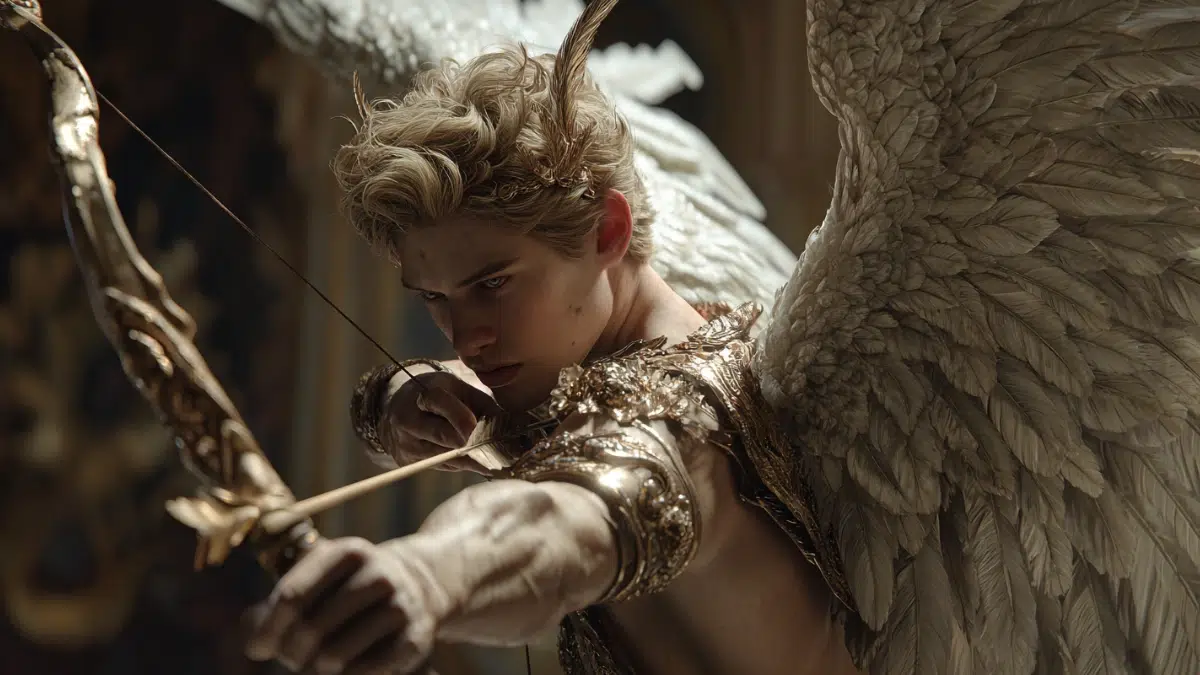
Eros, the god of love, looks nothing like the chubby baby Cupid we often see today. In early Greek myths, Eros appears as a handsome young man with powerful wings and a playful but serious nature.
He often carries a bow and arrows. One set tipped with gold to inspire love, and another with lead to cause rejection. His arrows play a major role in many myths, including the one with Psyche.
Eros’s face glows with youth and charm. He has golden hair, soft skin, and eyes that seem to know your deepest desires. His wings, large and feathered, shimmer like sunlight. While he seems gentle, his role is serious. He controls the strongest emotion, love, and that makes him powerful.
Artists through history show him in many ways: sometimes playful, sometimes quiet and thoughtful. In the story of Psyche, Eros appears more human and emotional than many other gods. He falls deeply in love and hides his identity, which makes him vulnerable.
In this myth, his beauty isn’t just physical. It reflects his ability to feel love, hurt, and longing. This makes Eros unique among the gods. He’s not just the god of love, he lives it, fully.
The Myth of Psyche and Eros (Cupid)

Psyche was a mortal princess with such beauty that people began worshipping her instead of Aphrodite.
Angry and jealous, the goddess of love told her son Eros (also called Cupid) to make Psyche fall in love with someone awful. But when Eros saw Psyche, he accidentally pricked himself with his own arrow and fell in love with her.
Psyche was soon taken to a beautiful palace by the wind god. There, she meets her mysterious husband but he only comes to her at night and tells her she must never look at him. Despite the warning, Psyche became curious.
Her jealous sisters visit her and convince her that her husband might be a monster.
One night, Psyche lights a lamp while Eros slept. She sees he was a beautiful god, but a drop of oil from her lamp falls on him. He wakes and flees, heartbroken that she has broken his trust.
Psyche sets out to win him back. She goes to Aphrodite, who gives her a series of impossible tasks. These include sorting a huge pile of seeds, fetching golden wool from dangerous sheep, and going to the Underworld to collect beauty from Persephone.
Psyche completes each task with help from kind creatures and even the gods. On her final journey, she opens Persephone’s box and falls into a deep sleep. Eros, who still loves her, finds her and wakes her with a kiss.
He pleads with Zeus to let them marry. Zeus agrees, making Psyche immortal, and welcomes her to Mount Olympus. Together, Psyche and Eros have a daughter named Voluptas, which means “Pleasure.”
Their story shows that true love takes patience, trust, and courage. Psyche’s name means “soul,” and her journey represents the soul’s path to find and grow through love.
Other Interesting Myths Involving Psyche and Eros

1. Psyche Wasn’t Always a Goddess
Unlike many Greek goddesses, Psyche starts as a mortal woman. Her journey from human to immortal sets her apart. She earns her place among the gods—not by birth, but by courage and love.
2. Aphrodite Gets Jealous
The myth shows a rare case of a goddess feeling threatened by a mortal. Aphrodite becomes so jealous of Psyche’s beauty that she sends her son Eros to ruin her life. But instead, Eros falls in love. This twist changes the course of the myth.
3. Psyche Faces Impossible Tasks
Before gaining immortality, Psyche must complete four tasks set by Aphrodite. These include sorting seeds, fetching golden wool, gathering water from a deadly river, and entering the Underworld. Each task tests her will and earns her divine respect.
4. Eros Also Appears in Other Myths
Eros is part of many other myths, often playing matchmaker or causing trouble. In the myth of Apollo and Daphne, for example, Eros shoots a golden arrow into Apollo and a lead one into Daphne. This makes Apollo fall in love and Daphne run away forever.
5. Psyche’s Name Has Meaning
The Greek word psyche means both “soul” and “butterfly.” This links her story to transformation. Just like a butterfly grows from a caterpillar, Psyche grows from a mortal into a goddess through love and hardship.
6. Roman Version Uses ‘Cupid’
In Roman mythology, Eros becomes Cupid and Psyche’s story appears in Apuleius’ Metamorphoses (also called The Golden Ass), written around the 2nd century CE. It’s one of the only full versions of the myth we have.
Other Myths

Psyche only appears in one main myth.
Her story comes from a Roman novel called The Golden Ass by Apuleius, written in the 2nd century CE.
That’s where we learn about her love for Eros, her challenges, and how she becomes immortal.
Ancient Greek myths don’t really include her outside this tale. Later writers and artists sometimes use her as a symbol of the soul, but she’s not a regular character in other myths.
Myths Involving Eros
Eros appears more often and has a broader role in Greek mythology. Some notable mentions include:
In early texts like Hesiod’s Theogony, Eros is a primordial god, emerging at the dawn of creation alongside Chaos and Gaia. He represents the force of attraction and procreation in the universe.
Eros often appears in stories involving unwanted love or divine punishment. His arrows cause love or loathing, depending on the tip, gold inspires desire, lead causes aversion.
Apollo and Daphne

Eros starts this myth by causing trouble. He shoots Apollo with a golden arrow that makes him fall deeply in love with Daphne, a forest nymph.
At the same time, he shoots Daphne with a lead arrow, making her hate Apollo. Apollo chases her, but she keeps running away. To escape him forever, she prays to her father, a river god, who turns her into a laurel tree.
This story shows how Eros’s arrows can twist love into heartbreak.
Zeus and Europa

Eros helps Zeus fall in love with Europa, a Phoenician princess. To get close to her, Zeus turns himself into a gentle white bull.
When Europa climbs onto his back, he runs across the sea to the island of Crete. There, Zeus reveals his true form and Europa becomes the mother of King Minos.
Eros’s role here is quiet but powerful. His arrow makes Zeus desire Europa, setting off a chain of events that shape Greek myths.
Orpheus and Eurydice
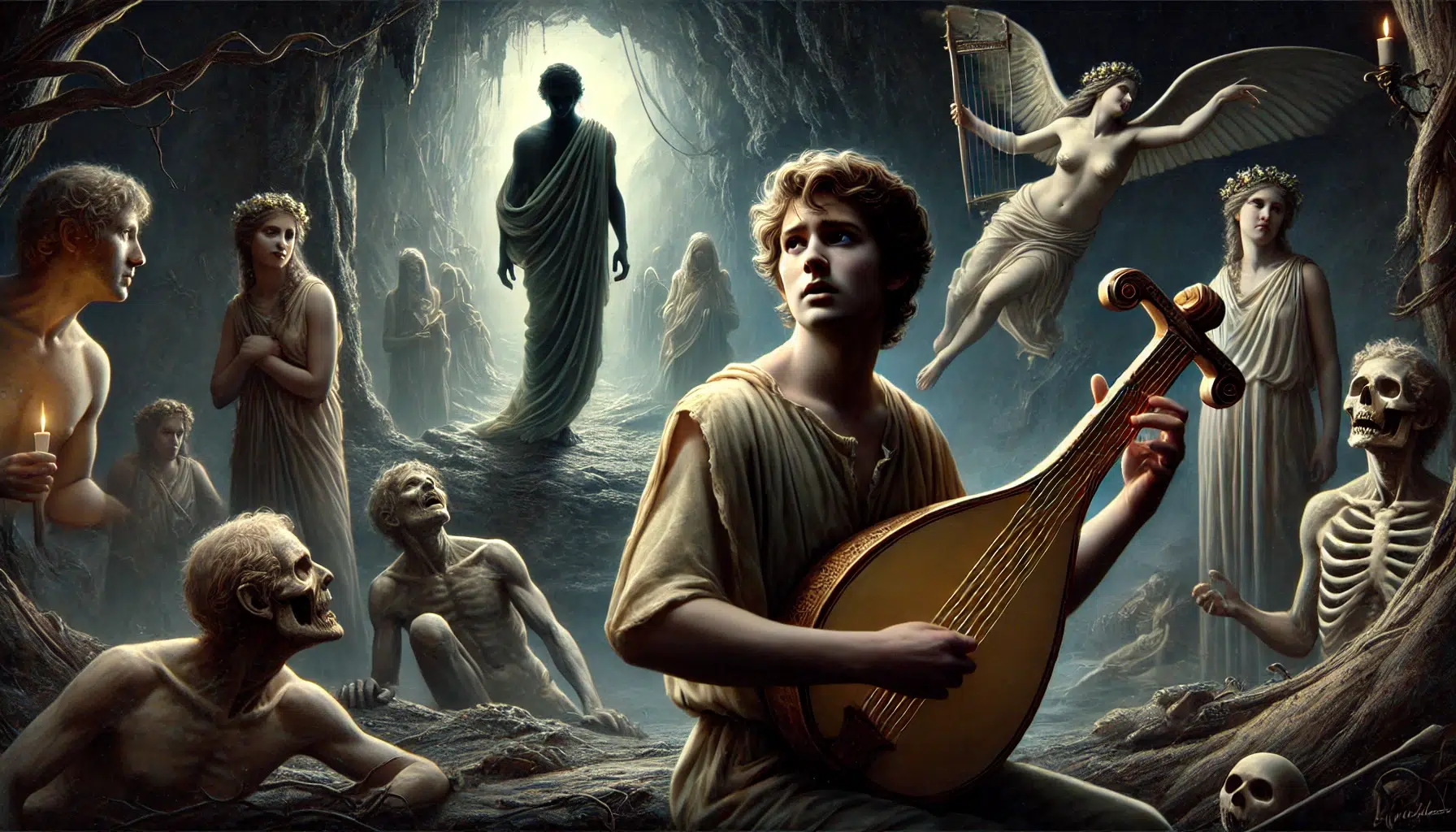
Eros plays a background role in the story of Orpheus and Eurydice. Their deep love reflects the kind of passion Eros stirs in mortal hearts.
After Eurydice dies, Orpheus travels to the Underworld to bring her back. He charms Hades with his music, but loses her by looking back too soon.
Though Eros doesn’t appear directly, the love and longing between the couple reflect his unseen influence—how powerful love can lead both to hope and sorrow.
Conclusion: Love Worth Fighting For
The story of Psyche and Eros shows how love grows through hardship. It begins with betrayal and trials, but ends in deep trust and unity. Their journey reminds us that real love doesn’t stay perfect. It takes effort, courage, and forgiveness.
Psyche earns her place among the gods, not by birth, but by heart. Eros learns to love beyond beauty, valuing Psyche’s strength and soul. Together, they show that love is not just a feeling. It’s a choice made again and again.
Even today, their story speaks to anyone who has loved, lost, and found their way back. It stands as one of the most touching love myths from ancient Greece.