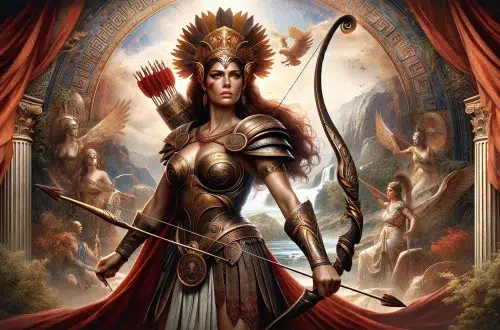

Philoctetes: Legendary Greek Archer & Healer
Philoctetes is a hero and legendary Greek archer from old Greek stories.
He’s famous for his role in the Trojan War, a big battle from mythology.
His story includes themes of pain, loneliness, and ultimately, heroism.
Explore how Philoctetes’ journey can help us understand more about bravery, friendship, and overcoming challenges.
Learn more about the roles in Greek mythology:
- Achilles: Greek Warrior Hero’s Journey from Glory to Grief
- Apollo: Exploring the Archer God’s Myths and Legends
- Artemis: Ancient Greek Goddess of Archery
- Atalanta: Fabled Archer to Legendary Heroine
- Diana: Goddess of Hunt in Roman Mythology
- Gods and Archery in Greek Mythology Books
- God of Archery: Norse, Greek & Roman Mythology
- Hector of Troy: Legendary Trojan Warrior
- Hippolyta: Queen of the Amazons in Greek Mythology
- Legacy of Archers: Women in Greek Mythology
- Paris: Tragic Hero, Villain or Pawn of the Gods
- Penthesilea: Amazon Queen Who Died in Trojan War
Key Takeaways:
- Philoctetes was a legendary Greek archer with unique healing abilities.
- He played a significant role in the Trojan War alongside famous heroes like Achilles and Hector.
- Philoctetes’s possession of the bow and arrows of Heracles played a crucial role in the fall of Troy.
- Philoctetes’s legacy in Greek mythology exemplifies the power of healing and the enduring nature of legends.
Background of Philoctetes
Philoctetes is a fascinating character from Greek mythology. He was born in the city of Meliboea, which lies in the ancient region of Thessaly.
This region was famous for its warriors and mythical heroes.
King Poeas, his father, was a skilled archer renowned for his bravery.
His mother’s identity is less clear, as myths often focus more on paternal lineage.
Philoctetes inherited his father’s skills in archery, which played a crucial role throughout his life.
This lack of detail about his personal life adds to the sense of isolation he experiences in the myths.
Philoctetes was especially famous for receiving the magical bow and arrows of Heracles.
This gift marked Philoctetes as a hero destined for great things, yet also foreshadowed the suffering he would endure.
His story teaches lessons about courage, endurance, and the impact of destiny in the lives of heroes.
| Key Details | |
|---|---|
| Character | Philoctetes |
| Parentage | Son of Pœas, King of the Malians, skilled archer |
| Role | Joining Greek expedition against Troy |
| Incident | Bitten by a snake and developed a painful wound |
| Island of Exile | Lemnos |
| Reason for Exile | Unbearable smell of his wound |
| Arsenal | Bow and arrows of Heracles |
| Importance | Prophecy in the Trojan War |
The Myth of Philoctetes
The Connection Through the Bow
Philoctetes had a special connection with Hercules, one of the greatest heroes in Greek mythology.
This connection centered around a powerful bow, which became the key to Philoctetes’ destiny.
Hercules was not just a hero; he was known for his incredible strength and heroic deeds.
As Hercules neared the end of his life, he suffered terribly from a poisoned shirt given to him by mistake.
The pain was so intense that Hercules decided to build a funeral pyre to end his suffering.
However, he needed someone to light the pyre, a task that required bravery.
Philoctetes, showing great courage, stepped forward to help Hercules.
He was the only one willing to light the fire. Moved by Philoctetes’ bravery, Hercules wanted to thank him in a meaningful way.
As a gift, Hercules gave Philoctetes his bow and arrows. These were no ordinary weapons; they were imbued with magical powers.
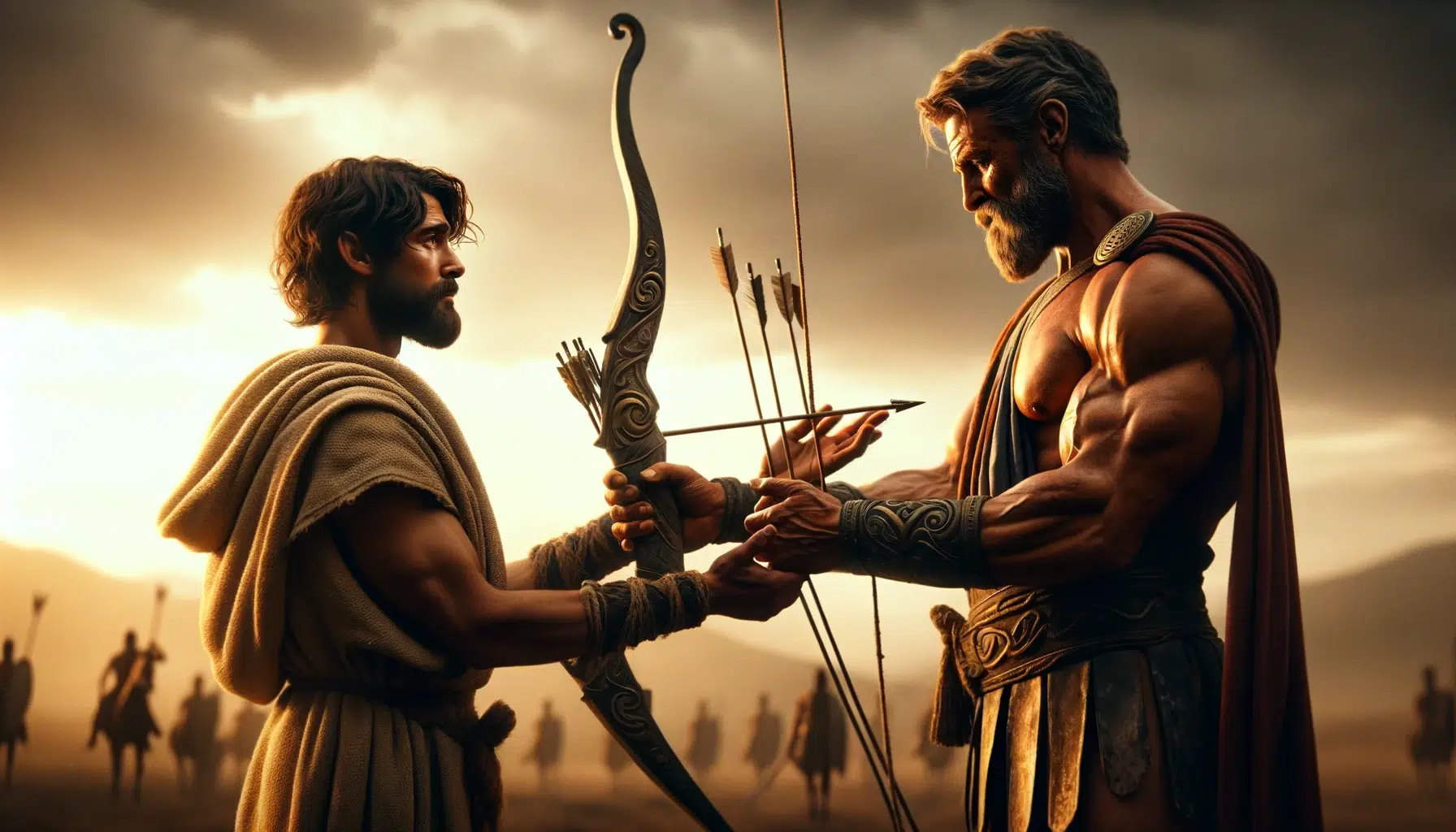
The Gift of Hercules’s Bow and Arrows
This bow was famous for its accuracy and strength, qualities that Hercules himself embodied.
The bow’s power was said to be crucial for winning the Trojan War.
Hercules knew that by passing this bow to Philoctetes, he was entrusting him with a great responsibility.
The gift of the bow linked Philoctetes directly to the legacy of Hercules. It symbolized trust and heroism.
Philoctetes’s mastery of the bow and arrows provided a crucial advantage to the Greeks in their prolonged battle against Troy.
His accurate shots decimated the Trojan forces and played a vital role in weakening the city’s defenses.
Without Philoctetes and the power of Heracles’s weapons, the outcome of the war may have been very different.
| Philoctetes’s Role in the Trojan War | Significance |
|---|---|
| Possession of Heracles’s bow and arrows | Allowed the fulfillment of the prophecy and the ultimate capture of Troy. |
| Deadly accuracy with the bow | Inflicted significant damage on the Trojans, weakening their forces. |
| Played a crucial role in battles | Contributed to the success of the Greek forces and the fall of Troy. |
The Journey Begins: Philoctetes and the Trojan War

Philoctetes’ journey to the Trojan War began with high hopes and the promise of victory.
He joined many Greek heroes, all eager to fight and win the war against Troy.
As a skilled archer with Hercules’ magical bow, Philoctetes was an important part of the team.
The Greek forces gathered at the port of Aulis, preparing to sail to Troy.
Philoctetes was among them, carrying the bow that was key to their success.
The journey started well, with all the heroes ready for the challenges ahead. However, it soon took a painful turn for Philoctetes.
Greek Forces Stopped on the Island of Lemnos
While stopping at the island of Lemnos, Philoctetes was bitten by a snake.
The bite was deeply poisonous, causing a wound that was terribly painful and would not heal.
The pain was so intense that Philoctetes couldn’t stop screaming. His wound also gave off a horrible smell.
The other Greeks, unable to bear the noise and smell, made a difficult decision.
They believed that Philoctetes’ condition would slow them down and jeopardize their mission.
So, led by Odysseus, they decided to leave Philoctetes behind on Lemnos. They thought this was for the best, focusing on the greater goal of winning the war.
Left alone on Lemnos with his painful wound, Philoctetes felt betrayed.
His journey to glory was cut short, turning into a struggle for survival.
This marked the beginning of his years of isolation, shaping his story into one of endurance and resilience.
Alone on Lemnos: Philoctetes’ Years of Isolation
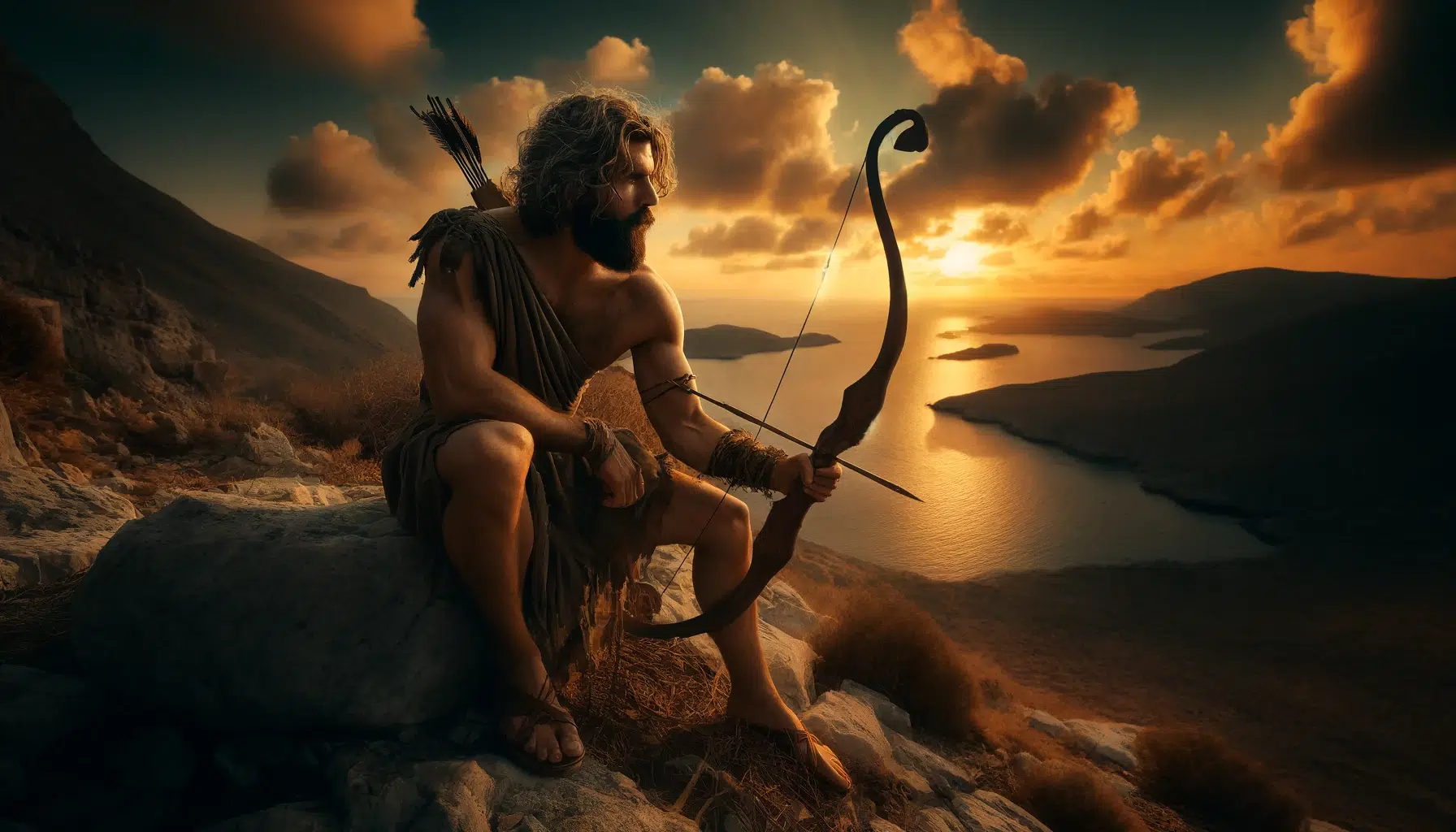
After being abandoned on Lemnos, Philoctetes faced years of solitude.
The island was remote, leaving him completely isolated from the world.
His only companions were pain and loneliness, as he dealt with his unhealing wound.
Every day, Philoctetes struggled to survive in this harsh environment.
He had to find food and water, which was not easy on an empty island.
His skills as an archer helped him hunt for whatever small animals he could find.
The pain from his wound was constant, and there was no one to help him heal.
Despite this, Philoctetes never gave up hope. He believed that one day, his situation might change, and he could leave the island.
Living alone on Lemnos taught Philoctetes strength and resilience.
He learned how to cope with his physical pain and emotional heartbreak.
This time of isolation became a test of his character, preparing him for the challenges ahead.
It showed his ability to endure and keep fighting, even when things seemed hopeless.
The Prophecy of Troy

The fall of Troy was foretold in a prophecy.
This prophecy deeply affected how the Greek military acted and what motivated them.
It focused on Philoctetes and a powerful bow, once owned by Heracles.
Oracle of Troy
The Delphic Oracle was highly respected in Greek society.
It said Troy couldn’t fall without Philoctetes.
The Greeks understood this to mean they must get him back from isolation on Lemnos.
This prophecy’s importance led them to make efforts to do just that.
Reintegration into the Greek Army
Bringing Philoctetes back into the Greek army was a big step.
It brought them a strategic advantage along with his personal redemption.
His skills in battle were crucial. This marked a key moment in Greek military tales.
His return showed the powers of transformation and honor in their stories.
The Prophecy and Rescue of Philoctetes
Years after Philoctetes was left on Lemnos, the Greek forces faced difficulties defeating Troy.
They remembered a prophecy that was crucial to their mission.
The prophecy stated that they could not win the Trojan War without Philoctetes and his magical bow.
This revelation made them realize the importance of Philoctetes’ role in the war.
Neoptolemus and Odysseus’s Mission
Neoptolemus, the son of Achilles, and Odysseus were entrusted with a crucial mission.
To retrieve Philoctetes from the island of Lemnos.
Their objective was twofold:
- to convince Philoctetes to join the Greek forces and
- to retrieve the renowned bow and arrows of Heracles
The success of the Trojan War hinged on the fulfillment of this mission.
It would require not only physical prowess but also tact and cunning to win over Philoctetes.
Odysseus, known for his cleverness, and Neoptolemus, a young and brave warrior, were chosen to go back to Lemnos and bring Philoctetes to Troy.
The Meeting on Lemnos
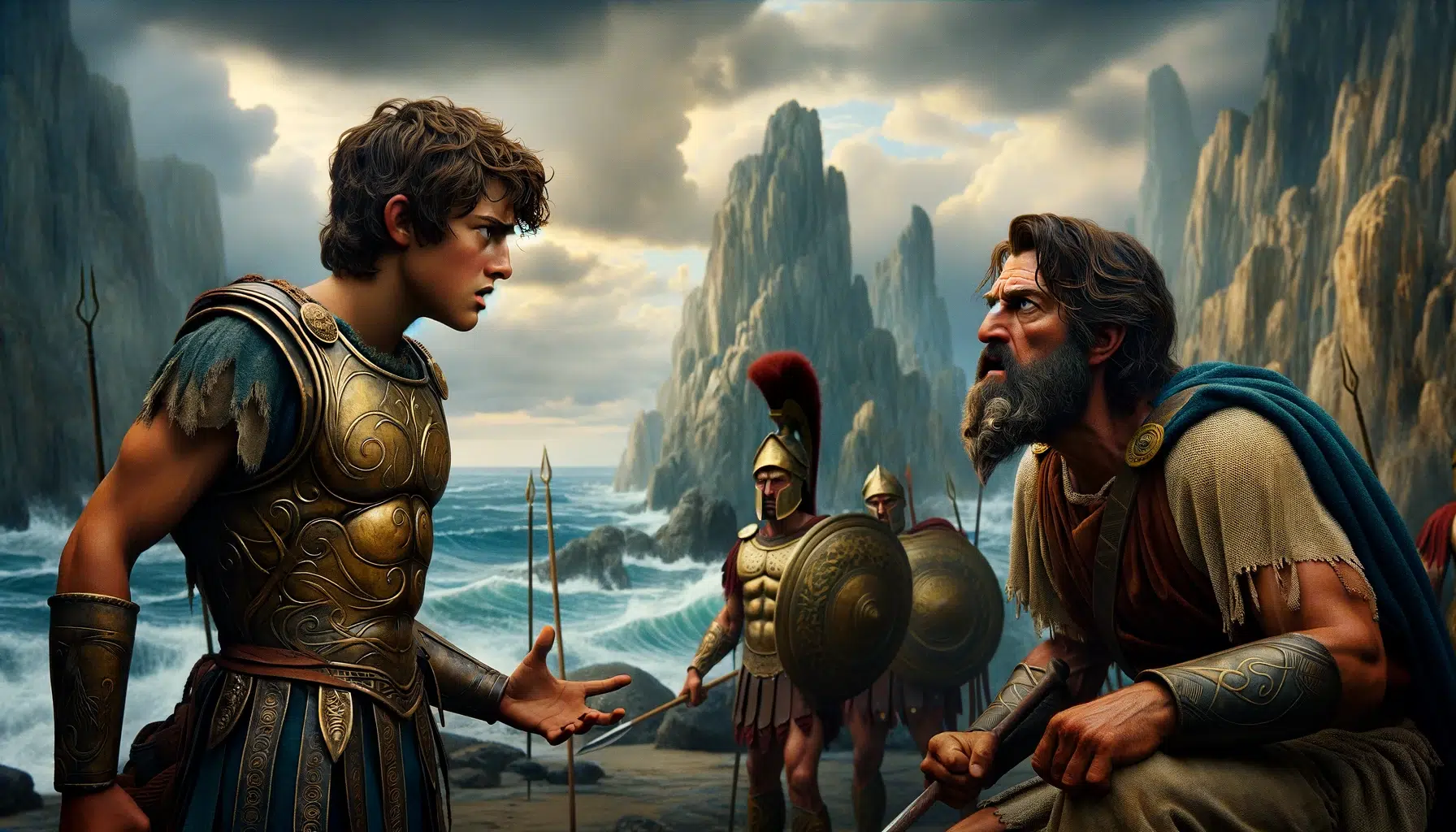
On the island of Lemnos, a crucial meeting unfolded between Philoctetes and Neoptolemus, shrouded in deception.
Neoptolemus, posing as a sympathetic ally, approached Philoctetes with a facade of understanding and solidarity in his exile on Lemnos.
With clever manipulation, Neoptolemus unveiled his true identity as the son of Achilles.
He expressed his resentment towards the Greek leaders, including Odysseus.
This carefully plotted ruse was designed to gain Philoctetes’s trust and convince him to join the Greek forces in their quest.
The meeting on Lemnos became a pivotal turning point, where trust hung in the balance, and the fate of the Trojan War rested on the outcome.
Philoctetes, having endured years of isolation and suffering, had every reason to be cautious with his newfound companion.
The deceptive encounter on Lemnos serves as a testament to the lengths one may go to achieve victory.
The meeting on Lemnos set in motion a series of events that would test the moral boundaries of heroism and reshape the course of history.
After much discussion, Philoctetes agreed to go with them to Troy.
Realizing that his role was not just about fighting but also about fulfilling his destiny.
This moment marked the beginning of his return to the heroic world and the crucial part he would play in the fall of Troy.
The Return to Troy
With Philoctetes now on their side, Neoptolemus and Odysseus returned to Troy with the bow and arrows of Heracles.
Philoctetes’s presence and his deadly accuracy with the bow played a crucial role in the final stages of the Trojan War.
Together, they contributed to the fall of Troy and the ultimate success of the Greeks.
After retrieving Philoctetes and the powerful bow and arrows of Heracles, Neoptolemus and Odysseus made their way back to Troy.
The return of Philoctetes, with his exceptional archery skills, proved invaluable in the final battles of the Trojan War.
His deadly accuracy struck fear into the Trojan forces, turning the tide of the war in favor of the Greeks.
His partnership with Neoptolemus and Odysseus proved to be a formidable force, leading to the ultimate success of the Greek forces.
Philoctetes’ Role in the Fall of Troy
Philoctetes’ return to the Greek army was a game-changer.
He brought with him amazing archery skills which were key in a big fight and how using Heracles’ bow made a huge difference.
Using the Bow of Heracles
Philoctetes is remembered for his role in bringing Troy down with the bow of Heracles.
This bow wasn’t just a weapon; it was a sign of Philoctetes’ great family history.
And it was seen as a symbol backed by the gods for winning the Trojan War.
Clash with Paris, Prince of Troy
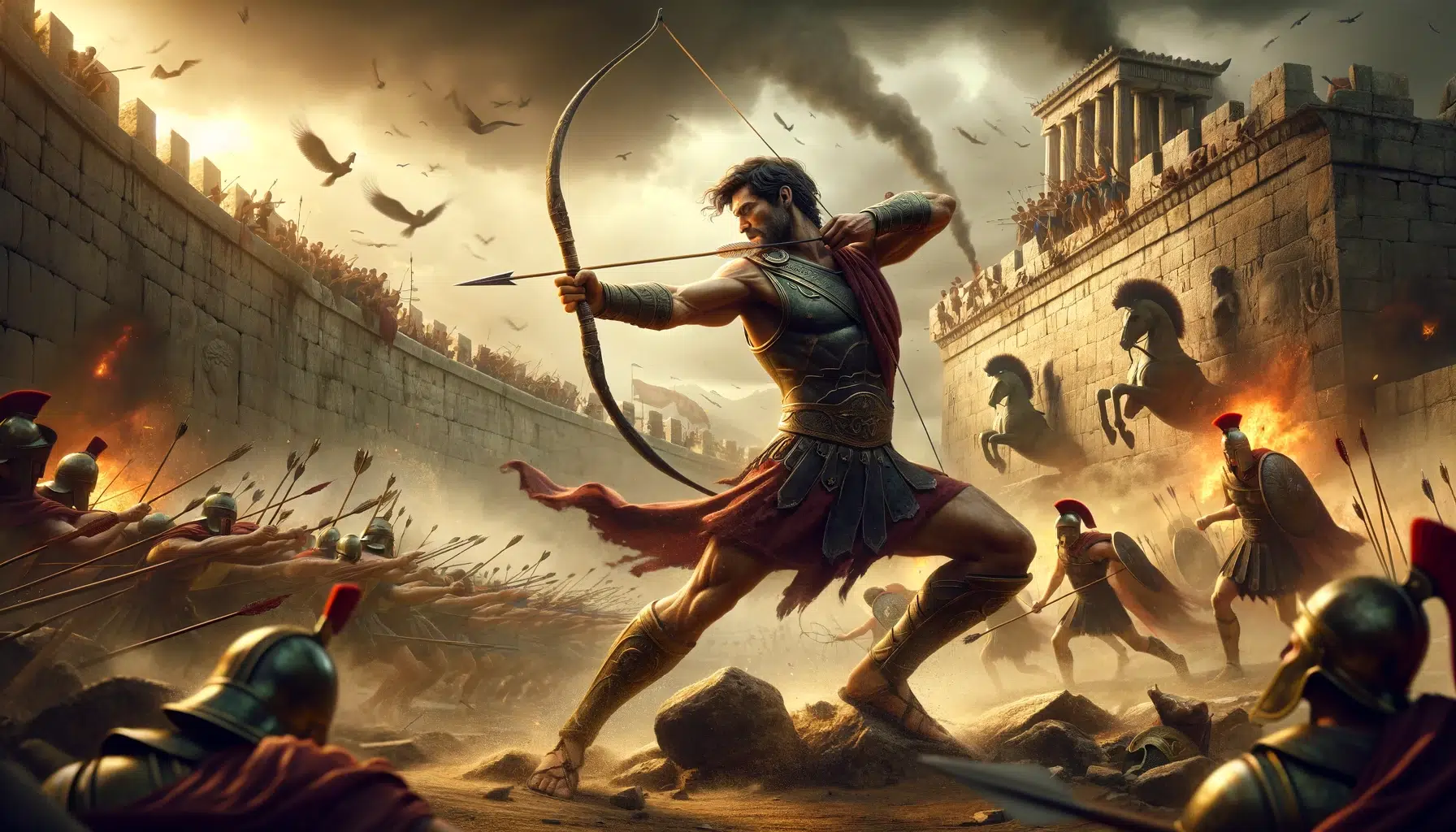
His fight with Paris in Troy showed the power of archery in battle.
Philoctetes’ shot hit Paris right on target, marking a moment of justice and retribution.
This was more than a personal fight; it marked a key point in the war, showing Philoctetes’ big role in Troy’s defeat.
The stories of Troy’s fall highlight archery’s crucial role, mainly through Philoctetes’ deadly accuracy.
His use of Heracles’ bow is a memorable tale in Greek mythology.
It shows the lasting impact of ancient heroes.
- Philoctetes’ use of Heracles’ bow shows he was chosen by the gods, linking him to Heracles.
- Philoctetes’ win against Paris shows both his personal bravery and his strategic importance.
- His archery represents the best in Greek fighting spirit, making him a heroic figure.
Roles in the Trojan War:
| Hero | Role |
|---|---|
| Philoctetes | Famous Greek archer, possessed the bow and arrows of Heracles |
| Achilles | Legendary Greek warrior, central to the story of the war |
| Hector | Prince of Troy, formidable warrior defending his city |
The Impact of Philoctetes: Lessons of Courage and Forgiveness
Philoctetes’ journey through pain and abandonment to becoming a hero left a lasting impact on Greek mythology and its audience.
His story teaches us about the power of resilience and the importance of forgiveness.
Despite being left alone with a painful wound, Philoctetes managed to survive on Lemnos through sheer determination and self-reliance.
His ability to endure such hardship shows his incredible strength and resilience.
This part of his story inspires us to face our challenges, no matter how difficult they seem.
When Philoctetes returned to Troy, he had to decide whether to hold onto his anger or forgive those who had wronged him.
By choosing forgiveness and focusing on the greater good, he played a crucial role in defeating Troy.
This teaches us that forgiving others can lead to important contributions and personal growth.
Philoctetes’s Legacy
His Heroic Healing Abilities
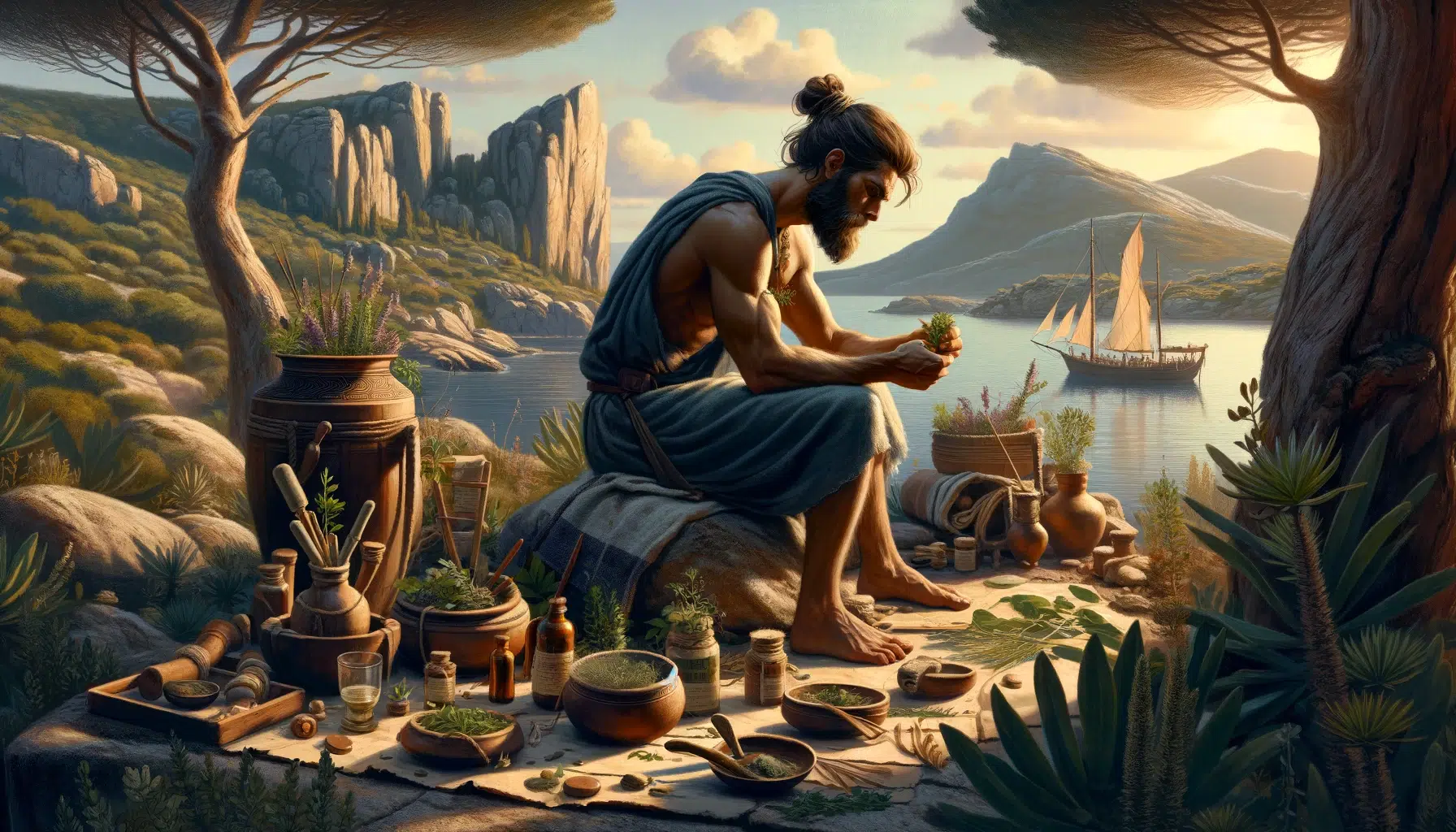
Known as a skilled archer in Greek mythology, his story also hints at his healing abilities.
Left on the island of Lemnos with a painful, festering wound, Philoctetes would face a long battle with his injury.
However, over the years, he would learn to manage his condition and gained knowledge about healing.
His time alone on the island taught him to use the natural resources around him to treat his wound.
He found herbs and plants could ease the pain and reduce infection.
This self-taught healing shows Philoctetes’ resourcefulness and determination to overcome his challenges.
When he returned to Troy, Philoctetes’ understanding of healing played a subtle role in his interactions.
He understood the importance of recovery, both physically and emotionally.
This knowledge helped him empathize with others facing hardships, making him a more compassionate warrior.
Philoctetes’s healing abilities were renowned in Greek mythology.
Heracles, with his superhuman strength and godlike powers, gave Philoctetes a profound gift.
With the power of healing, he could mend wounds and cure ailments, serving as a beacon of hope and salvation on the battlefield.
During the Trojan War, Philoctetes’s healing talents played a crucial role.
This ability not only saved the lives of fellow Greek warriors but also ensured their swift recovery, enabling them to continue the fight against the Trojans.
His healing prowess demonstrated the extraordinary powers bestowed upon heroes in Greek mythology.
An Olympian Archer on the Battlefield
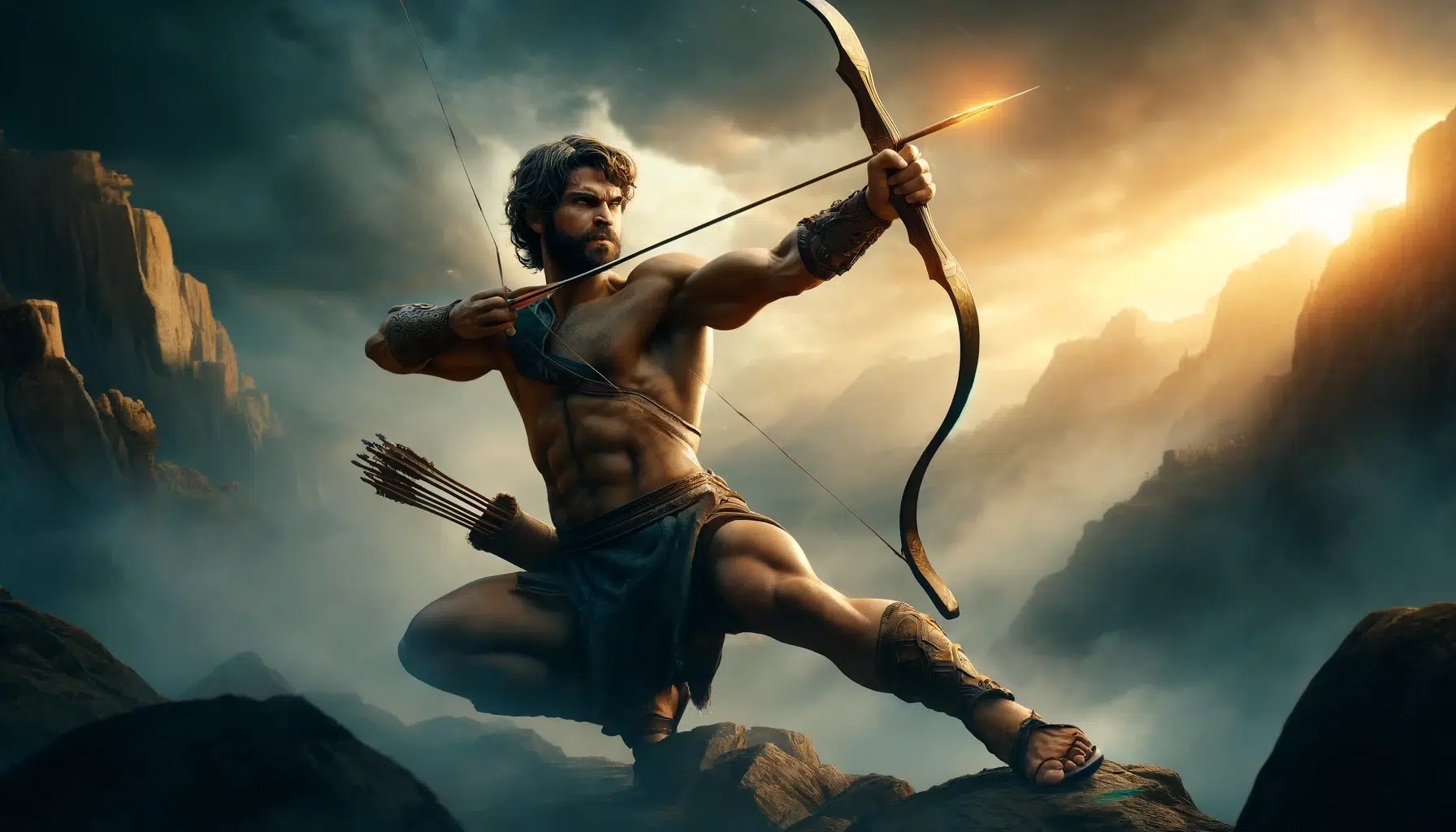
In addition to his unique healing abilities, Philoctetes was an exceptional archer, wielding the legendary bow and arrows of Heracles.
With unrivaled accuracy and precision, he struck down enemies from afar, making him an invaluable asset in the Trojan War.
Philoctetes’s archery skills struck fear into the hearts of the Trojans and inspired his fellow Greek warriors.
The power and symbolism of Philoctetes’s archery extended beyond his physical prowess.
His supernatural skills with the bow and arrows highlighted the divine essence within him, further establishing his status as a hero of Greek mythology.
| Philoctetes’s Legacy: | Key Aspects |
|---|---|
| Healing Abilities | Extraordinary power to cure wounds and ailments |
| Archery Skills | Exceptional accuracy and precision with the bow and arrows |
| Symbol of Heroism | Represented bravery, resilience, and the divine qualities of a hero |
Conclusion: The Lasting Legacy
Philoctetes’ story teaches us about strength, forgiveness, and the importance of each person’s role in a group.
Despite being abandoned and facing great pain, he showed incredible resilience by surviving alone and later playing a key role in the Trojan War.
His ability to forgive those who left him and focus on the greater good helped lead the Greeks to victory.
Philoctetes reminds us that overcoming challenges and working together can lead to success.
His journey from a lonely island to becoming a hero of Troy shows that we can all make a difference, no matter our struggles.
Let his story inspire us to face our own challenges with courage and to always value the contributions of others.