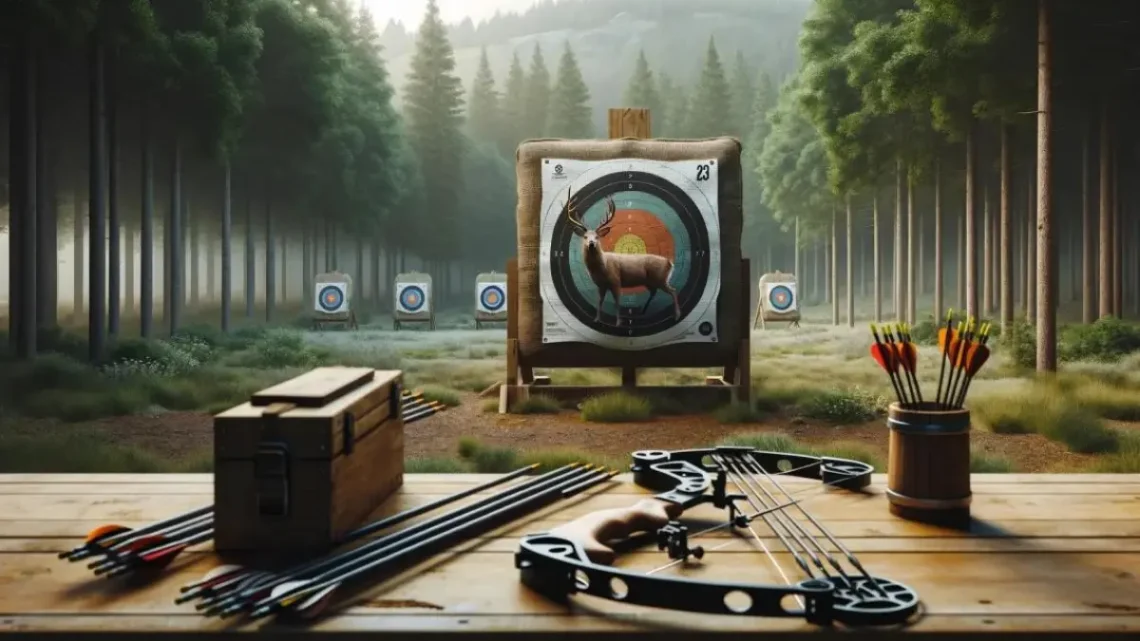
Perfecting Shots with a Deer Target
The Importance of Using a Deer Target in Archery
Refine your archery skills and perfecting your shot using a deer target.
Using a deer target in archery is critical for multiple reasons:
- Realistic Practice: Deer targets provide archers with a life-like simulation, enhancing the accuracy of shots in real hunting scenarios.
- Shot Placement: Practicing with deer targets helps archers understand vital hit points, ensuring a quicker and more humane kill.
- Judging Distance: It trains archers to judge distances accurately, a crucial skill when targeting game in various terrains.
- Confidence Building: Consistent practice with these targets builds the confidence needed for successful hunting excursions.
- Bow Calibration: It allows archers to fine-tune their equipment, ensuring their bows are properly calibrated for precision shooting.
Different Types of Archery Targets for Deer Hunting
When preparing for deer hunting, archers should familiarize themselves with various target types designed to mimic deer anatomy for practice. They include:
- 3D Targets: These are lifelike models that help hunters understand vital shot placement on an actual deer, enhancing the simulation of a real hunt.
- Block Targets: Typically made of foam, block targets are ideal for repetitive shooting, helping archers improve accuracy and consistency.
- Bag Targets: Filled with synthetic material, bag targets can withstand numerous shots and are suited for broadhead and field point practice.
- Paper Targets: These are printed with deer silhouettes featuring outlined organs, offering a cost-effective method for honing shot placement.
Selecting the right type is crucial for realistic practice and improved skill in the field.
Features to Look for When Selecting a Deer Archery Target
When investing in a deer archery target, one should prioritize durability to withstand numerous shots.
Look for a target made with self-healing foam that can handle broadheads, field points, and being expandable.
Size and realism are crucial; a life-sized target with detailed vitals can enhance practice and prepare an archer for actual hunting scenarios.
Portability matters if the target will be moved frequently, thus a lighter model with handles is preferable.
Additionally, weather resistance ensures the target can endure outdoor conditions without deterioration. Select a target with easy arrow removal to facilitate a smooth practice session.
3D Targets vs. Paper Targets: Pros and Cons for Deer Hunters
- Pro of 3D Targets
- Mimic real-life scenarios, improving shot placement.
- Enhance judging distances and angles.
- Offer a lifelike hunting experience for practice.
- Con of 3D Targets
- Generally more expensive than paper targets.
- Less portable due to size and weight.
- Can be damaged more easily with repeated use.
- Pro of Paper Targets
- Cost-effective and easy to replace.
- Lightweight and highly portable.
- Allow for easy scoring and pinpoint accuracy.
- Con of Paper Targets
- Lack the realism of a three-dimensional target.
- Not as durable when exposed to weather conditions.
- Do not aid in practicing body placement shots as effectively.
Tips for Realistic Deer Target Placement
When setting up a practice area for archery, realism is key to effectively preparing for a hunt. Here are some tips:
- Evaluate the Terrain: Place your deer target in a natural setting, similar to where you would typically find deer. Look for areas with brush or tree cover.
- Vary the Distances: Place the target at different ranges to mimic realistic hunting scenarios. Start with closer distances and gradually increase.
- Incorporate Elevation: If possible, position the deer target on slight inclines or declines to practice shooting at different angles.
- Use Natural Obstacles: Include elements such as branches or leaves in your sightlines to reproduce shooting through the foliage.
- Wind and Light: Consider wind direction and lighting when placing your target, as these factors will affect your shot in real hunting situations.
By creating a practice space with these considerations, archers can enhance their skills in settings that simulate the unpredictability of the wild.
Improving Shot Placement Through Target Practice
For archers aspiring to ensure ethical harvests, mastering shot placement on a deer target is crucial. The vital zones include:
- The heart-lung area, offering the most lethal and humane shot. Practice aiming behind the shoulder, approximately one-third up from the bottom of the chest.
- The brain, a small target requiring precision and discouraged due to its difficulty.
- The neck/spinal area, which can be effective but risky. Injuries lead to unnecessary suffering.
By focusing on replicating these shots during target practice, archers can enhance their skill in hitting the vital zones reliably.
Practice Makes Perfect
Achieving proficiency in archery requires dedication and regular practice. To hone skills with a deer target, it is recommended that archers engage in the following routine:
- Daily Practice: For the dedicated archer looking to quickly improve, shooting a series of arrows at the deer target daily is ideal. A commitment to at least 30 minutes each day can yield significant progress.
- Weekly Sessions: For those with limited time, aiming for 3-4 weekly practice sessions can still provide substantial benefits. Each session should be long enough to work on form, accuracy, and consistency.
- Pre-Season Intensity: In the weeks leading up to hunting season, increasing practice frequency can simulate hunting conditions and sharpen instincts. Daily practice with specific focus on shot placement and range estimation can prove invaluable.
Archers should listen to their bodies to avoid overuse injuries, and practice sessions should be balanced with rest and recovery for optimum performance.
DIY Deer Targets: Creating Your Own Practice Setup on a Budget
Preparing for hunting season or just honing archery skills doesn’t have to be expensive. With a few supplies and a bit of creativity, one can make a cost-effective deer target. Begin with basic materials like:
- Scrap cardboard or foam
- Quick-drying glue or duct tape
- A deer silhouette printout or hand drawing
- Sand or old clothing for stuffing (if creating a 3D target)
First, cut out the deer shape from the cardboard or foam and reinforce it with tape. If making a 3D target, carefully glue or tape edges together, leaving a hole for stuffing. Fill the form with sand or clothing to provide resistance to arrows. Ensure that the target is stable enough to withstand multiple shots; if necessary, support it with a backing structure like PVC pipes or wooden stakes. With the target erected, one can simulate realistic hunting scenarios, improving accuracy and consistency without breaking the bank.
Maintenance of Your Deer Target
To ensure longevity of deer archery targets:
- Regular Inspection: Check the target for signs of wear and tear before and after each practice session.
- Clean Surface: Wipe down the target after use to remove debris and moisture that can degrade the material.
- Safe Storage: Store your target in a cool, dry place away from direct sunlight to prevent fading and cracking.
- Patch Damage Promptly: Repair small punctures or tears immediately to prevent them from enlarging.
- Limit Exposure: Minimize exposure to harsh weather by bringing targets indoors when not in use.
Proper maintenance increases the life span of your targets, providing consistent performance.
Using Laser Scopes and Range Finders
To master archery and enhance accuracy when aiming at deer targets, one can integrate technological aids such as laser scopes and range finders. Here’s how:
- Use a laser scope to project a precise dot, indicating where the arrow tip should aim. This teaches consistency in anchor points and visual focus.
- Employ range finders to determine exact distance to target, adjusting shots based on distance data to improve shot placement.
- Practice with the same setup used in hunting scenarios to build real-world proficiency.
- Understand the device limitations and ensure regular calibration for consistent results.
Embracing technology elevates one’s technique and prepares the archer for varied shooting conditions.
Transitioning from Target Practice to the Field
To bridge the gap between target practice and actual hunting, archers must adapt their skills to unpredictable environments. As one transitions to field shooting, it is essential to:
- Acclimate to varying terrains. Practice on uneven ground and incorporate natural obstacles to simulate real hunting conditions.
- Adjust for distance and angle variances. Use a range finder to become proficient in estimating distance without assistance.
- Master the art of silence and stealth. Learn how to move quietly and remain undetected while in the proximity of game.
- Familiarize oneself with animal anatomy. Understand the vital zones of a deer to ensure ethical and effective shot placement.
- Experience shooting in different weather. Hone skills in wind, rain, or other conditions that one might encounter while hunting.
By focusing on these transitions, the archer will be well-prepared when the time comes to take a shot in the wild.
Ethical Hunting and the Role of Target Practice
Ethical hunting mandates the utmost respect for wildlife, ensuring that every effort is made to achieve a quick and humane kill.
Proficiency in archery through consistent target practice is fundamental for hunters to accomplish this goal.
By simulating real hunting scenarios with a deer target, archers can:
- Enhance their accuracy and precision, minimizing the chance of wounding and prolonging the animal’s suffering.
- Learn the critical shot placement that ensures swift incapacitation, targeting the vital organs.
- Develop muscle memory and steadiness for field conditions, reducing the impact of adrenaline on shot stability.
- Improve overall confidence and competence with their bow, leading to responsible and ethical shot decisions in the wild.
Continual practice is not only beneficial for the archer’s skillset but also a cornerstone of ethical hunting principles.
The Latest Innovation in Archery Practice Tools
Recent innovations in deer targets have elevated the efficiency and realism of archery practice.
Manufacturers now embed sensors to register hits and provide instant feedback, helping archers fine-tune their accuracy and shot placement.
The use of durable, self-healing materials extends target life, coping well with repetitive use.
Lifelike 3D models with realistic anatomy ensure an authentic experience, preparing archers for actual hunting scenarios. Also notable are the removable vital organs, offering an educational aspect by visualizing the optimal shot zones.
Lastly, wireless technology integration allows for tracking and data analysis through compatible apps, revolutionizing the way archers practice and perfect their craft.