Nakano Takeko: Female Samurai in Edo Period
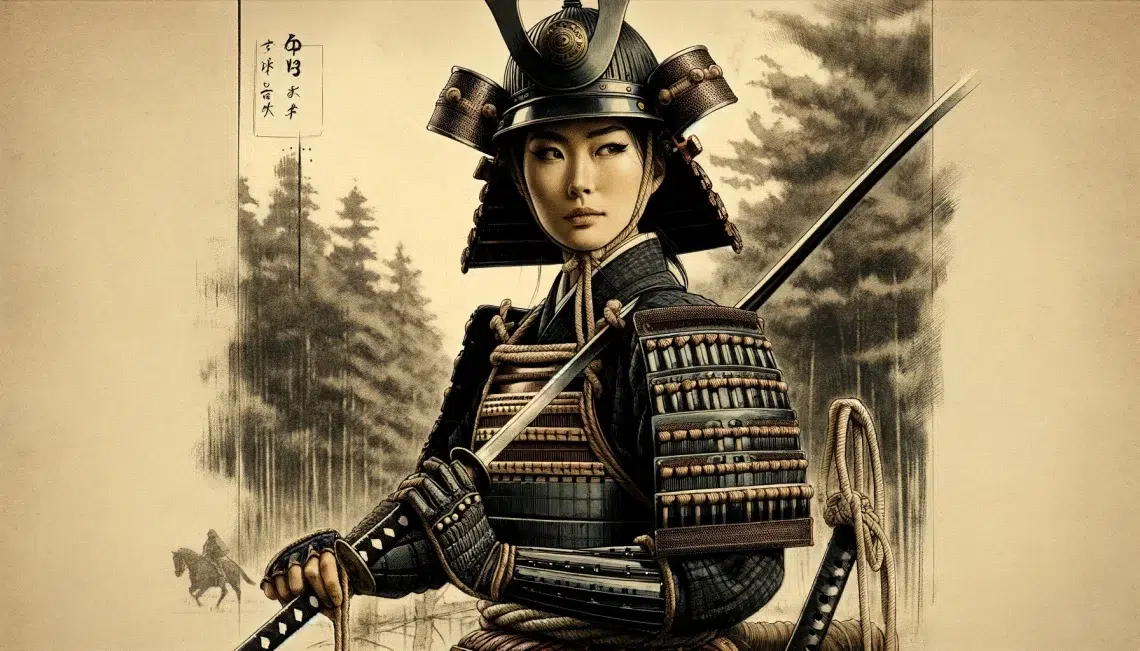
Nakano Takeko was a powerful female samurai from the Aizu Domain.
The Aizu Domain was part of the Tokugawa Shogunate, which was the military government in Japan during the Edo period.
Born in Edo, Tokyo today, she became famous for her bravery during the Boshin War in 19th-century Japan.
She would excel in using the naginata, a long pole-like weapon, and lead a group of women warriors.
This group, the Jōshitai, including her family, students, and women like Yamamoto Yaeko, showing great courage during the Battle of Aizu.
Despite the challenges of her time, her leadership was vital in fighting against traditional views on women.
She died a hero at just 21 years old.
Nakano was laid to rest with her naginata and a monument was built to honour her. This shows how much she continues to inspire and impact Japan’s history.
Early Life and Family Background of Nakano Takeko

Nakano Takeko was born in April 1847 into a distinguished samurai family in Edo-era Japan.
She was the eldest child of Nakano Heinai and Nakano Kōko.
Their family had a long history of following the warrior way. This influenced Nakano greatly while she was growing up.
Living by the samurai code in the Aizu Domain shaped Nakano Takeko.
She showed skill and a strong belief in martial values from a young age.
Her family and the Aizu Domain taught her the meaning of honour and courage throughout her childhood.
In the Nakano home, strength, honour, and loyalty were the core values.
Her brothers,Toyomi and Yūko, and she would learn these lessons together.
The family environment nurtured these values. This upbringing later played a huge part in Nakano Takeko’s life.
Nakano Takeko’s Martial Arts Training

Nakano Takeko started her martial arts journey in 1853.
She would learn from Akaoka Daisuke, a top instructor. Nakano focused on Hasso-Shoken, a key part of the Itto-ryu tradition.
She soon mastered naginatajutsu, which uses a naginata, a long Japanese weapon resembling a pole.
This weapon, with its long reach and bladed pole, was effective for both slicing and stabbing, making it a formidable tool in battle. Being so skilled made her a great fighter and teacher at the Itakura estate.
This was very rare for women back then.
Besides fighting, Nakano studied Chinese texts and practiced calligraphy. Her mix of martial arts and academics made her not just a warrior but a strong, wise one.
Learn more about:
- Tomoe Gozen: Female Samurai Archer
- Women in Ancient Warfare Defying Gender Norms
- Women in Archery in Different Cultures
Nakano Takeko Role in the Boshin War
Nakano Takeko played a vital part in the Boshin War. This war was between the Tokugawa shogunate and the supporters of the Meiji Restoration.
She was from the Aizu Domain and stood by the Tokugawa, showing her fierce loyalty.
Nakano Takeko became the leader of the Jōshitai, or Girls’ Army, to defend Aizu.
She led these women even though she was only 21 years old. They fought with courage and skill under Nakano’s command.
Nakano’s bravery in the Battle of Aizu became legendary.
Even after the war, she is remembered as one of the last samurai.
The Battle of Aizu and the Jōshitai
The Battle of Aizu was one of the significant confrontations during the Boshin War in Japan.
This war was a struggle to determine Japan’s future leadership and structure.
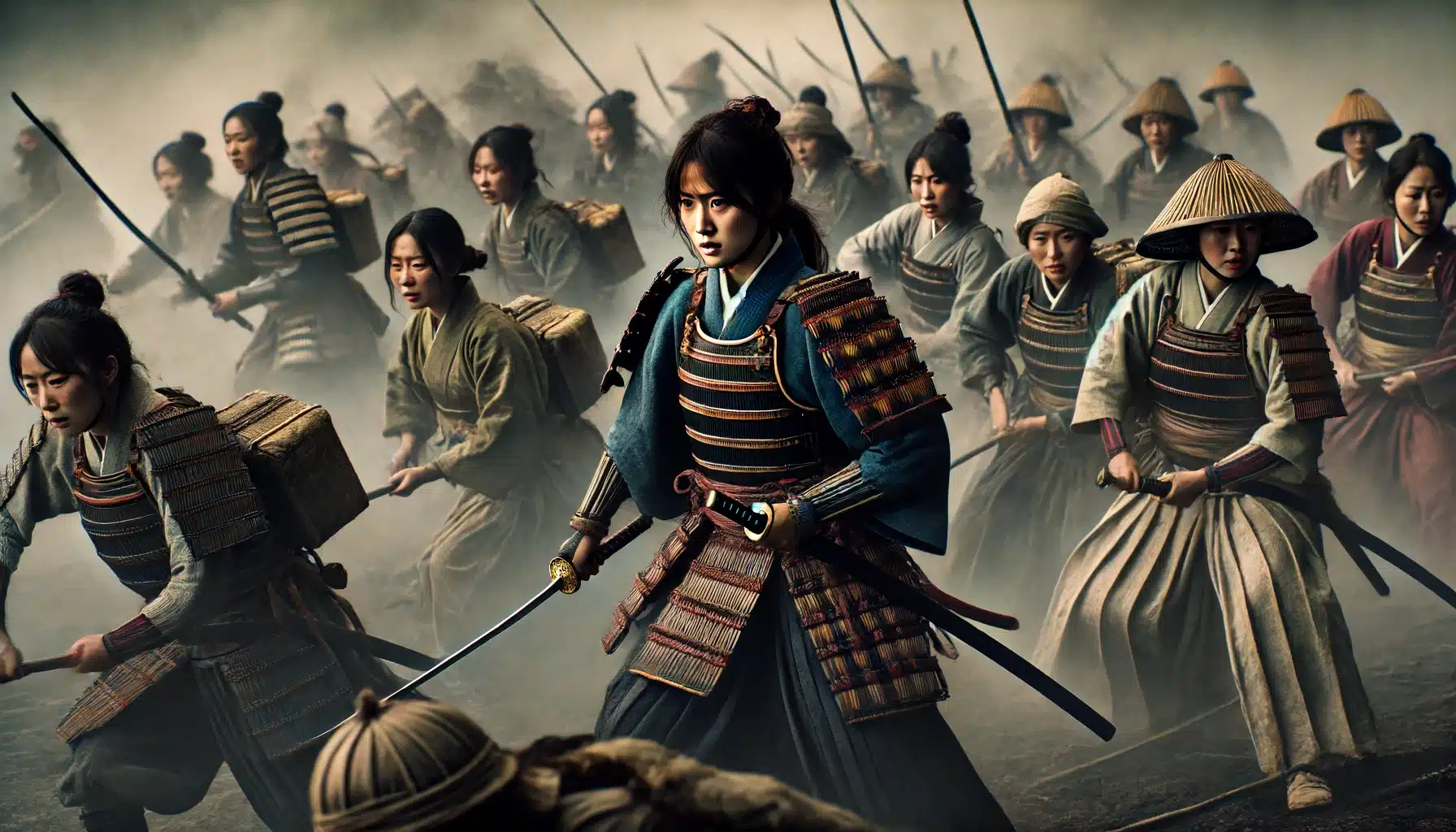
The Battle of Aizu is especially notable because it would highlight the involvement of the Jōshitai, a unit of female samurais, known as onna-musha.
This group led by Nakano Takeko was unique, with members ranging from 16 years old to their 40s.
The battle took place in the Aizu domain, a region known for its strong loyalty to the old Shogunate, the military government that had ruled Japan for centuries.
The forces of the newly restored Meiji Emperor would aim to consolidate power and modernize Japan.
However, they faced fierce resistance from domains like Aizu that clung to the old ways.
Nakano Takeko and her group of female samurais, took a stand at this critical juncture.
The Jōshitai fought bravely on the front lines, defending their homeland with skill and courage only armed with the naginata
The imperial forces had superior numbers and weaponry and the battle was intense and brutal, with significant losses on both sides.
Ultimately, the imperial troops were able to overcome the resistance, leading to the fall of the Aizu domain.
This would further solidify the power of the Emperor and the new government’s commitment to transform Japan into a modern state.
The Final Charge at Yanagi Bridge
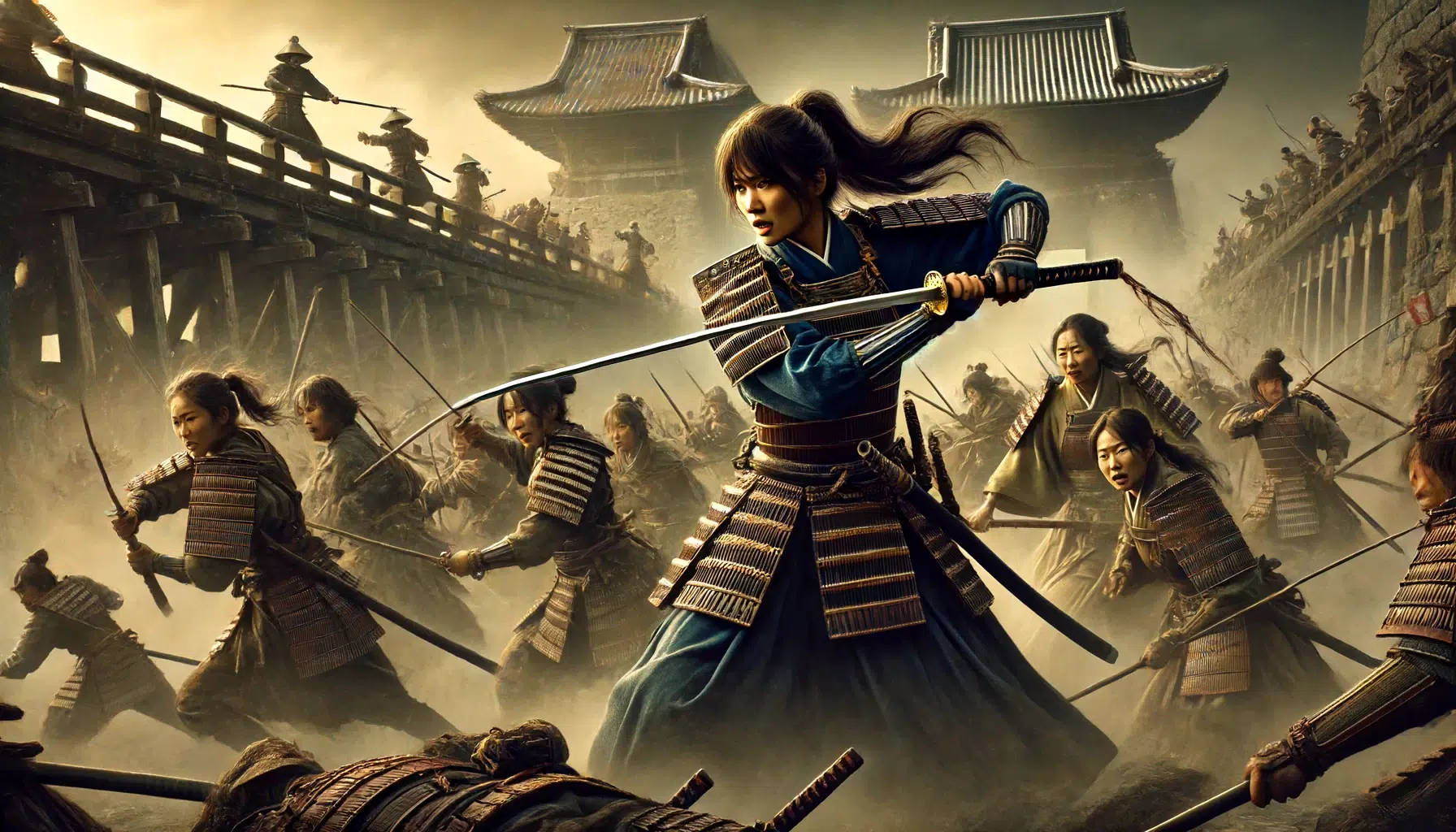
Nakano Takeko plays a key role during the final charge at Yanagi Bridge, a crucial moment in the Battle of Aizu.
On October 16, 1868, Nakano Takeko and her team, the Jōshitai, showed incredible bravery at Yanagi Bridge.
These brave women are ready to defend their land and beliefs.
On that fateful day, Takeko and her warriors face a tough challenge. They need to hold back the advancing imperial forces, who are better equipped and outnumber them.
Despite this, Takeko does not hesitate. She grabs her naginata and leads the charge.
As they rush towards the enemy, Takeko inspires her team with her courage and skill.
She shows them that even in the face of great danger, they can stand strong and fight fiercely.
The battle at Yanagi Bridge becomes a symbol of their bravery and commitment to their cause.
Even though they face overwhelming odds, Takeko and her warriors fight with all their might.
They believe in their duty to protect their homeland and uphold their honour.
Despite facing the imperial forces who had guns, Nakano was undaunted.
Seeing women fight shocked the imperial forces.
This gave the Jōshitai a chance to do real damage. Nakano was fierce, taking down five soldiers before she was hit.
As the fighting reached its end, Nakano shows the true spirit of a samurai.
Despite her skills, Takeko was fatally shot on October 16, 1868.
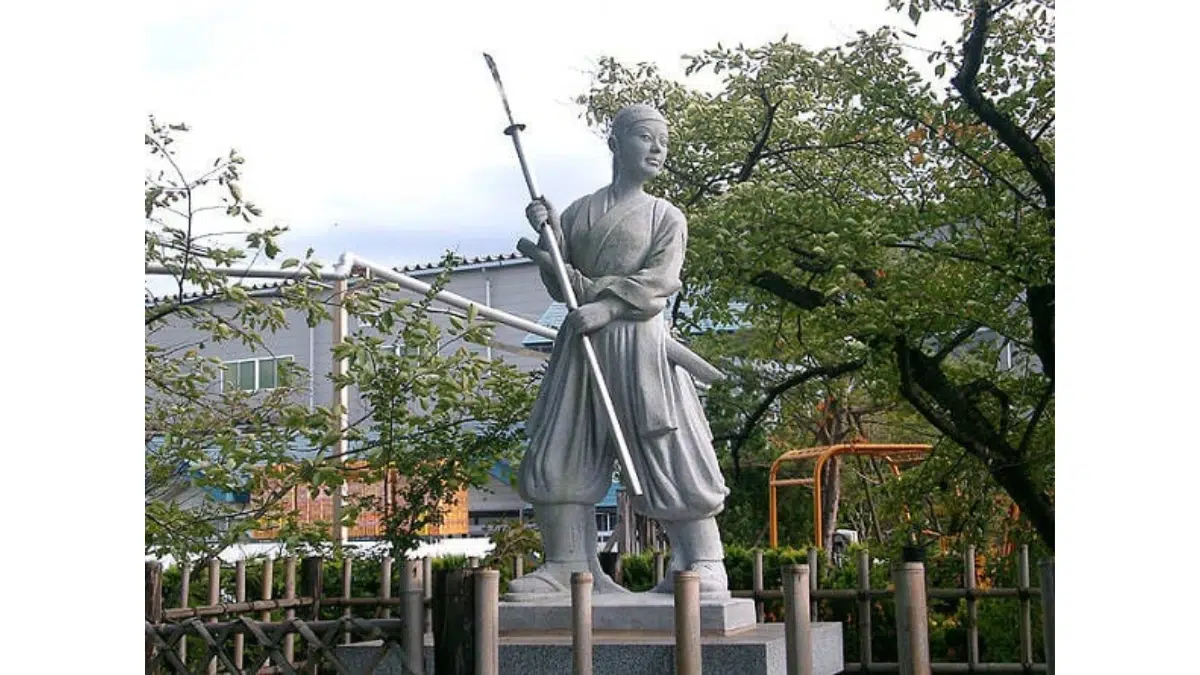
The Heroic Death of Nakano Takeko
Nakano Takeko died a hero, showing the world what a female samurai could do.
They protected the Aizu Domain during the Boshin War, facing overwhelming odds.
Even after getting hurt, she kept fighting fiercely and defended her people with all her might.
She displayed true samurai values by asking her sister to behead her. By doing this, the imperial forces couldn’t disgrace her body.
Nakano’s courage and loyalty to samurai values made her famous in history.
Her sacrifice was not only personal but also marked the end of a significant era in Japan.
With her death and the fall of Aizu Castle, Japan’s feudal period would end.
Nakano’s head was buried at Hōkai Temple, in Aizubange, Fukushima. A memorial was built in her honour here, too.
The monument was made by Admiral Dewa Shigetō, showing the high regard for Nakano after her death.
Recognition and Her Legacy
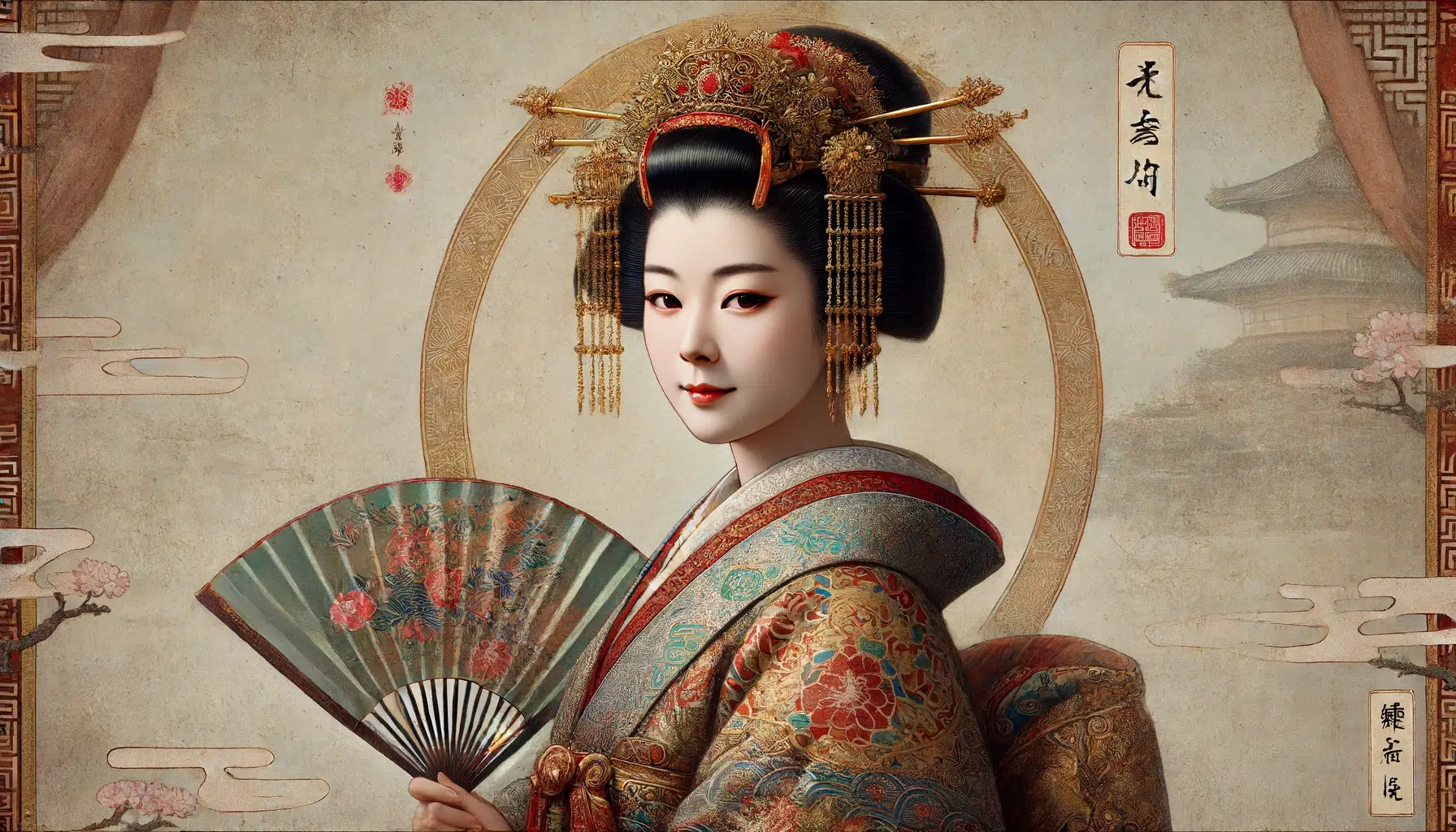
Nakano Takeko’s bravery is known far and wide. She was a woman and a samurai whose tale is now a key part of Japanese history.
Other stories show that women played a big role in battles long ago.
For example, at the Battle of Senbon Matsubaru in 1580, around 33% of fighters were women.
The Japanese government gave Nakano Takeko a special honor in 2008.
She received the Order of the Precious Crown, which values her work for society and ensures she is remembered in samurai stories.
This award is a sign that female warriors are getting more recognition.
In 2017, five female samurai, including Nakano, were named as important for Japan’s culture.
These actions show the government’s commitment to keeping alive the stories of brave female samurai.
People have built monuments and statues in Nakano’s name.
There is a special Jōshitai monument next to her grave. These memorials are important in honouring her and all female samurai.
Every year, the Aizu Autumn Festival remembers the heroics at Yanagi Bridge and Nakano is remembered.
Young girls wear special clothes and bands to honour Nakano and the Jōshitai.
In this festival, a lively march highlights her bravery and the importance of samurai traditions.
Thanks to these ceremonies and honours, Nakano Takeko’s story lives on.
She and other female samurai continue to inspire people today. They are an important part of Japan’s rich history.
Women have always been part of Japan’s warrior history. Figures like Empress Jingu and Nakano point to the role of female warriors.
Nakano’s life has led to a better understanding of samurai culture.
It highlights the diverse and strong stories of Japan’s warrior past.
Conclusion
Nakano Takeko is a symbol of strength and bravery in Japan. She showed the best of samurai courage and skills.
Her life is an example of passion and standing by her beliefs. She is a hero that still inspires us today.
The Battle of Aizu showed the amazing courage of Nakano and other women.
For 30 days, they fought, showing loyalty, courage, and sincerity.
Even with strict rules against them in the Meiji era, Nakano and other women broke expectations.
They followed bushido, showing that bravery is not just for men. Their bravery in battle and caring for the wounded inspire us all.
Looking back on Nakano’s life, we see a powerful symbol.
She reminds us that being a hero isn’t just for men. Nakano shows us the true spirit of a samurai, a spirit that lasts forever.