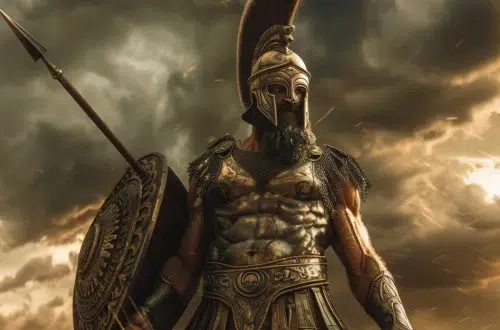
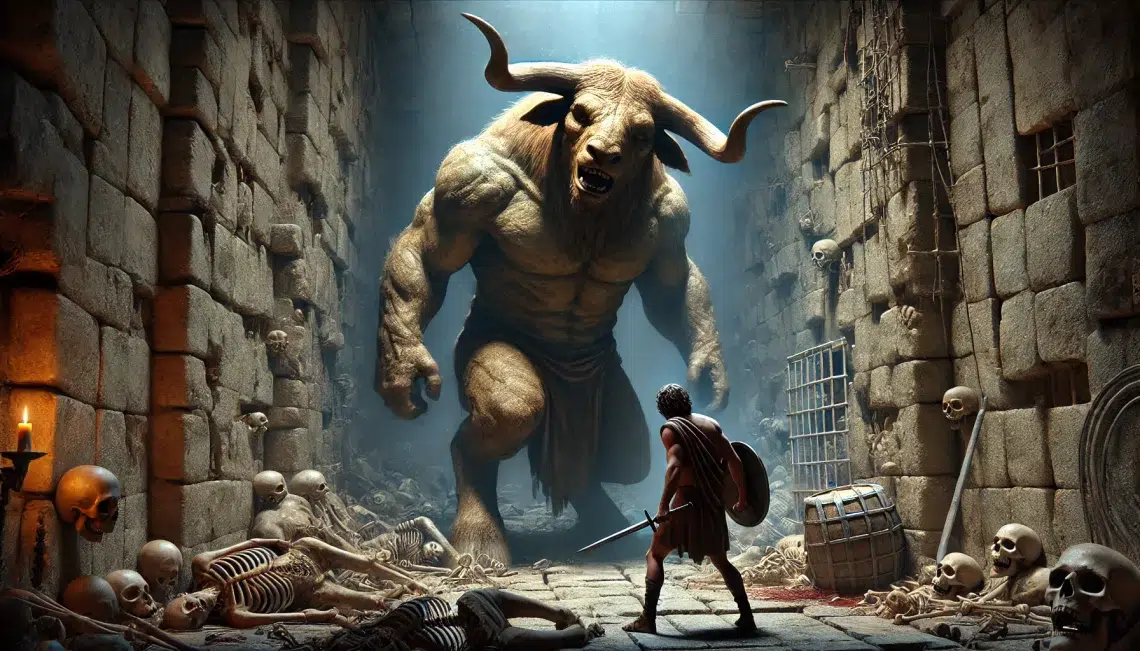
Most Popular Greek Myths in Greek Mythology
Some of the most popular Greek myths have fascinated people for centuries. These myths provide insight into the ancient Greeks’ understanding of the world, their gods, and human nature.
Each story is filled with heroes, gods, and monsters, all woven together in epic tales of adventure, love, betrayal, courage and tragedy.
In this first part of popular myths of Greek mythology, we delve into some of the most enduring and captivating myths: the Twelve Labors of Hercules, the Odyssey of Odysseus, Jason and the Argonauts, Prometheus and the Theft of Fire, Pandora’s Box, and the Greek Creation Story.
Each myth not only entertains but also imparts valuable lessons that resonate even today.
Learn more: Famous Greek Myths: Love, Conflict and Tragedy
Heracles (Hercules) and the Twelve Labors
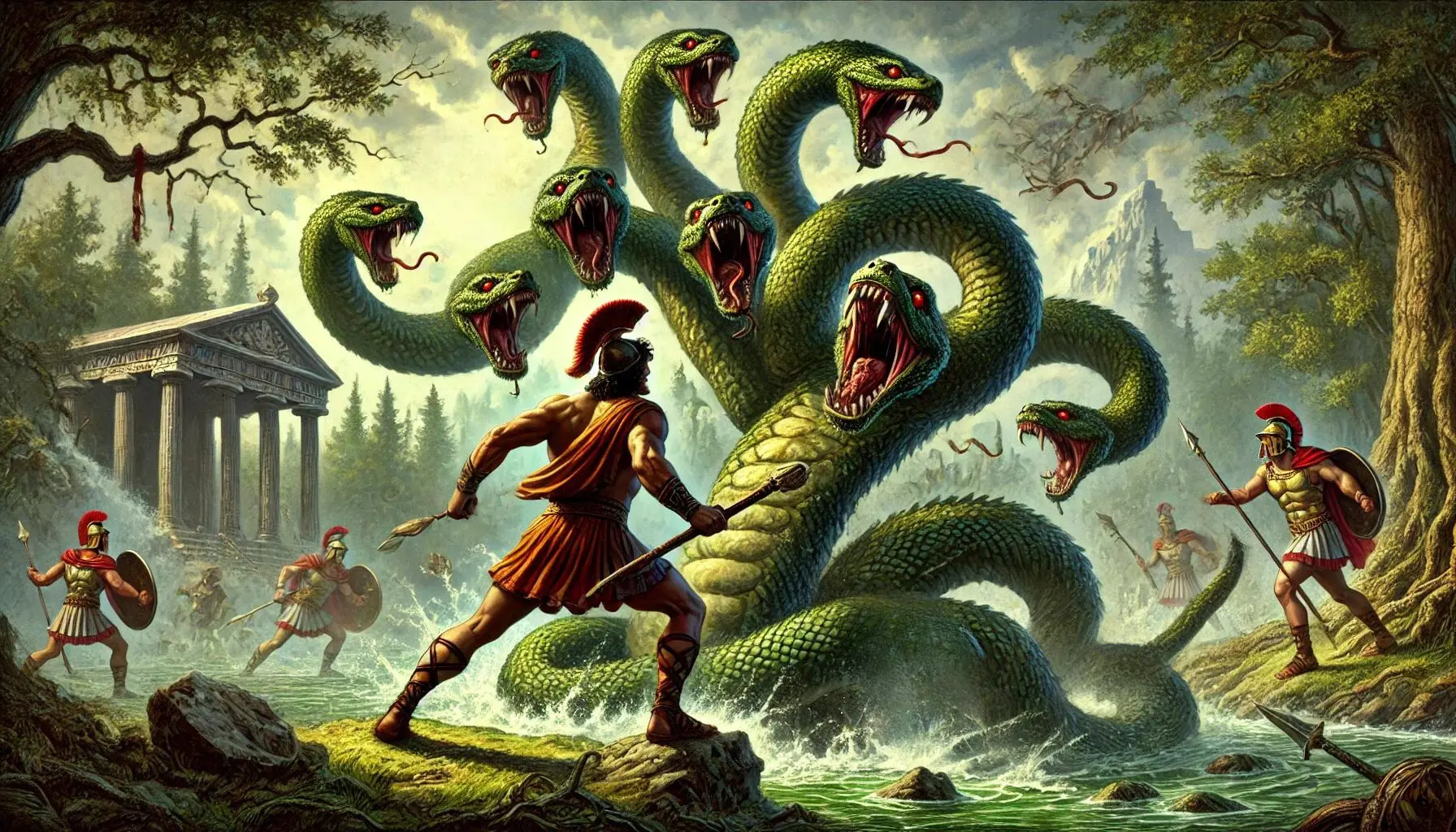
Hercules, the son of Zeus and a mortal woman, Alcmene, is known for his immense strength and heroic deeds. Hera, Zeus’s wife, hates Hercules and drives him mad. In his madness, Hercules kills his wife and children. Filled with remorse, he seeks atonement and visits the Oracle of Delphi.
The Oracle tells Hercules to serve King Eurystheus of Mycenae for twelve years. During this time, he must complete twelve labors, which are incredibly difficult and dangerous tasks.
During his labors, Hercules receives help from various gods. Athena gives him tools and advice, while Hermes guides him to the Underworld.
Each labor tests his abilities and perseverance. Upon completing the twelve labors, Hercules earns redemption. This solidifies his place as one of the greatest heroes in Greek mythology.
The Twelve Labors of Hercules
- Slay the Nemean Lion: A beast with impenetrable skin. Hercules uses his immense strength to strangle the lion and wears its skin as armor.
- Slay the nine-headed Hydra: A serpent-like creature with regenerating heads. With the help of his nephew Iolaus, Hercules burns each head after cutting it off to prevent them from regrowing.
- Capture the Golden Hind: A sacred deer of Artemis. Hercules chases the swift creature for a year before capturing it. Artemis forgives him for taking her sacred deer.
- Capture the Erymanthian Boar: A monstrous boar terrorizing the region. Hercules captures it alive and brings it back to Eurystheus.
- Clean the Augean stables in one day: These stables had not been cleaned for years. Hercules redirects two rivers to wash out the filth in a single day.
- Slay the Stymphalian Birds: Man-eating birds with metallic feathers. Hercules uses a rattle given by Athena to frighten them into the air, then shoots them down.
- Capture the Cretan Bull: A powerful bull from Crete. Hercules wrestles it to the ground and brings it back to Mycenae.
- Steal the Mares of Diomedes: Man-eating horses. Hercules feeds Diomedes to his own horses, taming them, and then brings them back.
- Obtain the girdle of Hippolyta: The queen of the Amazons willingly gives it to Hercules, but Hera stirs up trouble, leading to a battle.
- Capture the cattle of Geryon: A monster with three bodies. Hercules slays Geryon and drives the cattle back to Mycenae.
- Steal the golden apples of the Hesperides: Guarded by a dragon. Hercules enlists the help of Atlas to retrieve the apples.
- Capture Cerberus: The three-headed dog guarding the underworld. Hercules wrestles Cerberus into submission and brings him to the surface.
Key Characters and Lesson of Popular Greek Myths
- Key Characters:
- Hercules: The hero performing the Twelve Labors
- Zeus: Father of Hercules and king of the gods
- Hera: Zeus’s wife, who despises Hercules
- Athena: Goddess who provides tools and advice
- Hermes: God who guides Hercules to the Underworld
Lesson: Redemption through Perseverance: Hard work and determination can lead to redemption and glory
The Odyssey and the Adventures of Odysseus
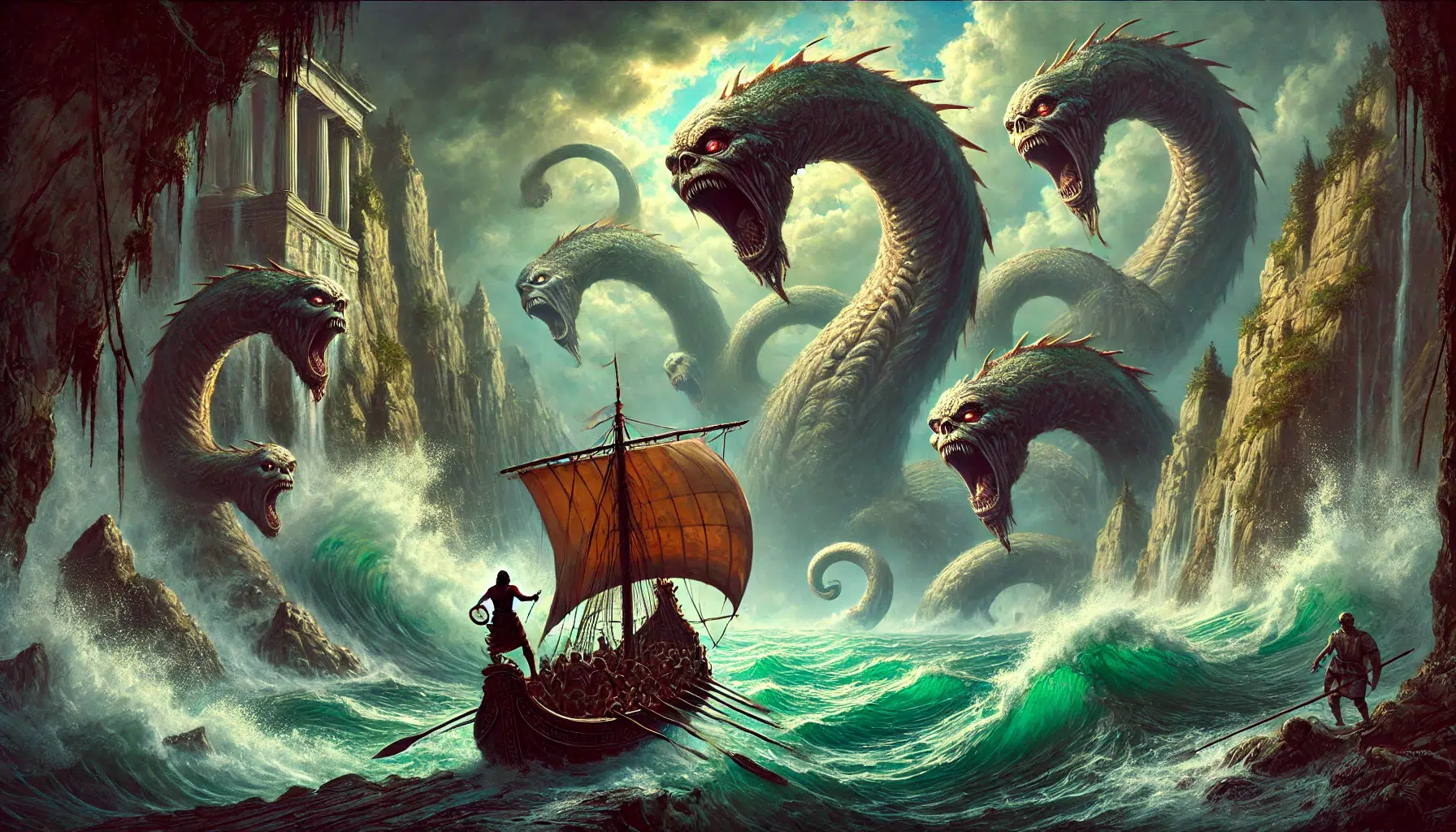
The Odyssey, written by Homer, follows the epic journey of Odysseus, King of Ithaca, as he attempts to return home after the Trojan War. The journey takes ten arduous years, filled with trials and tribulations. Odysseus is known for his cunning and resourcefulness, qualities that help him survive numerous challenges.
After the war, Odysseus and his men set sail for Ithaca, but their journey is hindered by various obstacles. The first major challenge they face is the island of the Cyclopes. Odysseus and his men are captured by Polyphemus, a giant one-eyed Cyclops. Using his wit, Odysseus blinds Polyphemus and they escape.
Next, they encounter the sorceress Circe, who transforms his men into pigs. With the help of the god Hermes, Odysseus resists her magic and persuades her to return his men to human form. They stay with Circe for a year before continuing their journey.
The Journey Continues
Odysseus then journeys to the Underworld to seek the prophet Tiresias’s advice. There, he learns of the trials ahead and how to appease the gods. He also meets the spirits of the dead, including his mother.
The journey continues with encounters with the Sirens, whose enchanting songs lure sailors to their doom. Odysseus plugs his men’s ears with beeswax and has himself tied to the mast to safely pass by. They also face Scylla and Charybdis, two monstrous sea hazards that threaten to destroy his ship.
After losing all his men and shipwrecked, Odysseus washes ashore on the island of the nymph Calypso. She holds him captive for seven years until the gods intervene. Finally, Odysseus reaches the island of the Phaeacians, who help him return to Ithaca.
Disguised as a beggar, Odysseus reunites with his son Telemachus and plots to reclaim his throne. Together, they defeat the suitors vying for his wife Penelope’s hand. Odysseus reveals his identity to Penelope, and they are joyfully reunited.
Throughout his journey, Odysseus receives help from various gods. Athena, the goddess of wisdom, provides guidance and support. Hermes assists him against Circe, and Zeus occasionally intervenes to ensure his journey continues.
Key Characters and Lesson of Popular Greek Myths
- Key Characters:
- Odysseus: The cunning hero of the story
- Penelope: Odysseus’s faithful wife
- Telemachus: Odysseus’s son
- Athena: Goddess of wisdom who aids Odysseus
- Hermes: Messenger god who helps Odysseus
Lesson: The Power of Intelligence and Cunning: Wit and intelligence can overcome even the greatest of challenges.
The Iliad and the Trojan War
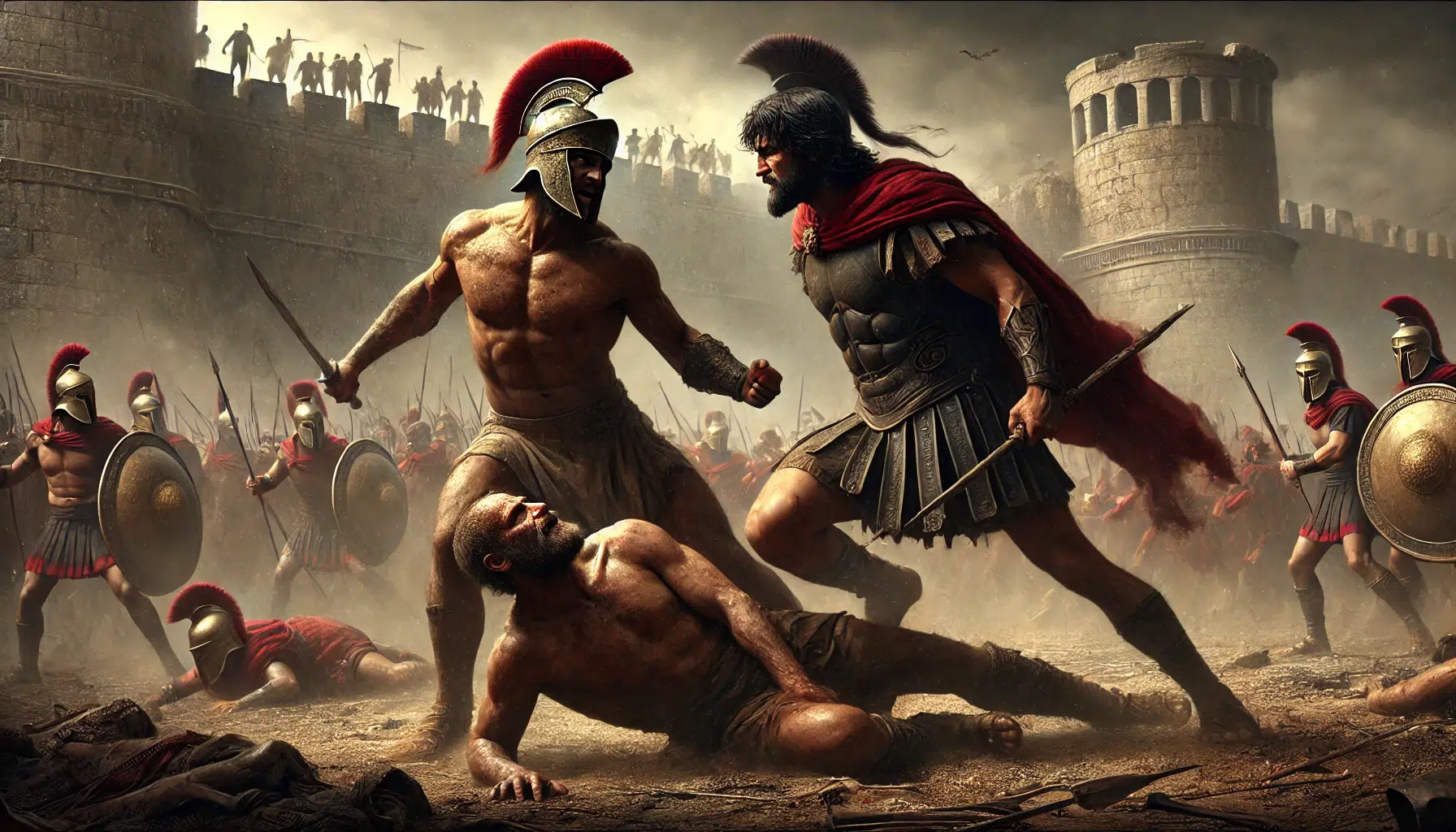
The Trojan War is one of the most famous events in Greek mythology, detailed in Homer’s epic poem, the Iliad. The war begins with a divine dispute that leads to the Judgement of Paris. Eris, the goddess of discord, throws a golden apple inscribed with “to the fairest” among the gods. Hera, Athena, and Aphrodite all claim it. Paris, a prince of Troy, is chosen to judge who deserves the apple.
Each goddess offers Paris a bribe. Hera offers power, Athena offers wisdom and skill in battle, and Aphrodite offers the most beautiful woman in the world, Helen of Sparta. Paris awards the apple to Aphrodite, sparking the events that lead to the war. Helen, already married to King Menelaus of Sparta, is abducted by or elopes with Paris and taken to Troy. Enraged, Menelaus and his brother Agamemnon gather a massive Greek army to retrieve Helen and attack Troy.
The War Continues for Ten Years
The Greek forces, including legendary heroes like Achilles, Odysseus, and Ajax, lay siege to Troy for ten years. The gods also take sides in the conflict, with Athena, Hera, and Poseidon supporting the Greeks, while Aphrodite, Apollo, and Ares favour the Trojans.
Achilles, the greatest Greek warrior, initially refuses to fight due to a dispute with Agamemnon but returns to battle after the death of his close friend Patroclus at the hands of Hector, Troy’s noble prince. Enraged, Achilles kills Hector and drags his body around the walls of Troy.
The war drags on with no clear victor. The Greeks devise a cunning plan to end the conflict. They construct a massive wooden horse, known as the Trojan Horse, and hide a group of warriors inside. The Greeks pretend to retreat, leaving the horse as a supposed offering to the gods. The Trojans bring the horse inside their city walls, unaware of the danger it holds.
That night, the Greek warriors emerge from the horse and open the gates for the rest of their army. The Greeks sack the city of Troy, leading to its ultimate destruction. Helen returns to Sparta with Menelaus, and the surviving Trojans scatter.
The Iliad not only recounts the events of the war but also explores themes of heroism, honor, and the wrath of Achilles. It highlights the human emotions and divine interventions that shape the epic conflict.
Key Characters and Lesson of Popular Greek Myths
- Key Characters:
- Achilles: The greatest Greek warrior
- Hector: The noble prince of Troy
- Helen: The cause of the war
- Paris: The prince who abducted Helen
- Athena: Goddess of wisdom, supports the Greeks
- Hera: Queen of the gods, supports the Greeks
- Aphrodite: Goddess of love, supports the Trojans
- Apollo: God of the sun, supports the Trojans
Lesson: The Cost of Pride and Wrath: Pride and anger can lead to devastating consequences.
Theseus and the Minotaur

Theseus, the son of Aegeus, King of Athens, and Aethra, a princess of Troezen, is one of the greatest heroes in Greek mythology. His most famous adventure is his battle with the Minotaur in the labyrinth of Crete.
The story begins with Athens forced to send seven boys and seven girls every nine years to Crete as tribute to King Minos. These tributes are fed to the Minotaur, a monstrous creature with the body of a man and the head of a bull, living in a labyrinth designed by the master craftsman Daedalus.
Theseus volunteers to be one of the tributes, determined to end the horror and kill the Minotaur. When he arrives in Crete, he meets Ariadne, the daughter of King Minos. She falls in love with Theseus and decides to help him. She gives him a ball of thread to unravel as he enters the labyrinth, ensuring he can find his way back out.
The Gods Intervene
The gods play a significant role in the events. Athena, the goddess of wisdom, often guides and supports Theseus. Poseidon, the god of the sea, is said to be Theseus’s divine father, adding to his heroic status. Aphrodite, the goddess of love, influences Ariadne’s feelings for Theseus.
Armed with his courage and a sword given by Ariadne, Theseus enters the labyrinth. He ties one end of the thread to the entrance and ventures deep into the maze. After a tense search, he confronts the Minotaur. A fierce battle ensues, and Theseus uses his strength and agility to slay the beast.
Following the thread back, Theseus emerges victorious. He escapes Crete with Ariadne, but their journey home takes a tragic turn. They stop at the island of Naxos, where Theseus abandons Ariadne, leaving her heartbroken. Dionysus, the god of wine, later finds and marries Ariadne.
When Theseus finally returns to Athens, he forgets to change the black sails of mourning to white, as he promised his father if he returned alive. Seeing the black sails, King Aegeus, believing his son is dead, throws himself into the sea, which is thereafter called the Aegean Sea. Theseus becomes the new king of Athens, known for his wisdom and strength.
Key Characters and Lesson of Popular Greek Myths
- Key Characters:
- Theseus: The hero who slays the Minotaur
- Ariadne: Daughter of King Minos who helps Theseus
- King Minos: Ruler of Crete, father of Ariadne
- Athena: Goddess of wisdom who guides Theseus
- Poseidon: God of the sea, Theseus’s divine father
- Aphrodite: Goddess of love who influences Ariadne
Lesson: Courage and Ingenuity: Bravery and clever thinking can overcome even the most daunting challenges.
Prometheus and the Theft of Fire

Prometheus, one of the Titans, is known for his intelligence and his sympathy for humanity. In Greek mythology, he creates humans from clay and becomes their benefactor. Zeus, the king of the gods, withholds fire from humanity, keeping them in a state of darkness and ignorance. Prometheus, however, decides to defy Zeus and help humankind.
Determined to aid his creations, Prometheus climbs Mount Olympus, the home of the gods. Using his cunning, he steals fire from the forge of Hephaestus, the god of blacksmiths, and hides it in a hollow fennel stalk. He then descends to the earth and gifts the stolen fire to humanity. With fire, humans can cook food, stay warm, and forge tools, advancing their civilization significantly.
Zeus, enraged by Prometheus’s defiance, decides to punish him severely. He orders that Prometheus be chained to a rock in the Caucasus Mountains. Every day, an eagle, the emblem of Zeus, comes to eat Prometheus’s liver. Due to his immortality, Prometheus’s liver regenerates each night, subjecting him to eternal torment.
Prometheus is Defiant
Despite his suffering, Prometheus remains defiant. He symbolizes the enduring spirit of rebellion and the quest for knowledge. His act of stealing fire is seen as a symbol of enlightenment and the progress of civilization.
Eventually, Prometheus is freed by the hero Hercules, who kills the eagle and breaks the chains binding Prometheus. This act is part of Hercules’s Twelve Labors, further cementing the interconnected nature of Greek myths.
The myth of Prometheus highlights the themes of sacrifice, rebellion against tyranny, and the pursuit of knowledge. It underscores the belief that progress often comes at a great cost and through great struggle.
Key Characters and Lesson of Popular Greek Myths
- Key Characters:
- Prometheus: The Titan who defies Zeus to help humanity
- Zeus: King of the gods who punishes Prometheus
- Hercules: The hero who frees Prometheus
Lesson: The Price of Progress: Advancing knowledge and civilization often requires great sacrifice and defiance against oppression.
Perseus and Medusa
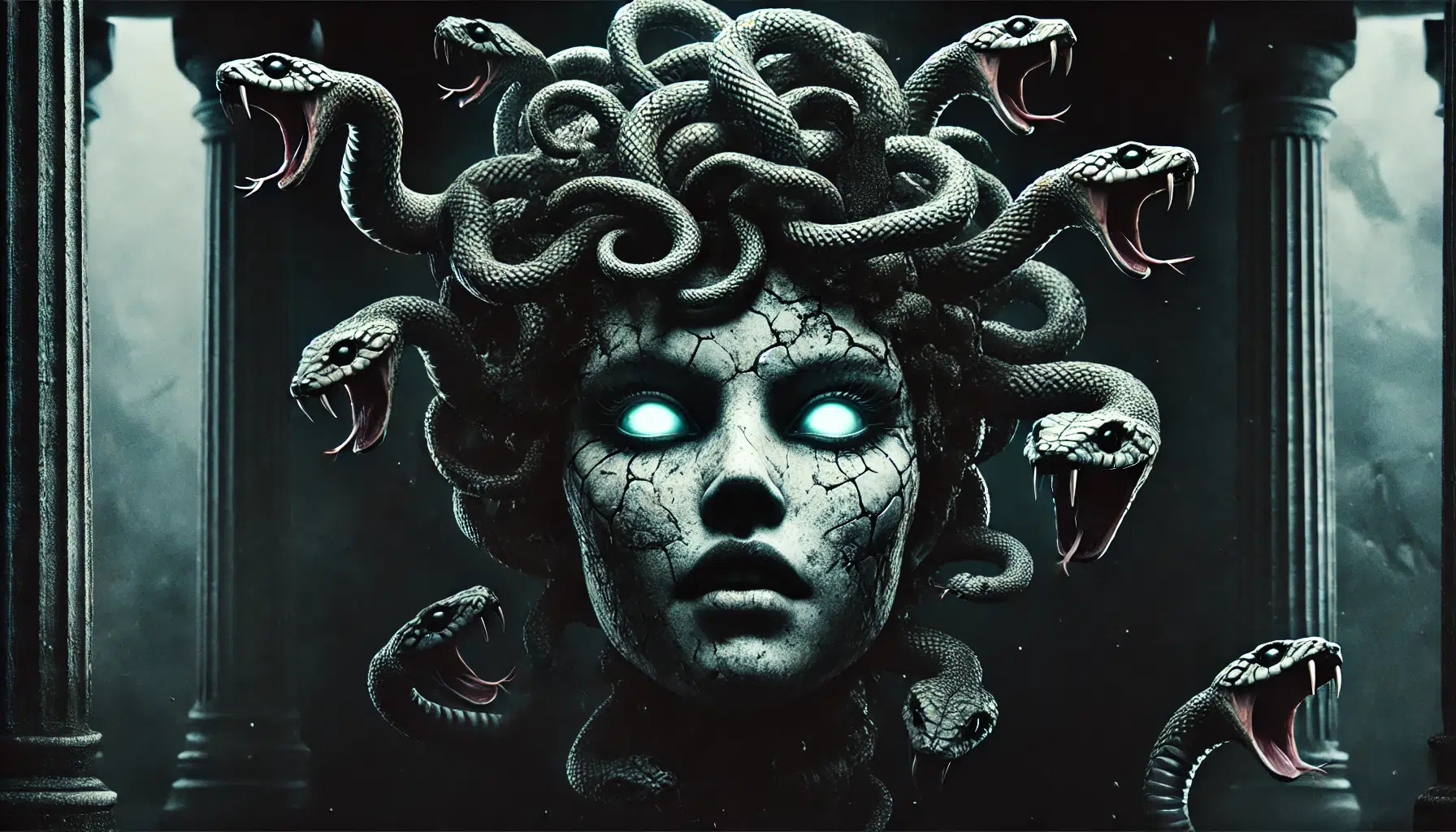
Perseus, the son of Zeus and Danae, is a celebrated hero in Greek mythology. His journey begins when King Polydectes of Seriphos demands that Perseus bring him the head of Medusa, one of the three Gorgon sisters. Medusa is a fearsome creature with snakes for hair, and anyone who looks directly at her turns to stone.
To help Perseus in his quest, the gods provide him with special tools. Athena gives him a reflective shield, Hermes lends him winged sandals, Hades provides the Helm of Darkness to make him invisible, and Hephaestus forges an unbreakable sword. Armed with these gifts, Perseus sets out on his perilous mission.
Perseus first visits the Graeae, three old sisters who share one eye and one tooth among them. By stealing their eye, he forces them to reveal the location of the Hesperides, who possess the items he needs to defeat Medusa. The Hesperides give him a magical satchel to safely carry Medusa’s head.
Perseus Locates Medusa
Perseus then finds the Gorgons’ lair. Using the reflective shield to avoid looking directly at Medusa, he approaches and decapitates her while she sleeps. From her severed neck, the winged horse Pegasus and the giant Chrysaor are born. Perseus places Medusa’s head in the magical satchel and begins his journey home.
On his way back, Perseus encounters Andromeda, a princess chained to a rock as a sacrifice to a sea monster. He uses Medusa’s head to turn the monster to stone and rescues Andromeda. They fall in love and return together.
Perseus returns to Seriphos and uses Medusa’s head to turn King Polydectes and his court to stone, freeing his mother Danae from the king’s advances. Perseus then gives Medusa’s head to Athena, who places it on her shield as a powerful weapon.
Key Characters and Lesson of Popular Greek Myths
- Key Characters:
- Perseus: The hero who slays Medusa
- Medusa: The Gorgon with snakes for hair
- Athena: Goddess who aids Perseus
- Hermes: Messenger god who helps Perseus
Lesson: Courage and Ingenuity: Bravery and cleverness can overcome even the most fearsome obstacles.
Pandora’s Box
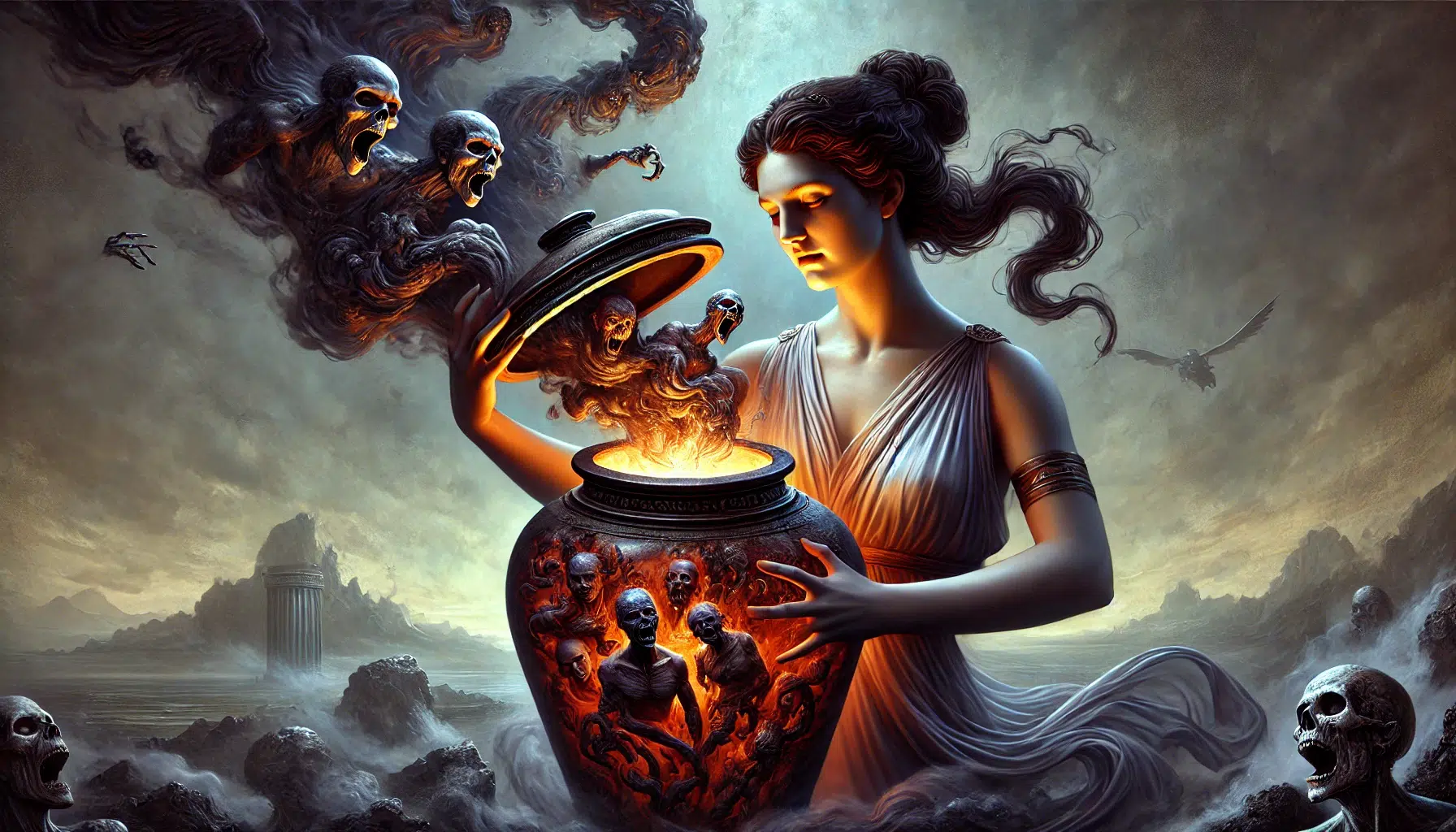
In Greek mythology, Pandora is the first woman created by the gods. Zeus, the king of the gods, orders her creation as a part of his plan to punish humanity for receiving the gift of fire from Prometheus. Hephaestus, the god of blacksmiths, crafts her from clay, and each god bestows upon her unique gifts. Athena gives her wisdom, Aphrodite endows her with beauty, and Hermes grants her cunning.
Zeus presents Pandora to Epimetheus, the brother of Prometheus, despite Prometheus’s warnings to avoid any gifts from Zeus. Epimetheus, captivated by Pandora’s beauty, marries her. As a wedding gift, Zeus gives Pandora a jar (later referred to as a box) with strict instructions not to open it.
Driven by curiosity, Pandora eventually succumbs to temptation and opens the jar. Immediately, all the evils and miseries of the world—such as disease, death, sorrow, and conflict—escape and spread across the earth. Realizing her mistake, Pandora quickly closes the jar, but it is too late. Only one thing remains inside: hope.
Origin of Human Suffering
The release of these evils brings great suffering to humanity. However, the presence of hope in the jar offers a glimmer of consolation amidst the chaos. The myth of Pandora’s Box explains the origin of human suffering and the existence of hope as a source of comfort and resilience.
Despite the consequences of her actions, Pandora’s story is one of complexity and depth. She represents the dual nature of humanity—both curious and capable of great mistakes, yet also possessing the enduring ability to hope and persevere.
The myth underscores the importance of obedience and the dangers of curiosity unchecked by wisdom. It also highlights the belief that even in the face of great adversity, hope remains an essential part of the human experience.
Key Characters and Lesson of Popular Greek Myths
- Key Characters:
- Pandora: The first woman created by the gods
- Zeus: King of the gods who initiates the creation of Pandora
- Epimetheus: Brother of Prometheus and husband of Pandora
Lesson: The Dual Nature of Humanity: Human curiosity can lead to great suffering, but hope always remains.
Orpheus and Eurydice
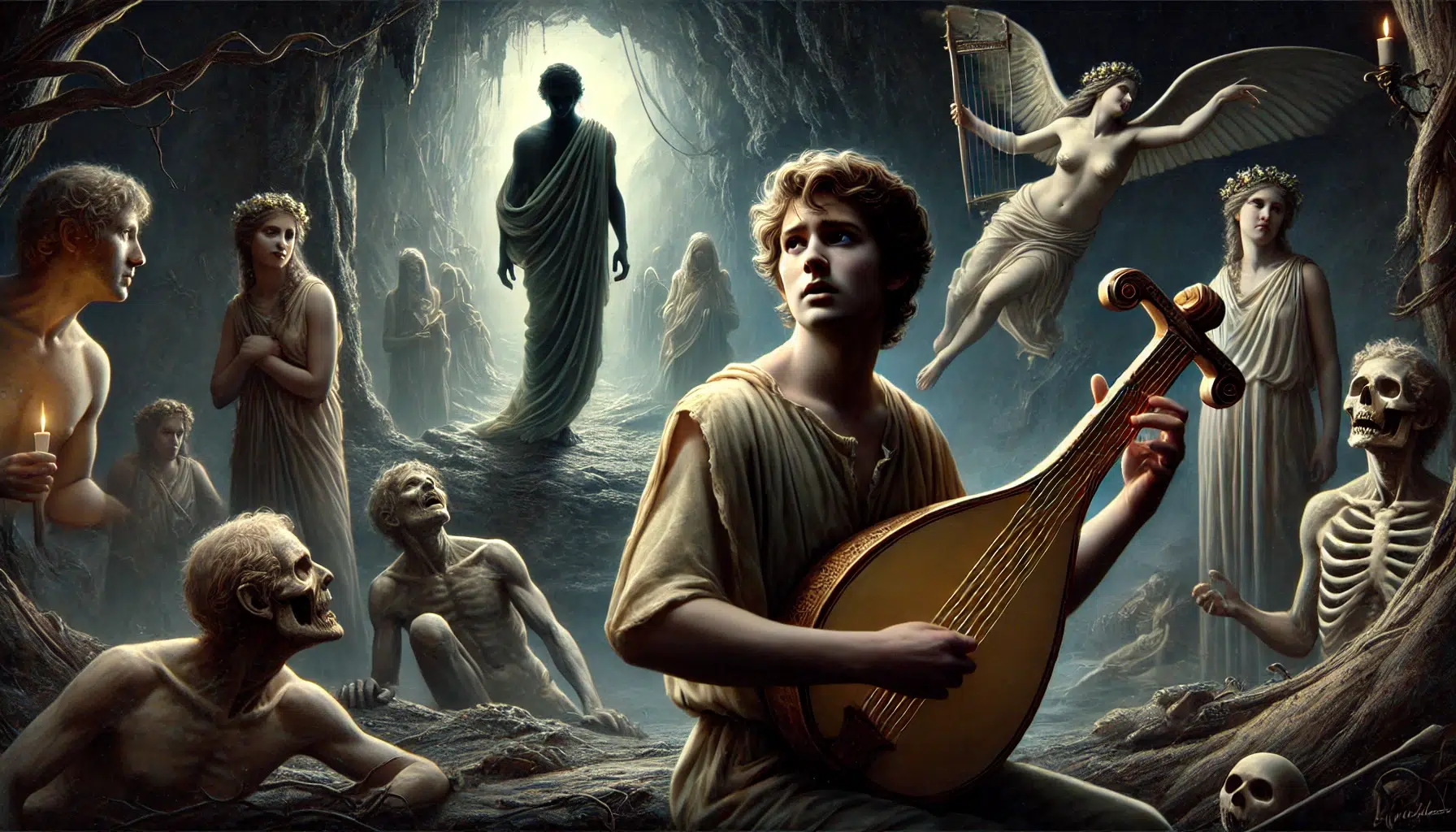
Orpheus, the son of the muse Calliope and the god Apollo, is a legendary musician whose music can charm anyone, even inanimate objects. He falls deeply in love with Eurydice, a beautiful nymph, and they marry. Their happiness is short-lived, as Eurydice is bitten by a venomous snake and dies.
Heartbroken, Orpheus decides to journey to the Underworld to bring her back. He plays his lyre and sings mournful songs, softening the hearts of Hades and Persephone, the rulers of the Underworld. Moved by his music, they agree to let Eurydice return to the living world on one condition: Orpheus must walk back to the surface without looking back at her.
Orpheus Loses Eurydice
Orpheus leads Eurydice through the dark and treacherous paths of the Underworld. He is filled with hope and anxiety, desperate to see his wife again. Just before reaching the surface, his doubt and longing overcome him. He turns around to ensure Eurydice is still behind him, breaking the condition. Eurydice is instantly pulled back into the Underworld, lost to him forever.
Devastated, Orpheus returns to the mortal world alone. He wanders the earth, playing sad and beautiful music that moves everyone who hears it. Refusing to love again, he ultimately meets a tragic end. Some myths say he is torn apart by Maenads, followers of Dionysus, while others say he is struck by a lightning bolt from Zeus.
Orpheus’s music remains legendary, symbolizing the power of love, loss, and the human spirit. After his death, he is reunited with Eurydice in the Underworld, where they can be together for eternity.
Key Characters and Lesson of Popular Greek Myths
- Key Characters:
- Orpheus: The legendary musician and hero
- Eurydice: The beautiful nymph and wife of Orpheus
- Hades: God of the Underworld
- Persephone: Queen of the Underworld
Lesson: The Power of Love and Trust: True love requires faith and trust, even in the face of great trials.
Jason and the Argonauts

Jason, the son of Aeson, rightful king of Iolcus, is a hero in Greek mythology. He is tasked by King Pelias to retrieve the Golden Fleece from Colchis as a seemingly impossible challenge to prove his worth and reclaim his throne.
The Golden Fleece is the fleece of a golden-woolled, winged ram named Chrysomallos (or Crius Chrysomallos) in Greek mythology. It became a symbol of authority and kingship, representing royal power and legitimacy
The journey begins when Jason’s uncle, Pelias, usurps the throne of Iolcus. An oracle warns Pelias to beware of a man wearing one sandal. Jason, returning to Iolcus to claim his throne, loses a sandal while helping an old woman (the goddess Hera in disguise) cross a river. Recognizing the threat, Pelias sends Jason on an impossible mission to retrieve the Golden Fleece from Colchis, hoping he will never return.
Jason assembles a crew of Greece’s greatest heroes, known as the Argonauts, named after their ship, the Argo. The crew includes Hercules, Orpheus, Atalanta, and many others. Under the guidance of Hera and the protection of Athena, they embark on their perilous journey.
The Argonauts Face Numerous Challenges
They first encounter the Isle of Lemnos, inhabited by women who have killed their husbands. They then navigate through the Clashing Rocks, aided by the advice of the blind prophet Phineus and his harpies. The goddess Hera also assists by sending a dove through the rocks to ensure their safe passage.
Upon reaching Colchis, King Aeetes agrees to give Jason the Golden Fleece if he completes three tasks. With the help of Medea, Aeetes’ daughter and a powerful sorceress who falls in love with Jason, he succeeds. The tasks include yoking fire-breathing oxen, sowing dragon’s teeth that sprout into armed warriors, and overcoming the sleepless dragon guarding the fleece.
Medea provides a potion to subdue the dragon and helps Jason obtain the fleece. They flee Colchis, pursued by Aeetes. Medea’s dark magic delays her father, ensuring their escape.
On their return journey, the Argonauts face more trials, including the sirens and the bronze giant Talos. Medea’s magic and the guidance of the gods help them overcome these challenges. Upon reaching Iolcus, Jason presents the Golden Fleece to Pelias. However, Pelias refuses to relinquish the throne. Medea uses her magic to trick Pelias’s daughters into killing him.
Jason and Medea are forced to flee to Corinth. Their story ends tragically, as Jason’s betrayal leads Medea to take revenge by killing their children and Jason’s new bride.
Key Characters and Lesson of Popular Greek Myths
- Key Characters:
- Jason: The hero who leads the quest for the Golden Fleece
- Medea: Daughter of King Aeetes, a sorceress who helps Jason
- Hera: Goddess who aids Jason
- Athena: Goddess who protects the Argonauts
Moral Lesson: The Quest for Glory: Great quests often come with great sacrifices and unforeseen consequences.
Greek Creation Story
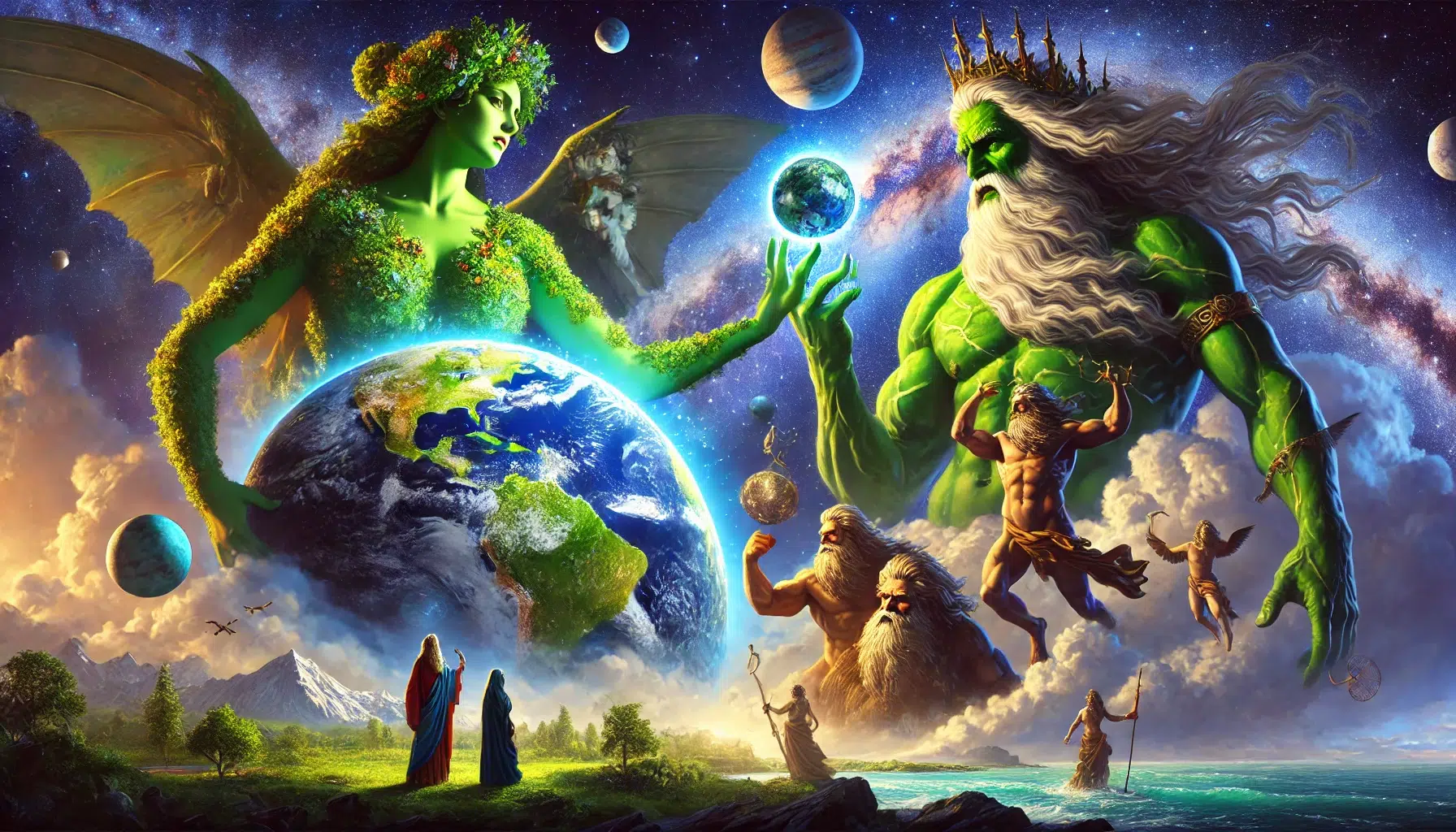
The Greek creation story, as told in Hesiod’s Theogony, begins with Chaos, a vast, dark void. From Chaos, Gaia (Earth) emerges, providing the foundation for all life. Soon after, Tartarus (the Underworld) and Eros (Love) come into existence. Gaia gives birth to Uranus (the Sky), who becomes her consort, and together they produce the first generation of beings, including the Titans, the Cyclopes, and the Hecatoncheires (hundred-handed giants).
Uranus, fearing his powerful children, imprisons the Cyclopes and Hecatoncheires in Tartarus, causing great pain to Gaia. Anguished, Gaia devises a plan to overthrow Uranus. She creates a great sickle and urges her Titan children to use it against their father. Only Cronus, the youngest Titan, agrees. Cronus ambushes Uranus, castrates him, and takes his place as ruler of the cosmos.
Cronus marries his sister Rhea, and they have several children: Hestia, Demeter, Hera, Hades, Poseidon, and Zeus. Fearing a prophecy that one of his children will overthrow him, Cronus swallows each child at birth. However, Rhea saves the youngest, Zeus, by tricking Cronus into swallowing a stone wrapped in swaddling clothes.
Zeus is Saved From Cronus
Zeus is raised in secret on the island of Crete. When he comes of age, he confronts Cronus, forcing him to regurgitate his siblings. Together, they wage a ten-year war against Cronus and the Titans, known as the Titanomachy. With the help of the Cyclopes and Hecatoncheires, whom Zeus frees from Tartarus, the Olympians triumph. The Titans are imprisoned in Tartarus as punishment.
Zeus, Poseidon, and Hades divide the world among themselves. Zeus becomes the ruler of the sky, Poseidon rules the sea, and Hades governs the Underworld. This marks the beginning of the reign of the Olympian gods, who establish order and justice in the cosmos.
The Greek creation story explains the origins of the gods and the cosmos, highlighting themes of power, rebellion, and the cyclical nature of time.
Key Characters and Lesson of Popular Greek Myths
- Key Characters:
- Zeus: King of the gods, ruler of the sky
- Cronus: Titan ruler overthrown by Zeus
- Gaia: Personification of Earth, mother of the Titans
Moral Lesson: The Cycle of Power: Power shifts through generations, often through acts of rebellion and conflict.
Conclusion
Greek mythology continues to captivate our imagination with its timeless stories of gods, heroes, and the complex interplay between fate and free will.
The myths of Hercules, Odysseus, Jason, Prometheus, Pandora, and the creation of the world provide profound insights into human nature and the ancient world’s view of life and the cosmos.
Through their trials and triumphs, these myths teach us about courage, perseverance, the consequences of hubris, and the enduring power of hope and wisdom.
As we reflect on these ancient tales, we can appreciate their lasting impact on literature, art, and culture, and their ability to convey universal truths that transcend time and place.