
Legendary Archery Mythology: The Mythical Bow
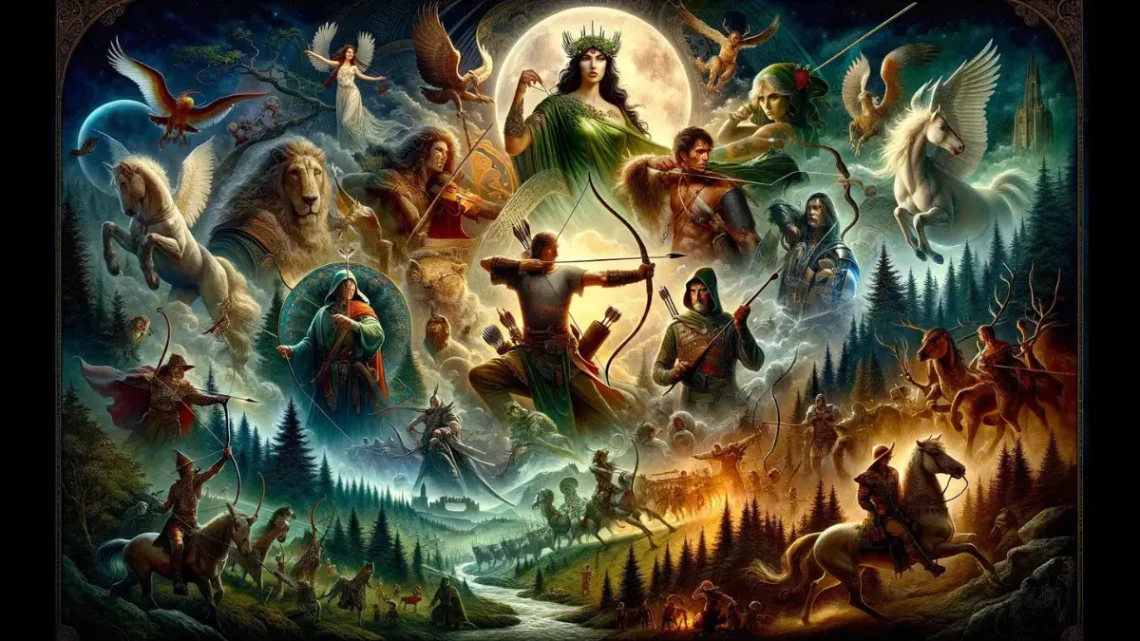
Throughout history, the bow has held a revered place in archery mythology across the world.
Its origins depict ancient legends often attributing its creation to gods or demigods.
Deep within time, mythical bows were born, cradled in the arms of ancient legends.
Each civilization had its tales, etched into the fabric of their culture.
Bows were symbols of power, guardians of the sacred, and extensions of the heroes they chose.
Artemis and Apollo: Greek Archery Mythology of Olympus
Artemis and Apollo are twin siblings in Greek mythology. They are prominent figures associated with archery in the ancient world. Their skills with the bow are legendary. Imagery shows them as divine archers, while embodying various aspects of this skill and its symbolic meanings.
Artemis: The Goddess of the Hunt
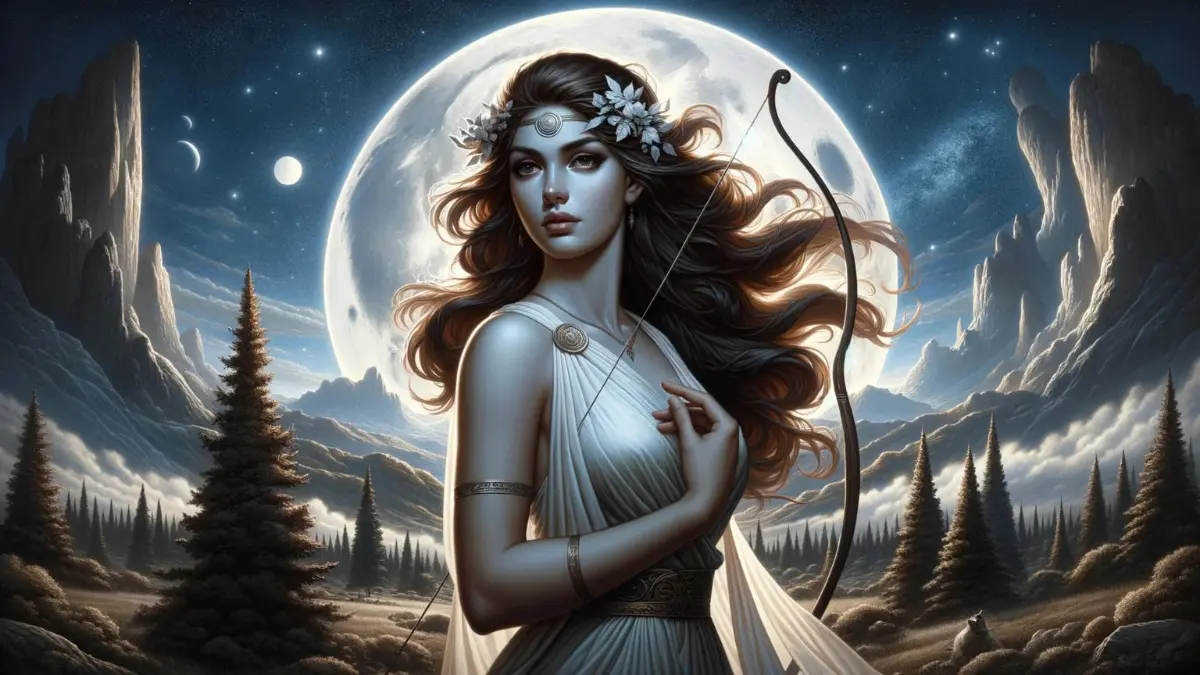
Artemis is the goddess of the hunt, wilderness, and childbirth, is often holding with a bow. This symbolizes her role as a protector of wild animals and a patron of hunters. In ancient myth, Artemis roamed the wilderness with a silver bow. Cloaked in moonlight, she protected the virtues of nature and chastity. As a deity, Artemis upheld harmony, embracing her role with a fierce spirit and arrow that never missed its mark.
- Parentage and Birth: Artemis and Apollo are the children of Zeus. According to myth, Artemis was born first and then assisted in the birth of her twin brother, Apollo.
- Attributes and Associations: Artemis is primarily known as the goddess of the hunt, wilderness, and wild animals. She is also associated with childbirth and the protection of young girls.
- Depiction and Symbolism: Artemis is often depicted as a huntress carrying a bow and quiver of arrows. Her bow symbolizes her role as a protector and hunter, as well as her connection to the moon and the natural world.
- Virgin Goddess: She is one of the few virgin goddesses in Greek mythology. This emphasizes her independence and connection to the natural, untamed aspects of the world.
- Legends and Myths: Artemis is in numerous myths, where her skills with the bow highlight her gift, such as the story of Actaeon and the punishment of Niobe.
Apollo: The God of Many Talents in Mythology
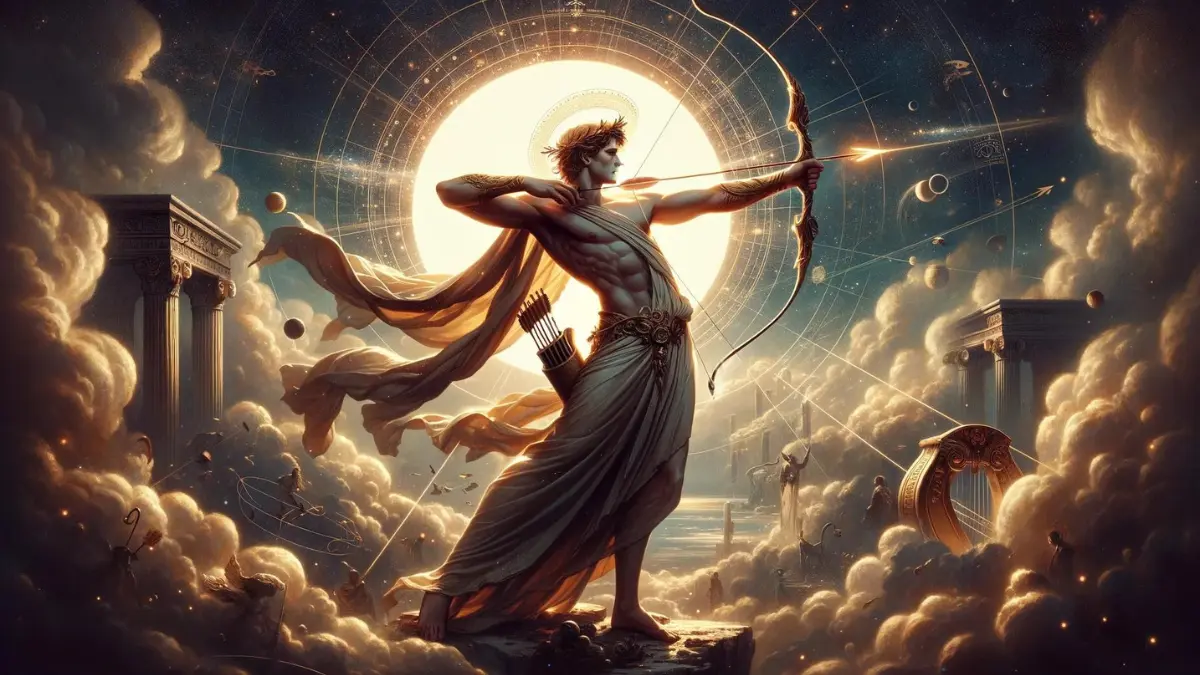
Apollo is her twin brother and is the god of the sun, music, and healing. He bore his silver bow, however he unleashed deadly arrows—disease-bringing or plague-ending. The myths surrounding these archers highlights their mastery skills to over life and death.
- Role in Greek Mythology: While Apollo is known for many roles, including music, poetry, healing, and prophecy, he is also celebrated as a master archer.
- Solar Deity: As a sun god, Apollo’s use of the bow is a symbol of the sun’s rays piercing through the sky.
- Depiction and Symbolism: Apollo often has a golden bow and arrows, signifying not only his skill in archery but also his ability to bring disease and plague with his arrows, as well as healing and protection.
- Myths and Stories: Several myths highlight his prowess with the bow, such as the slaying of the Python at Delphi and his defeat of the giant Tityos.
Cultural Impact of Greek Archery Mythology
Artemis and Apollo are extensively in classical art, literature, and sculpture. It often shows them with their bows as prominent symbols of their divine powers and attributes.
In the context of these deities, archery is not just a physical skill but also a symbol of various divine attributes – precision, purity, protection, and destruction.
They continue to influence modern culture, seen in various media and literature, often as symbols of strength, skill, and independence.
Learn more about Greek mythology:
- Achilles: Greek Warrior Hero’s Journey from Glory to Grief
- Atalanta: Fabled Archer to Legendary Heroine
- Diana: Goddess of Hunt in Roman Mythology
- Gods and Archery in Greek Mythology Books
- God of Archery: Norse, Greek & Roman Mythology
- Hector of Troy: Legendary Trojan Warrior
- Hippolyta: Queen of the Amazons in Greek Mythology
- Legacy of Archers: Women in Greek Mythology
- Paris: Tragic Hero, Villain or Pawn of the Gods
- Penthesilea: Amazon Queen Who Died in Trojan War
- Philoctetes: The Legendary Greek Archer and Healer
Ullr and Odin: Norse Legends of Mythology

Norse mythology is a rich and complex tapestry of legends and sagas from ancient Scandinavia. It features a pantheon of deities and heroes, each with their unique attributes and stories. Among them, two figures stand out for their association with archery: Ullr and Odin.
Ullr: The God of Archery
- Parentage and Lineage: Ullr is the son of Odin, the chief god in Norse mythology. His mother is said to be Sif which makes him a step-brother to Thor.
- Attributes: Ullr is known for his skill with the bow and arrow which makes him the Norse god of archery. This skill also extends to his prowess in skiing, and he is often depicted as a hunter moving swiftly through the snow-covered forests.
- Worship and Significance: Ullr holds an important place in the hearts of ancient Norse people, especially those involved in winter hunting and warfare.
- Representation: Ullr is typically depicted as a formidable, bearded warrior armed with a longbow, often amidst a winter landscape.

Odin: The All-Father’s Association with the Bow
- Role in Norse Mythology: Odin is the father of the gods and this reflects wisdom, poetry, and war. There are aspects of his lore that connect him with archery.
- Odin’s Bow: In some sagas, Odin is hailed for his possession of a powerful bow. This bow is said to strike with the fury of thunder, symbolizing both the might of Odin and the ferocity of the storms he could command.
- Symbolism: The bow is often a symbol of power, precision, and the ability to strike from afar. This aligns with Odin’s role as a deity of foresight and strategy.
- Influence in Battles: Odin is associated with the spear, so his connection to the bow in certain legends underscores his role in guiding and influencing battles.
Legendary Archery: The Cultural Impact
- Legacy in Modern Times: These characters have transcended their mythological origins to become symbols of skill, precision, and strength in modern archery culture.
- Artistic Depictions: Ullr and Odin are in art and literature, inspiring a range of interpretations from classical to contemporary styles.
- Influence on Archery: Their stories continue to inspire and influence archers and enthusiasts, reminding them of the ancient roots and mythological significance of their sport.
Ullr and Odin from Norse mythology hold significant places in the realm of archery. Ullr, as a specialized deity of archery, and Odin, with his legendary bow, both contribute to the rich tapestry of legends that continue to inspire and influence the world of archery today.
Learn more about Norse Mythology:
Eros and Cupid: Symbols of Love’s Precision
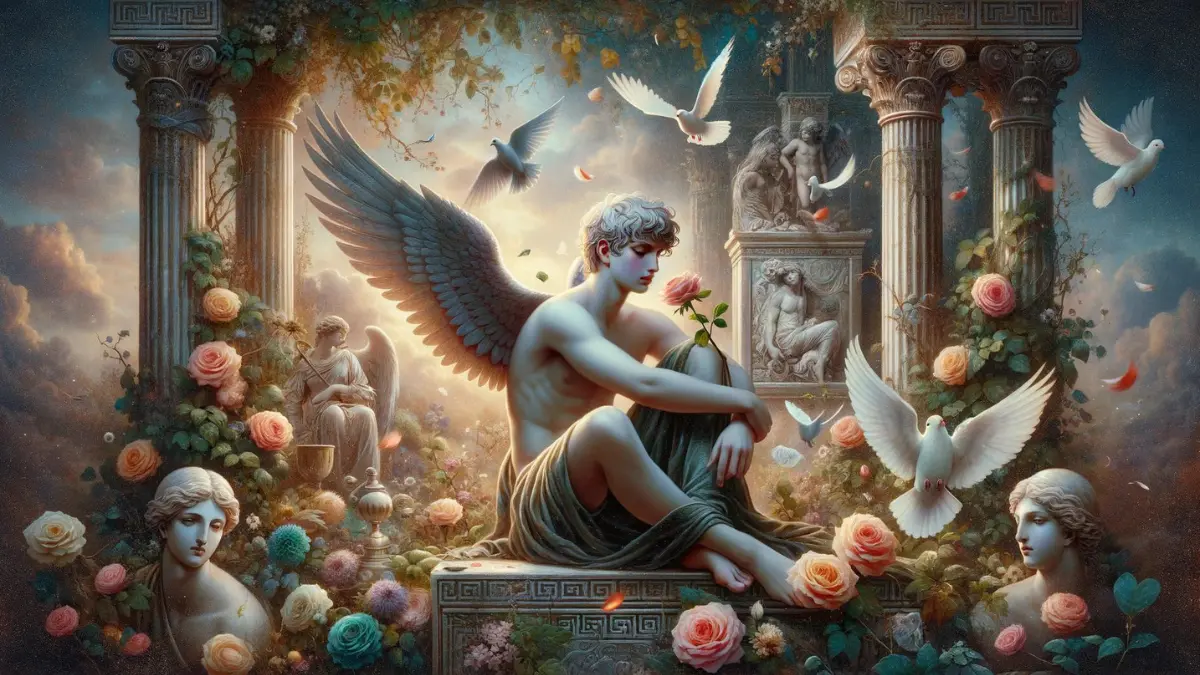
Eros in Greek mythology and Cupid in Roman mythology are figures representing the themes of love and desire. Imagery shows them as archers whose arrows incite love and passion in their targets. Their portrayal as divine archers symbolizes the precision, unpredictability, and profound impact of love.
Eros: The Greek God of Love
- Origins and Family: In early Greek mythology, Eros is a primordial god, born from Chaos. In later traditions, imagery shows him as the son of Aphrodite, the goddess of love, and Ares, the god of war.
- Role and Symbolism: Eros is the personification of love and desire. As a god wielding a bow and arrow, his shots inspire love or desire in his targets. The idea is that love can strike as suddenly and unexpectedly as an arrow.
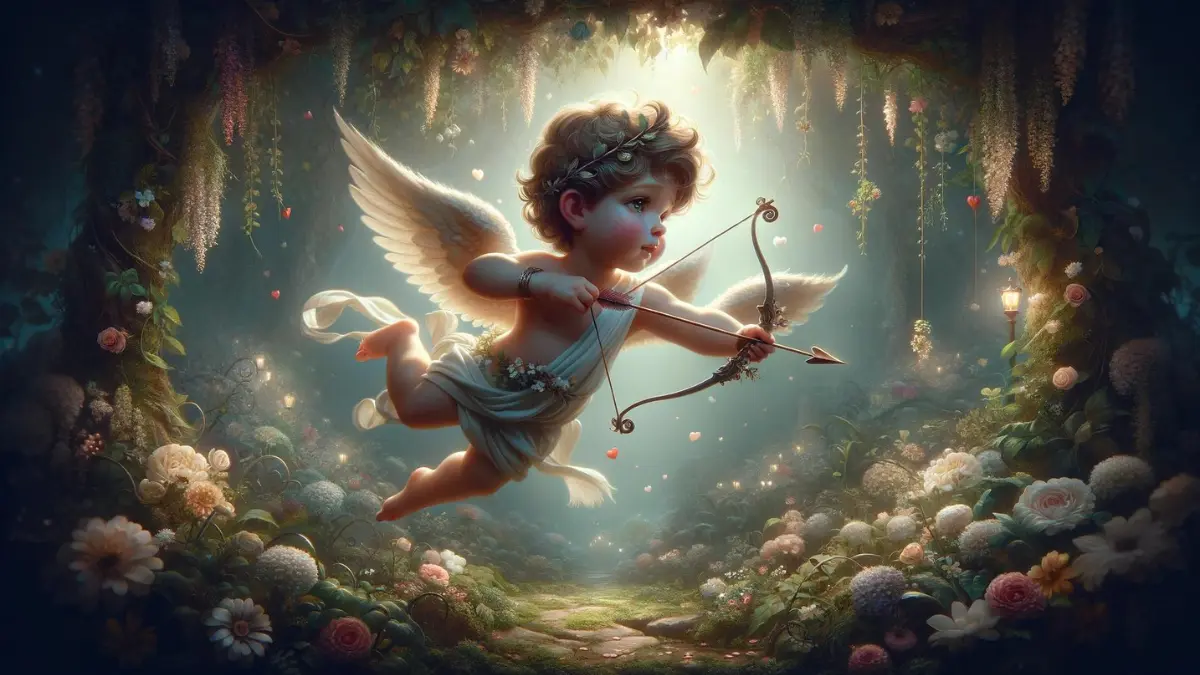
- Depiction and Legends: Eros is a young boy or a winged youth, symbolizing the innocence and capriciousness of love. In art, he holds his bow and arrows, ready to ignite love in gods and mortals alike.
- Influence on Culture and Art: Eros influences a wide range of artistic representations, from ancient pottery to Renaissance paintings, often showcasing themes of love, beauty, and desire.
Cupid: The Roman Counterpart in Archery Mythology
- Adaptation from Eros
Cupid is the Roman adaptation of the Greek Eros. Roman interpretations of Cupid often gave him a more playful, mischievous character.
- Parentage and Stories
Roman mythology considers Cupid to be the son of Venus (the Roman equivalent of Aphrodite) and Mars (the Roman equivalent of Ares).
- Symbolism and Role
Cupid’s arrows represent the power of love and attraction. Drawings depict him as a cherubic figure, often blindfolded to symbolize the blindness of love.
- Cultural and Artistic Influence
Cupid remains a popular figure in Western culture which symbolizing love and Valentine’s Day. His imagery as a cherub with a bow and arrow is a staple in art and literature, embodying the whimsical and unpredictable nature of love.
The Metaphor of Archery in Mythology
For both Eros and Cupid, the bow and arrow serve as powerful metaphors for the way love can strike individuals suddenly and with great impact.
Mythology Impact on Human Relationships
These mythological figures and their tools symbolize the idea that love can target anyone.
This is regardless of status, wealth, or power, which highlights its universal and transformative nature.
Eros and Cupid symbolize the precise, powerful, and often unpredictable nature of love’s reach.
Their stories underscore the universal experience of love’s sudden and transformative impact.
This is a theme that has resonated through centuries.
It continues to be a significant part of cultural and artistic expressions around love and desire.
The Bhagavad Gita: Arjuna’s Divine Archery
The Bhagavad Gita is a 700-verse Hindu scripture.
It is part of the Indian sacred text Mahabharata. This is a profound spiritual and philosophical text.
Within this context, the figure of Arjuna, a master archer, stands out as a central character.
He faces a profound moral and existential crisis, which is emblematic of the human condition and the struggle for righteousness.
Background of the Mahabharata
- Epic Narrative: The Mahabharata is one of the two major Sanskrit epics of ancient India, narrating the story of the Kurukshetra War and the fates of the Kaurava and the Pandava princes.
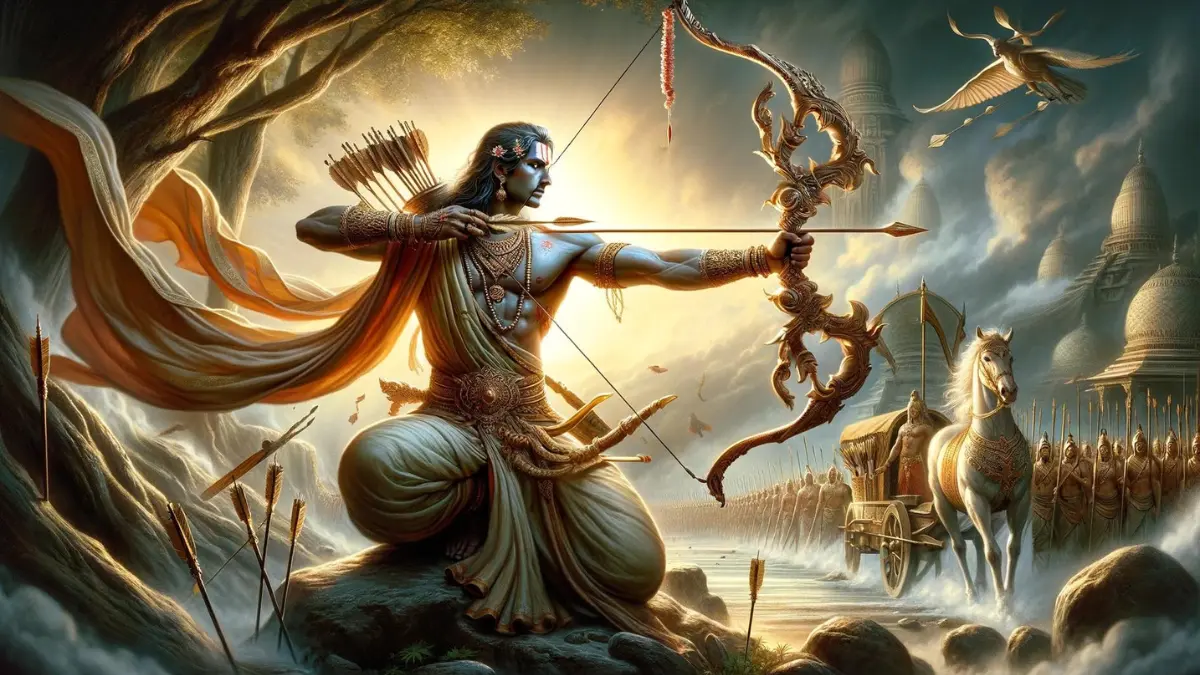
- Arjuna’s Role: Arjuna is one of the five Pandava brothers, renowned for his skills as an archer. He is a central figure in many stories within the Mahabharata, known for his valor and dexterity in archery.
Arjuna in the Bhagavad Gita
The Bhagavad Gita unfolds on the battlefield of Kurukshetra, just as the great war is about to begin.
Arjuna, the great warrior, fills with moral dilemma and despair about fighting in the battle.
This is primarily because he would had to kill his own relatives, beloved friends, and revered teachers.
In his chariot, Lord Krishna, his charioteer, counsels Arjuna. He is an avatar of the Hindu god Vishnu.
Krishna imparts spiritual wisdom and guidance to Arjuna, addressing his doubts and concerns.
Arjuna’s crisis is not just about war however his profound exploration of duty, righteousness (dharma), and the moral struggles that one faces in life.
His status as an archer becomes symbolic of the discipline, focus, and ethical conviction required to navigate life.
The Bhagavad Gita covers a range of spiritual topics, including the nature of reality, the self, the universe, and the purpose of life.
It emphasizes the importance of doing one’s duty and adhering to the path of righteousness.
Archery Mythology: Cultural and Philosophical Impact
The Bhagavad Gita has had a profound influence on Hindu philosophy and spirituality.
It offers guidance on how to live a virtuous, meaningful life.
The text has transcended its religious origins to become an important philosophical and spiritual resource globally, admired for its universal themes.
Arjuna’s skill with the bow and arrow is a metaphor for the focus, clarity, and discipline needed in spiritual and ethical pursuits.
Arjuna is more than just a legendary archer in an ancient epic.
He embodies the human struggle with ethical and moral dilemmas, the pursuit of duty, and the quest for spiritual understanding.
His story in the Gita continues to be studied for its deep insights into the human condition and the path to spiritual enlightenment.
Across cultures, archers are revered and embody heroism and moral integrity.
Learn about The Journey of Archery from Combat to Recreation