Hachiman: God of War in Japanese Mythology
Hachiman: The God of War and Protector of Japan
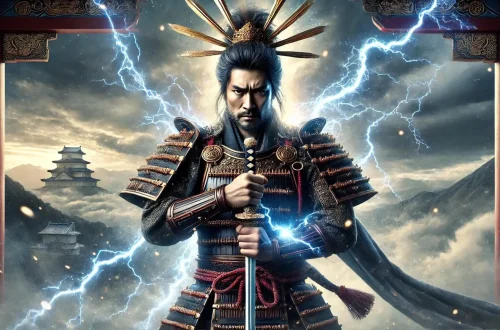
In Shintoism, Hachiman stands as a revered deity in Japanese mythology.
Often embodying both the ferocity of war and the safeguarding of the Japanese people.
His origins, deeply rooted in Japan’s history, have intertwined him with martial valor and national defense.
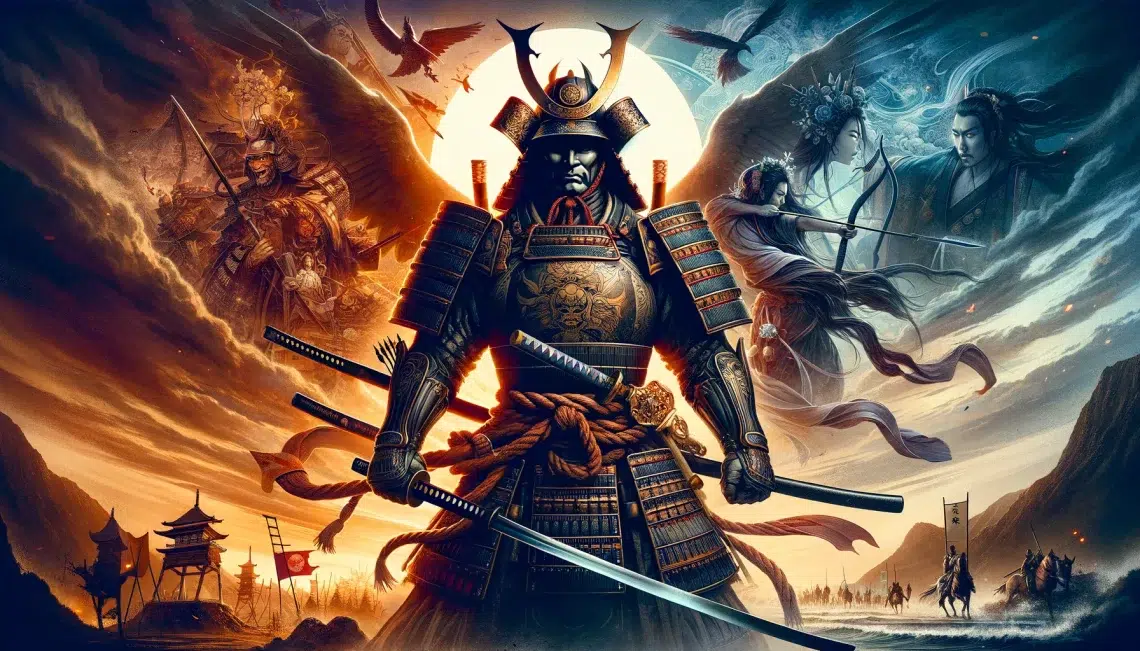
A divine protector of Japan and the warrior class, Hachiman’s worship extends beyond the battlefield.
He also represents fertility and peace, showcasing the duality of his influence.
There are numerous shrines dedicated to him across Japan.
The most famous being the Usa Shrine in Oita Prefecture, Hachiman’s presence permeates through various aspects of Japanese culture and society.
His lore often connects him to historical figures and events.
His iconography frequently features the dove and the bow, symbols of his warlike and protective nature.
The Legend of Hachiman: Divine Birth to Warrior Deity

Divine providence steeped Hachiman’s origins, with believers considering him the son of Emperor Ōjin, whom people deified after his death.
Linked to both Buddhist and Shinto practices, Hachiman transitioned from a protector of agriculture to a revered warrior deity.
His worship was widespread among samurai, who saw in him an idealized figure of martial prowess and honor.
Legend has it that Hachiman would guide warriors in battle, ensuring victories for those who paid him homage.
Through his divine birth and transformation into a warrior deity, Hachiman embodies the spirit of Japan’s martial traditions and the sacredness of warfare.
Symbols of Hachiman: Understanding the Iconography

Hachiman, venerated in Shinto tradition, possesses distinctive symbols reflecting his martial and divine status:
- The Dove: Serving as his messenger, the dove represents Hachiman’s ability to bring peace despite his martial associations.
- The Bow and Arrows: These tools of war symbolize Hachiman’s prowess in battle and his role as a protector of warriors and archers.
- The Tomoe: This comma-shaped emblem often found in Hachiman shrines signifies strength and valor, essential qualities for a god of war.
- The War Fan (Gunbai): It stands for military command and is also an instrument reflecting the power to control the elements, particularly wind.
By recognizing these icons, devotees connect with Hachiman’s essence, invoking his protection and guidance.
Learn more bout: Japanese Archery: The Art of Mastering Kyudo
Sacred Spaces for Worship across Japan

Hachiman, the syncretic deity of war and divinity, holds remarkable significance in Japanese culture, and his shrines are a testament to this reverence.
Throughout Japan, Hachiman shrines populate the landscape, each offering a unique space for veneration and ritual.
The most notable is Usa Jingu in Oita Prefecture, considered the head shrine of all Hachiman worship.
- Thousands of Hachiman shrines exist across Japan.
- Locals and travelers visit these shrines to pay homage, pray for success in war and personal endeavors.
- Torii gates, traditional architecture, and serene natural surroundings characterize these holy sites.
- The shrines serve as venues for festivals, showcasing martial traditions and rituals.
- Energetic and peaceful atmospheres coalesce, reflecting Hachiman’s dual nature as both a ferocious warrior and a guardian deity.
The Role of Hachiman in Samurai Culture and Bushido
Hachiman, revered as the divine protector of Japan and its people, held a significant place in samurai culture and the principles of bushido— the samurai’s ethical code.
Esteemed as a god of war and warriors, Hachiman was looked upon for:
- Guidance in martial prowess and warfare strategy.
- Ensuring victory and safeguarding the samurai in battle.
- Embodying the bushido values of honor, bravery, and loyalty.
Samurai warriors often visited Hachiman shrines before battle, seeking his blessings and carrying shrine tokens known as “o-mamori” into combat for protection and courage.
Thus, Hachiman’s influence permeated the very essence of samurai life and their moral conduct.
Learn more about: Famous Archers in History: Legends of the Bow and Arrow
Festivals and Ceremonies: Celebrating Hachiman
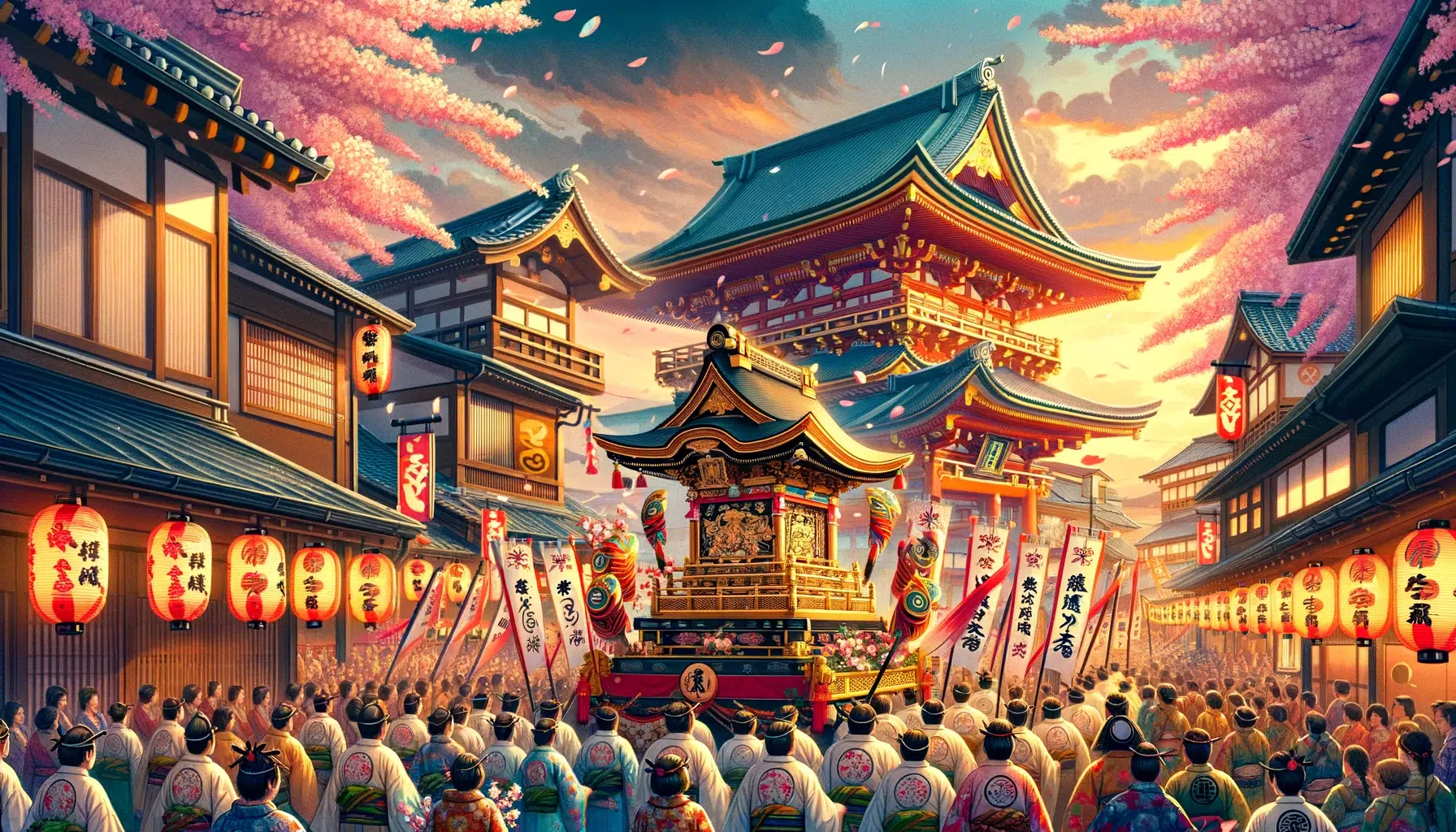
In Japan, Hachiman is honored with numerous festivals and ceremonies, reflecting his significance as a deity of war and protection.
The most prominent among them is the Hachiman Matsuri, which is celebrated with grand parades of portable shrines (mikoshi) and traditional music, encapsulating both reverence and celebratory vibrance.
- Yabusame, the ritual of mounted archery, is a spectacular homage to Hachiman’s martial prowess. Expert archers, clad in classical samurai garb, race on horseback, shooting at targets to prove their skill and dedication.
- Sanno Matsuri and Gion Matsuri are two other major festivals where Hachiman is venerated, featuring elaborate processions and rituals that display community bonds and historical continuity.
- Seasonal agricultural ceremonies also beseech Hachiman’s blessing, underscoring his role as a guardian of abundance and wellbeing.
Community participation in these traditions fosters a sense of unity and ensures the perseverance of Hachiman’s martial and protective ethos in contemporary Japan.
Hachiman in Literature
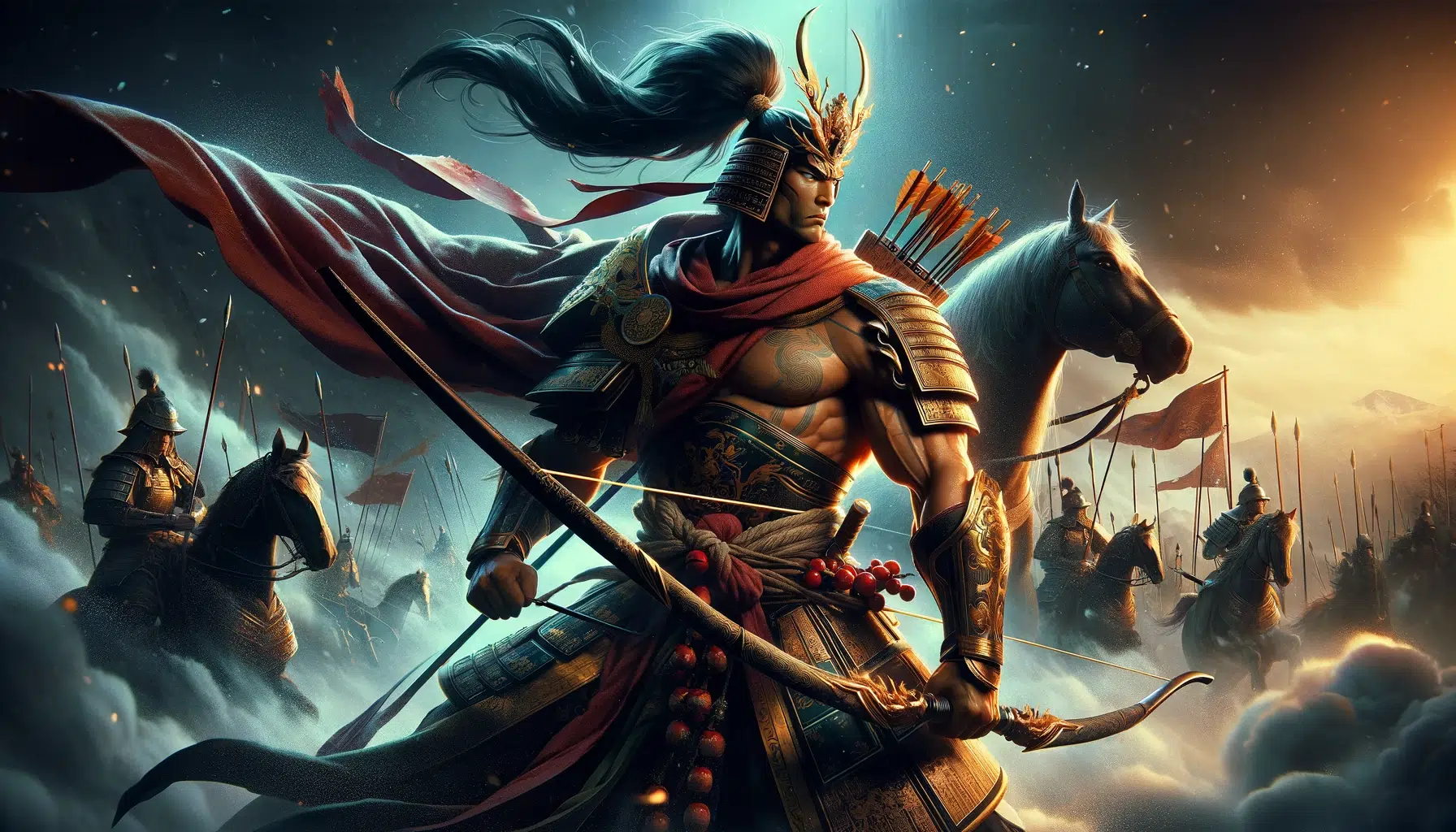
The portrayal of Hachiman in Japanese literature is steeped in reverent narratives and artistic tributes.
In the epic Heike Monogatari, Hachiman is celebrated as a divine warrior, guiding the Minamoto clan to victory.
Poets of the waka and haiku traditions often compose stirring verses dedicated to his valor and virtue, highlighting his role as protector and inspirer.
These literary pieces not only illustrate the god’s martial prowess but also underscore the cultural and spiritual significance of Hachiman in the tapestry of Japanese history and religion.
Hachiman’s Impact on East Asian Warfare Deities
While Hachiman is quintessentially Japanese, his martial persona resonated throughout East Asia, mingling with an array of divine protectors.
This syncretism left a mark on regional deities:
- In Korea mythology, local gods of war and protection, like Guan Yu, also worshipped in China, incorporated elements akin to Hachiman’s valor and strategic prowess.
- In China, aspects of Hachiman’s persona can be seen mirrored in revered war gods like Guandi, mixing Shinto influences into the local folk religion.
- Mongol invasions of Japan in the 13th century witnessed Hachiman’s veneration by both sides, symbolizing a cross-cultural reverence for indomitable protectors in times of conflict.
Hachiman’s Place in Contemporary Japanese Society
In contemporary Japan, Hachiman’s relevance remains significant, intertwining religious tradition with modern cultural identity.
Citizens often visit Hachiman shrines for various reasons:
- Community Events – Shrines serve as hubs for festivals and local gatherings.
- Personal Milestones – People seek blessings at significant life events, including weddings or children’s coming-of-age rituals.
- Business Success – Entrepreneurs and corporations pay homage to Hachiman, hoping to secure prosperity and good fortune.
- Cultural Preservation – Dedicated practitioners and cultural enthusiasts support these shrines to maintain traditional customs.
- Spiritual Anchor – Many Japanese find solace and guidance in the ancient stories of Hachiman, applying spiritual lessons to contemporary life challenges.
Thus, Hachiman’s worship demonstrates a harmonious blend of historical reverence and modern practices.
Insights from Religious Scholars and Historians
Religious scholars often view Hachiman as a complex deity, embodying the Shinto belief in kami while also reflecting the syncretism of Shinto and Buddhism.
Historians deduce his veneration signifies the militaristic and protective expectations of Japanese society during various periods of its historical development.
- Shinto practitioners see Hachiman as a guardian of Japan and its people, emphasizing his benevolent aspects.
- Buddhist interpretations of Hachiman focus on his role as a protector of the Dharma, illustrating the interweaving of religious traditions.
- Historians link Hachiman’s martial aspects to the samurai culture, suggesting his worship was integral to warrior ethos.
- Scholars observe that Hachiman worship often included rituals for agricultural fertility, highlighting the god’s multifaceted nature.
This nuanced interpretation reflects the layered tapestry of Japanese religious and cultural history.
The Legacy of Hachiman in Japanese Mythology
Hachiman’s enduring legacy in Japanese culture transcends mythology, marking him as a deity of multifaceted influence.
Historically revered by samurai and peacetime leaders alike, his veneration reflects the evolving fabric of Japanese spiritual and societal values.
As protector and patron, Hachiman bridges Shintoism and Buddhism.
This deity’s worship, embodying martial prowess and peaceful prosperity, continues to resonate within the collective consciousness of Japan.
Thus underscoring his timeless relevance and the complexity of the divine in human affairs.