Cadmus and the Dragon’s Teeth: Founding Thebes
Cadmus and the Dragon’s Teeth begin with a brother’s promise.
Zeus carries Europa away in bull form. Cadmus’s father the king orders Cadmus to find her and never return without her. The quest reshapes his fate with Cadmus seeking guidance at Delphi. But the oracle redirects him.
He’s told he must follow a sacred cow and build a city where it lies down. That single sign sets a chain in motion. Battling a serpent. Teeth fall into soil. Warriors spring from the earth and a city takes root.
Thebes stands because one prince follows an omen.
Background: Prince of Phoenicia
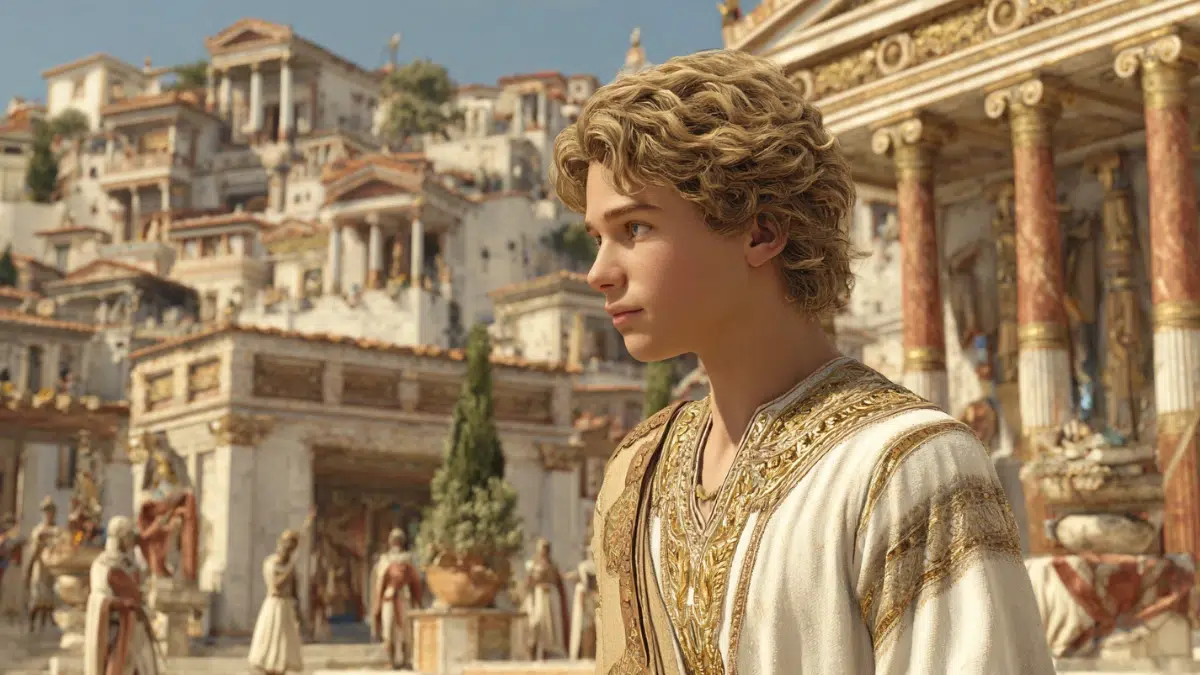
Cadmus is a mortal prince of Phoenicia, a region along the eastern Mediterranean coast. This land stretches across parts of present-day Lebanon, Syria, and northern Israel. Famous for its ships, its trade, and its purple dye, Phoenicia stands as a powerful link between East and West.
Cadmus’s father is Agenor, a king tied to Tyre or Sidon. His mother is usually named Telephassa, who guides her sons after Europa’s disappearance. Some traditions call her Argiope, a nymph, which leaves room for debate.
Cadmus grows up with siblings, Cilix and Phoenix, who also shape geography through myth. His brother Phoenix gives his name to Phoenicia itself. Cilix becomes linked with Cilicia in Asia Minor. His sister Europa sparks the story that changes everything.
Cadmus and the Alphabet
Many Greek traditions credit Cadmus with bringing letters to Greece. The idea links him, a Phoenician prince, with the Phoenician script — an early alphabet that influenced the Greek alphabet.
Phoenicians were traders and spread their script widely through the Mediterranean. Around the 8th century BCE, Greeks adopt and adapt this script into their own alphabet, adding vowels.
History shows the alphabet develops centuries later, but myth ties both city and script to the Phoenician prince. Thebes becomes not just a city of warriors but also a city of knowledge.
Abduction of Europa

The story begins with the abduction of Europa.
In Greek mythology, Zeus often desires mortal women. Europa, daughter of King Agenor of Phoenicia, becomes one of his most famous pursuits. Europa’s beauty draws Zeus’s attention.
To approach her without fear, Zeus transforms into a majestic white bull. Europa plays with the bull, even climbs on its back. Zeus then leaps into the sea, carrying her to Crete.
This moment sets the stage for Cadmus destiny. Agenor commands his three sons to search for her. He tells them never to return without their sister.
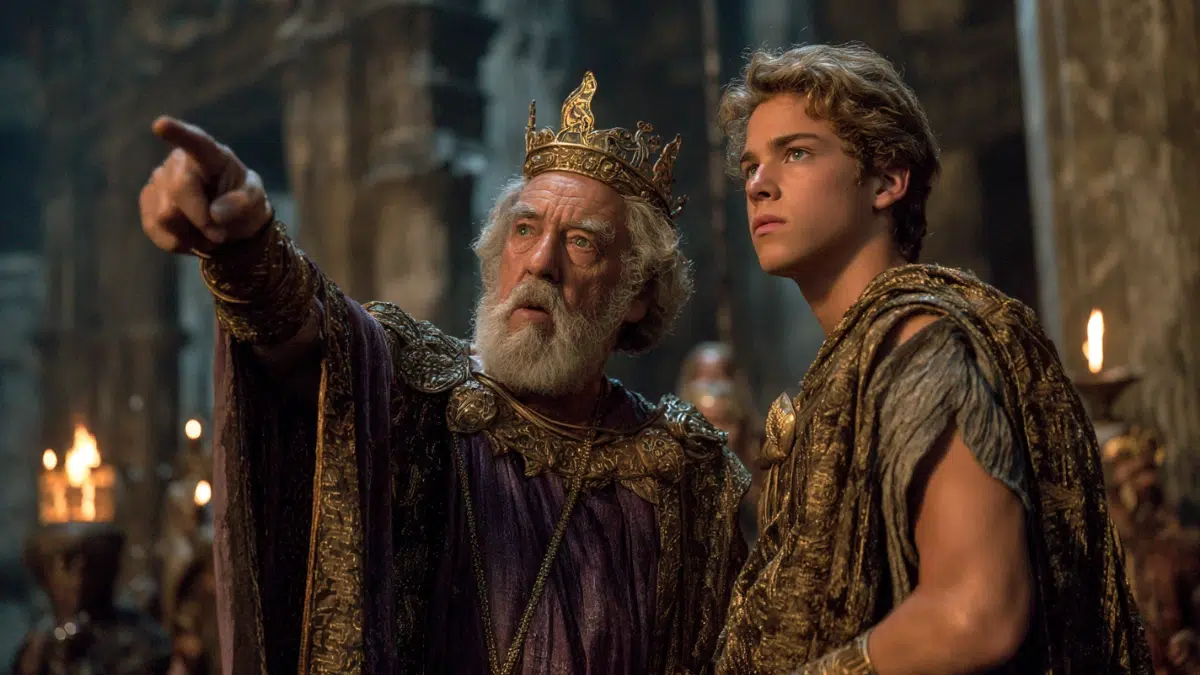
Each son obeys. Phoenix heads one way, Cilix another, and Cadmus takes his own path. Telephassa joins them for part of the journey, but she dies in Thrace. From that point, Cadmus continues alone.
The family search expands into the founding of cities. Phoenix, Cilix, and even Europa leave their names on maps. Cadmus steps into Greece itself.
The Search and the Oracle
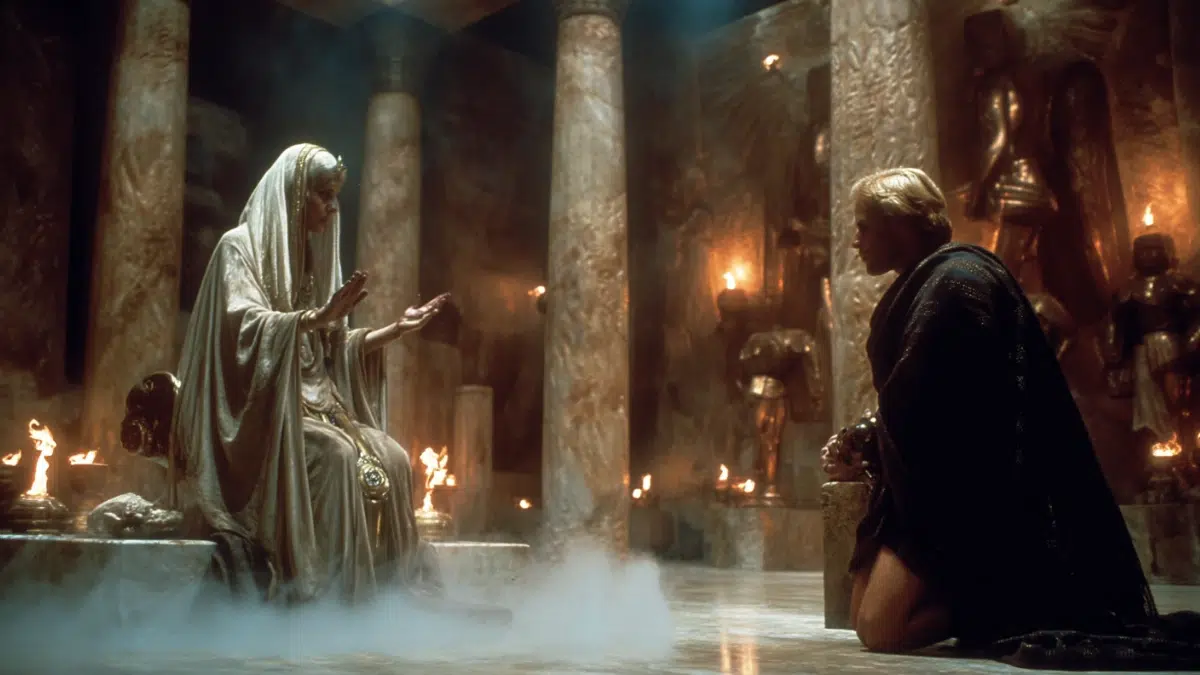
Cadmus searches across many lands but finds no trace of Europa. His mother, Telephassa, travels with Cadmus and his brothers at the start of the search. But she dies in Thrace, while the brothers are still looking for Europa.
Cadmus wanders without success. He visits Delphi for guidance.
Oracle of Delphi
The Oracle of Delphi is the sacred temple of Apollo, providing divine guidance. People would come to the Oracle of Delphi to ask Apollo questions about wars and personal choices.
Pythia is the priestess at Delphi who delivers Apollo’s words. She would enter a trance and speak the prophecy. The Greeks called her “Pythia” because Delphi’s older name was Pytho.
Pythia was not giving her own opinion, she spoke for Apollo. Her role was a channel, not an independent prophetess.
The Pythia speaks plainly. Stop the search. Follow a cow with a moon-shaped mark. Build a city where it lies down. The message shifts his aim from sister to city. He is now to seek ground, not a person.
Once the gods speak, mortals rarely argue. The oracle’s authority is final. Cadmus drops his duty to his father and follows Apollo’s will. His duty would now shift into something greater than a rescue.
The Sacred Cow and the Chosen Ground
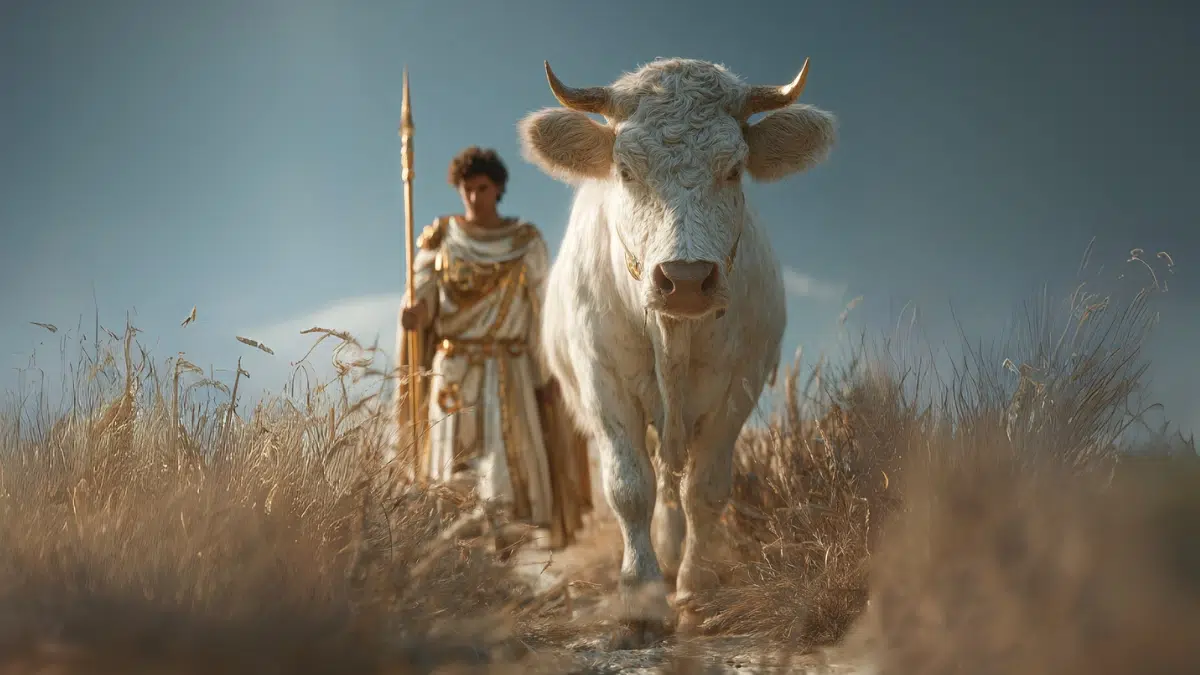
Fate guides him. As Cadmus leaves Delphi, the cow appears as part of Apollo’s design, reinforcing the idea that this is a divinely guided mission. The animal has the moon-shaped mark described by Pythia.
Cadmus follows the cow across Boeotia. The animal leads without haste. Hills roll by, streams cross the route. The cow finally rests and lies down — the spot where Thebes rises.
When the cow rests, Cadmus prepares to sacrifice it to Athena, thanking her for guidance in his quest. He sends men to fetch water from a nearby spring. There, they meet the serpent of Ares.
The Serpent of Ares
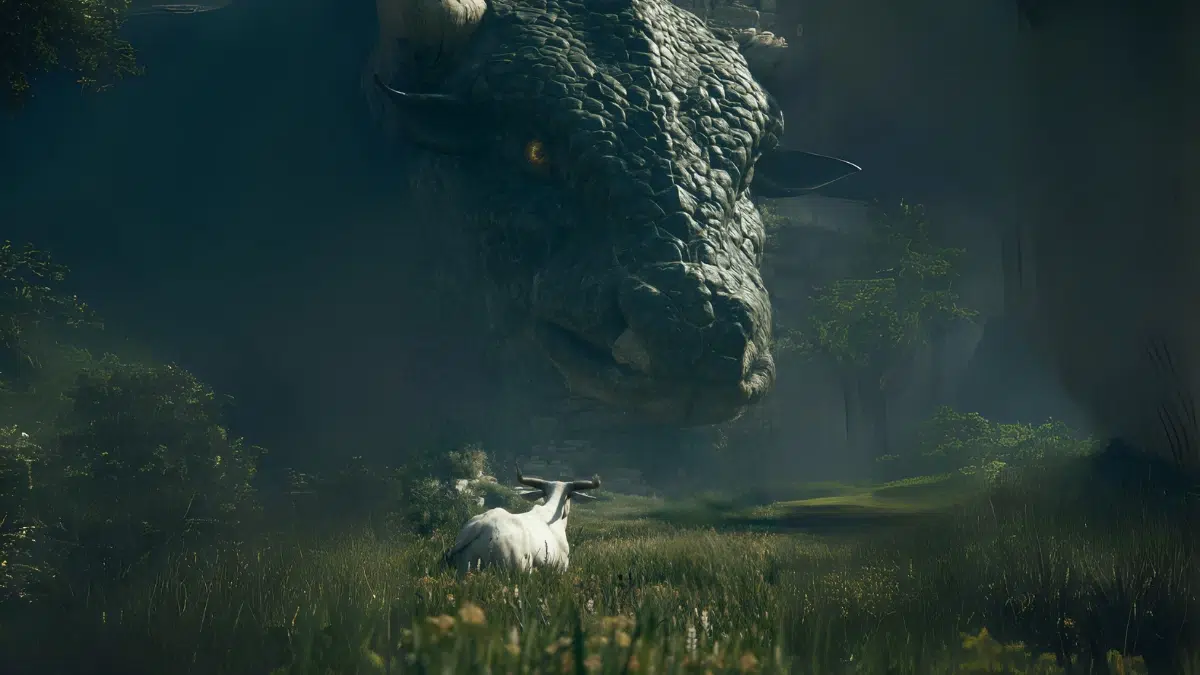
The spring Cadmus sought lay under the guard of a sacred serpent. This beast wasn’t just a random monster, it belonged to Ares, god of war.
Its role was to guard the spring of Ares, a vital water source near the site where Cadmus would build Thebes. Anyone who tried to use the spring for sacrifice or settlement had to face the guardian first.
It struck down Cadmus’s men as they fetched water.
Alone, Cadmus faced the monster. The serpent was enormous, coiling and striking like a dragon. Cadmus, armed with spear and courage, stood his ground.
Cadmus pierces the serpent again and again until it collapses in death. At last, the serpent fell.
Victory came at a cost. The guardian’s death provoked Ares himself. Divine anger now shadows the new city.
Some say Cadmus served the war god in penance for eight years. Others say the god’s anger spread into the family line.
Either way, conflict did not end with the serpent’s fall. It only changed form.
Athena’s Counsel: Sowing the Teeth
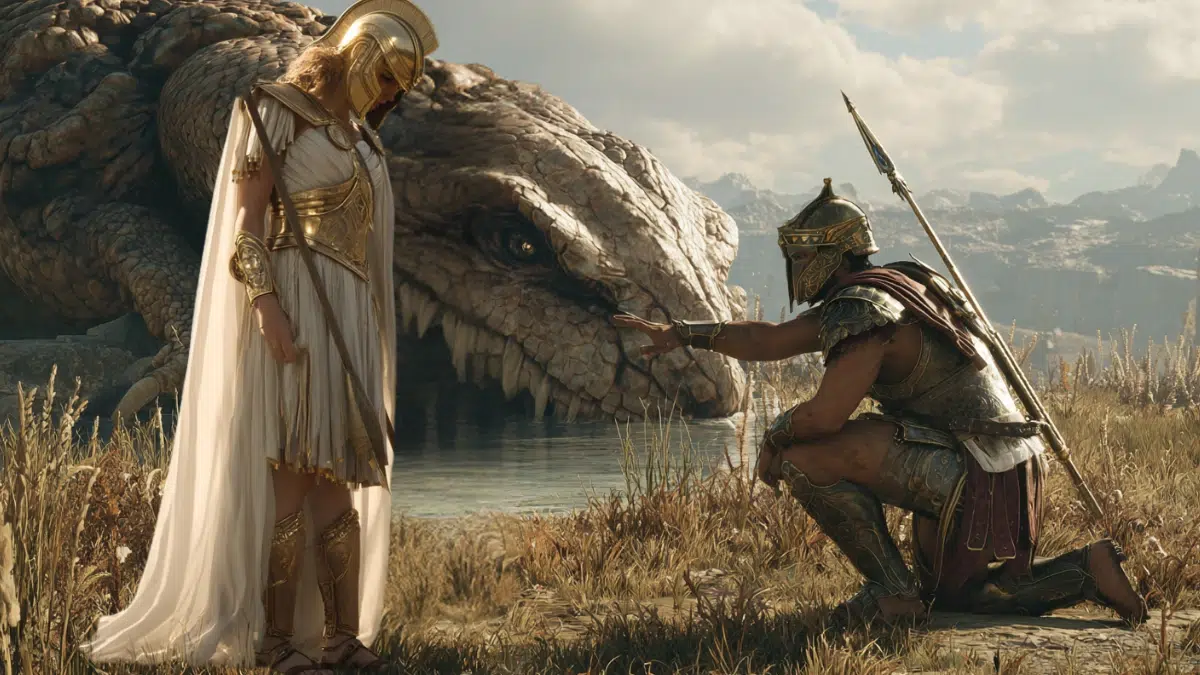
After Cadmus kills the serpent, Athena appears. She does not fight for him, but she provides strategy.
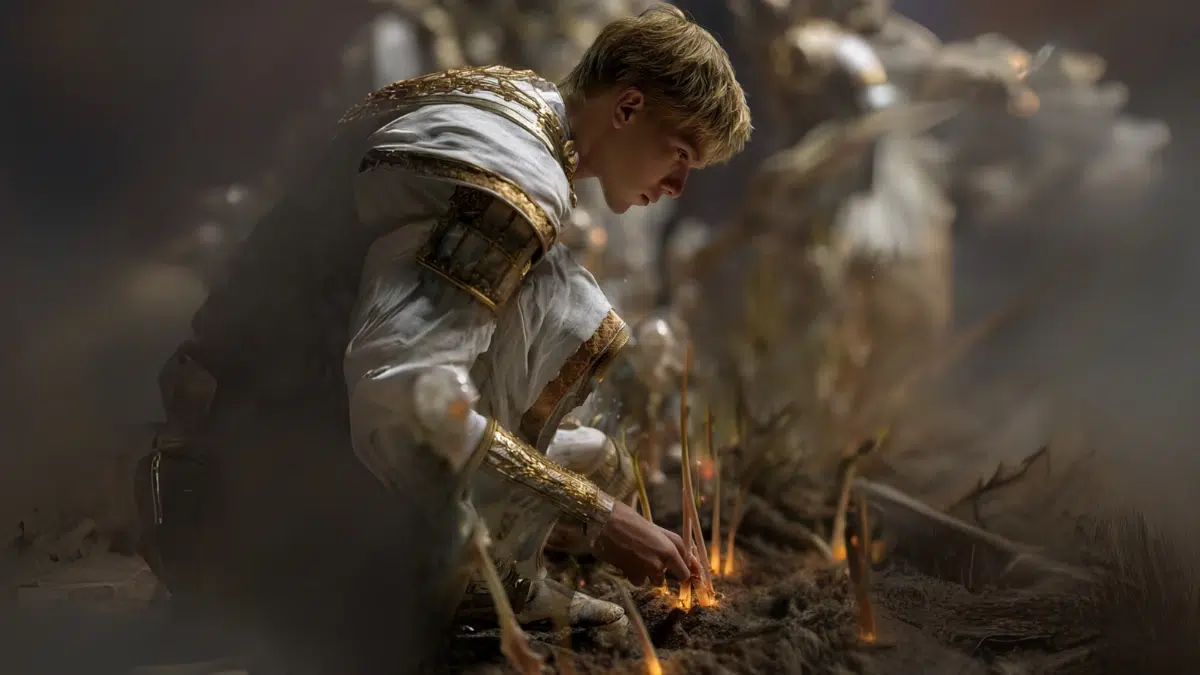
She tells Cadmus to pull the serpent’s teeth and sow them in the ground. The command sounds strange, even unsettling.
Why bury remnants of a monster? Still, Cadmus obeys. He plants the teeth like seeds and the ground stirs.
Warriors from the Soil
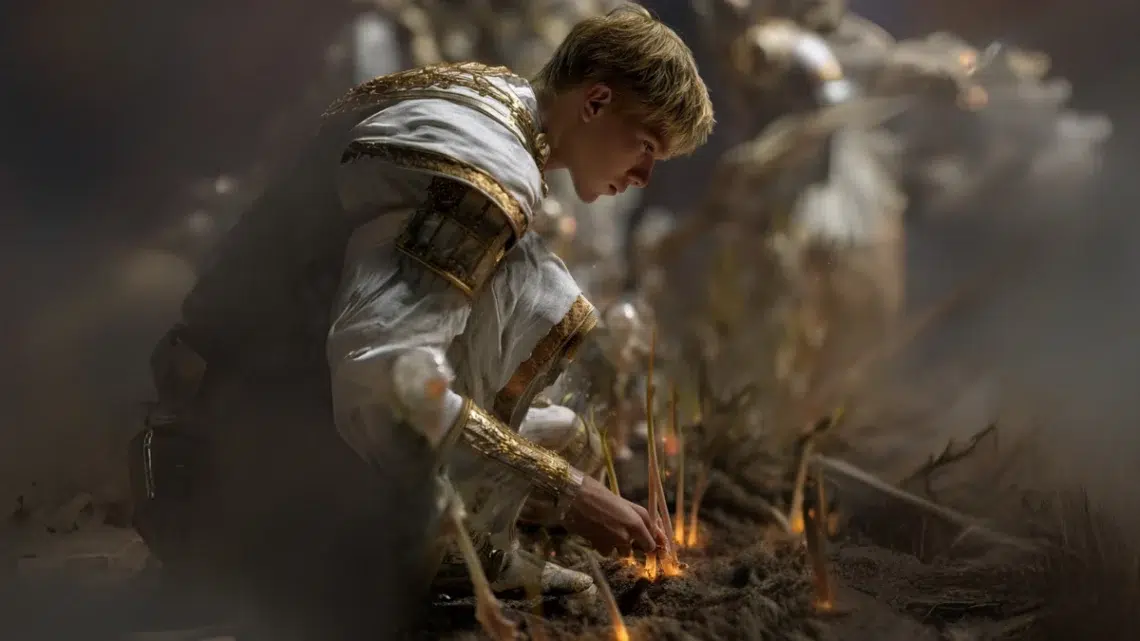
The ground begins to stir as the teeth sink into the earth. Bronze glints in sunlight. Helmets rise from the soil.
Shields push through dirt. One by one, fully armed warriors climb out of the earth.
These men are the Spartoi, the “sown ones.” They stand tall, fierce, and ready for battle.
Cadmus’s Clever Trick
Athena guides Cadmus again. She tells him not to fight them directly.
Instead, he throws a stone into their midst. Confused, the earth-born warriors believe the blow comes from one of their own.
They turn on each other. A brutal clash begins. Steel clashes with steel. Shields splinter. Dust and blood rise together.
The Survivors and Thebes
When the dust clears, only five warriors remain alive.
These five survive because they outlast the frenzy of their brothers. They do not vanish back into the earth. They stand as founders.
The Thebans trace their noble families back to these earth-born ancestors. The Spartoi give Thebes its roots. Warriors sprung from the very soil of the land.
These five become pillars of Thebes. They anchor noble families and its earliest order.
The Spartoi and the Founding of Thebes
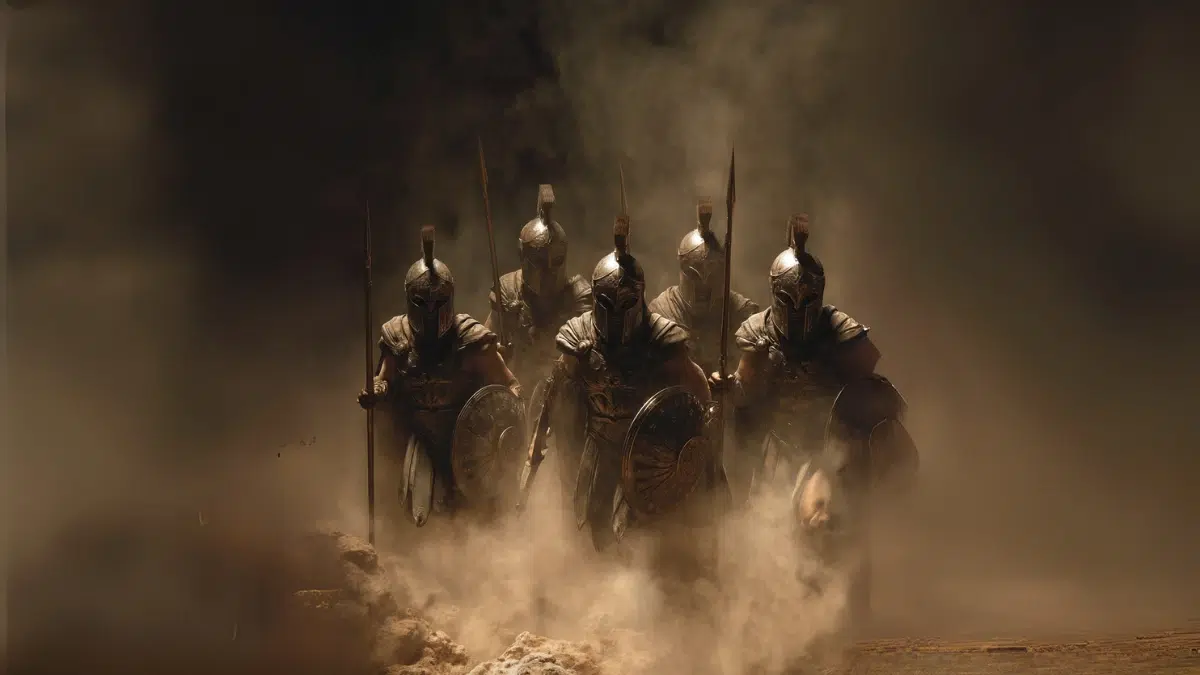
The surviving Spartoi help Cadmus build walls and law. Earth itself provides citizens.
The city claims its people as native and ancient. Thebes gains both mythic age and martial grit.
Cadmus rules with Athena’s favour however Ares’s anger hangs over Cadmus’s house. The tension never fully fades: order under Athena’s guidance and wrath under Ares’s shadow.
Harmonia and the Cursed Necklace
After Cadmus kills the serpent of Ares, he owes penance to the war god. He serves eight years of bondage to Ares. Only after this service does reconciliation come.
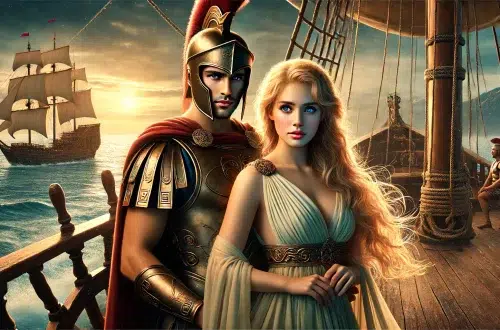
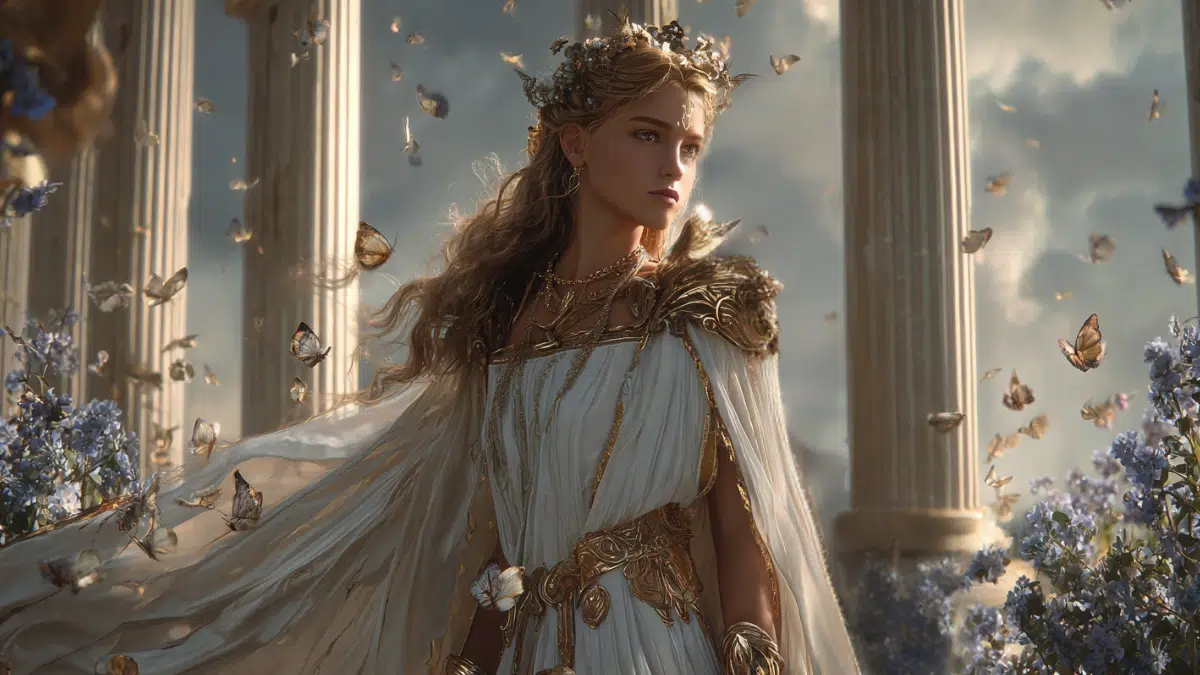
His marriage to Harmonia, daughter of Ares and Aphrodite, functions as both a reward and a peace offering. It symbolically binds Cadmus to Ares’s line, transforming hostility into alliance.
Unlike most mortal weddings, the gods themselves attend Cadmus and Harmonia’s wedding.
The union signals harmony between Cadmus, the mortal founder, and the divine forces that once opposed him.
The name Harmonia itself underscores this embodying reconciliation and balance.
The Necklace of Harmonia
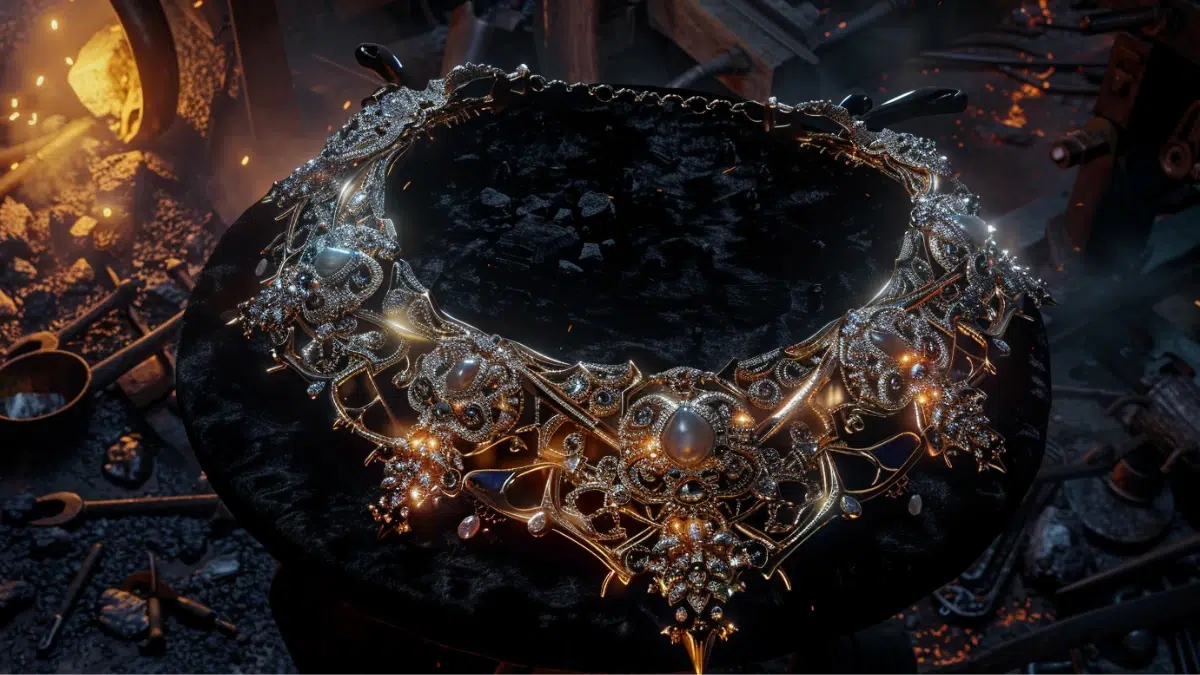
Hephaestus forges the necklace. Some traditions say it’s cursed because Hephaestus resents Aphrodite’s unfaithfulness for her affair with Ares.
The necklace grants both beauty and doom for generations of Thebans.
The Curse
The curse of Harmonia’s necklace doesn’t strike Cadmus and Harmonia immediately. Their lives start with honour. Gods attend their wedding, and Cadmus rules Thebes.
But their children carry the weight. The doom runs through their daughters and grandchildren, shaping every tragedy in Thebes.
Daughters of Cadmus and Harmonia
Cadmus and Harmonia have several daughters and some sons, but the daughters dominate most myths.
- Semele — Zeus struck by lightning and killed her
- Agave — under Dionysus’s spell, she tears her own son Pentheus to pieces.
- Ino — becomes the goddess Leucothea after leaping into the sea with her son
- Autonoë — mother of Actaeon, the hunter killed by Artemis
Semele
Semele captures Zeus’s love, but her fate turns tragic.
Hera, jealous and cunning, tricks Semele into asking Zeus to appear in his full divine form. Bound by oath, Zeus reveals himself, and Semele burns in the lightning.
She carries Zeus’s child, and before she dies, he rescues the unborn infant and sews it into his thigh. From this extraordinary birth comes Dionysus, god of wine and ecstasy.
Semele’s death is one of the first signs of the curse shadowing Cadmus’s family.
Agave
Agave’s story shows the curse at its most brutal.
In Euripides’ Bacchae, Dionysus punishes Thebes for rejecting his divinity.
As punishment, Dionysus strikes the women of Thebes, including Agave, with a divine spell of madness.
In this frenzy, they join the Maenads (wild female followers of Dionysus) and roam the mountains.
When Pentheus spies on them, Dionysus tricks him into wearing women’s clothing and leads him into their midst.
In their delirium, the maddened Agave and the Maenads mistake Pentheus for a lion.
Agave herself leads the attack, tearing him apart with her bare hands. Only when the frenzy passes does she see the horror of her act.
Agave embodies how Cadmus’s line suffers not from outside enemies but from their own blood, twisted by divine will.
Ino
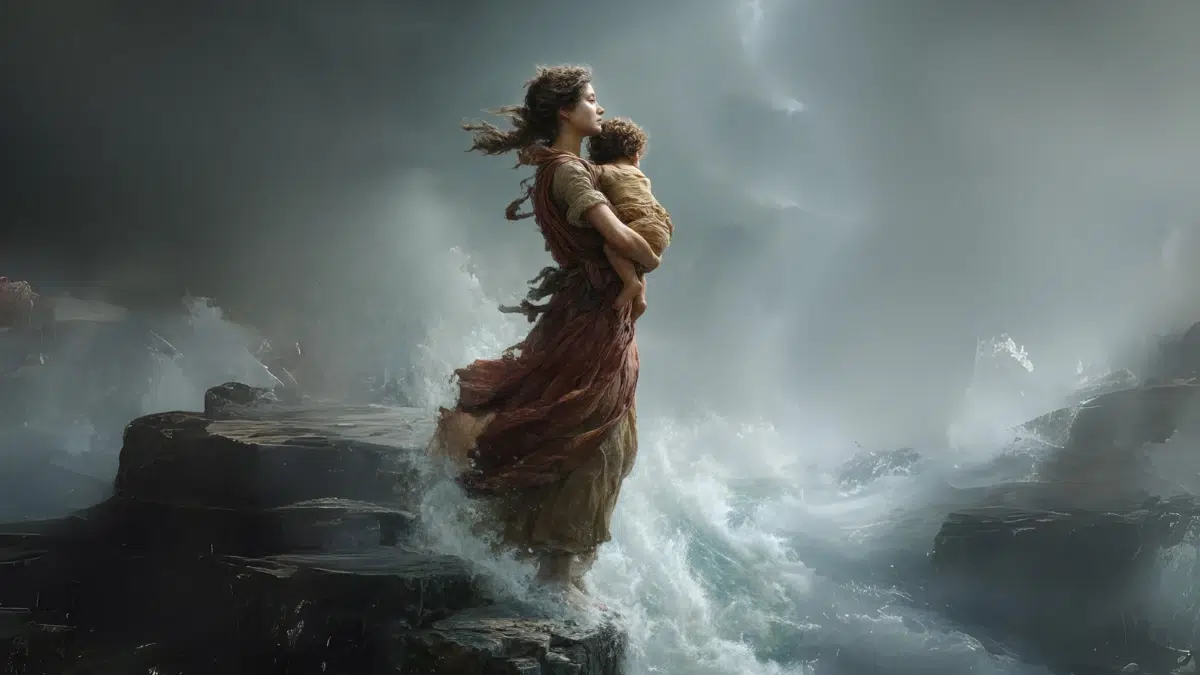
Ino raises Dionysus for a time, earning Hera’s wrath.
As punishment, Hera drives Ino’s husband, Athamas, into madness.
In his frenzy, he kills one of their children. Ino flees with the other and leaps into the sea to escape.
The gods take pity, transforming her into the sea goddess Leucothea, a divine helper of sailors in distress.
Ino’s fate is bittersweet. She loses her mortal life but gains a divine role.
Her story highlights how Cadmus’s daughters cannot escape the gods’ attention, whether cruel or merciful.
Autonoë
Autonoë suffers through her son, Actaeon, whose death ties the curse to the next generation.
Though she does not act directly, her grief shows how Cadmus’s line continues to pay for old transgressions.
The curse touches not just daughters but their children too.
Each daughter carries tragedy. The necklace serves as the symbol of this doom. A glittering reminder that beauty can mask destruction.
The Curse Continues with Grandchildren and Beyond

The curse doesn’t stop with the daughters.
Pentheus (Agave’s son) dies violently
Agave, his mother, under a divine spell of madness, mistakes her son for a lion and tears him apart.
Actaeon (Autonoë’s son) meets a brutal end
Actaeon accidentally sees Artemis bathing, a violation of her purity. Furious, she transforms him into a stag. Actaeon’s own hunting dogs fail to recognise him and tear him apart.
Autonoë loses her son in one of the most violent and senseless deaths in Greek myth.
Later, through Theban lineage, the curse echoes into the house of Oedipus. Thebes becomes a city haunted by Cadmus’s line.
Serpent Transformations
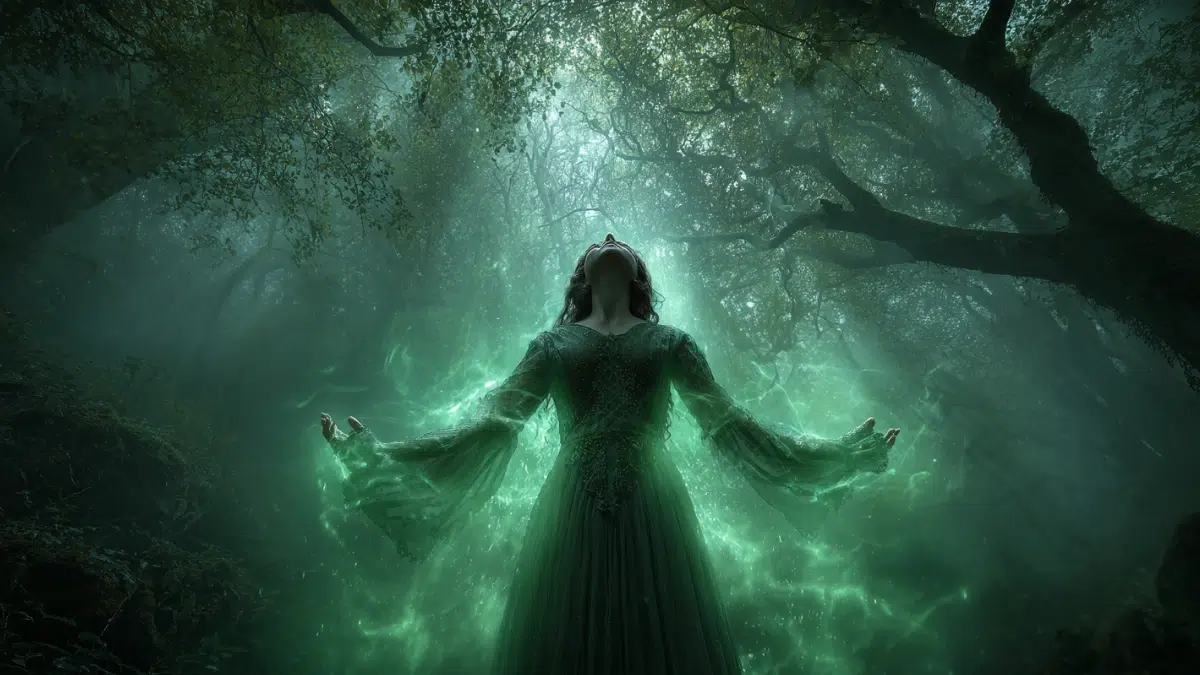
In old age, Cadmus and Harmonia leave Thebes for Illyria. There, grief and despair weigh on them.
Some versions say Cadmus wonders if he suffers because he slew Ares’s serpent. The gods then transform him and Harmonia into serpents.
The transformation isn’t framed as breaking the curse. Instead, it offers release. An end to human suffering, a new form tied to the serpent that marked their beginning.
As serpents, they remain together, bound in a new harmony.
Versions and Sources
Sources agree on the core: oracle, cow, serpent, teeth, Spartoi, city. Apollodorus (Library 3.4.1–2) sets the sequence cleanly. Ovid (Metamorphoses 3) tells it with vivid drama. He dwells on the serpent fight and the earth-born warriors.
Euripides (Bacchae) shows Cadmus as an aged figure within later Theban tragedy. Pausanias adds local lore.
Herodotus (5.58) links Cadmus to letters, reflecting Greek views on Phoenician influence.
- Apollodorus, Library 3.4.1–2: Oracle, cow, serpent of Ares, sowing teeth, Spartoi warriors
- Ovid, Metamorphoses 3.1–137, 3.407–730: Serpent combat and earth-born warriors; rich narrative detail
- Euripides, Bacchae: Cadmus in later Theban saga; family tragedies tie back to his line
- Pausanias 9.x: Local Theban traditions and sites
- Herodotus 5.58: Phoenicians (and Cadmus) bring letters to Greece (Greek perspective)
Symbolism: Seeds of War, Roots of Identity
The dragon’s teeth symbolize sowing conflict and reaping violence. War often grows from hidden seeds.
The Spartoi also signal autochthony.
Thebes claims warriors who rise from its soil. The land makes its own defenders.
The serpent links water, land, and power. Killing it grants access to life and city. It also incurs guilt. Order arrives through necessary violence.
The necklace embodies fatal beauty. The gift looks bright yet spreads harm. Power and splendour demand a price.
Comparison: Cadmus, Jason, and Other Founders
A similar myth involves Jason. He also sows dragon’s teeth in Colchis. His earth-born warriors mirror the Spartoi.
He survives by trick and wit, aided by Medea. Cadmus acts on Athena’s counsel and uses stratagem only after obedience. Both myths show warriors from soil and the danger of instant armies.
Founders often follow omens. Romulus seeks augury. Aztecs look for an eagle on a cactus. Cadmus follows a cow.
Each sign ties city to symbol and story. Each city roots its identity in a moment of vision.
Conclusion
Cadmus follows an omen and builds a legacy. Cadmus and the Dragon’s Teeth frame Thebes as a city grown from earth and courage.
The tale binds wisdom to action, and action to consequence. A serpent falls. Teeth become men. A necklace gleams and darkens a dynasty. Thebes stands because one prince listens, sows, and survives.
The cost echoes through his house. The lesson endures: every city carries the story of how it rises.