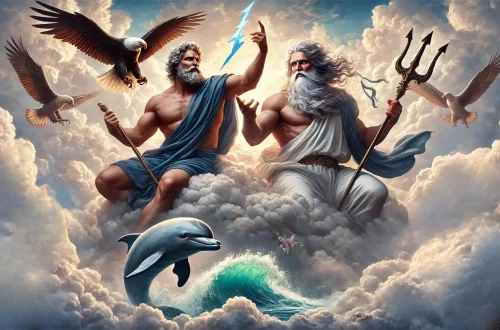
The Wives of Zeus: Children, Myths, and Power
Zeus is remembered for lightning bolts and affairs. But his marriages reveal something far more strategic. Every wife represents a domain he needed control over, prophecy, law, art, harvest, destiny, legitimacy.
He did not simply fall in love. He absorbed influence.
To understand Zeus, you have to understand the women he chose to bind himself to.
Why Zeus Married So Many Women

In Greek mythology, marriage is rarely about romance. It is about power.
When Zeus marries, he is not simply choosing a partner. He is securing influence. Each union connects him to a force that shapes the world — wisdom, law, memory, fertility, prophecy.
Many of his early wives are not minor figures. They are Titans or primordial beings older than Olympus itself. By marrying them, Zeus absorbs their authority and strengthens his rule after overthrowing the Titans.
In several myths, prophecy plays a key role. Zeus learns that a wife may bear a son more powerful than him. Instead of risking overthrow, he acts to prevent it. His marriage to Metis becomes the clearest example of this fear.
Later unions serve a different purpose. With Demeter, the harvest becomes tied to divine politics. And with Mnemosyne, art and history enter the world. With Leto, prophecy and the hunt gain Olympian heirs.
By the time he marries Hera, the focus shifts. Hera brings legitimacy. She becomes Queen of Olympus, and their marriage represents divine order — even when it fractures under betrayal.
Zeus does not simply fall in love.
He consolidates control.
And through these marriages, Olympus takes its final shape.
Metis: The Wife He Swallowed
Children:
Metis is not just another goddess. She is wisdom itself.
After defeating the Titans, Zeus learns a prophecy: Metis will bear two children. The first will be a daughter of great intelligence. The second will be a son powerful enough to overthrow his father.
Zeus has just taken the throne from Cronus. He refuses to repeat history. So he does something shocking. He swallows Metis whole.
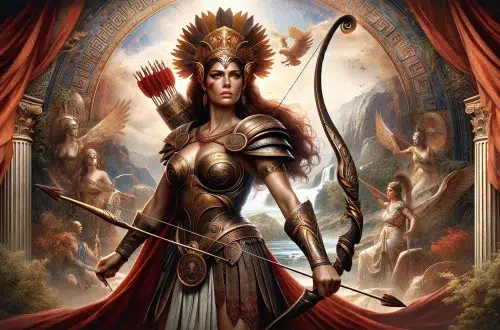
She continues to live inside him. She advises him from within. Later, Zeus develops a terrible pain in his head. Hephaestus splits his skull open with an axe. From it emerges Athena — fully grown, armed, and ready for war.
There is no son. The prophecy is neutralized.
This myth shows Zeus at his most strategic and most fearful. He does not destroy wisdom. He absorbs it. Athena becomes one of his closest allies and most powerful children.
Through Metis, Zeus secures intelligence without surrendering control.
Associated Myth: Zeus swallows Metis and later Athena is born.
Why It Matters: Zeus absorbs wisdom instead of sharing power. Athena becomes a core Olympian.
Eurynome: Mother of the Graces

Children:
- The Charites (Aglaea, Euphrosyne, Thalia)
Eurynome is an Oceanid, a daughter of Oceanus and Tethys. She represents flowing movement and refinement.
Her union with Zeus produces the Charites, known as the Graces. These goddesses embody beauty, joy, and harmony. They attend the Olympians and influence art, celebration, and favour among gods and mortals.
The Graces soften Olympus. They bring charm into divine politics.
This marriage may seem less dramatic than others, but it matters. Power without grace breeds fear. Power with beauty earns loyalty.
Through Eurynome, Zeus gains cultural elegance. Olympus becomes more than a battlefield. It becomes a court.
Associated Myth: The Graces embody beauty, charm, and joy at Olympus.
Why It Matters: Zeus becomes associated with refinement and divine favour.
Demeter: The Harvest and the Cost of Power
Children:
- Persephone – Queen of the Underworld and goddess associated with spring growth
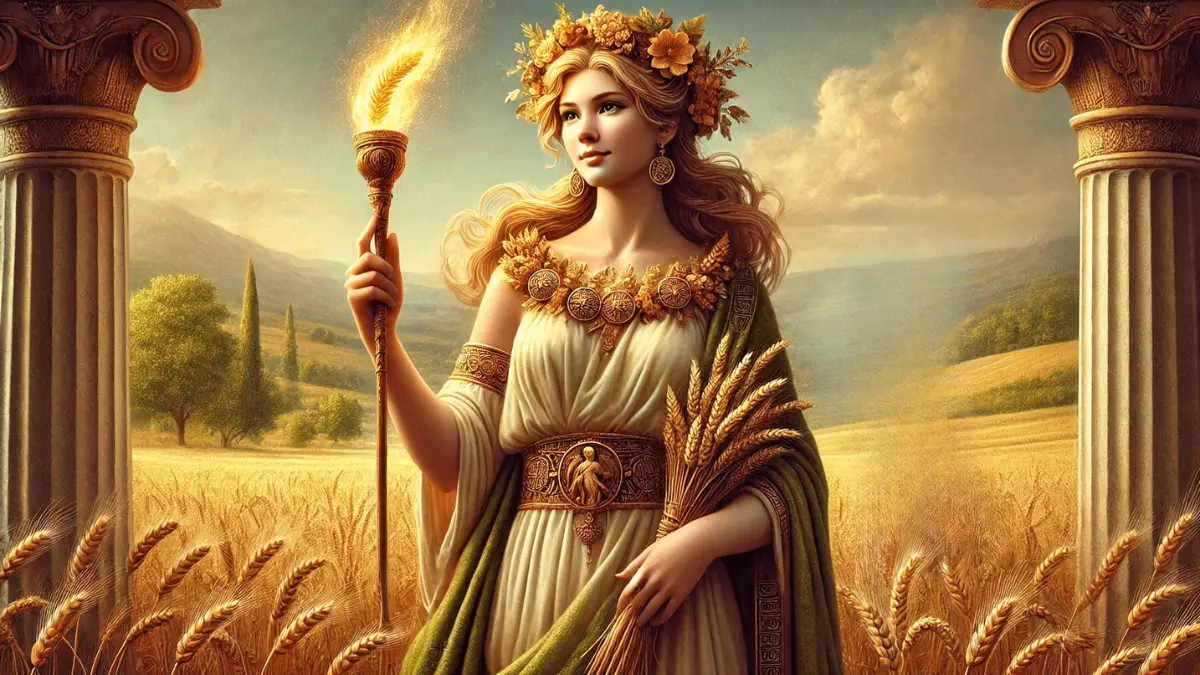
Demeter governs agriculture and fertility of the earth. When Zeus unites with her, Persephone is born.
That child becomes central to one of the most important myths in Greek religion.
When Hades abducts Persephone, Demeter’s grief causes the earth to wither. Crops fail. Humanity starves. The gods begin to worry.
Zeus must intervene.
A compromise is reached. Persephone will spend part of the year in the Underworld and part with her mother. This cycle creates the seasons.
Notice something important: Zeus allows the arrangement that triggers Demeter’s suffering. He does not prevent it.
This union produces not just a daughter, but the rhythm of life and death itself.
Through Demeter, Zeus becomes tied to the survival of humanity.
Associated Myth: The abduction of Persephone by Hades
Why It Matters: The seasons are born from Zeus’ decision not to fully intervene.
Mnemosyne: Memory and the Birth of the Muses
Children:
- The Muses (Calliope, Clio, Erato, Euterpe, Melpomene, Polyhymnia, Terpsichore, Thalia, Urania) – Nine goddesses of the arts, poetry, music, and history
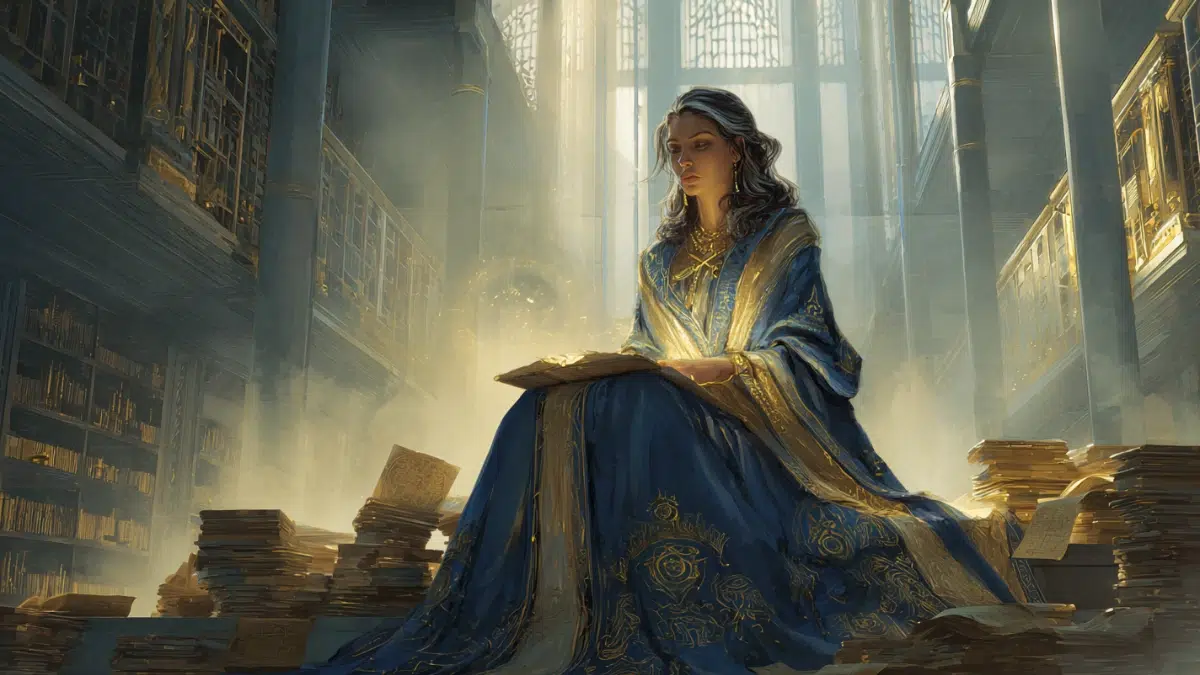
Mnemosyne is the Titaness of memory. Zeus lies with her for nine consecutive nights. From each night comes one Muse.
The Muses govern poetry, history, music, tragedy, astronomy, and sacred song. Without them, there is no art. No storytelling. No recorded legacy.
Memory shapes civilization. Through Mnemosyne, Zeus becomes father of culture itself.
It is a quieter union. No jealousy. No violence. But its impact is enormous. Through this marriage, Olympus gains voice.
Associated Myth: Zeus spends nine nights with Mnemosyne.
Why It Matters: Art, poetry, and history enter the world.
Leto: Exile and the Birth of Light

Children:
- Apollo – God of prophecy, music, healing, plague, and the sun (in later tradition)
- Artemis – Goddess of the hunt, wilderness, childbirth, and protector of young women
Leto is a Titaness and one of Zeus’ most important partners. But her story is defined by suffering.
When Hera discovers Leto is pregnant, she forbids her from giving birth on any land under the sun. No island, no mainland, no safe harbour will accept her. Leto wanders, heavy with twins, searching for refuge.
At last, the floating island of Delos offers shelter. Because it is not anchored to the earth, it falls outside Hera’s command.
There, Leto gives birth to Artemis first. Artemis then helps deliver her twin brother, Apollo. Those twins reshape Olympus.
Apollo becomes god of prophecy, music, plague, and healing. Artemis becomes goddess of the hunt and protector of young women.
Through Leto, Zeus gains two of the most powerful and widely worshipped Olympians.
But this union also deepens Hera’s resentment. Leto is one of the few lovers Hera never truly punishes beyond exile, yet the hostility never fades.
This marriage produces brilliance and tension that ripples across Olympus.
Associated Myth: Leto gives birth to the Twin Gods
Why It Matters: Apollo becomes god of prophecy. Artemis becomes goddess of the hunt.
Hera: Queen, Sister, and Rival
Children:
- Ares – God of war, violence, and battlefield chaos
- Hebe – Goddess of youth and cupbearer to the gods
- Eileithyia – Goddess of childbirth and labour pains
- Hephaestus (in some traditions) – God of fire, metalworking, and craftsmanship
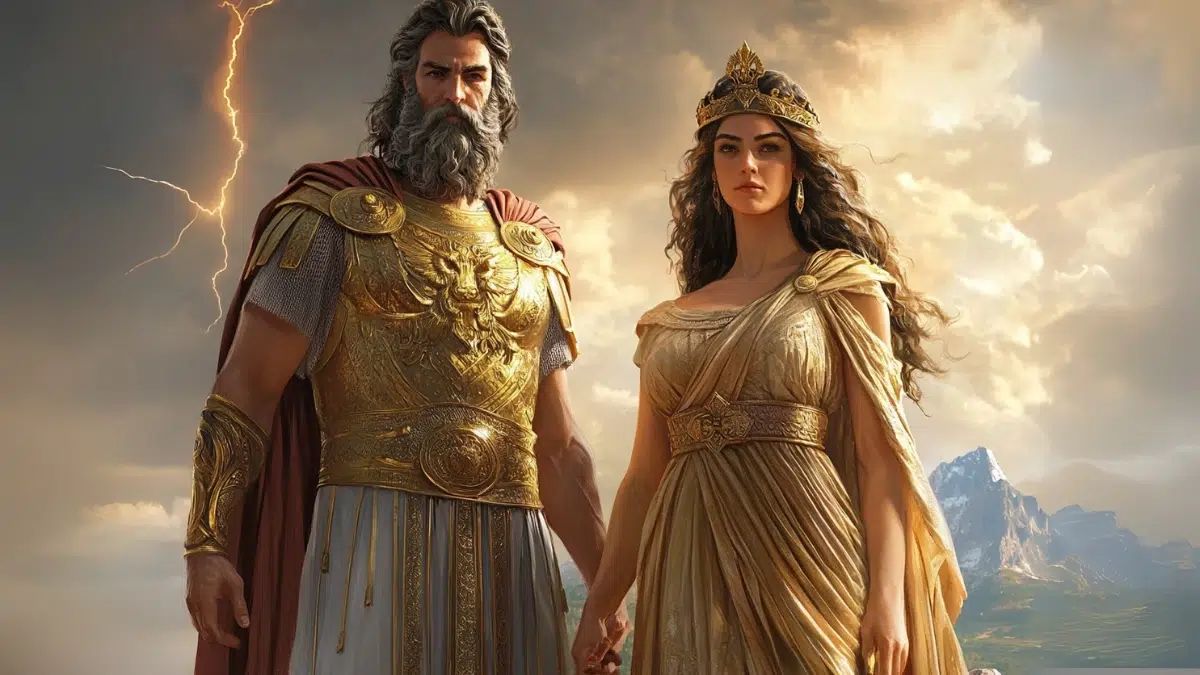
Hera is not just another wife. She is the final and official Queen of Olympus.
Their marriage represents legitimacy. Hera is goddess of marriage and family. By wedding her, Zeus stabilizes his rule publicly. She becomes the divine counterpart to his kingship.
But their union is anything but peaceful.
Zeus repeatedly betrays her. Hera cannot strike him directly, so she targets his lovers and their children. Io is turned into a cow. Semele is manipulated into her own destruction. Heracles suffers relentless trials.
Yet Hera is not powerless.
In one myth, she leads a rebellion against Zeus with Poseidon and Athena. They bind him in chains before Thetis intervenes. It is one of the few times Zeus loses control.
Hera embodies pride, endurance, and political authority. She does not fade into the background. She rules beside him, even in fury.
If earlier wives gave Zeus forces of nature, Hera gives him a throne. Their marriage defines Olympus as much through conflict as through partnership.
Associated Myth: Vengeance against Zeus’ lovers, including Io and Semele.
Why It Matters: Hera represents power, pride, and the cost of betrayal.
Notable Lovers of Zeus and the Children Who Changed Myth
Zeus’ official wives secured Olympus.
But his lovers expanded his reach.
Through mortal women and hidden affairs, Zeus fathered the heroes of the heroic age, the rulers of powerful kingdoms, and gods who would challenge, soften, or complicate his rule.
These relationships may not have been political marriages, but their consequences echo just as loudly through myth.
Io: The Woman Turned Into a Cow
Child:
- Epaphus – linked to Egyptian royalty and early mythic dynasties
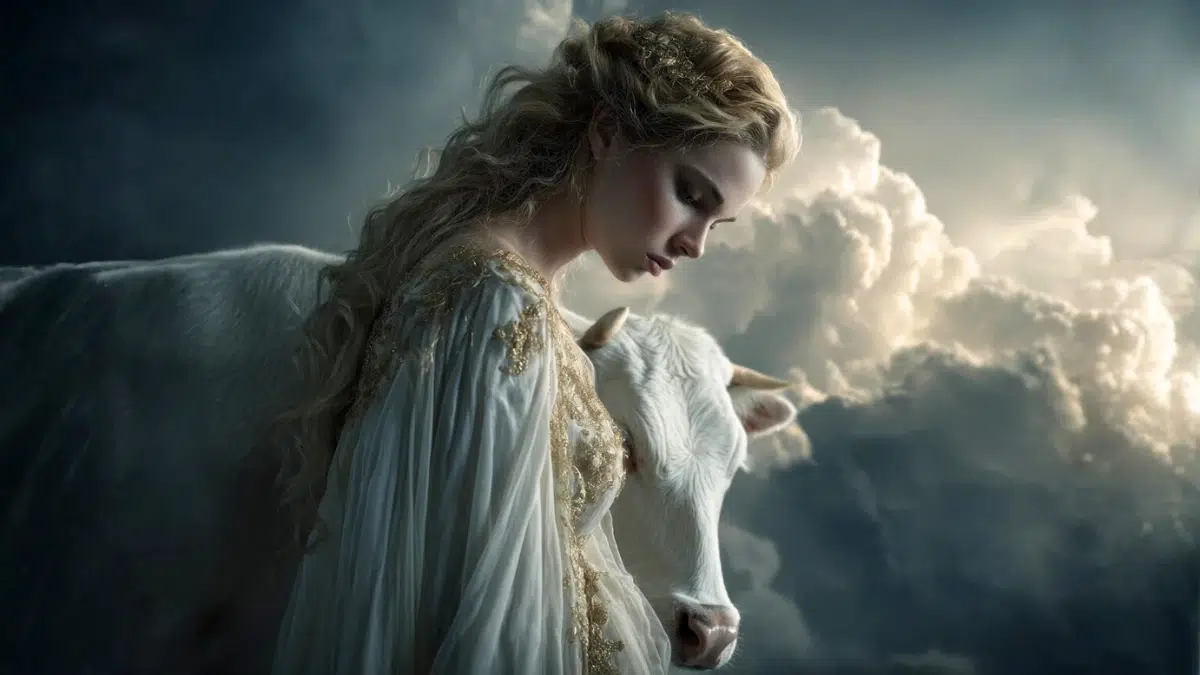
Io is a priestess of Hera. When Zeus desires her, he hides her by transforming her into a white cow. Hera sees through the deception and demands the animal as a gift.
She sends a gadfly to torment Io, driving her across the world in madness and exile.
Eventually, Io reaches Egypt, where she is restored to human form. Her son Epaphus becomes linked to Egyptian royalty in later traditions.
Io’s suffering creates one of the earliest examples of divine persecution in Greek myth. Her story also connects Greek mythology to distant lands.
Myth: Zeus turns Io into a cow
Semele: Mother of Dionysus

Child:
- Dionysus – God of wine, ecstasy, theatre, and ritual madness
Semele is a mortal princess of Thebes. Zeus visits her in secret. Hera, disguised as an old woman, convinces Semele to demand proof of Zeus’ divinity.
Bound by oath, Zeus reveals himself in his full lightning form.
Semele cannot survive the sight. She burns.
Zeus rescues the unborn Dionysus and sews him into his thigh until he is ready to be born.
Dionysus becomes god of wine, ecstasy, and transformation.
This myth shows the danger of proximity to divine power. It also introduces one of the most unpredictable Olympians.
Myth: Semele asks Zeus to reveal his true form
Danaë – The Golden Rain
Child:
- Perseus – Mortal hero and monster slayer, founder of royal bloodlines
Danaë’s father locks her away after hearing a prophecy that her son will kill him.
Zeus enters her chamber as a shower of golden light. From this union comes Perseus.
Perseus later slays Medusa and saves Andromeda. He fulfills the prophecy by accidentally killing his grandfather.
This myth reinforces a theme Zeus understands well: prophecy cannot be avoided.
Alcmene – Mother of Heracles
Child:
- Heracles – Mortal hero and warrior, later granted immortality
Zeus disguises himself as Alcmene’s husband and extends the night to conceive a child.
Heracles becomes the greatest Greek hero. He defeats monsters, performs twelve labours, and eventually ascends to Olympus.
Hera’s hatred of Heracles fuels many of his trials.
Through Alcmene, Zeus’ influence reaches the heroic age.
Europa – The Bull of Crete

Children:
- Minos – King of Crete and later a judge of the dead in the Underworld
- Rhadamanthus – Wise ruler and judge of the dead
- Sarpedon – Warrior king who fought in the Trojan War
Zeus transforms into a white bull and carries Europa across the sea to Crete.
Her son Minos becomes king of Crete and later a judge of the dead in the Underworld.
From this union emerges the Minotaur myth, the labyrinth, and the story of Theseus.
Europa’s name later becomes the name of an entire continent.
Maia – The Quiet Mother
Child:
- Hermes – God of travel, trade, communication, trickery, and messenger of the gods
Maia lives in a cave far from Olympus. Zeus visits her in secret.
Hermes is born clever and restless. On his first day of life, he steals Apollo’s cattle and invents the lyre.
Hermes becomes messenger of the gods, guide of souls, and patron of travellers and tricksters.
Maia does not seek recognition. Yet her son becomes one of Zeus’ most trusted allies.
Themis – Mother of Fate and Order
Children:
- The Horae (the Seasons)
- The Moirai (Clotho, Lachesis, Atropos) – The Fates (Moirai) – Three goddesses who control the thread of life and destiny
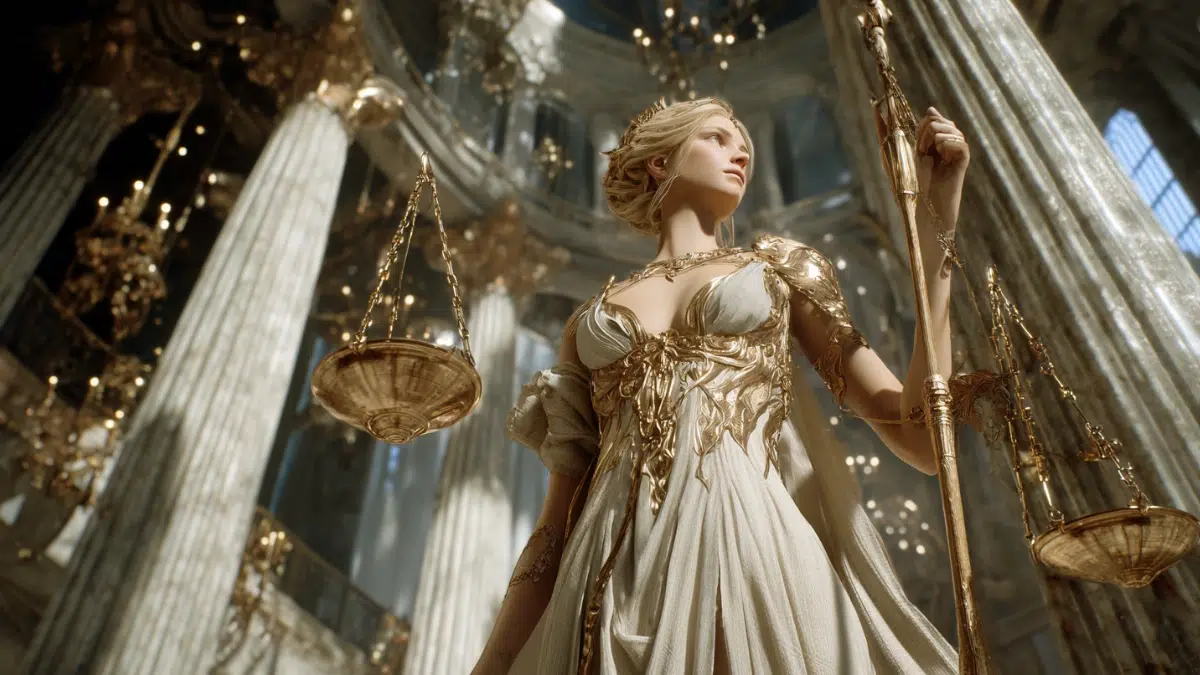
Themis is the Titaness of divine law and natural order. When Zeus unites with her, he aligns his rule with justice and structure.
Through Themis, the Seasons are born. They govern the natural rhythm of the year and uphold balance in both nature and society.
More significantly, she gives birth to the Moirai — the Fates.
- Clotho – spins the thread of life
- Lachesis – measures its length
- Atropos – cuts it
Even the gods respect their authority.
In most later traditions, the Fates are daughters of Zeus and Themis, tying destiny directly to his reign. Earlier sources sometimes describe them as daughters of Nyx, suggesting they once stood beyond even Zeus’ control.
Through Themis, Zeus does not just rule, he governs time, order, and the limits of life itself.
Conclusion – The Power Behind the Throne
Zeus is often remembered for storms, lightning, and scandal.
But his marriages tell a deeper story.
- Through Metis, he gains wisdom
- Through Themis, he secures law and destiny
- Through Demeter, he becomes tied to the seasons
- Through Mnemosyne, he fathers memory and art
- Through Leto, prophecy and the hunt rise to prominence
- Through Hera, he gains legitimacy as king
Even his unions with mortal women shape the heroic age. Perseus, Heracles, Dionysus, and countless rulers trace their bloodlines back to him.
Zeus does not rule alone. His wives and lovers give birth to the forces that define Olympus being war, justice, culture, harvest, prophecy, and fate itself.
If Zeus holds the thunderbolt, the women in his life shape the world it strikes.
And without them, there is no mythology as we know it.