Wakan Tanka: Supreme Being in Lakota Mythology
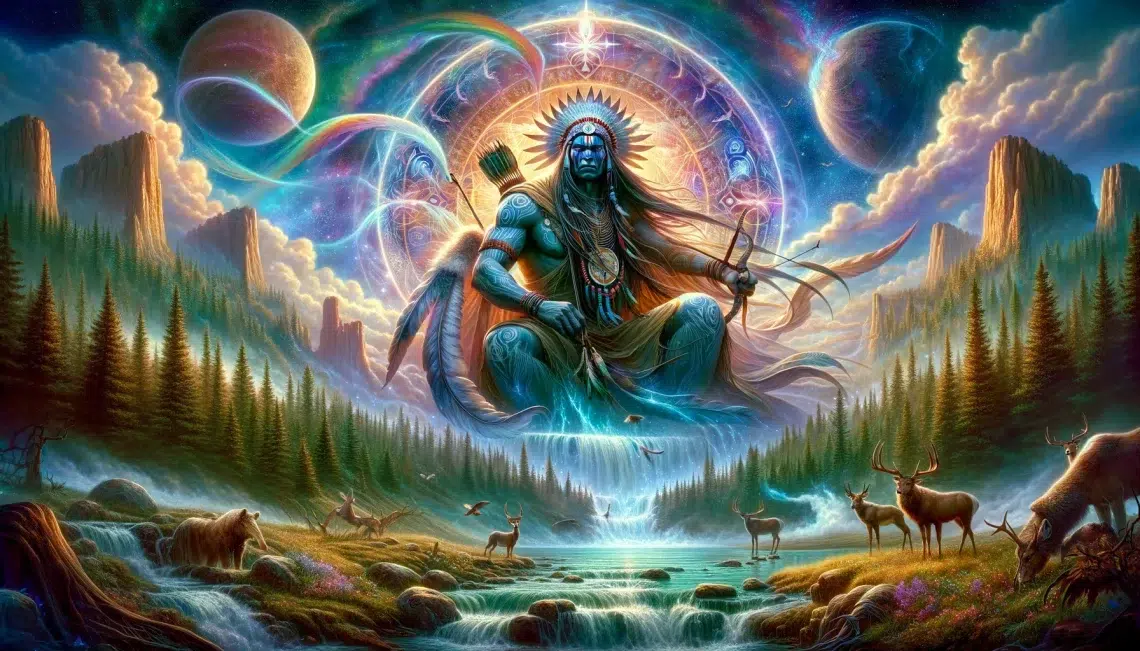
The concept of Wakan Tanka goes beyond a mere deity.
It encompasses a profound understanding of the interconnectedness of all things in the universe for the Lakota people.
Origins and Lineage of Wakan Tanka
The Lakota Peoples
The Lakota people are a big part of the Sioux nation and split into seven groups.
Each group has its own area, leaders, and ways of life. They live in Wisconsin, Iowa, and the Dakotas.
These groups are very important for the Lakota’s way of life and traditions.
Here are the seven groups:
- Oglala: meaning “Scatter Their Own.” Famous leaders include Red Cloud and Crazy Horse
- Sicangu or Brulé: meaning “Burnt Thighs”
- Hunkpapa: meaning “End of the Circle”
- Miniconjou: meaning “Planters by the Water”
- Itazipco or Sans Arc: meaning “Without Bows”
- Sihasapa or Blackfoot: They’re different from the Blackfoot tribal people. Their name may come from dark moccasins.
- Oohenunpa: meaning “Two Kettle”
Each group adds to Lakota culture in its own way.
Together, they show the Lakota’s variety and unity, sharing common beliefs and traditions while being unique.
Learn more about: Native American Indigenous Peoples and the injustices they experience
Key Takeaways
- Wakan Tanka is a key figure for the Lakota Sioux, known as the Great Mystery
- Wakan Tanka is the Sacred Being and Creator Spirit. This belief shows how everything in the universe is connected
- Wakan Tanka is more than just one spirit. It’s a power in everything, showing how we’re all one with nature
- The understanding of Wakan Tanka reflects the beliefs and Indigenous traditions of the Lakota Sioux
- Being thankful and feeling close to nature are big parts of this spirituality
- Gratitude and kinship with the natural world are essential aspects of Native American spirituality

Creator of the Lakota Sioux
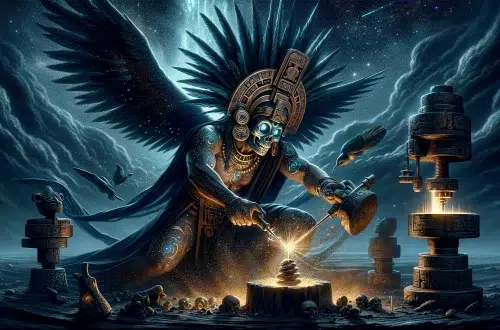
In Lakota mythology, Wakan Tanka is the supreme being and creator of the Lakota Sioux.
Before creation, Wakan Tanka existed within a great emptiness called “Han.”
Feeling lonely, Wakan Tanka decided to create companions for himself.
The first god created was Inyan, followed by Maka, Skan, and Wi.
Each of these gods played a significant role in shaping the world and everything within it.
The companions created by the primary gods, such as Moon, Wind, Falling Star, and Thunderbird, contribute to the process of creation.
These beings were all considered aspects of Wakan Tanka and were responsible for various aspects of the natural world.
Wakan Tanka’s decision to create companions signifies the desire for companionship and connection.
It highlights the understanding that the supreme being, despite its immense power, seeks relationships with other divine entities.
Gods and Companions of Wakan Tanka
| Primary Gods | Respective Companions |
|---|---|
| Inyan | Rock, Stone, and Crystal |
| Maka | Earth, Mountains, Rivers, and Plants |
| Skan | Sky, Weather Phenomena, and Celestial Bodies |
| Wi | Sun, Moon, Star, and Lightning |
It showcases the diverse aspects of the natural world that these beings govern and oversee.
From the solid foundations of rocks and mountains to the ethereal elements of the sky and celestial bodies.
Each entity represents a vital component of the interconnected ecosystem conceived by Wakan Tanka.
The Nature of Wakan Tanka

In Lakota stories, Wakan Tanka is a special energy in everything showing how everything in the world is connected in Lakota beliefs.
The first gods, Inyan, Maka, Skan, and Wi, came from Wakan Tanka. They started everything that exists.
Wakan Tanka means more than just one spirit. It’s a power in everything, like storms, people, and animals.
This view tells us to live in peace with nature and not see natural events as bad. It teaches that everything is linked and deserves respect.
Sacred Energy and Interconnectedness
In Lakota stories, Wakan Tanka is a special energy in everything in the universe. This idea shows how all things are connected and part of one big family.
The Lakota see Wakan Tanka in every part of nature, linking everything together.
This energy is in people, animals, plants, and even things like the wind and rain. They believe everything in nature depends on each other and works together.
They don’t see nature as something separate but as a big community where everything has its place. This view teaches that hurting the environment hurts the balance Wakan Tanka creates. It reminds us to take care of our world and everything in it.
Unity and Harmony with Nature
Believing in Wakan Tanka helps the Lakota people live well with nature, seeing everything in nature as connected and sacred.
This belief makes them respect the environment and follow ways that keep nature balanced. Their culture has special ceremonies and rituals that show this bond with nature. These practices help them live in peace with the world around them.
By following Wakan Tanka’s teachings, the Lakota aim to keep nature balanced and protect the life force in everything.
| Aspect | Description |
|---|---|
| Interconnectedness | The belief that all beings and natural phenomena are inherently interconnected, forming a holistic and interdependent web of life. |
| Sacred Energy | The recognition of a sacred life force, Wakan Tanka, that permeates all elements of the universe, imbuing them with spiritual significance. |
| Unity | The understanding that all things are part of a larger whole and that humanity is intricately connected to the natural world. |
| Harmony with Nature | The belief in living in balance and coexistence with the environment, honoring the reciprocal relationship established by Wakan Tanka. |
Cultural Significance and Influences
Wakan Tanka is a very important belief among the Lakota Sioux and other Native American Peoples showing how deeply they feel connected to nature and their spiritual life.
This belief is a big part of their daily lives and religious practices.
Different people and tribes might see Wakan Tanka in various ways, but they all agree that nature is full of spirit and a big part of their lives.
Native Americans believe everything in the world is connected and that nature deserves great respect.
Christian teachings have influenced some Native American views on Wakan Tanka. After meeting Christian missionaries, some have mixed Christian ideas with their beliefs about Wakan Tanka.
Some even compare Wakan Tanka to the God of Christianity, Judaism, and Islam. But these comparisons don’t fully show what Wakan Tanka means to the Lakota Sioux.
Their view is much deeper and more complex. Wakan Tanka shows the rich culture and spiritual beliefs of Native American peoples.
It reminds us of the deep link between people and nature. It teaches the importance of living in peace with the world and its sacred forces.
Mythical Themes and Symbols of Wakan Tanka
The myths surrounding Wakan Tanka in Lakota and Native American mythology are rich in symbolism. The themes underline the interconnectedness and unity of the natural world.
Wakan Tanka, as a sacred energy, is believed to permeate all things. The gods created by Wakan Tanka play a pivotal role as the originators of everything in existence.
In these myths, the Lakota reject the notion that certain natural phenomena, such as storms or floods, are inherently hostile or evil.
Instead, they emphasize harmony with nature, recognizing the interdependence of all living things and the need for reverence and respect.
The symbols associated with Wakan Tanka further reinforce these themes of unity and harmony. They serve as powerful reminders of the interconnectedness among all beings and the sacred energy that flows.
These symbols are visual representations of the Lakota’s deep understanding of the natural world and their responsibility to maintain balance and harmony within it.
Sacred Medicine Wheel
One of the symbols commonly associated with Wakan Tanka is the medicine wheel, a sacred circle divided into four quadrants.
Each representing the four primary gods created by Wakan Tanka:
- Inyan (rock)
- Maka (earth)
- Skan (sky)
- Wi (sun)
Each quadrant represents a different aspect of life, such as the physical, emotional, mental, and spiritual realms.
The medicine wheel symbolizes the holistic nature of existence and the interconnectedness of all these elements.
It’s a sacred sign for the Plains peoples, standing for the universe’s knowledge. It brings hope and healing.
The Medicine Wheel contains a circle, lines, a feather, and the four directions.
The Medicine Wheel stands for all the universe’s knowledge to the Plains peoples.
It gives hope and healing to those who seek it.
The Circle
The Medicine Wheel’s circle marks Earth’s sacred edge.
People call it the Sun Dance Circle or the Sacred Hoop.
This circle shows:
- life and death’s cycle
- the path of the sun and moon
- homes like the tipi
- drums and more
The Lines
The lines across the circle show the sun’s and people’s sacred paths. These lines meet at the centre of Earth.
The Feather
A feather shows the Great Spirit’s power. Receiving a feather means you did something noteworthy.
The Four Directions
Each direction (west, north, east, south) has its color: black, red, yellow, and white.
Powerful Symbols of the Buffalo and Sun
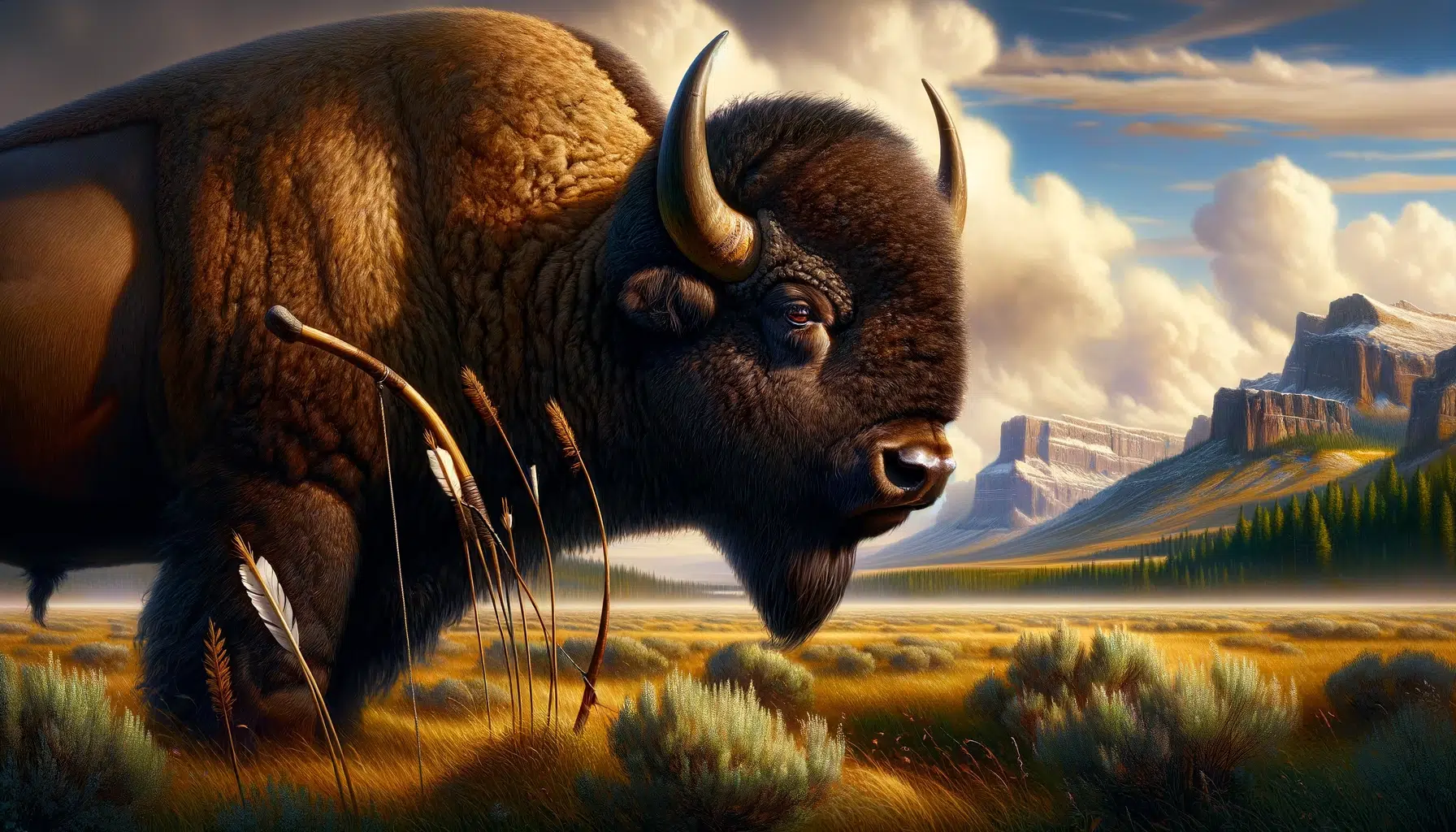
Another important symbol is the buffalo, which holds great significance in Lakota culture and mythology.
The buffalo symbolizes abundance, strength, and unity.
The sun is also a powerful symbol in Lakota mythology, representing Wakan Tanka’s life-giving energy and the unity of all creation.
The Lakota consider the sun a sacred entity that connects the physical and spiritual realms, providing light, warmth, and nourishment to all living beings.
Table of Symbols of Wakan Tanka
| Symbol | Meaning |
|---|---|
| Medicine Wheel | Representation of the four primary gods and the interconnectedness of all aspects of life |
| Buffalo | Symbol of abundance, strength, and unity |
| Sun | Represents Wakan Tanka’s life-giving energy and the interconnectedness of all creation |
These symbols, among others, help the Lakota people connect with the spiritual realm, reminding them of their interconnectedness with nature and the need for harmony and respect.
They serve as visual cues to honour and uphold the sacred energy of Wakan Tanka.
Thus highlighting the unity and interdependence of all living beings within the creation themes of Lakota mythology.
Depiction of Wakan Tanka in Art and Literature
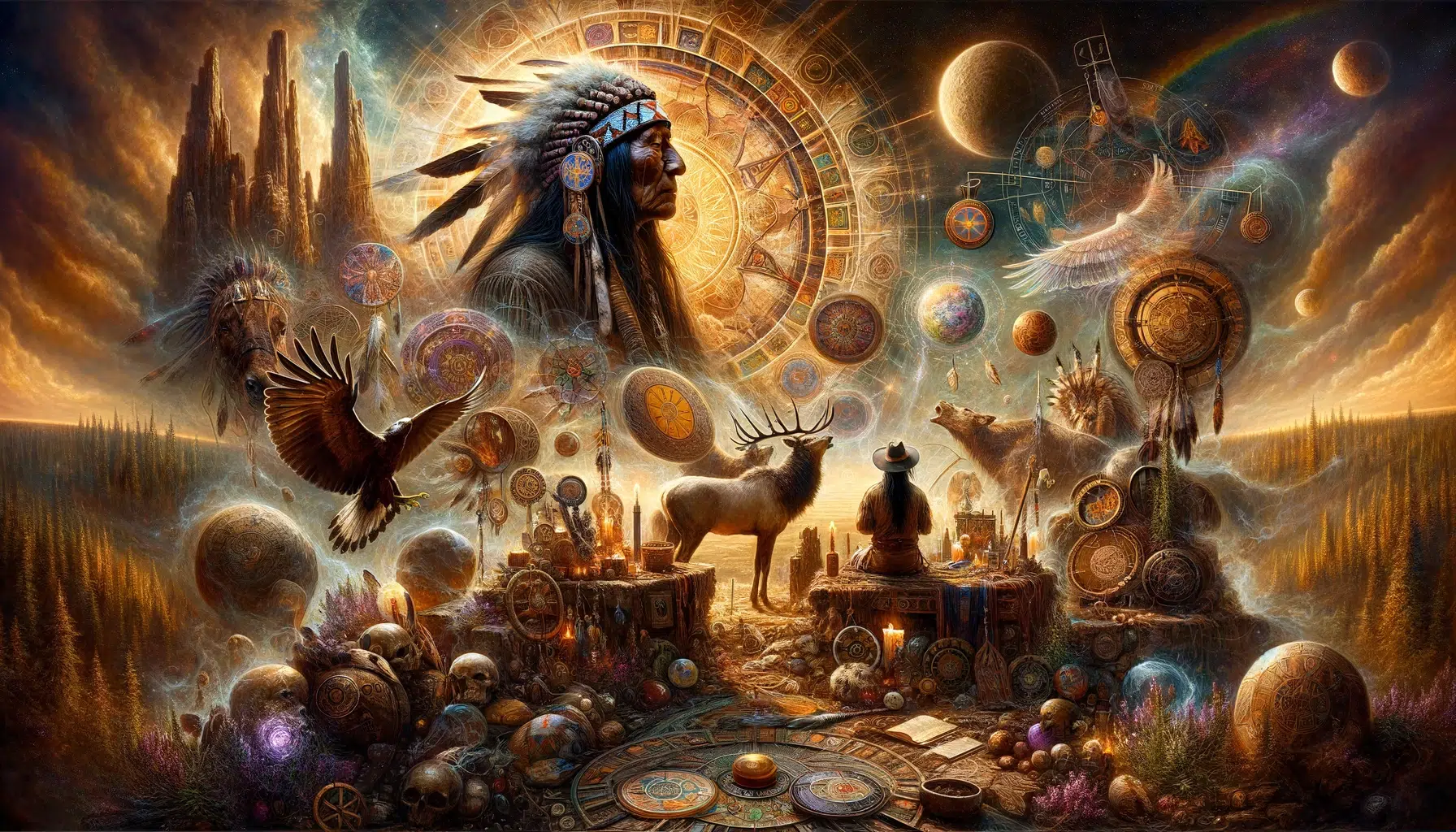
Wakan Tanka, the supreme being of Lakota Sioux mythology, holds a central position within Native American Indian beliefs, particularly among the Lakota people.
The spiritual significance of Wakan Tanka is beautifully portrayed in various literary works that have emerged over the years.
Books Exploring Sioux History, Beliefs and Myths
- “Black Elk Speaks” by John G. Neihardt
- “Bury My Heart at Wounded Knee” by Dee Brown
“Black Elk Speaks” tells the story of Black Elk, a Lakota medicine man. It beautifully shares the Lakota’s oral traditions and deep spiritual beliefs. This includes how much they respect Wakan Tanka, the Great Spirit.
The book lets readers see into the Lakota Sioux’s spiritual world. It shows how important Wakan Tanka is to their culture.
“Bury My Heart at Wounded Knee” tells a sad story of Native Americans and European settlers. It talks about many things, including the Lakota’s beliefs and their bond with Wakan Tanka. It shows their struggles and strong faith, giving more meaning to Wakan Tanka in their lives.
Even with these important books, many people still don’t know much about Wakan Tanka or Native American beliefs.
But for the Lakota Sioux, Wakan Tanka is very important. Showing it in art and books helps keep Native American beliefs alive and appreciated.
These books help us understand the Sioux people’s past and their spiritual views. They share stories of hope, faith, and survival. They teach us about the Sioux’s rich culture and deep respect for life and the spirit world.
Their stories are powerful and remind us of the value of understanding different cultures and beliefs. Through these books, the spirit and wisdom of the Sioux people reach out to us all.
Indigenous Cosmic Visions
Indigenous peoples have diverse cosmologies, but certain characteristics unite them.
One commonality is the perception of the universe’s creative process as a form of thought or mental process.
Creation often involves multiple entities or sacred actors derived from a First Principle.
These agents of creation are often regarded as holy, animal-like, or forces of nature.
Indigenous cosmologies also emphasize the living nature of the universe and the kinship that exists between all things.
Native peoples’ understanding of the cosmos incorporates profound spiritual insights.
The interconnectedness between the natural world, humans, and spiritual beings forms the foundation of their beliefs.
By recognizing the inherent kinship and symbiotic relationship between all things, indigenous peoples cultivate a profound reverence for the environment.
The Creation Process in Indigenous Cosmologies:
- Perceived as a mental process or thought
- Involves multiple entities or sacred actors
- Derived from a First Principle
- Agents of creation seen as holy, animal-like, or forces of nature
The Living Universe and Kinship:
- Belief in a living universe
- Recognition of kinship between all things
- Interconnectedness of the natural world, humans, and spiritual beings
- Profound reverence for the environment and the web of life
Gratitude and Kinship in Native American Beliefs

A prominent characteristic of Native American beliefs, including the belief in Wakan Tanka, is gratitude.
Native Americans express overwhelming love and thankfulness for the gifts of the Creator and Mother Earth.
The understanding is that all things connect in the universe.
Thus making gratitude and reverence crucial aspects of Native American spirituality.
The Creator and the earth are seen as family members.
Mother Earth being referred to as a caring and nurturing mother.
Giving thanks and maintaining a kinship with the natural world is considered essential for Native Americans.
| Key Aspects | Description |
|---|---|
| Gratitude | Expressing love and thankfulness for the gifts of the Creator and Mother Earth. |
| Kinship | Maintaining a familial relationship with the natural world. |
| Interconnectedness | Belief in the connection and relation between all things in the universe. |
| Harmony | Striving for balance and unity with the environment. |
Examples of Gratitude in Native American Traditions
- Offering prayers and thanks during ceremonies and rituals
- Returning offerings to nature, such as food or tobacco
- Expressing gratitude for the abundance of the earth’s resources
- Teaching future generations to value and respect the natural world
Maintaining gratitude and kinship, Native Americans honour the interconnectedness of all beings and live in harmony with Mother Earth.
Supreme Being and Creator of the Lakota Sioux
Wakan Tanka, the supreme being and creator of the Lakota Sioux, holds a central position in Native American spirituality. This belief system reflects a profound understanding of the world as a living and interconnected universe.
Where every aspect is related and carries spiritual significance.
The myths, symbols, and cultural significance associated with Wakan Tanka emphasize the interconnected nature of the natural world.
They encourage unity and harmony with the environment.
Native American beliefs, including the belief in Wakan Tanka, also emphasize the importance of gratitude and kinship.
The reverence and respect for the Creator and all things in the universe are integral to Native American spirituality.
The understanding of the world as a living universe highlights the deep connection between humanity and the greater cosmic reality.
This profound perspective invites us to cultivate gratitude and kinship.
Fostering a deeper appreciation for the natural world and nurturing a harmonious relationship with it.