
Typhon in Greek Mythology: The Monster Zeus Feared
Before the Olympian gods ruled with confidence, before Zeus sat secure on his throne, a monster rose that nearly ended it all.
His name was Typhon, not just another giant and not just another enemy. Even Zeus, king of the gods, feared him.
Born from Gaia and Tartarus, Typhon came into the world as a final challenge to Olympian rule. His battle with Zeus was not just a fight. It was a war for the sky itself.
And for a moment, Zeus almost lost.
Common Questions About Typhon
Who is Typhon in Greek mythology?
Typhon is one of the most powerful monsters in Greek mythology. He is the son of Gaia and Tartarus and is known as the final great enemy of Zeus. Typhon nearly overthrew the Olympian gods and became the father of many famous monsters.
What does Typhon look like Greek mythology?
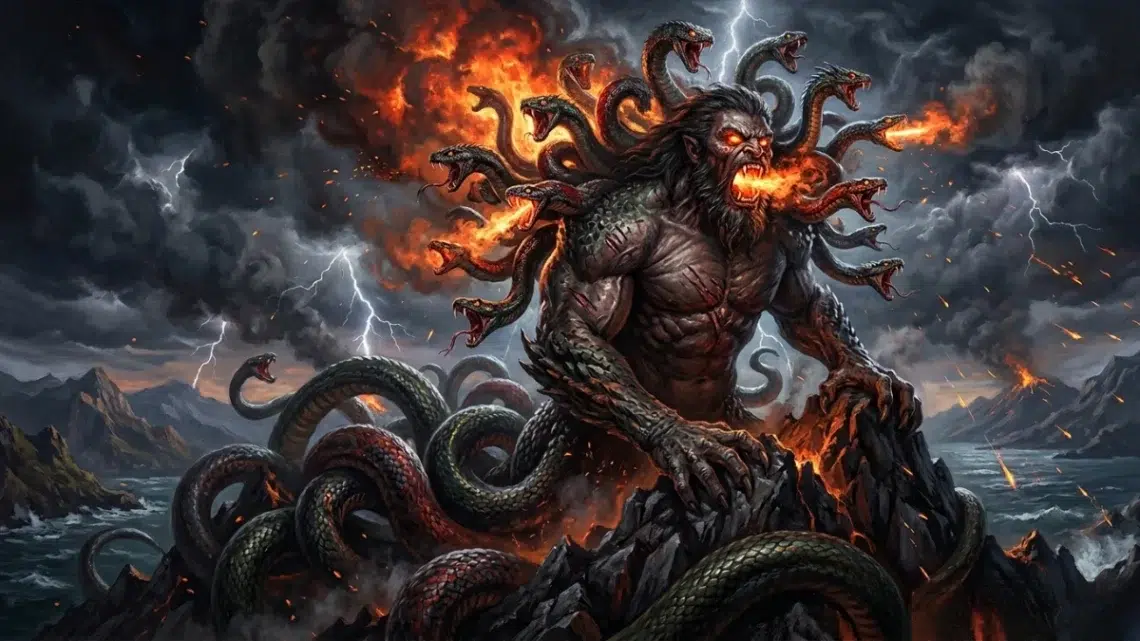
Typhon is described as a massive creature with a human upper body and serpent legs. From his shoulders rise many dragon heads that breathe fire. His eyes flash with flames, and his voice can sound like a storm, a beast, or a god.
How big is Typhon Greek mythology?
Typhon is said to be enormous beyond measure. Ancient writers describe him as so tall that his head touched the stars. His arms could stretch across great distances, and his size rivaled mountains.
Who killed Typhon in Greek mythology?
Zeus defeated Typhon after a violent battle that shook the earth and sky. He struck him down with powerful thunderbolts and buried him beneath Mount Etna to stop him from rising again.
Where did Typhon live Greek mythology?
After his defeat, Typhon was trapped beneath Mount Etna in Sicily. The ancient Greeks believe volcanic eruptions and earthquakes were caused by Typhon struggling under the mountain.
Born of Earth and the Abyss
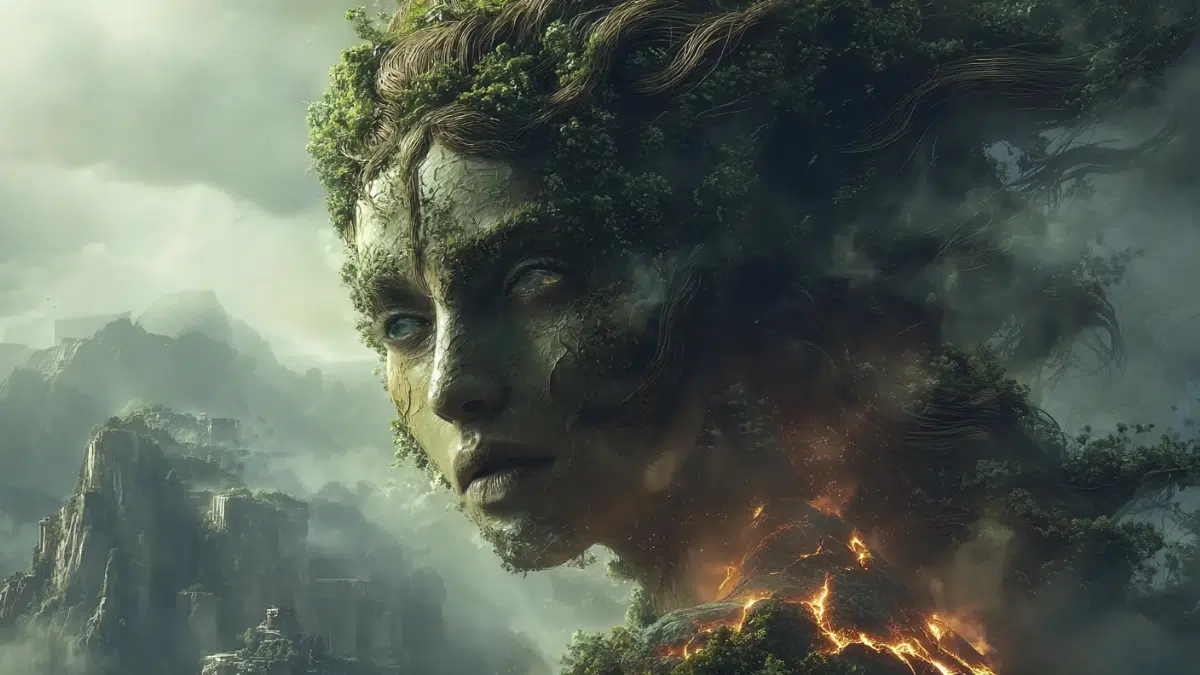
Typhon was the son of Gaia, the Earth, and Tartarus, the deep abyss beneath the Underworld.
Gaia did not create him out of love. She creates him out of anger.
After Zeus defeats the Titans, Gaia grows furious at how her children had been imprisoned or destroyed. In some versions of the myth, she joins with Tartarus to produce a creature powerful enough to challenge Olympus.
That creature was Typhon.
Ancient writers describe him as enormous beyond measure. His body towered over mountains. From his shoulders sprang a hundred dragon heads. Fire flashed from his eyes. Snakes writhed from his legs. His voice could sound like a god, a beast, or a storm.
What Did Typhon Look Like?
Descriptions of Typhon vary, but they all agree on one thing. He was terrifying.
He stood so tall that his head brushed the stars. His hands could stretch from east to west. Instead of fingers, he had coiling serpents. From his thighs down, he is a mass of twisting snake bodies.
Each of his dragon heads could breathe fire. When he roared, the sound shook heaven and earth. Some accounts say his wings blotted out the sun.
Typhon did not represent simple strength. He represented raw, uncontrolled force. Storms, earthquakes, volcanic eruptions, and violent winds were often linked to him.
He was nature when it turns against itself.
The War Against Olympus
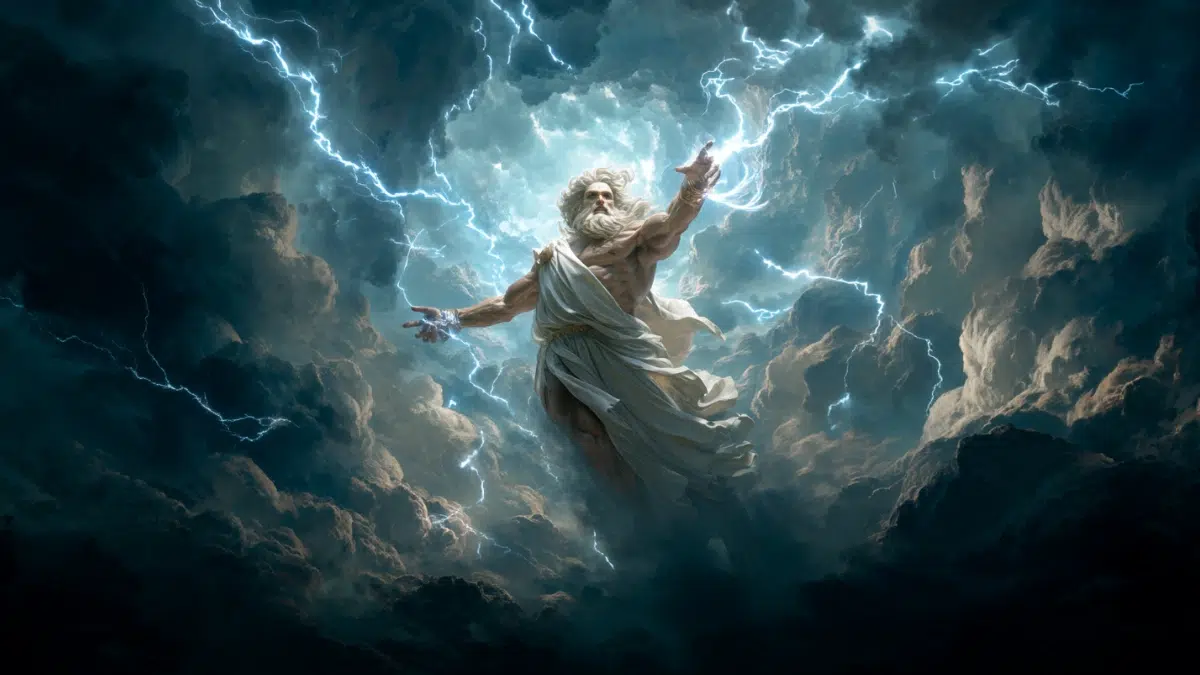
When Typhon rose, the gods panicked.
Many fled to Egypt to escape him. Some myths even say they transformed into animals to hide. Zeus alone chose to stand and fight.
Their battle shook the world.
Zeus hurled thunderbolts. Typhon answered with mountains and flame. The earth split. The sea boiled. The sky cracked with lightning.
For a time, Typhon gained the upper hand.
In one dramatic version of the myth, Typhon overpowered Zeus and tore out the sinews from his hands and feet. Without them, Zeus could not move. Typhon hid the sinews in a cave, guarded by a dragon.
The king of the gods lay helpless.
But the story does not end there.
Hermes and Pan rescued the sinews and restored Zeus. Strength returned to him. This time, Zeus did not hesitate.
He unleashed a storm of thunder and lightning greater than anything before.
The Fall of Typhon
Zeus did not defeat Typhon in a single strike. The battle tore across the world.
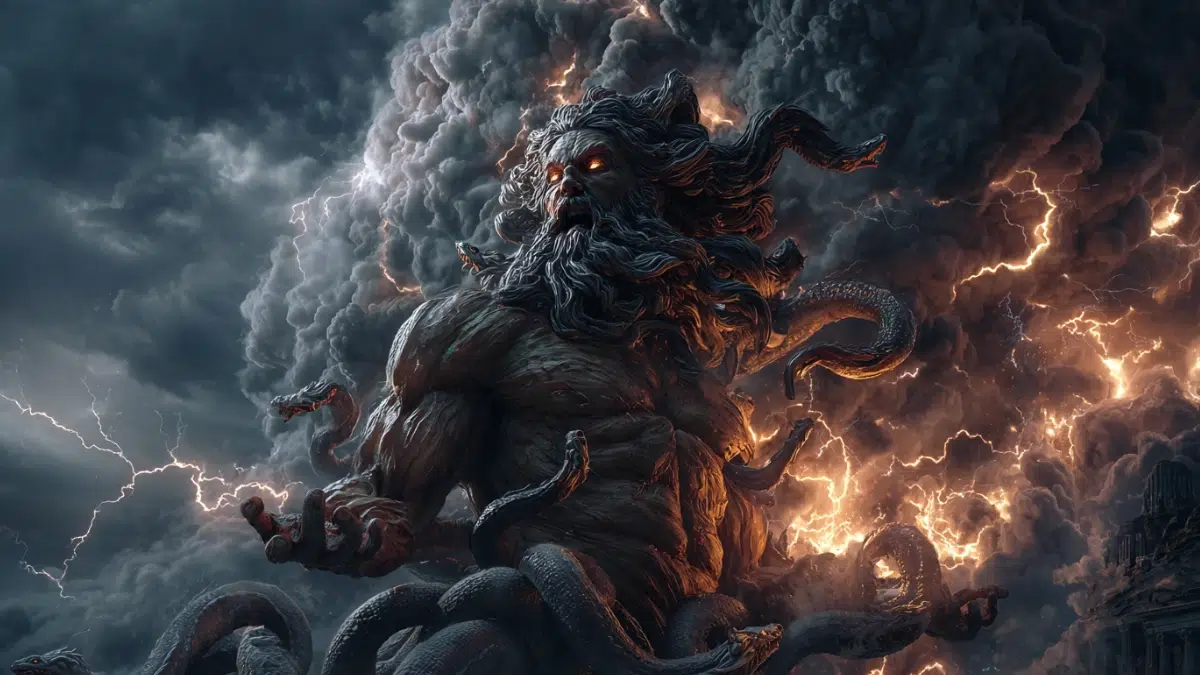
Typhon rose like a living storm, his hundred serpent heads hissing fire and venom. He hurled mountains. He shattered the sky. Even the gods fled at first, abandoning Olympus in fear.
But Zeus did not yield.
Thunderbolts split the heavens as he drove the monster westward. Some myths say their war scorched the land of Greece and reached as far as Sicily. The sky burned. The earth cracked. Sea and sky blurred under the violence of their clash.
At last, Zeus gathered his full strength. He unleashed a final, devastating bolt. Typhon fell.
Zeus hurled a mountain down upon him, Mount Etna, crushing the monstrous body beneath stone and fire.
But Typhon did not die. He was buried. Trapped beneath rock and molten flame.
Ancient Greeks believed that when Etna erupted and the ground trembled, it was Typhon raging in his prison. The smoke was his breath. The lava, his fury.
He was silenced but never erased. Chaos, once unleashed, is never fully gone.
Typhon and the Birth of Monsters
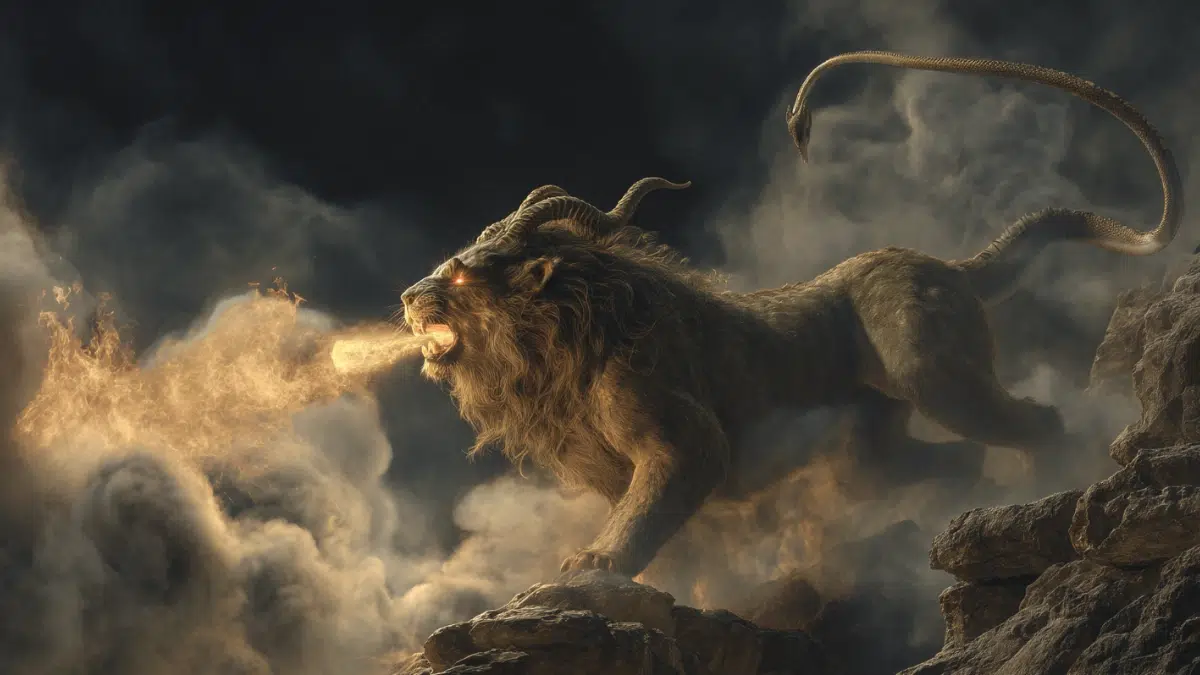
Typhon did not stand alone in myth. He fathered many of the most famous monsters in Greek legend.
With Echidna, a half woman and half serpent creature, Typhon became the father of a terrifying lineage.
Among their children were:
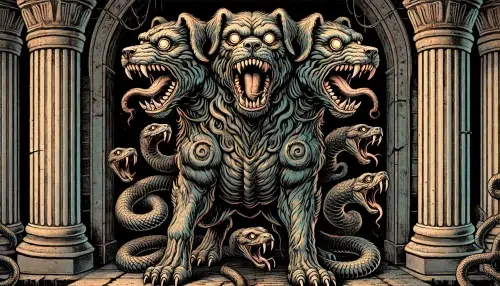
- Cerberus, the three headed hound of the Underworld
- The Hydra, slain by Heracles
- The Chimera, a fire breathing beast
- The Sphinx, who challenged Oedipus
Typhon became the source of chaos that heroes would later defeat. In this way, he shaped Greek myth far beyond his own story.
He was the root of the monsters.
What Does Typhon Symbolize?
In Greek myth, the Olympian gods stand for structure, law, and civilization. Typhon stands for the untamed world. Storms. Earthquakes. Fire. Destruction without reason.
His battle with Zeus reflects a deeper theme in mythology. Order must constantly fight against chaos to defend power.
Typhon also represents fear of the natural world. Ancient people saw volcanoes erupt and winds tear apart cities. They needed a name for that force. Typhon became that name.
Even Zeus, the ruler of gods, could be wounded. Could be defeated. Could be afraid. That makes Typhon different from other monsters.
Why Zeus Feared Typhon

Zeus had already secured his rule. The Titans were defeated and Cronus was overthrown. The sky belonged to him.
Yet Typhon was not simply another challenger. The Titans represented an older generation of power. Their rebellion was political. Their war was about succession.
Typhon was something far more dangerous.
Born from Gaia’s fury, he embodied raw destruction. Fire poured from his mouths. Serpent heads lashed in every direction. Mountains shattered under his movement. Even Olympus trembled.
When Typhon rose, many gods fled.
Ancient sources describe a terrifying moment when Zeus himself was overwhelmed. His strength was stripped away. His sinews were torn from his body. The ruler of the heavens lay helpless while chaos threatened to swallow the world.
That moment is why Typhon matters as this was not a test of authority but was a test of survival.
Power alone was not enough. Kingship did not protect him. Lightning did not guarantee victory.
The sky shook because order is never permanent.
Through resilience and recovery, Zeus rises again. Strength returns. The thunderbolt strikes once more.
Order survives not because it cannot fall, but because it is reclaimed.
Typhon in Later Myth and Culture
Writers like Hesiod and Apollodorus preserve Typhon’s story. Later cultures link him to other storm monsters across the ancient world.
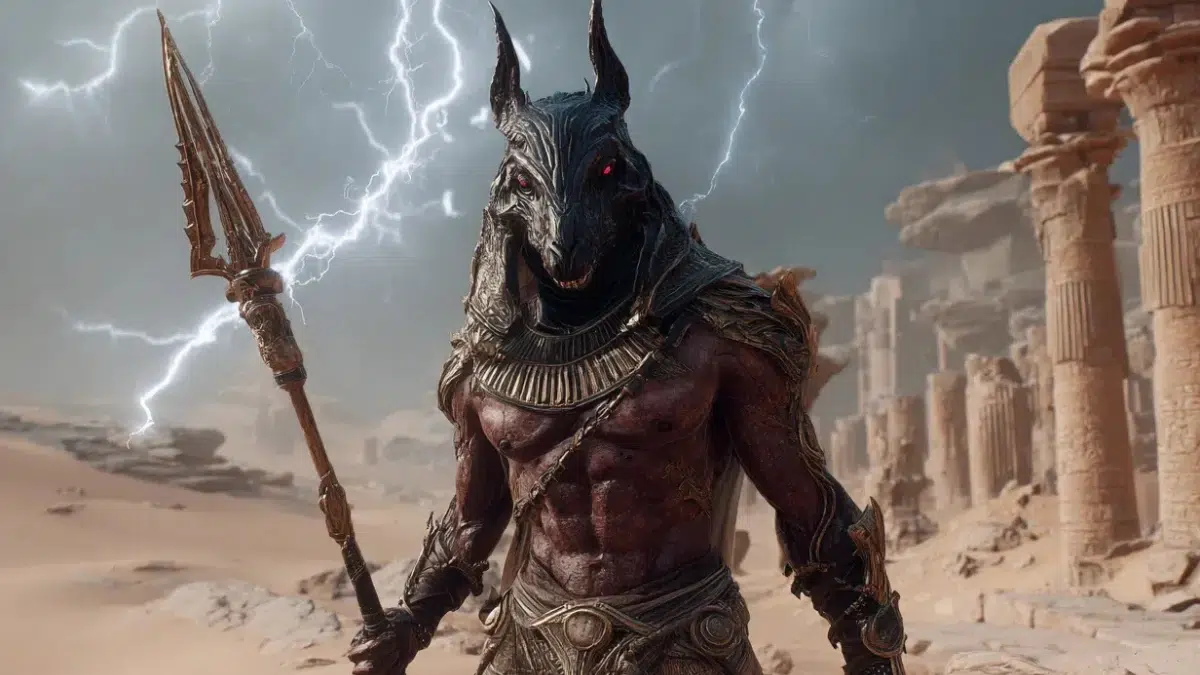
In some traditions, Typhon becomes associated with Set in Egyptian myth with both representing chaos and destruction.
Typhon also influences later dragon myths. The idea of a massive serpent like force challenging the sky appears again and again in world mythology.
He stands as one of the last great threats before the Olympian era becomes stable and is the final storm before calm.
The Monster Beneath the Mountain
Typhon’s story does not end with his defeat.
He remains buried under Mount Etna. Each tremor reminds the world that chaos never disappears completely.
In Greek myth, the gods do not destroy chaos. They suppress it and manage it. They stand guard against it.
Typhon becomes a warning. Power can be challenged. Order can crack. The earth itself can rebel.
And somewhere beneath the mountain, the monster still shifts.


