The Harpies: Winged Spirits of Storm and Punishment
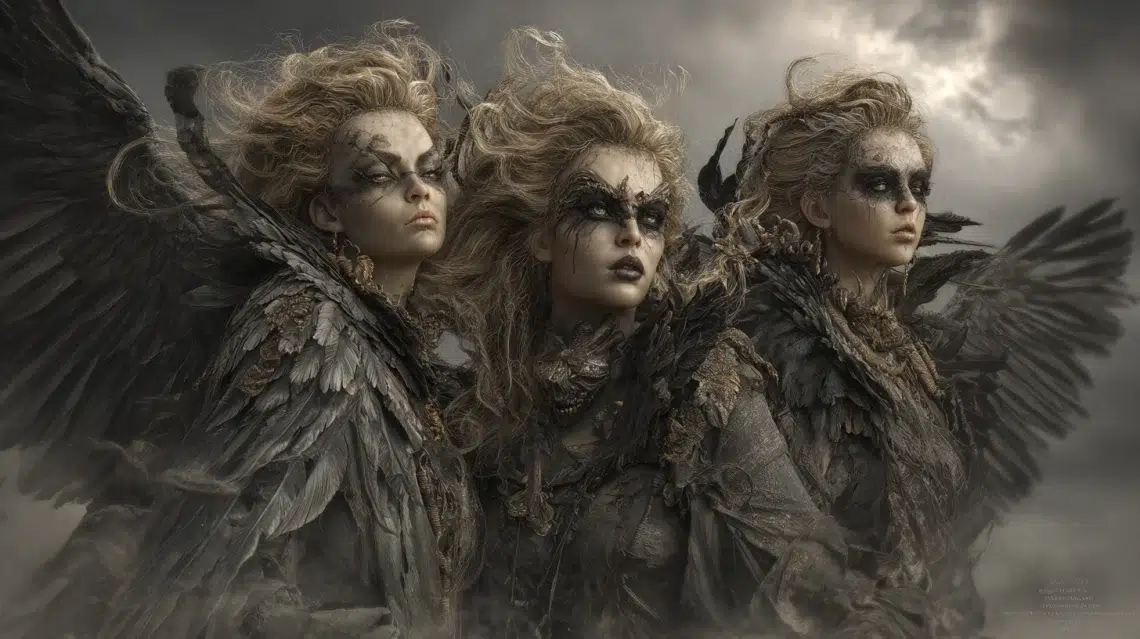
The Harpies are among the most unsettling figures in Greek mythology. Half-bird and half-woman, their very name means “snatchers,” reflecting their role as agents of sudden disappearance.
In early myths, they were wind-spirits tied to storms. Later they became more sinister, messengers of punishment who carried souls or tormented mortals.
Though not as prominent as gods or heroes, their appearances left a lasting mark in the ancient imagination.
The Harpies appear in stories from the Argonauts to Virgil’s Aeneid, where they embody fear, hunger, and the uncontrollable forces of nature.
To the Greeks, they were a reminder that divine punishment could come suddenly, on wings of storm.
Learn more about creatures in Greek mythology:
- The Perilous Tale of Scylla and Charybdis
- Minotaur and Theseus: King, Hero and a Tragic Death
- Odysseus: The Clever Hero of The Odyssey in Greek Mythology
- Hercules Labors: The Greek Hero’s Twelve Feats
Origins and Nature of the Harpies

In Greek mythology, the Harpies were known as the “snatchers,” a name that captured their terrifying role. They were often described as winged women with sharp claws and the stench of decay, embodying both beauty and horror.
According to Hesiod’s Theogony, they were the daughters of Thaumas and the Oceanid Electra, linking them to both the sea and the sky.
Beyond their monstrous appearance, the Harpies symbolized sudden and uncontrollable forces — violent storms, unexpected disappearances, and the swift hand of divine retribution.
The Harpies and King Phineus (Argonautica)
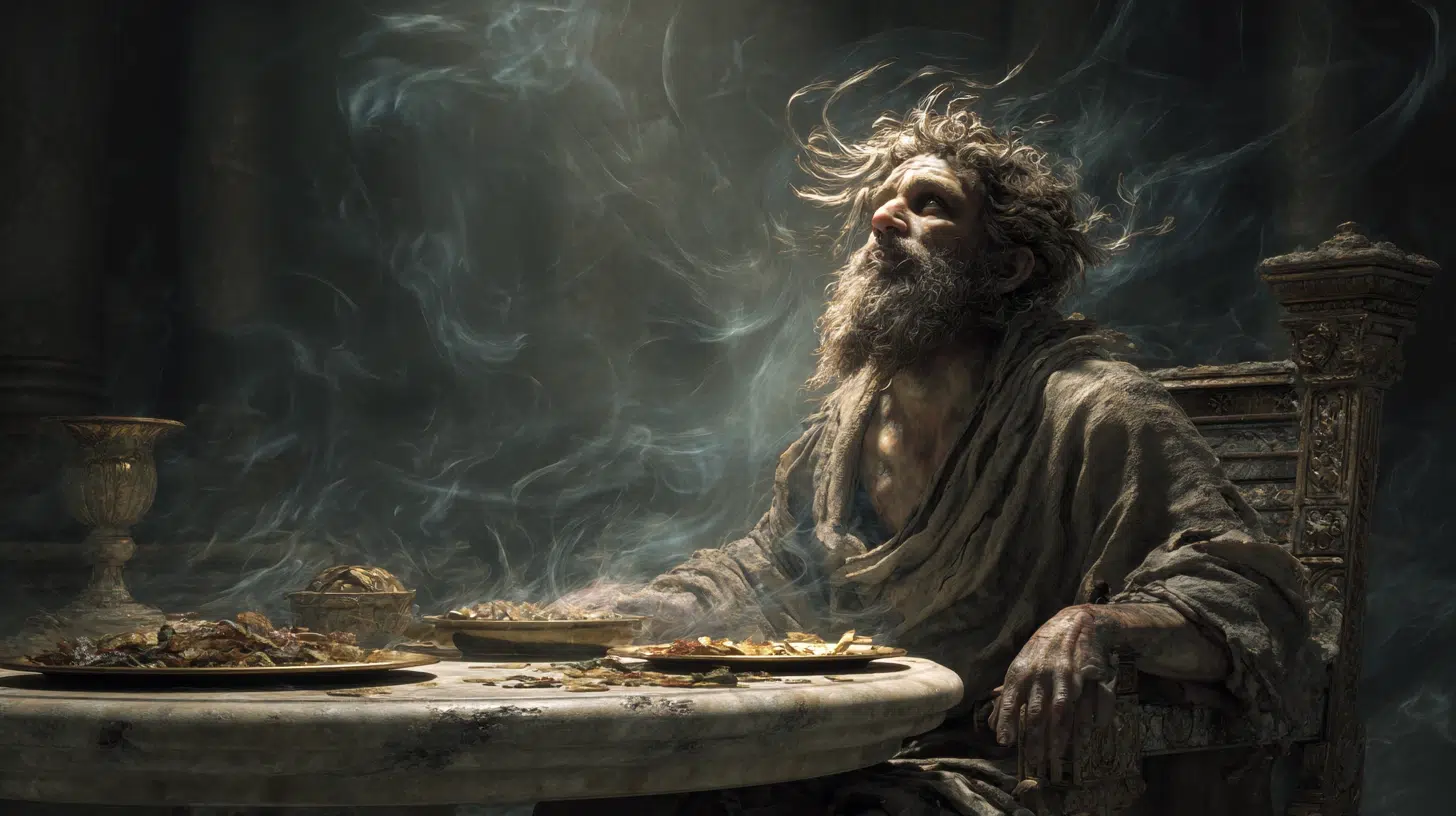
One of the most enduring myths about the Harpies comes from Apollonius of Rhodes’ Argonautica and earlier traditions about the blind king Phineus of Thrace.
Phineus was a gifted seer who could reveal the will of the gods, but this gift became his curse. In some versions, he revealed too much, angering Zeus.
As punishment, Zeus sent the Harpies to torment him.
Their cruelty was relentless. Whenever Phineus attempted to eat, the Harpies swooped down from the skies with their sharp claws and beating wings.
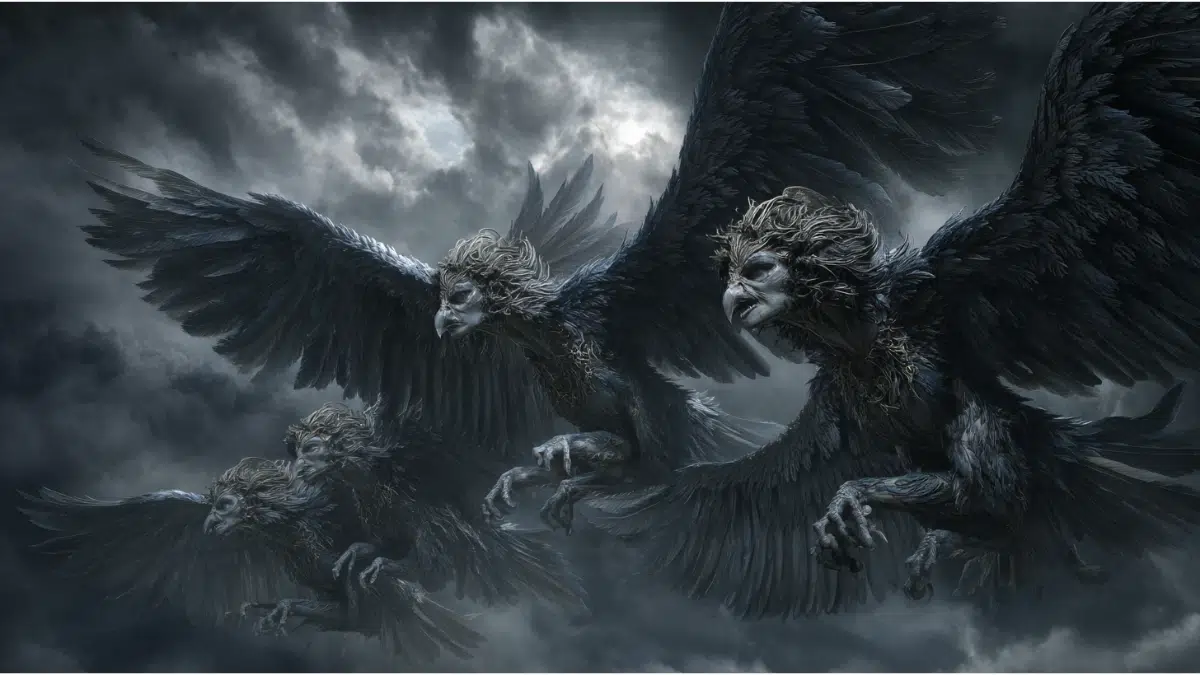
They stole the food before he could touch it, leaving only scraps behind. What remained was fouled with a sickening stench, making it impossible for him to eat.
Over time, Phineus grew weak with hunger, condemned to live in constant misery.
When Jason and the Argonauts arrived in their quest for the Golden Fleece, they encountered Phineus and learned of his suffering.
Moved by his plight, they sought to help. Two members of the crew, the winged Boreads — Zetes and Calais, sons of the North Wind — gave chase when the Harpies next attacked.
The pursuit stretched across the sky and sea, and the Boreads would have slain the Harpies had the goddess Iris not intervened. She swore that the Harpies would no longer torment Phineus, and in return, the Boreads released them.
Freed from his punishment, Phineus shared his prophetic knowledge with the Argonauts, guiding them on their journey.
This myth reveals the Harpies not merely as monsters, but as divine agents carrying out Zeus’ punishment.
Their torment of Phineus showed the devastating power of divine wrath, while their retreat highlighted the balance between justice and mercy in Greek myth.
The Harpies in Virgil’s Aeneid
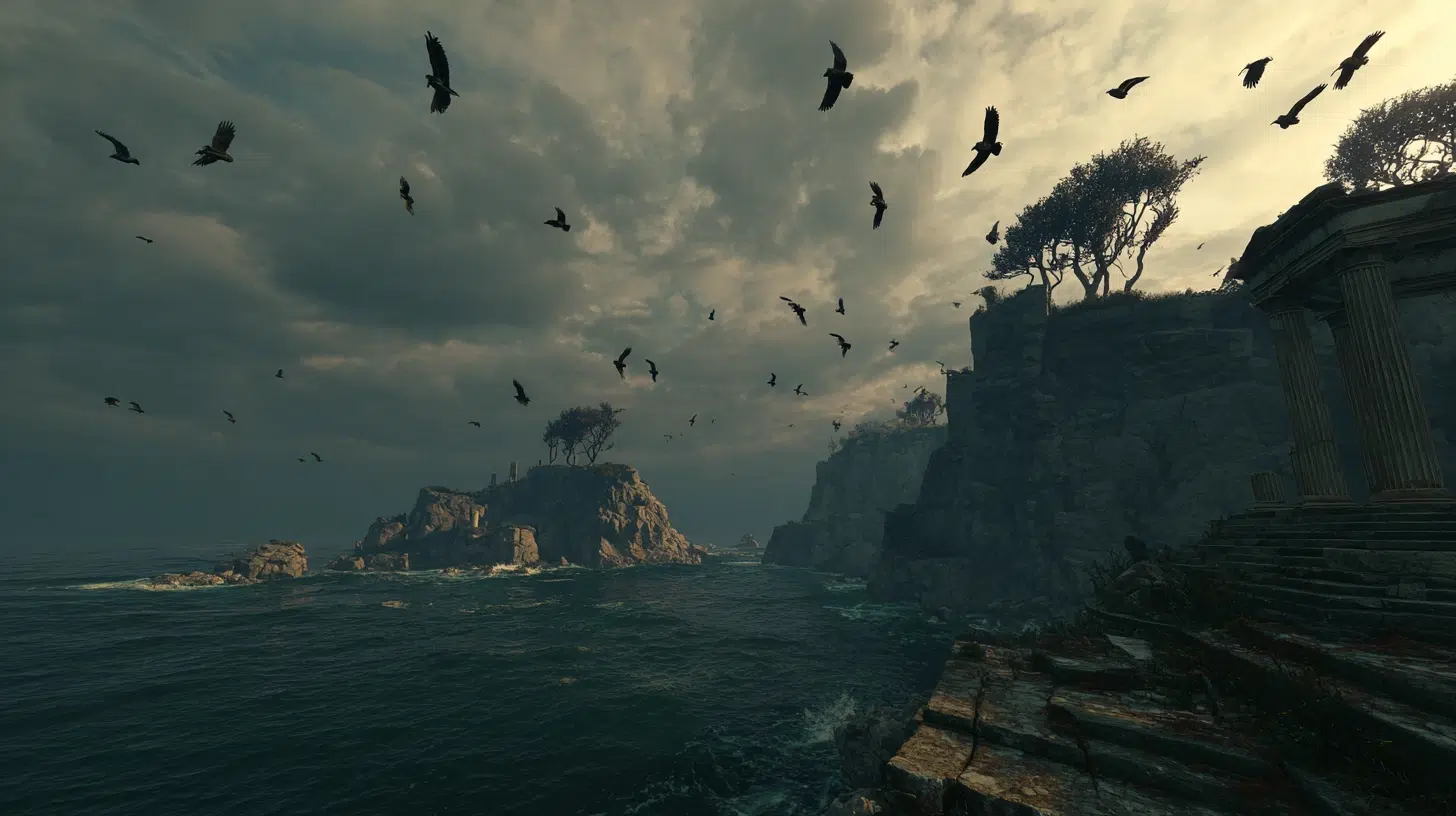
The Harpies reappear in Roman myth with even darker tones in Virgil’s Aeneid.
After the fall of Troy, Aeneas and his followers set sail in search of a new homeland. Their wanderings bring them to the Strophades Islands, a place inhabited by the Harpies.
At first, the Trojans believe they have found safety. They slaughter cattle and prepare a great feast, grateful for food and rest. But as soon as they begin to eat, the Harpies descend in a storm of wings and shrieks.
The monsters swoop down to snatch the food from their tables, leaving behind filth and an unbearable stench. Again and again, the Trojans try to drive them off, but each attempt fails.
The Harpies’ attacks are not just thievery — they are an omen of misery, hunger, and frustration on Aeneas’s journey.
Their leader, Celaeno, steps forward to deliver a terrifying prophecy.
She curses the Trojans, declaring that they will not reach their destined land in Italy until they are so starved that hunger forces them to “eat their tables.”
This pronouncement terrifies Aeneas and his men, for it suggests that the gods themselves have set suffering and hardship in their path.
In time, the prophecy comes true in a symbolic way. Once in Italy, the Trojans eat their meager food served on bread, then consume the bread itself — fulfilling Celaeno’s words.
The episode reinforces the Harpies’ role as agents of divine will. They embody not only torment but also prophecy, bridging the mortal world with the fate decreed by the gods.
In Virgil’s epic, the Harpies are no longer storm-spirits alone, but omens of doom whose curses shape the destiny of heroes.
Other Appearances and Symbolism of The Harpies
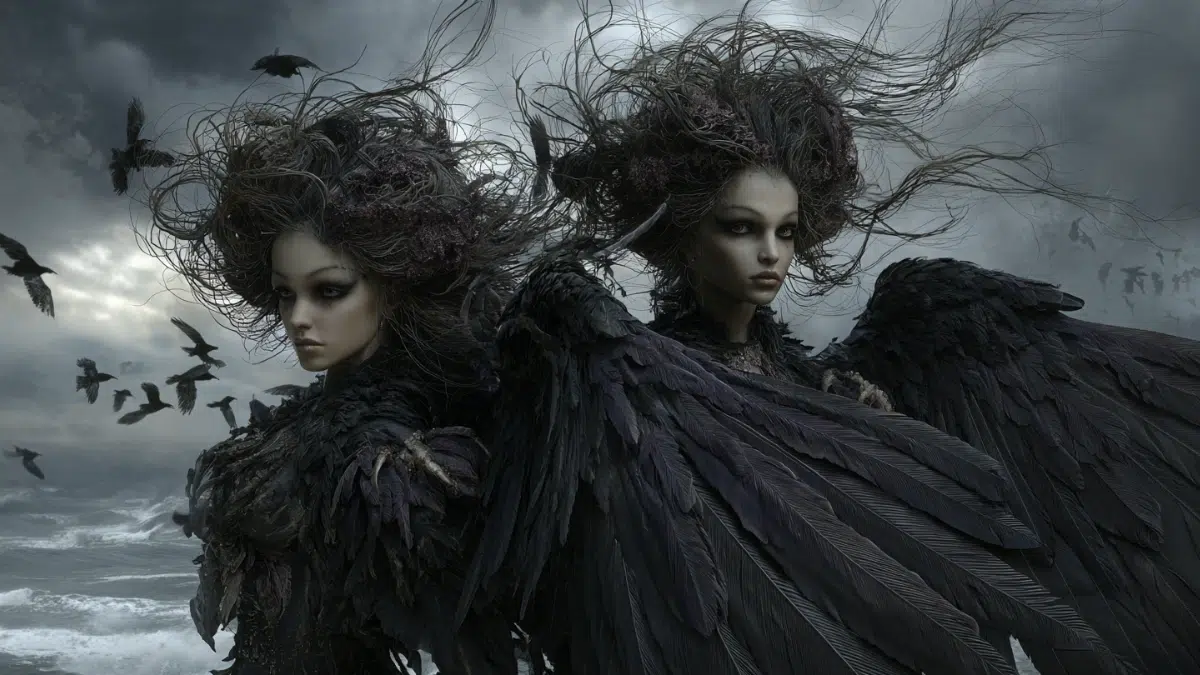
Beyond the famous tales of Phineus and Aeneas, the Harpies surface in several other myths, sometimes in roles less sinister but equally unsettling.
In Homer’s works, they are mentioned as agents of the gods who can suddenly carry mortals away. This image of the Harpies as abductors reflects a symbolic link to sudden death or unexplained disappearance — lives “snatched” by forces beyond human control.
Hesiod describes them in the Theogony as daughters of Thaumas and Electra, swift as the wind and tied to storms that sweep unpredictably across land and sea.
Their shifting portrayals across time reflect how the Greeks understood nature.
In earlier traditions, the Harpies were closer to neutral storm-spirits, embodiments of the destructive winds.
As Greek myth developed, particularly in the Hellenistic and Roman periods, they took on darker roles as omens of death, punishment, and despair.
By the time of Virgil, they were no longer just winds but prophetic monsters, their shrieks carrying curses as well as terror.
Symbolically, the Harpies represent the uncontrollable aspects of life. Hunger, storms, and divine justice all fall into their domain. They remind mortals that no matter how strong or clever, humans remain vulnerable to forces beyond their control.
Whether tormenting a cursed king, stealing food, or issuing prophecies of doom, the Harpies embodied both nature’s fury and the gods’ punishment.
Their presence in myth ensured that these fears had a face — half-bird, half-woman, swooping down from the sky without warning.
Similar Creatures to The Harpies in Other Mythologies
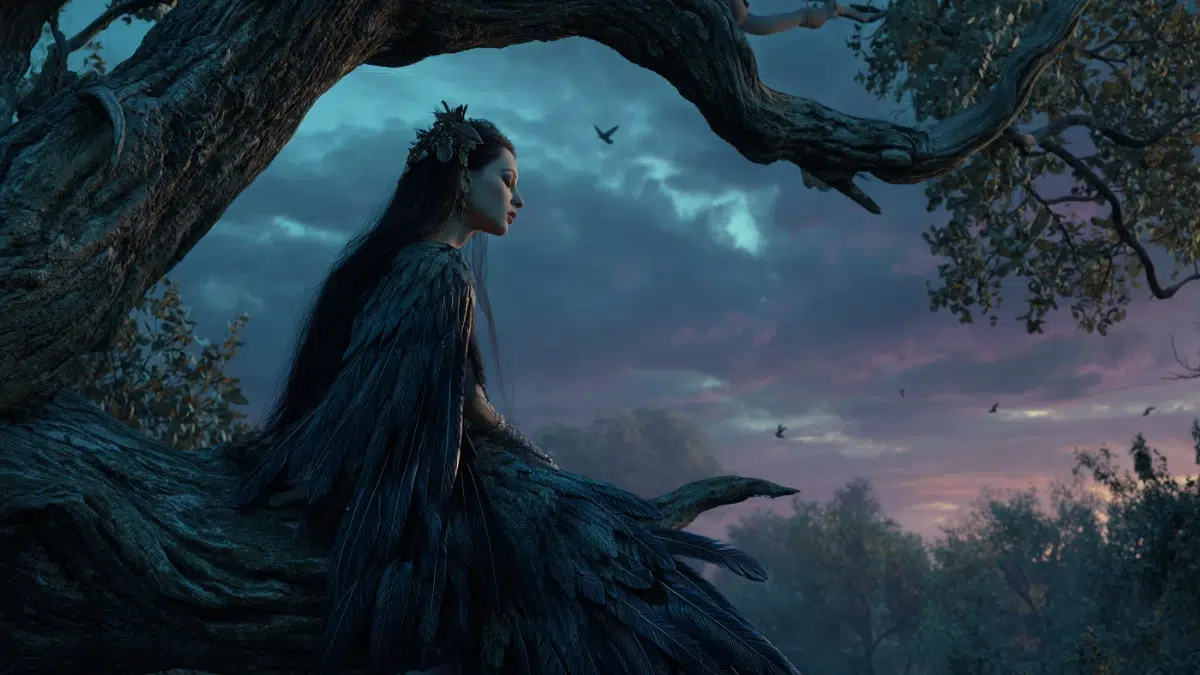
- Alkonost (Slavic Mythology) – Another bird-woman hybrid, associated with fate and sometimes destructive power. She carried both enchanting beauty and unsettling otherworldly qualities.
- Sirin (Slavic Mythology) – Half-woman, half-bird beings who sang haunting songs. Though often linked to beauty and mystery, like the Harpies they were omens of death and misfortune, luring listeners toward despair.
- Kinnari & Kinnara (Hindu/Buddhist Mythology) – Bird-human hybrids, though more benevolent than Harpies. They represent celestial musicians, yet their form echoes the same human-bird hybrid image.
- Valkyries (Norse Mythology) – Choosers of the slain who carried warriors from the battlefield to Valhalla. Like the Harpies, they were winged figures tied to death and the sudden removal of mortals from the human world.
- Lamia (Greek Mythology) – A terrifying female monster who preyed on children and young men. While not winged, she shares the Harpies’ mix of female form and predatory hunger.
- Churel / Pishacha (South Asian folklore) – Female spirits that embody death, decay, or vengeance, often swooping down unexpectedly to snatch away life, similar to the Harpies’ role as “snatchers.”
- Furies / Erinyes (Greek Mythology) – Chthonic avengers of crimes, especially against family. Like Harpies, they were agents of divine punishment who haunted and tormented mortals.
Conclusion
The Harpies were never as central as the Olympians or great heroes, but their myths left lasting impressions.
From the torment of Phineus to the prophecy of Celaeno, they embodied the fears of the ancient world: hunger, storms, punishment, and the sudden snatching away of life.
In their dual role as storm-spirits and divine avengers, the Harpies remind us of how Greek mythology often gave form to the forces of nature. Like making the wind itself into a winged spirit, feared and respected in equal measure.