
Sedna: How Inuit Myth Breathes Life into the Sea
Inuit mythology is full of epic stories and tales from Arctic culture with Sedna a key figure in these stories. Her legend has lasted through the ages, giving deep insights into Inuit spirituality and the natural world.
Sedna’s story is not just a myth; it reflects Arctic traditions and the environment. It has been passed down through stories, keeping Sedna’s legend alive in the culture and memories of the people.
Myths like Sedna’s play a big part in shaping community values and beliefs. Exploring this story helps us see how Inuit society views their connection with nature. They see nature as a powerful force, personified by Sedna.
Over time, Sedna’s story has been told in literature, inspiring and being studied. It shows how her tale remains relevant today, capturing the depth of human feelings and the power of nature.
The Origins of Sedna in Inuit Folklore

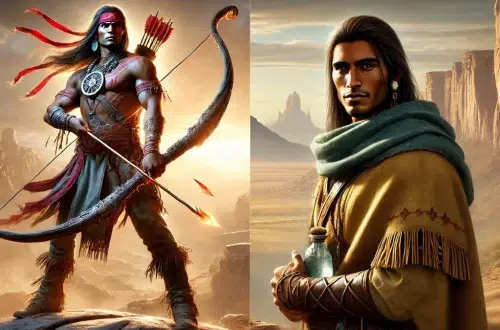
The Inuit people in the Artic used bows and arrows, primarily for hunting on land rather than as their main hunting tools.
They made their weapons from Arctic materials like bone, antler, driftwood, and animal tendons. Inuit hunters used bows and arrows to hunt caribou, birds, and smaller game on land.
For marine hunting, they relied on harpoons, spears, and kayaks, which worked better in icy waters and for hunting large sea animals like seals and whales.
Using the bow and arrow was an important part of Inuit hunting traditions, showing their skill and adaptability to the harsh Arctic. In her Inuit village, Sedna would be known for her impressive bow and arrow skills.
She would hunt in the harsh Arctic to feed her community. Her hunting skills led to events that made her a key figure in Inuit mythology.
The Inuit Story of How Sedna Became “Woman of the Sea”
There is a well-known Inuit myth about the origins of Sedna, also called “the Mother of the Sea” or “the Sea Woman.”
Her story varies across Inuit communities, but the core tale often includes themes of transformation, betrayal, and a profound connection to the ocean.
In many versions, Sedna begins as a beautiful young woman living in a remote village.
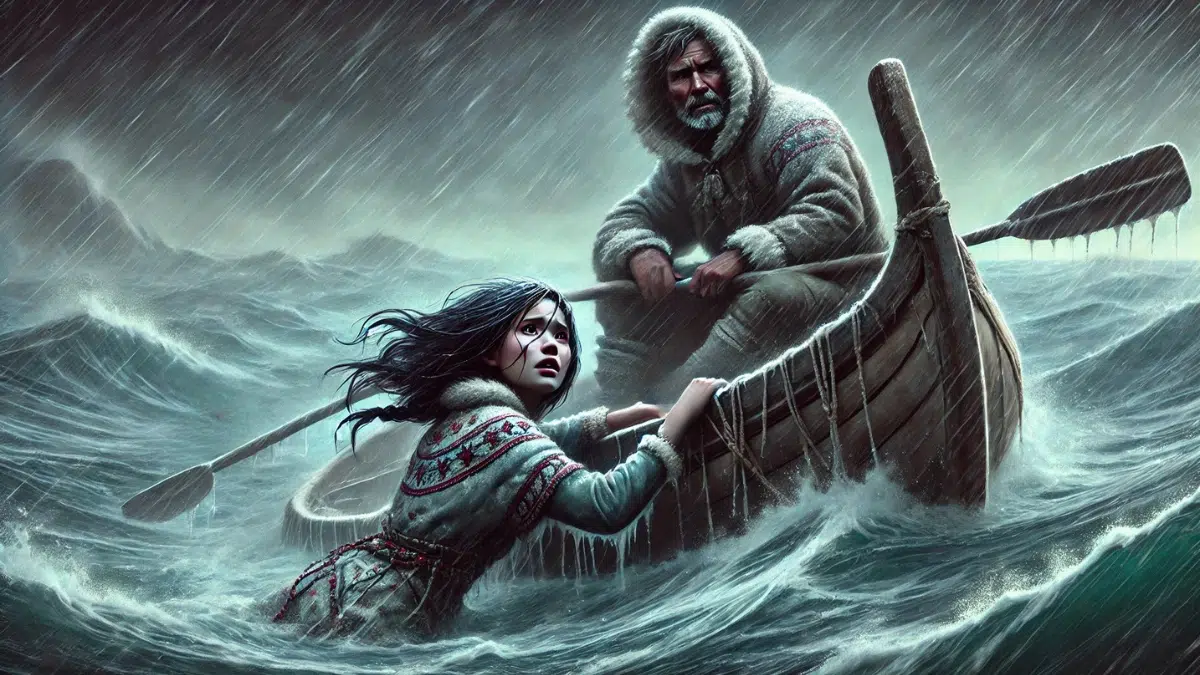
In her story, Sedna often faces betrayal, tricked or forced into marriage by an unworthy suitor, sometimes a bird or dog in disguise. Her father, seeing her unhappiness, tries to rescue her.
During their journey home by kayak, a violent storm strikes. Sedna is thrown overboard, either by accident or because her father tries to save himself from the storm.
As she clings to the kayak, her fingers are cut off, sometimes by her father, who tries to pry her loose. Her severed fingers fall into the ocean and transform into sea creatures like seals, whales, and other marine animals. These creatures represent her lasting presence in the sea.
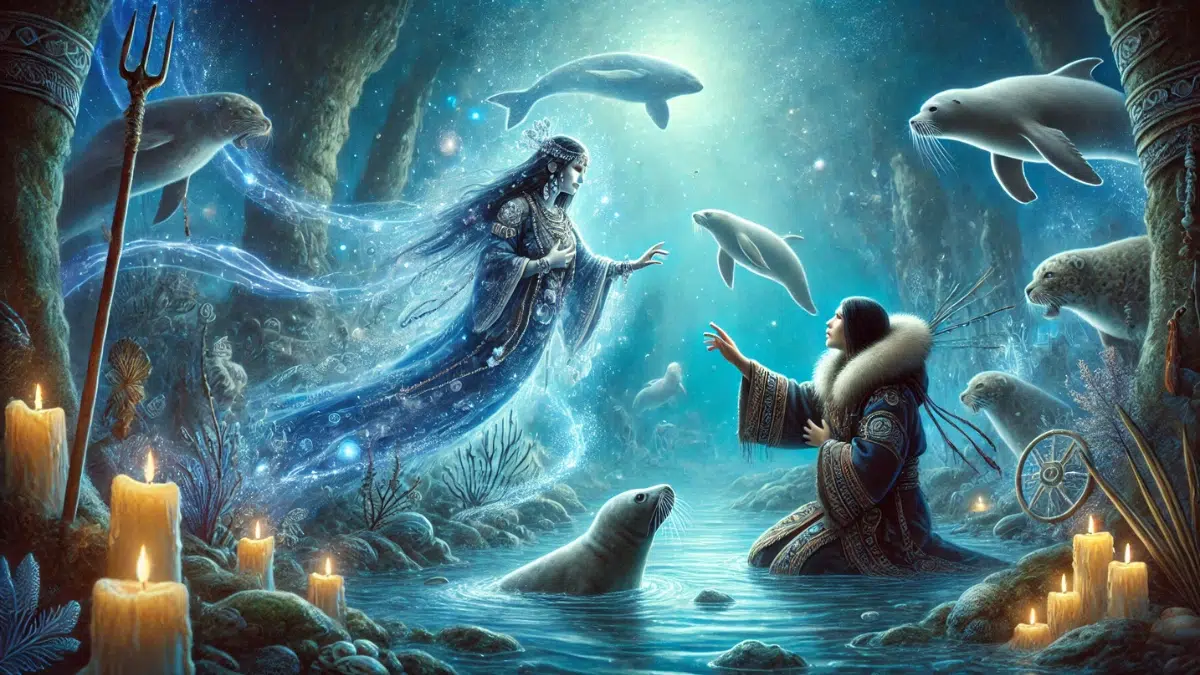
Sedna sinks to the ocean floor and becomes the goddess of the sea and marine life, ruling as a powerful spirit.
Inuit believe Sedna controls sea creatures. Shamans perform rituals to appease her, especially when hunters face poor catches. Her story emphasizes the Inuit respect for nature and their belief in a spiritual bond between humans, animals, and nature.
Sedna is primarily known as the sea goddess in Inuit mythology, associated with marine life and the deep ocean. Her legend revolves around her transformation into the Mother of the Sea, governing seals, whales, and other creatures, making her vital in Inuit beliefs about the ocean and hunting.

More Myths About Sedna the Sea Goddess
Appeasing Sedna
In Inuit tradition, Sedna is sometimes depicted as a temperamental goddess. When hunters struggle to catch sea animals, it is believed Sedna may be upset. To appease her, shamans or spiritual leaders undertake a journey to the sea’s depths through a trance or ritual, combing and soothing Sedna’s hair as a symbolic gesture of calming her. This act of appeasement is thought to release animals for hunting, reflecting the Inuit respect for the ocean and its resources.
Sedna’s Guardianship Over the Animals
Some myths emphasize her bond with the creatures she created from her fingers, including seals, whales, and walruses. As their guardian, she ensures they are treated with respect, and any disregard for proper hunting rituals might lead to her withholding these animals from hunters. This relationship reinforces the Inuit belief in ethical hunting and respect for animals.
Sedna’s Challenge of Redemption
In some versions, Sedna is a complex figure who might test humans. Hunters or travelers are said to encounter her during intense storms, and their survival may depend on their ability to show respect or to interpret her messages correctly, making her a spiritual guide and a figure of moral judgment.
Sedna’s Anger and the Role of Shamans
In many versions, Sedna can become angry or displeased, especially if humans disrespect the natural balance or mistreat animals. When hunters experience poor fishing or hunting luck, shamans often perform rituals to soothe Sedna. They “descend” to the spirit world to comb her tangled hair, symbolically cleansing her and ensuring her goodwill. This act of calming Sedna is seen as essential to restore balance and abundance.
Sedna’s Transformation and the Origin of Sea Animals
A core aspect of Sedna’s mythology is her transformation into the goddess of the sea. After her fingers are cut off (typically by her father, during a storm when he tries to save himself), each finger falls into the ocean and becomes a different sea animal, like seals, whales, or fish. This creation myth explains the origins of these animals and emphasizes the Inuit belief in the interconnectedness of life.
Sedna Inuit Protector of the Sea
In some stories, Sedna acts as a protector of marine life, ensuring that animals are only taken respectfully and sustainably. When humans follow these principles, she rewards them with plentiful hunts. Her presence serves as a reminder to the Inuit of the respect and gratitude owed to the natural world.
Sedna and the Animal Spirits
Some stories emphasize Sedna’s connection with animal spirits who help her guard the ocean. These spirits are often seen as her companions or even as her “children” since they were created from her fingers. They act as intermediaries, carrying out her will and reinforcing the Inuit’s respect for animals as spiritual beings.
Sedna’s Loneliness and Isolation
Sedna’s myth sometimes includes a sense of loneliness and isolation. After her transformation, she lives on the ocean floor, far removed from the human world. This isolation makes her temperamental, and Inuit hunters and shamans must maintain a careful relationship with her. Her loneliness also symbolizes the vast, sometimes harsh, ocean environment, where survival requires humility and reverence.
The Role of Nature and Animals in Sedna’s Inuit Tale

In Sedna’s tale, nature and animals play a crucial role, embodying both survival and spirituality for the Inuit people.
In Sedna’s myth, animals are more than creatures; they are spiritual beings that symbolize Inuit beliefs about connection, respect, and balance with nature.
Animal Spirits
- Animals as Extensions of Sedna: When Sedna’s fingers fall into the ocean, they transform into sea animals like seals, whales, and fish. These creatures are an extension of Sedna herself, making her the “mother” of marine life. This transformation shows the belief that all ocean life is interconnected and carries Sedna’s spirit, giving them a sense of sacredness.
- Spiritual Guides and Animal Spirits: In Inuit spirituality, animals often act as guides and protectors. In Sedna’s story, the animals she “creates” embody the Inuit’s deep respect for these beings as partners rather than resources. Each animal has its own symbolic meaning:
- Seals symbolize adaptability and resilience, qualities needed to survive in the harsh Arctic climate
- Whales represent strength and abundance, often reflecting the bounty of the sea and its ability to sustain the Inuit people
- Polar Bears (in some stories) are seen as powerful spiritual guardians, representing strength and the ability to navigate both land and sea
Nature and the Ocean
- Nature’s Balance and Respect: Sedna’s story teaches about the balance of nature. When people hunt respectfully, acknowledging the spiritual significance of animals and taking only what they need, Sedna rewards them with plentiful resources. However, if they overhunt or disrespect the animals, Sedna becomes angry and withholds the bounty of the sea. This highlights the Inuit belief in taking only what is necessary, respecting the animals as beings with spiritual significance, and maintaining harmony with nature.
- Symbolism of the Ocean and Sedna’s Domain: The ocean, Sedna’s domain, is a symbol of both life and mystery. The depths of the sea are where Sedna resides, and they represent the unknown, the uncontrollable power of nature, and the source of all marine life. The sea is both bountiful and dangerous, embodying the Inuit’s respect for the power and unpredictability of nature.
- The Bond Between Humans and Animals: Inuit hunters often regard animals as partners rather than mere prey, a sentiment reinforced by Sedna’s myth. This bond symbolizes the Inuit worldview that humans are part of nature, not separate from it, and must honor animals through rituals and traditions that acknowledge their sacrifice. This view fosters a spiritual connection that sees animals as essential to both survival and cultural identity.
In essence, Sedna’s tale emphasizes that animals are not merely resources but respected spirits and guides, embodying the wisdom and resilience required to live in harmony with the Arctic world. The story serves as a powerful reminder of the Inuit’s cultural and spiritual connection to nature.
Comparative Analysis: Sedna and Other Mythological Archers

Sedna shares some thematic parallels with other mythological figures who embody nature, protection, and a connection with animals, though her story and transformation are unique to Inuit culture. Here are a few figures who resonate with elements of Sedna’s myth:
Artemis (Greek Mythology)
Artemis is indeed a fitting comparison, especially as the goddess of the hunt, wilderness, and animals. Like Sedna, Artemis is connected to animals and serves as a protector of wildlife. She represents the balance of nature and holds hunters accountable, similar to how Sedna demands respect for marine life. Artemis also embodies independence and resilience, qualities that resonate with Sedna’s transformation and power.
Njord (Norse Mythology)
Njord, a Norse god associated with the sea, wind, and wealth, is a protector of sailors and fishermen. Unlike Sedna, who has a role tied to respect and reverence for animals, Njord is more focused on the prosperity the sea brings rather than any spiritual connection with marine life.
Manannán mac Lir (Celtic Mythology)
Manannán is the Irish and Celtic sea god, known as a protector of seafarers. He often acts as a guide, much like Sedna is revered in Inuit culture as a figure who controls the ocean’s resources. Manannán also has ties to magical islands and otherworldly realms, linking him to the mystical nature of the sea.
Tangaroa (Polynesian Mythology)
Tangaroa is one of the major gods of the sea in Polynesian beliefs. He is the father of fish and other marine life, echoing Sedna’s creation of Arctic animals from her fingers. Tangaroa embodies both the life-giving and powerful aspects of the ocean.
Yemaya (Yoruba and Afro-Caribbean Mythology)
Yemaya is a nurturing, protective mother figure who cares for her children and protects sailors. Like Sedna, Yemaya has a nurturing side and is deeply connected to the welfare of her people, symbolizing the sea’s maternal qualities.
Mazu (Chinese Mythology)
Mazu is a sea goddess worshipped in Chinese and Taiwanese culture, revered as a protector of fishermen and sailors. Unlike Sedna, who controls marine animals, Mazu’s focus is on providing safety and guidance to travelers on the sea. However, her protective nature aligns with Sedna’s connection to Inuit hunters who depend on her goodwill for survival.
The Cultural Impact of the Inuit Myth of Sedna

The myth of the Inuit archer Sedna is a key part of their cultural stories. It shows the true spirit of Inuit heritage. Sedna’s story lives on in art, literature, and community traditions, highlighting the power of storytelling.
Festivals and Art
- Inuit Storytelling Festivals: Inuit communities, especially in Canada and Greenland, have storytelling events and cultural festivals where Sedna’s tale is often recited. These festivals are meant to keep the oral traditions alive, sharing Inuit myths, including Sedna’s story, with younger generations.
- Inuit Carvings and Sculptures: Sedna is a popular figure in Inuit art, often depicted in soapstone, bone, and ivory carvings. These sculptures show her as a sea goddess, sometimes with sea creatures like seals and whales emerging from her body or hands, reflecting the myth’s themes.
- Contemporary Inuit Artists: Many Inuit and Canadian artists have interpreted Sedna’s story through modern art forms, including painting, printmaking, and mixed media. For example, Kenojuak Ashevak and Germaine Arnaktauyok, both renowned Inuit artists, have created works inspired by Sedna and other Inuit myths, bringing her story into contemporary art galleries.
Books and Films of Sedna
- “The Sea-Woman: Sedna in Inuit Shamanism and Art in the Eastern Arctic” by Aqqaluk Lynge: This book explores Sedna’s role in Inuit shamanistic practices and her cultural impact, focusing on how her myth has influenced Inuit beliefs and artistic expression.
- “The Goddess of the Sea: Sedna in Inuit Shamanism and Folklore”: Various authors have published collections on Inuit mythology that include the story of Sedna. These books often explore Sedna’s transformation, her relationship with animals, and her role in the Arctic’s natural world.
- Children’s Books: Many children’s authors have adapted Sedna’s story for young readers, presenting her tale as a way to teach about respect for nature and cultural resilience. Titles such as “The Legend of Sedna” by Bill Helin and “Sedna, Goddess of the Sea” by Ellen L. Frye are popular in classrooms and libraries in Canada.
- “The Legend of Sedna” (Animation): This animated short film tells the story of Sedna’s transformation into the goddess of the sea. Educational settings use it to introduce Inuit mythology and is popular in Canada.
These new stories and art keep Sedna’s spirit alive. They help keep Inuit traditions strong in a changing world. Sedna’s myth is key to the Inuit community’s identity, showing how myths shape and keep culture alive.
Sedna Inuit Myth Reflects Values and Beliefs
The story of Sedna shows deep Inuit ethics and values. It connects to nature and community, giving us a peek into Inuit society. This myth teaches us about life, culture, and beliefs of the Inuit people.
Respect for Nature and Marine Life
Sedna is the Mother of the Sea, responsible for creating and protecting marine animals. Her story instills the importance of treating these animals—and nature as a whole—with respect and reverence.
Symbol of Female Strength and Resilience
Sedna’s story is one of betrayal, transformation, and independence. She goes from being a young woman who faces hardship and betrayal to a powerful goddess who controls the seas. This transformation serves as an enduring symbol of resilience, independence, and strength, especially for Inuit women.
Connection to Shamanic Practices
Shamans, as spiritual intermediaries, communicate with her when the sea is unyielding. They undertake journeys to the spirit world to calm and appease her, ensuring the community’s survival.
Cultural Identity and Storytelling
Sedna’s tale has been passed down orally through generations, helping to preserve Inuit culture and values. Storytelling is a crucial part of Inuit identity. Sedna’s myth serves as a cultural touchstone. It reminds the Inuit of their shared beliefs, traditions, and the environment in which they live.

Conclusion
Sedna’s myth tells a story full of cultural importance and deep symbols. From her origins in Inuit stories to her heroic journey, Sedna’s tale is rich and complex.
At the heart of her story is the connection between humans and nature. The Arctic landscapes and the animals in the tale show this bond. When we compare her to other mythological archers, we see how unique Sedna is. Her story has touched Inuit culture and people all over the world.
Sedna’s story teaches us about being strong, respecting nature, and keeping our cultural roots alive. In the end, Sedna’s myth is more than an Inuit story. It connects the past and present, showing us the value of keeping these stories alive for the future.
These myths are key to who we are and where we come from. They share messages that cross borders. By looking at Sedna’s myth, we’re reminded to value and keep these stories alive. Let’s make sure these tales stay with us, shaping our shared human history.