Ochosi African God: Hunter & Protector
Ochosi, a revered deity in African mythology, not only stands out for his exceptional archery skills but also serves as a guardian of justice. With roots in Yoruba mythology in West Africa, Ochosi is one of the most famous African gods and archers in history.
Ochosi is known as a key Orisha of the wilderness. He symbolizes a skilled hunter and fisherman who lives in the forests.
Introduction to Ochosi
Ochosi is famous for his accurate shooting with a bow and arrow. He is seen as a protector along with other. In other versions, he has close links with Ogun.
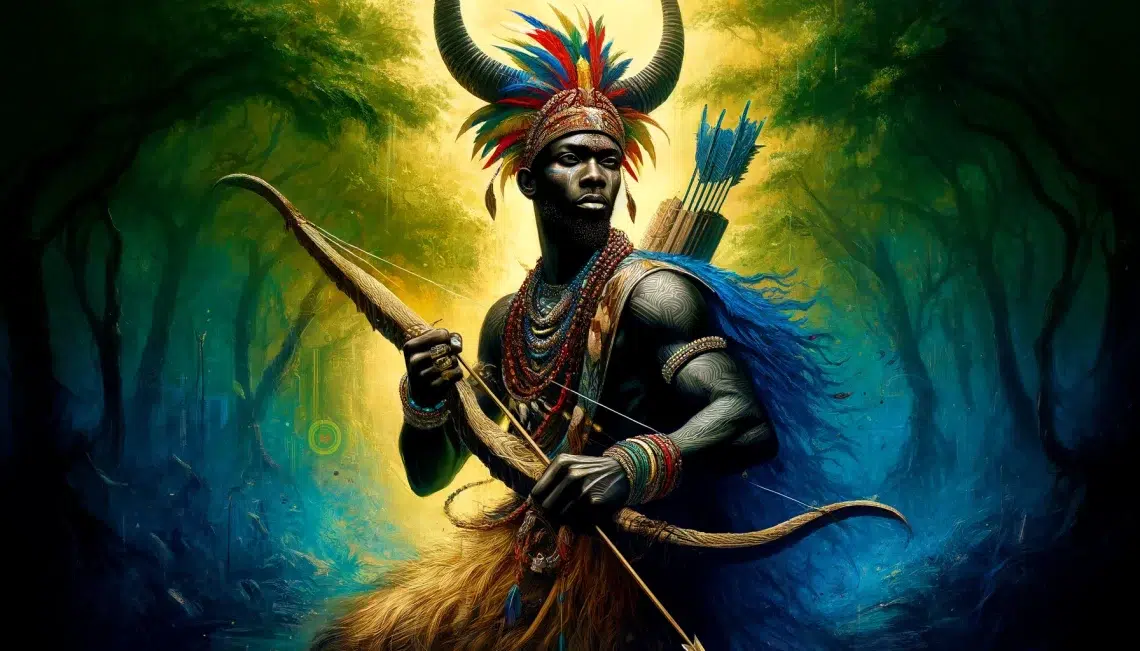
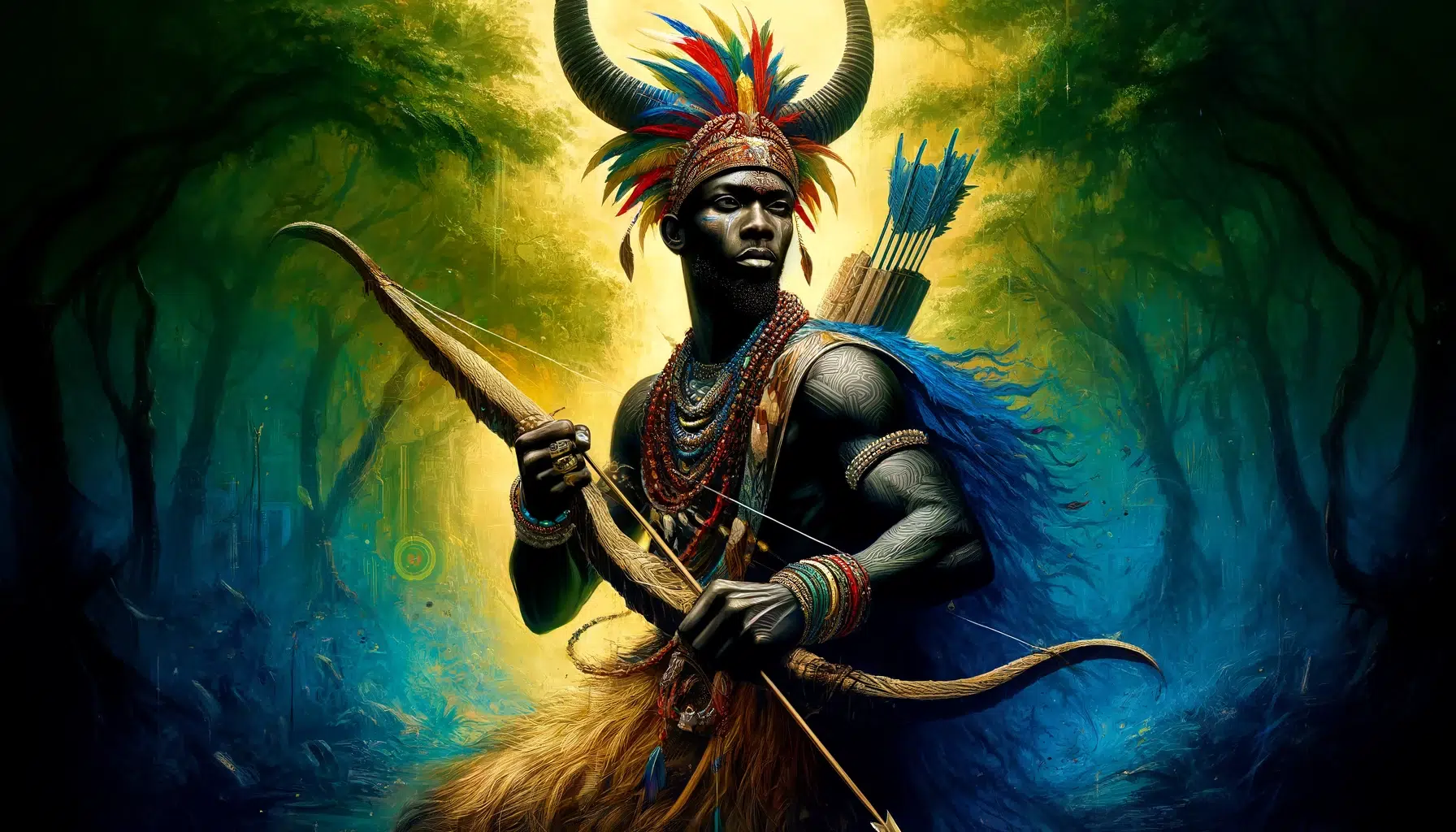
As the Orisha of justice, Ochosi helps guide people through rituals and ceremonies, especially in divination. His image often includes a bow and arrow, and a unique headpiece with blue, yellow, and red colors.
These colours show his connection to nature and other Orishas. People honour Ochosi on June 7th with gifts of game animals and fruits. This shows his role as a hunter.
He is also seen as a protector and supporter of those in the legal field. This includes police and lawyers. He works to ensure justice and fairness in society.
It is said to have great spiritual power.
Ochosi has a deep link to nature and his care for wild animals show his value in Yoruba myth and spiritual beliefs.
The Origins of Ochosi
Oshosi is a key god in the Yoruba religion. People in many places like Nigeria, Brazil (as Oxossi), and Cuba (as Ochosi) worship him. He’s from areas near Lake Chad and has strong cultural connections. People have recognized him for about 9,000 years.
In ancient Egypt, there’s a similar god to Oshosi named Osiris. He is compared to Shu and Osiris in Egypt. There, he’s called “O-Shu-Osi”.
A key link is through the Orion constellation, showing the deep connection between Oshosi and the sky and land. Oshosi is known for his roles as a hunter, scout, and leader. He would help start civilizations and create rules for governing.
His father, Odede, helped societies from being simple to becoming more organized cities. Oshosi also inspires people to have good character and to help others.
His role ranges from acts of charity to aiding in the growth of communities. He holds a special place in the progression of ancient and current societies. Early people used to predict the future by looking at animals’ signs.
Oshosi was part of these practices. Even today, people honour him by offering specific animals in their rituals.
The Role of Ochosi in Yoruba Religion
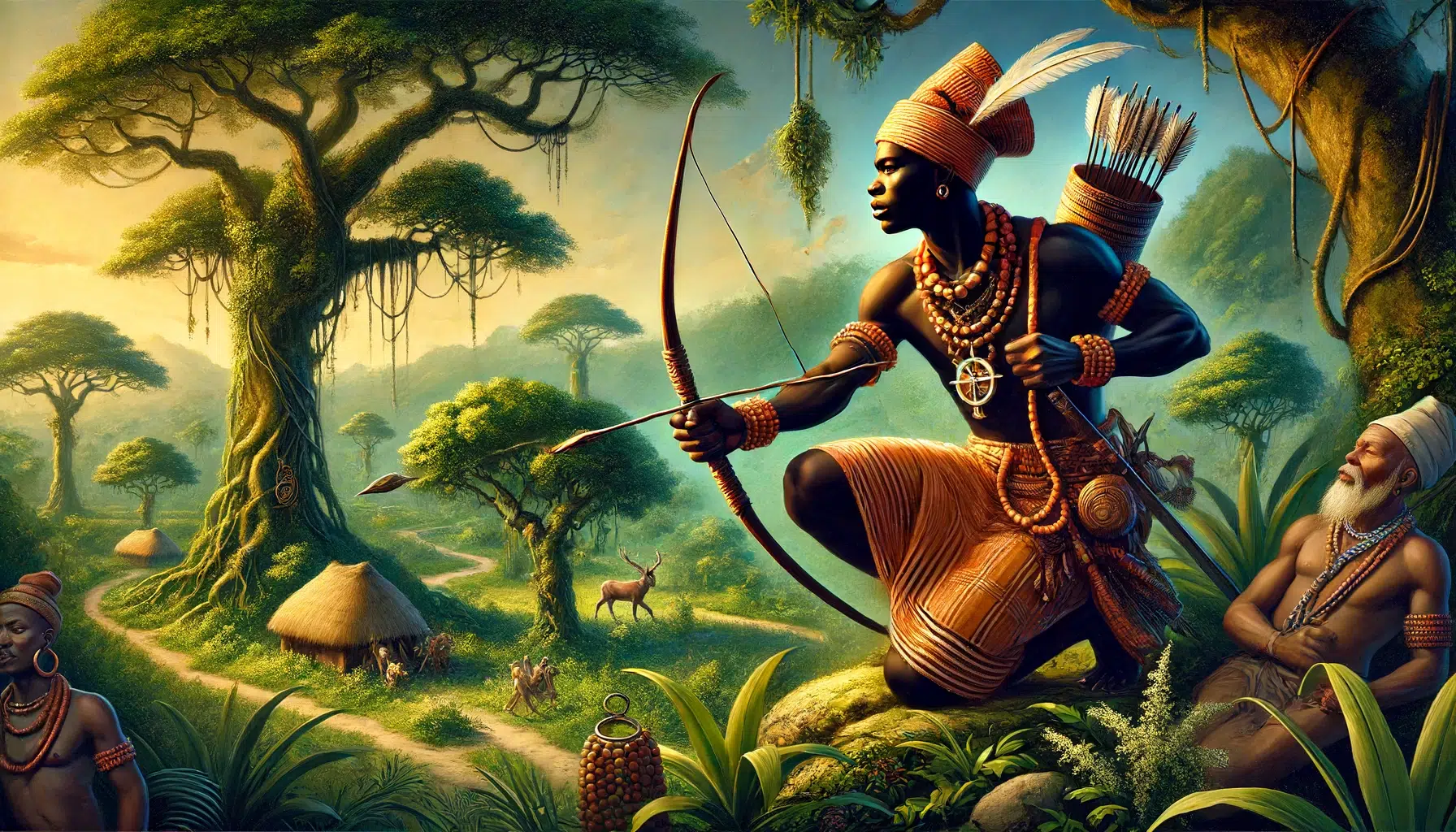
In the Yoruba religion, Ochosi is known as a spiritual hunter. He’s also seen as a scout and someone who leads the way. Ochosi helps people find areas rich in resources important for growing communities.
He plays a big part in changing how people lived. He helps move societies from roaming to staying in one place. This makes him not just a key figure in hunting but also a provider and protector for his people.
The name “The Tracker” fits Ochosi well. It shows his talent in leading people to their spiritual goals. He helps start the basis of how communities in Yoruba tradition were organized. Ochosi is highly respected in several traditions, including the Yoruba, Dahomey, and Vodun.
Veneration of him involves offerings of goats, cooked pigs, and guinea fowls.
His symbol is a bow and arrow, which represent his strength and area of control. He is also admired for his knowledge, cleverness, and support for the arts. These qualities show how complex and important he is as a spiritual figure.
Ochosi’s Connection to Other Orishas

Ochosi’s role in the Orishas sheds light on the deep bonds and partnerships among the Yoruba deities. He works closely with Elegua, who opens paths, and Ogun, the god of iron and war.
In Santeria, Ochosi is often called upon with them to boost spiritual powers and gain clear advice. Ochosi is seen as Ogun’s child in some practices. Their strong tie helps followers deal with obstacles.
In other tales, Oshun and Oloddumare are said to be Ochosi’s parents. This shows his diverse roots in Yoruba lore.
Together, these deities cover all aspects of spiritual life, from mental clarity to protection and the delivery of divine messages. People offering to Ochosi may give hunted animals and birds, especially on June 7th, his feast day.
This act honours his guardianship of nature. It also shows the balanced partnership among the Orishas. Using a specific symbolic item, like a crossbow in Ogun’s cauldron, makes Ochosi’s presence stronger during prayers.
Ochosi has deep links to justice and fairness. He protects those enforcing the law.
The collaborations among the Orishas symbolize how they work together to keep the spiritual realm in order.
Learn more about:
Ochosi as the Guardian of Justice
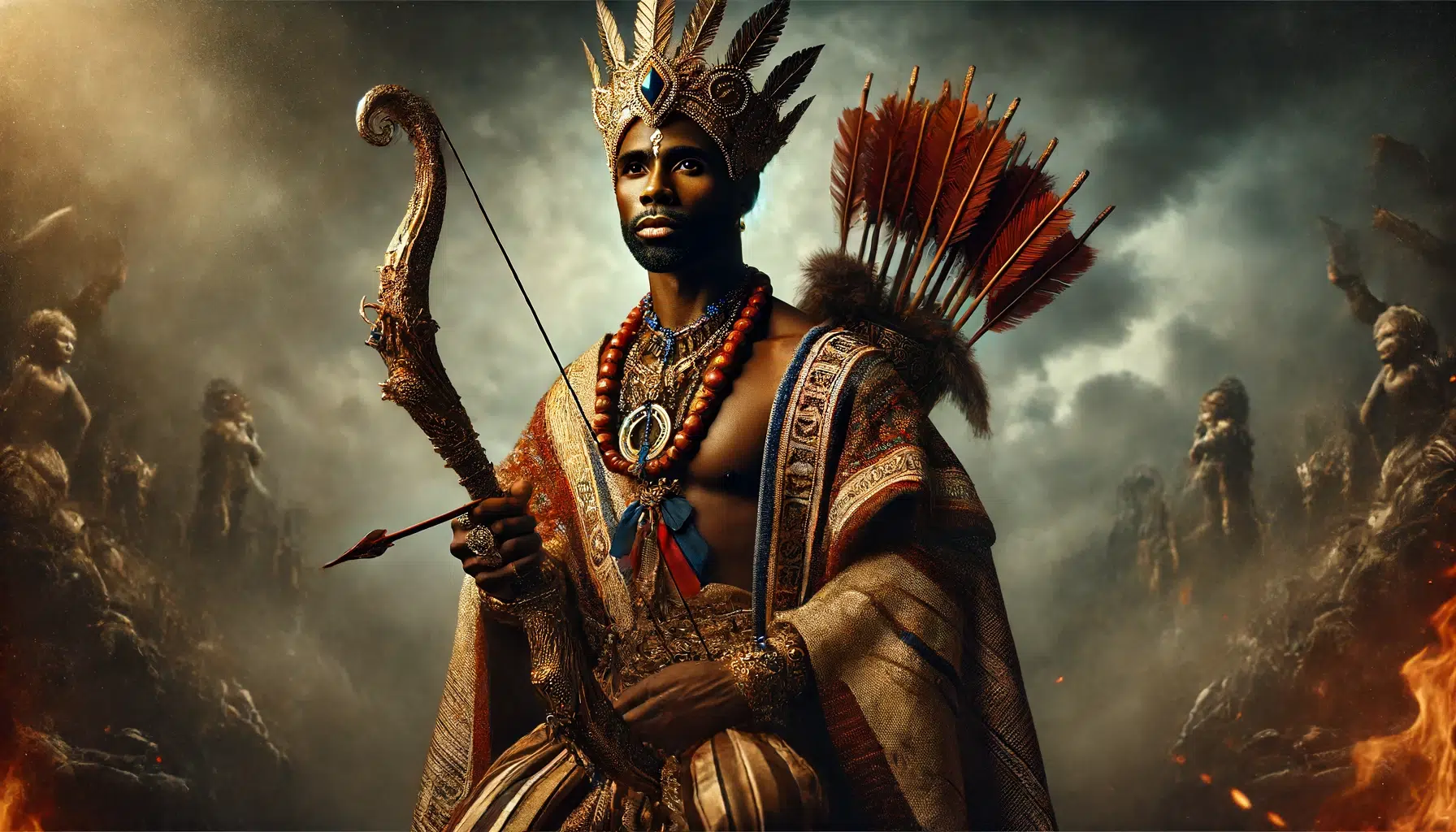
Ochosi is deeply respected as the Orisha of fairness in the Santeria tradition. He is seen as a mighty protector and a symbol of justice. People celebrate him on June 7th with abundant offerings.
These offerings include hunted animals and fruits like plantains, pomegranates, and bananas. They also engage in prayer, chanting, and the use of candles and incense. Ochosi’s role as a guardian of the innocent is key in seeking justice for all.
Believers often use the Alamo plant in their spiritual practices, such as preparing baths with it. This ritual helps connect them with Ochosi’s energy for justice.
Ochosi is known for his sharp aim, which symbolizes not only hunting but also the precision of justice.
In Santeria, Ochosi works closely with Elegua, Ogun, and Oshun. This collaboration strengthens his role as the Orisha of fairness. His link with other Orishas shows the unity in the divine for justice.
At the Ochosi-Oshun Festival, this attire showcases his spiritual and cultural importance. Through these festivals and continuous worship, Ochosi’s role as a guardian of justice endures.
His presence as a symbolic legal protector is essential in Santeria.
| Key Attributes of Ochosi | Associated Meanings |
|---|---|
| Sentinel | Watchfulness, protection, and guarding against threats |
| Spirit of Justice | Legal enforcement, fairness, and ensuring accountability |
| Law Enforcement Officer | Dedication, valour, and upholding the law |
| Confinement | Prisons, incarceration, and solitary environments |
The Image and Depiction of Ochosi
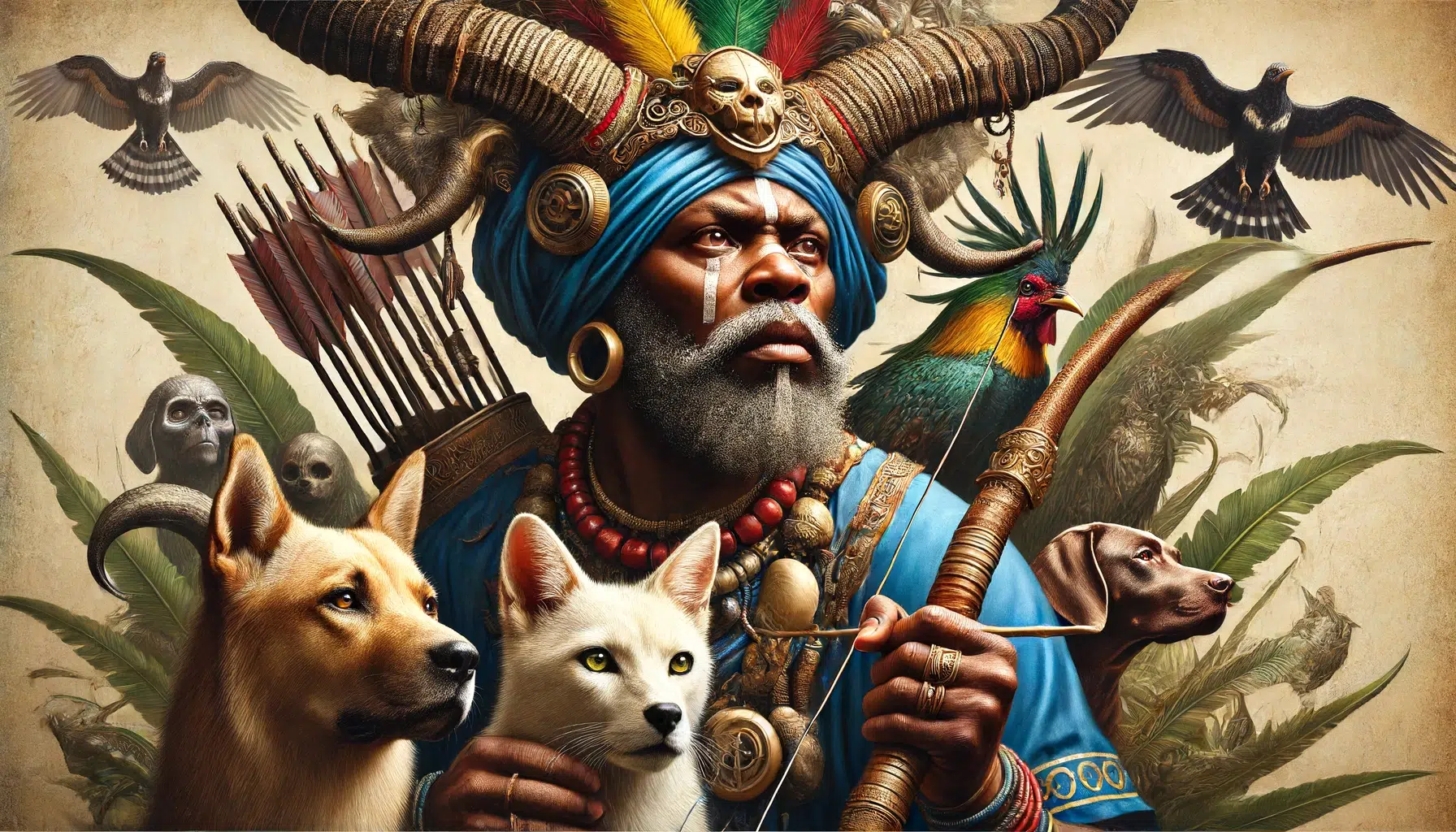
Ochosi appears as a watchful, skilled hunter in religious art. He holds his bow and arrow in these images and often wears a headpiece with horns and feathers. This demonstrates his close connection to nature and his role in protecting Orisha worshipers.
Ochosi is recognized by his favourite colours – blue, yellow, and red. His dress often features these colours and animal skins. These colours indicate his close connection with other Orishas, such as Ogun.
Ochosi appears with the animals he protects, like dogs and birds. This represents more than just hunting. It symbolizes how he guards and guides people in life and spirit.
Historical Evolution of Ochosi
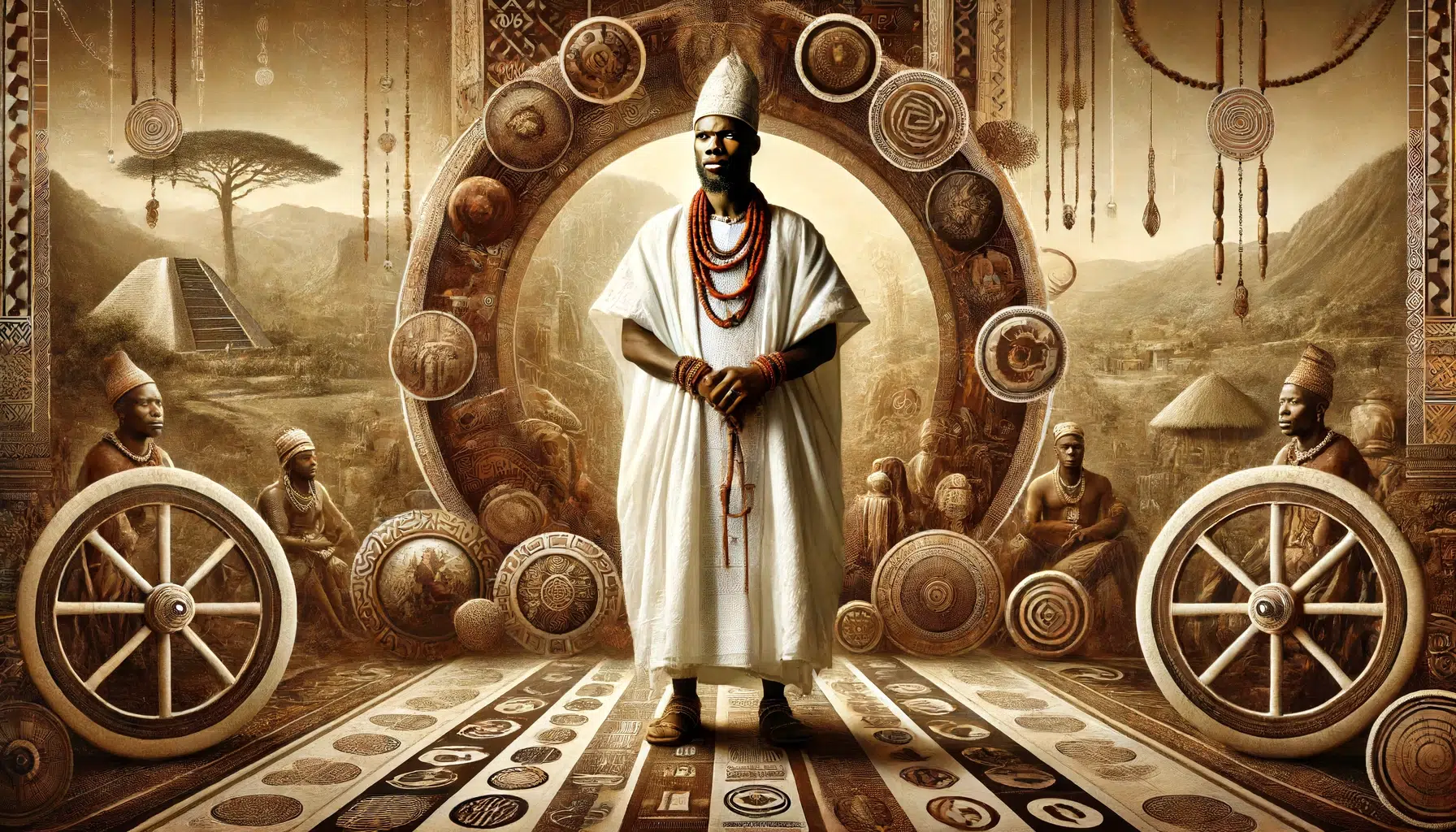
People respect Oshosi in places like Nigeria, Brazil, and the US. His name changes by location, such as Oxossi in Brazil and Ochosi in Cuba.
Knowing the origins of his name helps us better understand his history and culture. Oshosi has strong connections to the Yoruba people, an ancient African group. They lived around Lake Chad over 9,000 years ago.
In Yoruba stories, Oshosi is a skilled hunter and guide. He symbolizes goodness and helping others.
Oshosi also has links to ancient Egyptian gods like Shu and Osiris. These gods use symbols that reference the stars, such as Orion. Orion represents leadership and fate, which also connect to Oshosi in Yoruba tradition.
In Yoruba tradition, Oshosi is more than a hunter.
He’s a leader who helps start societies. His father, Odede, taught people to farm. This shows how his worship blends history and modern beliefs.
Oshosi’s impact reaches beyond religion. He has links to starting things like zoos and hospitals. This shows his importance to society.
Oshosi stands for survival, support, and fairness, making him a key figure in many cultures over the years.
Ochosi’s Legacy and Cultural Impact
Ochosi’s impact radiates from the Yoruba religion in West Africa and now resonates globally, especially among people of African descent.
In regions like Brazil and in the faiths of Candomblé and Santería, he emerges as a divine hunter. Known for his proficiency with a bow and arrow, people praise Ochosi for his role in providing and seeking knowledge.
In Yoruba culture, hunters occupy a special role, providing food, protecting others, and demonstrating qualities such as strength and deep knowledge of nature. Ochosi exemplifies these traits, appearing as more than just a physical hunter.
He engages in seeking knowledge, unraveling mysteries, and achieving necessary outcomes.
In Santería, practitioners perform a ritual called ‘bembé’ to honour Ochosi, offering fruits and vegetables as tokens of gratitude for his provisions. Symbols like his bow and arrow, green clothes, and the deer signify focus, abundance, and gentleness. These symbols form crucial elements of religious and cultural practices, highlighting Ochosi’s significant role.
Ochosi’s influence is evident both historically and currently. In 1987, Cuban authorities recognized Santería objects as part of the nation’s heritage, marking a significant recognition. Cuban museums, such as Casa de Africa, now display these religious items, emphasizing Ochosi’s far-reaching impact and enduring legacy.
Santería, which originated from the amalgamation of various cultural beliefs, underscores Ochosi’s spiritual and cultural significance. As a pivotal figure within the Yoruba pantheon, which includes fewer than 20 deities in Cuba, he wields substantial religious and ethical influence.
This enduring impact showcases Ochosi’s prominent role in Afro-Caribbean faiths and his continuous presence in global religion.
Ochosi’s Symbols and Attributes
Ochosi, the Yoruba deity of hunting, possesses distinctive symbols and attributes that represent his role as a skilled archer. He is also an enforcer of justice, and guardian of the wild.
Ochosi is often carrying a bow and arrows. Thus symbolizing his exceptional archery skills and his ability to hunt down wrongdoers with accuracy and precision. In addition to his mastery of the bow and arrows, Ochosi is associated with handcuffs, which signify his dominion over confinement and imprisonment.
As a spirit of justice, he has the power to arrest and imprison those who have committed wrongdoing.
Antlers are another significant symbol of Ochosi, representing his connection to the wild and nature. They serve as a reminder of his role as a hunter and his ability to navigate and protect the natural world.
These symbols and attributes collectively reflect Ochosi’s multifaceted nature as a hunter, guardian, and enforcer of justice. They also highlight his ability to bring order to chaos and maintain the balance between the human and natural realms.
Ochosi’s Feast Days and Rituals
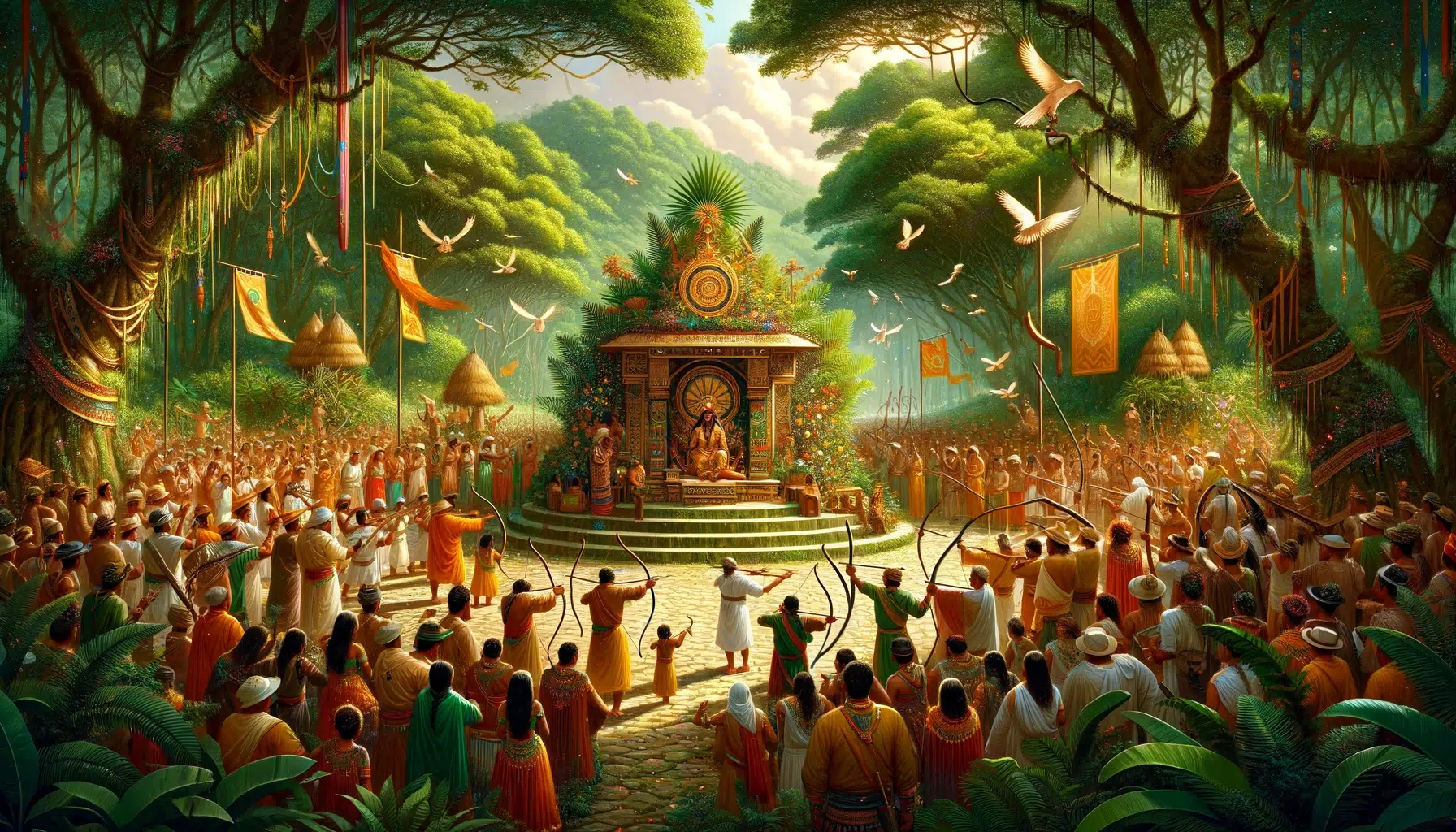
Ochosi, the deity of hunting and justice, is celebrated on the 20th of January, which coincides with the Feast of Saint Sebastian. On this occasion, devotees partake in various rituals and make offerings to honour Ochosi’s divine presence.
Throughout the years, a traditional practice has emerged where offerings are left at the thresholds of police stations, prisons, or any building associated with confinement.
These offerings serve as a gesture of reverence and seek Ochosi’s protection and guidance in matters of justice. The offerings to Ochosi can be diverse and symbolic, reflecting his role as the master of the hunt and guardian of justice.
These offerings symbolize the sustenance to provide for Ochosi during the hunt, the sweetness of justice, and the tools needed to maintain order and protect the innocent. When creating an altar for Ochosi, it is customary to decorate it with items that evoke his essence.
Antlers, horns, feathers, and animal print fabrics can adorn the altar and create a sacred space that resonates with Ochosi’s connection to the wild and nature.
| Offerings and Rituals | Symbolism |
|---|---|
| Roasted peanuts | Abundance and sustenance |
| Trail mix | Guidance and determination |
| Honey | Sweetness of justice |
| Jerky | Strength and endurance |
| Corn cooked with coconut | Harmony and balance |
| Anisette or cachaça | Celebration and spiritual connection |
| Tobacco products | Prayers and communication |
| Handcuffs and manacles | Confinement and justice |
| Traps | Protection and capturing wrongdoers |
| Bows and arrows | Exceptional archery skills and guardian of justice |
Ochosi’s Connection to Mythological Gods
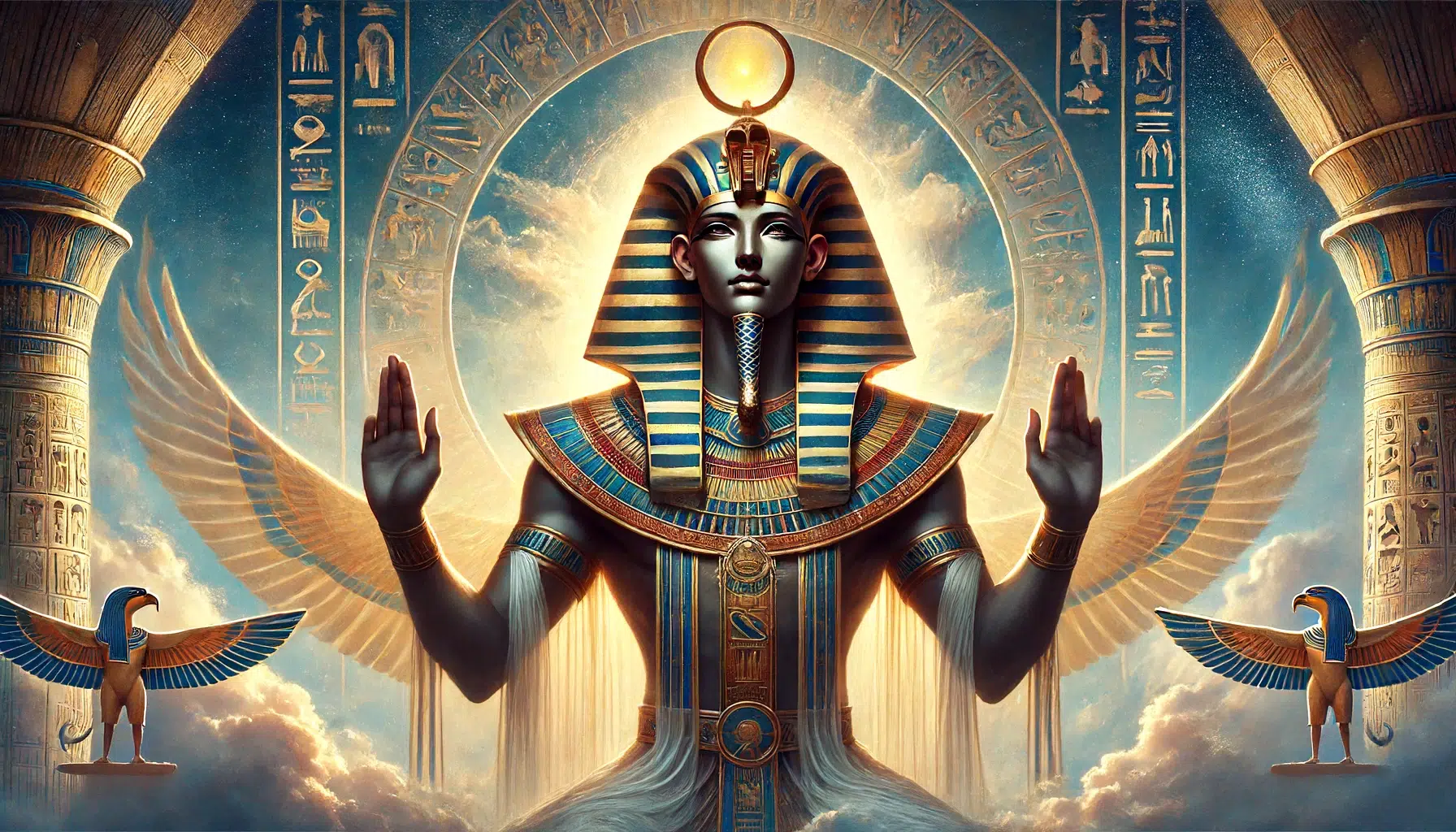
Osiris Egyptian God of Agriculture and Life
Osiris, the Egyptian god associated with agriculture and the founder of civilization, shares striking similarities with Ochosi. Both deities are considered progenitors of civilization and order.
Osiris, known for his role in introducing agriculture and guiding humanity towards progress, aligns with Ochosi’s responsibility for enforcing justice and maintaining balance in the world.
Shu Egyptian God of Air and Sky
Shu represents cosmic harmony and acts as a supporter of Ma’at, the concept of truth, justice, and order. Similarly, Ochosi ensures justice will be served by hunting down those who disturb the balance.
Ochosi’s connection to Shu manifests in their shared pursuit of order and righteousness.
Egyptian Goddess Isis
In Yoruba mythology, people often pair Ochosi with his wife, known as “Isis.” Interestingly, the connection associates the Egyptian goddess Isis with Sirius, the night sky’s brightest star, and Orion’s loyal companion.
This connection further reinforces Ochosi’s ties to ancient Egyptian culture, bridging the symbolism and importance of both deities. Overall, Ochosi’s connection to ancient Egyptian culture highlights the cross-cultural influences and shared themes that exist within mythologies around the world.
Orion of Greek Mythology
The great cosmic hunter in Greek mythology, Orion holds a parallel with both Osiris and Ochosi. Orion, as the ruler of the night sky, associates with Osiris.
His placement in the heavens aligns with Osiris’ role as a guiding force. Ochosi, being a master hunter himself, resonates with Orion’s representation of a skilled archer and tracker of celestial movements.
Conclusion
Ochosi embodies more than just an African God; he serves as the Guardian of Justice. Many deeply revere him, linking myths, worship, and various cultures across time.
In the Yoruba religion, Ochosi symbolizes protection, fairness, and the maintenance of the natural order. He offers a beacon of hope to those seeking divine justice and balance.
His influence extends widely, touching the hearts of those in Santería, Candomblé, and Umbanda. In these faiths, people view Ochosi not only as a spiritual guide but also as a connector of different beliefs.
His connections with Catholic saints illustrate a fusion of religions, broadening his impact. Each year, the Ochosi-Oshun Festival attracts thousands, celebrating his role in Yoruba culture.
Recognizable by his symbols—the bow and arrow, the deer, and the color green—Ochosi represents more than mere items. He embodies survival, well-being, and the pursuit of justice.
Ochosi anchors spiritual practices, revealing the complex network of the spiritual world. He maintains strong links with other deities such as Shango and Eshu, emphasizing the importance of balance in the universe.
Through worship and ceremonies, Ochosi’s spirit actively guides and protects his followers.
His legacy continues to enrich the world’s religious tapestry.