Nyx Greek Goddess of the Night – Power, Mystery, and Myths
Nyx Greek goddess of the night in mythology. She brings darkness across the sky and fills the world with mystery. Her presence makes the stars shine and the moon glow. The Greeks saw her as both beautiful and powerful, like the night itself.
Even the mighty gods respected Nyx. Zeus, the king of the gods, feared her power. He avoided making her angry because she was older and stronger than most gods. She controlled sleep, dreams, and even death through her children.
Nyx lives at the edge of the world, where day and night take turns. When she rises, the world rests under her peaceful darkness. She is not just a shadowy figure—she is a force that shapes the balance between light and dark. Her power makes her one of the most fascinating figures in Greek myths.
Nyx Greek Goddess of Night
Nyx’s Origins
Nyx is one of the first gods in Greek mythology. She existed before most other gods, even before Zeus. The Greeks called her a primordial deity, meaning she came from the very beginning of everything. She was born from Chaos, a vast, empty space where the first gods appeared.
Nyx’s Role in Mythology
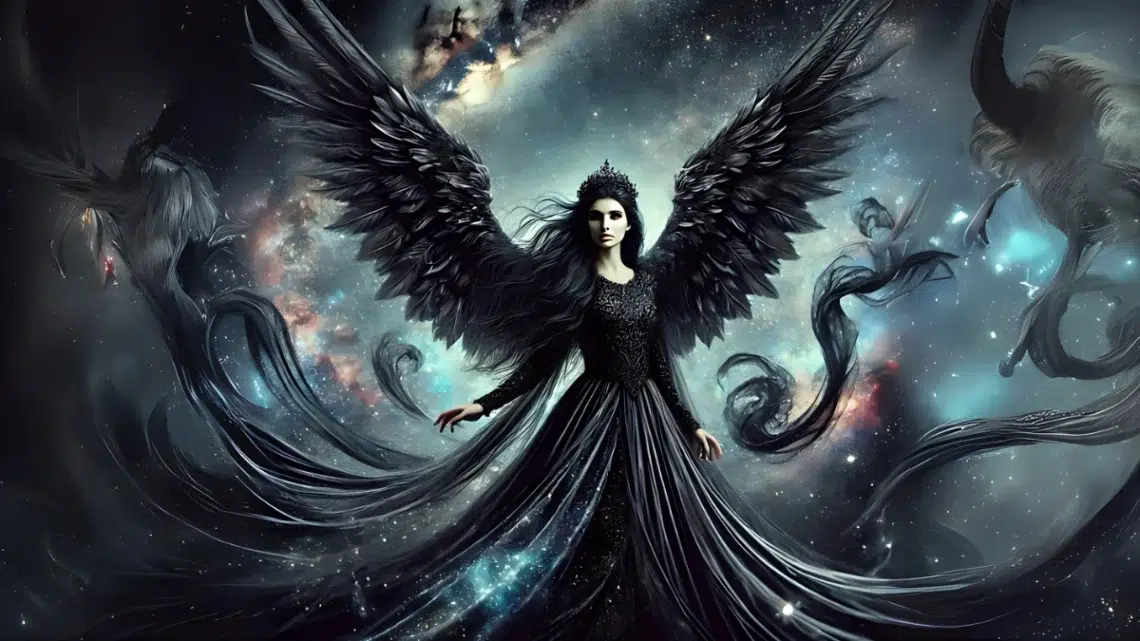
Nyx rules the night. She brings darkness across the sky and covers the world in shadows. People see her as a mix of beauty and power. Some stories say she has wings as dark as midnight. Others picture her riding a chariot pulled by black horses.
Nyx does not just bring darkness—she controls its mysteries. She connects to sleep, dreams, death, and fate. Many of her children, like Hypnos (Sleep) and Thanatos (Death), shape the world. Even Zeus, the strongest god, fears her.
Nyx lives at the edge of the world, where night and day meet. When she rises, the world rests under her quiet, starry sky. She does not fight or seek revenge, but her power is unmatched. Her presence reminds people that darkness is not just something to fear—it is also a place of beauty, rest, and wonder.
Nyx’s Family Connections

The Mother of Powerful Deities
Nyx is not just the goddess of night—she is also the mother of many powerful gods. She often brings them into existence without a father. Each of her children controls an important force in the world.
- Hypnos (Sleep) god of Sleep, makes people rest and dream
- Thanatos (Death) his twin brother Hypnos, god of Death, guides souls to the afterlife
- Momos (Blame) god of Blame
- Eris (Strife) goddess of Discord, brings chaos and conflict
- Hemera (Day) goddess of Day
- Nemesis (Retribution) goddess of Justice
- The Fates (Moirai) Controllers of destiny
Hypnos, the god of sleep, helps people rest and dream. His twin, Thanatos, the god of death, guides souls to the afterlife. Together, they show that Nyx connects to both peace and the unknown. Both brothers remind people that sleep and death are part of life.
Some of her children cause trouble and chaos. Momos, the god of blame, brings criticism and harsh words.
Eris, the goddess of discord and strife, brings chaos and conflict. She causes fights between friends, families, and even gods. She once started the Trojan War by stirring jealousy among goddesses.
Others bring justice and fate. Nemesis punishes those who act unfairly or grow too proud. The Fates control destiny, deciding when each person is born and when they die. These gods show how Nyx connects to mysterious forces like life, death, fate, and justice.
Nyx’s children remind people that night holds both peace and mystery. Even though Nyx stays in the shadows, her children shape the world. They remind people that darkness does not just bring fear. It also brings balance, rest, and the unseen forces that guide life.
Nyx’s Relationship with Other Gods
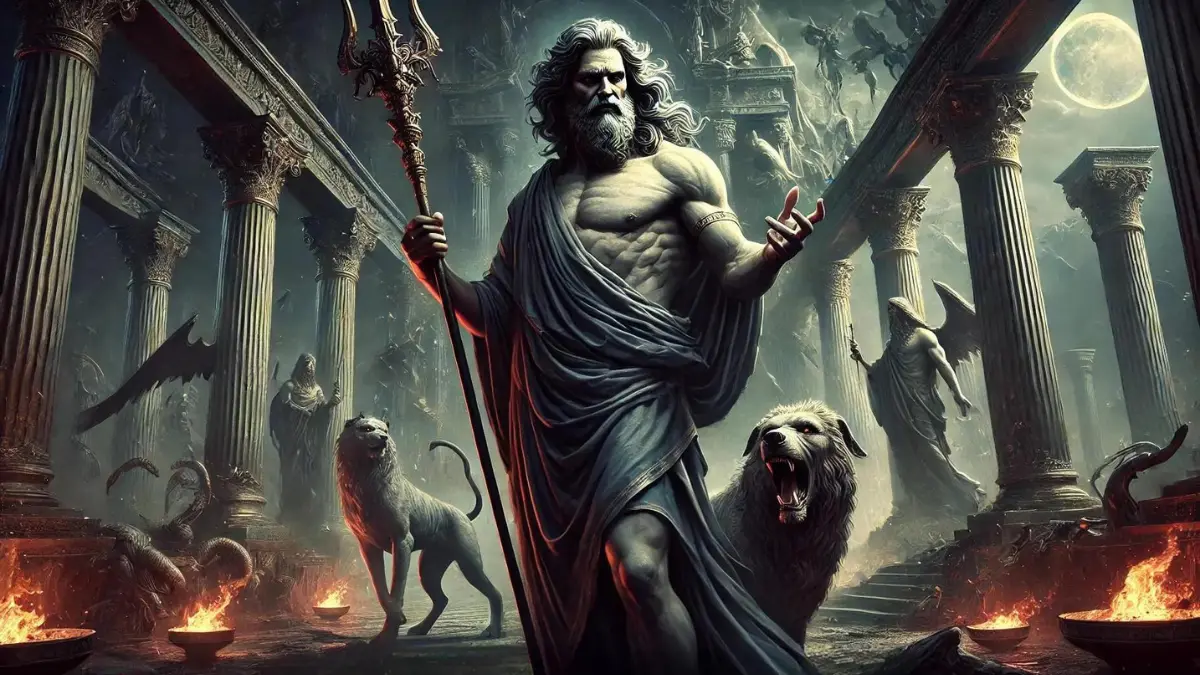
Nyx is one of the few gods that even Zeus fears. As the king of the gods, Zeus controls the sky and rules from Mount Olympus. He challenges many powerful beings, but he avoids making Nyx angry.
One story shows how strong Nyx is. Zeus once chased Hypnos, the god of sleep, for tricking him. Hypnos ran to Nyx for protection, and Zeus immediately stopped. He knew that fighting Nyx would bring serious trouble.
Nyx also connects to Hades and the underworld. She does not rule it, but many of her children, like Thanatos (Death) and The Fates, work closely with Hades. Nyx’s darkness touches the underworld, where souls rest after death.
Even though she does not often fight, Nyx’s power is undeniable. She controls the night, and even the strongest gods respect her. Her presence reminds everyone that darkness is just as powerful as light.
Nyx’s Symbols and Representation
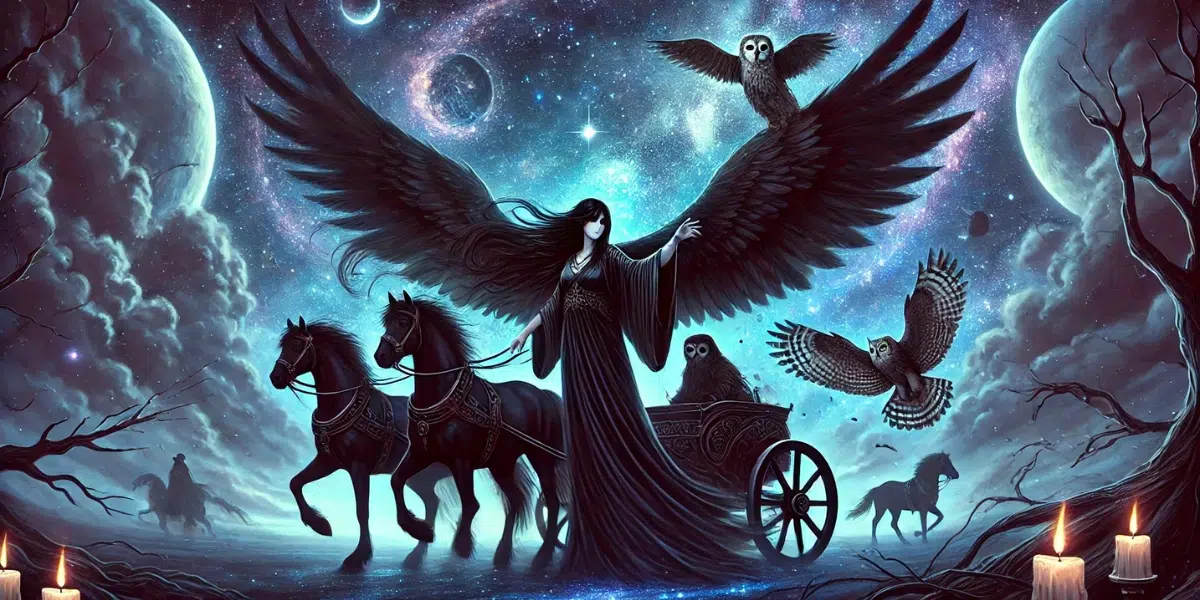
Symbols of Nyx Greek Goddess of Night
Nyx’s symbols show her deep connection to the night, mystery, and power.
The night sky is one of her strongest symbols. She spreads darkness across the world, bringing rest and dreams. Stars also represent her because they shine in the sky when she arrives.
Some myths say Nyx has huge black wings that cover the earth in shadows. These wings remind people that she moves silently, bringing night without warning.
A chariot pulled by black horses also represents her. She rides through the sky, carrying darkness behind her.
Some connect owls to Nyx because they are nocturnal birds that move through the night with wisdom and quiet strength.
A dark veil also symbolizes her mystery, hiding secrets in the shadows.
All of these symbols show Nyx’s power. She does not bring fear—she brings beauty, rest, and the quiet magic of the night.
How Nyx Was Worshipped
The ancient Greeks honoured Nyx at night with quiet prayers and small rituals. People asked her for peaceful sleep and protection from the unknown. Some believed she controlled dreams and whispered secrets in the dark.
Nyx did not have large temples like Zeus or Athena. Instead, people respected her in smaller ways. Some lit oil lamps or made offerings at shrines dedicated to night and mystery. Priests in Oracles and mystery cults sometimes called on her for wisdom and visions.
Even without grand temples, Nyx remained a powerful and deeply respected goddess in Greek mythology.
Myths About Nyx Greek Goddess
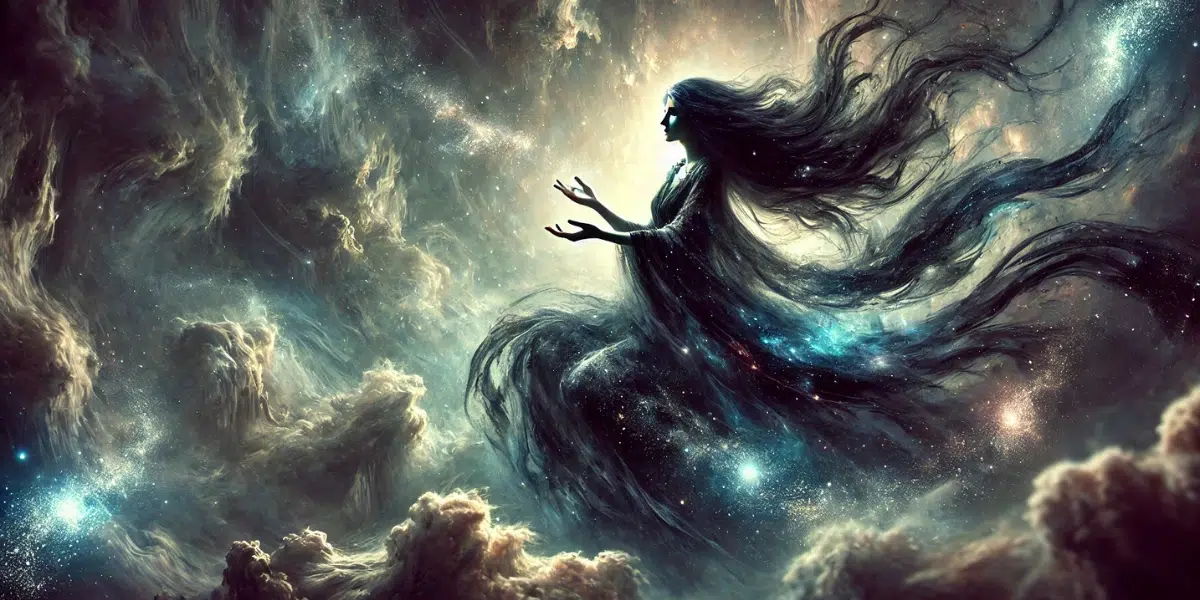
The Birth of Nyx
Nyx is one of the first gods in Greek mythology. She comes from Chaos, the endless void before anything existed. She does not have parents—she simply appeared, along with other ancient forces.
Nyx represents night itself. She spreads darkness across the sky, wrapping the world in shadows. She does not just bring night—she is night. Without her, the world would never rest, and stars would never shine.
She is older than Zeus and the Olympian gods. She existed before the Earth, the sky, or the sea. Her power shapes the balance between light and dark, day and night.
Even though she does not rule from a throne, Nyx’s presence controls an important part of life. She brings peace, sleep, and mystery to the world. Without her, there would be no quiet nights, no glowing stars, and no dreams.
Even Zeus Feared Nyx Greek Goddess
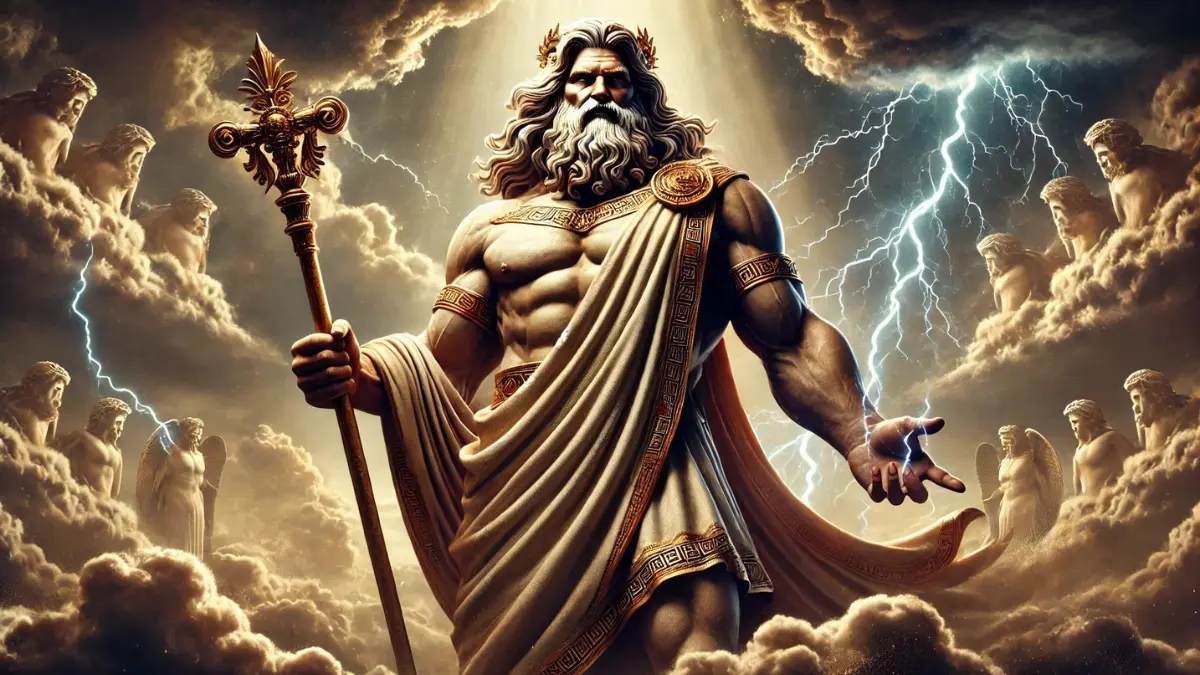
Nyx is one of the few gods that even Zeus feared. As king of the gods, Zeus controls the sky and wields powerful lightning. He does not fear any god or mortal, but he knows that Nyx’s power is beyond his control.
One myth shows her strength and influence. Zeus once asked Hypnos, the god of sleep, to make Hera fall asleep. Zeus wanted to act without her interference. Hypnos obeyed, but when Hera woke up and discovered the trick, Zeus became furious.
Zeus chased Hypnos across the heavens, ready to punish him. Hypnos, knowing he could not fight Zeus, fled to his mother, Nyx. He hid in her deep shadows, where even Zeus dared not follow.
Nyx stood in front of her son, unshaken by Zeus’s anger. She did not need threats or weapons—her mere presence made Zeus hesitate. Rather than risk her wrath, Zeus backed down and let Hypnos go.
This story proves that Nyx’s power is greater than even the strongest Olympian. She may stay in the shadows, but no god dares to challenge her. Her strength comes not from battles, but from the fear and respect she commands over all.
Nyx Greek Goddess and the Underworld
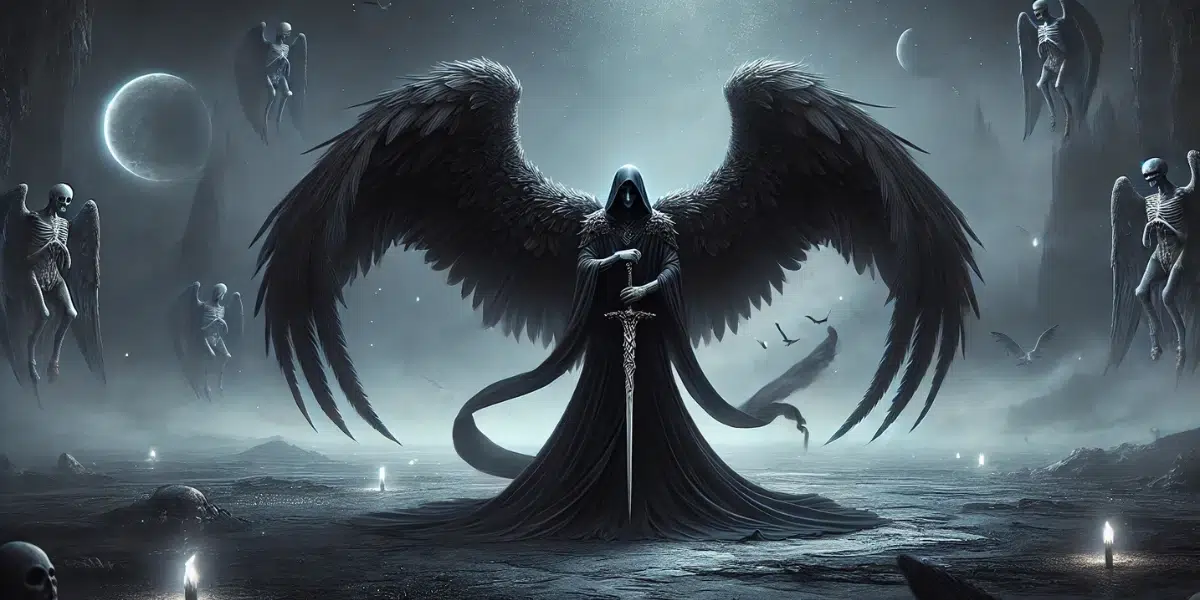
Nyx does not rule the underworld, but she is deeply connected to it. Many of her children, like Thanatos (Death) and The Fates, work closely with Hades, the god of the underworld.
Nyx’s home lies at the edge of the world, where light and darkness meet. Some myths say she rises from Tartarus, the deepest part of the underworld, where ancient gods sleep. As she moves across the sky, she brings night, shadows, and mystery.
Nyx does not guide souls like Hades, but she rules over the darkness they travel through. Her presence fills the underworld with quiet and stillness. She also controls dreams and sleep, giving the living a glimpse of the unknown world beyond.
Even in the underworld, Nyx remains a powerful and respected force. She does not bring fear—she brings balance, allowing both gods and mortals to rest under her eternal night.
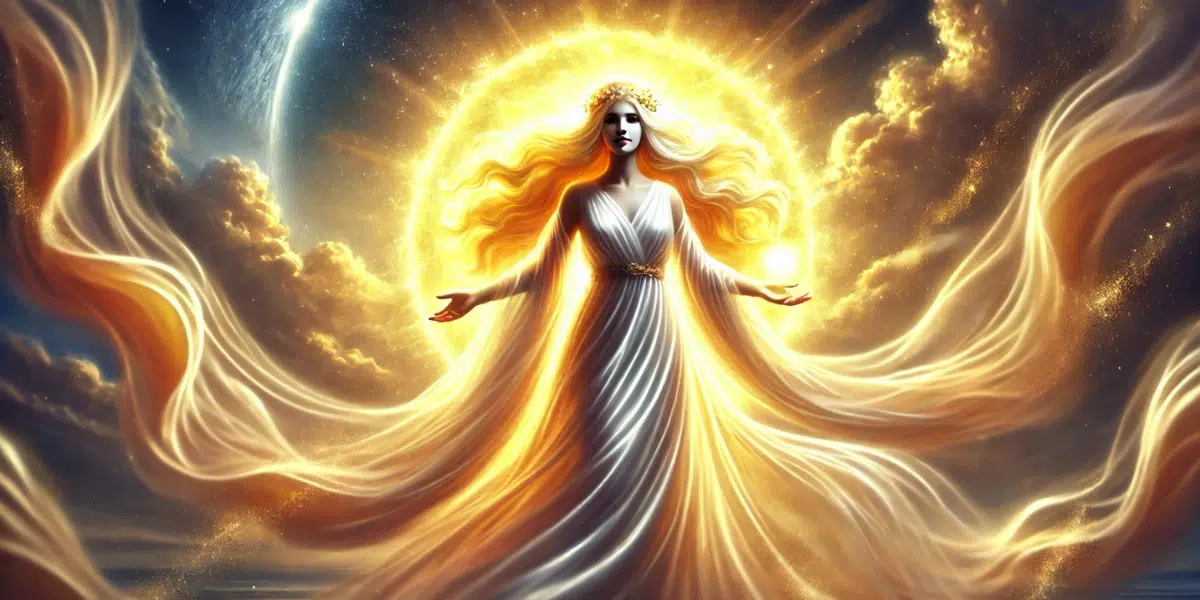
Nyx Comparisons to Others Mythology Gods
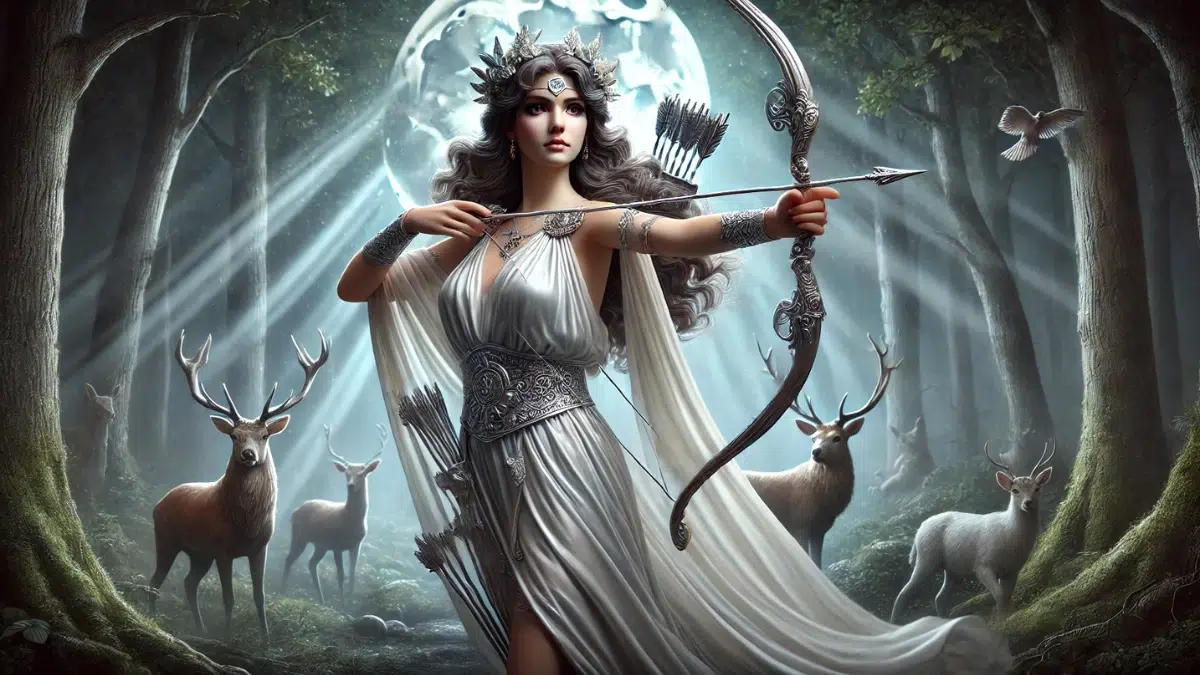
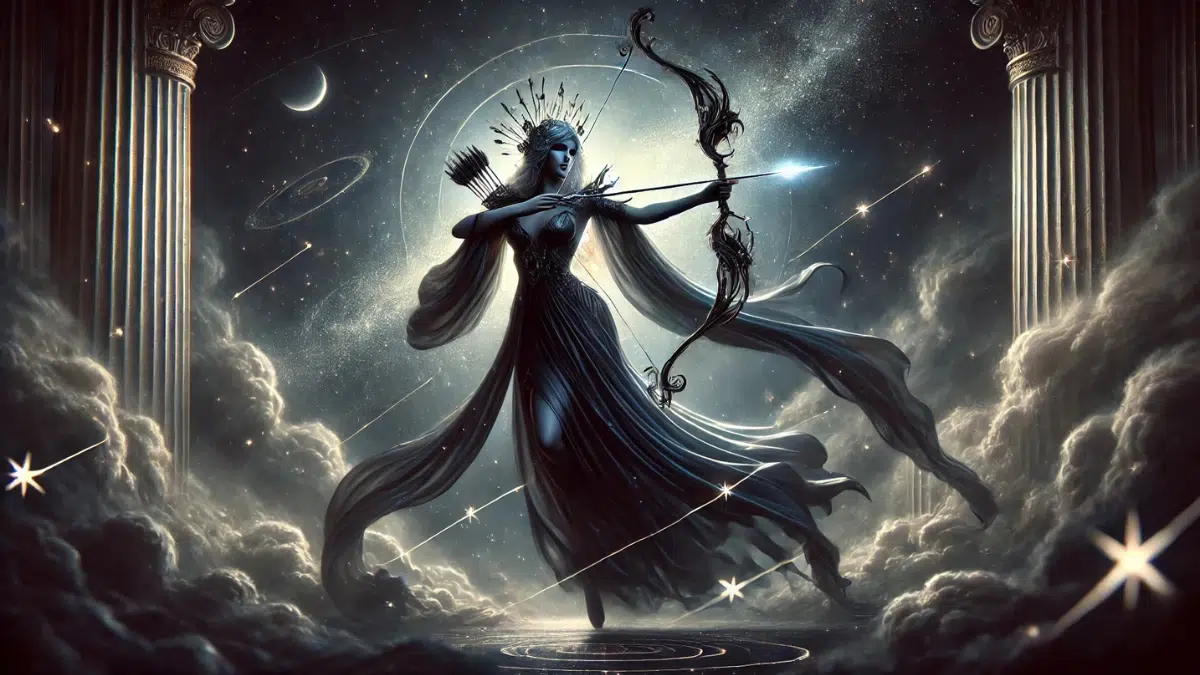
Nyx is not the only night-related deity, but unlike many others, she does not use a bow or weapons. However, some gods connected to darkness and the night sky do wield bows.
Artemis (Greek Mythology)
Artemis is the goddess of the hunt and is often linked to the moon and nighttime hunting. She carries a bow and arrows made by Hephaestus and the Cyclopes. Hunters and warriors call on her for protection, especially at night.
Chandra (Hindu Mythology)
Chandra is the Hindu moon god and sometimes appears as an archer. He does not control night itself, but he represents celestial darkness and lunar cycles. His bow connects him to both time and the movement of the stars.
Mixcoatl (Aztec Mythology)
Mixcoatl is the Aztec god of hunting, the night sky, and stars. He always carries a bow and arrows and uses them to strike enemies or hunt celestial beings. His name means “Cloud Serpent,” connecting him to swirling darkness in the sky.
While Nyx does not need a bow, these gods show how night, hunting, and archery often go together in mythology.
Conclusion
Nyx is a powerful and mysterious goddess who controls the night. She brings darkness, guides shadows, and connects to sleep, dreams, and fate. Even Zeus fears her strength, proving she is one of the most respected gods in Greek mythology.
Her story reminds people that night is not just darkness—it is also beauty, mystery, and balance. Without Nyx, the world would never rest.
Learning about Nyx helps us see how ancient myths explain the world. Her story teaches that even the quietest forces can hold great power.