
Norse Myths and Tales Demystified
Viking mythology is full of Norse myths and tales based on ancient Scandinavian stories. These stories from before Christianity show us the beliefs and legends of the Norse people, especially the Vikings. They tell of gods, goddesses, and mythical creatures that tried to explain the world and our place in it.
These stories have left a lasting mark on modern stories and popular culture. From the epic tales of Odin and Thor to the magical stories of Yggdrasil and Ragnarok, Norse mythology is a key part of ancient stories that have captivated people for centuries.
Origins of Norse Myths and Tales in Mythology

The roots of Norse mythology go back to the Proto-Norse language period. This was when many myths and legends started to form. Archeological finds, language studies, and historical records show a deep folklore among Germanic peoples. This folklore later became the myths of the Viking Age.
Norse mythology starts as stories told from person to person. People begin writing them down only after the Norse regions convert to Christianity.
This led to important texts like the Edda and various sagas. These writings give us a peek into the myths that shaped the culture and spirituality of Scandinavia.
The Viking Age was a time of big changes for Norse mythology. Old beliefs and stories, based on the Proto-Norse language, became more organized and spread widely. This era moved from just oral stories to written mythology. It helped keep these ancient tales alive and their impact strong.
Learn more about:
- Norse Mythology Gods and Legends
- Norse Mythology Symbols
- God of Archery: Norse, Greek & Roman Mythology
Epic Norse Myths and Tales
Norse mythology is full of stories of bravery and heroism that have wowed people for ages. From the creation myth to Thor’s hammer, to the end of the Norse world.
The Creation Myth of the Norse World
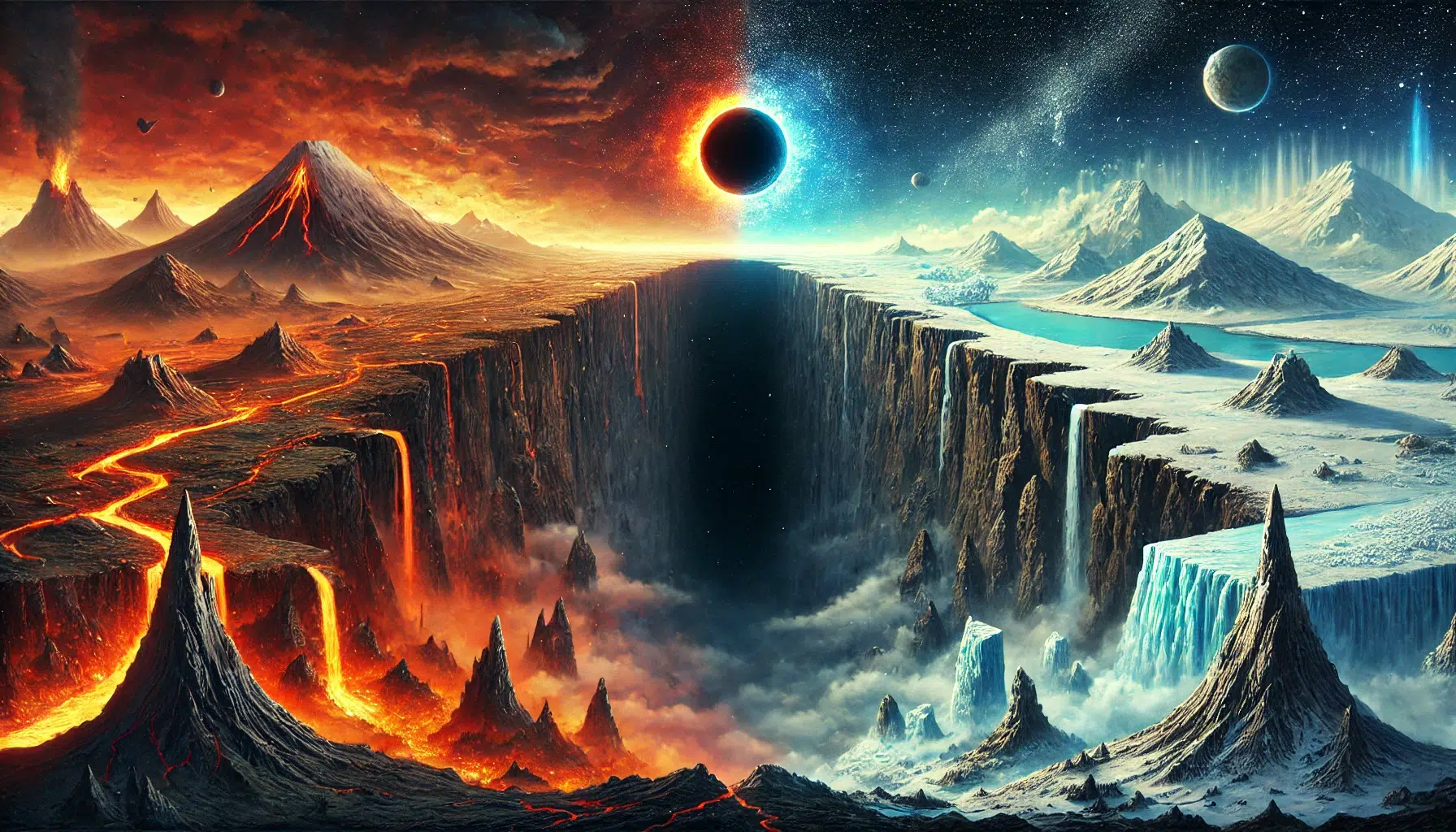
The creation myth of the Norse world is a fascinating tale.
It starts in the vast void called Ginnungagap. This huge gap splits the world into two parts: the fiery Muspell in the south and the icy Niflheim in the north.
When sparks from Muspell met the cold air from Niflheim, something big happened. This leads to the birth of Ymir, the first giant. The gods then used Ymir’s huge body to create the world. They make the earth from his flesh, the oceans from his blood, and the mountains from his bones.
The story of Ymir is key to Norse mythology. It tells us how the world was made and introduces the giants who would fight the gods. These giants were seen as symbols of chaos and the wild side of nature.
The myth also sets the stage for the gods and humans to appear. The relationship between giants and gods shapes many stories. This ancient tale is a key part of understanding Norse mythology.
The Creation of the First Humans

In Norse mythology, Odin, Vili, and Ve create the first humans from trees. They find two pieces of driftwood on the shore and breathe life into them. Odin gives them life and spirit.
Vili grants them intelligence and emotions and Ve provides their senses and physical appearance. They name the man Ask and the first woman Embla.
Odin, Vili, and Ve give them Midgard as their home, a realm surrounded by a great ocean. Ask and Embla start the human race, populating Midgard. The gods continue to guide and protect them.
Their story reflects the gods’ power and creativity. Ask and Embla symbolize humanity’s deep connection to nature. The creation highlights the gods’ roles in shaping the world.
This myth emphasizes the importance of life, spirit, and intelligence. The tale of Ask and Embla remains a cornerstone of Norse mythology. It reveals the divine origins of human existence in ancient lore.
Learn more about:
The Aesir-Vanir War
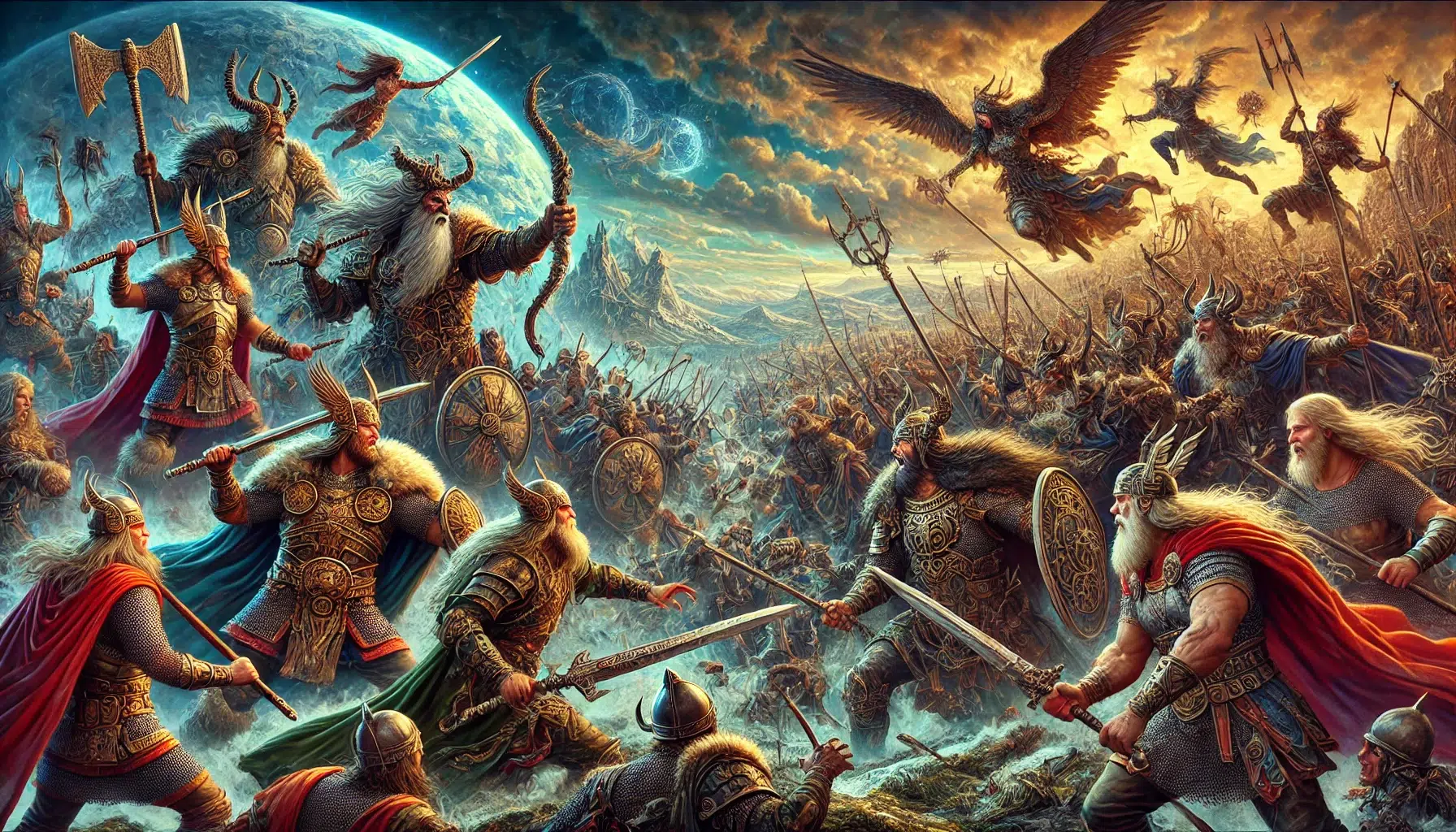
The Aesir-Vanir War stands as a key myth in Norse mythology, symbolizing the conflict and eventual unity of two divine peoples.
The war begins when the Aesir mistreat Freyja, also known as Gullveig, attempting to kill her multiple times. This act of aggression sparks hostilities between the Aesir and the Vanir.
The Aesir, known for their brute strength, clash with the Vanir, who wield powerful magic. The battle remains evenly matched, causing widespread destruction but no decisive victory for either side.
As the war drags on, both groups realize the futility of their conflict and seek peace. This desire for harmony leads to a truce and an exchange of hostages to ensure lasting peace.
The Vanir send Njord, Freyr, and Freyja to live with the Aesir, while the Aesir send Hoenir and Mimir to the Vanir.
This exchange symbolizes the merging of the two groups into a single pantheon, fostering cooperation and mutual respect among the gods.
Learn more about:
The Mead of Poetry
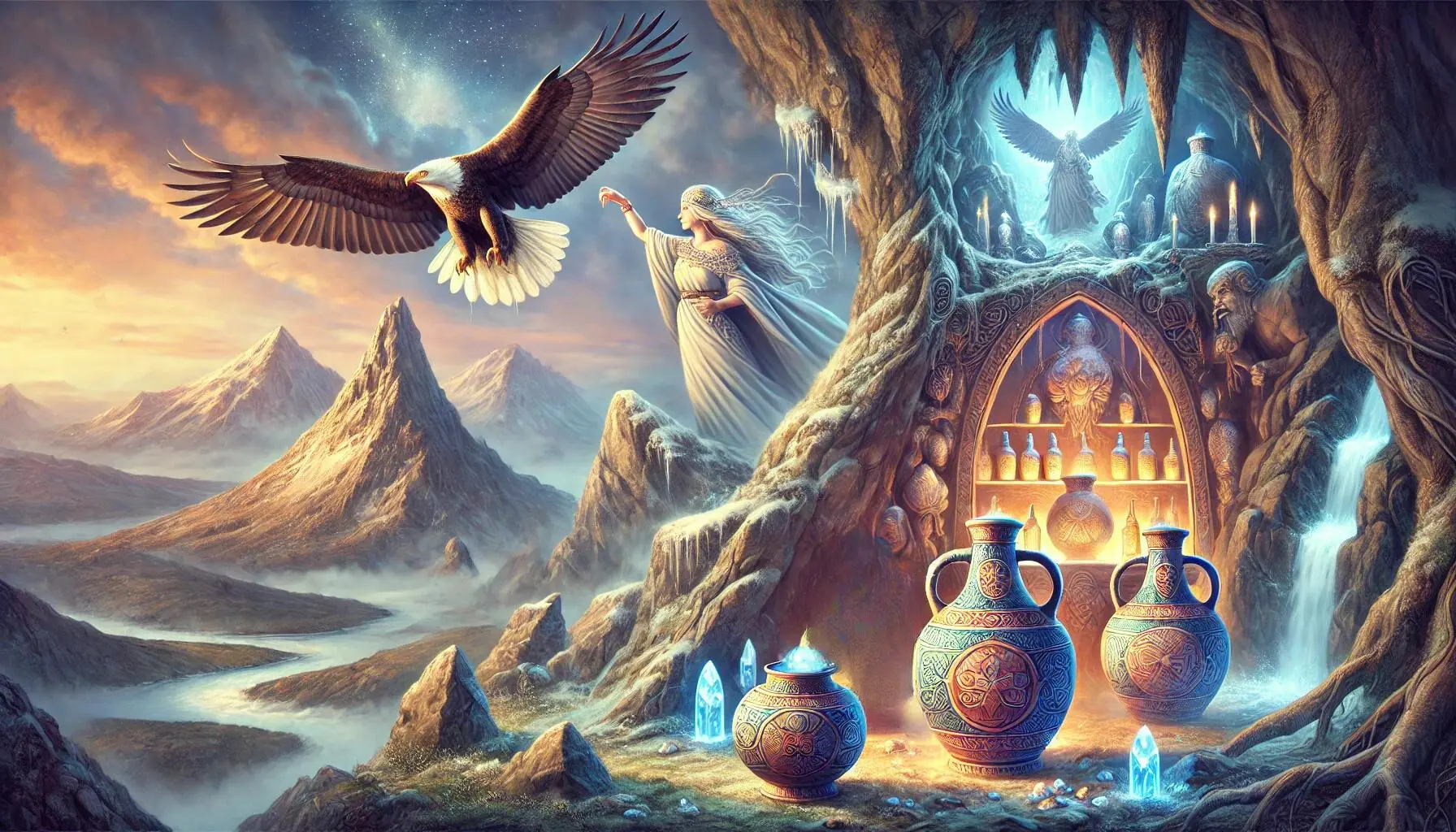
The Mead of Poetry is central in Norse mythology, showing the divine origins of poetic inspiration and wisdom.
After the Aesir-Vanir War, the gods seal their truce by spitting into a vat. From this vat, they create Kvasir, the wisest being.
Kvasir travels the world, sharing his vast knowledge until the dwarves Fjalar and Galar murder him. They drain his blood and mix it with honey to create a magical mead. This mead grants anyone who drinks it the gift of poetry and wisdom.
The giant Suttung acquires the mead after avenging his parents’ deaths by the dwarves. He hides it in a mountain, guarded by his daughter Gunnlod.
Odin, desiring the mead, undertakes a series of cunning disguises and tasks to obtain it. Ultimately, he transforms into an eagle, steals the mead, and brings it back to Asgard. There, he dispenses it to gods and worthy poets, spreading the gift of poetic inspiration across the world.
The Creation of Thor’s Hammer
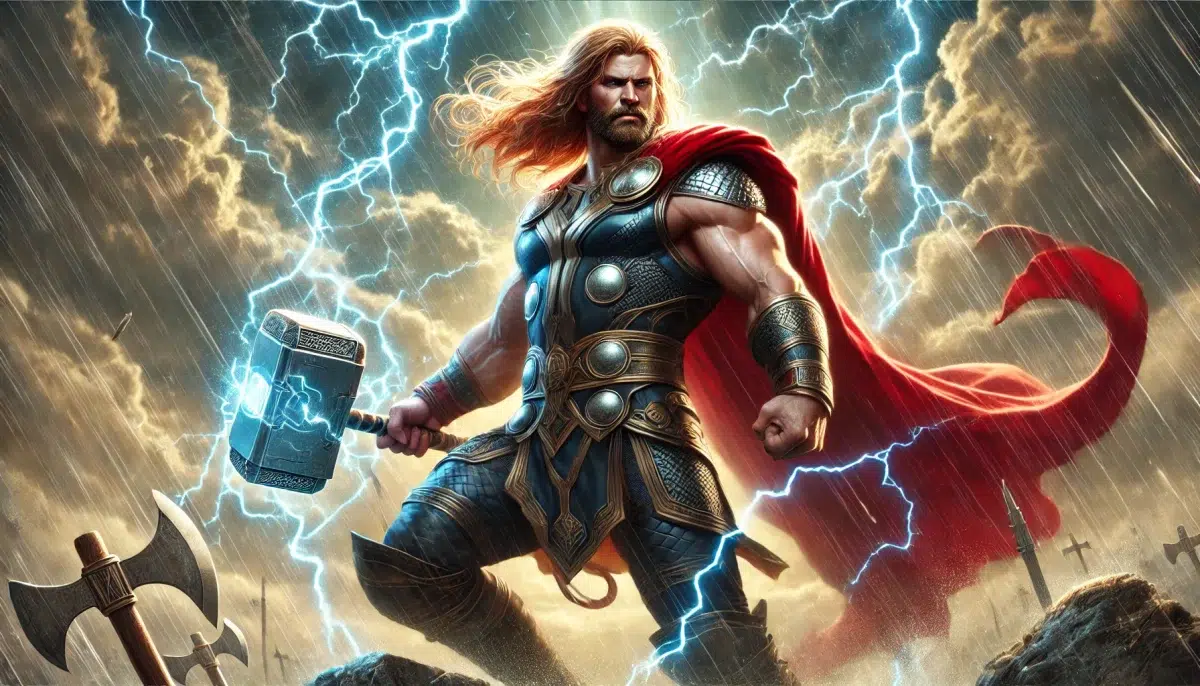
The creation of Thor’s hammer, Mjölnir, is a captivating tale in Norse mythology involving Loki and masterful dwarves.
Loki cuts off Sif’s golden hair, enraging Thor. To appease Thor, Loki promises to obtain more beautiful hair for Sif from the dwarves of Svartalfheim.
He approaches the sons of Ivaldi, who create new hair, the ship Skidbladnir, and the spear Gungnir. Loki then taunts the dwarven brothers Brokkr and Sindri into a contest, betting his head they cannot create equally magnificent items.
Disguised as a fly, Loki tries to sabotage their efforts by biting Brokkr. Despite Loki’s interference, the dwarves produce Gullinbursti, the ring Draupnir, and Mjölnir.
Due to Loki’s meddling, Mjölnir’s handle is shorter than intended. Despite this flaw, Mjölnir becomes the finest weapon, capable of returning to Thor’s hand after being thrown and possessing immense destructive power.
Thor receives Mjölnir, which becomes essential in his battles against the giants.
The Death of Baldur
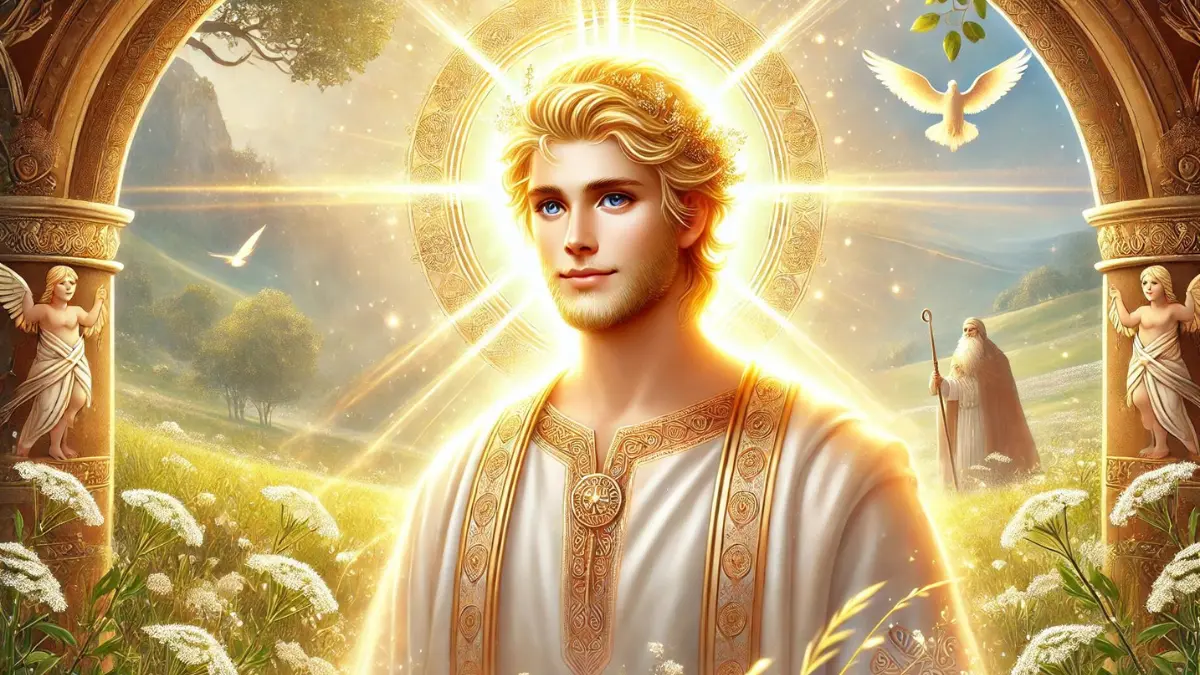
The Death of Baldur is a poignant and pivotal myth in Norse mythology. Baldur, beloved son of Odin and Frigg, dreams of his death.
To protect him, Frigg extracts oaths from all things not to harm Baldur, except mistletoe. Believing Baldur invulnerable, the gods throw objects at him, which bounce off harmlessly.
Loki discovers the oversight and fashions a spear from mistletoe. He convinces Baldur’s blind brother, Hodr, to throw it, guiding his hand. The mistletoe pierces Baldur, killing him instantly.
The gods grieve, recognizing this event as a harbinger of Ragnarök. Frigg pleads for someone to retrieve Baldur from Hel.
Hermod, another son of Odin, volunteers but fails when the giantess Thökk (likely Loki in disguise) refuses to weep for Baldur. Baldur remains in the underworld until after Ragnarök.
Myth of Ragnarok: The End of the Norse World
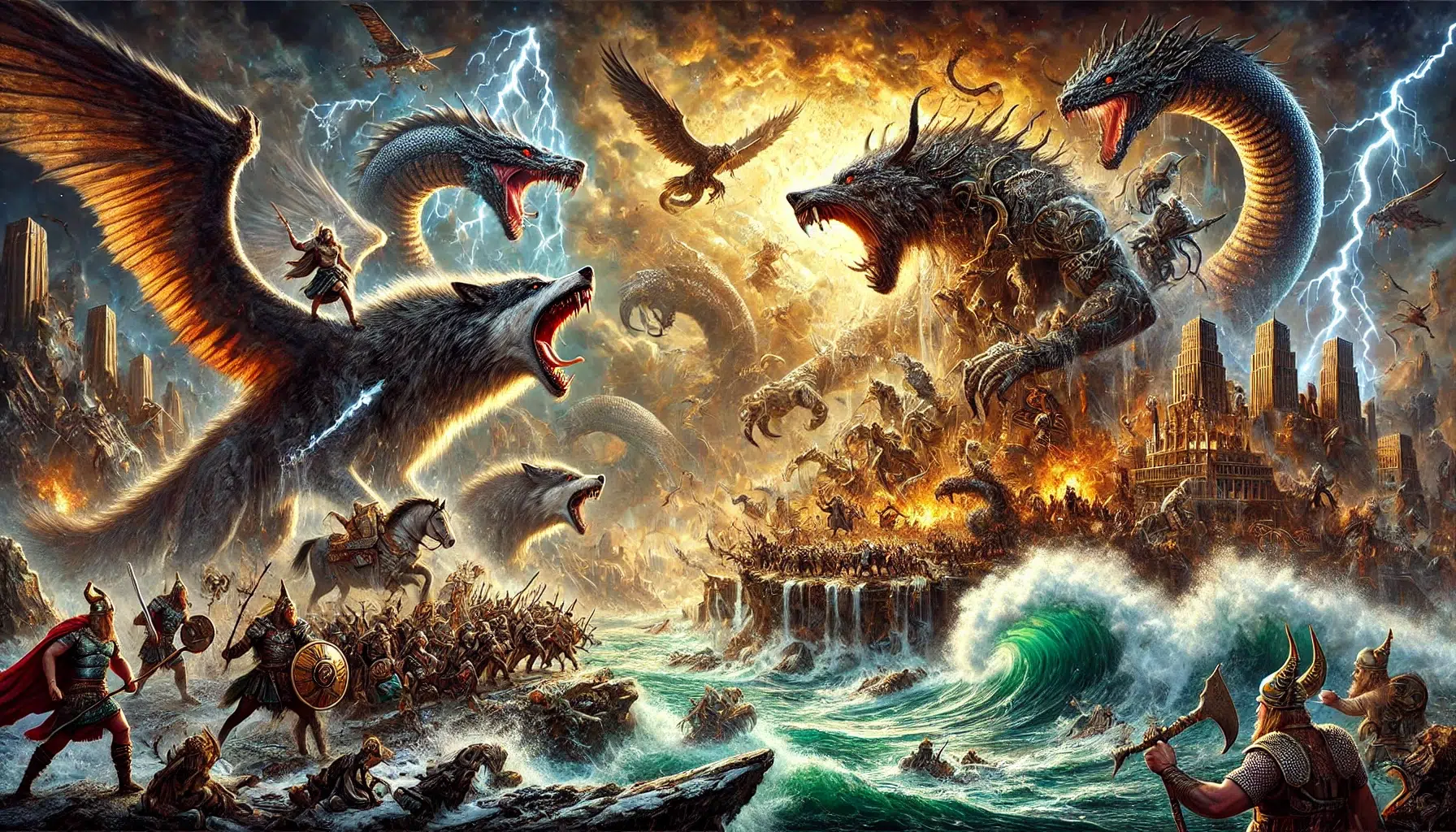
Ragnarok, often called the Twilight of the Gods, is the Norse myth of the end times.
It tells of a huge destruction and then a new start for the world. At the heart of this story are Fenrir, a huge wolf, and Jormungandr, a massive serpent.
Before Ragnarok, chaos and fighting will fill the world. Fenrir will break free and join the big fight. Jormungandr, the Midgard Serpent, will come out of the sea, causing huge floods.
In the battle, the gods will fight hard against these huge enemies. Odin will face Fenrir, and Thor will battle Jormungandr. But, many gods will sadly die in this fight. The world will burn and then sink into the sea.
But Ragnarok also talks about starting over. After all the destruction, a new world will come out of the ashes. It will be fresh and full of life, where gods and new beings will live. This shows how destruction leads to new beginnings.
- Twilight of the Gods
- Fenrir
- Jormungandr
- apocalyptic prophecy
Ragnarok shows us the Norse view of the world’s cycle. It tells us that every end means a new start. It’s a strong message about staying strong and starting anew.
Modern Influence and Legacy of Norse Myths & Tales
Norse mythology has made a big impact on today’s culture in literature, art, film, and TV. These ancient stories still inspire many people. They have been turned into modern stories, like in J.R.R. Tolkien’s “The Lord of the Rings” and Marvel’s “Thor” movies.
There’s also a growing interest in Norse paganism, especially with Asatru. This shows a renewed spiritual interest in old Nordic beliefs. It keeps the religious traditions alive and connects us to our mythological past.
Viking designs have also made their way into many creative fields. Designers use symbols like Yggdrasil and the runic alphabets in their work. This shows how Norse mythology’s stories and symbols are still important today, influencing our culture in many ways.
Conclusion
Exploring Norse myths and tales takes us beyond just old stories and legends. It shows us the deep roots of the Viking culture. We learn about the gods and goddesses, the World Tree, and the Norse universe’s structure.
The creation myths and the Norns show the deep beliefs of the ancient Norse. These stories are not just old tales. They are a key part of the Norse cultural heritage. The stories of heroes and the end of the world, Ragnarok, teach us about courage, destiny, and starting anew.
Today, Norse mythology still affects us through books, movies, and studies. These stories teach us about the past and human nature. They help us understand how cultures change over time. We invite you to explore these stories more. They connect us to the Vikings and their history in a powerful way.