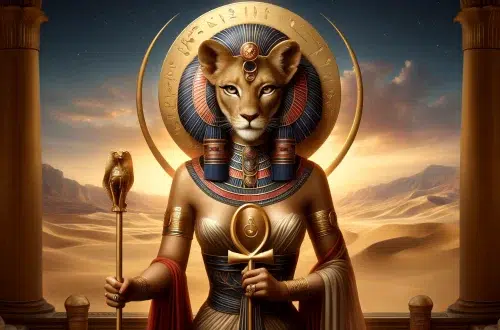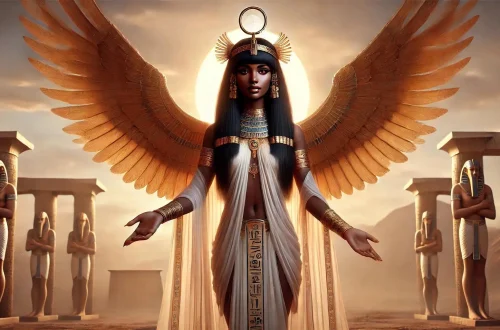
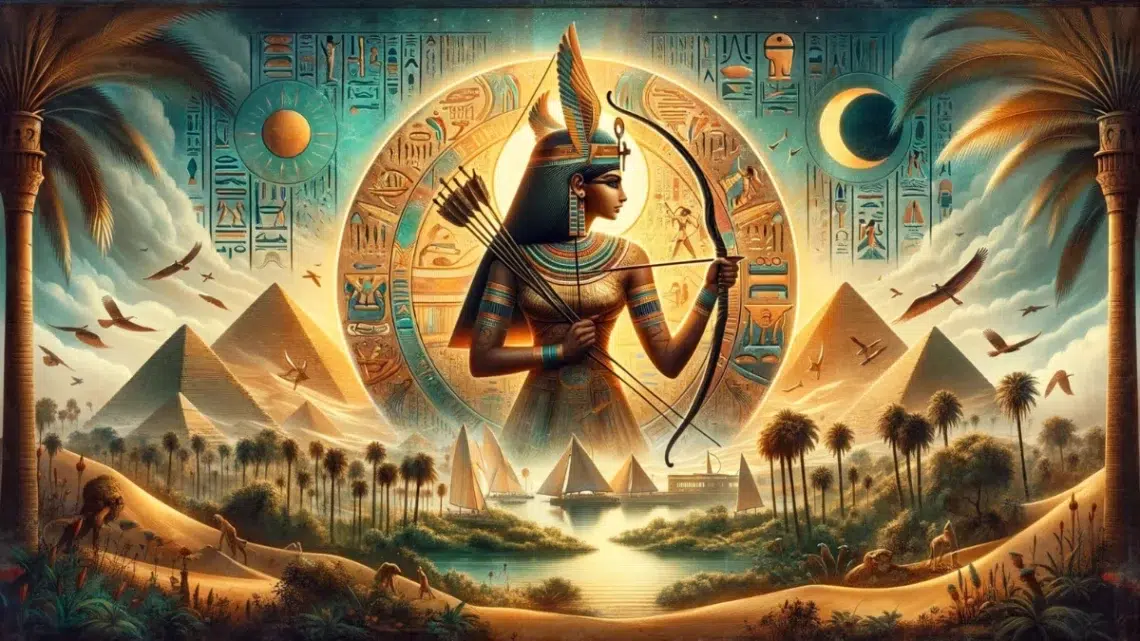
Neith: Mysteries of Egypt’s Ancient Goddess
Neith: The Enigmatic Deity of Ancient Egypt
Neith, revered in ancient Egyptian religion, embodies a paradox of identities.Originating in the early delta city of Sais, Neith’s worship eventually permeated throughout Egypt.
Recognized as one of the oldest deities, Neith transcends simple categorization.Initially connected with war, she brandished arrows and a shield, symbolizing a warrior’s vigor.
Remarkably, Neith also epitomized creation and weaving, her shroud of the cosmos representing the enigmatic fabric of existence.
This duality underscores her role as both a creator and a protector, making her a uniquely multifaceted goddess whose influence and complexities continue to fascinate scholars and enthusiasts alike.
Neith’s Role in Egyptian Mythology
Neith, an ancient Egyptian deity, embodies the primordial waters of creation.Her worship dates back to the pre-dynastic period, highlighting her longevity in Egyptian faith.
As the goddess of war and hunting, Neith was depicted carrying a shield and crossed arrows, signifying her martial prowess.Moreover, in her motherly aspect, she was revered as a creator, weaving the cosmos into being.
This dual-nature signified balance and cyclical renewal, central to Egyptian cosmology.Her veneration at temples in Sais manifests her cultural importance.
Neith’s influence trickles down through pharaohs who honored her protection and wisdom.
Iconography and Symbols
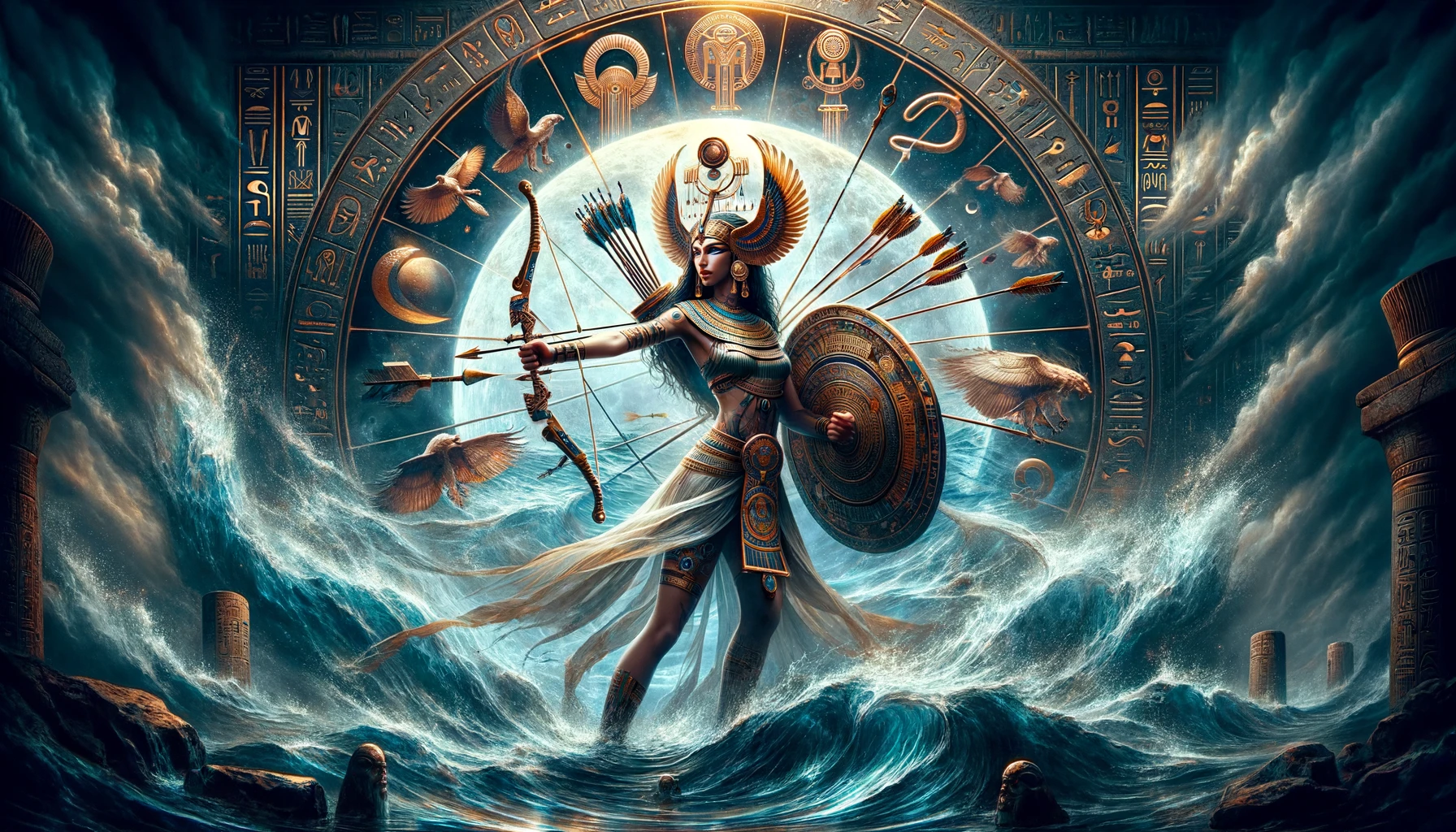
Neith’s iconography is rich with symbolism. In Egyptian art, she is often depicted:
- Wielding a bow and arrows, signifying her role as a huntress and a goddess of war.
- Accompanied by a shield, emphasizing her protective nature.
- Wearing the red crown of Lower Egypt, showing her connection to the land and her patronage over it.
- Sometimes portrayed alongside a loom, which signifies her association with weaving and creation.
- Her symbol, two crossed arrows over a shield, encapsulates her martial prowess and her role as a defender.
- Occasionally, Neith is represented as a cow, linking her to the concept of nourishment and the heavens.
Each symbol reflects an aspect of her complex identity as an ancient deity, encapsulating her dominion over hunting, war, creation, protection, and the cosmos.
Worship of Neith
Neith, an ancient Egyptian deity, was venerably worshipped in two main centers: Sais in the Delta, and Esna in Upper Egypt. In Sais, her priesthood presided over elaborate temple rites, with her sanctuary known as the “House of the Bee.”
Worshippers participated in daily rituals that included offerings of food, textiles, and precious objects, as well as processions and hymn chanting. Special festivals saw the image of Neith paraded through the streets, accompanied by lively celebrations.
Women played a significant role in her worship, reflecting Neith’s maternal and protective qualities.
Her cult was characterized by a blend of mystical and practical elements, where ceremonial acts were seen as essential to maintaining cosmic balance and harmony.
Neith’s Influence Beyond Egypt
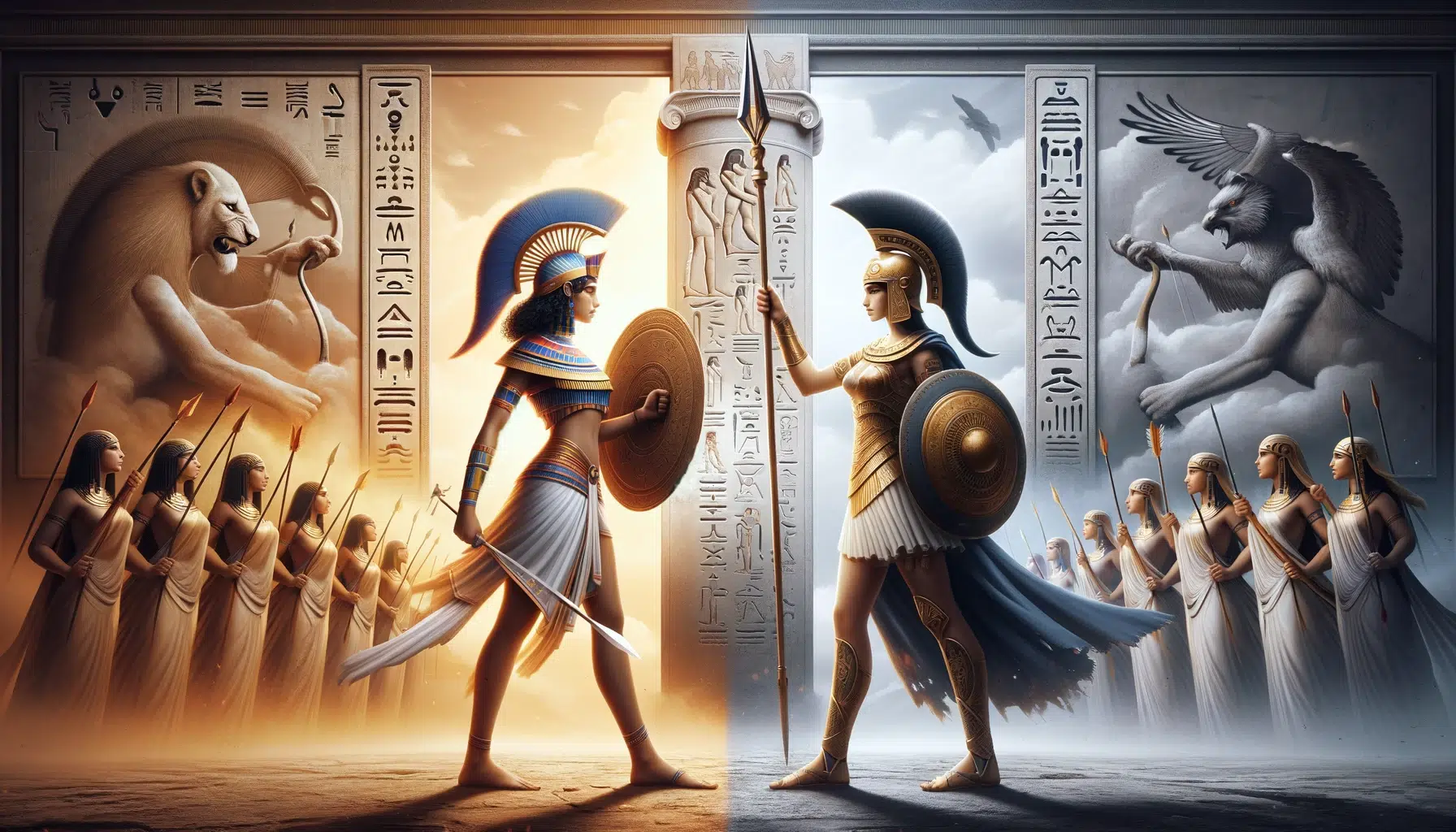
Neith, Egypt’s enigmatic goddess, held sway not only within her native land but also across ancient cultures, where her influence can be discerned.
Her attributes and mythology often resonated with or were akin to those of other deities:
- The Greco-Roman pantheon compared Neith to Athena, due to their shared attributes of wisdom and warfare.
- As mother of Sobek, parallels with the Mesopotamian goddess Tiamat, symbol of primordial creation and chaos, were drawn.
- Libyan peoples revered a goddess akin to Neith, indicating her worship transcended Egyptian borders.
- In Canaanite religion, similarities to the goddess Anat, embodying war and fertility, were notable.
These cross-cultural connections highlight Neith’s broad significance beyond her place of origin.
Modern-Day Discoveries and Their Impact
Recent archaeological efforts have shed new light on Neith’s worship and influence in ancient Egyptian culture. Highlights include:
- Excavation of a temple in Sais revealed intricate reliefs depicting Neith in various roles, suggesting a more versatile deity.
- Advanced imaging techniques identified previously undetected inscriptions, offering insights into Neith-related rituals and liturgies.
- DNA analysis of mummies provide evidence of their high social standing and potential influence on political affairs.
- New finds of offerings in the Nile area point to Neith’s continued reverence.
- Deciphering of recently discovered papyri has revealed hymns and prayers to Neith.
Learn more about other women:
Neith’s Legacy: Understanding Her Place in Egyptology
Neith, an ancient Egyptian goddess, embodies a complex figure with war and hunting aspects, yet paradoxically linked to creation and weaving.
Her worship spanned millennia, evidencing her significance in Egyptian religion. Initially a local deity of Sais, Neith’s cult gained prominence nationally.
Egyptologists have studied her extensive iconography, revealing insights into Egyptian cosmology and social order. Temples dedicated to Neith, like the famous Red Monastery, still intrigue scholars.
Her enduring presence in Egyptian art and mythology underscores a multifaceted divine feminine archetype in ancient Egypt.