Melanippe: Tale of Captivity and Rescue
Introduction to Melanippe
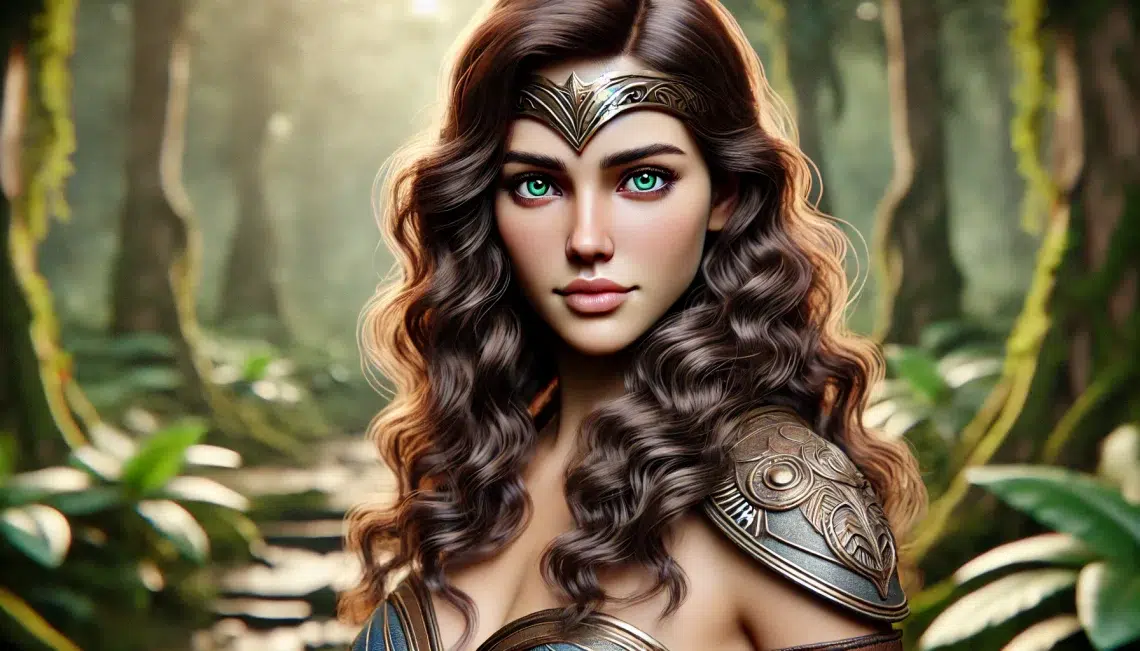
Melanippe is a fascinating character in Greek mythology. She is an Amazon warrior, known for her bravery and strength. The Amazons are a group of warrior women, often depicted as fierce and independent. They are known for their skills in archery, combat, and physical agility. They live on the edge of the Greek world, near the Black Sea, in a city called Themiscyra.
Melanippe is the daughter of Ares, the god of war, and Otrera, the first queen of the Amazons. She has several notable sisters, including Hippolyta, Penthesilea, and Antiope. Each sister has her own unique stories and adventures, but Melanippe stands out for her encounters with famous Greek heroes.
One of the most well-known stories about Melanippe involves Heracles, the great Greek hero. Heracles captures Melanippe during his quest for the girdle of Hippolyta, her sister. This event shows the complex relationships between the Amazons and the Greek heroes. It also highlights Melanippe’s importance in Greek mythology.
Melanippe’s story is not just about her capture. It also includes themes of freedom, strength, and the role of women in ancient times. She symbolizes the power and independence of the Amazons.
Her story inspires many and shows that women can be just as strong and brave as men.
In art, Melanippe is often depicted as a warrior or a hunter. Ancient mosaics and sculptures show her in action, highlighting her skills and bravery. These artworks help us understand how the ancient Greeks viewed the Amazons and their role in society. Melanippe’s legacy continues in modern literature and media.
She appears in books, movies, and TV shows, often as a symbol of female strength and independence. Her story resonates with audiences today, reminding us of the timeless appeal of strong, courageous women.
Background and Origin

Melanippe is the daughter of Ares, the god of war, and Otrera, the first queen of the Amazons. This divine parentage gives her a unique status among the Amazons. Ares, known for his fierce and aggressive nature, passes on his martial prowess to his daughter. Otrera, as the founder of the Amazonian society, instills in Melanippe the values of strength, independence, and leadership.
The Amazons are a group of warrior women who live in a matriarchal society. They are known for their skills in combat, archery, and horseback riding. The Amazons value strength, courage, and independence. They often engage in battles and raids, challenging the traditional roles of women in ancient Greek culture.
Melanippe’s early life is filled with training and adventures. She grows up in a society where women hold power and respect. This environment shapes her into a strong and resilient individual. Her family’s influence plays a crucial role in her development.
Living among the Amazons, Melanippe learns to value courage, loyalty, and strength. Her background gives her a unique perspective on life and prepares her for her encounters with gods and mythical creatures. The Amazons’ connection to nature and their warrior lifestyle are essential elements of her story.
Melanippe’s family is notable for its strong connections to war and leadership. Her sisters, Hippolyta, Penthesilea, and Antiope, are also famous Amazon warriors. This family of warrior women represents the strength and independence of the Amazons.
| Family Member | Role in Mythology | Famous Myth |
|---|---|---|
| Ares | Father, god of war | Ares and the Trojan War |
| Otrera | Mother, demigod | Founder of the Amazons and their society |
| Antiope | Sister, Amazon queen | Antiope and Abduction by Theseus |
| Hippolyta | Sister, Amazon queen | Hippolyta’s Girdle – Hercules 9th Labour |
| Penthesilea | Sister, Amazon warrior | Penthesilea and the Trojan War |
Myths of Melanippe’s Sisters
Hippolyta

Hippolyta, queen of the Amazons, receives a magical girdle from her father, Ares. This girdle symbolizes her authority and strength. Heracles, tasked with retrieving the girdle for his ninth labor, arrives at the Amazonian land. Initially, Hippolyta agrees to give him the girdle.
However, Hera, disguised as an Amazon, spreads rumours that Heracles plans to abduct Hippolyta. The Amazons attack, leading to a fierce battle. Heracles fights bravely, ultimately killing Hippolyta and taking the girdle.
This myth highlights Hippolyta’s bravery and the tragic consequences of misunderstandings and divine interference.
Penthesilea
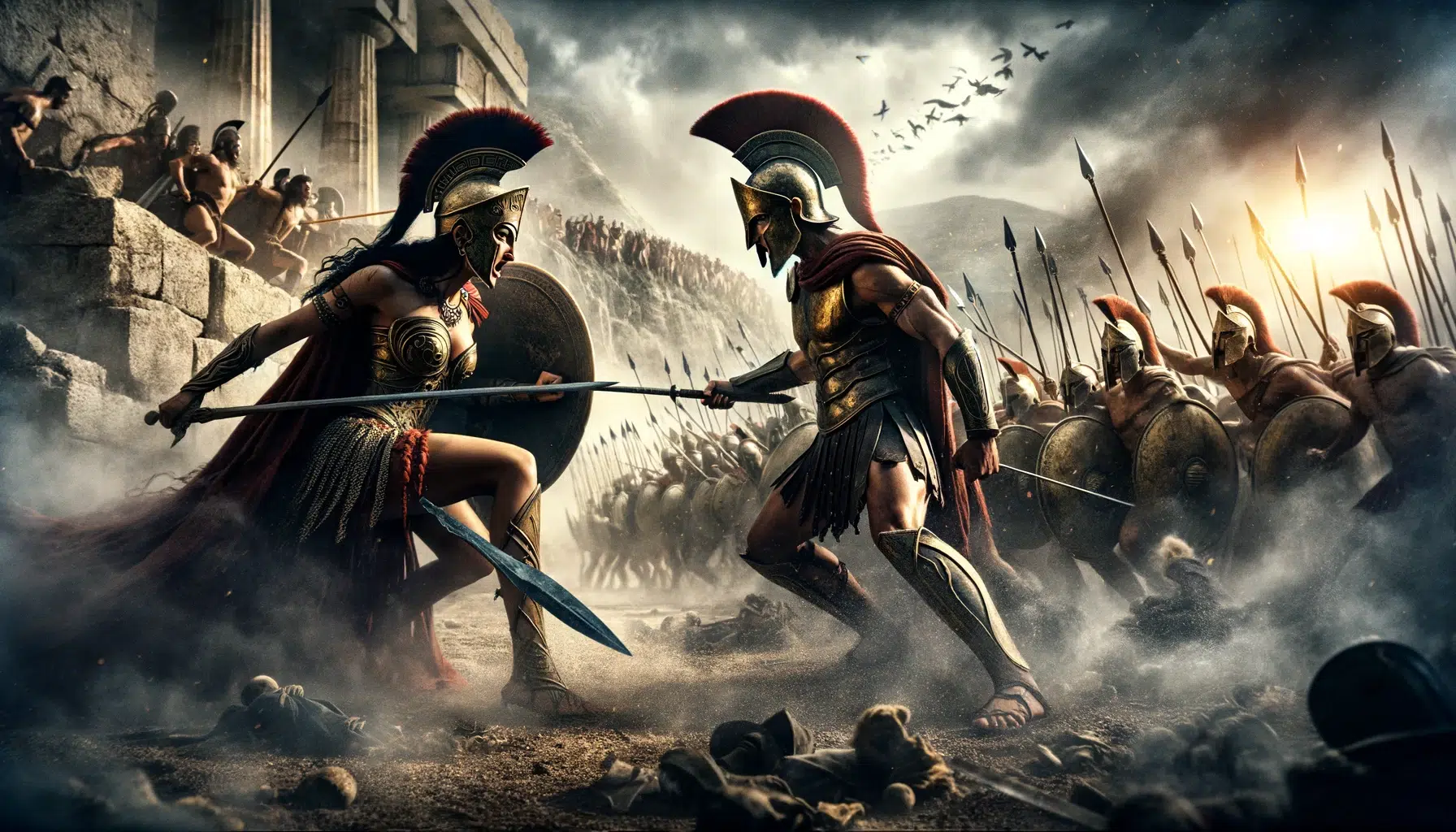
Penthesilea fights fiercely, killing many Greek soldiers. Her prowess catches the attention of Achilles, the greatest Greek warrior. In a dramatic encounter, Achilles and Penthesilea face each other. Despite her valiant efforts, Achilles kills her.
As he removes her helmet, he sees her beauty and feels deep remorse. This myth emphasizes Penthesilea’s warrior spirit and the tragic nature of war, where even the bravest can fall.
Antiope

Antiope, an Amazon warrior, becomes involved with Theseus, the hero and king of Athens. During Heracles’ ninth labor, Theseus either abducts Antiope or she willingly leaves with him. They marry, and Antiope gives birth to their son, Hippolytus.
The Amazons, angered by Antiope’s abduction, launch an attack on Athens. This conflict, known as the Attic War, sees fierce battles between the Amazons and Athenians.
Antiope fights alongside Theseus but meets a tragic end, killed either by Theseus or accidentally by another Amazon. Her story reflects themes of love, betrayal, and the fierce loyalty of the Amazons.
Key Myths and Legends of Melanippe
Myth of Heracles Capturing Melanippe
One of the most famous myths involving Melanippe is her capture by Heracles.
Melanippe plays a significant role in the myth of Heracles’ ninth labor. Heracles, a famous Greek hero, receives a task to obtain the girdle of Hippolyta, the queen of the Amazons. This girdle, a symbol of power and authority, belongs to Hippolyta, who is also Melanippe’s sister. It was gifted to her by her father, Ares, god of war.
The Capture and Release
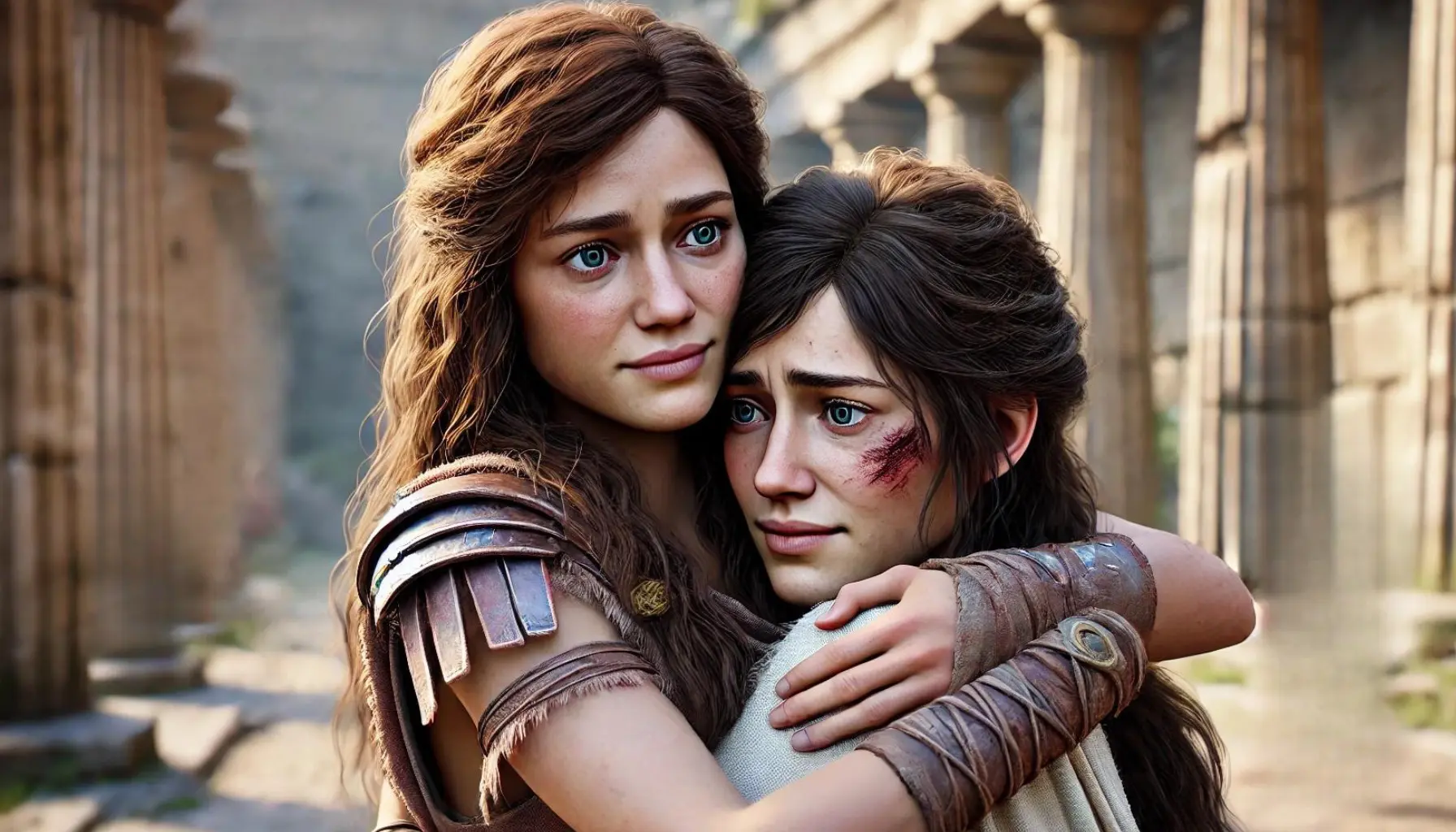
Heracles sets out on his quest and arrives at the land of the Amazons. To achieve his goal, he devises a plan to capture Melanippe. Heracles knows that capturing an Amazon warrior will give him leverage.
He ambushes Melanippe and takes her prisoner. This act demonstrates Heracles’ cunning and strategic thinking.
With Melanippe in his custody, Heracles approaches Hippolyta.
He demands the girdle in exchange for Melanippe’s freedom. Hippolyta faces a difficult decision. She values the girdle, but her sister’s life is more important.
After considering her options, Hippolyta agrees to Heracles’ demand. She hands over the girdle to save Melanippe. This exchange highlights the bond between the Amazon sisters and their willingness to sacrifice for each other.
After receiving the girdle, Heracles keeps his word and releases Melanippe. This act shows that even in the midst of conflict, honour and promises hold value.
Melanippe returns to her people, and Heracles completes his labour successfully. The exchange between Heracles and Hippolyta reflects the complex interactions between Greek heroes and the Amazons.
Variations of the Myth
The myth of Heracles capturing Melanippe explores themes of power, sacrifice, and honour. It highlights the strategic and sometimes ruthless nature of Greek heroes. The story also emphasizes the strong familial bonds among the Amazons.
Melanippe’s capture and the subsequent exchange for the girdle illustrate the complexities of heroism and the high stakes involved in mythological quests.
Different versions of the myth offer various outcomes for Melanippe. In some accounts, she is not just captured but also killed by Telamon, a companion of Heracles.
Another version suggests that Theseus, another Greek hero, abducts Melanippe and marries her. There is also the version where Theseus kidnaps Antiope, her sister.
These variations show the rich and diverse storytelling traditions in Greek mythology.
Role in the Trojan War
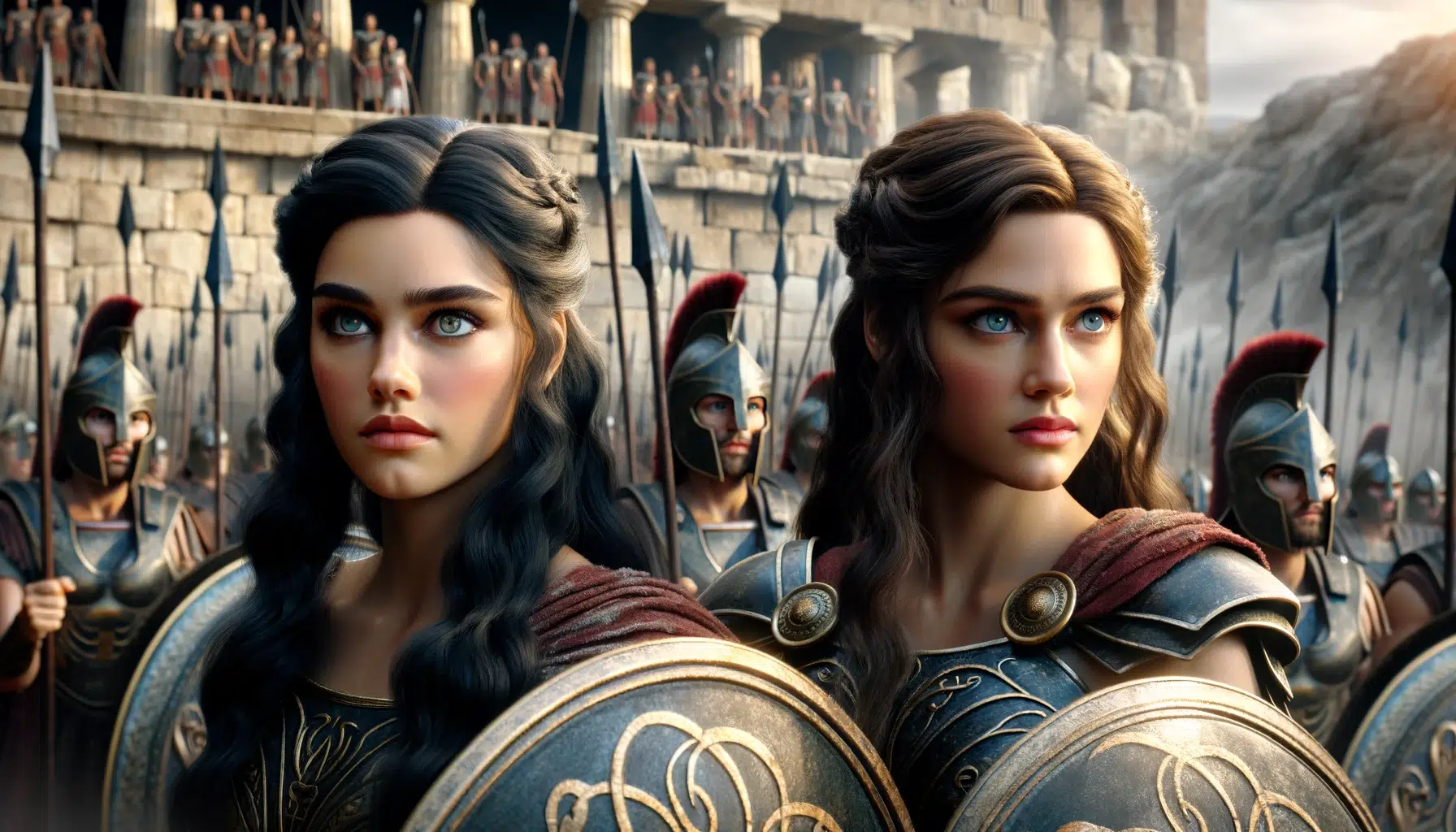
Melanippe plays a significant role in the myths surrounding the Trojan War. The Amazons, known for their bravery and combat skills, join the conflict on the side of the Trojans. Their involvement adds a unique dimension to the epic saga.
The Amazons, led by Queen Penthesilea, arrive at Troy to support the Trojans. Penthesilea, Melanippe’s sister, seeks to aid King Priam and his people against the Greek invaders. The arrival of the Amazons boosts the morale of the Trojans, who face a prolonged and grueling siege.
Melanippe, as a prominent Amazon warrior, fights alongside her sisters and fellow Amazons. She demonstrates exceptional bravery and skill in battle. The Amazons, including Melanippe, engage in fierce combat with the Greek warriors, showcasing their prowess and determination.
In the heat of the Trojan War, Melanippe participates in several key battles. The Amazons’ arrival marks a turning point, as they bring fresh energy and formidable fighting abilities to the Trojan side. Melanippe’s combat skills and leadership contribute to the temporary successes of the Trojans.
During the war, Melanippe encounters several Greek heroes. These encounters highlight the intense and personal nature of the conflict. The Amazons face off against renowned Greek warriors, demonstrating their courage and strength.
The death of Queen Penthesilea, Melanippe’s sister, is a pivotal moment in the Trojan War.
Achilles, the greatest Greek warrior, kills Penthesilea in battle. Her death deeply affects the Amazons, including Melanippe, who mourn the loss of their leader. This event underscores the high stakes and tragic nature of the war.
Myth of Melanippe and Poseidon (Based on Euripides’ Plays)
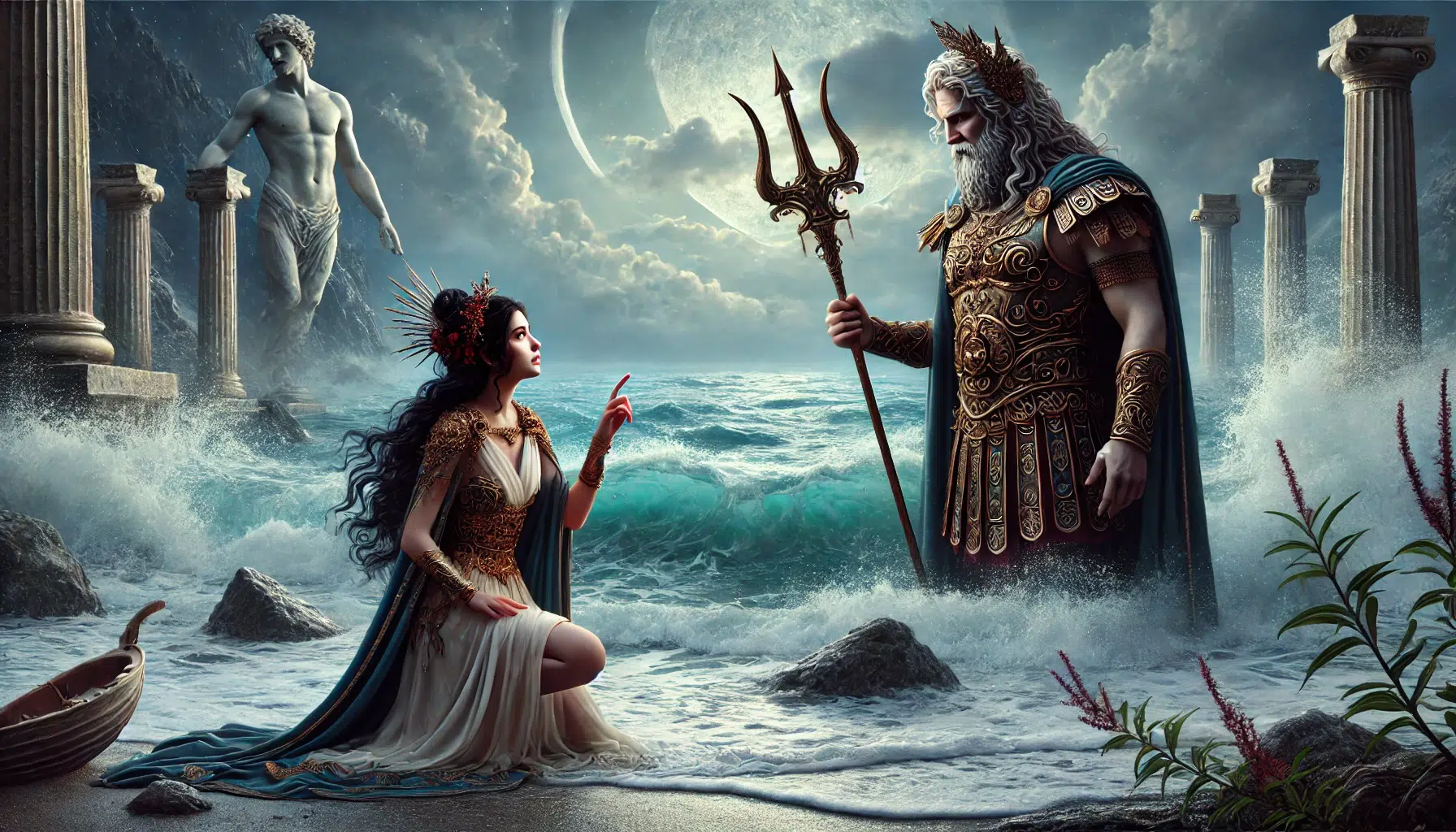
The myth of Melanippe having children with Poseidon is based on Euripides’ plays, specifically Wise Melanippe and Captive Melanippe. In these plays, Euripides explores the story of Melanippe, who bears twin sons by Poseidon. These plays explore her struggles and the eventual triumph of her family.
This Melanippe, also known as Arne or Antiopa, is a significant figure in Greek mythology. She is the daughter of Aeolus and has a notable relationship with Poseidon, the god of the sea. This relationship results in the birth of twin sons, Aeolus and Boeotus.
Melanippe’s story takes another dramatic turn when she encounters Poseidon. Known for his power and unpredictable nature, Poseidon sees Melanippe and becomes enamoured with her. He approaches her, and their meeting changes her life forever.
Melanippe gives birth to twins, Aeolus and Boeotus, fathered by Poseidon. To hide her pregnancy from her father, she places the newborns in a cow shed. However, her father discovers the babies and, believing them to be monsters, orders them to be exposed to the elements.
Despite the harsh order, the twins survive. A cow suckles them, providing the nourishment they need. Shepherds find the babies and take them in. They eventually give the twins to Theano, the wife of King Metapontus of Icaria. Theano, who fears her husband’s wrath for not bearing children, presents the twins as her own.
Later, Theano gives birth to her own sons. Fearing that Metapontus favours the twins, she plots to have them killed. She instructs her natural sons to kill Aeolus and Boeotus during a hunt. However, the twins defend themselves and, with Poseidon’s aid, kill Theano’s sons. Theano, in despair, takes his own life.
The Twins and Their Rescue
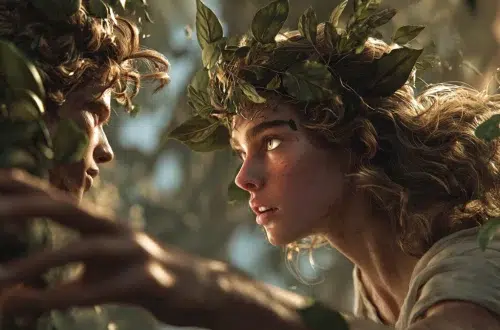
After these events, the twins learn about their true parentage. They discover that Poseidon is their father and that their mother, Melanippe, is imprisoned and blinded by her father. Determined to rescue her, Aeolus and Boeotus set out to free Melanippe.
The twins successfully rescue Melanippe from her imprisonment. Poseidon, grateful for their bravery, restores Melanippe’s sight. The family reunites, and Melanippe’s suffering ends. This myth highlights the themes of survival, resilience, and the bond between mother and children.
Melanippe’s Children

Melanippe’s two children, Boeotus and Aeolus, inherit qualities from their divine father and mortal mother.
Boeotus grows up to be a strong and capable leader. He eventually becomes the ancestor of the Boeotians, a group of people who play an essential role in Greek history. His name and legacy carry forward, marking his significance in the myths.
Aeolus, the other child, also becomes a notable figure. He is often associated with the wind, reflecting his grandfather Aeolus’s connection to this natural element.
In some stories, Aeolus becomes the ruler of the winds, inheriting his namesake’s power and responsibilities. His control over the winds makes him a crucial figure in various Greek myths, where the wind’s direction can change the course of events.
The birth of Boeotus and Aeolus brings both joy and challenges to Melanippe. As a mother, she has to protect and raise her children in a world filled with gods and mythical creatures. Their divine heritage brings them both advantages and dangers. Melanippe’s strength and resilience help her navigate these challenges, ensuring her children grow up to fulfill their destinies.
Myth About a Different Melanippe – Turning Into A Mare

There is a myth about Melanippe being turned into a mare, but it is not the same Melanippe who is an Amazon warrior. The myth about the transformation into a mare involves a different Melanippe, who is the daughter of the Centaur Chiron.
This myth is not from Euripides’ plays but is a separate story in Greek mythology.
Melanippe, also known as Hippe or Euippe, is the daughter of the Centaur Chiron and the nymph Chariclo. She possesses prophetic abilities, which play a significant role in her story.
Melanippe becomes pregnant by Aeolus, the son of Hellen. Fearing her father’s reaction, she flees to Mount Pelion to hide her pregnancy. Chiron, unaware of her condition, searches for his missing daughter. In her desperation, Melanippe prays to the goddess Artemis for help. Artemis answers her prayers by transforming her into a mare to protect her from being discovered by Chiron.
Symbolism, Art and Modern Interpretations of Melanippe
Themes of Stength and Loyalty
Melanippe’s story includes many themes and symbols that give it depth and meaning.
One major theme is female strength and resilience. Melanippe shows bravery and determination in the face of challenges, such as her captivity and transformation. She remains strong and hopeful, embodying the power of women in mythology.
Family loyalty is another important theme. Melanippe’s family plays a crucial role in her rescue from the Centaurs. Their efforts highlight the strength of family bonds and the importance of teamwork. This theme underscores the value of support and unity in overcoming obstacles.
Symbolism of Warrior Spirit
Melanippe stands as a symbol of strength. Her character shows that women can be powerful and brave. She fights alongside her sisters and other Amazons, demonstrating courage and skill in battle. Her strength is not just physical but also mental.
She faces challenges with determination and resilience, embodying the true spirit of a warrior.
Melanippe also embodies the values and culture of the Amazons.
The Amazons live in a matriarchal society where women hold power and authority. They value independence, bravery, and loyalty. Melanippe’s actions reflect these values. She fights for her people and stands up against powerful adversaries. Her loyalty to her sisters and her people is unwavering.
This loyalty and dedication highlight the strong bonds within the Amazonian society.
Cultural and Artistic Depictions
Melanippe appears in various forms of ancient art and literature. These depictions help us understand how the ancient Greeks viewed the Amazons and their place in society.
Melanippe is often shown as a strong and active warrior. For example, the Edessa Mosaic, a late antique mosaic, depicts her hunting. This image highlights her skills and bravery.
Ancient Greek vases and sculptures also show Amazons in battle, emphasizing their warrior nature. These artworks often portray Amazons with weapons like spears and bows, showcasing their combat skills.
In literature, Melanippe features in myths and stories that highlight her bravery and strength. Euripides, a famous Greek playwright, writes about her in his plays Wise Melanippe and Captive Melanippe. These plays explore her struggles and triumphs, adding depth to her character.
Modern Interpretations
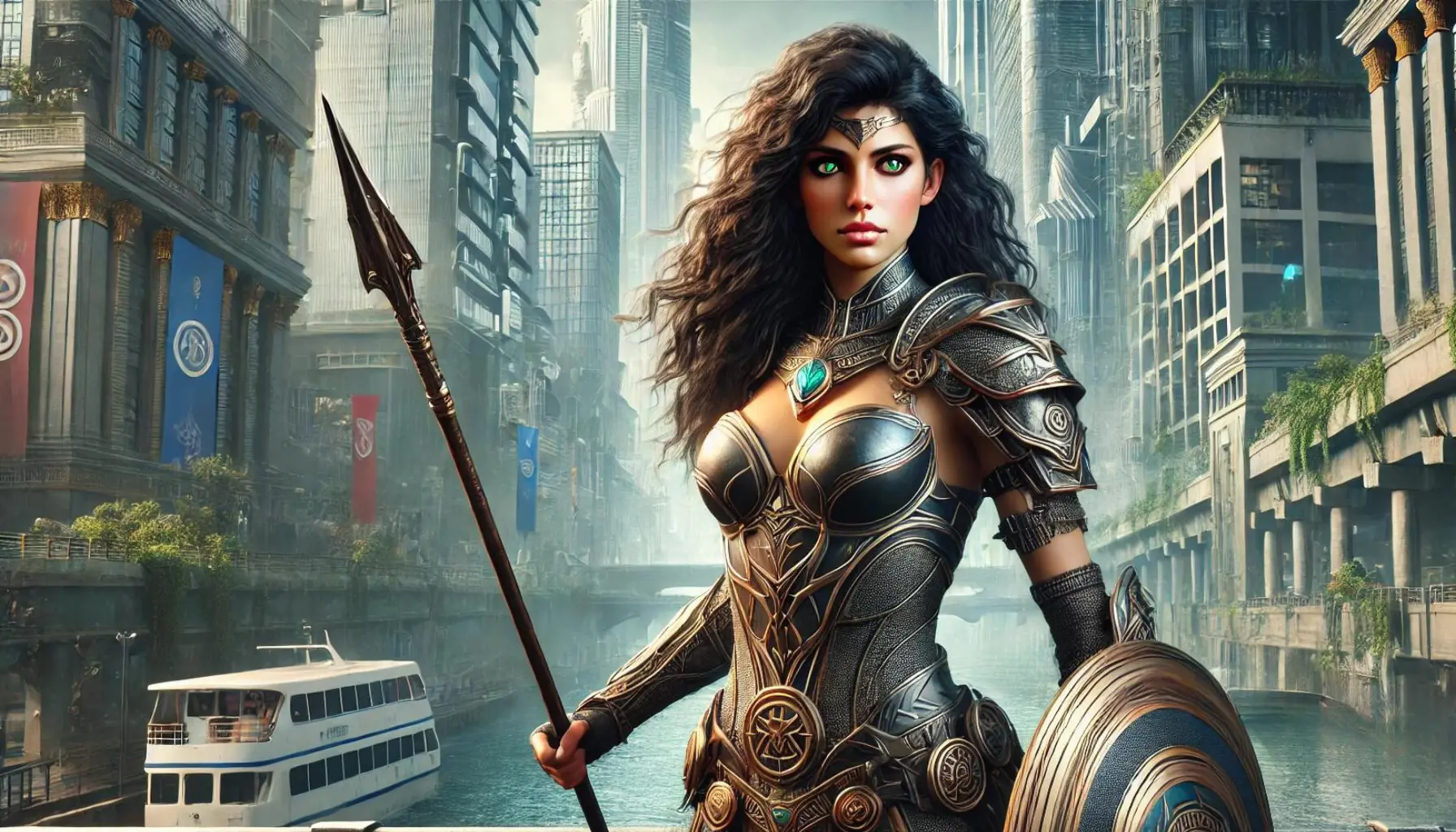
In modern times, Melanippe continues to inspire. She appears in books, movies, and TV shows, often as a symbol of female strength and independence. For example, in the Percy Jackson series, she is portrayed as a powerful Amazon warrior.
This modern representation keeps her legacy alive and relevant.
Melanippe’s story resonates with contemporary themes of female empowerment. She stands as a role model for strength, courage, and independence. Her character inspires people to stand up for themselves and others, showing that true strength comes from within.
Filmmakers also bring Melanippe’s story to the screen. Movies and TV shows depict her journey with stunning visuals and engaging storytelling. Directors focus on her transformation, family loyalty, and encounters with gods. These adaptations reach a wide audience, introducing Melanippe to new generations.
The feminist movement also embraces Melanippe’s story. Her experiences symbolize female empowerment and the struggle for equality. Activists and scholars use her myth to discuss themes of gender, power, and identity. Melanippe becomes a symbol of resistance and transformation, inspiring people to fight for their rights.
Conclusion
Melanippe, the Amazon warrior, embodies bravery, strength, and the complex dynamics between the Amazons and Greek heroes.
Her capture by Heracles, participation in the Trojan War, and divine connections highlight her significance in Greek mythology.
As a symbol of female power and independence, Melanippe continues to inspire and captivate audiences. Her story showcases the timeless appeal of strong, courageous women who defy traditional gender roles and forge their own paths.
Melanippe’s legacy endures, reminding us of the enduring strength and resilience of women throughout history and mythology.