
Matangi: Outcaste Goddess of Forbidden Knowledge
Introduction to Matangi
Matangi is known as the outcaste goddess of forbidden knowledge. She blesses music, speech, and the power of words, but she does so in ways that break normal rules.
Unlike Saraswati, who represents formal learning and purity, Matangi rules over what society often rejects.
In her stories she accepts leftovers, appears as an outcaste girl, and even serves as a royal counsellor. Each form shows that knowledge can grow anywhere, not just in places seen as clean or proper.
She teaches that truth often hides at the edges, waiting to be spoken or sung.
Background of Matangi: Names, Forms, Signs

Matangi appears in two main forms.
Ucchista Matangi
The first is Ucchista Matangi, linked with leftovers and ritual impurity.
The Sanskrit word ucchista means “food that has already been eaten or touched.”
Normally, this is avoided in Hindu practice, but Matangi accepts it as an offering.
By doing so, she shows her role as a goddess of the margins, blessing those who honour her with knowledge, speech, and influence.
Raja Matangi
The second is Raja Matangi, also called Shyamala.
In this form, she is refined and regal.
She serves as counsellor and minister to the goddess Lalita Tripurasundari in a tradition known as Sri Vidya, which focuses on worship of the Divine Mother.
Here Matangi represents the power of music, poetry, and mantra recitation at the highest level of spiritual practice.
Description of Matangi

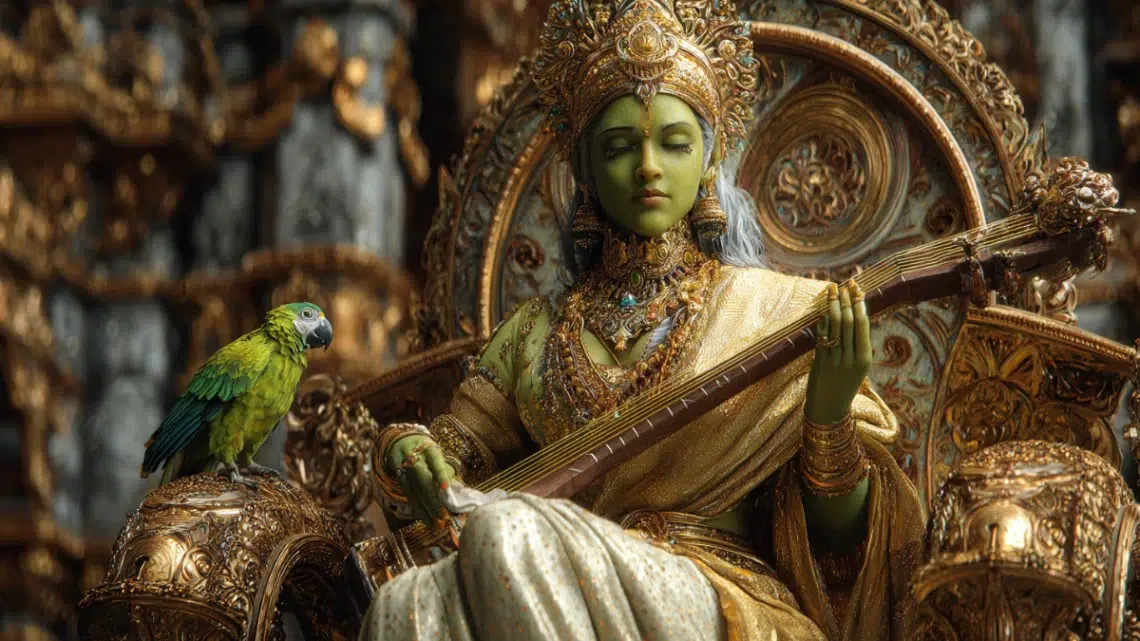
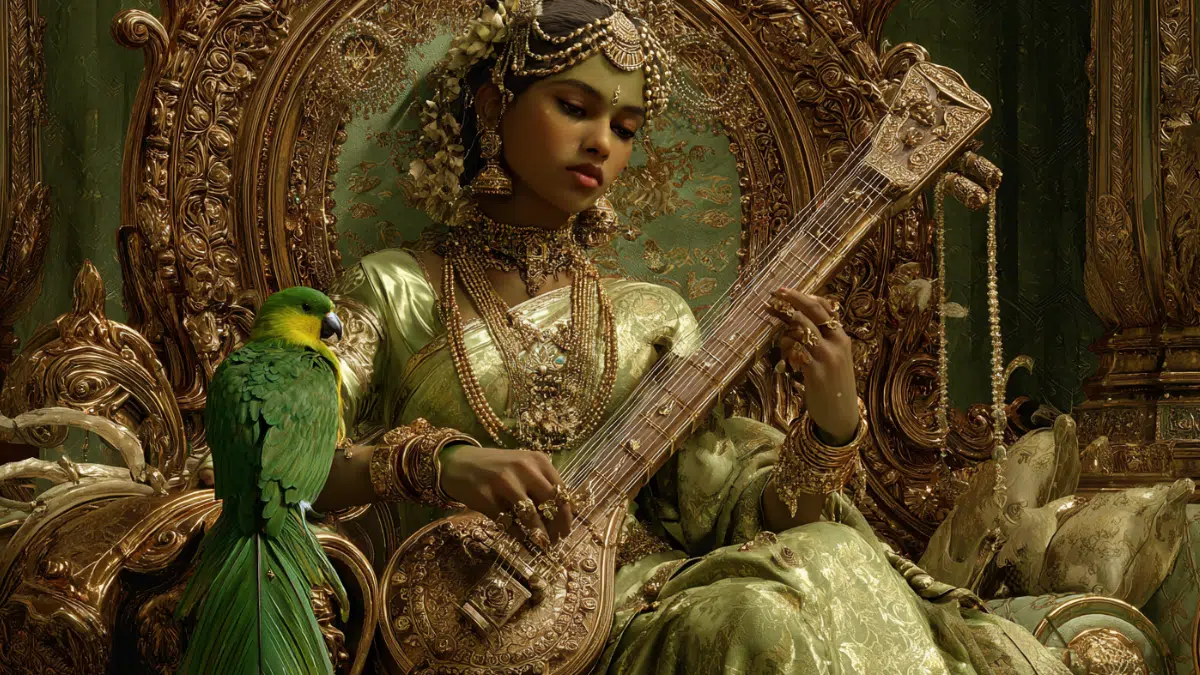
Images of Matangi show her with a green body, which stands for growth, creativity, and the flowering of thought.
She often carries a vina (a stringed instrument, similar to a lute), a book, a parrot, a goad, and a noose. The parrot symbolizes speech that echoes and spreads.
The vina represents music that shapes both emotion and mind. The book shows her link to learning, while the goad and noose suggest her control over direction and attachment.
Worship of Matangi often breaks rules on purpose.
In her ucchista form, devotees offer food scraps with their mouths and hands still unwashed, a deliberate act that flips the idea of purity.
In her royal form, followers focus on sound, mantra, and counsel. In both forms, Matangi grants power over speech, song, and influence. The ability to guide thought and move others.
Myth: Ucchiṣṭa-Matangi
Matangi appears in a way that feels unusual. During a divine feast, scraps of food fall to the ground.
From these leftovers, a glowing goddess rises. She asks for more of what others throw away.
This is Ucchista Matangi, the form of the goddess who rules over the forbidden.
She blesses those who honour her with skill in speech, music, and hidden knowledge. The story shows that wisdom can grow in places that people normally reject.
Myth: The Outcaste Form
Another story tells of Matangi appearing as a young woman from an outcaste family. Shiva meets her in this form and feels drawn to her.
Some versions say she is Parvati in disguise, testing him.
Others say she is a goddess in her own right.
Either way, the story makes a point: divine power does not belong only to kings and priests. It also shines among people who live on the margins of society.
Matangi proves that wisdom and beauty often come from places others ignore.
Myth: Raja Matangi (Shyāmala)
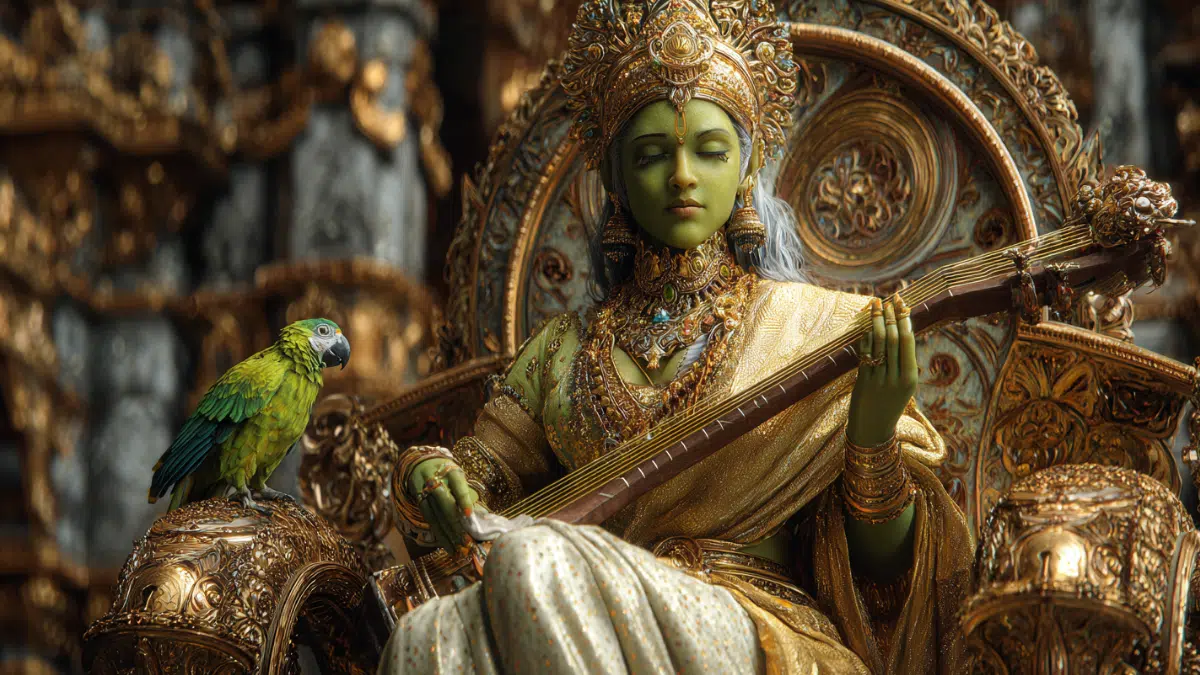
In her royal form, Matangi is called Raja Matangi or Shyamala.
She serves as counsellor to the great goddess Lalita.
In this form she glows green, symbolizing growth and renewal. She carries a musical instrument called a lute, and often keeps a parrot at her side.
The lute represents music and harmony, while the parrot represents living speech.
She gives her followers clarity, charm, and eloquence. This form of Matangi shows how words can guide leaders and inspire art.
Symbolism of Matangi: Speech, Music, and Hidden Knowledge

Matangi is a goddess of speech and music. She shows that words are more than sounds.
They create, persuade, and guide. Her green body stands for growth and the flowering of the mind. The parrot she often carries reminds us of living speech, always moving and repeating.
The lute she holds represents the way music can tune both thought and emotion.
One form of Matangi accepts what others call impure.
By doing so, she teaches that clarity and honesty matter more than surface rules. Another form sits in a royal court, shaping advice, poetry, and song.
Both forms tell the same story: language carries real power. Words can heal or harm, inspire or deceive. Music can soften hearts and change moods.
Matangi shows that knowledge thrives even in places society overlooks. She blesses those who use their voices with courage and integrity, and she reminds us that truth often comes from the edge.
Matangi and Other Goddesses
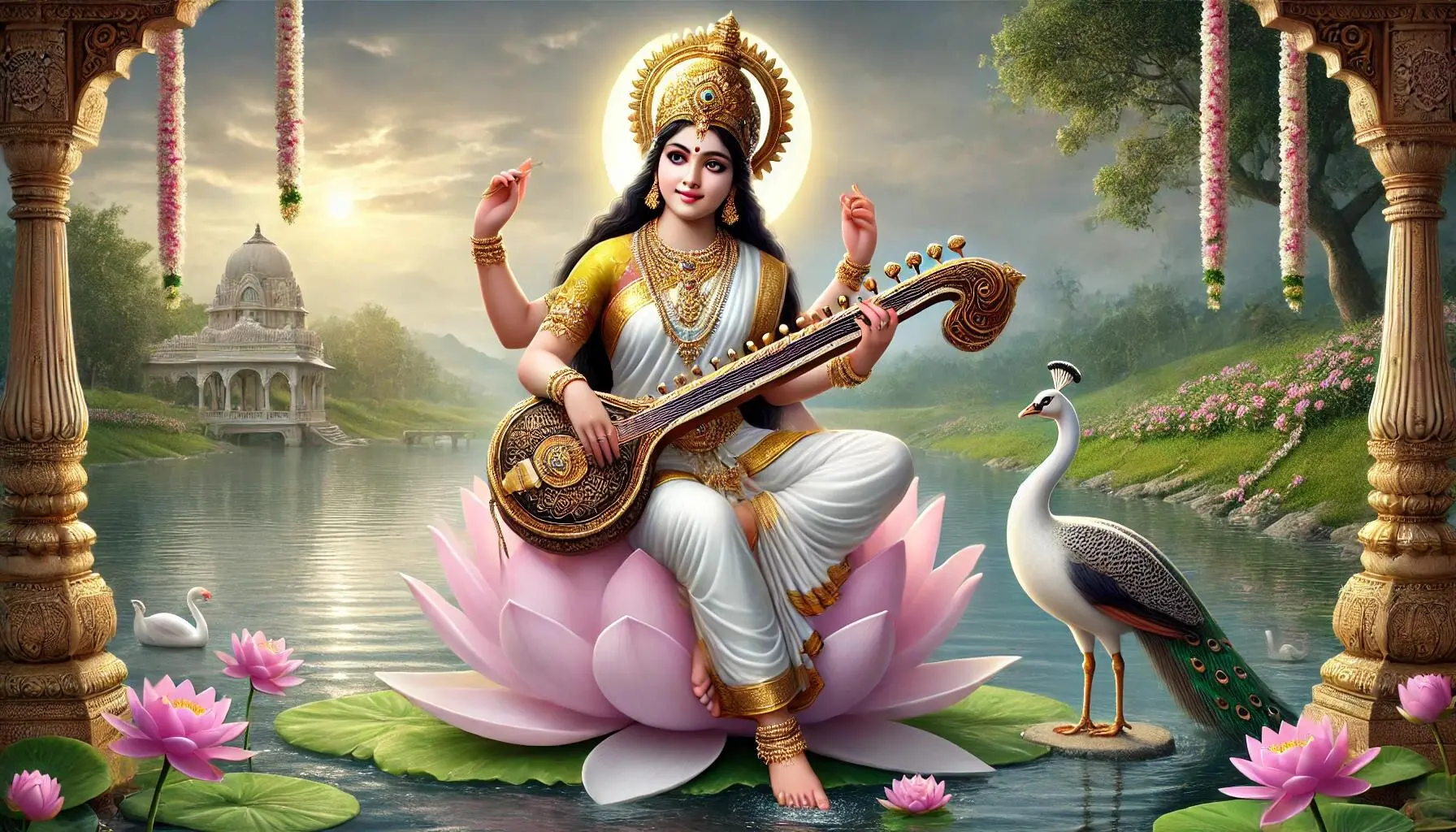
Matangi often gets compared to Saraswati, the goddess of learning and the arts.
Saraswati represents formal study, purity, and knowledge gained in schools and temples.
Matangi also rules speech and music, but she works through the margins of society. She teaches that wisdom can grow in unexpected places, not only in polished classrooms.
She also shares space with Kali, the fierce goddess of time and destruction. Kali shatters fear by showing the power of death and rebirth. Matangi unsettles by crossing social rules about purity and class. Both remind followers that truth comes with discomfort, not ease.
In other mythologies, Matangi resembles figures like Hermes from Greek myth, who plays with boundaries and rules of speech. She also echoes trickster goddesses who use wit and words to shift power.
Together these comparisons show her place: Matangi is the goddess who uses voice, song, and boundary-breaking to reveal truths that polite society might rather ignore.
Conclusion
Matangi shows that wisdom does not only belong to temples or books.
She proves that song, speech, and insight rise even in the places people call impure.
In one form she accepts what others throw away; in another she advises rulers with music and counsel.
Together her stories highlight the same message: words carry power, and knowledge often breaks rules before it changes lives.
Matangi invites us to listen at the margins and to find wisdom where few expect it.