Ladon – The Dragon of the Hesperides’ Golden Apples
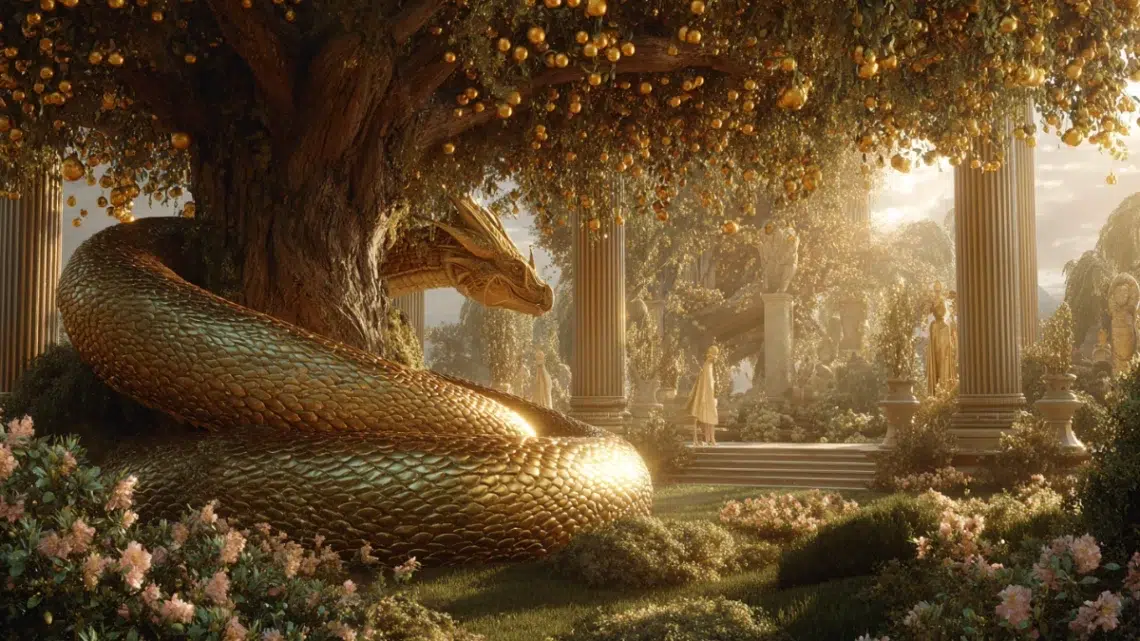
Ladon, the dragon of the Hesperides, guards one of the most famous treasures in Greek mythology—the golden apples of immortality. These apples grow in a sacred garden at the edge of the world, and only a hero brave enough to face Ladon can hope to reach them.
This serpent-like dragon twists around the tree, never sleeping, always watching. His many heads and deadly presence make him nearly impossible to defeat. Even the mighty Heracles, who faces this challenge as one of his Twelve Labours, must use cunning rather than brute strength to succeed.
Ladon’s role may seem small, but it holds deep meaning. He stands between gods and mortals, guarding something sacred. His story shows how ancient myths used dragons not just as monsters—but as symbols of limits, tests, and transformation. In this blog, you’ll explore where Ladon comes from, what he looks like, and how his legend still echoes through time.
Origins and Parentage of Ladon
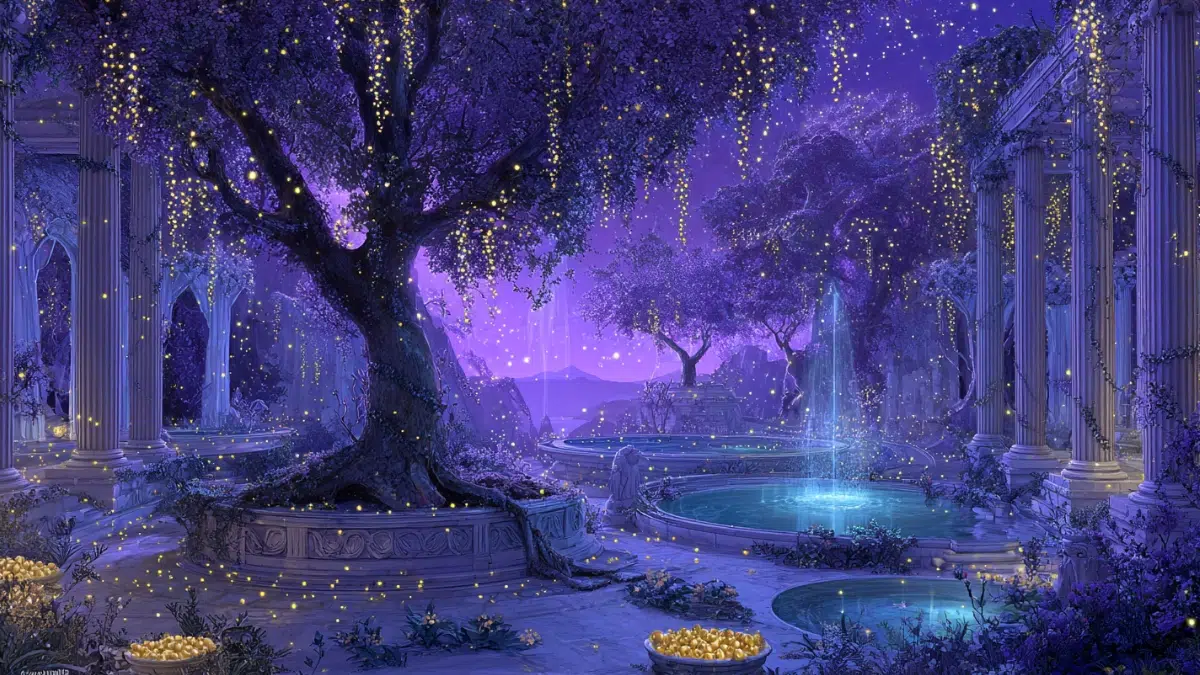
Ladon comes from deep within Greek mythology and plays the role of a sacred guardian. He protects the golden apples in the Garden of the Hesperides—a place said to lie at the far western edge of the world. This garden belongs to the goddess Hera, who plants the apples as a wedding gift from Gaia (Earth). Ladon coils around the tree and prevents anyone from stealing its fruit, even the gods.
His parentage varies depending on the myth. Some say Ladon is the child of Phorcys and Ceto, sea gods known for birthing monstrous creatures. Others link him to the fearsome pair Typhon and Echidna, who produce many of Greek mythology’s deadliest monsters.
A third version claims that Gaia, the Earth itself, creates Ladon to guard her sacred gift. Each version strengthens his role as a primordial, powerful being tied to the natural world.
The garden is also home to the Hesperides, nymphs of the evening who care for the tree. But Hera doesn’t trust them fully, so she places Ladon as a living lock around the trunk. He is more than just a guard—he is a symbol of sacred limits.
His name may come from the Greek word Lados, which means “strong current” or “to seize,” hinting at his unyielding grip and fluid serpent form.
Through his origin, Ladon becomes more than a monster—he becomes a force of nature, tied to divine power, sacred duty, and the boundary between mortal desire and immortal reward.
Appearance and Symbolism
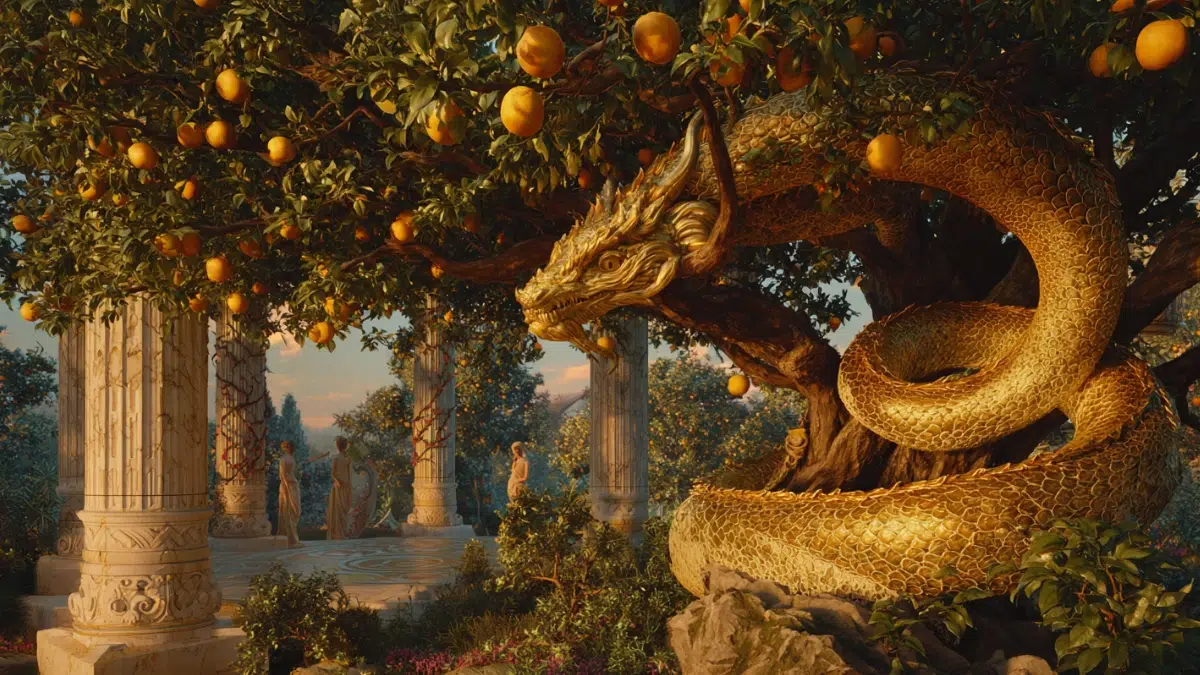
Ladon is often described as a massive, serpent-like dragon wrapped around the tree of golden apples in the Garden of the Hesperides. In some versions of the myth, he has a hundred heads, and each one can speak a different language or make its own sounds. This detail adds to his fearsome nature, showing he can guard the tree from any being—human or divine.
He never sleeps. Ancient writers say Ladon keeps watch day and night, his many eyes always open. His constant vigilance makes him a perfect guardian, especially for the apples of immortality. These apples, golden and divine, are gifts from Gaia and belong to Hera. They represent eternal life, divine power, and forbidden knowledge—things mortals are not meant to have without trial.
Ladon’s body coils tightly around the tree, acting like a living wall. His presence turns the peaceful garden into a place of challenge and danger. In this way, Ladon becomes a symbol of boundaries—the line between gods and mortals, between sacred and stolen.
Dragons in Greek mythology often represent natural forces or obstacles. Ladon is no different. He is not evil—he is a test. To pass him is to prove oneself worthy of divine gifts. His form, both beautiful and terrifying, reminds us that some treasures must be earned with courage, strength, or cleverness.
Roles and Influence of Ladon
Ladon serves one clear and powerful role in Greek mythology: he is the eternal guardian of the golden apples in the Garden of the Hesperides. These apples grant immortality and belong to the goddess Hera. As such, they are not meant for mortal hands. Ladon’s job is to make sure no one—mortal or god—can steal them. His role is not to destroy or dominate, but to protect something sacred.
This makes Ladon more than just a monster. He is a living test for those who dare to reach beyond mortal limits. Facing Ladon means proving yourself against divine boundaries. That’s why he becomes so important in the story of Heracles (Hercules).
In Heracles’ Eleventh Labour, he must retrieve the golden apples. Different versions of the myth offer two outcomes: in one, Heracles slays Ladon with an arrow; in another, he uses trickery, asking the titan Atlas to fetch the apples while he holds up the sky. In both versions, Ladon represents the main obstacle—something Heracles must overcome to complete his journey.
Ladon’s story doesn’t end there. Some myths say that after his defeat, Hera places him in the sky as the constellation Draco, rewarding his loyalty. This lasting form in the stars shows his continuing influence as a guardian and symbol of vigilance.
Ladon doesn’t change the world, but he guards a piece of it that must not change—a divine treasure that only the bravest can reach. In that role, he becomes part of every hero’s journey: the final guardian, the silent watcher, and the sacred test.
Myths Involving Ladon
1. Ladon and the Garden of the Hesperides
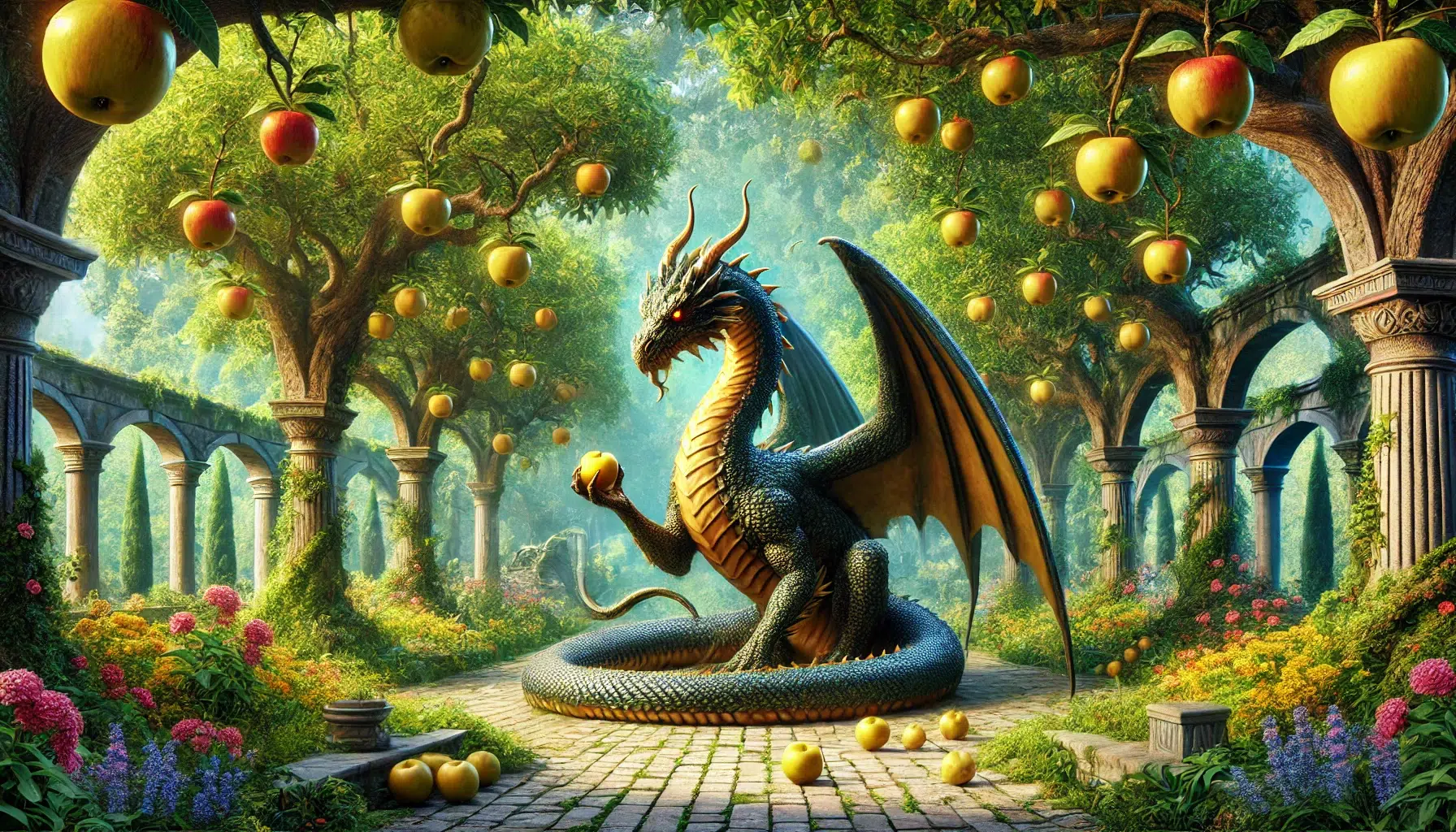
Ladon guards the Garden of the Hesperides, a lush paradise filled with divine treasures. Located at the far western edge of the world, this garden holds a tree that grows golden apples. These apples aren’t just rare fruit—they grant immortality, making them sacred and dangerous. The garden belongs to Hera, queen of the gods, who receives it as a wedding gift from Gaia, the Earth goddess.
Hera assigns the Hesperides, a group of nymphs, to care for the tree. But worried they might steal the apples themselves, she adds an extra line of defence: Ladon. Coiled tightly around the tree’s trunk, Ladon watches day and night, never sleeping. Some say he has a hundred heads, each speaking a different language or producing a different sound.
This myth makes Ladon a perfect symbol of divine boundaries—he doesn’t attack unless someone crosses into forbidden space. His very presence turns the garden from a peaceful orchard into a place of trial. As long as Ladon guards the tree, no mortal or god dares take the apples without facing the consequences.
His story sets the stage for a famous hero to try his luck: Heracles. And in doing so, Ladon becomes one of the great mythic obstacles that test courage, strength, and wit.
2. Heracles and the Eleventh Labour

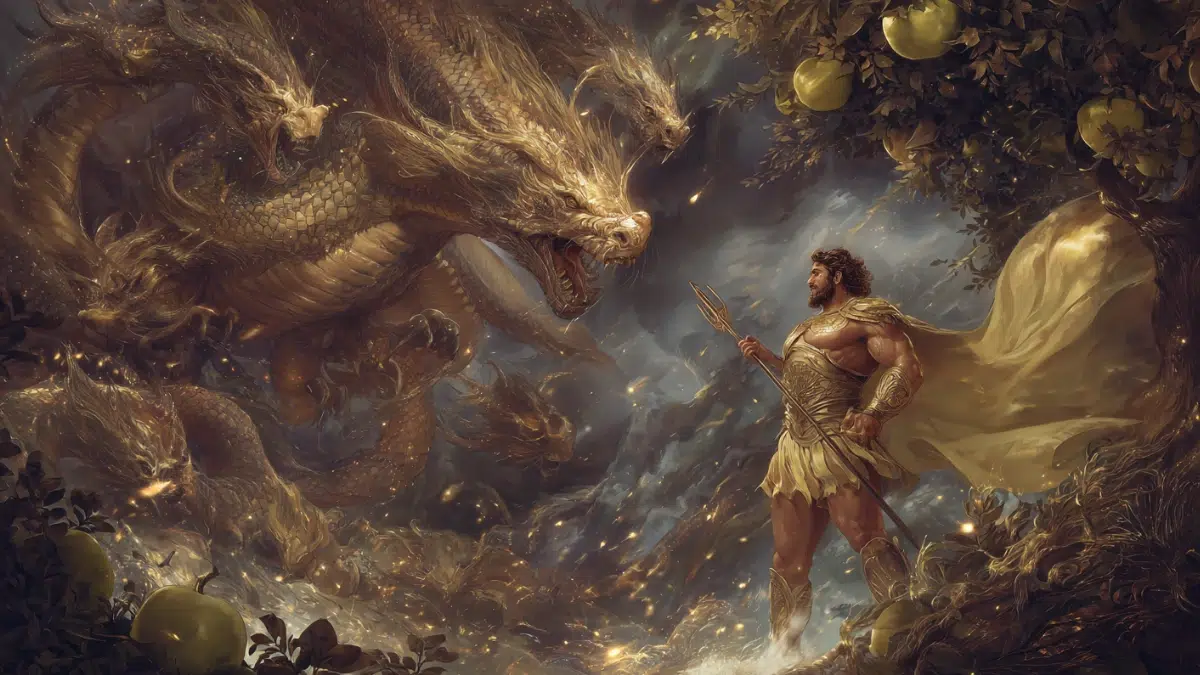
In his Eleventh Labour, Heracles (Hercules in Roman myth) receives a nearly impossible task: retrieve the golden apples of the Hesperides. These apples belong to the gods, guarded by Ladon, the hundred-headed dragon who never sleeps. To steal them means facing a divine creature who answers to Hera herself.
Different versions of the myth explain how Heracles completes the task. In one version, he kills Ladon with a well-aimed arrow, slaying the beast and taking the apples. This version emphasizes his physical power—he overcomes the undefeatable guardian with sheer force.
But in another telling, Heracles uses cleverness instead of violence. He meets Atlas, the titan who holds up the sky, and offers to take the weight off Atlas’s shoulders for a while. In return, Atlas agrees to fetch the apples from the garden himself. Heracles supports the heavens as Atlas retrieves the fruit, avoiding any fight with Ladon.
These two versions show two sides of heroism: brute strength versus strategy. In both, Ladon remains the key obstacle. Whether he falls or is bypassed, Heracles cannot complete his labour without confronting the sacred boundary Ladon defends.
This myth places Ladon in one of the most important heroic cycles in Greek storytelling, securing his place as more than a monster—he’s a divine challenge.
3. Ladon’s Transformation into the Stars
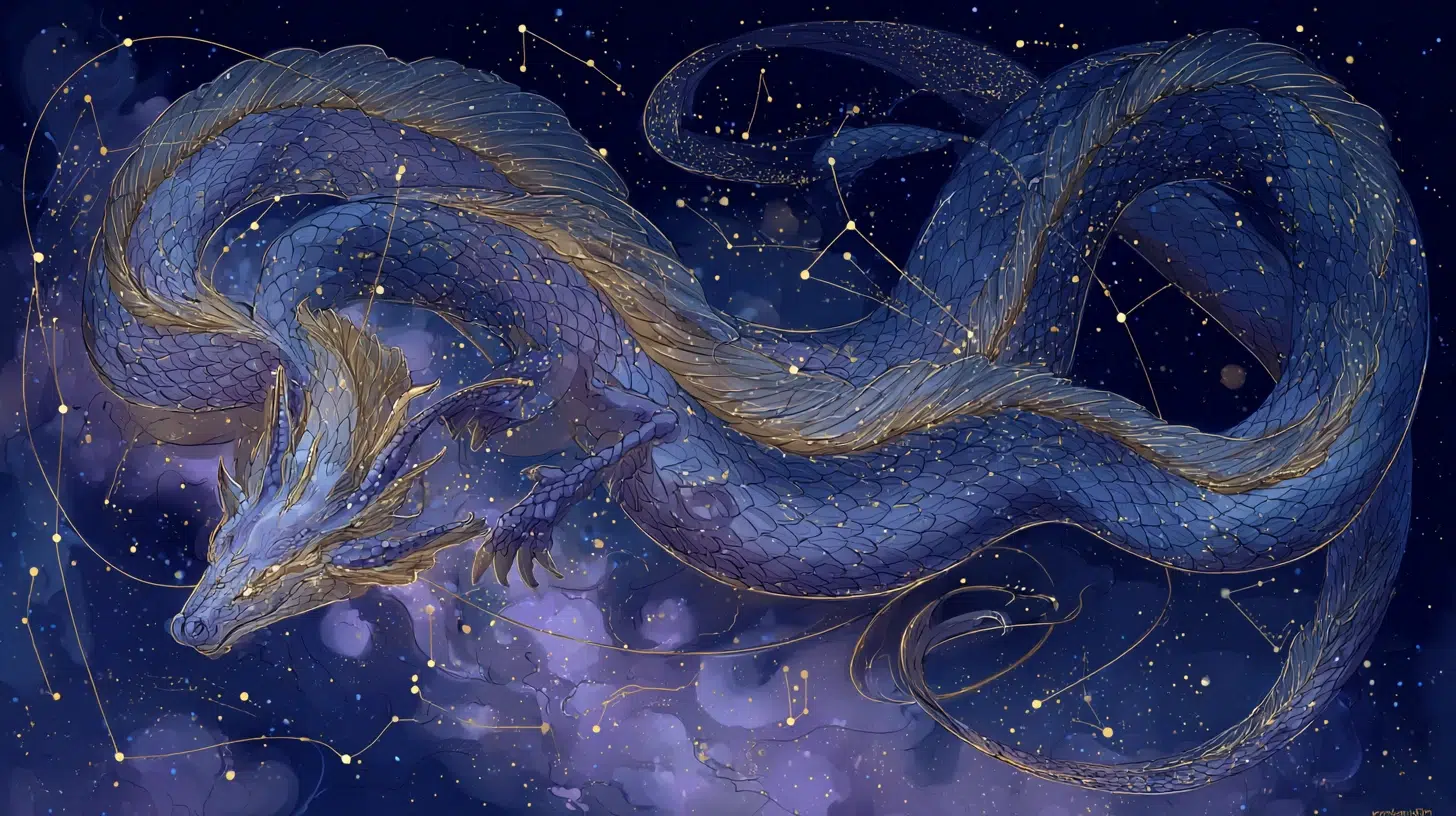
After Heracles retrieves the golden apples, the story of Ladon takes a cosmic turn. In some versions of the myth, Hera mourns the loss of her dragon, either out of anger or respect. To honour Ladon’s unwavering duty, she places him among the stars. He becomes the constellation Draco, which coils in the northern sky, near the Little Dipper.
This transformation is meaningful. It shifts Ladon from an earthly guardian to an eternal watcher. In the stars, he no longer guards golden apples—but his form still wraps around an invisible axis, keeping eternal watch.
In this way, Ladon’s story mirrors his role: never sleeping, always guarding, now across the heavens.
Greek mythology often ends with fallen heroes or creatures becoming stars. This practice both rewards and immortalizes them. For Ladon, it’s a way to continue serving Hera and remain part of the divine order.
Even today, Draco the Dragon circles near the North Pole, never dipping below the horizon in many parts of the world. Like Ladon in the garden, he’s always present, always watching—proof that even monsters, when loyal and brave, earn a place in the heavens.
Interesting Facts About Ladon
1. Ladon Never Slept
One of the most well-known details about Ladon is that he never closed his eyes. Some myths describe him as always awake, guarding the golden apples with total focus. His constant watchfulness made him nearly impossible to sneak past, adding to his reputation as the perfect guardian.
2. He May Have Had 100 Heads
Many versions describe Ladon with a hundred heads, similar to the hydra or other multi-headed beasts in Greek mythology. Some say each head spoke a different language, allowing him to understand and defend against anyone who approached—mortal or divine.
3. He Became the Constellation Draco
After Ladon’s role in the golden apple myth, Hera placed him in the sky as a constellation to honour his service. Draco (Latin for “dragon”) still appears in the night sky today, coiling around the northern celestial pole. He remains a symbol of eternal vigilance.
4. Ladon Has Near Eastern Roots
Scholars link Ladon to older myths from the Near East. Figures like Lotan (Ugaritic) and Illuyanka (Hittite) were also serpent guardians or cosmic dragons. These older stories may have influenced Greek writers, blending into Ladon’s tale over time.
5. The Golden Apples May Symbolize Immortality
The apples Ladon protects are not just rare—they often symbolize eternal life or divine favour. Some scholars connect them to the sun setting in the west, tying the garden’s location to the edge of the known world where life and death meet.
Conclusion
Ladon, the sleepless dragon of the Hesperides, remains one of the most iconic guardians in Greek mythology. He doesn’t lead armies or start wars—his power lies in patience, protection, and presence. As the protector of the golden apples, he stands between mortals and immortality, between the known world and the divine.
Whether slain by Heracles or outwitted through trickery, Ladon represents the kind of obstacle every hero must face—not just a beast, but a symbol of sacred limits. His later transformation into the constellation Draco ensures he continues to watch the world from above, always guarding, never forgotten.
Ladon’s myth reminds us that monsters are not always evil. Sometimes, they exist to test the worth of those who seek what lies beyond. In his coiled form, wrapped around golden fruit or the stars themselves, Ladon keeps one eye on the prize—and the other on those who dare to reach for it.