Kaikeyi in the Ramayana: Villain or Victim?
The night before Rama’s coronation, the palace is filled with celebration.
By morning, everything changes.
Queen Kaikeyi demands two promises from King Dasharatha. One sends Rama into exile. The other places her own son on the throne.
Was she a villain driven by ambition? Or a queen acting out of fear and loyalty?
Kaikeyi’s decision reshapes the entire Ramayana and changes the fate of a kingdom.
Frequently Asked Questions About Kaikeyi
Who is Kaikeyi in the Ramayana?
Kaikeyi is one of King Dasharatha’s three queens and the mother of Bharata. She plays a key role in the Ramayana by demanding Rama’s exile before his coronation.
Why did Kaikeyi exile Rama?
Kaikeyi used two boons promised by Dasharatha to send Rama into exile and crown Bharata instead. Her maid Manthara convinced her that Rama’s rule would weaken Bharata’s position.
How did Kaikeyi save Dasharatha?
During a battle, Kaikeyi drove Dasharatha’s chariot and prevented disaster. She helped him survive the fight. Grateful, he promised her two boons, which she later claimed.
What happened to Kaikeyi after Rama’s exile?
Kaikeyi faced grief and isolation after her decision. Bharata rejected the throne and condemned her actions. She later regretted her choice.
Did Kaikeyi regret exiling Rama?
Yes. After seeing the pain her decision caused, Kaikeyi felt deep remorse. Rama eventually forgave her when he returned from exile.
How did Kaikeyi die?
The Ramayana does not give detailed accounts of Kaikeyi’s death. Most traditions state that she lived quietly after Rama’s return.
Kaikeyi’s Role in the Ramayana
The Ramayana, traditionally attributed to the sage Valmiki, tells the story of Prince Rama and his journey through exile, loss, and victory.
At the centre of this epic stands a turning point, Kaikeyi’s demand.
On the eve of Rama’s coronation, Kaikeyi claims two boons once promised to her by King Dasharatha. She asks that her son Bharata be crowned king and that Rama be sent into exile for fourteen years.
That single decision reshapes the entire epic.
Rama accepts exile without protest. He leaves Ayodhya with Sita and Lakshmana. In the forest, events unfold that lead to Sita’s abduction by Ravana and the great war in Lanka.
Without Kaikeyi’s demand, the Ramayana would unfold very differently.
Her choice does not merely affect a family. It sets the story in motion.
Kaikeyi’s Early Life and Background
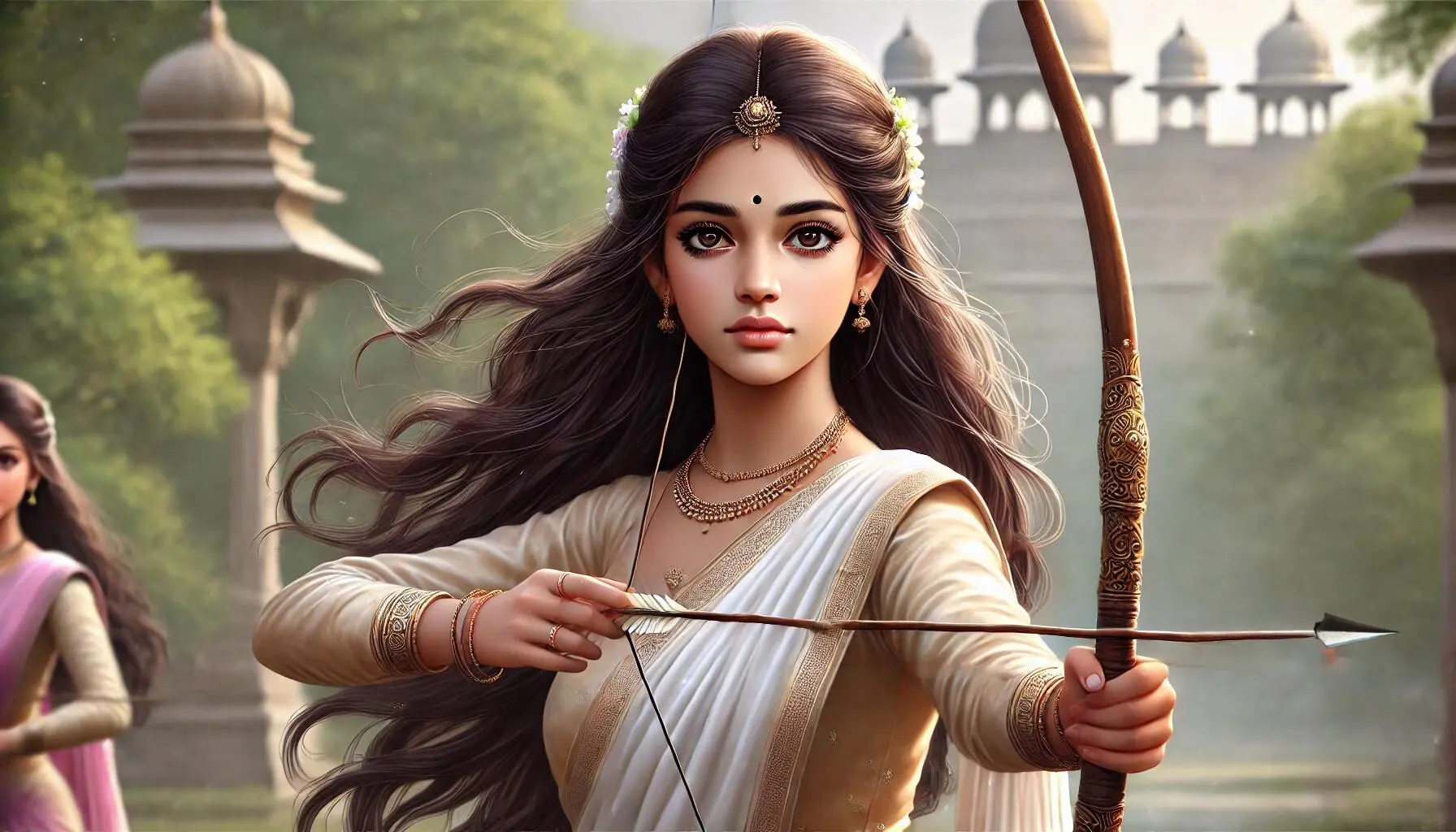
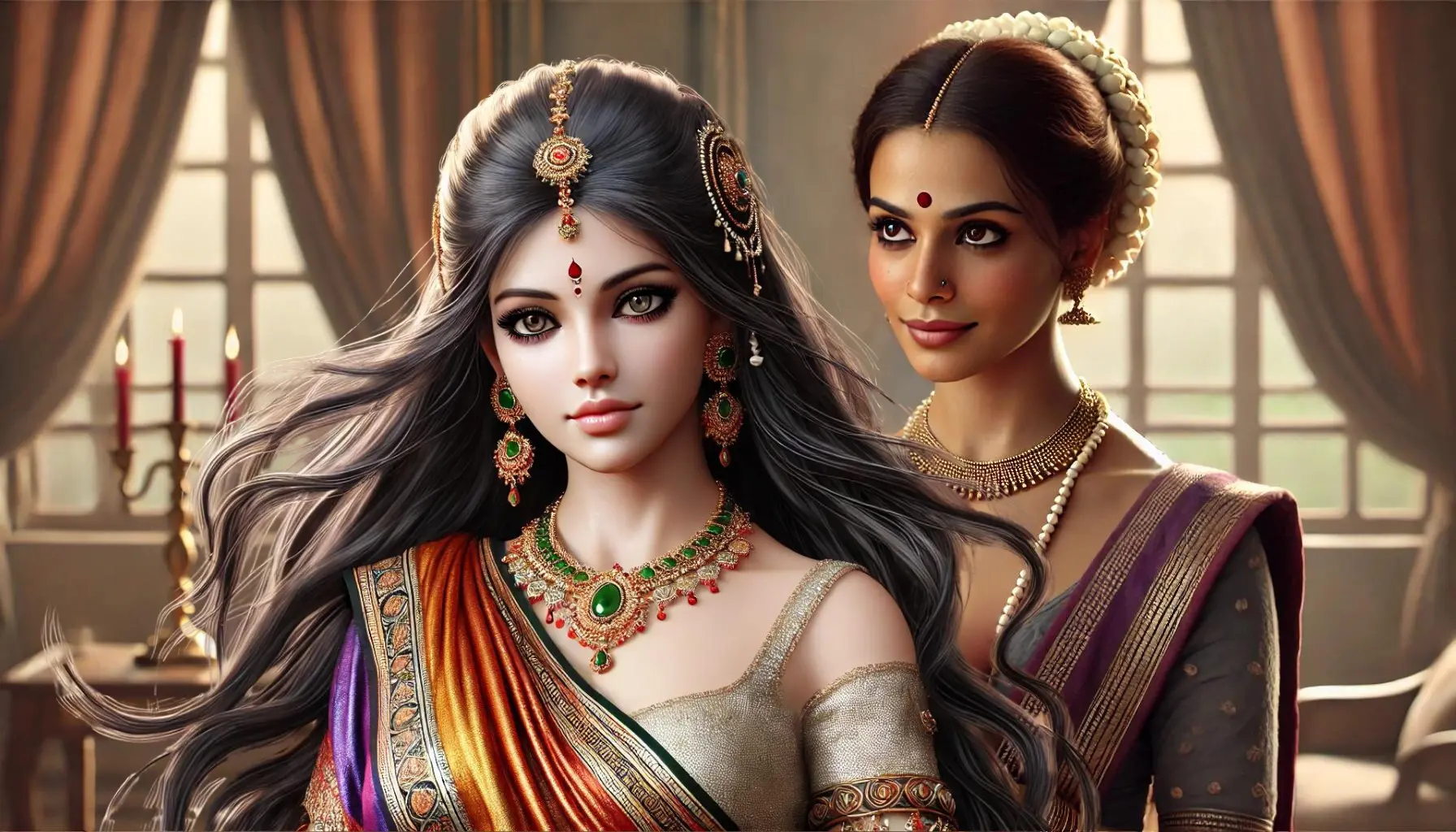
Kaikeyi is one of King Dasharatha’s three queens in the Ramayana. Before she enters Ayodhya’s palace, she grows up as a princess in the kingdom of Kekaya, a region often associated with northwestern India.
As the daughter of a powerful king, Kaikeyi receives an education uncommon for royal women of her time. She learns statecraft, strategy, and even martial skills such as archery and chariot driving. Her training reflects her royal upbringing and her strong personality.
Her reputation for intelligence and courage reaches King Dasharatha, who chooses her as one of his queens. She quickly becomes his favourite, not only for her beauty, but for her loyalty and confidence.
Her strength proves decisive in battle, when she later saves Dasharatha’s life. That act of bravery earns her two promises from the king — promises that will one day change the course of the Ramayana.
Kaikeyi’s early life reveals a capable and respected queen. She is not introduced as a villain, but as a skilled and trusted royal whose choices carry enormous consequences.
Kaikeyi’s Relationship with Rama
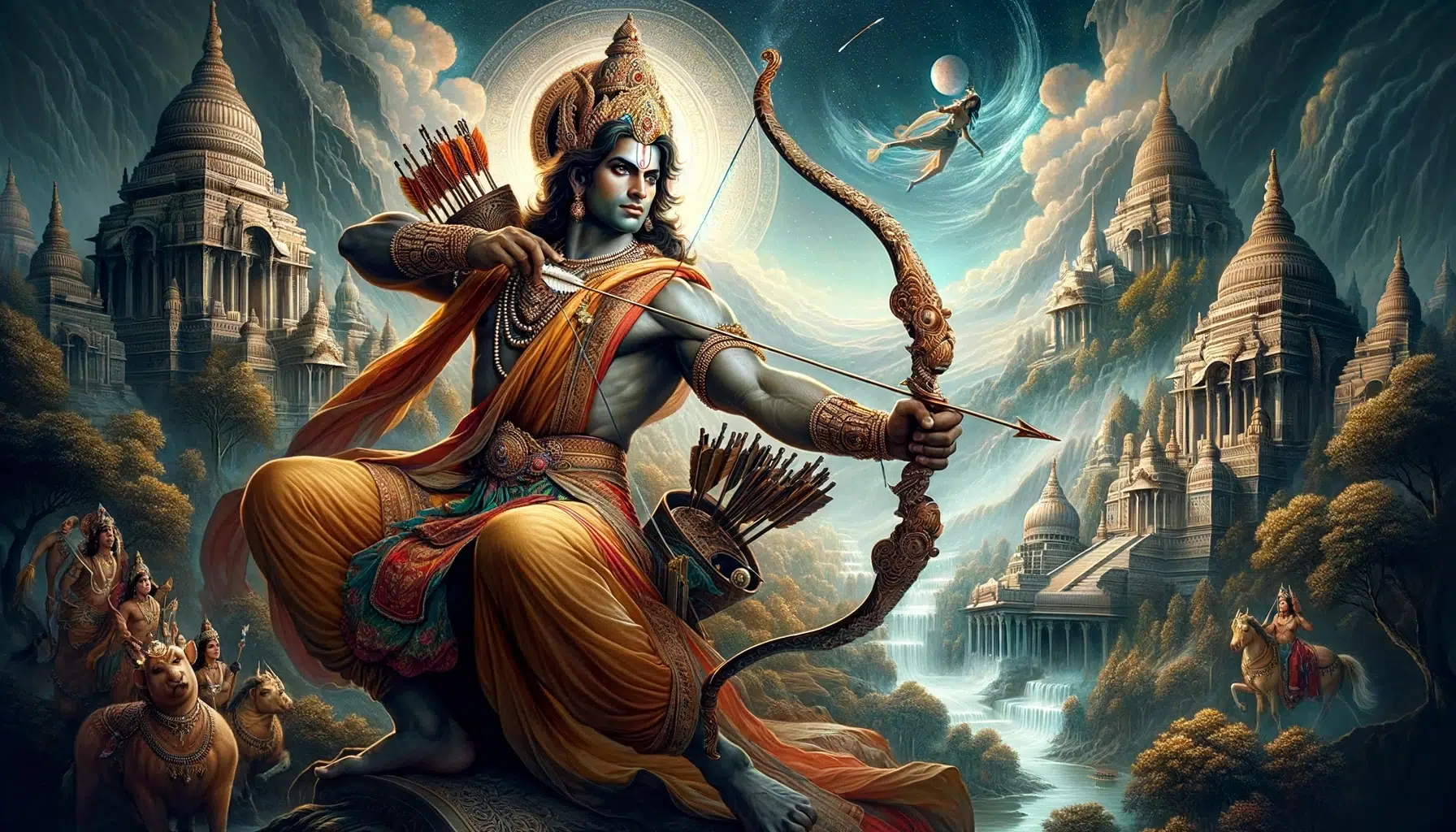
Before the exile, Kaikeyi deeply cares for Rama.
In many versions of the Ramayana, she treats him like her own son. Rama respects her, and she is proud of him. There is no early hostility between them.
That is what makes her later demand so shocking.
When Manthara warns her that Rama’s coronation will reduce Bharata’s influence, doubt begins to grow. Kaikeyi’s loyalty shifts from the kingdom to her son.
Her love for Rama does not disappear. It collides with fear and insecurity.
In that moment, she chooses Bharata’s future over Rama’s.
The decision is not born from hatred, but from persuasion and maternal instinct.
Yet the consequences are enormous.
Rama accepts exile without anger. Bharata refuses the throne and condemns her choice. Dasharatha dies grieving.
Kaikeyi’s relationship with Rama becomes one of the most tragic elements of the epic. She is not a simple villain. She is a mother torn between affection and ambition.
Key Moments in Kaikeyi’s Story
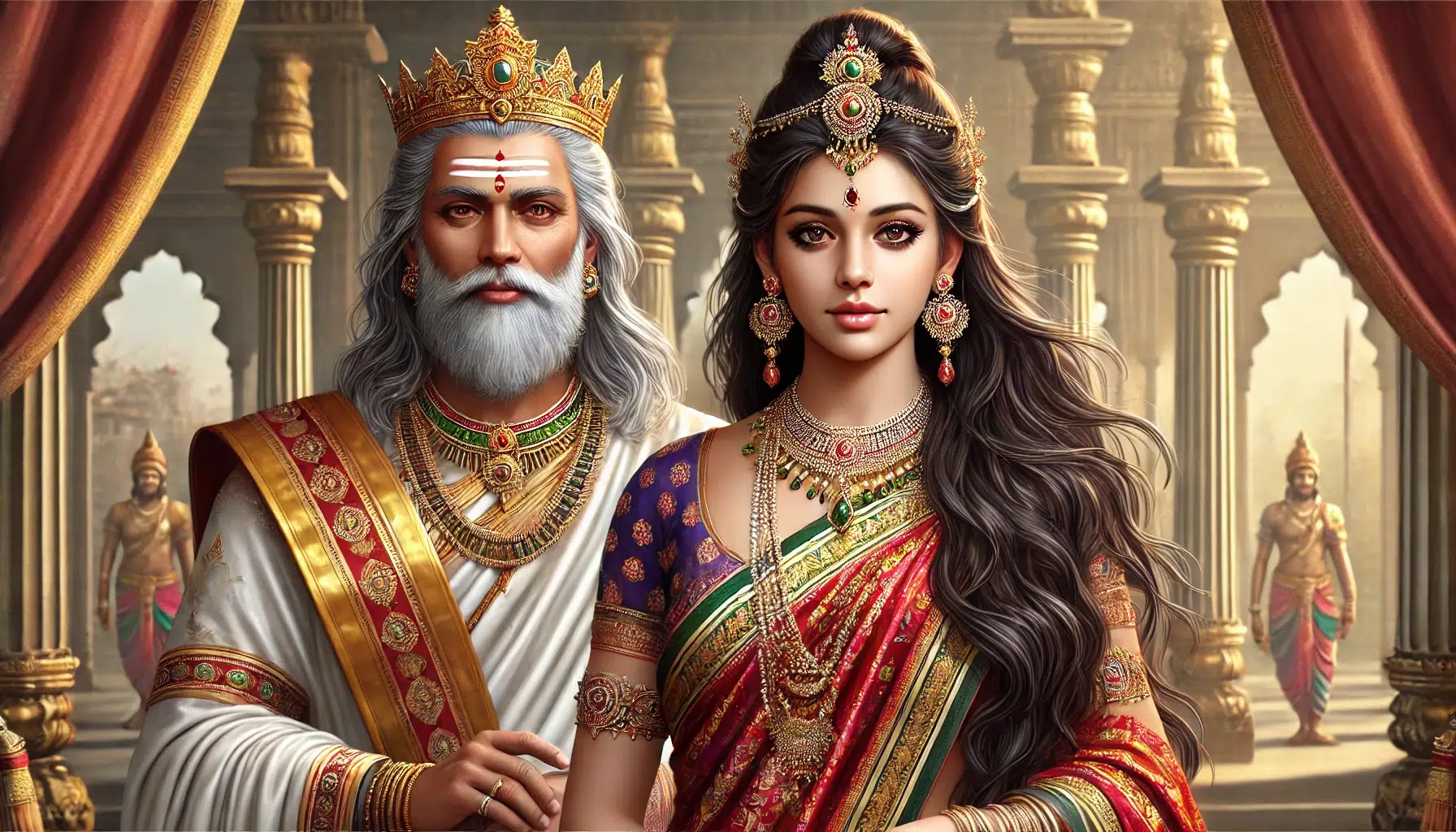
The Turning Point: The Two Boons
Kaikeyi once saved King Dasharatha’s life in battle. When his chariot wheel loosened in combat, she stepped in, steadied the vehicle, and helped him survive the fight.
Grateful, Dasharatha promised her two boons to be claimed at any time.
Years later, on the eve of Rama’s coronation, Manthara reminds Kaikeyi of that promise.
Fear takes hold. If Rama becomes king, what will happen to Bharata?
Kaikeyi enters Dasharatha’s chamber and claims her boons.
Her first demand: Bharata must be crowned king.
Her second: Rama must go into exile for fourteen years.
Dasharatha is shattered, but bound by honour. He cannot refuse.
Rama accepts the exile without anger. He leaves Ayodhya with Sita and Lakshmana, while the kingdom falls into grief.
One decision changes everything.
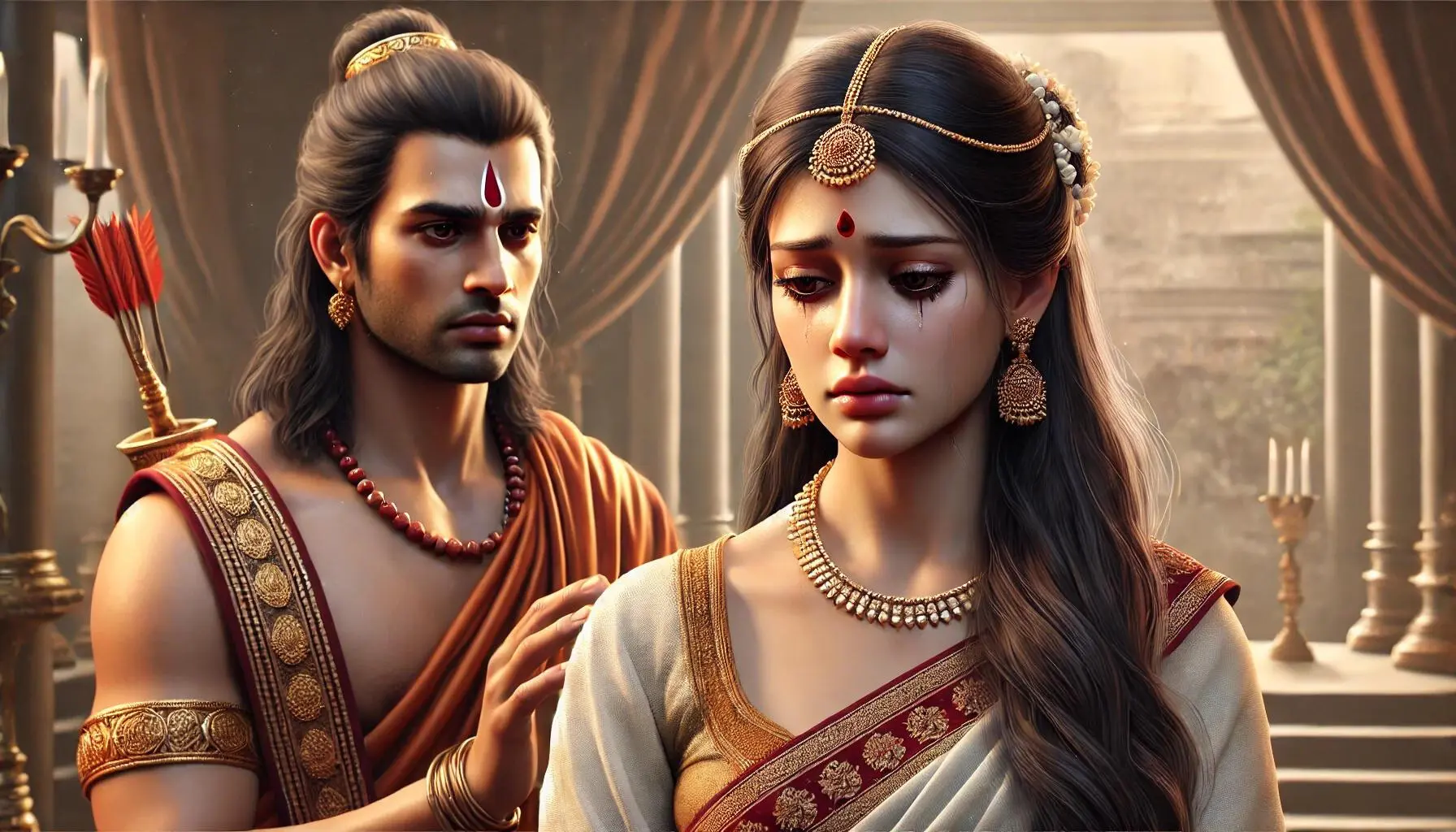
Regret and Redemption
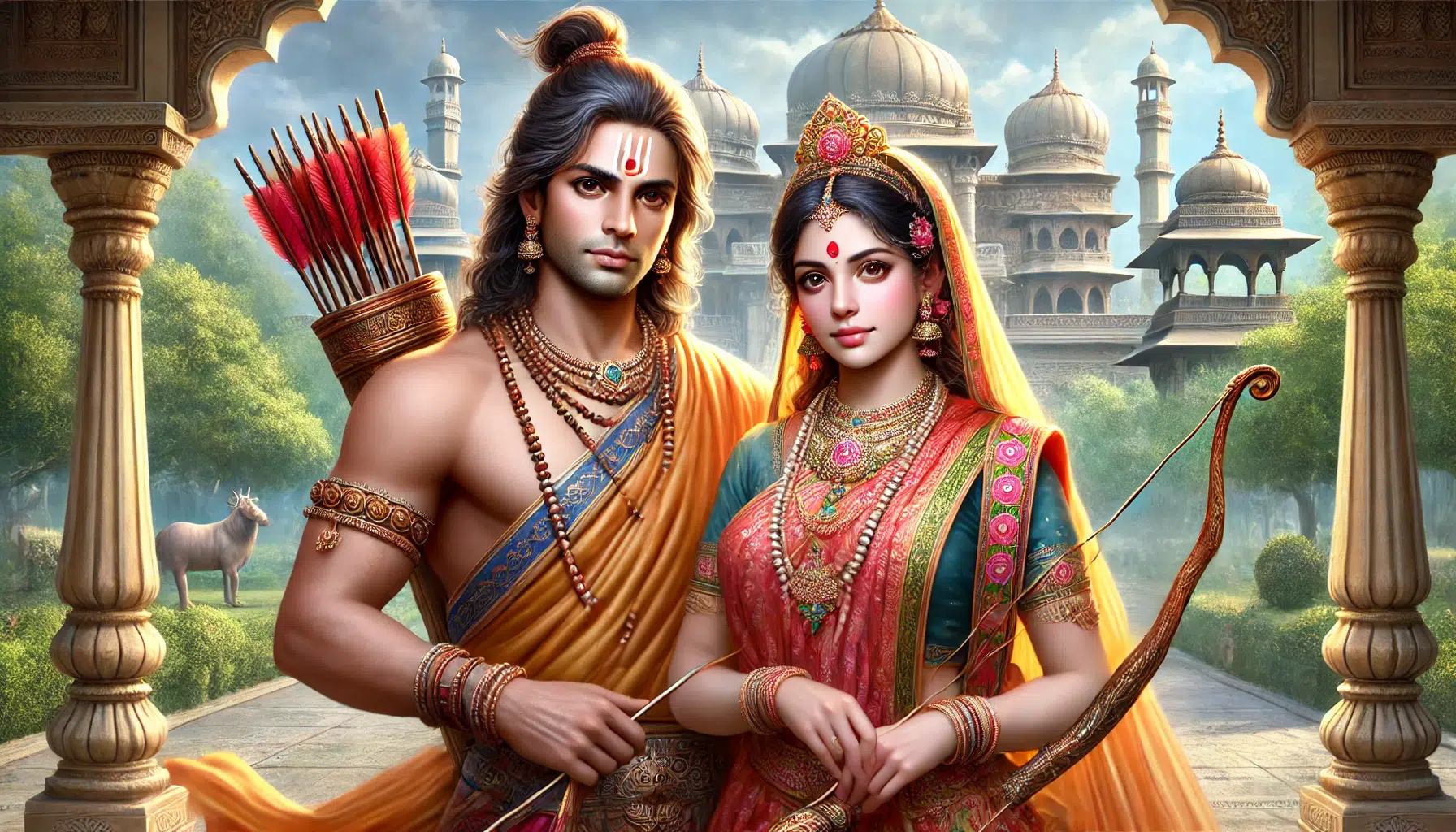
The consequences come quickly.
Dasharatha dies in sorrow. Bharata refuses the throne and condemns his mother’s actions. He rules only as a regent, waiting for Rama’s return.
Kaikeyi realizes the depth of her mistake.
Her ambition does not bring power. It brings isolation.
When Rama returns years later, he does not seek revenge. He forgives her.
That forgiveness restores her place in the family and reveals one of the epic’s central themes: even grave mistakes can lead to redemption.
Kaikeyi’s story is not simply one of ambition. It is a story of influence, fear, regret, and forgiveness.
The Motives Behind Kaikeyi’s Actions
Kaikeyi’s decision is often reduced to ambition. But her motives are layered.
She is a queen in a royal court where succession determines survival. Power is not abstract. It shapes alliances, security, and legacy.
Manthara’s warnings ignite fear. If Rama becomes king, Bharata’s position weakens. In that moment, Kaikeyi chooses protection over harmony.
Her action can be seen as political strategy, maternal instinct, or insecurity fueled by manipulation.
It is likely all three.
The Ramayana does not portray her as evil by nature. It shows how fear, influence, and court politics can reshape even a trusted queen.
Kaikeyi’s demand is not born from cruelty alone. It is born from pressure.
Changing Perceptions of Kaikeyi
For centuries, Kaikeyi is viewed as the villain who broke a royal family apart.
Modern interpretations are more nuanced.
Today, many readers see her as a tragic figure — a powerful woman navigating palace politics who made a devastating mistake.
Her story resonates because it reflects a familiar human pattern: a decision made under pressure that cannot be undone.
Television, theatre, and contemporary retellings often portray her with greater empathy. Rather than a one-dimensional antagonist, she becomes a study in power, motherhood, and consequence.
Kaikeyi’s reputation continues to evolve.
That evolution mirrors changing conversations about gender, authority, and responsibility.
Comparative Analysis: Other Misunderstood Figures in Mythology

Kaikeyi is not the only figure in mythology remembered for one decision but instead for her full story.
Across cultures, people often label characters as villains without examining their motives.
In Greek mythology, Medea reacts to betrayal with shocking violence. Jason abandons her, strips her of status, and leaves her powerless. Her actions are extreme, but they grow from heartbreak and humiliation.
In Norse mythology, Loki disrupts the gods through trickery and chaos. He causes harm, yet he also exposes weakness and forces change. His mischief reveals flaws the gods prefer to ignore.
Even in the Ramayana, Ravana stands as more than a demon king. He kidnaps Sita, yet he also rules Lanka as a scholar and a devoted follower of Shiva. His pride drives his downfall.
Like these figures, Kaikeyi cannot be reduced to a single act.
These stories show how ambition, jealousy, fear, and grief shape human decisions. They remind us that myth rarely divides characters into simple heroes and villains.
Conclusion
Kaikeyi’s story is not simple.
She is remembered as the queen who sent Rama into exile however, before that she was a brave princess, a trusted wife, and a respected queen.
Her decision reshaped a kingdom.
It reveals how fear, influence, and love can collide in a single choice.
The Ramayana does not present her as purely evil. It shows how even powerful figures can falter under pressure.
Kaikeyi’s story endures because it feels human and reminds us that one decision can change everything.