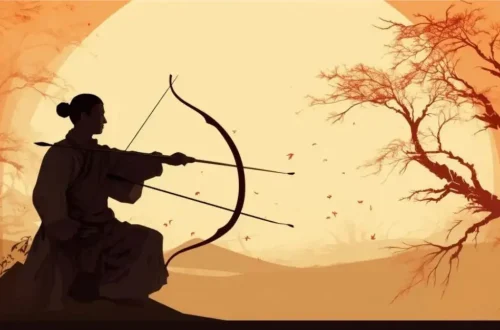

Japanese Archery: The Art of Mastering Kyudo
Introduction to Kyudo: The Beauty and Discipline of Japanese Archery
Kyudo means “The Way of the Bow”. It is the traditional art of Japanese archery known for both its aesthetic and spiritual aspects. It is a discipline that demands precision, control, and a harmonious union of mind, body, and spirit.
Originating from samurai warrior-class practices, Kyudo has evolved into a contemplative practice focusing on self-improvement and moral development.
Practitioners, known as kyudoka, follow a strict set of rituals and etiquettes that reflect the depth and philosophy of this martial art. With each precise movement leading up to the release of the arrow, kyudoka strive not only for physical accuracy but also for spiritual and ethical growth.
The beauty of Kyudo lies not merely in hitting the target, but also in the graceful execution of each shot.
Historical Significance of Kyudo in Japanese Culture
Kyudo, which means “the way of the bow,” is deeply rooted in the traditions of Japanese culture. Dating back to the samurai class of feudal Japan, kyudo was originally a martial skill employed during warfare.
Over centuries, it has transcended its practical applications to become a spiritual and philosophical pursuit, symbolizing honor, precision, and the pursuit of moral and personal development.
Kyudo’s emphasis on etiquette and form, rather than just accuracy, reflects its historical role in cultivating discipline, focus, and a refined character among practitioners, making it an integral part of Japan’s rich cultural tapestry.
Learn more about: Journey of Archery from Combat to Recreation
Understanding the Equipment: The Yumi, Ya, and More
Kyudo, the traditional Japanese archery, uses specific equipment deeply rooted in history and tradition.
- The Yumi is the asymmetric longbow, distinct for its shape differing significantly above and below the grip. Made of bamboo, wood, and leather, it requires careful handling and maintenance.
- Ya refers to the arrows in Kyudo, which are typically made of bamboo and feature feathers at the end for stabilization during flight.
Other essential equipment includes:
- The Yugake, the archer’s glove, often from deerskin and equipped with a hard thumb to assist in pulling the string.
- Makiwara, the straw target for close-range practice, helps archers refine their technique.
- Kyudojo, the practice hall, is traditionally laid out to foster discipline and the proper execution of shooting rituals.
The Kyudo Training Process
The path from novice to master in Kyudo is meticulous and profound. Initially, students focus on the basics: proper posture, the holding of the bow (yumi), and the etiquette that underpins the practice.
As proficiency grows, attention shifts to the precise stages of shooting—yugamae (readying the bow), uchiokoshi (raising the bow), hikiwake (drawing the bow), to hanare (release).
Advanced practitioners refine their technique, striving for zanshin, the state of complete follow-through and mental focus. Ultimately, mastery in Kyudo transcends mere physical skill, embodying the unity of mind, body, and bow.
The Spiritual Aspect of Kyudo
Kyudo, the Way of the Bow, transcends mere technique, embracing spirituality.
Practitioners find a meditative rhythm in the deliberate steps of the Hassetsu, the eight stages of shooting. With each breath and movement, the archer seeks mindfulness and inner stillness, aiming not just at a physical target but at achieving harmony between the bow, the arrow, and the self.
The silence enveloping the dojos underscores this pursuit; the twang of the bowstring and the arrow’s flight become a dialogue with the universe. Through Kyudo, archers embark on a contemplative journey, embodying Zen principles and the art of living in the present moment.
The Importance of Form and Etiquette in Kyudo
In the disciplined practice of Kyudo, paramount importance is placed on not just physical technique but also on form and etiquette. This adherence to traditional values is not merely for ceremony’s sake; it is integral to the art itself.
- Proper form ensures the archer’s body aligns correctly with the bow, contributing to accuracy and power.
- The careful observation of etiquette fosters a respectful atmosphere where focus and serenity can flourish.
- The ritualistic actions preceding each shot help in calming the mind, allowing for a clear, unperturbed release.
- Mastery of form and etiquette is seen as a reflection of one’s spiritual development, central to Kyudo’s philosophy.
For Kyudo practitioners, the bow is an extension of the self, making these principles vital to both personal and martial growth.
Mastery through Practice
Achieving mastery in kyudo, the Japanese martial art of archery, entails a regimented practice routine, focusing not just on skilled accuracy but also on the cultivated elegance of each movement.
Practitioners spend countless hours refining their stance (ashi-sabaki), their grip on the bow (yugamae), and the smooth cycle of drawing and releasing the arrow (uchiokoshi to hanare).
This ceaseless repetition is akin to a meditative process, where the mind and body synchronize to perform with effortless precision. The archer’s ability to execute each step of the shot with a harmonious blend of power and poise showcases their progress. Cultivating these attributes is essential, as they epitomize the spirit and beauty ingrained within kyudo.
The Role of Kyudo in Modern Day Japan
In Japan today, Kyudo maintains a cultural significance, integrating tradition with contemporary values. It is a physical and spiritual discipline, taught in clubs and schools and practiced by people of all ages.
Kyudo offers a conduit for self-improvement and mindfulness, qualities highly regarded in Japan’s fast-paced society. Tournaments and demonstrations showcase the art’s precision and beauty, captivating audiences and preserving heritage. Moreover, Kyudo fosters connections with Zen Buddhism, reinforcing Japan’s historical narrative and spiritual tapestry.
Through these avenues, Kyudo remains a pertinent element of Japan’s identity, merging the past with the present.
Kyudo Competitions and Ceremonies
In the realm of kyudo, competitions and ceremonies highlight its sophisticated performance aspect. Unlike Western archery, kyudo tournaments are not merely about precision, but also grace and spiritual alignment.
Archers showcase their skills in taikai (tournaments), where hitting the target is just part of the score; form and etiquette significantly influence rankings.
Meanwhile, shaji (ceremonial shooting), often part of Shinto and Buddhist rituals, elevates kyudo to a ceremonial art, focusing on the beauty of the movement and the shooter’s mindful presence. These events embody kyudo’s dual nature as a martial discipline and a refined cultural performance.
Kyudo Dojos and the Sensei-Student Relationship
Kyudo dojos are sanctuaries where the revered traditions of Japanese archery are taught and upheld. Within their walls, the relationship between the sensei (teacher) and student is paramount.
It is a bond that covers respect, discipline, and mutual dedication to the art:
- The sensei imparts not only technical skills but also philosophical insights, guiding their students on a path of self-improvement and spiritual growth.
- Students are expected to embody the virtues of kyudo, such as sincerity, humility, and perseverance, inside and outside the dojo.
- A reciprocal exchange marks the sensei-student dynamic: the sensei’s wisdom for the student’s earnest effort.
- Recognition of progress is formalized through ranks and grading, a testament to the sensei’s mentorship and the student’s advancement.
This profound mentorship is integral to mastering kyudo’s physical and esoteric components.
Overcoming Challenges in Kyudo Practice
Kyudo practitioners often encounter obstacles that test their resolve. To surmount these, core strategies are implemented:
- Regular Practice: Consistency is key; it refines technique and strengthens mental fortitude.
- Mindful Reflection: Analyzing each shot improves awareness and identifies areas for improvement.
- Seeking Guidance: Experienced archers or sensei provide insights that can lead to breakthroughs in form and mindset.
- Cross-Training: Engaging in complementary exercises enhances physical capability and concentration.
- Patience and Persistence: Understanding that mastery is a slow process helps maintain motivation through plateaus.
These elements are essential to advancing in the disciplined path of Kyudo.
Incorporating Kyudo Principles into Daily Life
Kyudo, the “way of the bow,” extends beyond archery, offering lessons that can apply to everyday existence. Those who study Kyudo find that its principles cultivate discipline, focus, and serenity.
Here’s how you can integrate these values into your day-to-day life:
- Mindfulness: Aiming requires a complete presence of mind. When you are at home or at work, practice focusing fully on your current task.
- Patience: Drawing the bow teaches patience. Apply this by not rushing through tasks and by giving others your time without pressure.
- Respect: Kyudo emphasizes reverence for the equipment and process. Show similar respect for the possessions and contributions of others.
- Etiquette: The courtesy shown in the dojo can reflect in polite interactions with colleagues and acquaintances.
- Perseverance: Kyudo is a path of continuous improvement, which can inspire persistent efforts in personal growth and problem-solving.
Resources for Learning Kyudo
- Books:
- “Kyudo: The Essence and Practice of Japanese Archery” by Hideharu Onuma
- “Zen in the Art of Archery” by Eugen Herrigel
- “The Practice of Kyudo” by Feliks F. Hoff
- Clubs:
- Find local kyudo associations via the International Kyudo Federation (IKYF) directory
- Join regional workshops and seminars for hands-on experience
- Online Communities:
- Kyudo subreddit (/r/kyudo) for discussion and advice
- Online forums like Kyudo.com for community support and resources
- Facebook groups dedicated to kyudo practitioners worldwide
Conclusion: The Endless Journey of Kyudo Mastery
Kyudo, the Japanese art of archery, is not merely about perfecting the technique of shooting arrows; it’s a lifelong path of self-improvement and spiritual refinement.
The practitioner aims to achieve a state where mind, technique, and spirit converge flawlessly. It’s a pursuit that delves deep into personal development, demanding endless patience, discipline, and introspection.
As archers continue to practice, they discover that the true target in Kyudo is not the one at the end of the range but the mastery of one’s self. This endless journey is not just about hitting the mark—it’s about the perpetual quest for excellence and enlightenment in every aspect of life.