Norse God Heimdall: All-Seeing Guardian in Mythology
In Norse mythology, Heimdall was not specifically a god of war, but the protector of Asgard. He can see and hear everything, making him a powerful guardian.
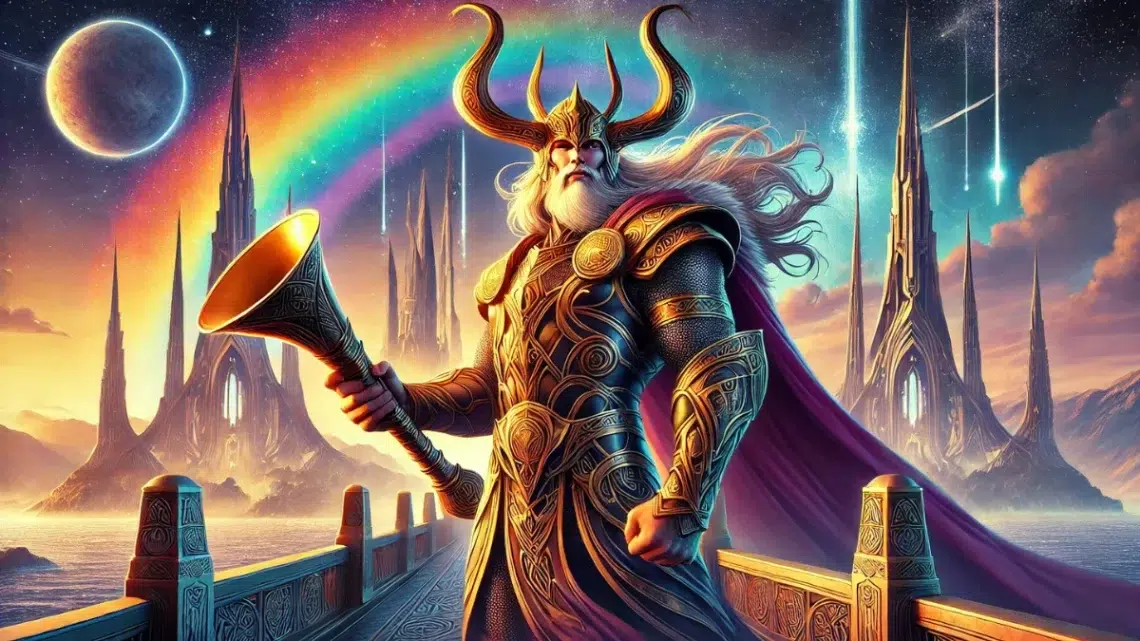
He is primarily known as the guardian of the Bifrost, the rainbow bridge that connects Midgard (the world of humans) to Asgard (the realm of the gods).
Key Traits of Heimdall
- Vigilance: Heimdall has extraordinary senses, capable of hearing grass grow and seeing great distances, making him an excellent guardian.
- Foresight: He possesses wisdom and foreknowledge, particularly about Ragnarok, the prophesied end of the world.
- Martial Role: While not specifically a god of war, Heimdall does have combat prowess. At Ragnarok, he fights Loki in a final battle, where they kill each other.
Heimdall is considered a god in Norse mythology. He is one of the Æsir, the main pantheon of Norse gods. His divine role is significant, as he acts as the watchman and protector of Asgard, the realm of the gods.
Heimdall’s Divine Attributes
- Birth: Heimdall is described as being born of nine mothers, who are sometimes associated with the waves of the sea. This mysterious origin underscores his divine nature.
- Guardian Role: As the keeper of Bifrost, the rainbow bridge, Heimdall is responsible for guarding Asgard from any threats. He will be the first to warn the gods of impending danger, especially at Ragnarok (the end of the world).
- Special Abilities:
- Superhuman senses: He can hear and see across vast distances, even detecting events others cannot.
- Minimal need for sleep: Heimdall requires very little rest to maintain his eternal vigilance.
Gods of the Æsir Pantheon in Norse Mythology
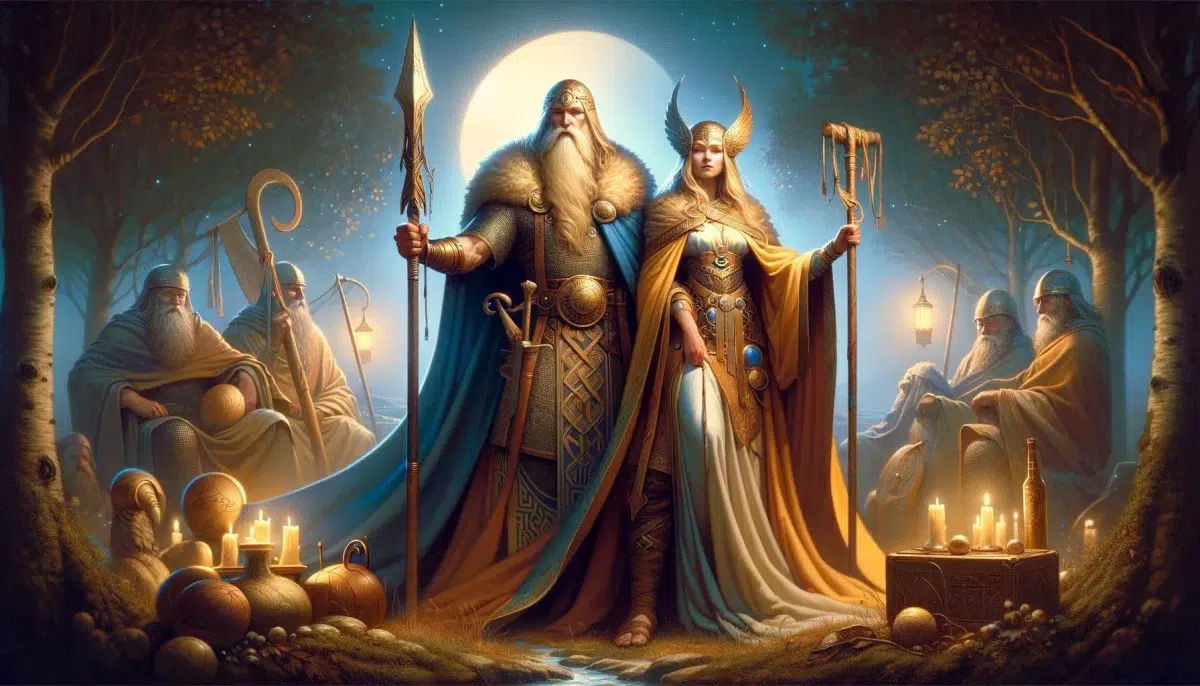
Although Heimdall is not a “creator god” or a ruler like Odin, his role is crucial in protecting the cosmic order. This makes him an essential deity, recognized among the Æsir pantheon, even if his worship was not as widespread as Odin, Thor, or Freyja.
The Æsir are one of the two primary groups of gods in Norse mythology, the other being the Vanir.
The Æsir are associated with war, power, and governance, while the Vanir are connected to fertility and nature. After a war between the two groups, they formed a truce and exchanged gods.
Major Æsir Gods and Goddesses
- Odin – The Allfather and chief of the Æsir; God of wisdom, war, death, poetry, and magic
- Thor – God of thunder, strength, and protection and son of Odin and the earth goddess Fjörgyn (Jörð)
- Frigg – Queen of the Æsir and wife of Odin and Goddess of marriage, motherhood, and foresight
- Baldr – God of beauty, light, and purity and son of Odin and Frigg
- Heimdall – The watchman of the gods and guardian of the Bifrost bridge
- Týr – God of war, justice, and law
- Loki – A trickster figure and god of mischief and chaos
- Höðr – God of darkness and winter
- Víðarr – God of vengeance and silence
- Váli – God of vengeance and survival
- Bragi – God of poetry, music, and eloquence
- Forseti – God of justice, peace, and reconciliation
- Idunn – Goddess of youth and rejuvenation
The Origins of Heimdall Norse Mythology

Heimdall’s birth story is one of the most unique in Norse mythology. He is the son of nine mothers, a detail that sets him apart from other gods.
These mothers are often linked to the sea and may represent waves or sea goddesses. Their connection to water adds a layer of mystery and symbolism to his origins.
The sea plays a vital role in Norse culture and mythology, symbolizing both life and unpredictability. By being born of the sea’s waves, Heimdall becomes a figure tied to nature’s power and its ability to both protect and destroy.
This link to water may also explain his role as a vigilant guardian, reflecting the watchfulness needed to survive in a harsh, seafaring world.
The number nine in Norse mythology holds special meaning, often tied to cycles, creation, and completeness. Heimdall’s nine mothers may symbolize a connection to cosmic balance and the interconnectedness of all things.
His unique birth reflects his extraordinary abilities. Heimdall’s superhuman senses, foresight, and unmatched vigilance align with his origins as a child of the sea. His story reminds us that even in mythology, nature plays a key role in shaping the powers of gods and heroes alike.
Heimdall’s Guardianship of Bifrost
The Bifrost, a rainbow bridge connecting Asgard to other realms, is under Heimdall’s constant watch. This bridge symbolizes the link between the divine and mortal worlds. Heimdall’s duty to guard it ensures the safety and stability of the cosmos.
The Bifrost is more than a connection between realms—it represents boundaries and order. Heimdall’s tireless protection of this sacred bridge reflects his dedication to maintaining balance in Norse mythology.
This role emphasizes his connection to maintaining boundaries and protecting transitions. The Bifrost represents the link between the divine and mortal worlds. Heimdall’s watchful presence ensures the gods’ safety and the order of the realms.
His role highlights the importance of balance and structure in Norse mythology.
Heimdall god of war guards the Bifrost with great care, filled with symbols that show his special role in Norse myths. His famous Gjallarhorn is a key symbol, used to warn the gods of Ragnarok’s coming. This horn is more than just a tool; it shows his constant watchfulness and his duty to protect Asgard.
Heimdall’s job guarding the Bifrost shows his dedication and the respect he has among the gods. His work keeps the divine realms safe and united in Norse lore.
The Superhuman Senses of Heimdall in Norse Mythology
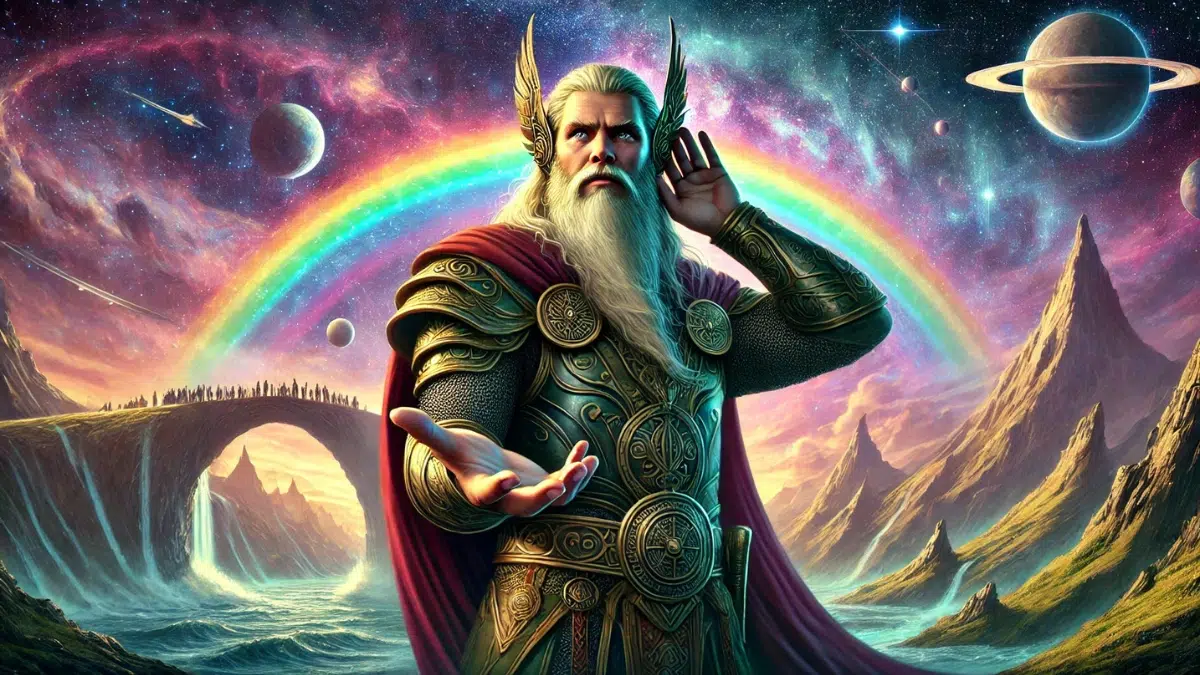
Heimdall: The All-Seeing Guardian
In Norse mythology, Heimdall is the vigilant protector of Asgard, the realm of the gods. Known for his unmatched ability to see and hear everything, Heimdall stands as a powerful guardian against chaos.
His duty goes beyond watchfulness—he is always ready to sound the mighty Gjallarhorn, signaling danger and the onset of Ragnarok.
Heimdall symbolizes safety, order, and readiness, making him a vital figure in Norse mythology. His stories highlight his importance as a protector and his role in preserving cosmic balance.
Heimdall is famous for his amazing ability to see and hear things from far away. As the watchman of the gods, he can see and hear things others can’t. This makes him very important in keeping the realms safe.
Heimdall is known for being very alert and careful. This skill is key to keeping the cosmic order. He is seen as the one who stops chaos from happening.
His eyes are said to see everything, making him a strong protector. He can hear even the quietest sounds from far away. Heimdall is like a guardian, keeping peace and order for everyone.
The Significance of Heimdall’s Hearing
Heimdall god of war is famous for his amazing hearing in Norse mythology. He is seen as one of the top divine listeners.
This skill is known as a mythic sense. It highlights his role as a watchful guardian of the realms. He is always ready to protect Asgard.
Stories about Heimdall show his unmatched hearing. They describe him as a guardian who is always ready. His sharp hearing means he can see the future and prepare for dangers.
This skill keeps Asgard safe and balanced. It shows his deep connection to the world he guards.
Heimdall’s hearing shows what it means to be a guardian of Asgard. His hearing is more than just a physical ability. It shows his constant watchfulness and deep care for Asgard.
Symbols and Attributes of Heimdall God of War
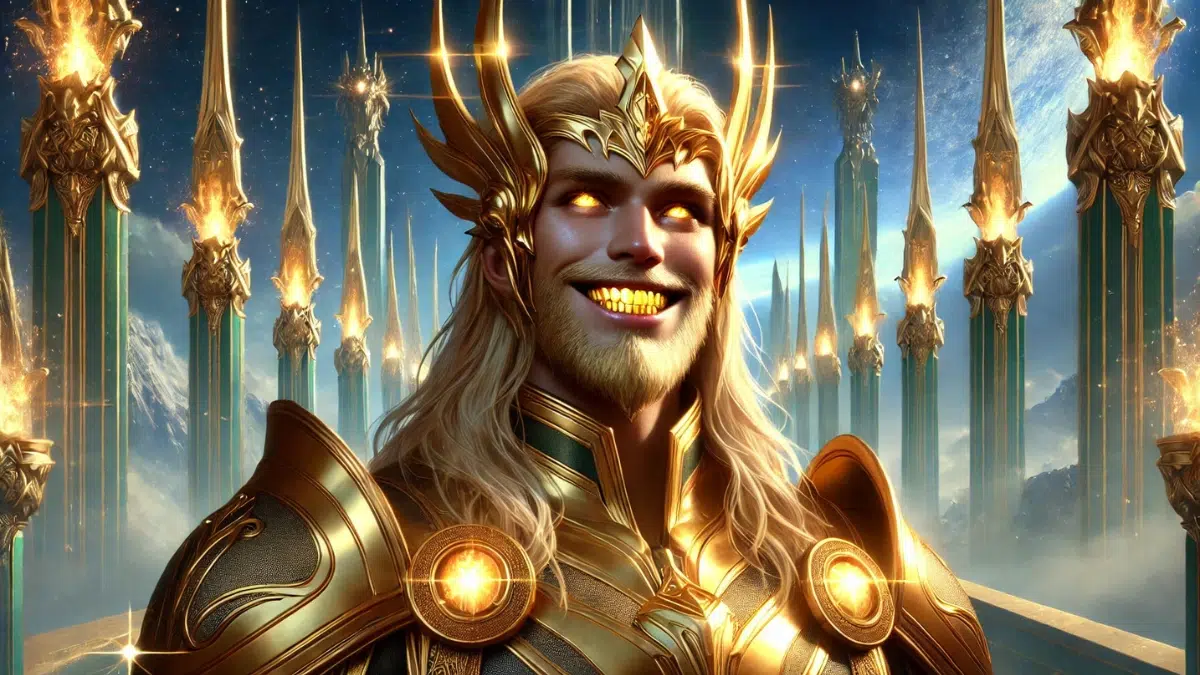
Heimdall’s attributes and symbols highlight his divine role:
- Gjallarhorn: This legendary horn symbolizes vigilance and is used to alert the gods to approaching danger.
- Golden Teeth: Known as “Gold-Mane” (Gullintanni), his golden teeth represent purity, light, and his unique divine status.
- Hallinskíði (Ram): While not a literal mount, the ram symbolizes strength, leadership, and vigilance—qualities Heimdall embodies.
These reflect his commitment to protection and his divine role as reflected in the symbols in Norse mythology.
Gjallarhorn, Heimdall’s iconic horn, serves multiple purposes in Norse mythology. It is a tool for alerting the gods to Ragnarok, marking the start of the final battles. Gjallarhorn also symbolizes constant vigilance and preparedness.
In some interpretations, it connects to rituals in Viking culture, representing the idea of being ready for challenges. The horn’s deep, resonating sound reflects Heimdall’s connection to protection and cosmic order.
Golden Teeth: Known as “Gold-Mane” (Gullintanni)
Heimdall’s golden teeth are a unique and striking feature in Norse mythology. They earn him the title “Gold-Mane” (Gullintanni). This epithet highlights his divine nature and sets him apart from other gods.
The golden teeth symbolize purity, light, and divine radiance. In Norse culture, gold often represents immortality and strength. Heimdall’s connection to these values reflects his role as a protector and guide.
His radiant smile adds to his mystique as a watchful guardian. It reinforces his image as a figure of hope and safety. The brilliance of his golden teeth connects to his role as a shining beacon for the gods and the realms.
Hallinskíði (Ram)
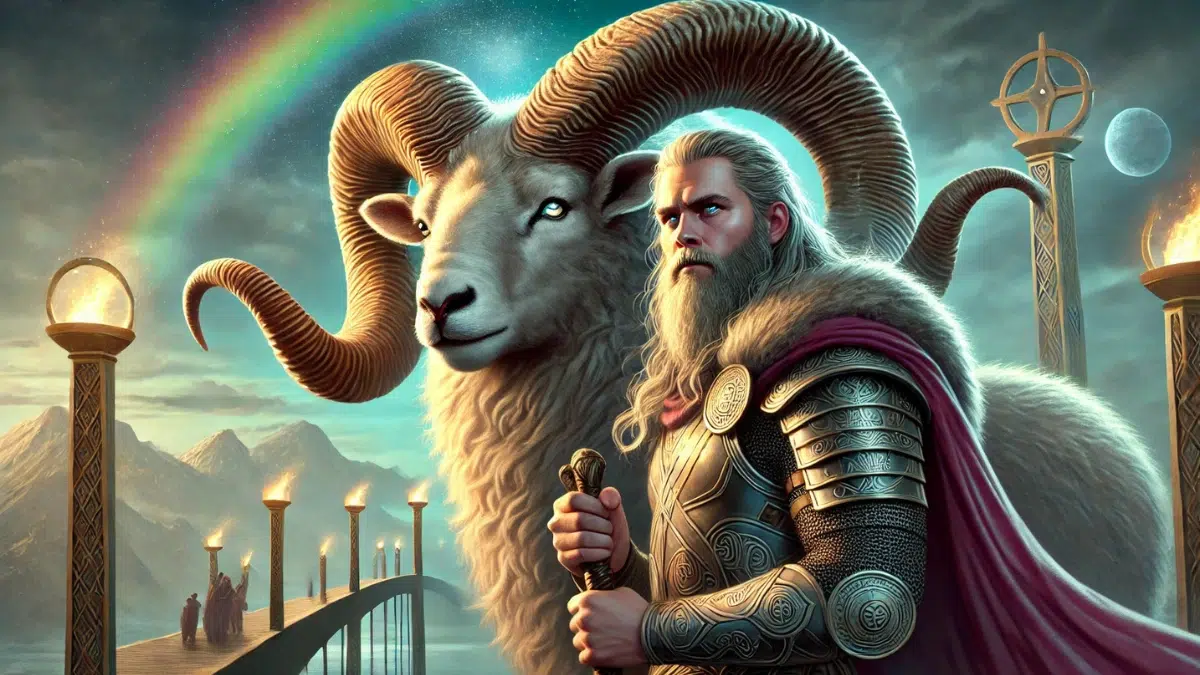
Heimdall’s epithet “Hallinskíði,” meaning “ram” or “bent stick,” connects him to symbolic traits of strength and leadership. The ram stands for strength, leadership, and watchfulness. These are all traits Heimdall shows as the gods’ vigilant guardian.
The ram represents qualities like vigilance, determination, and the ability to protect. These traits match Heimdall’s role as the watchful guardian of Asgard.
The connection to the ram highlights Heimdall’s unyielding nature. Like a ram standing its ground, Heimdall defends the Bifrost and Asgard against threats. This symbolism emphasizes his unwavering dedication to maintaining order and safety.
In Norse mythology, animals often reflect the characteristics of gods. The ram’s association with endurance and alertness mirrors Heimdall’s constant vigilance. This link also reinforces his role as a guide and protector of transitions, as rams are often seen navigating difficult terrain.
Heimdall Norse Mythology Role in Ragnarok

In the end of the gods, known as Ragnarok, Heimdall is a key figure. Heimdall plays a crucial role in Ragnarok, the prophesied end of the world.
The Völuspá tells us about Heimdall’s bravery in these final battles. When giants and gods meet for the last time, Heimdall shows great courage. His actions show his commitment and duty.
During these events, Heimdall faces Loki, his long-standing rival, in a duel where both meet their end. This climactic encounter symbolizes the eternal conflict between order (Heimdall) and chaos (Loki).
Heimdall’s vigilance and the sound of the Gjallarhorn start the world’s change. This marks the beginning of the end for the gods. The legendary battles begin, with the fate of the world at stake.
Heimdall’s Relationships with Other Gods
Heimdall is known as the watchful guardian of Asgard. He has many roles and relationships that show the complex world of Norse mythology. These connections are key to his character and shape his stories.
Heimdall’s bond with Odin, the All-Father, is especially strong. He is deeply loyal to Odin, showing the strong bonds among gods in Asgard. He guards the Bifrost bridge, keeping Asgard safe from danger.
Heimdall and Thor, the god of thunder, work well together. They often join forces to protect Asgard. This teamwork shows how the gods work together to keep their world safe.
Heimdall’s connections with other gods show his complexity:
- Odin: Heimdall’s loyalty to Odin underscores his role as a protector of Asgard and a defender of divine order.
- Thor: He collaborates with Thor, the god of thunder, to safeguard Asgard from threats.
- Loki: Their rivalry embodies the battle between structure and chaos, culminating in their final fight during Ragnarok.
These relationships illustrate Heimdall’s role in maintaining balance among the gods and the realms.
Popular Myths Involving Heimdall
Heimdall and Loki: The Theft of Freyja’s Necklace (Brísingamen)

Heimdall plays a key role in the story of Freyja’s stolen necklace, Brísingamen, a treasure of great beauty. Loki, the trickster god, steals the necklace, hoping to cause chaos in Asgard. Heimdall, ever-vigilant, quickly notices the theft and sets out to recover it.
Loki transforms into a seal to hide the necklace and escape detection. Heimdall, known for his wisdom and abilities, also transforms into a seal to confront Loki. The two engage in a fierce underwater battle, each using their strength and cunning to gain the upper hand.
In the end, Heimdall’s determination and skill prevail. He defeats Loki and retrieves the necklace, returning it to Freyja. This restores balance and protects Asgard from the discord Loki intended to create.
This story shows Heimdall’s role as a protector and his commitment to keeping peace in Asgard. His sharp senses and quick thinking allow him to act decisively, even against Loki’s tricks. The tale of Brísingamen highlights Heimdall’s loyalty, courage, and vigilance, making him one of the most dependable gods in Norse mythology. Through this myth, Heimdall reminds us of the importance of standing up to chaos to protect what matters most.
Heimdall and the Gjallarhorn
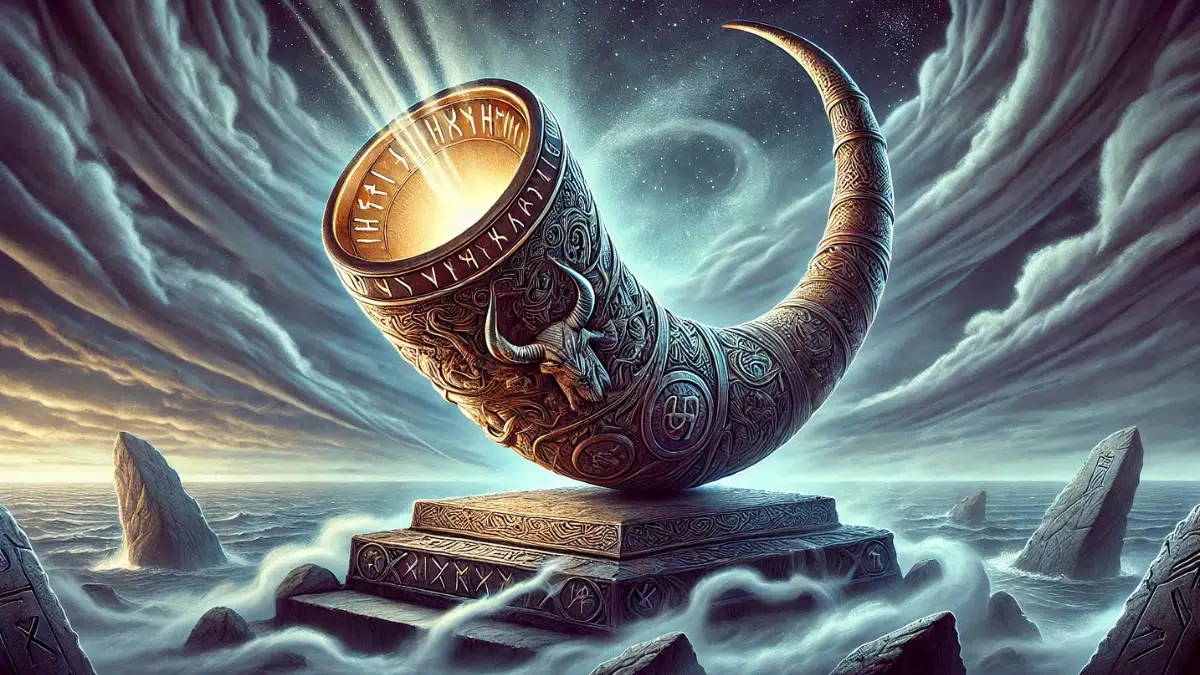
Heimdall stands as the vigilant guardian of Asgard, always ready to protect the gods and their realm. He holds the Gjallarhorn, a powerful horn with the ability to sound across all worlds. This horn serves as a warning signal, alerting the gods to danger.
Heimdall keeps the Gjallarhorn close, ensuring it remains ready for use. As the watchman of the Bifrost, the rainbow bridge connecting Asgard to Midgard, Heimdall uses his sharp senses to monitor for threats. He hears the faintest sounds and sees great distances, making him the perfect protector.
The Gjallarhorn carries immense importance in Norse mythology. When Ragnarok begins, Heimdall will blow the horn to alert the gods. Its sound will echo through all realms, calling the gods to prepare for the final battle. This act symbolizes Heimdall’s duty to protect and warn, even in the face of the world’s end.
This myth highlights Heimdall’s readiness and courage. He embodies vigilance and loyalty, standing firm in his role as Asgard’s protector. The Gjallarhorn serves as a powerful symbol of duty, showing Heimdall’s unwavering commitment to guarding the realms and preserving cosmic order.
The Battle Between Heimdall and Loki at Ragnarok
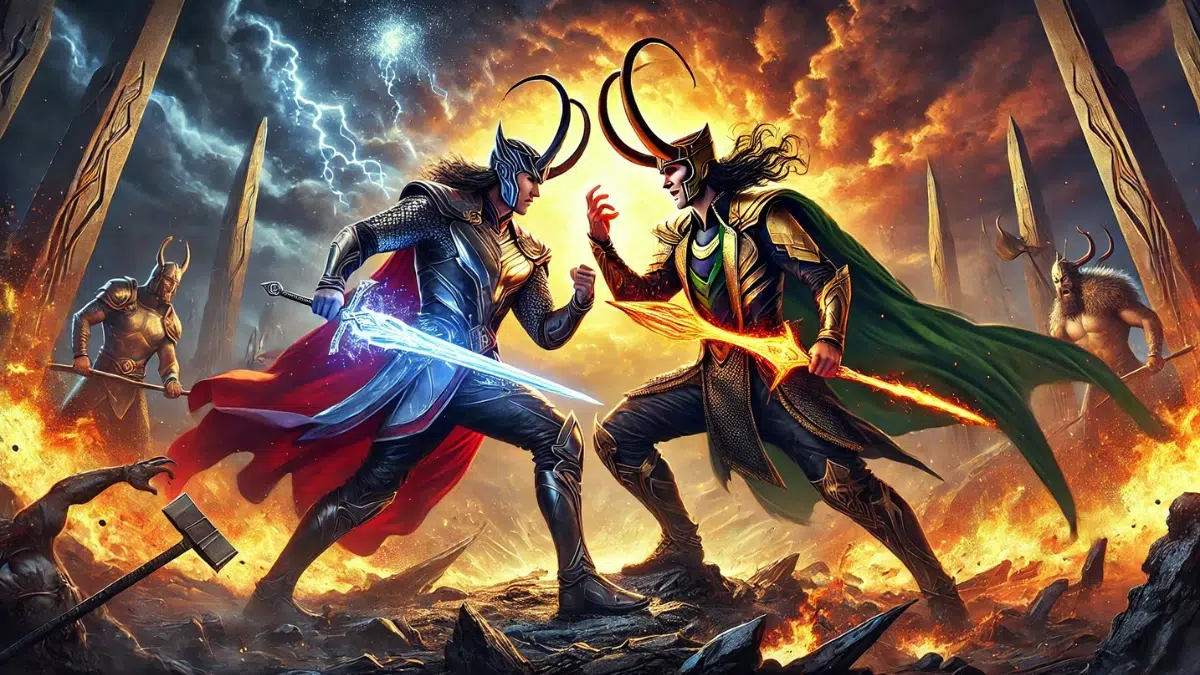
At Ragnarok, the final battle, Heimdall faces Loki in a fight that decides the fate of the world. Heimdall, the watchful guardian of Asgard, stands ready to protect the gods. Loki, the trickster, seeks chaos and destruction.
As the battle begins, Heimdall blows his powerful horn, the Gjallarhorn, to warn the gods. Its sound echoes across all realms, calling everyone to prepare for the end. Heimdall confronts Loki directly, knowing their conflict represents the struggle between order and chaos.
The two clash fiercely, using their strength and cunning to overpower each other. Heimdall fights with focus and precision, determined to stop Loki’s plans. Loki counters with tricks and deception, trying to gain the upper hand. Their fight shakes the battlefield, showing the balance of their opposing forces.
In the end, Heimdall and Loki strike fatal blows, ending each other’s lives. Heimdall sacrifices himself to ensure Loki’s chaos cannot prevail. This act protects the gods, even as the world begins to collapse.
Their battle symbolizes the eternal conflict between good and evil, order and chaos. Heimdall’s bravery and sacrifice make him a hero, showing the value of standing firm against destruction.
Conclusion
Heimdall, the all-seeing guardian of Norse mythology is known for his vigilance and duty. His special abilities, like his great sight and hearing, make him stand out. He is the protector of Bifrost, showing his key role in the myths.
Heimdall’s symbolic meaning and his place in modern culture show his lasting impact. He’s more than just a warrior; he’s a guardian with deep mythological insights. His connections with gods and his role in Ragnarok help us see his importance.
Thinking about Heimdall’s story, we see his deep impact on Norse mythology. His influence, wisdom, and lessons live on. He inspires us to value vigilance, duty, and the watchful eye in our lives.