

Leuce: Hades’s First Love and the White Poplar Myth
Leuce is one of the quieter figures in Greek mythology, yet her story reaches into the depths of the Underworld.
Quick Facts About Leuce
How do you pronounce Leuce?
Leuce is usually pronounced LOO-see or LYOO-see in English. In ancient Greek, it derives from Leukē, meaning “white.”
Who was Leuce in Greek mythology?
Leuce was an Oceanid nymph and daughter of Oceanus. Later traditions link her to Hades, who transformed her into the white poplar tree after her death.
How did Leuce die?
Ancient sources do not describe her death in detail. Most versions simply state that after she died, Hades turned her into the white poplar, a tree that became sacred in Elysium.
Introduction to Leuce

A daughter of Oceanus and one of the Oceanids, she was a water nymph whose fate became intertwined with Hades. Unlike mortal women taken to the Underworld in fear, Leuce’s tale ends not in darkness, but in transformation.
After her death, Hades is said to have turned her into the white poplar tree, a symbol of renewal that grows between worlds. The tree later became sacred to heroes such as Heracles, linking Leuce’s memory to strength and rebirth.
Though her myth survives only in fragments, it reveals how the Greeks blended nature, divinity, and the afterlife into a single, enduring image.
Origins and Parentage of Leuce

Leuce was one of the Oceanids, the three thousand daughters of Oceanus and Tethys.
These water nymphs lived in rivers, lakes, and springs, acting as gentle spirits tied to nature’s flowing beauty.
Each Oceanid often had a place or feature of the natural world they were linked to, and Leuce’s name—meaning “white” or “bright” in Greek—hinted at her later connection to the white poplar tree.
Oceanus, her father, was the Titan of the great encircling river believed to surround the world. Oceanus personified the world-encircling river (often called Okeanos) that the ancient Greeks believed flowed around the edges of the Earth. He was one of the primordial Titans.
His children, the Oceanids (like Leuce) and the Potamoi (river gods), represented individual freshwater bodies.
Tethys, her mother, nurtured freshwater sources that sustained life on land.
As their child, Leuce embodied calm and purity, her spirit tied to flowing waters that fed the earth. She belonged to a world of soft breezes, quiet pools, and untouched groves, far removed from the shadowed depths of the Underworld that would later claim her.
Leuce’s Fate

Unlike many nymphs who stayed in their domains, Leuce’s fate led her to Hades, the god of the dead.
As a white poplar, Leuce rooted herself in Elysium, the paradise of heroes.
Her origins as a river nymph and her end in Elysium bridged two worlds: flowing life-giving water and the restful afterlife. Leuce’s dual nature mirrors the tree itself: one side dark, the other pale silver.
Her origins rooted her in life’s natural cycles, making her eventual shift to the afterlife even more striking. This journey bridged two realms: the bright vitality of flowing rivers and the eternal stillness of Elysium.
Her story shows how the Greeks often linked nature spirits to larger myths about gods and the afterlife.
Through Leuce, they connected the freshness of water with the peace of paradise. She was not a warrior or goddess but a quiet figure whose path revealed how mortal and divine worlds intertwined. Her transformation from river nymph to sacred tree created a lasting symbol of renewal and reward, blending her watery beginnings with her eternal place in Elysium.
Leuce and Hades: A Myth of Love and Transformation

Leuce’s story begins with her life as an Oceanid, one of the countless daughters of Oceanus.
Her beauty and grace drew the attention of Hades, lord of the Underworld.
Unlike Persephone’s abduction, sources describe this bond as gentler, a rare moment of affection from a god known for his stern and shadowed nature.

Hades loved Leuce deeply and brought her to his realm, where she lived among the quiet groves and dark rivers of the Underworld.
In time, Leuce’s mortal nature caught up with her, for even nymphs were not immortal. When she died, Hades mourned her loss. Rather than allow her memory to fade, he transformed her spirit into a white poplar tree.
This tree took root in Elysium, the paradise of heroes and virtuous souls. Its two-toned leaves—dark green on top, pale silver beneath—mirrored her journey: shadow and light, death and renewal.

Her transformation gave Elysium a striking feature. Surrounded by lush fields and gentle breezes, her tree symbolized love’s endurance and the promise of rest after hardship.
From then on, Leuce became not just a memory but a lasting part of the afterlife itself, rooted in a place of reward and peace.
Her myth also influenced hero worship. When Heracles descended into the Underworld for his twelfth labour, he crowned himself with a wreath of white poplar from Leuce’s tree.
This act honoured Hades and marked Heracles’ survival through death’s domain. The wreath became a badge of victory, symbolizing courage and renewal after trials.
Through Leuce, even the feared Underworld showed a softer side. Her tale blended love, loss, and transformation, revealing beauty within Hades’ realm and offering comfort to those who believed in Elysium’s promise.
The Symbolism of the White Poplar Tree

The white poplar, born from Leuce’s transformation, carried deep symbolic meaning in Greek mythology.
Its leaves, dark green on top and silvery-white underneath, reflected the dual nature of existence: life and death, shadow and light.
This contrast made it the perfect emblem of Leuce’s journey from the living world to the Underworld and finally to Elysium.
For the Greeks, the poplar represented renewal and triumph over trials.
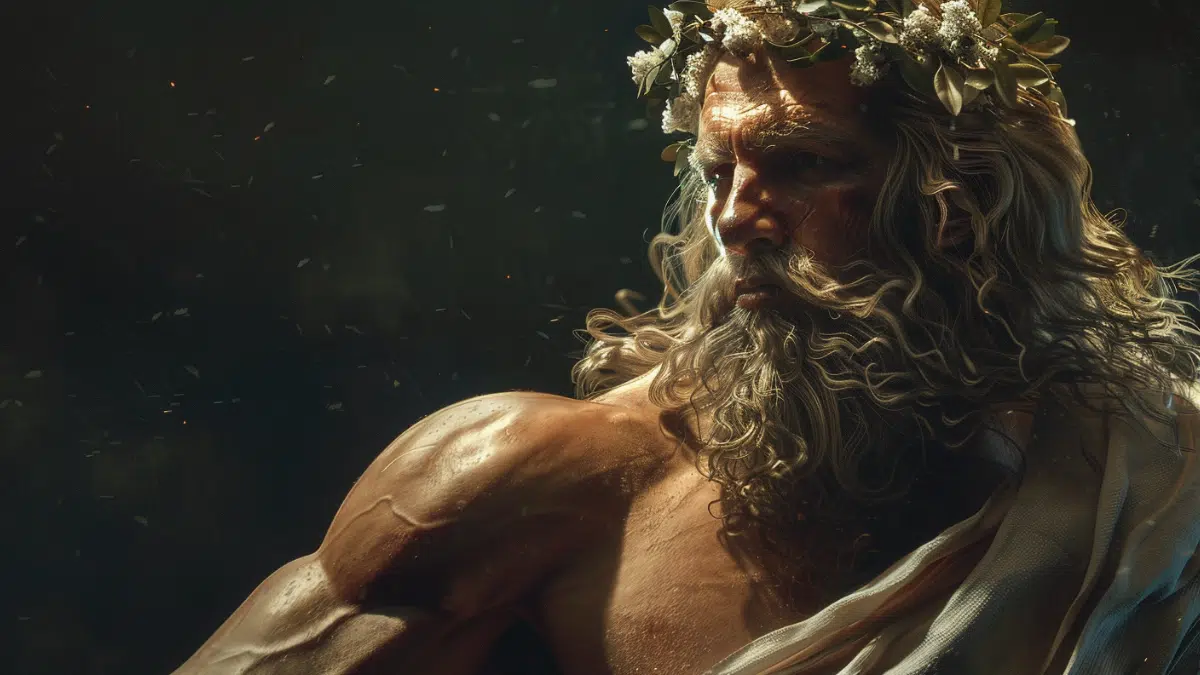
Heracles famously crowned himself with a wreath of its leaves after returning from the Underworld.
This act marked his survival through death’s domain and symbolized his rebirth into the world of the living. The wreath later became a sign of endurance, worn by heroes who wished to honour both Hades and their own courage.
The white poplar’s link to Elysium, the paradise of virtuous souls, also tied it to peace and reward.
Unlike the fear often associated with Hades, Leuce’s tree softened his image, showing the Underworld as a place of memory and love rather than only gloom. Her presence in Elysium gave hope of beauty and serenity in the afterlife.
Its shimmering underside connected the tree to moonlight and quiet reflection.
Standing beneath it was thought to bring calm, as if touching both the mortal and divine. Poplar groves near rivers were seen as sacred spaces, believed to carry Leuce’s spirit and serve as gateways between realms.
By transforming Leuce into this tree, Hades immortalized her and gave the world a living reminder of balance: darkness paired with light, death entwined with renewal.
The white poplar became more than a tree—it became a lasting bridge between life, death, and eternal reward.
Interesting Facts about Leuce
Heracles and the White Poplar
Heracles’ descent into the Underworld links him directly to Leuce’s story.
After completing his twelfth labour, Heracles returned from Hades’ realm and crowned himself with a wreath of white poplar. The gesture honoured the sacred tree and marked his survival through death’s domain.
From that moment, the poplar became a heroic emblem. Warriors and athletes later wore its leaves as a sign of endurance and renewal.
Leuce and Elysium

Some traditions place the white poplar in Elysium, the blessed field reserved for heroes and the virtuous.
Its presence there set it apart from ordinary trees of the mortal world. In this setting, the tree stood as a symbol of peace after struggle.
Through this transformation, Leuce became part of the most serene region of the afterlife.
The Twofold Leaves of the Poplar
The white poplar carries dark green leaves on one side and a pale, silvery underside on the other.
Greek symbolism often linked this contrast to duality. Shadow and light. Mortality and renewal. The surface and what lies beneath.
The tree’s physical form mirrors Leuce’s own passage from life into sacred memory.
A Gentler Side of Hades

Leuce’s myth offers one of the few softer portrayals of Hades.
Instead of punishment or abduction, this story centres on remembrance. By transforming her into a living tree, he preserved her presence within his realm.
The myth suggests devotion rather than dominance, a rare perspective on the ruler of the Underworld.
Conclusion
Leuce may be a minor figure, but her story weaves nature, love, and the afterlife together.
As an Oceanid, she began in flowing rivers. Through Hades’ affection, she became rooted in Elysium as a white poplar tree.
Her myth inspired heroic symbols and rituals tied to death and renewal. Even today, her story shows how the Greeks saw beauty in every corner of their world—even in the Underworld.
Leuce reminds us that even minor myths hold deep meaning.
Learn more about other Greek nymphs :
Other popular Greek myths: