
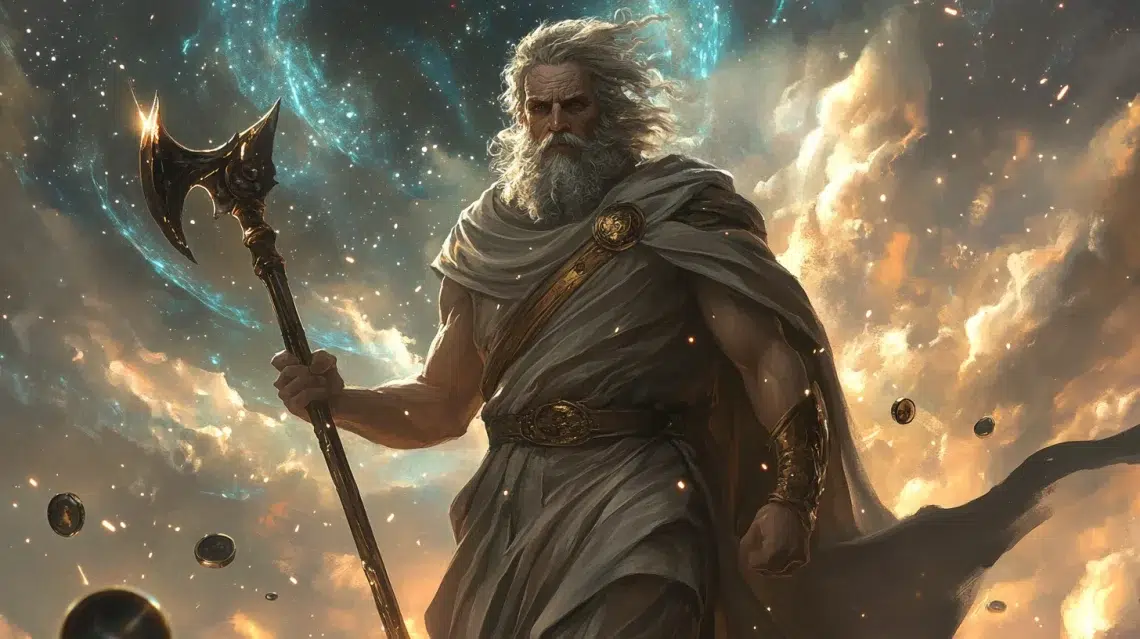
The Greek Titans: Children of Gaia and Uranus
The Greek Titans were powerful deities born from Gaia (Earth) and Uranus (Sky), forming the second generation of gods in Greek mythology. They embodied cosmic forces—time, light, memory, water—and ruled during the mythic Golden Age before the Olympians.
Introduction to the Greek Titans
According to Hesiod’s Theogony, there were twelve original Titans: six male (Oceanus, Coeus, Crius, Hyperion, Iapetus, and Cronus) and six female (Theia, Rhea, Themis, Mnemosyne, Phoebe, and Tethys).
The youngest, Cronus, overthrew Uranus with Gaia’s help, setting the stage for their rule.
From these Titans came many prominent gods, including Zeus, Hera, Helios, Selene, and the Muses. Their stories are filled with power struggles, prophecies, and the famous Titanomachy—the war between the Titans and the Olympians.
These myths reveal how the Titans bridged the primordial deities and the Olympian gods, shaping the foundations of Greek mythology and influencing tales of rebellion, cosmic order, and divine legacy.
Origins of the Greek Titans
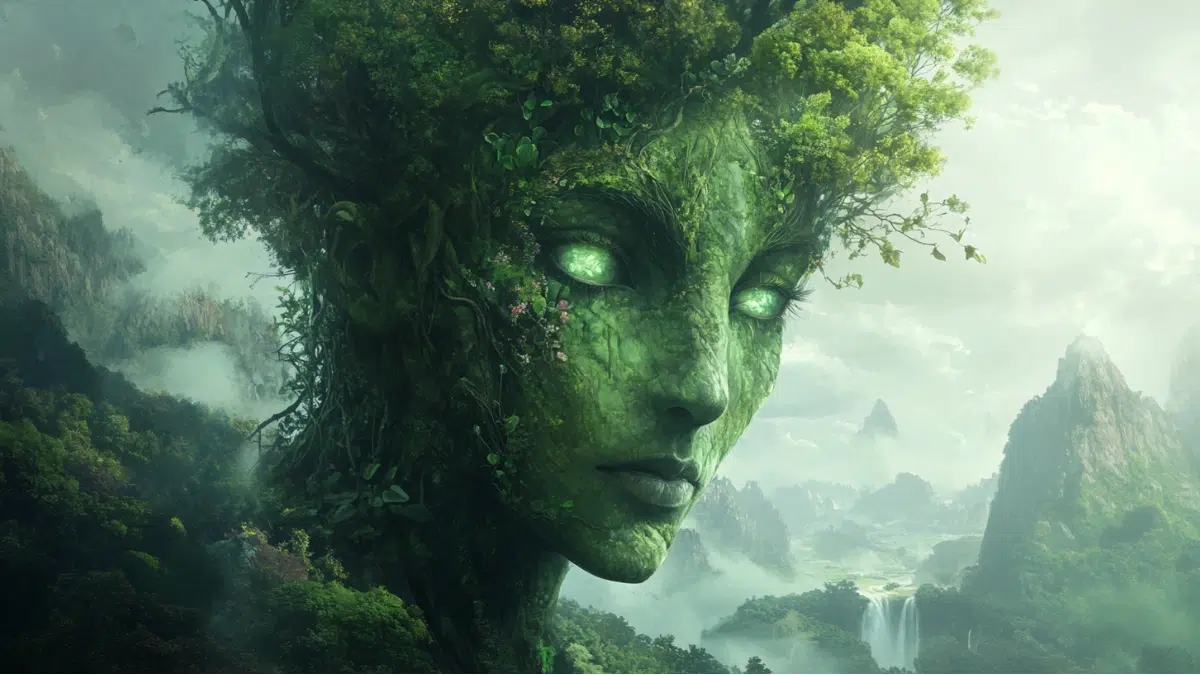
In the beginning, there was Gaia, the personification of Earth, and Uranus, the embodiment of the Sky.
Gaia was one of the first primordial deities, born from Chaos, and she gave form to the living world. She created mountains, seas, and fertile lands.

From her came Uranus, who became both her son and her consort. Together, Gaia and Uranus united, representing the eternal bond between Earth and Sky.
Their union produced the Twelve Titans, powerful deities who embodied fundamental elements of existence—time, memory, light, rivers, and more. Hesiod’s Theogony lists them as six male Titans and six female Titanesses.
Uranus, however, grew cruel and imprisoned their other children—the Cyclopes and Hecatoncheires—deep within Gaia.
Angered, Gaia crafted a sickle and urged her youngest Titan, Cronus, to overthrow Uranus, sparking the rise of the Titans and the start of their reign.
The Main Greek Titans
1. Cronus (Kronos) – Greek Titan of time, harvest, and the ages

- Role: Titan of time, harvest, and the ages
- Symbol: Sickle or scythe (used to overthrow Uranus)
- Partner: Rhea (sister)
- Children: Zeus, Hera, Poseidon, Hades, Demeter, and Hestia (the Olympian Gods)
Cronus was the youngest of the Titans and the one who answered Gaia’s call to overthrow Uranus. Armed with a sickle forged by Gaia, he ambushed Uranus and castrated him.
Thus ending his father’s rule and becoming leader of the Titans. Under Cronus’s reign, the Golden Age of peace and prosperity flourished.
However, a prophecy foretold that one of his children would overthrow him.
To prevent this, Cronus swallowed each child at birth.
His wife, Rhea, secretly saved their youngest, Zeus, hiding him in a cave on Crete and tricking Cronus with a swaddled stone.
When Zeus grew up, he forced Cronus to regurgitate his siblings. Together, they waged the Titanomachy—a ten-year war that ended the Titans’ rule and established the Olympians as the new rulers of the cosmos.
2. Rhea – Greek Titaness of motherhood, fertility, and generation
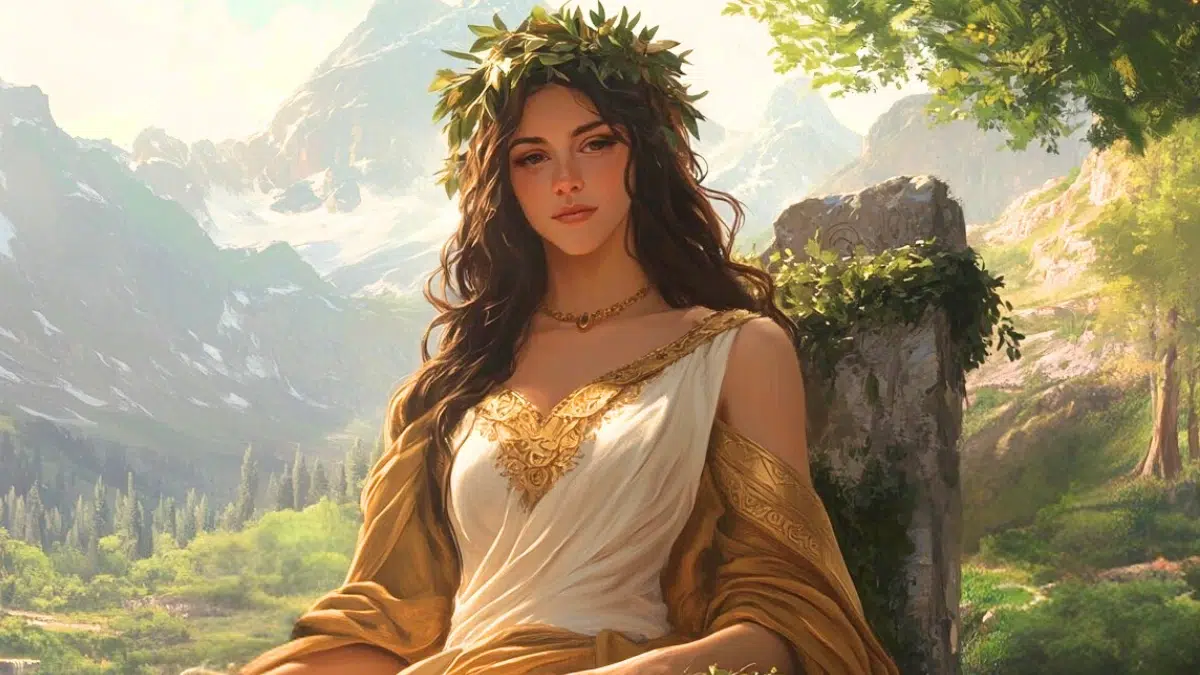
- Role: Titaness of motherhood, fertility, and generation
- Titan Symbol: Lions, chariot, or crown
- Partner: Cronus (brother)
- Children: Zeus, Hera, Poseidon, Hades, Demeter, and Hestia (the Olympian Gods)
Rhea was revered as the great mother of the Olympian gods.
During the rule of her consort Cronus, she bore six children. However, Cronus, fearing a prophecy that one of them would overthrow him, swallowed each newborn.
Heartbroken, Rhea sought Gaia’s aid.
When her youngest, Zeus, was born, she hid him in a cave on Crete, entrusting him to nymphs and a sacred goat named Amalthea. To deceive Cronus, she presented him with a stone wrapped in swaddling clothes, which he swallowed instead.
Zeus grew in secret, later returning to challenge his father. With Rhea’s guidance and Gaia’s support, Zeus freed his swallowed siblings and led them in the Titanomachy, overthrowing Cronus and fulfilling the prophecy.
Through Rhea’s cunning and maternal devotion, she became central to the survival of the Olympian line and a lasting symbol of protection and motherhood.
3. Oceanus – Greek Titan of the great world-encircling river
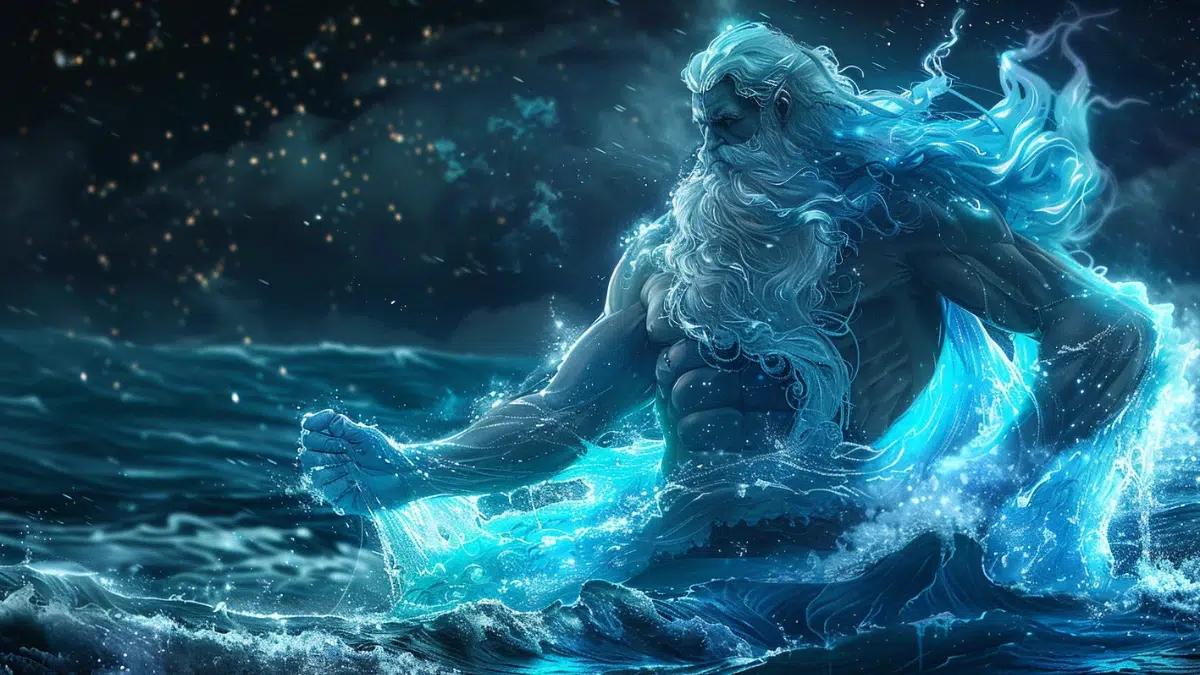
- Role: Titan of the great world-encircling river and all bodies of water
- Titan Symbol: Waves, fish-tailed form, or flowing water
- Partner: Tethys (sister)
- Children: The Oceanids (three thousand sea nymphs) and numerous river gods
Oceanus was the Titan who personified the endless river believed to surround the known world. Unlike many of his siblings, Oceanus remained neutral during the Titanomachy and avoided Zeus’s wrath, allowing him to continue his domain peacefully.
He was depicted as a wise and ancient figure, often with a fish-tailed lower body, symbolizing his boundless connection to the seas and rivers. With his consort Tethys, Oceanus fathered countless divine offspring: thousands of Oceanids (water nymphs) who ruled springs, lakes, and ponds, and river gods who embodied major waterways of the ancient world.
Oceanus’s neutrality in the cosmic war and his association with life-giving water connected him to themes of stability and nourishment. His role bridged primordial forces and later Olympian order, as his descendants—like rivers and nymphs—became vital to mythic landscapes and stories throughout Greek mythology.
4. Tethys – Greek Titaness of freshwater, nursing, and the fertile flow of rivers
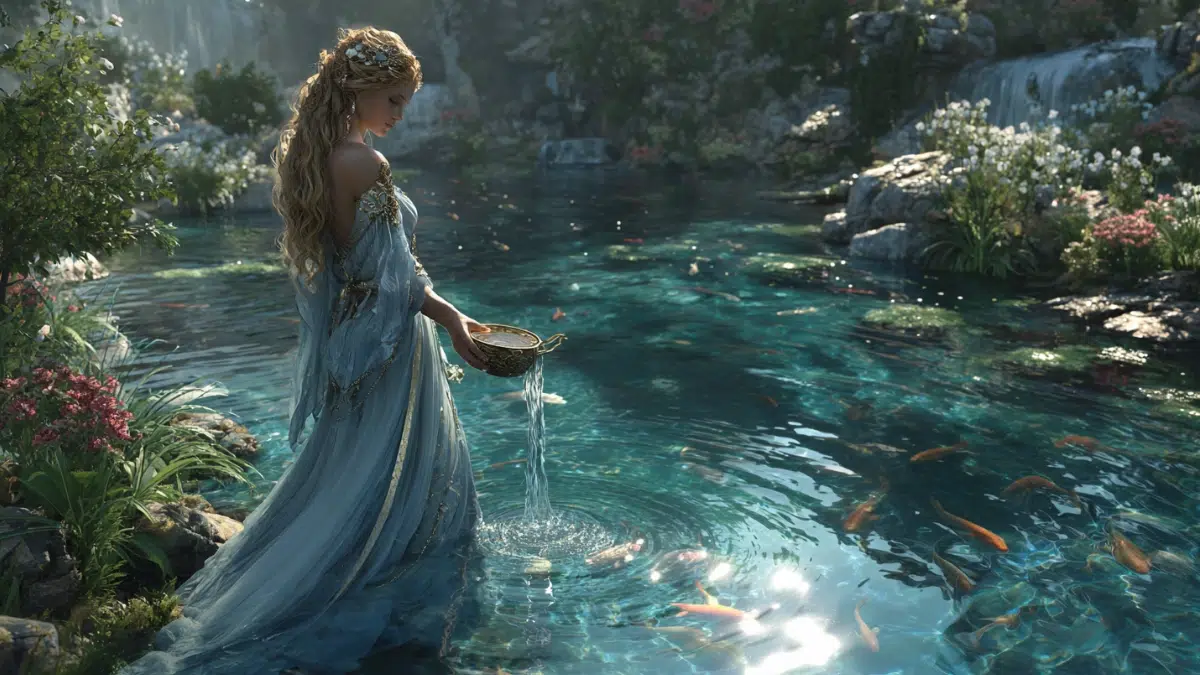
- Role: Titaness of freshwater, nursing, and the fertile flow of rivers
- Titan Symbol: Flowing water, fish, and vessels pouring streams
- Partner: Oceanus (brother)
- Children: The Oceanids (sea nymphs) and river gods
Tethys was the nurturing Titaness who embodied freshwater sources, from springs to rivers, essential for life. With her brother Oceanus, she gave birth to thousands of Oceanids, graceful nymphs tied to springs, fountains, and lakes, and countless river gods representing major waterways across the ancient world.
Tethys was also associated with the natural cycle of nourishment, often seen as a maternal figure linked to the sustenance of both gods and mortals. Unlike other Titans, she played no role in the Titanomachy and remained uninvolved in conflicts, which spared her from punishment by Zeus.
In later myths, Tethys fostered Hera, the future queen of the Olympians, when she was young, highlighting her enduring role as a caretaker. Her presence reflected the essential bond between water, life, and growth, symbolizing stability and support within Greek mythology’s cosmic order.
5. Hyperion – Greek Titan of heavenly light and observation
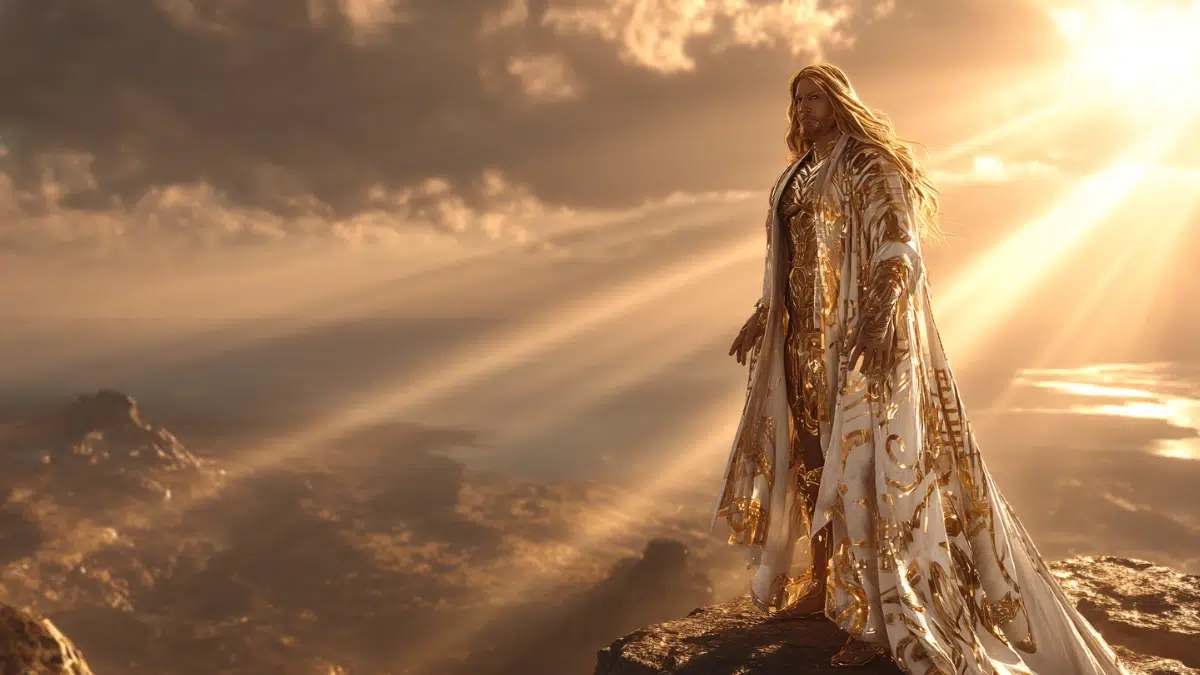
- Role: Titan of heavenly light and observation
- Titan Symbol: Sun rays, radiant light, and celestial brilliance
- Partner: Theia (sister)
- Children: Helios (Sun), Selene (Moon), and Eos (Dawn)
Hyperion personified the light of the heavens, illuminating the world before the rise of the Olympian gods. His name means “He Who Watches From Above,” reflecting his association with observation and celestial order. With his sister Theia, he fathered three radiant children: Helios, the Sun god; Selene, the Moon goddess; and Eos, goddess of the Dawn. Together, they governed the cycles of day and night.
Hyperion’s role was less conflict-driven than his siblings. He symbolized the steady, guiding force of light, bridging night and day, and connecting the heavens to mortal life. In later tradition, he became closely linked with his son Helios, passing his luminous domain to him. Through his lineage, Hyperion’s legacy endured, establishing the cosmic rhythm that framed much of Greek mythology’s celestial imagery.
6. Theia – Greek Titaness of sight, radiance, and precious metals
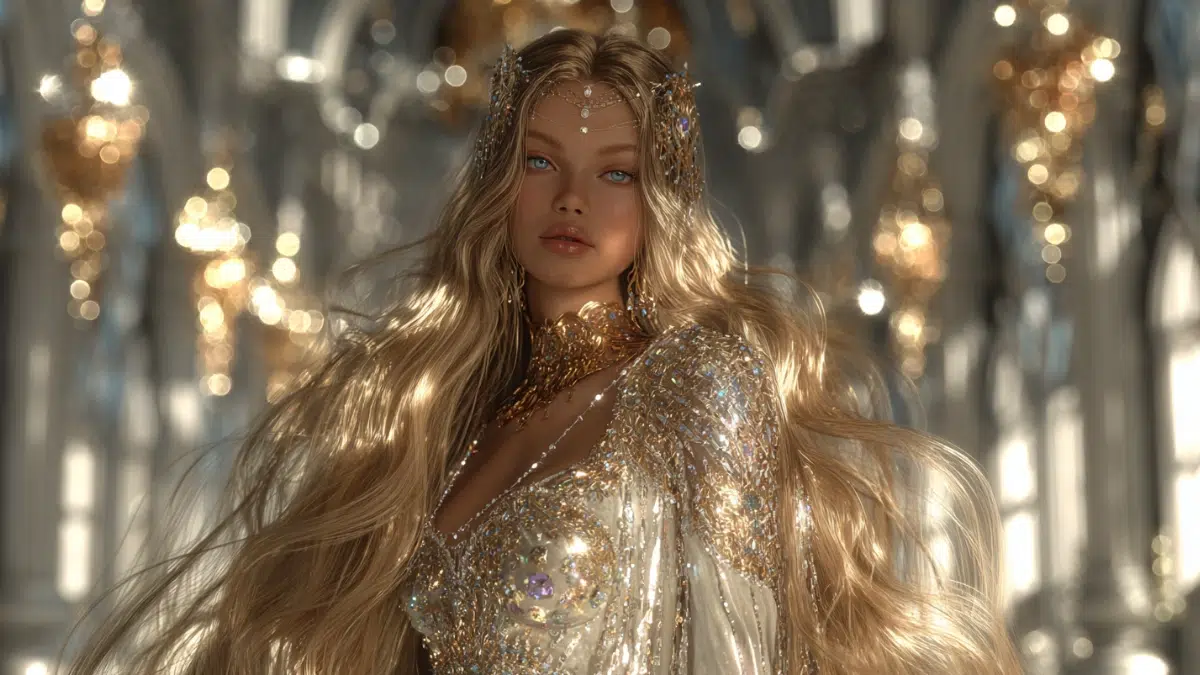
- Role: Titaness of sight, radiance, and precious metals
- Titan Symbol: Shining light, gems, and gold
- Partner: Hyperion (brother)
- Children: Helios (Sun), Selene (Moon), and Eos (Dawn)
Theia embodied vision and the brilliance of light, linking her to both sight and the gleam of precious metals and gems. Her name means “divine” or “goddess,” underscoring her luminous nature. With Hyperion, she became mother to three celestial deities: Helios, who drove the sun across the sky; Selene, who guided the moon; and Eos, who heralded each dawn.
Theia’s association with brilliance extended beyond the heavens to the wealth of the earth, symbolized by gold and sparkling jewels. In myth, her radiance merged with Hyperion’s celestial light, reinforcing their children’s roles as keepers of day and night. Through her lineage, Theia linked the glory of the heavens with earthly splendour, uniting divine beauty with cosmic order.
7. Coeus (Koios) – Greek Titan of intelligence, inquiry, and the celestial axis
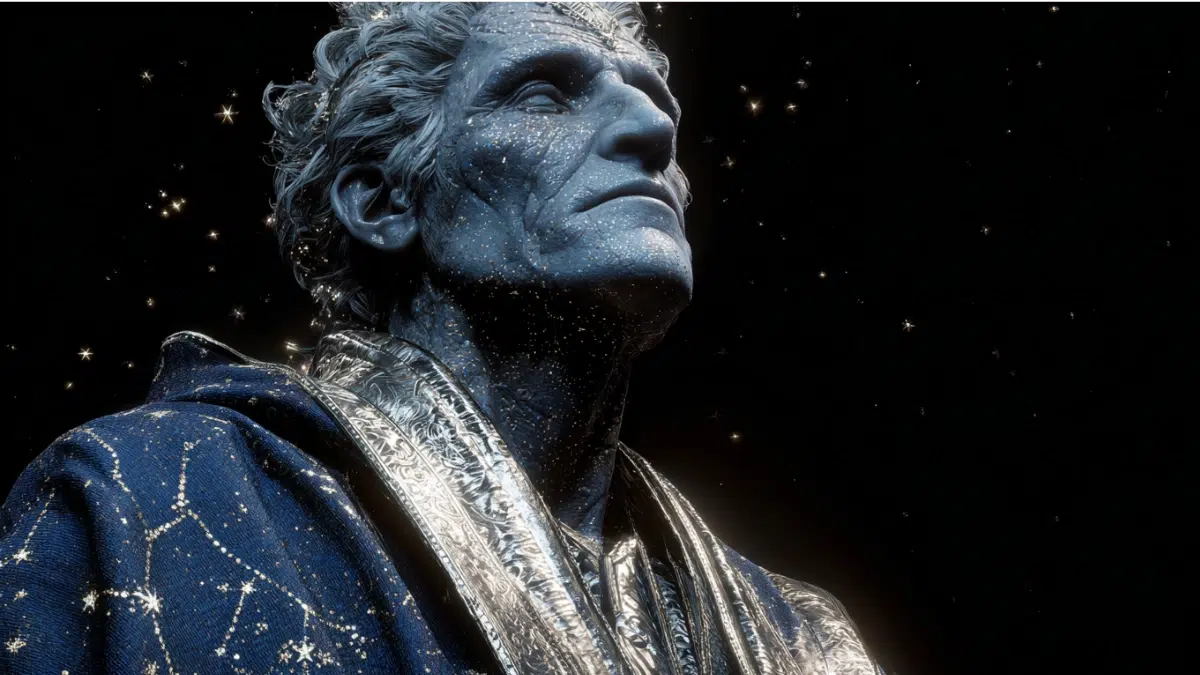
- Role: Titan of intelligence, inquiry, and the celestial axis
- Titan Symbol: Stars, celestial spheres, and the axis of the heavens
- Partner: Phoebe, a Titaness of prophecy
- Children: Leto (mother of Apollo and Artemis) and Asteria (goddess of falling stars)
Coeus represented intellect and the celestial order, often associated with the axis around which the heavens revolved. His union with Phoebe, a Titaness of prophecy, produced two daughters who became central to Greek myth. Leto became beloved by Zeus and bore Apollo and Artemis, while Asteria transformed into a quail and later into the island of Delos to escape Zeus’s pursuit.
Though Coeus’s own myths are limited, his role as father to Leto directly tied him to the Olympians. His connection to intellect and the heavens symbolized the link between knowledge and cosmic order, while his descendants bridged the Titan era to the age of Zeus and the Olympian gods.
8. Phoebe – Greek Titaness of prophecy, intellect, and radiance
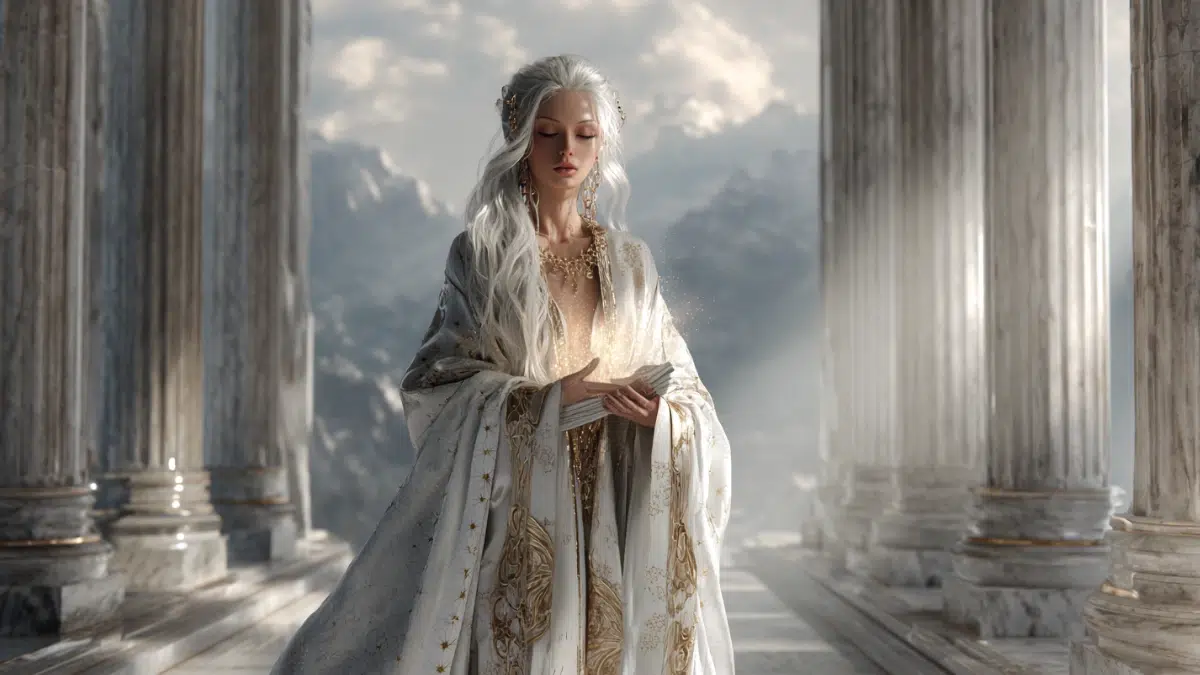
- Role: Titaness of prophecy, intellect, and radiance
- Titan Symbol: Moon, prophetic symbols, and light
- Partner: Coeus, Titan of intelligence
- Children: Leto (mother of Apollo and Artemis) and Asteria (goddess of falling stars)
Phoebe embodied brightness and prophetic wisdom. She was closely linked to the Oracle of Delphi before it was later associated with Apollo, her grandson.
Through her union with Coeus, she gave birth to Leto, who bore Apollo and Artemis, and Asteria, tied to starlight and divine transformation.
Phoebe’s name means “bright” or “radiant,” connecting her to both intellect and celestial light. Her prophetic role symbolized foresight and guidance, qualities later passed down to Apollo as god of oracles. By bridging the Titans with the Olympians through her children, Phoebe stood as a luminous figure linking ancient cosmic order with the new Olympian reign.
9. Crius – Greek Titan of constellations and the celestial axis
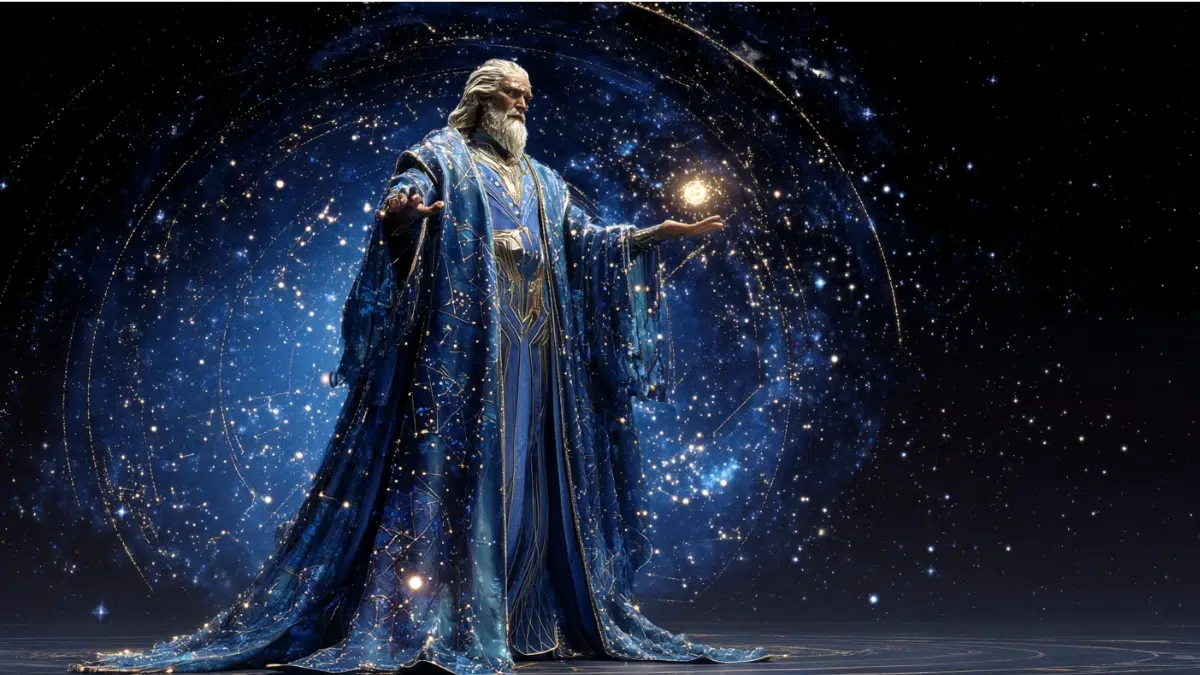
- Role: Titan of constellations and the celestial axis
- Titan Symbol: Stars, constellations, and rams (linked to Aries)
- Partner: Eurybia (a sea goddess and daughter of Pontus and Gaia)
- Children: Astraeus (god of dusk), Pallas (warcraft), and Perses (father of Hecate)
Crius was connected to the heavens and the constellations, symbolizing the ordered structure of the stars. His marriage to Eurybia, a sea goddess with mastery over the sea’s forceful nature, united celestial and oceanic power. Their children played significant roles in Greek myth: Astraeus married Eos (Dawn) and fathered the winds and stars; Pallas became linked to battle strategy; and Perses was the father of Hecate, the goddess of magic and crossroads.
Although Crius himself had few myths, his lineage tied him directly to later deities governing twilight, wind, stars, and magic. His celestial symbolism positioned him as a figure associated with the cosmic order and transitions between night and day.
10. Mnemosyne – Greek Titaness of memory and remembrance
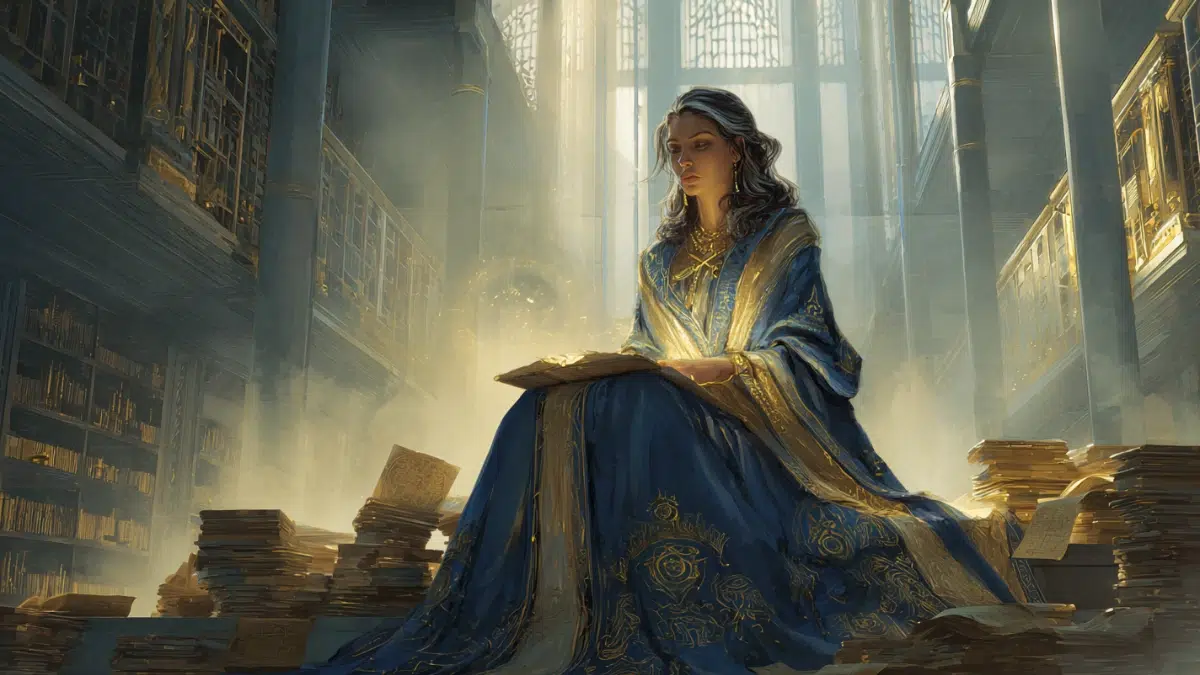
- Role: Titaness of memory and remembrance
- Titan Symbol: Scrolls, tablets, and written words
- Partner: Zeus (after the Titanomachy)
- Children: The Nine Muses (goddesses of the arts and inspiration)
Mnemosyne personified memory, an essential force for knowledge, storytelling, and continuity. Her name itself means “remembrance,” reflecting her vital role in preserving history and culture. After the Titans’ defeat, she united with Zeus, and for nine nights they lay together, resulting in the birth of the Nine Muses. These goddesses became patrons of music, poetry, dance, history, and all creative arts, inspiring mortals and immortalizing human achievements.
Mnemosyne’s connection to memory highlights how ancient Greeks valued oral tradition and the power of knowledge passed through generations. Through the Muses, she bridged the Titans to later Olympian ideals of creativity and wisdom, ensuring that memory shaped art, culture, and even divine influence.
Themis and Iapetus: Titans of Law, Justice, and Legacy
Themis and Iapetus are Titans, but they are sometimes omitted or mentioned less frequently because their roles became overshadowed by their descendants or because they didn’t play major parts in the Titanomachy.
Hesiod’s Theogony mainly emphasizes the “original twelve Titans” (6 male, 6 female) central to the succession myths. Some later traditions swapped or omitted certain Titans for narrative focus.
Themis is better known in later myths as a goddess of divine law and order who sides with Zeus after the Titanomachy, making her more closely associated with the Olympian order.
Iapetus is mainly remembered through his famous sons (Prometheus, Atlas, Epimetheus, Menoetius) rather than his own myths.
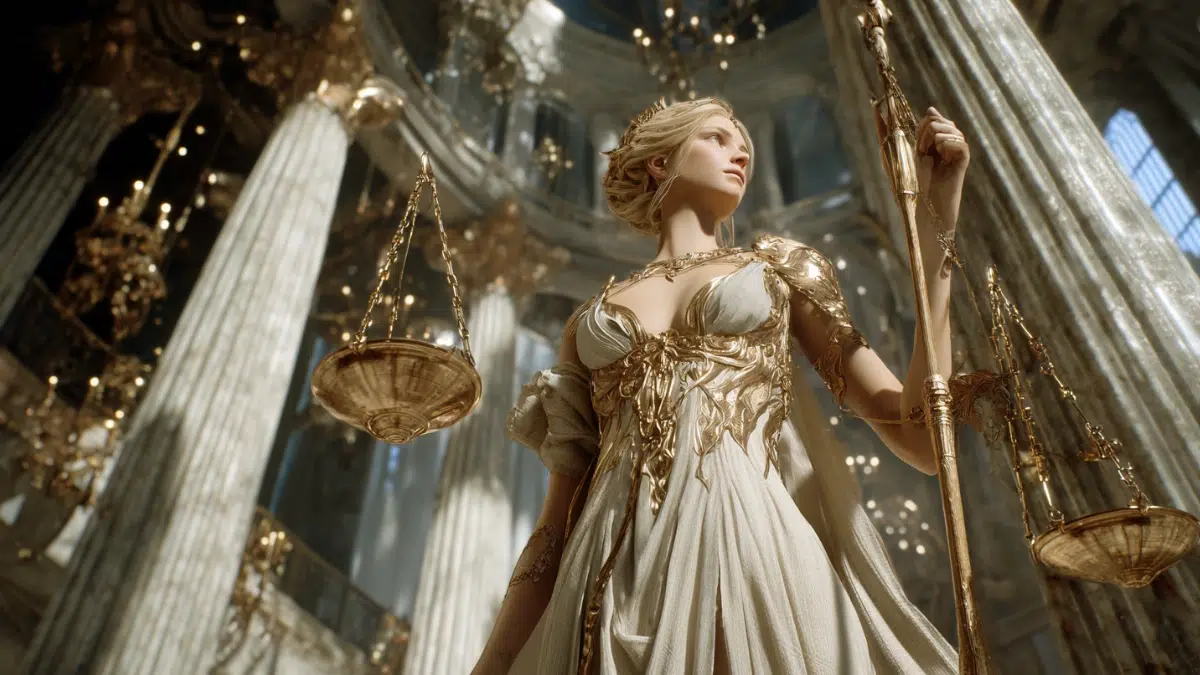
11. Themis – Greek Titaness of divine law, order, and justice
- Symbol: Scales of justice, cornucopia, and a blindfold (later Roman influence)
- Partner: Zeus (after the Titanomachy)
- Children: The Horae (Seasons) and the Moirai (Fates)
Themis embodied order and fairness, guiding both gods and mortals in accordance with natural law. Unlike many Titans, she sided with Zeus during the Titanomachy, helping him establish his rule. As Zeus’s consort, she bore the Horae, who represented the orderly seasons and civic justice, and the Moirai, who spun the destinies of all beings.
Themis also advised Zeus, symbolizing wisdom and balance in governance.
In Hesiod’s Theogony, the Fates are born directly from Nyx (Night), without a father. This aligns them with primordial forces tied to cosmic inevitability and destiny.
Later traditions, especially in classical literature, describe the Fates as daughters of Themis (Titaness of divine order) and Zeus, reinforcing their link to law and justice under the Olympian order.
Both interpretations coexisted in myth, with the Nyx version often seen as more ancient, while the Themis version reflects the shift to Olympian-centered mythology.
12. Iapetus – Greek Titan of mortality and craftsmanship
- Symbol: Spear or tools
- Partner: Clymene (an Oceanid)
- Children: Prometheus, Atlas, Epimetheus, and Menoetius
Iapetus is best remembered as the father of influential figures rather than for personal myths. His son Prometheus shaped humanity and defied Zeus by stealing fire, while Atlas was condemned to hold the sky. Epimetheus was linked to Pandora and the origins of human suffering, and Menoetius was struck down during the Titanomachy for his arrogance.
Through his sons, Iapetus connected the Titans to human fate and suffering, blending divine rebellion with mortal consequences. His lineage deeply influenced mythic themes of punishment, defiance, and human struggle.
Olympians vs. Second-Generation Titans
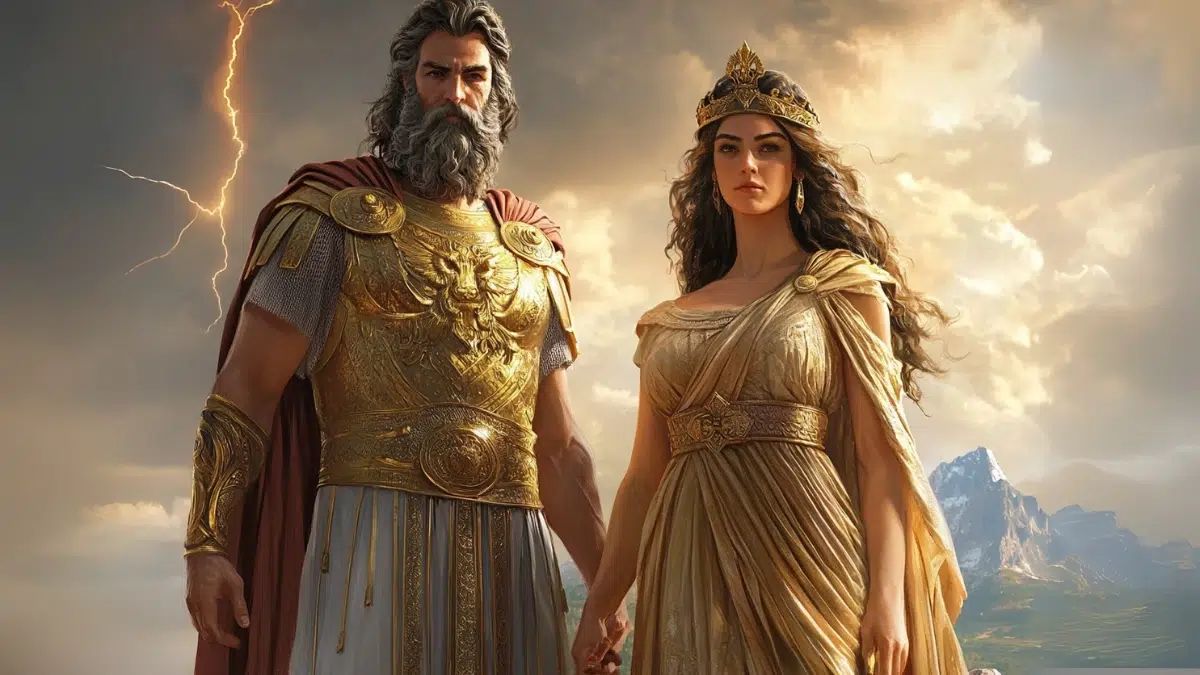
Olympians:
- The Olympians were the children of Cronus and Rhea: Zeus, Hera, Poseidon, Hades, Demeter, and Hestia.
- After Zeus freed his siblings and defeated the Titans in the Titanomachy, they became the rulers of the cosmos.
- They lived on Mount Olympus and formed the core group of deities most associated with Greek religion and myth.
Second-Generation Titans:
- Other children of the Titans like Helios, Selene, Eos, Prometheus, Atlas remained powerful deities but were not Olympians.
- Many governed essential domains (like the Sun and Moon) or played key roles in myth (Prometheus bringing fire to humanity).
- These deities are sometimes called Titan-descended gods or second-generation Titans, linking the old order to the Olympians.
Key Point: Only the children of Cronus and Rhea became Olympians. All other Titan-born deities remained outside Olympus, even if they interacted closely with the Olympian gods.
The Titans and the Titanomachy
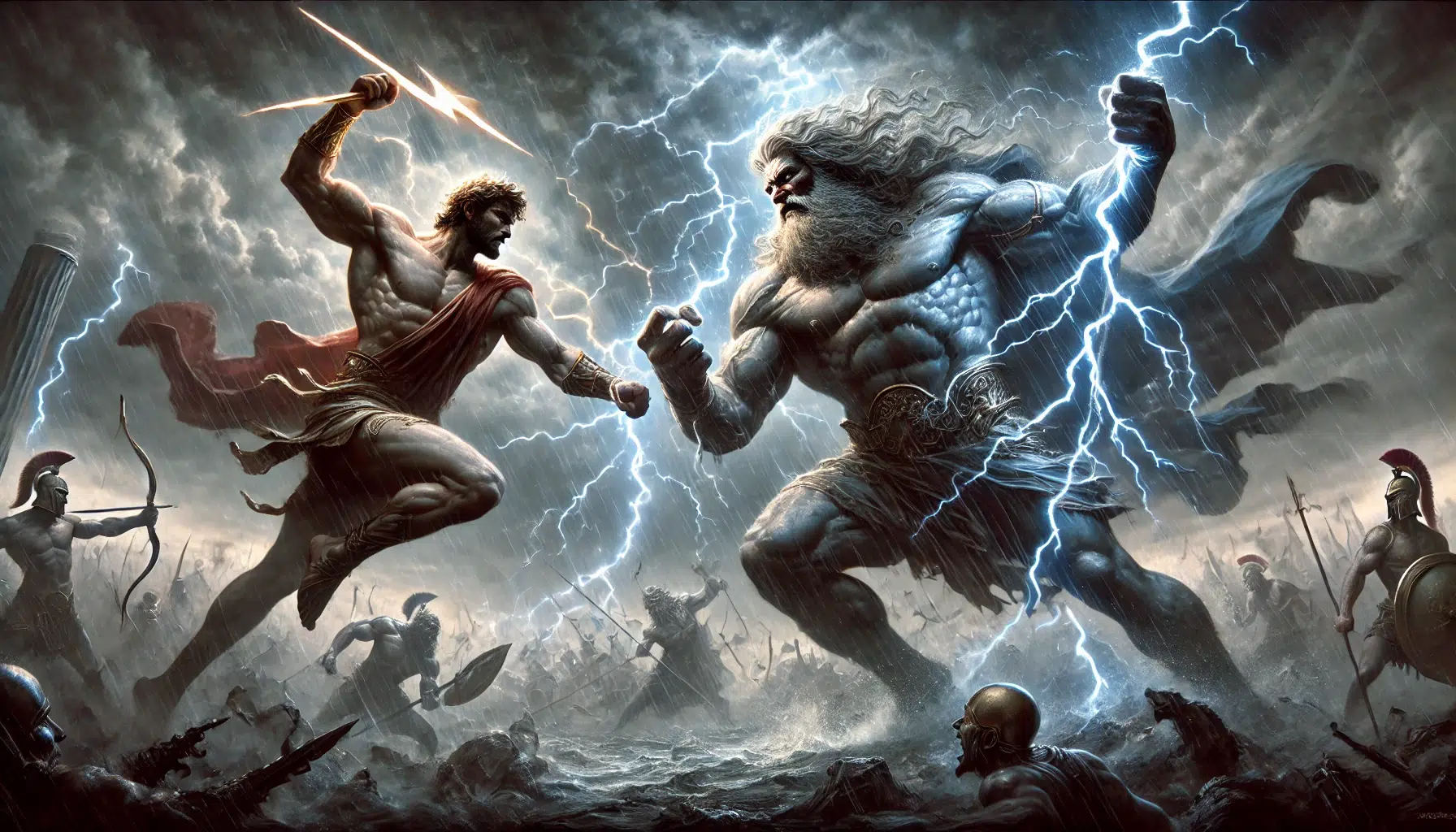
This begins the Titanomachy, a great war between the Titans and the Olympians. The battle rages for ten years. The Olympians fight from Mount Olympus, while the Titans hold Mount Othrys.
The Olympians receive help from the Cyclopes and the Hecatoncheires, whom Zeus frees from Tartarus. The Cyclopes give Zeus his thunderbolts, Poseidon his trident, and Hades a helmet of invisibility. With these powerful weapons, the Olympians gain an advantage.
Zeus, with his siblings and allies, defeats the Titans. He imprisons them in Tartarus, a deep abyss. The Olympians become the new rulers of the cosmos.
This victory marks the end of the Titan rule and the beginning of the reign of the Olympian gods. Zeus becomes the king of the gods, ruling from Mount Olympus. The Titanomachy highlights the theme of the struggle for power and the importance of family alliances.
Conclusion: Legacy of the Titans
The Titans represent the bridge between the primordial gods and the Olympians, shaping the foundation of Greek mythology.
Born from Gaia and Uranus, they ruled during the Golden Age and personified cosmic forces like time, light, law, and memory. Through their children, they influenced nearly every corner of myth: Zeus and his siblings rose as Olympians, while second-generation Titans like Helios, Prometheus, and Hecate continued to shape the world.
Their dramatic fall in the Titanomachy marked a shift from chaos to order under Zeus, but their presence endured in stories of rebellion, balance, and natural order.
The Titans remain timeless symbols of power and transition, reminding us of a mythic world where even gods were bound by destiny, and each generation built upon the legacy of the one before.


