
Greek Mythology Symbols of Gods, Heroes and Creatures
Greek mythology symbols are rich with meaning, representing the gods, heroes, and creatures of ancient stories. These symbols often embody the powers and traits of the deities they are associated with, serving as visual representations of their divine influence.
For instance, Zeus’s thunderbolt signifies his control over the sky and his ability to enforce justice, while Athena’s owl symbolizes wisdom and strategic warfare.
Heroes like Hercules and Perseus also have their own symbols, such as the lion skin and Medusa’s head, reflecting their legendary feats.
Understanding these symbols provides insight into the values and beliefs of ancient Greek culture.
Greek Mythology Symbols: Gods and Goddesses
Zeus – King of the Greek Gods

- Thunderbolt/Lightning Bolt: Represents his power over the sky and his ability to enforce justice
- Aegis: A protective cloak or shield, often associated with Zeus, symbolizing protection and authority
- Eagle: Symbolizes his sovereignty, vigilance, and authority as the king of the gods
- Bull: Reflects strength, virility, and his role in fertility myths, such as the abduction of Europa
- Oak Tree: Sacred to Zeus, it signifies strength, endurance, and his connection to the natural order
Zeus is associated with several powerful symbols that represent his dominion and attributes. His most distinctive symbol is the thunderbolt, signifying his control over the sky and his ability to enforce justice.
Zeus obtained his thunderbolt as a reward for liberating the Cyclopes and the Hecatoncheires from Tartarus, where they had been imprisoned by Cronus. In gratitude, the Cyclopes, who were master craftsmen, forged the thunderbolt for Zeus.
Zeus obtained the aegis, a powerful protective shield, through the craftsmanship of Hephaestus, the god of blacksmiths. The aegis is often depicted as a goatskin shield or cloak, sometimes adorned with the head of a Gorgon, such as Medusa.
It was originally made from the hide of the goat Amaltheia, which nursed Zeus as an infant. The aegis could produce thunder, lightning, and instill terror. Zeus frequently lends it to Athena and occasionally to Apollo for use in battle.
Hera – Queen of the Greek Gods

- Peacock: Symbolizes her beauty, pride, and watchfulness
- Cuckoo: Represents her marriage to Zeus
- Cow: Signifies her nurturing nature and fertility
- Pomegranate: Symbolizes fertility and marriage
- Diadem (crown): Represents her royal status as the queen of the gods
Hera’s peacock symbolizes her beauty, pride, and watchfulness. The bird’s impressive feathers represent Hera’s majestic and regal nature. In myth, Argus, her loyal servant with a hundred eyes, transformed into a peacock, emphasizing her vigilance. The peacock’s many eyes symbolize Hera’s ability to see everything and maintain her watch over marriage and family.
The cuckoo represents Hera’s marriage to Zeus. Zeus transformed into a cuckoo to win Hera’s love. This bird symbolizes their union and Hera’s role as the goddess of marriage. The cuckoo highlights the cleverness of Zeus and the eventual sacred bond between Hera and Zeus.
Poseidon – God of the Sea
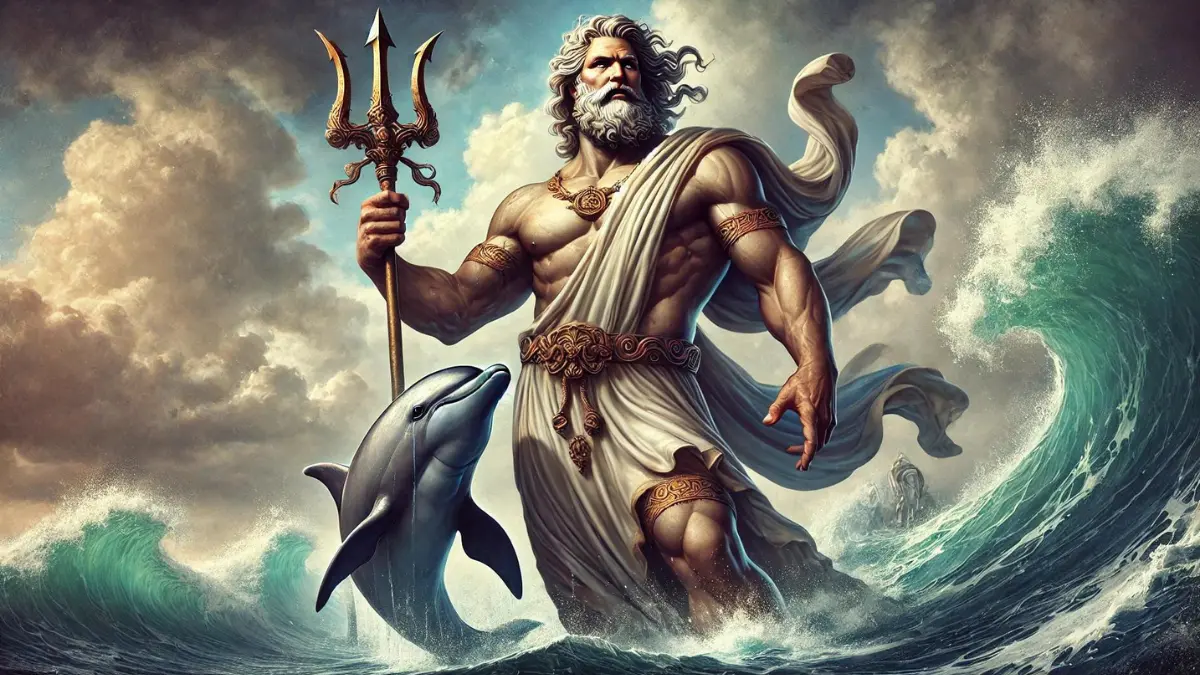
- Trident: Symbolizes his dominion over the seas and his ability to create storms and earthquakes
- Horse: Represents his role as the creator of horses and his connection to horse racing and chariot races
- Dolphin: Signifies his power over marine life and his ability to calm the seas
- Bull: Associated with power and strength, often linked to Poseidon’s creation of the Minotaur
Poseidon wields a trident, a three-pronged spear, which signifies his control over the seas and his power to create storms and earthquakes. This powerful weapon, forged by the Cyclopes, allows Poseidon to assert his influence over all bodies of water and maintain his status among the Olympian gods.
The trident also appears in many myths where Poseidon causes natural disasters. For example, in the story of Odysseus, he uses it to create storms that hinder Odysseus’s journey home.
Poseidon creates the first horse to impress Demeter during their courtship. This act links him to horse racing and chariot races, important activities in ancient Greek culture. The horse symbolizes his creativity and power, making it a key part of his mythology. Poseidon often rides a chariot pulled by horses, showing his dominion over both land and sea, and his multifaceted nature as a deity.
Athena – Goddess of Wisdom and War

- Owl: Symbolizes wisdom and knowledge
- Aegis: A protective cloak or shield, often associated with Zeus, but also used by Athena
- Olive Tree: Represents peace and prosperity
- Spear: Signifies her warrior aspect and strategic skill
- Helmet: Denotes her role as a warrior goddess and protector
Athena’s owl symbolizes wisdom and knowledge. This bird represents her role as the goddess of wisdom. The owl’s keen eyesight and nocturnal nature signify insight and truth. Athenians hold the owl in high regard, associating it with Athena’s guidance in wisdom and warfare.
The aegis, a protective cloak or shield, often appears with Athena. Although originally Zeus’s symbol, Athena uses the aegis in battle. It symbolizes protection, power, and her role as a fierce warrior. The aegis, sometimes adorned with a Gorgon’s head, instills fear in enemies.
This shield highlights Athena’s authority in wisdom and war. These symbols together showcase Athena’s roles as protector and strategist, embodying both intellect and strength.
Apollo – God of Music, Sun, and Prophecy

- Lyre: Symbolizes music, poetry, and the arts
- Laurel Wreath: Represents victory, honour, and eternal youth
- Sun Chariot: Signifies his role as the god of the sun
- Bow and Arrow: Denotes his prowess in archery and his ability to bring sudden death
- Raven: Represents prophecy and communication with the divine
Apollo’s lyre symbolizes music, poetry, and the arts. Hermes crafted the lyre and gifted it to Apollo, who became its master. Apollo uses the lyre to create harmony and inspire creativity. It highlights his role as the patron of musicians and poets.
The laurel wreath represents victory, honour, and eternal youth. After Daphne transformed into a laurel tree to escape him, Apollo adopted the laurel as his sacred plant. He wears the wreath as a crown, symbolizing his triumphs and eternal beauty.
The laurel wreath also signifies the highest honours in artistic and athletic competitions, reflecting Apollo’s influence over these domains.
Artemis – Goddess of the Hunt and Moon
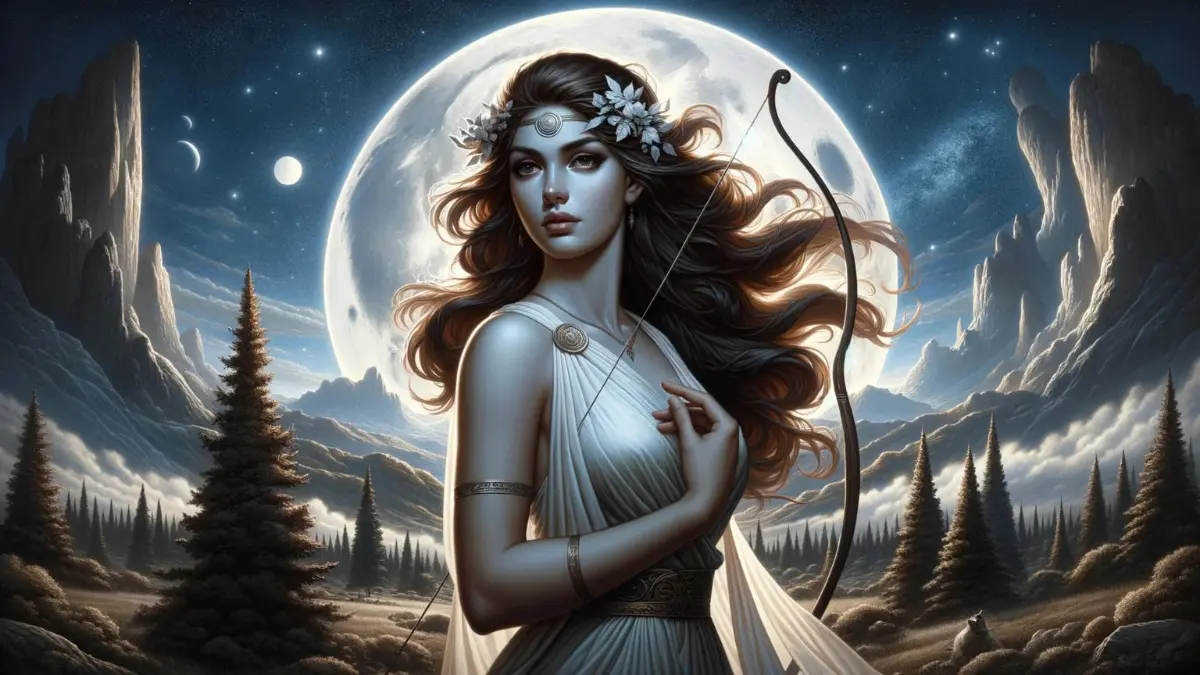
- Bow and Arrow: Symbolizes her prowess in hunting and her role as the protector of wildlife
- Moon: Represents her connection to the night and her role as a lunar deity
- Deer: Signifies her association with the wilderness and animals
- Cypress Tree: Represents her connection to nature and the forest
- Hunting Dogs: Denotes her role as a huntress and her companionship with animals
Artemis’s bow and arrow symbolize her prowess in hunting and her role as the protector of wildlife. She receives her bow and arrows from the Cyclopes, and they never miss their target. Artemis uses these weapons to hunt animals and protect the forest, embodying her strength and precision as a huntress.
The moon represents Artemis’s connection to the night and her role as a lunar deity. Often depicted with a crescent moon above her head, Artemis lights up the night sky and guards the wilderness under its glow.
The moon also highlights her dual nature as both a nurturing protector and a fierce hunter. These symbols together showcase Artemis’s mastery of the hunt and her deep bond with nature and the night.
Aphrodite – Goddess of Love and Beauty

- Dove: Symbolizes love, peace, and gentleness
- Rose: Represents beauty, desire, and passion
- Seashell: Signifies her birth from the sea foam
- Mirror: Denotes her beauty and self-reflection
- Swan: Symbolizes grace and elegance
Aphrodite’s dove symbolizes love, peace, and gentleness. The dove represents her role as the goddess of love and beauty. This bird embodies the serene and tender aspects of Aphrodite’s influence, often seen accompanying her in various myths.
The rose represents beauty, desire, and passion. Aphrodite is often associated with roses, which are linked to her through their enchanting beauty and fragrance. The rose symbolizes romantic love and the allure of physical attraction, reflecting Aphrodite’s power over desire and affection.
In myths, roses bloom from her tears or blood, highlighting their deep connection to her essence. These symbols together illustrate Aphrodite’s influence over love, beauty, and passion, showcasing her as a central figure in matters of the heart.
Hermes – Messenger of the Gods and God of Commerce
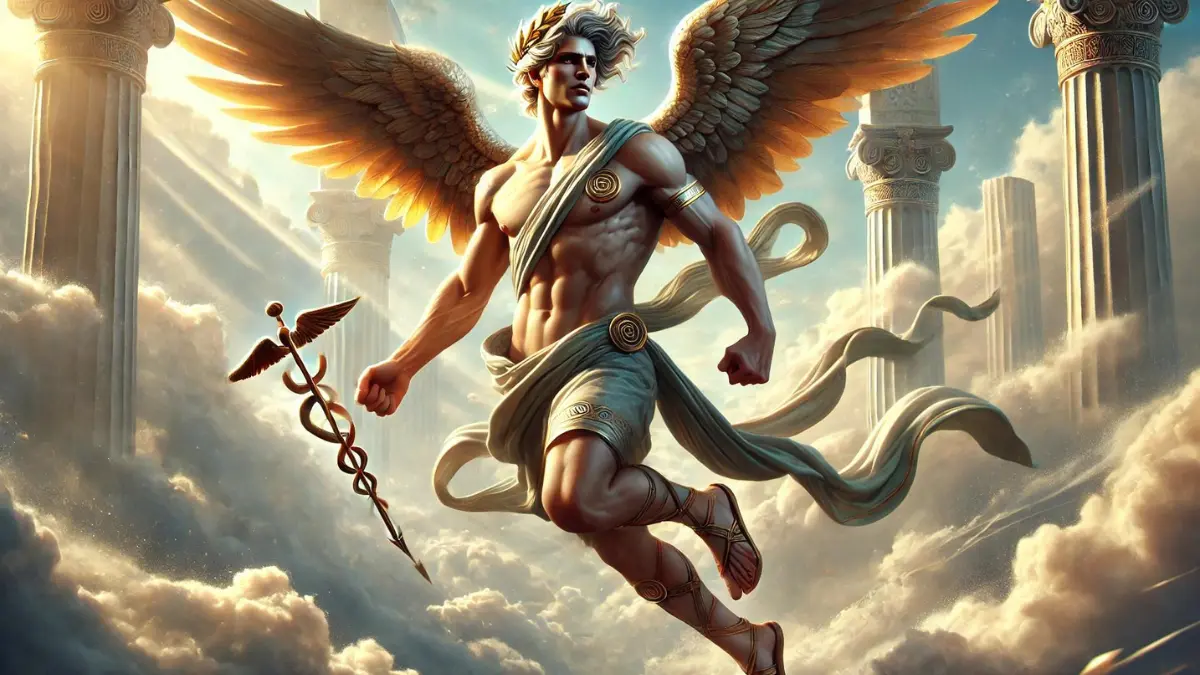
- Winged Sandals: Symbolize his speed and ability to travel swiftly between the mortal and divine worlds
- Caduceus: Represents his role as a messenger and guide of souls
- Tortoise: Signifies his inventiveness and the creation of the lyre
- Rooster: Denotes the herald of a new day and vigilance
- Winged Helmet: Represents his swiftness and role as a protector of travelers
Hermes’s winged sandals symbolize his speed and ability to travel swiftly between the mortal and divine worlds. These magical sandals allow him to deliver messages quickly and move freely across realms. Hermes often uses his winged sandals to assist gods and mortals, emphasizing his role as a swift and efficient messenger.
The caduceus represents Hermes’s role as a messenger and guide of souls. This staff, entwined with two serpents and topped with wings, signifies peace and negotiation. Hermes uses the caduceus to lead souls to the afterlife and resolve conflicts. The caduceus also highlights his association with commerce and communication, showcasing his versatility and influence in various domains. These symbols together illustrate Hermes’s speed, inventiveness, and his vital role as a messenger and guide in Greek mythology.
Ares – God of War
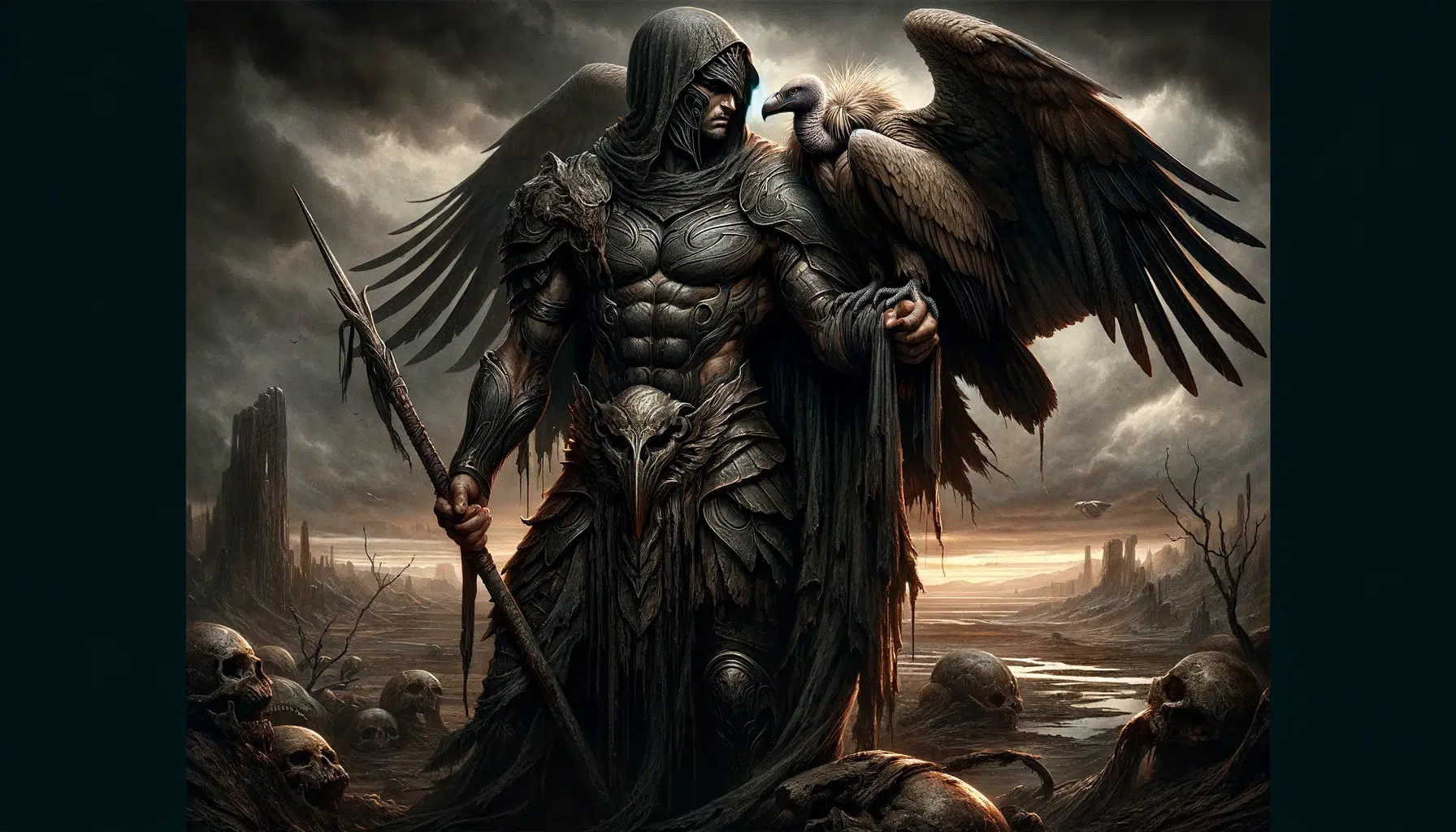
- Spear: Symbolizes his aggression and prowess in battle
- Helmet: Represents his readiness for war and his role as a warrior
- Vulture: Denotes his association with death and the aftermath of conflict
- Dog: Symbolizes loyalty and the brutal aspects of war
- Shield: Represents protection and combat
Ares’s spear symbolizes his aggression and prowess in battle. The spear represents Ares’s martial skills and his eagerness to engage in combat. It highlights his role as a fierce and relentless warrior who thrives on the chaos of war.
The helmet represents Ares’s readiness for war and his role as a warrior. Ares always appears with a helmet, signifying his constant preparedness for battle. The helmet symbolizes his protective nature over his warriors and his leadership in conflicts. These symbols together showcase Ares’s fierce combat skills and his embodiment of the brutal and violent aspects of war.
Hephaestus – God of Fire and Blacksmiths
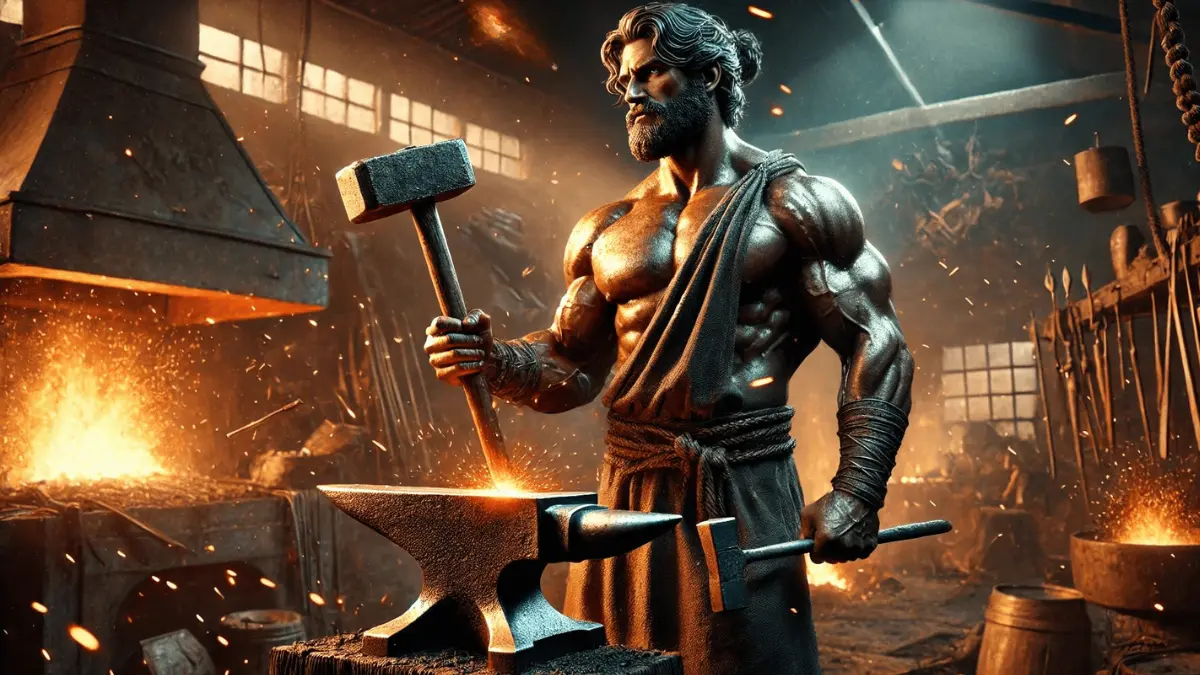
- Hammer: Symbolizes his skill in craftsmanship and blacksmithing
- Anvil: Represents his work as a metalworker and creator
- Tongs: Denotes his precision and control in crafting
- Fire: Signifies his domain over fire and its creative and destructive powers
- Donkey: Represents his resilience and hardworking nature
Hephaestus’s hammer symbolizes his skill in craftsmanship and blacksmithing. He uses it to forge weapons and tools for the gods. The hammer shows his unmatched ability to create powerful and beautiful items.
The anvil represents Hephaestus’s work as a metalworker and creator. He shapes and forms metals on the anvil, highlighting his role in making divine artifacts. Hephaestus creates important items like Achilles’ armour and Zeus’s thunderbolt. These symbols together illustrate Hephaestus’s mastery of fire and metal.
They show his precision in crafting and his vital contributions to the gods through his creations. Hephaestus’s resilience and hardworking nature are also symbolized by the donkey, showing his dedication to his craft.
Dionysus – God of Wine and Festivity
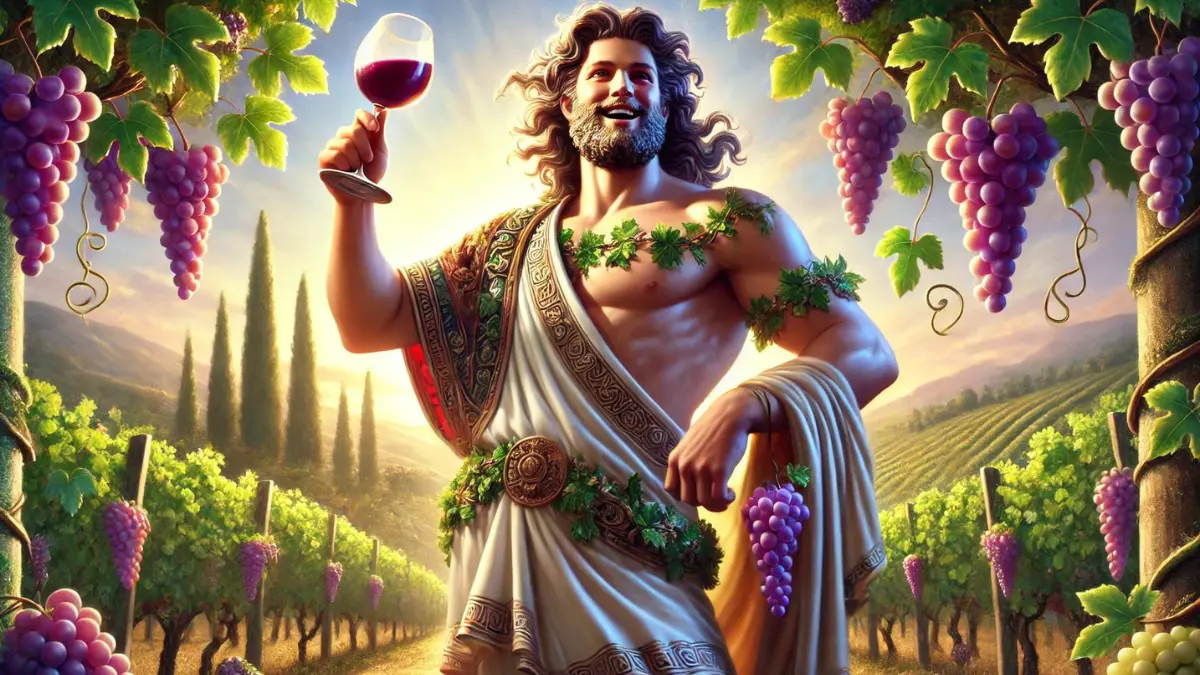
- Grape Vine: Symbolizes his dominion over wine, fertility, and festivity
- Thyrsus: A staff tipped with a pine cone, representing prosperity, pleasure, and chaos
- Ivy: Denotes eternal life and immortality
- Leopard: Represents his wild and untamed nature
- Goblet: Symbolizes indulgence and celebration
Dionysus’s grape vine symbolizes his dominion over wine, fertility, and festivity. The grape vine represents the growth and abundance of the harvest, essential for making wine. Dionysus brings joy, ecstasy, and a sense of community through the consumption of wine.
The thyrsus, a staff tipped with a pine cone, represents prosperity, pleasure, and chaos. Dionysus carries the thyrsus to lead his followers in frenzied dances and celebrations.
It embodies the dual nature of his influence—bringing both joy and madness. These symbols together highlight Dionysus’s role in promoting festivity, indulgence, and the wild, untamed aspects of life.
Hades – God of the Underworld

- Helmet of Invisibility: Symbolizes his power to become unseen and move undetected
- Cerberus: The three-headed dog guarding the entrance to the underworld
- Scepter: Represents his authority over the underworld
- Cypress Tree: Denotes mourning and the afterlife
- Narcissus Flower: Signifies death and the underworld
Hades’s Helmet of Invisibility symbolizes his power to become unseen and move undetected. The Cyclopes crafted this helmet, which allows Hades to blend into the shadows of the underworld. It represents his secretive and elusive nature.
Cerberus, the three-headed dog, guards the entrance to the underworld. This fierce creature prevents the dead from leaving and the living from entering.
Cerberus symbolizes Hades’s control over his realm and his ability to maintain order. These symbols together highlight Hades’s authority over the underworld and his ability to command both fear and respect.
Demeter – Goddess of Agriculture and Harvest
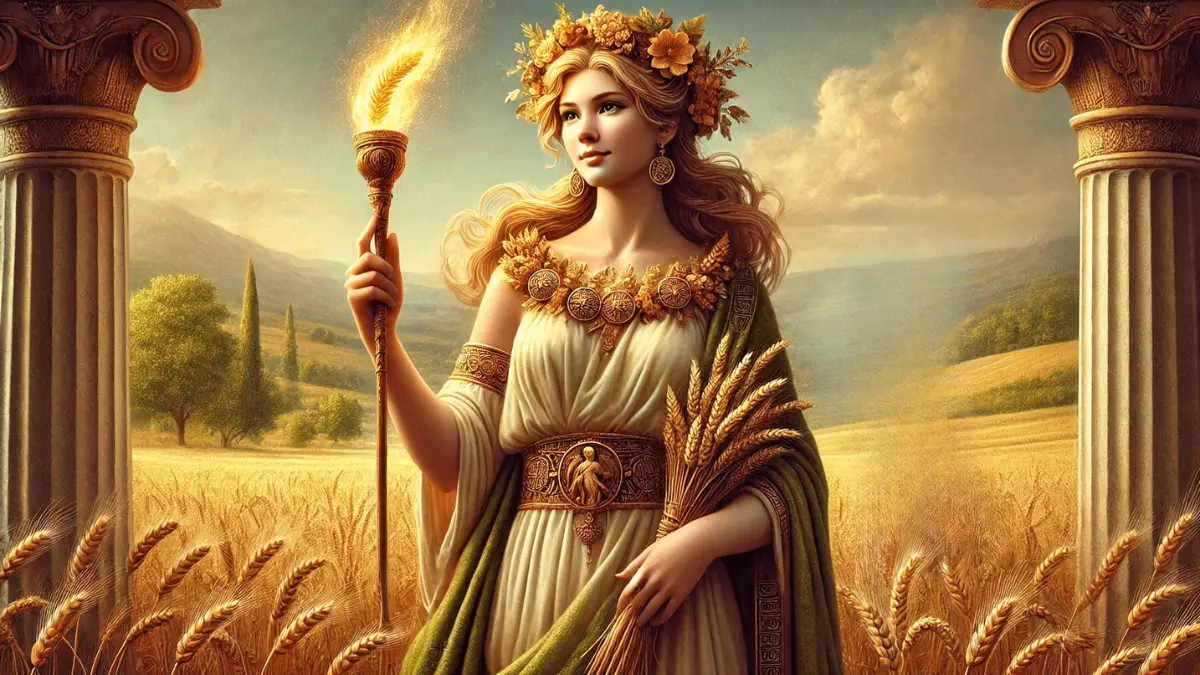
- Cornucopia: Symbolizes abundance, nourishment, and the harvest
- Wheat Sheaf: Represents fertility, growth, and the bounty of the earth
- Torch: Signifies her search for Persephone and light in dark times
- Poppy: Denotes rest and recovery
- Bread: Represents sustenance and life-giving nourishment
Demeter’s cornucopia symbolizes abundance, nourishment, and the harvest. This “horn of plenty” overflows with fruits and grains, representing the earth’s bounty. The cornucopia highlights her power to nurture and sustain life.
The wheat sheaf represents fertility, growth, and the bounty of the earth. Demeter is closely associated with the growth of crops and the cycles of planting and harvesting. The wheat sheaf underscores her connection to agriculture and the sustenance of humanity. These symbols together highlight Demeter’s essential role in agriculture, fertility, and the nurturing of life, showcasing her influence over the natural world and its cycles.
Hestia – Goddess of the Hearth and Home
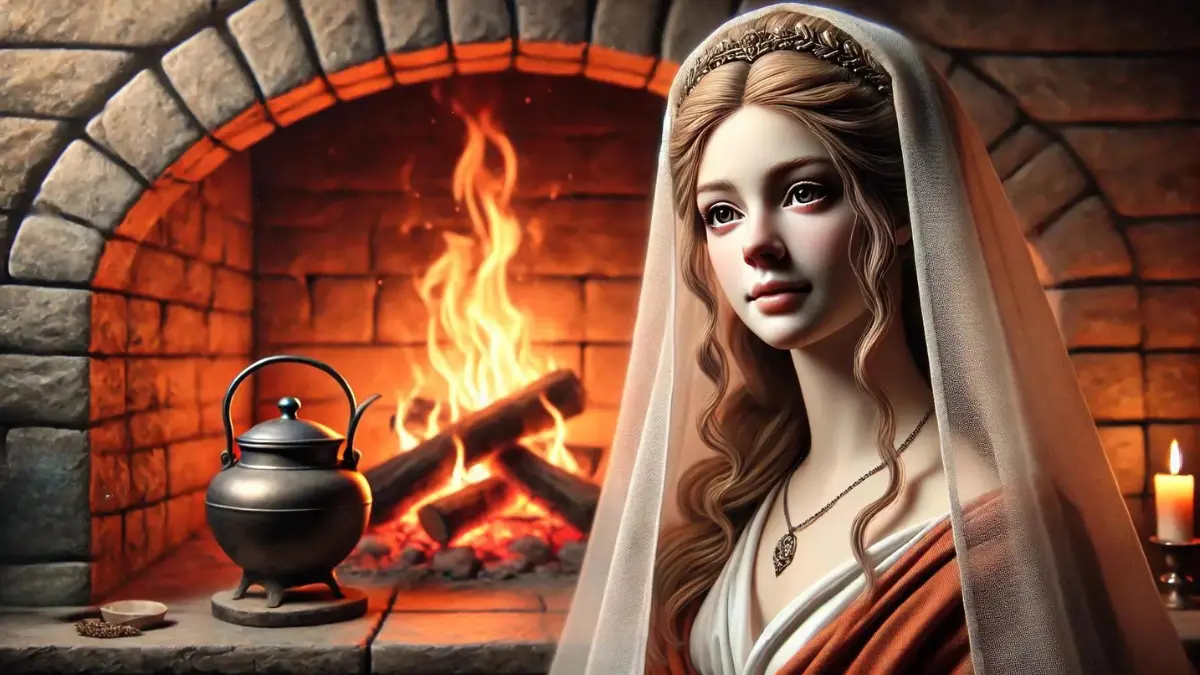
- Hearth: Symbolizes the home, family, and domestic life
- Flame: Represents warmth, light, and the sustaining fire of the hearth
- Kettle: Denotes nourishment and the preparation of meals
- Veil: Signifies modesty and purity
- Branch: Represents peace and welcoming hospitality
Hestia’s hearth symbolizes the home, family, and domestic life. The hearth serves as the central point in households, representing unity and warmth. It highlights Hestia’s role in maintaining the sanctity of the home and family bonds.
The flame represents warmth, light, and the sustaining fire of the hearth. Hestia keeps the sacred flame burning, ensuring the continuity of domestic and communal harmony. The flame emphasizes her role in providing comfort and stability. These symbols together underscore Hestia’s importance in Greek mythology as the protector of home and hearth, embodying warmth, unity, and family.
Asclepius – God of Medicine
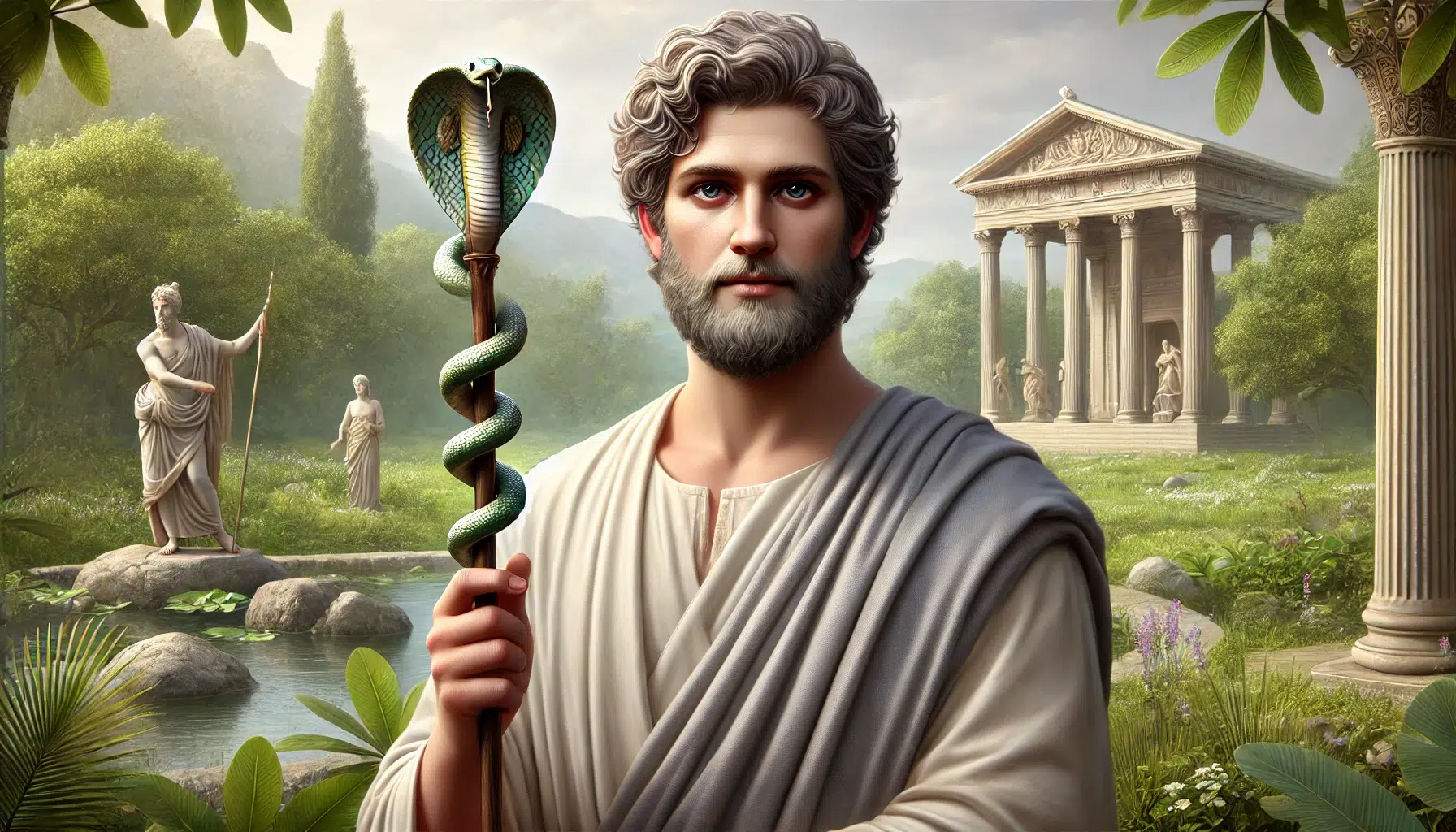
- Rod of Asclepius: Symbolizes healing and medicine
- Serpent: Represents renewal and rejuvenation
Asclepius’s most important symbol is the Rod of Asclepius, which symbolizes healing and medicine. This rod, entwined with a single serpent, represents his ability to cure diseases and restore health.
Asclepius, son of Apollo, has extraordinary skills in medicine and healing, which were taught to him by the centaur Chiron. The serpent on the rod signifies renewal and rejuvenation, embodying the continuous cycle of life and healing.
Asclepius’s expertise in medicine makes him a revered figure in Greek mythology, with his symbol still widely recognized in modern medical contexts. This symbol highlights his profound impact on health and healing practices.
Greek Mythology Symbols: Demigods & Heroes
Heracles (Hercules) – Son of Zeus and Hero of Strength
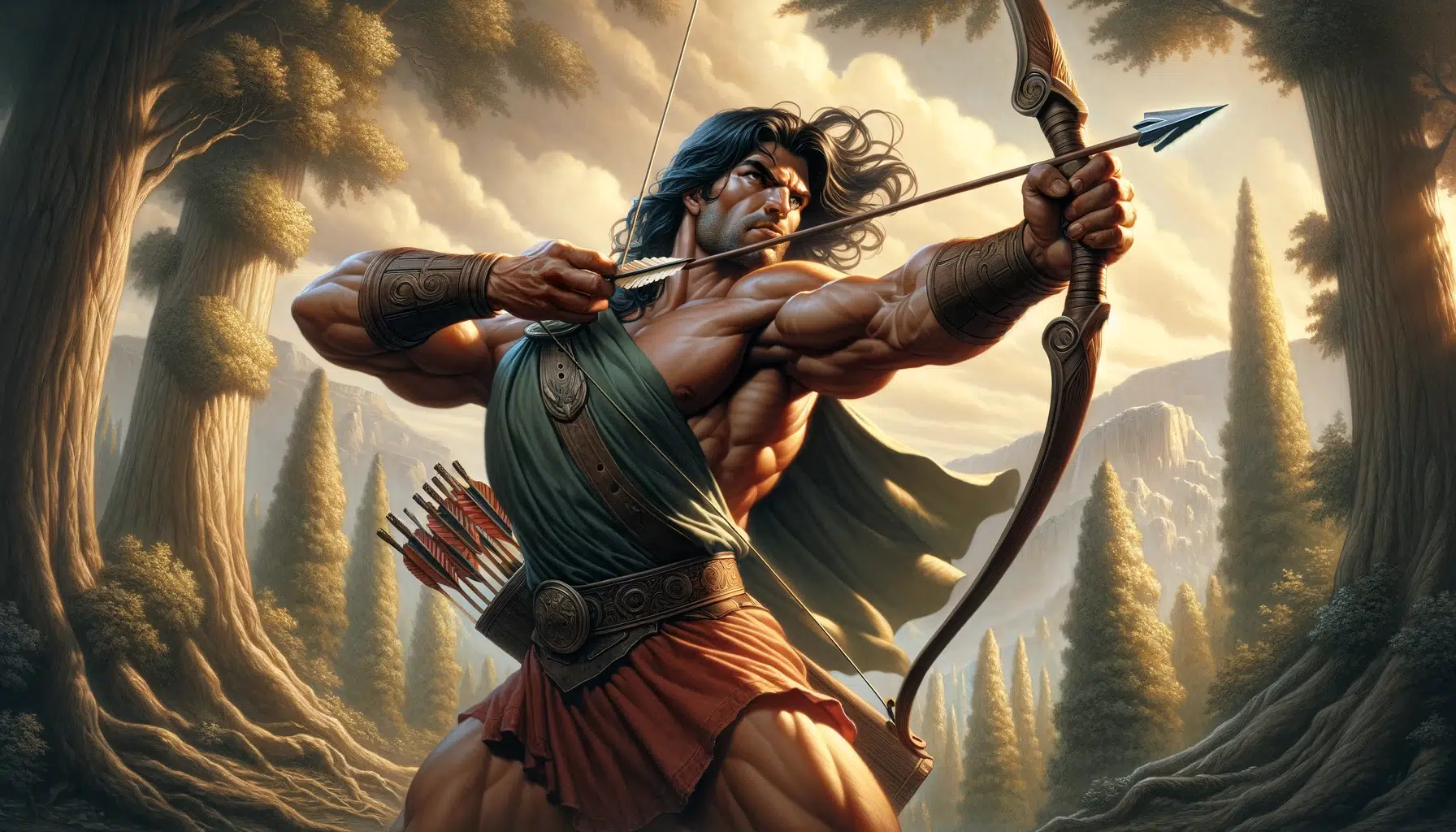
- Lion Skin: Symbolizes his immense strength and heroic feats
- Club: A large wooden club represents his weapon of choice and brute force
- Bow and Arrows: Signify his skill in archery, including slaying the Stymphalian Birds
Hercules’s lion skin symbolizes his immense strength and heroic feats. As the son of Zeus, Hercules wears the skin of the Nemean Lion, which he defeated during his Twelve Labors.
The impenetrable lion skin highlights his incredible power and bravery. Wearing it, Hercules becomes even more formidable, showcasing his triumph over invincible foes. This symbol underscores his legendary status and heroic nature.
Achilles – Greatest Greek Warrior of the Trojan War
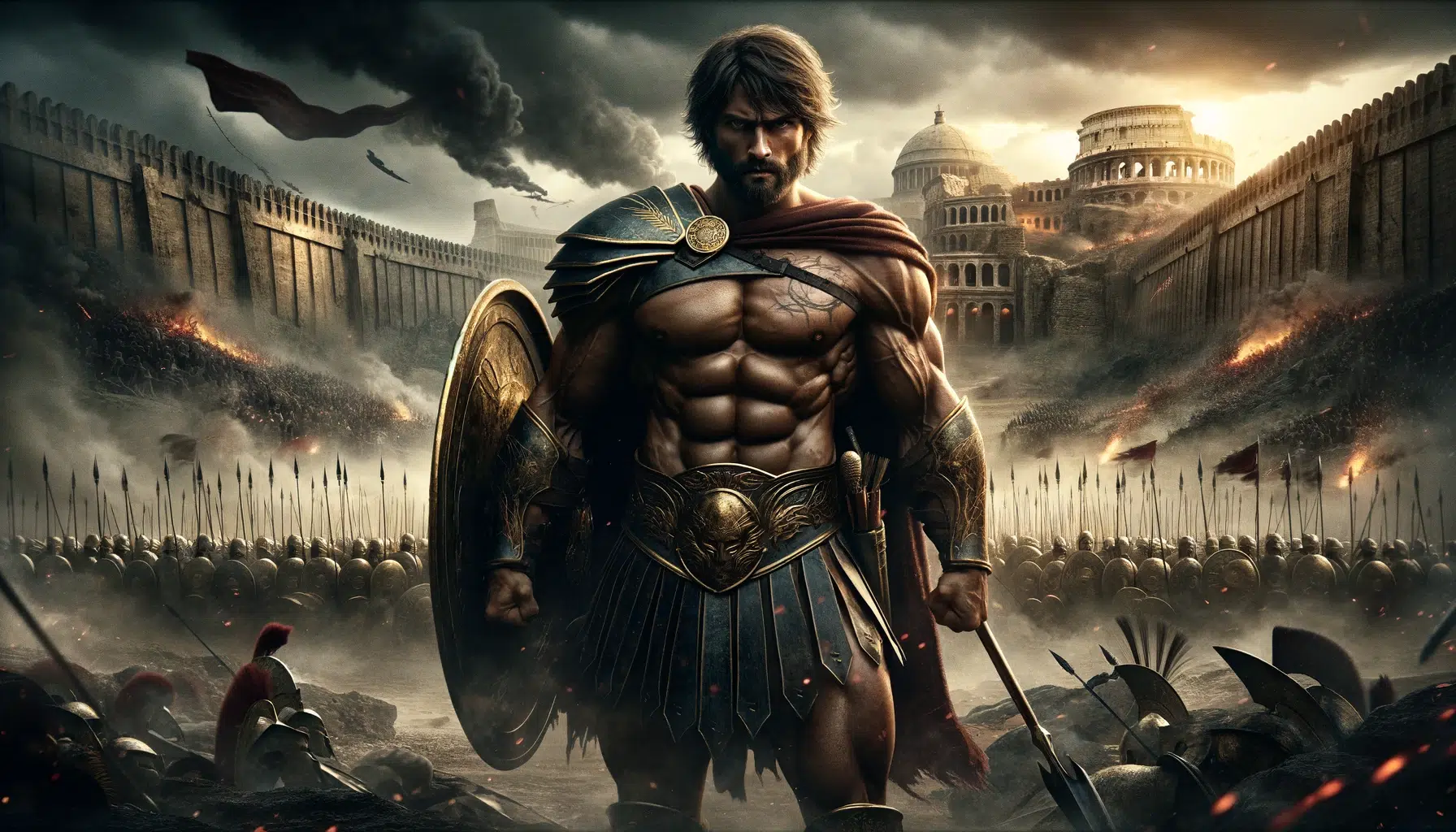
- Heel: Represents his only vulnerable spot, leading to the term “Achilles’ heel”
- Shield/Armour: Symbolizes his prowess and unmatched strength and heroism in battle
Achilles’s heel symbolizes his only vulnerable spot, leading to the term “Achilles’ heel.” According to myth, his mother, Thetis, dipped him in the River Styx to make him invulnerable, but his heel, where she held him, remained unprotected. This vulnerability ultimately led to his downfall during the Trojan War. The term “Achilles’ heel” now refers to a person’s point of weakness, highlighting the hero’s legendary status and the tragic nature of his story.
Perseus – Slayer of Medusa and Hero of Greek Mythology
- Gorgon’s Head (Medusa): Symbolizes his triumph over the Gorgon Medusa, whose head he used as a weapon
- Winged Sandals: Represents speed and divine assistance given to him by Hermes, allowing him to fly
- Helm of Darkness: Given to him by Hades, granting him invisibility
- Mirror Shield: Signifies strategy and protection
Perseus’s most iconic symbol is Medusa’s head, which he uses to defeat enemies by turning them to stone. After slaying Medusa, he carries her head in a special bag, using its power to save others and achieve further victories.
This symbol showcases Perseus’s bravery, strategic thinking, and his role as a hero who overcomes great challenges. Medusa’s head reflects his legendary status and enduring legacy in Greek mythology.
Theseus – Hero and King of Athens
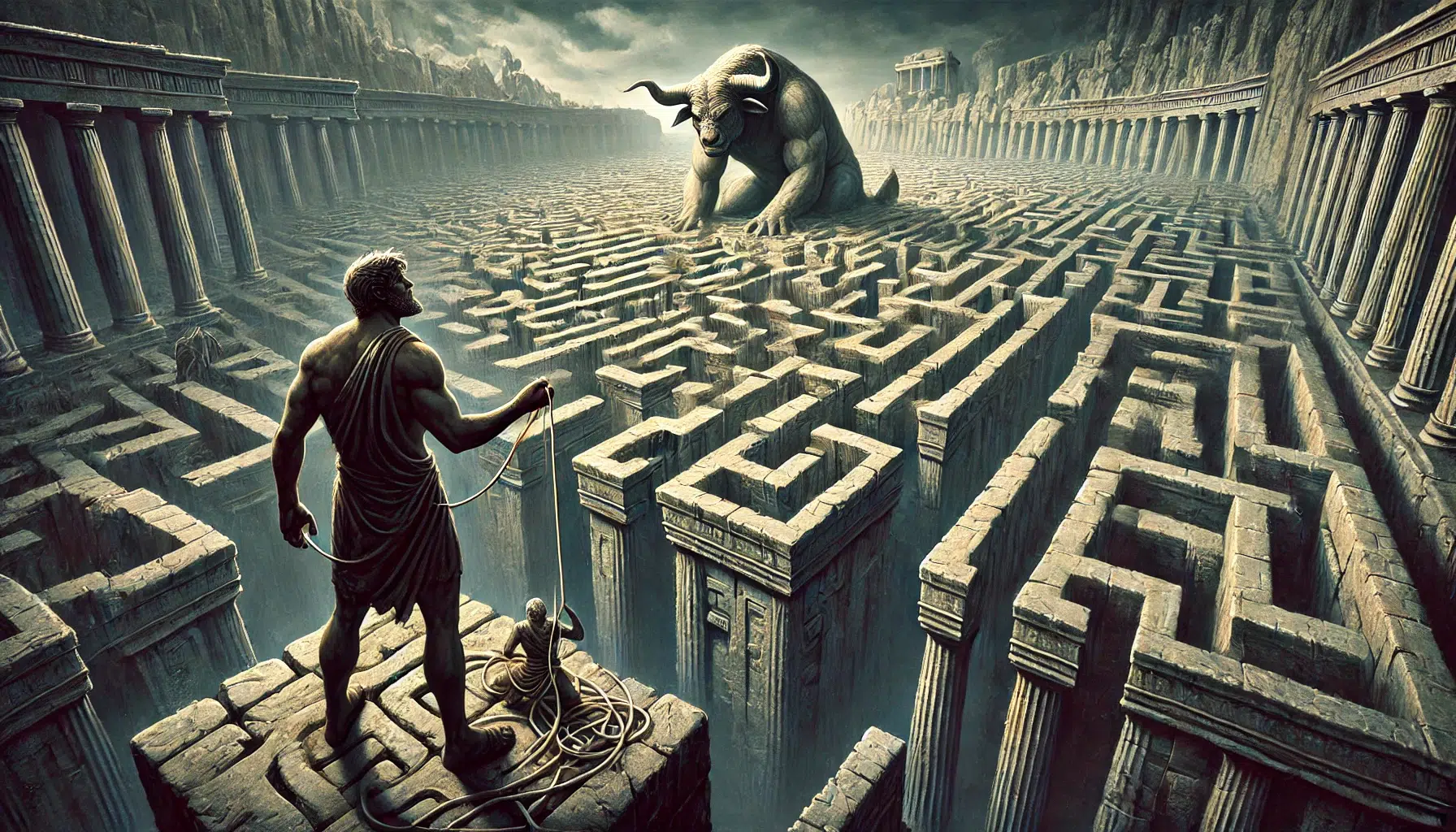
- Labyrinth: Symbolizes his intelligence and bravery in defeating the Minotaur
- Sword and Sandals: Symbols of his heritage and right to the throne of Athens, given to him by his father Aegeus
Theseus’s most important symbol is the Labyrinth, which he navigates to defeat the Minotaur. With the help of Ariadne’s thread, Theseus finds his way through the complex maze and slays the beast.
This feat showcases his intelligence, bravery, and heroism. The Labyrinth symbolizes his ability to overcome difficult challenges and protect his people, highlighting his legendary status as a hero and king of Athens.
Bellerophon – Slayer of the Chimera
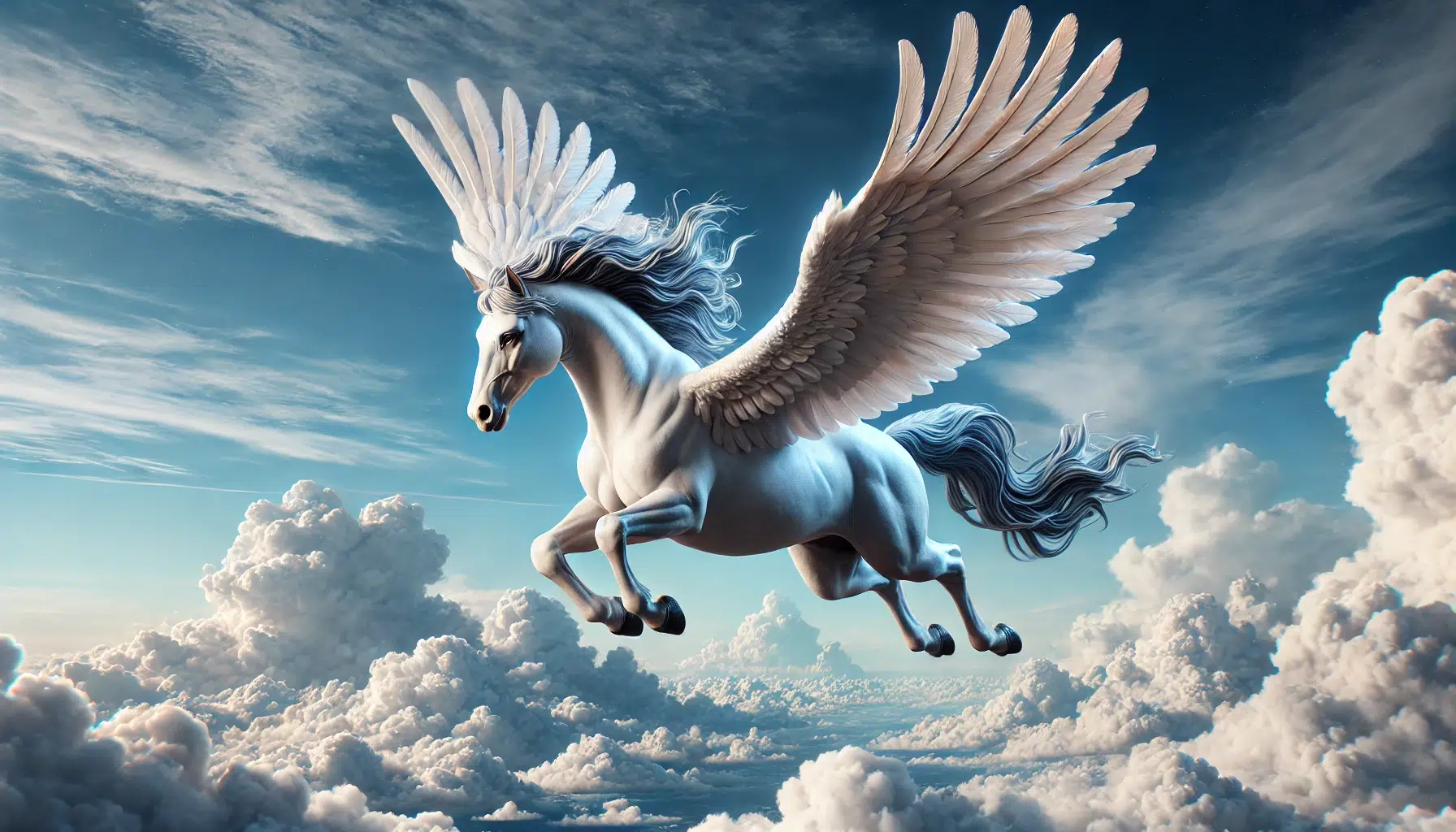
- Winged Horse (Pegasus): The winged horse he tamed and rode to defeat the Chimera, symbolizes divine assistance and his heroic achievements
- Golden Bridle: Represents his control over Pegasus and divine favour
- Chimera: Denotes his triumph over monstrous threats
Bellerophon’s most important symbol is Pegasus, the winged horse he rides to defeat the Chimera. Athena gifts Bellerophon a golden bridle to tame Pegasus, showcasing his favour from the gods. With Pegasus, Bellerophon soars to victory against the Chimera, cementing his heroic legacy. Pegasus symbolizes divine assistance and the extraordinary feats Bellerophon achieves, highlighting his status as a legendary hero in Greek mythology.
Orpheus – Legendary Musician and Poet
- Lyre: Symbolizes his unparalleled musical talent and ability to charm all living things, even the gods and nature
- Eurydice: Represents his deep love and tragic loss
Orpheus’s most important symbol is the lyre, which symbolizes his unparalleled musical talent. Given by Apollo, the lyre allows Orpheus to charm all living things, including trees, animals, and even the stones.
His music is so powerful that it softens the hearts of gods and spirits in the Underworld. The lyre represents Orpheus’s unique ability to move others through his art, highlighting his legendary status as the greatest musician and poet in Greek mythology.
Atalanta – Famed Huntress and Heroine

- Bow and Arrow: Represent her exceptional skill in hunting and archery
- Golden Apples: Symbolize the cunning strategy used to win her hand in marriage
- Wild Boar: Denotes her participation in the Calydonian Boar Hunt
Atalanta’s bow and arrow symbolize her exceptional skill in hunting and archery. Renowned for her prowess, she competes alongside the greatest heroes in the Calydonian Boar Hunt. Her unmatched precision and speed make her a formidable huntress. The bow and arrow highlight her independence and strength, defining her as one of the few prominent female heroes in Greek mythology. These symbols together showcase Atalanta’s expertise and courage, reinforcing her legendary status.
The golden apples symbolize the cunning strategy used to win her hand in marriage. During a race that determined her suitor, Hippomenes used three golden apples, given by Aphrodite, to distract Atalanta and win the race. The golden apples highlight her athletic prowess and the cleverness required to match her. This symbol underscores the blend of strength and wit that defines Atalanta’s legendary status in Greek mythology.
Greek Mythology Symbols: Creatures and Monsters
Greek mythology is rich with fascinating monsters, each with its own unique traits and stories.
Monsters of Greek Mythology
Among these fearsome creatures is the Minotaur, a beast with the body of a man and the head of a bull. King Minos of Crete confined the Minotaur in the Labyrinth, an elaborate maze designed by Daedalus. This monstrous creature fed on human sacrifices until Theseus, a hero of Athens, entered the Labyrinth and slew it with the help of Minos’s daughter, Ariadne, who provided him with a ball of thread to navigate the maze.
Hydra
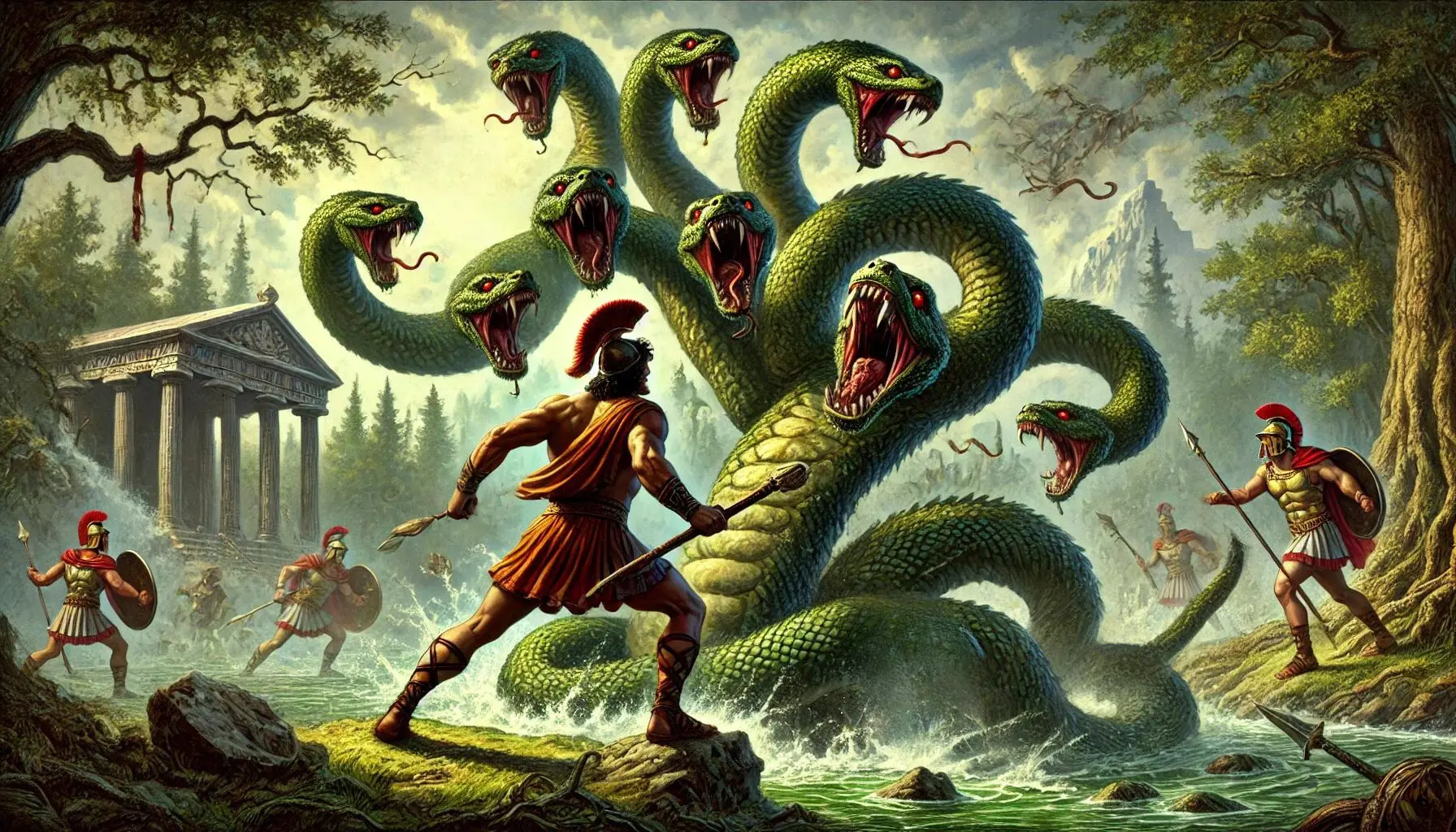
Another famous monster is the Hydra, a multi-headed serpent-like beast. Each time one of its heads was cut off, two more would grow in its place, making it nearly invincible. Heracles, in his second Labour, confronted the Hydra. He discovered that cauterizing the neck stumps with a torch prevented the heads from regenerating, eventually killing the monster. The Hydra’s poisonous blood and breath added to its terrifying reputation.
Chimera
The Chimera is another composite creature in Greek mythology, featuring the body of a lion, the head of a goat arising from its back, and a tail ending in a snake’s head. This fire-breathing monster terrorized the lands until Bellerophon, riding the winged horse Pegasus, defeated it. The Chimera’s hybrid nature symbolizes chaos and destruction, making it a formidable foe.
Sphinx
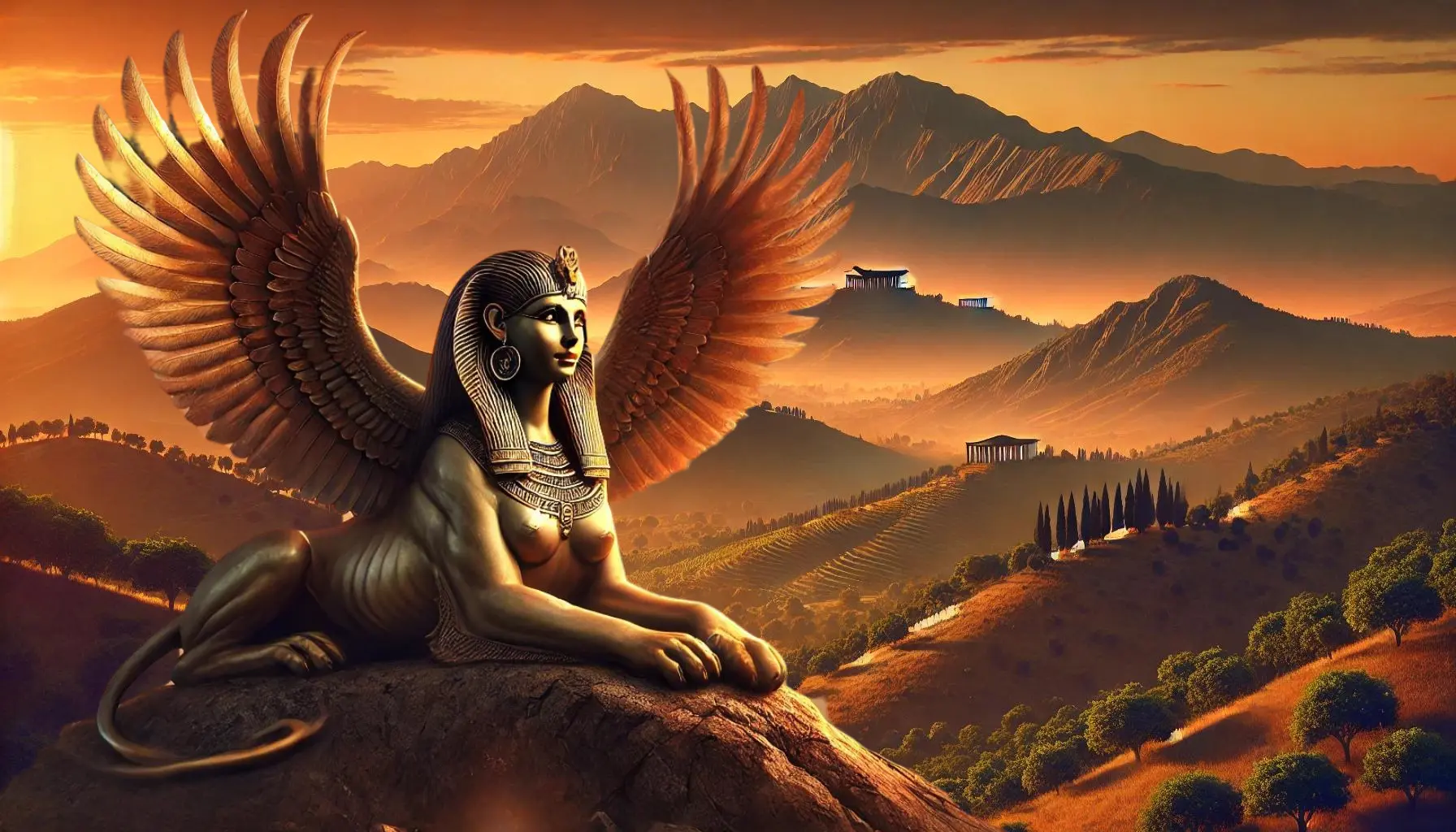
The Sphinx, with the head of a woman, the body of a lion, and the wings of an eagle, is known for its riddles. Stationed near Thebes, it challenged travelers with its puzzles, devouring those who failed to answer correctly. Oedipus famously solved the Sphinx’s riddle, leading to the creature’s demise and his subsequent rise to kingship in Thebes.
Gorgons
The Gorgons, particularly Medusa, are some of the most iconic monsters. These women had snakes for hair and could turn anyone who looked at them to stone. Perseus, with the aid of divine gifts, beheaded Medusa by viewing her reflection in his polished shield, thus avoiding her petrifying gaze.
Cyclops
Lastly, the Cyclops are one-eyed giants renowned for their strength and craftsmanship. The most famous Cyclops, Polyphemus, encountered Odysseus during his journey home from the Trojan War. Odysseus cleverly blinded Polyphemus to escape his cave, showcasing the hero’s wit against brute force.
These monsters not only provided formidable challenges for Greek heroes but also symbolized various human fears and natural forces, making them enduring figures in mythology.
Mythical Animals
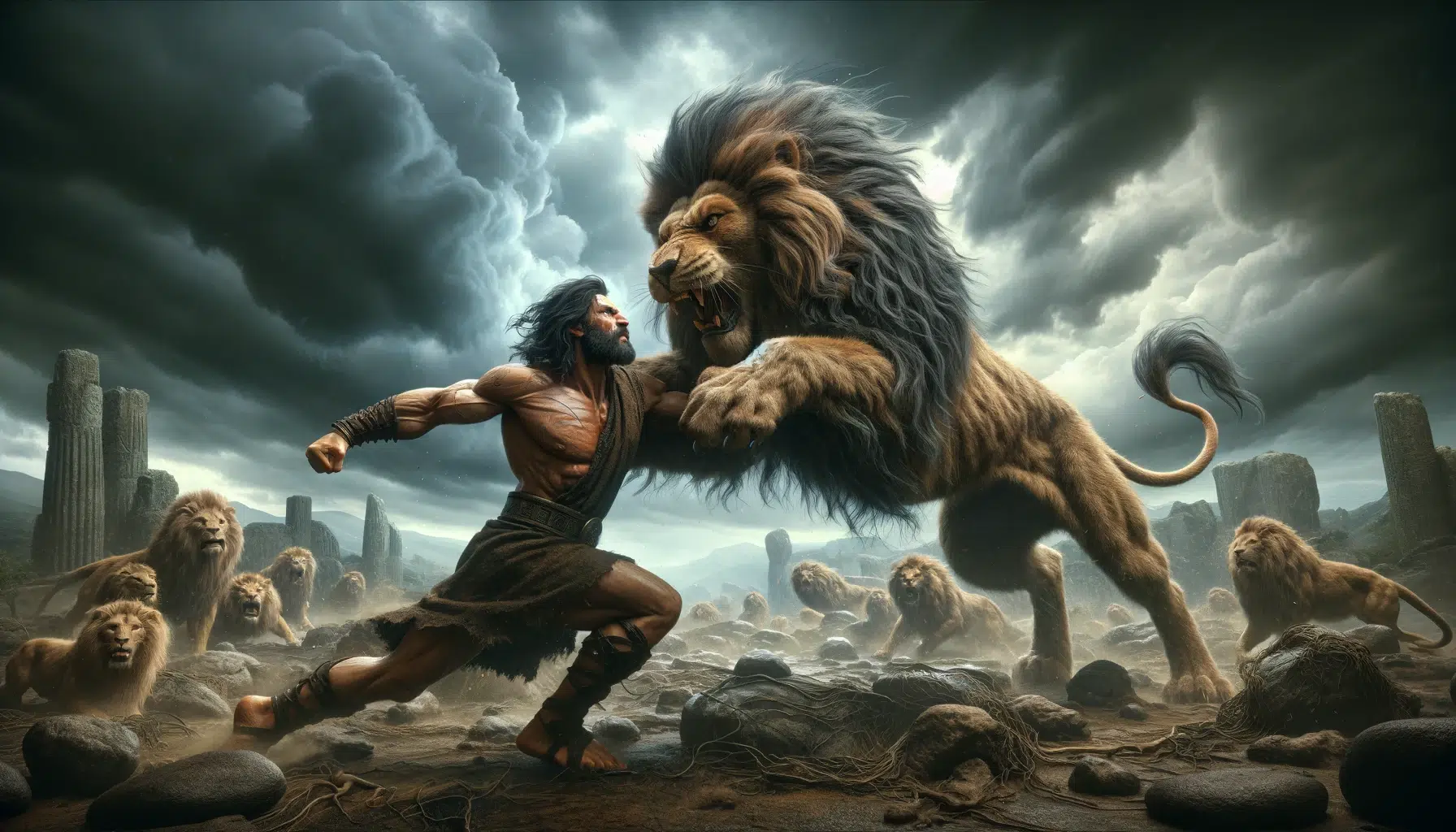
Mythical animals in Greek mythology showcase a variety of incredible creatures, each with unique attributes and symbolism.
The Nemean Lion, a gigantic lion with impenetrable skin, was defeated by Heracles during his Twelve Labors. This feat symbolizes immense strength and heroism, as Heracles had to use his bare hands to strangle the beast.
The Griffin, a majestic creature with the body of a lion and the head and wings of an eagle, represents divine power and guardianship. Often depicted guarding treasures and sacred sites, Griffins embody the union of strength and wisdom.
Harpies, winged spirits with the body of a bird and the face of a woman, are notorious for snatching people and objects. They embody chaos and terror, often serving as instruments of punishment by the gods.
The Erymanthian Boar, another challenge for Heracles in his Twelve Labors, symbolizes the hero’s ability to conquer monstrous threats. Capturing the gigantic boar demonstrates Heracles’s courage and strength, further cementing his legendary status.
Hybrid Creatures
Hybrid creatures in Greek mythology showcase fascinating blends of human and animal traits. Centaurs, half-man, half-horse beings, often act wild and unruly, except for the wise centaur Chiron.
Satyrs, half-man, half-goat creatures, associate with Dionysus and revel in mischief and celebration. These beings embody the duality of human nature, mixing civilized and primal aspects, and highlight the richness of Greek mythological imagination.
Sea Creatures
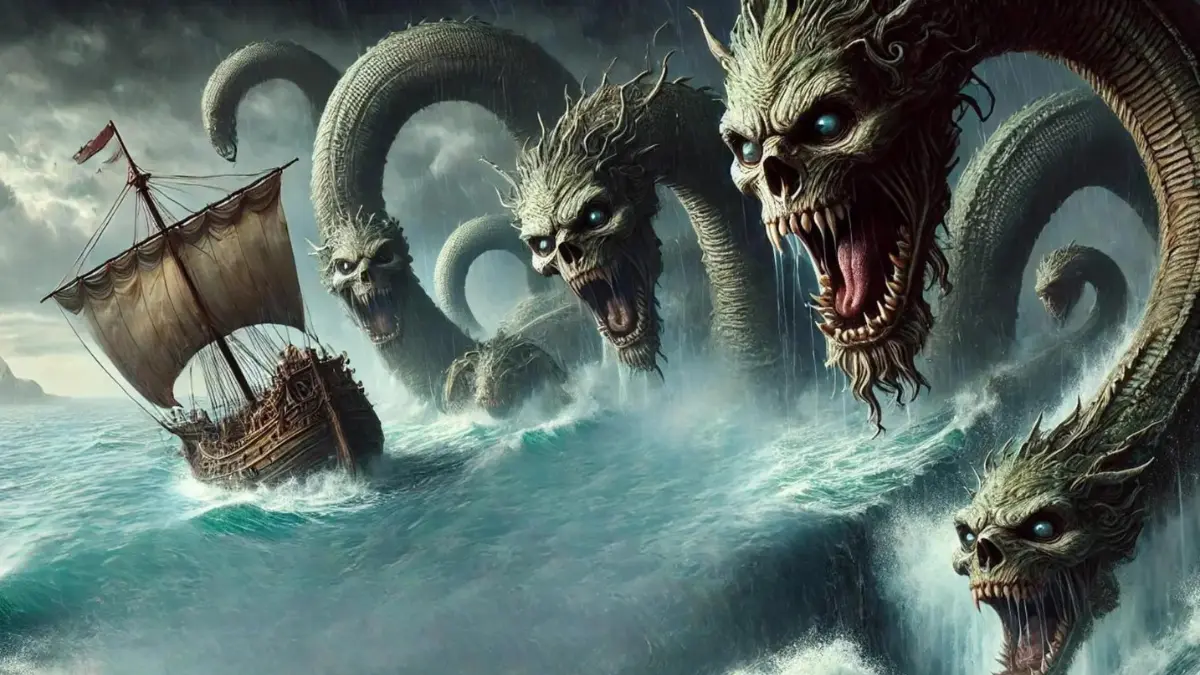
Greek mythology features a variety of sea creatures and monsters that embody the dangers of the ocean.
Charybdis is a terrifying sea monster with multiple heads that devours sailors who venture too close to her lair. Jason and the Argonauts encountered this on their journey. Positioned on one side of a narrow strait, she represents a constant threat to passing ships.
On the opposite side resides Charybdis, a sea monster that creates massive whirlpools by swallowing and spitting out large amounts of water. Sailors must navigate carefully between these two hazards, often referred to as “between Scylla and Charybdis,” signifying a perilous situation.
The Sirens are sea nymphs whose enchanting songs lure sailors to their deaths. Their melodious voices compel sailors to steer their ships towards rocky shores, leading to shipwrecks and doom. Odysseus famously encounters the Sirens during his journey home, ordering his men to plug their ears with beeswax while he listens, tied to the mast, to experience their songs safely.
These sea creatures and monsters highlight the perils of maritime exploration and the irresistible pull of the unknown.
Conclusion to Greek Mythology Symbols
Greek mythology symbols offer a window into the ancient world, revealing the values, beliefs, and cultural significance of gods, heroes, and mythical creatures.
These symbols, from Zeus’s thunderbolt to Athena’s owl, encapsulate the divine attributes and heroic feats that have captivated imaginations for centuries. They serve not only as visual representations but also as enduring legacies of storytelling, illustrating the timeless nature of these myths.
By studying these symbols, we gain a deeper appreciation of the rich tapestry of Greek mythology and its profound impact on art, literature, and modern culture.