Freya: The Enigmatic Goddess of Norse Mythology
Freya, the goddess of love and beauty, plays a pivotal role in Norse mythology.
Her multifaceted character and captivating stories make her one of the most revered figures in Norse culture.
From her association with fertility and war to her mastery of seidr magic, Freya’s influence permeates throughout the Norse pantheon.
Key Takeaways:
- Freya is a central figure in Norse mythology, embodying love, beauty, fertility, and war.
- Her name, Freya, means “lady” in Old Norse, and she is associated with various names and kennings that highlight her lineage and attributes.
- Freya’s personal relationships, particularly her marriage to Ódr, and her roles as a goddess of fertility and a chooser of fallen warriors add depth to her character.
- She is known for her association with seidr magic and her influence on the practice of fortune-telling and fate manipulation in Norse culture.
- Freya’s allure and legacy endure through her myths and continued fascination with her complex character and story.
Learn more about Norse Mythology:
- Exploring Norse Mythology Gods and Legends
- God of Archery: Norse, Greek & Roman Mythology
- Norse Mythology Symbols in Archery
- Odin: The Allfather in Norse Mythology
- Sif Norse Mythology Goddess
- Skadi: Norse Goddess of Winter and Mountains
- Ullr: The Norse God of Archery and Winter
The Name and Kennings of Freya

In Norse mythology, the goddess Freya holds a significant place among the Nordic pantheon.
Her name, Freya, derived from the Proto-Germanic word *frawjōn, translates to “lady” or “mistress” in Old Norse.
Renowned for her beauty and power, Freya is known by several names that reflect her diverse attributes.
Freya, known as “Daughter of Njord,” shows she’s Njord the sea god’s child, making her a key figure in the Vanir people.
She’s also “Sister of Freyr,” linking her to her twin, the god of wealth and growing things.
Her title “Wife of Ódr” points to her deep love and marriage to Ódr, hinting at strong feelings in their bond.
Some think Ódr might even be Odin, tying Freya closely to the chief god.
Freya has a warrior side too, called “Possessor of the Slain.”
She picks half of the warriors who die in battle to come to Fólkvangr, her realm.
This shows she’s also a goddess of war and the afterlife.
Her role as “Goddess of the Vanir” underlines her power and place among her people, stressing her importance.
Freya’s often called the “Goddess Beautiful in Tears,” capturing the deep emotions of love and beauty she brings.
This name shows she can bring happiness and sadness, showing her complex nature.
Freya’s also linked to gold, a sign of her ties to wealth and beauty.
These titles and connections make Freya a fascinating and vital part of Norse mythology, reflecting her many roles and deep emotions.
Kennings of Freya
| Kenning | Description |
|---|---|
| Daughter of Njord | Highlights Freya’s lineage as the daughter of the sea god Njord |
| Sister of Freyr | Emphasizes Freya’s relationship with her twin brother, Freyr |
| Wife of Ódr | Represents Freya’s marital connection with Ódr |
| Possessor of the Slain | Demonstrates Freya’s role in selecting fallen warriors for her realm |
| Goddess of the Vanir | Recognizes Freya’s divine authority within the Vanir tribe |
| Goddess Beautiful in Tears | Evokes the emotions and complexities associated with Freya’s beauty |
Ancient Roots of Freya
Freya, the enigmatic Norse goddess, has ancient roots that can be traced back to older Germanic traditions.
Her name, Freya, is etymologically linked to the words “frau” in modern German and “Frue” in modern Norwegian.
This connection showcases the enduring influence of Freya across different cultures and languages.
Freya’s lineage adds to her intrigue.
She was born to the sea god Njörd, but the identity of her mother remains unknown.
This enigmatic aspect of Freya’s story only deepens the fascination surrounding her.
After the Aesir-Vanir war, Freya and her family, including her twin brother Freyr, moved to reside among the Aesir gods.
This move symbolizes a newfound harmony between the two peoples.
It highlights Freya’s immense significance within the Norse pantheon.
Throughout her ancient story, Freya embodies various roles and attributes, from goddess of love and beauty to fierce warrior.
Her myths and legends continue to captivate audiences, offering a glimpse into the rich tapestry of Norse mythology.
By exploring Freya’s ancient roots, we gain a deeper understanding of her enduring legacy.
Freya’s Personal Relationships
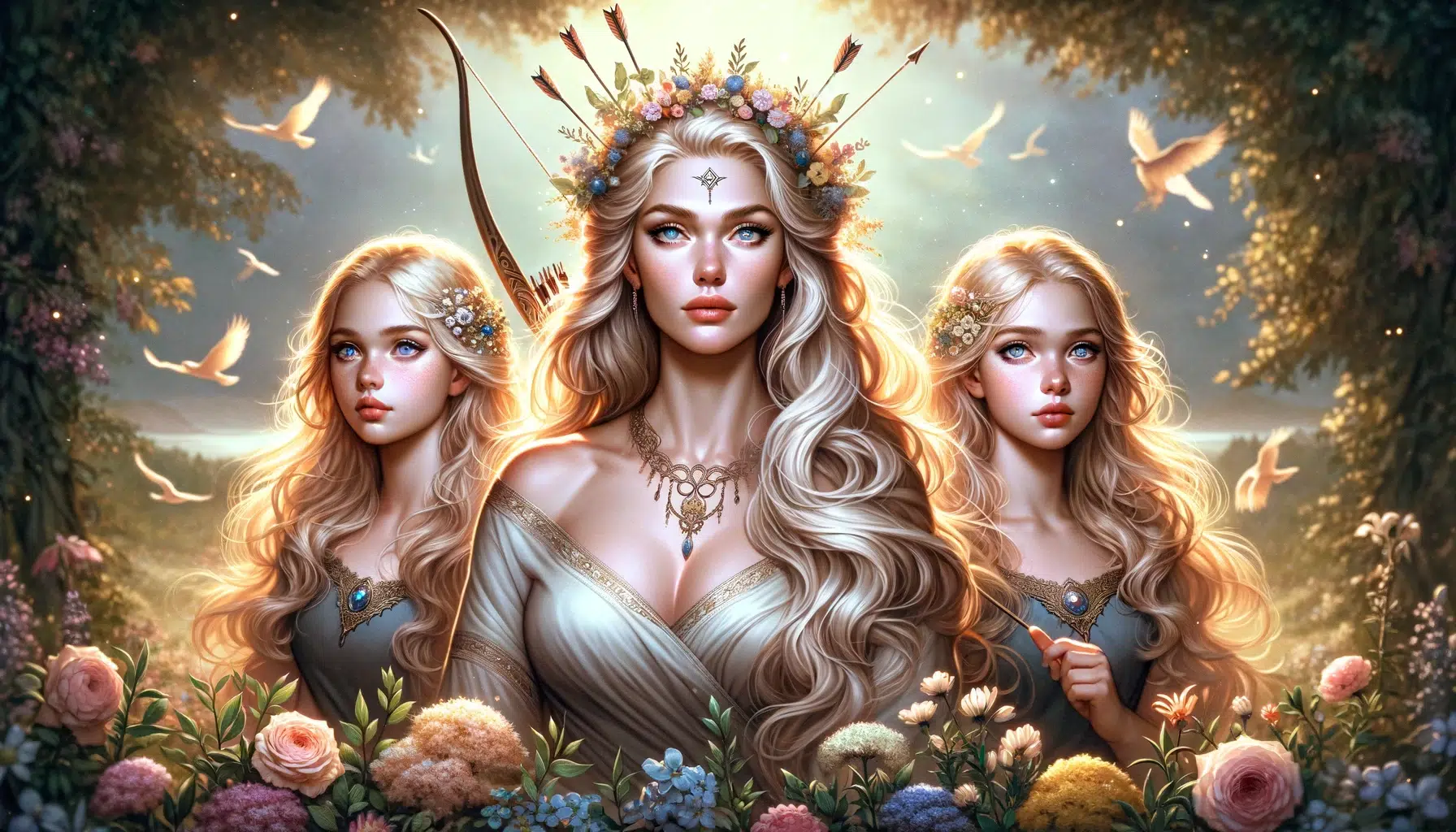
Freya’s marriage with Ódr, whose name means “frenzy” or “ecstasy,” is marked by deep love and longing.
Ódr is a somewhat elusive figure in Norse mythology. There are theories that he may be another aspect or manifestation of Odin himself.
Freya and Ódr have two daughters, Hnoss and Gersemi, who embody the attributes of beauty and treasure.
| Relationship | Description |
|---|---|
| Freya and Ódr | Freya’s marriage with Ódr is characterized by profound love and intense longing. Ódr’s identity and role in mythology are shrouded in mystery, with theories suggesting his connection to Odin. |
| Hnoss and Gersemi | Hnoss and Gersemi are the two daughters of Freya and Ódr. They possess beauty and treasure attributes, symbolizing their mother’s realm and influence. |
Freya’s Roles and Responsibilities
Freya, the captivating goddess of Norse mythology, encompasses a range of roles and responsibilities that reflect her divine influence and power.
Let’s explore the various domains that Freya presides over and the symbols associated with her.
Fertility and Prosperity
Freya is renowned as a symbol of fertility and prosperity.
She governs the cycles of life and is believed to bestow blessings upon those seeking abundance and growth.
As the goddess of fertility, Freya’s nurturing energy is deeply connected to the natural world and the cycles of creation.
Love and Beauty
Freya is widely revered as the goddess of love and beauty.
Her ethereal charm and allure captivate all who encounter her.
Through her sacred presence, Freya exemplifies the profound emotions and desires that lie within the human heart.
Her essence embodies the power and intoxicating nature of love.
Role in the Afterlife
One of Freya’s notable responsibilities is her role in the afterlife.
In Norse mythology, she chooses half of the fallen warriors to join her in Fólkvangr, her realm.
This esteemed duty demonstrates her connection to the warrior spirit and her ability to guide souls on their journey beyond the mortal realm.
Freya’s selection in the afterlife guarantees an eternal existence in valiant valour and honour.
Association with Valkyries
Freya’s connection to the Valkyries, the mystical female figures who select slain warriors for Odin’s hall, adds to her compelling mythos.
Some interpretations even propose that she may be the leader of the Valkyries herself.
This connection further emphasizes her involvement in matters of war and the strength and bravery required in battle.
| Domain | Symbols |
|---|---|
| Fertility and Prosperity | The sow, golden apples, the harvest |
| Love and Beauty | The Brísingamen necklace, falcon feathers |
| Afterlife | Valhalla, falcons, warhorses |
| Valkyries | Winged Valkyrie helmet, spear, shield |
Freya’s Physical Attributes and Personality
Freya, the captivating goddess of Norse mythology, is renowned for her exceptional physical beauty and radiant allure.
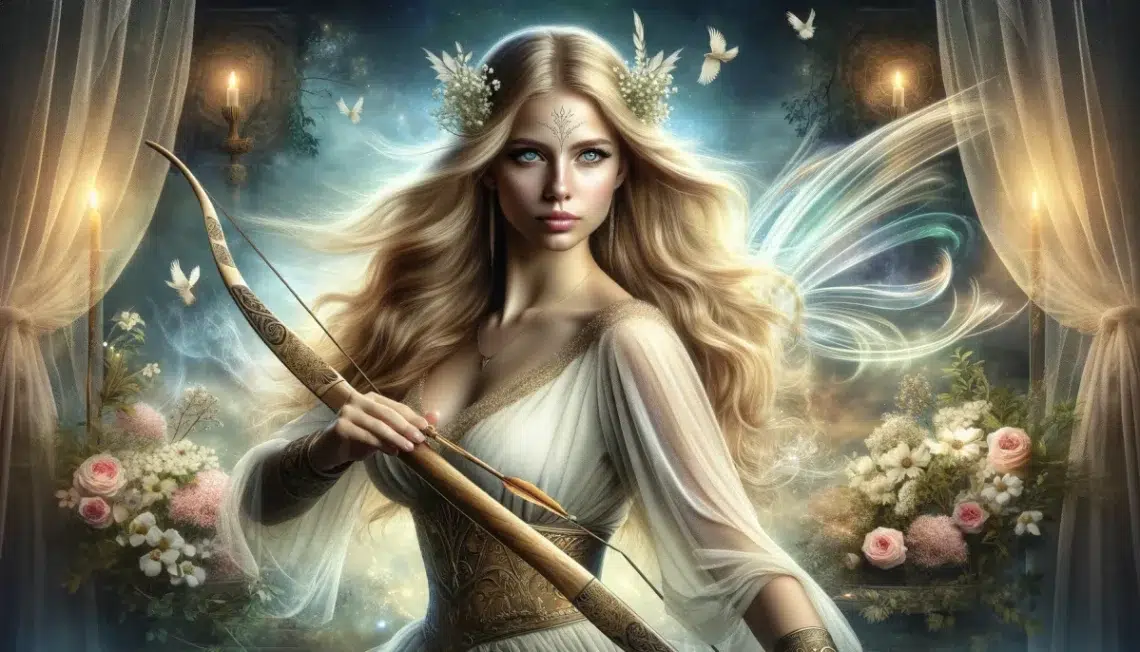
She is often depicted with glorious golden hair that shines like the sun’s rays.
Freya’s captivating physical appearance is associated with the symbolism of gold, reflecting her status as a goddess of love, beauty, and fertility.
The Legendary Brísingamen Necklace
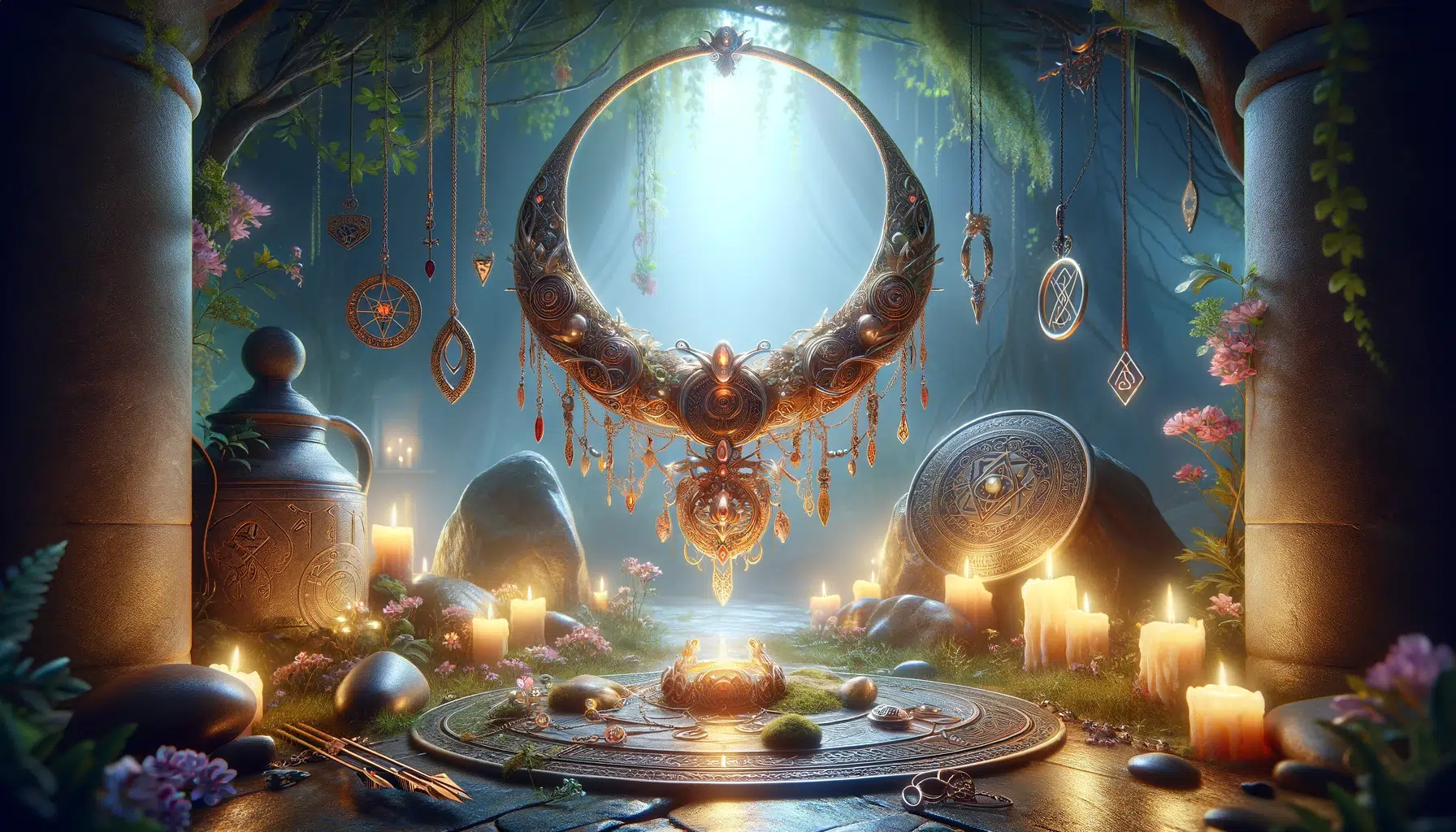
In various Norse myths and artwork, she is portrayed wearing the legendary Brísingamen necklace, which further enhances her enchanting presence.
Freya’s allure extends far beyond her physical beauty.
She embodies a profound sense of love, sensuality, and independence, captivating hearts and minds alike.
Her personality traits are a reflection of her role as the goddess of love and fertility.
Freya exudes passion and sensuality. This symbolizes the intense emotions that accompany romantic relationships and desire.
Freya possesses a strong sense of autonomy and independence, defying traditional gender roles.
She is a symbol of empowerment and represents women who are unafraid to embrace their desires and pursue their dreams.
Freya’s independent spirit captivates both mortals and gods. This makes her a fascinating and influential figure in Norse mythology.
| Physical Attributes | Personality Traits |
|---|---|
| Exceptional beauty | Passionate |
| Golden hair | Sensual |
| Radiant allure | Independent |
| Associated with the symbolism of gold | Empowered |
Freya’s multifaceted nature extends beyond her beauty and personality.
Her mastery of seidr Norse magic showcases her intellectual prowess and spiritual capabilities.
As a Seidkona, she possesses the ability to manipulate fate and shape destiny.
Further emphasizing her complex and enigmatic character.
Freya’s role in selecting half of the slain warriors to enter her realm, Fólkvangr, highlights her multifaceted nature.
She combines love, sensuality, and war, embodying the paradoxical qualities often found in mythological figures.
Freya’s portrayal as a divine chooser and protector of warriors is a testament to her remarkable depth and versatility.
Freya’s physical attributes and personality make her a captivating deity, enchanting mortals and fellow gods alike.
Her indomitable spirit, beauty, and magical prowess continue to inspire fascination and admiration in Norse mythology.
Freya’s Family and Vanir Gods
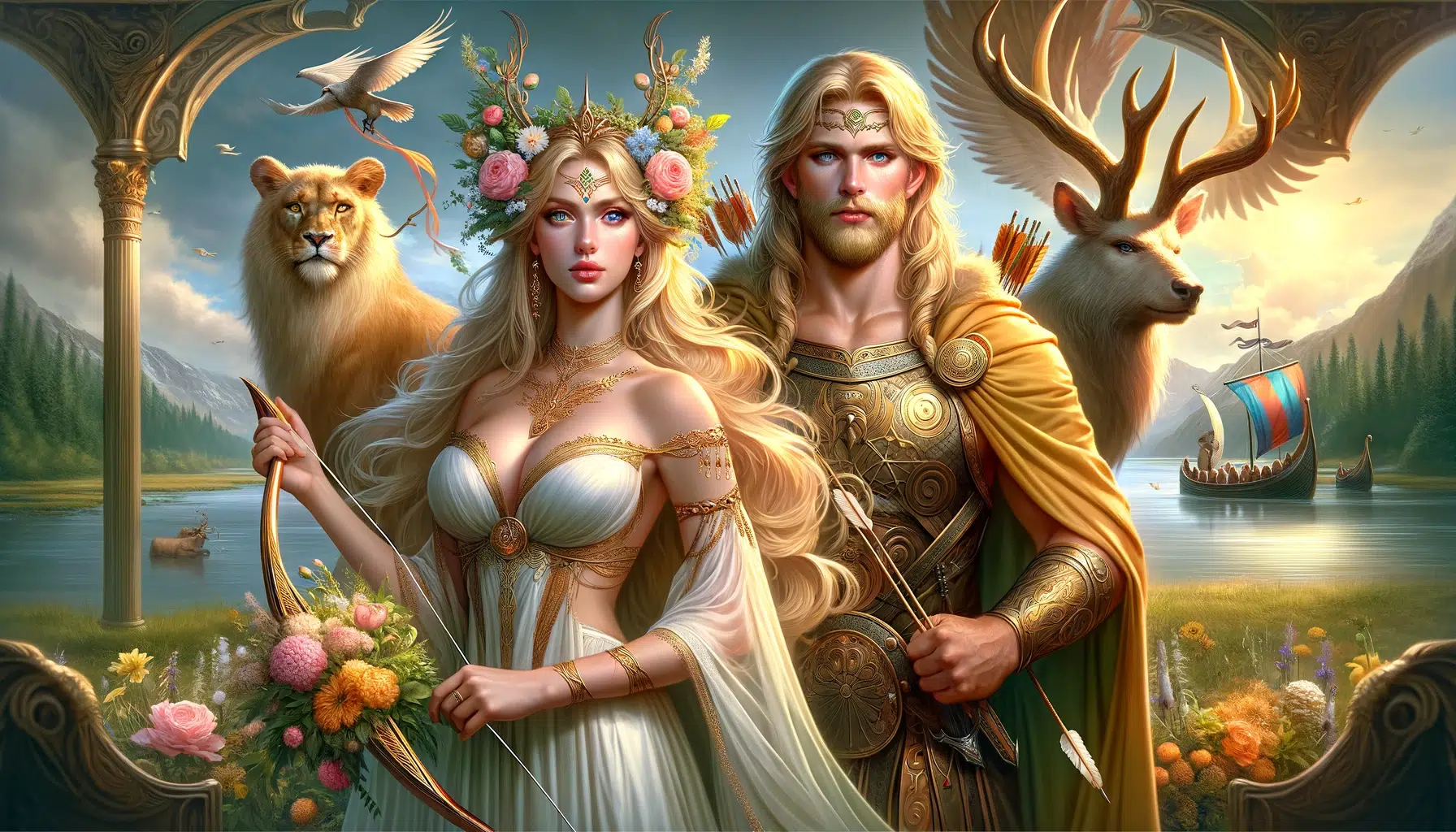
Freya, the Vanir goddess, has a rich lineage within Norse mythology.
She is the daughter of Njörd, the sea god, and her mother’s identity remains a mystery.
Speculations suggest that her mother could be Njörun or Nerthus, but the truth remains elusive.
Freya shares a close bond with her twin brother, Freyr, who is associated with wealth, prosperity, and fertility.
Together, they form an important part of the Vanir people, a group of powerful gods with deep connections to nature and fertility.
Here is a glimpse of Freya’s family tree:
| Family Member | Role |
|---|---|
| Father: Njörd | God of the sea |
| Mother: Unknown | Mystery surrounds her identity |
| Twin Brother: Freyr | Associated with wealth, prosperity, and fertility |
Freya’s family and lineage play a significant role in shaping her character and mythology.
Their divine connection reflects the intricate relationships and dynamics within Norse culture.
This demonstrates the importance of family and kinship.
Freya and the Art of Seidr Magic
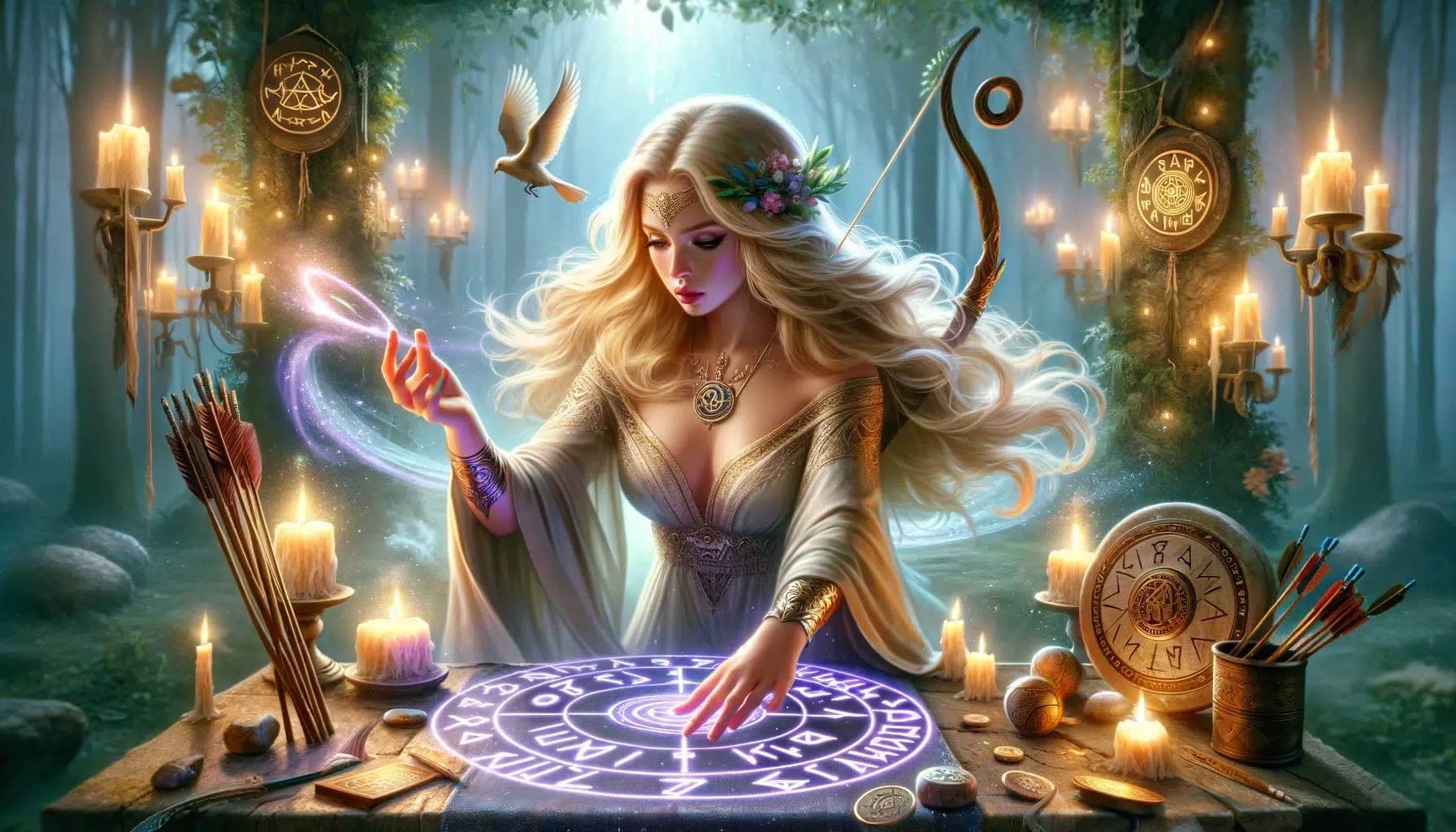
Freya is a key character in Norse myths, famous for her magic called seidr.
This powerful magic let her and others change fate and talk to spirits.
Freya was the first to teach this magic to gods and people, making her very important in these stories.
Seidr involves working with fate to make changes or see the future.
People practicing seidr could connect with the spirit world, get advice, see what’s coming, and shape events.
In old Norse times, mostly women called völvas did seidr.
They could go into deep trances to talk with spirits and help others.
Freya, known for love, beauty, and war, also used seidr to show her many sides.
Her magic skills made her even more powerful.
Freya used seidr to bring good luck and wealth to those who followed her.
She could also use it to decide who wins in battles.
Sometimes, she picked warriors who died to live with her in Fólkvangr, showing her strong ties to magic and battle.
This showcases her authority over destiny and her ability to shape the course of events.
Explore Freya’s association with seidr magic in Norse mythology, refer to the table below:
| Aspect | Role |
|---|---|
| Seidr Magic | Introduction of seidr to gods and humans Expertise in divination and prophecy |
| Fertility and Prosperity | Bestows blessings of abundance and prosperity Guides individuals in matters of love and fertility |
| War and Battle | Chooses fallen warriors to join her in Fólkvangr Manipulates the outcome of battles through seidr magic |
Freya’s mastery of seidr magic adds to the allure and enigma surrounding her character.
Through her connection to seidr, she transcends the boundaries of mortal existence.
Thus embodying the essence of ancient magic and the ever-present interplay between fate and personal agency.
Freya’s Mythological Connections and Influences
Freya, a key goddess in Norse myths, often stirs up stories with her charm and quick thinking.
Loki, the trickster god, once stole Thor’s mighty hammer.
Freya helped figure out how to get it back, showing her smart and influential side in these godly troubles.
In another story, “The Thrym’s Wedding,” a giant named Thrym took Thor’s hammer and wanted to marry Freya to return it.
Freya said no and helped come up with a plan to get the hammer back, proving her bravery and quick wit.
Freya also owns a special necklace called Brísingamen, which comes up a lot in myths.
Loki stole this necklace too, but Freya’s clever moves brought it back to her.
These stories show Freya’s strength, smarts, and how she deals with problems, making her a standout character in Norse mythology.
Influences and Symbolism
Freya’s myths, relationships, and symbolic artifacts contribute to her powerful character and captivating mythology.
Her connections with giants, gods, and the theft of her necklace showcase her resilience, determination, and willingness to fight for what is hers.
The Brísingamen Necklace
The Brísingamen necklace holds significant symbolic value.
It represents Freya’s beauty, power, and sensuality.
The theft and retrieval of the necklace underline Freya’s strength, resourcefulness, and her place as a central figure in Norse mythology.
| Myth | Summary |
|---|---|
| The Theft of Thor’s Hammer | Loki steals Thor’s hammer and approaches Freya to retrieve it. |
| The Thrym’s Wedding | Thrym steals Thor’s hammer and demands Freya’s hand in marriage as ransom. |
| The Theft of Brísingamen | Loki steals Freya’s Brísingamen necklace, leading to a series of challenges and its eventual return. |
Freya’s connections and influences within Norse mythology add depth to her character and make her a captivating presence.
Her myths and symbolism fascinate and inspire readers, elevating her status as a legendary figure of Norse mythology.
Similarities Between Freya and Frigg

Freya and Frigg, Odin’s wife, stand out in Norse myths.
Some think they might have been the same goddess once, showing different sides, especially when people started following Christianity.
Both are important in Norse stories, and they share a lot of qualities:
- Love and Beauty: Freya and Frigg both deal with love, beauty, and having children. They make people feel love and bring new life.
- Marriage and Family: Freya is married to Ódr, and Frigg to Odin. They both have kids who are important in these stories.
- Magic and Seeing the Future: Freya knows a lot about magic, especially seidr magic. Frigg can also see the future and has her own magic.
There are many similarities between Freya and Frigg are closely linked, making Norse myths rich and deep.
Whether seen as different or the same, both goddesses spark our imagination and are key to Norse mythology.
Freya’s Allure and Legacy in Norse Mythology
Freya, a key goddess in Norse myths, draws in both gods and people with her charm.
She stands out in the Norse gods’ world because she deals with love, fertility, beauty, and war.
Freya shows the many sides of life and feelings.
Freya uses her magic, especially seidr, a special kind of Norse magic.
With this power, she can see the future and change things, affecting both gods and people.
More than just magic, Freya’s beauty is legendary. She has golden hair that shines like sunlight.
Everyone admires her beauty, making her a symbol of beauty in Norse stories.
Freya’s stories are still popular today, catching the interest and imagination of many.
Even though we might not know everything about her, her role in Norse myths is clear.
She has left a lasting mark on the ancient stories of gods and heroes.
| Freya’s Allure and Legacy | Description |
|---|---|
| Powerful Presence | Freya’s presence commands attention and respect among the gods and mortals alike. |
| Goddess of Love, Fertility, Beauty, and War | Freya embodies the complexities of human experiences and emotions, representing various aspects of life. |
| Seidr Magic | Her association with seidr magic showcases her mastery over the mystical arts and her ability to influence fate. |
| Exceptional Beauty | Freya’s radiant allure and physical beauty make her the epitome of beauty in Norse mythology. |
| Enduring Legacy | Freya’s captivating myths and enchanting character continue to captivate and inspire people throughout the ages. |
Conclusion
Freya is a Norse goddess of love, beauty, fertility, and war.
She is very important in Norse myths because of her many roles.
Freya picks warriors who have died in battle to live in her realm, Fólkvangr.
This shows her power and why people love Norse gods. Her beauty and magic skills reflect life’s many sides.
Freya is famous for her love stories and shows how important love, freedom, and being yourself are.
People still love Freya’s stories today because they are interesting and teach us about Norse culture.
Learn more about other women archers: Women in Archery in Different Cultures