
Famous Greek Myths: Love, Conflict and Tragedy
Each of these famous Greek myths from Greek mythology tell a story of gods, mortal heroes, adventures and often tragedy.
These myths show the values and beliefs of ancient Greeks. In this continuation of popular Greek myths, we explore ten more famous myths.
Learn about the Titans, King Midas, Abduction of Persephone by Hades, Icarus, the tragic tale of Oedipus and more. These stories teach us important lessons about life, love, and the power of the human spirit.
Learn more about:
- Gods and Archery in Greek Mythology Books
- Greek Mythology Movies Showcasing Archers
- Legacy of Archers: Women in Greek Mythology
The Titans and the Titanomachy
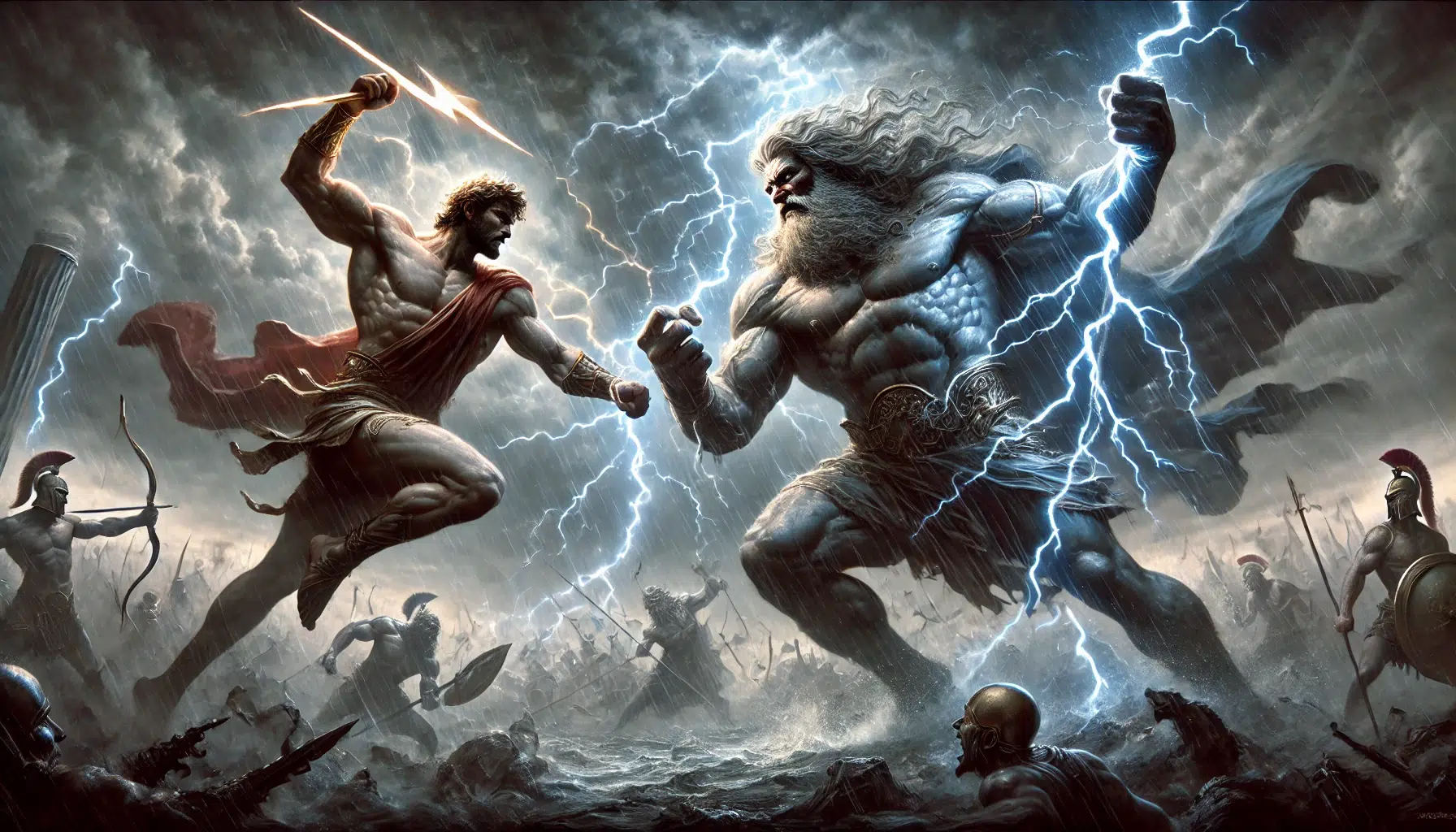
In Greek mythology, the Titans are the children of Uranus (Sky) and Gaia (Earth). They are the first generation of gods, ruling before the Olympian gods. Cronus, the youngest Titan, becomes the leader after overthrowing Uranus. He takes power with his sister-wife, Rhea.
Cronus fears a prophecy that his own children will overthrow him. To prevent this, he swallows each of his children at birth. Rhea, distressed, hides her youngest son, Zeus, and gives Cronus a stone to swallow instead.
Zeus grows up in secret. He plans to free his siblings and challenge Cronus. With the help of Gaia, Zeus forces Cronus to vomit up his siblings: Hestia, Demeter, Hera, Hades, and Poseidon. Together, they form the Olympian gods.
The Titanomachy Begins
This begins the Titanomachy, a great war between the Titans and the Olympians. The battle rages for ten years. The Olympians fight from Mount Olympus, while the Titans hold Mount Othrys.
The Olympians receive help from the Cyclopes and the Hecatoncheires, whom Zeus frees from Tartarus. The Cyclopes give Zeus his thunderbolts, Poseidon his trident, and Hades a helmet of invisibility. With these powerful weapons, the Olympians gain an advantage.
Zeus, with his siblings and allies, defeats the Titans. He imprisons them in Tartarus, a deep abyss. The Olympians become the new rulers of the cosmos.
This victory marks the end of the Titan rule and the beginning of the reign of the Olympian gods. Zeus becomes the king of the gods, ruling from Mount Olympus. The Titanomachy highlights the theme of the struggle for power and the importance of family alliances.
Key Characters and Lesson of Famous Greek Myth
- Key Characters:
- Zeus: Leader of the Olympians
- Cronus: Leader of the Titans
- Moral Lesson:
- Power and Justice: Even the mighty can fall when justice prevails.
Narcissus and Echo

Narcissus is a beautiful youth, admired by many, but he is scornful of those who love him. Echo, a nymph who falls in love with Narcissus, suffers a curse from Hera that allows her only to repeat the last words spoken to her. Desperate to speak to Narcissus, she follows him, but he harshly rejects her advances. Heartbroken, Echo retreats to live in lonely caves and mountains, pining away until only her voice remains.
Meanwhile, Narcissus continues to break hearts with his beauty and arrogance. One day, he comes across a clear pool of water and, seeing his reflection for the first time, falls deeply in love with it. Unaware that it is his own image, he becomes entranced and cannot leave the pool, believing he has found someone worthy of his love.
Nemesis Punishes Narcissus
The goddess Nemesis, witnessing Narcissus’s cruelty and arrogance, decides to punish him. She leads him to the pool where he falls in love with his reflection. Consumed by his desire for his reflection, Narcissus wastes away, unable to eat or drink, and eventually dies by the pool. The gods, taking pity on him, transform him into the flower that bears his name, the narcissus, which grows beside the water where he died.
Echo’s love for Narcissus remains unfulfilled, and she continues to repeat the last words of others, her presence lingering in the places where she once roamed. The story of Narcissus and Echo highlights the dangers of excessive pride and self-love and the sorrow of unrequited love.
Key Characters and Lesson of Famous Greek Myths
- Key Characters:
- Narcissus: A beautiful youth who falls in love with his own reflection
- Echo: A nymph cursed to repeat only the last words spoken to her
- Hera: Queen of the gods, who curses Echo
- Nemesis: Goddess of retribution, who punishes Narcissus
- Moral Lesson:
- The Perils of Self-Obsession: Excessive pride and self-love can lead to one’s downfall.
King Midas and the Golden Touch

King Midas, the ruler of Phrygia, is known for his immense wealth and love of gold. One day, Midas shows kindness to Silenus, a satyr and companion of the god Dionysus, who has wandered into his garden. Grateful for Midas’s hospitality, Dionysus offers to grant the king a wish.
Midas, consumed by his love for gold, wishes that everything he touches turn to gold. Dionysus, though hesitant, grants his wish. Midas is overjoyed and begins touching objects around him, watching them transform into gold. He believes he has received the greatest gift.
The Gravity of His Greed
However, Midas soon realizes the downside of his wish. When he tries to eat, his food turns to gold, making it impossible to consume. He accidentally turns his beloved daughter, Marigold, into a golden statue when she embraces him. Devastated, Midas understands the gravity of his greed and the curse his wish has become.
Desperate to reverse the effects, Midas prays to Dionysus for help. The god, taking pity on him, instructs Midas to wash in the river Pactolus. Midas follows the instructions, and as he does, the golden touch washes away from him and into the river. The sands of the river Pactolus become rich with gold, and Midas regains his daughter and his ability to eat.
Having learned a valuable lesson, Midas renounces his greed and becomes a wiser and more compassionate ruler. He realizes that true happiness does not come from wealth but from the love and well-being of his family and people.
Key Characters and Lesson of Famous Greek Myths
- Key Characters:
- King Midas: The ruler who wishes for the golden touch
- Dionysus: God of wine, who grants Midas’s wish
- Marigold: Midas’s daughter, turned into a golden statue
- Moral Lesson:
- The Dangers of Greed: Greed can lead to unintended consequences and true happiness comes from non-material things.
Sisyphus

Sisyphus, the cunning king of Corinth, is known for his craftiness and deceit. He angers the gods with his trickery and hubris. Sisyphus’s most famous act of defiance occurs when he cheats death not once, but twice.
The first instance involves Sisyphus tricking Thanatos, the god of death, who comes to take him to the underworld. Sisyphus pretends to comply but then cunningly chains Thanatos, preventing anyone from dying. This disruption causes chaos until Ares, the god of war, intervenes and frees Thanatos, restoring order.
Sisyphus tricks Persephone
In another version, Sisyphus tricks Persephone, queen of the underworld. He convinces her to let him return to the living world temporarily to arrange a proper burial, but once he escapes, he refuses to return. His blatant defiance angers the gods further.
Zeus decides to punish Sisyphus with an eternal punishment. He condemns Sisyphus to an eternity in Tartarus, the deepest part of the underworld. There, Sisyphus must push a massive boulder up a steep hill. Each time he nears the summit, the boulder rolls back down, forcing him to start again. This ceaseless and futile labour becomes the ultimate punishment for his hubris and deceit.
The myth of Sisyphus highlights the themes of punishment and the futility of human effort against divine will. Despite his cleverness, Sisyphus cannot escape his fate, and his endless task serves as a reminder of the consequences of defying the gods.
Philosophers and writers have often used Sisyphus’s story as a metaphor for the human condition, emphasizing the endless struggles and perseverance required in life.
Key Characters and Lesson of Famous Greek Myths
- Key Characters:
- Sisyphus: The cunning king condemned to eternal punishment
- Zeus: King of the gods who punishes Sisyphus
- Thanatos: God of death who is tricked by Sisyphus
- Persephone: Queen of the underworld who is deceived by Sisyphus
- Ares: God of war intervenes and frees Thanatos
- Moral Lesson:
- The Consequences of Hubris: Defying the gods and engaging in deceitful behavior can lead to severe and eternal punishment.
Bellerophon and Pegasus
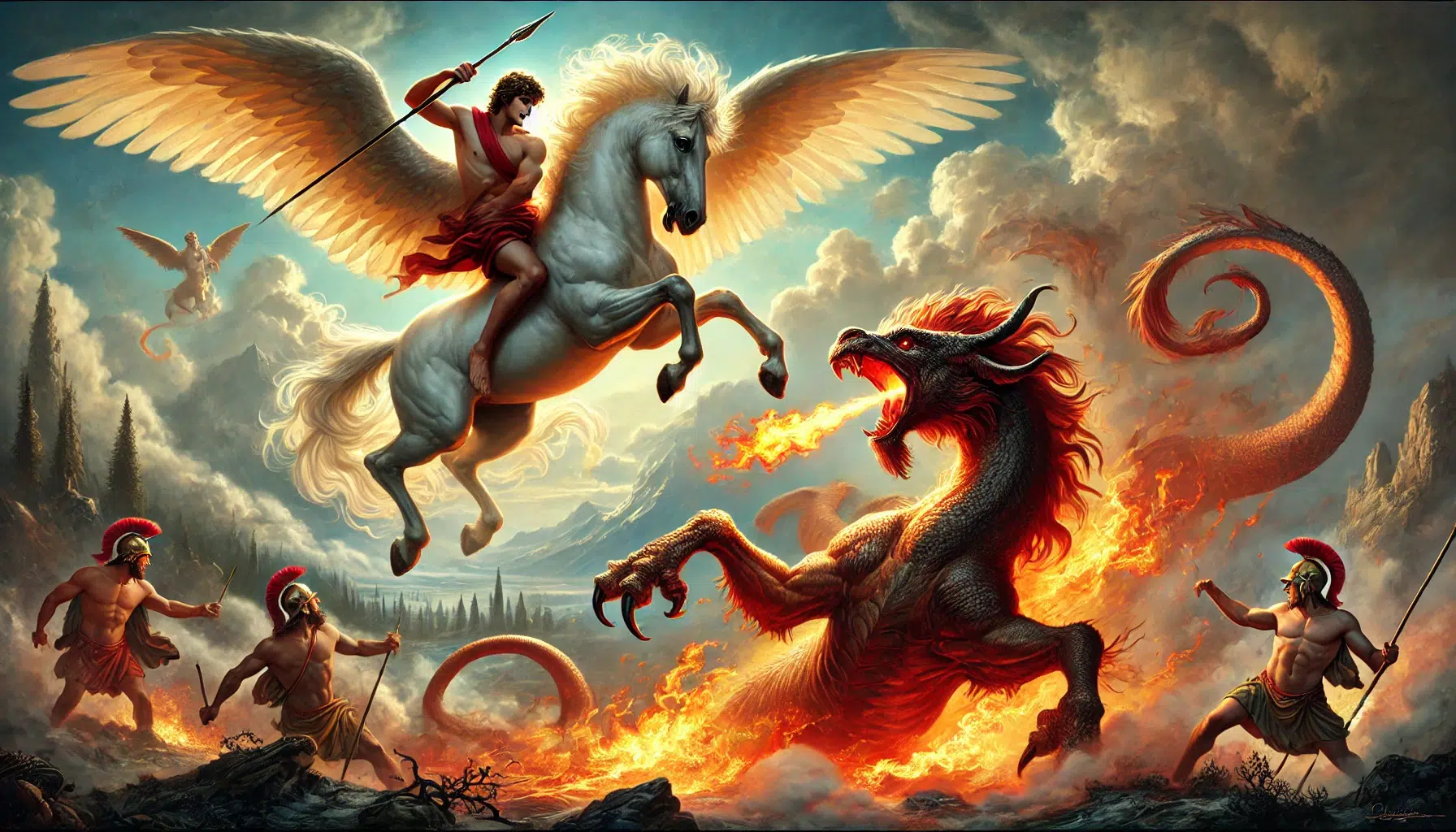
Bellerophon, a hero of Greek mythology, is known for his quest to slay the Chimera, a fearsome fire-breathing monster. He is the son of Glaucus, king of Corinth, and is favored by the gods for his bravery and skill.
Bellerophon’s story begins with a crime. He accidentally kills his brother and seeks purification from King Proetus of Tiryns. While at Proetus’s court, Proetus’s wife, Stheneboea, falsely accuses Bellerophon of trying to seduce her after he rejects her advances. Enraged, Proetus sends Bellerophon to King Iobates of Lycia with a sealed message requesting his execution.
Iobates, not wanting to defy the gods’ hospitality by killing Bellerophon directly, sends him on a series of dangerous missions, hoping he will perish. The first and most daunting task is to slay the Chimera, a monstrous creature with the body of a lion, the head of a goat, and a tail ending in a serpent.
Defeating Chimera
To defeat the Chimera, Bellerophon needs the help of Pegasus, the winged horse born from the blood of Medusa. Athena, the goddess of wisdom, appears to Bellerophon in a dream and gives him a golden bridle. Following her guidance, he finds Pegasus drinking at the Pierian spring. With the bridle, Bellerophon tames Pegasus and rides the magnificent creature into battle.
With Pegasus’s speed and agility, Bellerophon flies above the Chimera, staying out of reach of its fiery breath. He uses a spear to attack from the air, eventually slaying the beast. Triumphant, Bellerophon returns to Iobates, who, impressed by his success, continues to set more challenges, all of which Bellerophon completes with Pegasus’s help.
Eventually, Iobates learns the truth about Bellerophon and Stheneboea’s deceit. He acknowledges Bellerophon’s courage and innocence, giving him his daughter’s hand in marriage and half of his kingdom.
However, Bellerophon’s success leads to hubris. He attempts to fly to Mount Olympus on Pegasus, aspiring to join the gods. Angered by his arrogance, Zeus sends a gadfly to sting Pegasus, causing Bellerophon to fall. He survives the fall but is left crippled and blind, living out his days in misery.
Key Characters and Lesson of Famous Greek Myths
- Key Characters:
- Bellerophon: The hero who tames Pegasus and slays the Chimera
- Pegasus: The winged horse who aids Bellerophon
- Athena: Goddess of wisdom who helps Bellerophon
- Zeus: King of the gods who punishes Bellerophon’s hubris
- Moral Lesson:
- The Dangers of Hubris: Excessive pride and ambition can lead to one’s downfall.
Eros and Psyche
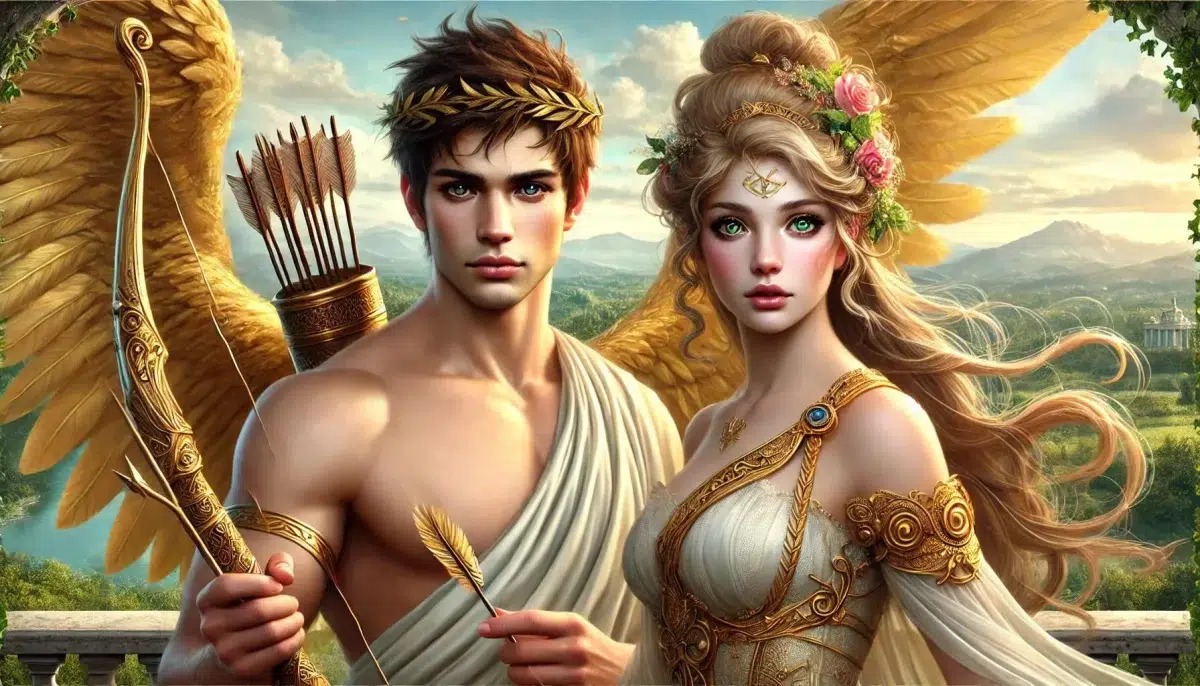
Psyche, a mortal princess, is renowned for her extraordinary beauty, which makes the goddess Aphrodite jealous. Aphrodite sends her son, Eros, the god of love, to make Psyche fall in love with the most despicable creature on earth. However, when Eros sees Psyche, he is so struck by her beauty that he accidentally pricks himself with his own arrow, causing him to fall deeply in love with her.
Despite Psyche’s beauty, no one dares to marry her, and her parents consult an oracle. The oracle, influenced by Aphrodite, declares that Psyche must be taken to a mountain and left there to marry a monstrous creature. Psyche, resigned to her fate, is carried to the mountain by Zephyrus, the west wind, where she falls into a deep sleep.
When Psyche awakens, she finds herself in a magnificent palace with invisible servants attending to her every need. Her new husband, Eros, visits her only at night, and he forbids her to look at him. Psyche enjoys her new life but grows lonely and requests to see her sisters. Eros reluctantly agrees, and her sisters, consumed by jealousy, convince Psyche that her husband is a terrible monster and that she must see him.
Psyche Discovers Eros is Her Husband
One night, Psyche lights a lamp to see her husband while he sleeps, only to discover that he is the beautiful god Eros. Startled by her betrayal, Eros awakens and flees, leaving Psyche alone and heartbroken.
Determined to win back Eros, Psyche seeks the help of Aphrodite, who imposes a series of seemingly impossible tasks on her. Psyche completes these tasks with the help of sympathetic creatures and gods. For her final task, Aphrodite sends Psyche to the Underworld to retrieve a box of beauty ointment from Persephone. Psyche succeeds but, overcome by curiosity, opens the box and falls into a deathlike sleep.
Eros, unable to bear Psyche’s plight, rescues her and pleads with Zeus to grant her immortality. Moved by their love, Zeus agrees, making Psyche a goddess. Psyche and Eros are joyfully reunited and live together forever in bliss. Their union produces a daughter named Hedone, the goddess of pleasure.
Key Characters and Lesson of Famous Greek Myths
- Key Characters:
- Eros: The god of love who falls in love with Psyche
- Psyche: A mortal princess whose beauty rivals that of the gods
- Aphrodite: Goddess of love and beauty, Eros’s mother, who is jealous of Psyche
- Moral Lesson:
- The Power of True Love: True love can overcome any obstacle and lead to eternal happiness.
Tragic Tale of Oedipus
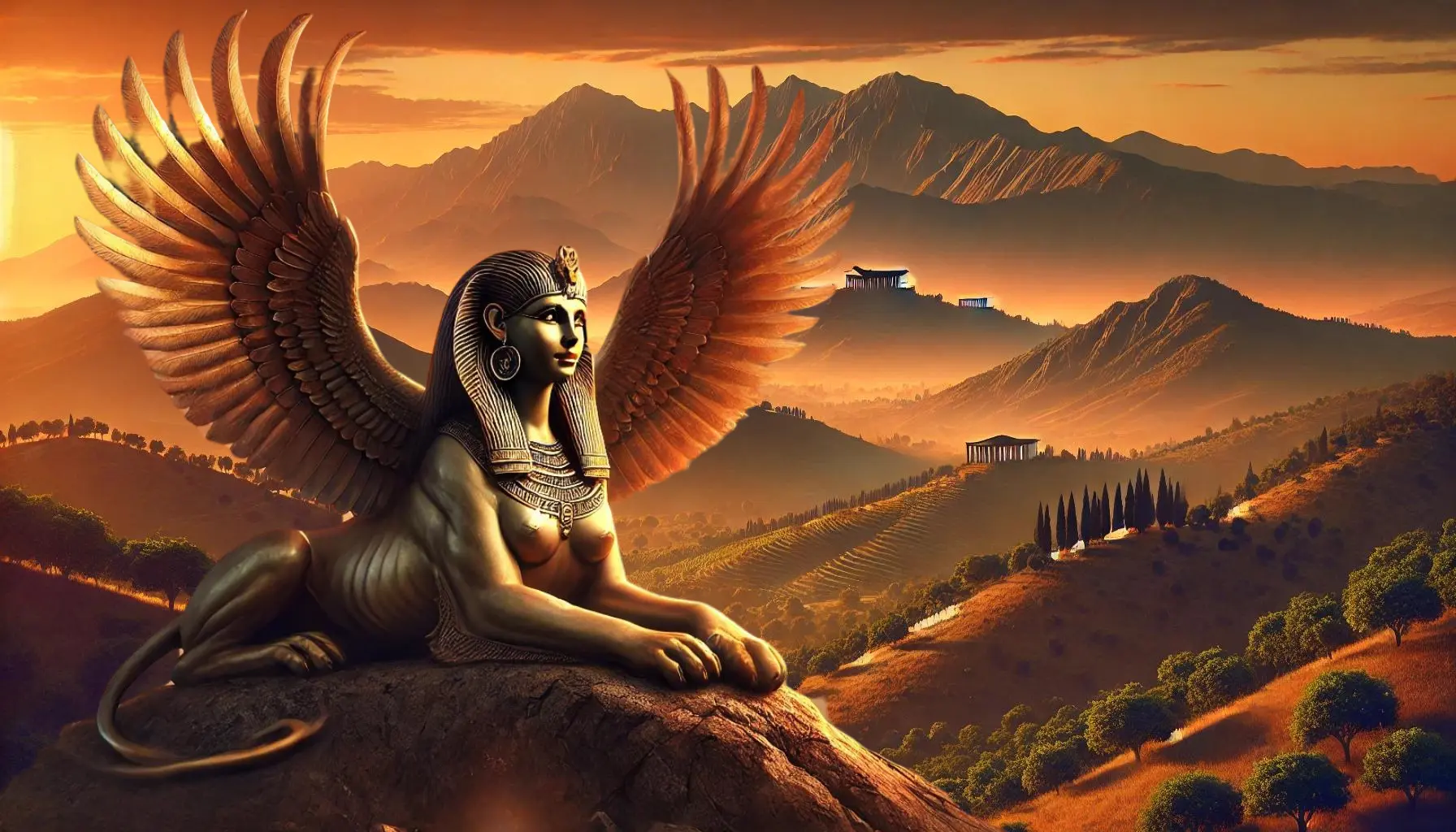
Oedipus, the son of King Laius and Queen Jocasta of Thebes, is born under a dark prophecy. Before his birth, an oracle prophesies that Oedipus would kill his father and marry his mother.
Horrified, Laius and Jocasta abandon their infant son on a mountainside, with his ankles pinned together to ensure he would die. A shepherd finds the baby and takes him to Corinth, where King Polybus and Queen Merope raise him as their own. He is named Oedipus, which means “swollen foot,” due to the injuries inflicted on his ankles.
As a young man, Oedipus learns of the prophecy and, believing Polybus and Merope to be his real parents, flees Corinth to avoid his fate.
On his journey, he encounters a chariot at a crossroads. A heated argument ensues, and Oedipus kills the driver and his passengers, not knowing that one of them is his biological father, Laius.
Continuing to Thebes, Oedipus finds the city plagued by the Sphinx, a monstrous creature who poses a deadly riddle: “What walks on four legs in the morning, two at noon, and three in the evening?” Oedipus correctly answers, “Man,” solving the riddle and causing the Sphinx to destroy herself.
The grateful Thebans make Oedipus their king, and he marries the recently widowed Queen Jocasta, unknowingly fulfilling the second part of the prophecy.
Oedipus Learns the Horrifying Truth
For many years, Oedipus rules Thebes wisely and justly, fathering four children with Jocasta: Eteocles, Polynices, Antigone, and Ismene. However, a devastating plague strikes Thebes, and the oracle reveals that the city is cursed because the murderer of Laius remains unpunished.
Determined to find the culprit, Oedipus investigates and gradually uncovers the horrifying truth. Jocasta, realizing the truth before Oedipus, hangs herself in despair. When Oedipus finally understands that he has killed his father and married his mother, he is overwhelmed with grief and guilt. He then blinds himself with Jocasta’s brooches.
Oedipus goes into self-imposed exile, accompanied by his daughter Antigone. He eventually finds refuge in Colonus, where he died.
Oedipus’s story is a profound exploration of fate, free will, and the limits of human understanding. His tragic downfall serves as a cautionary tale about the inescapable nature of destiny and the consequences of human hubris.
Key Characters and Lesson of Famous Greek Myths
- Key Characters:
- Oedipus: The tragic hero doomed by fate
- Jocasta: Oedipus’s mother and wife, queen of Thebes
- Laius: Oedipus’s father, the former king of Thebes
- Moral Lesson:
- The Inescapability of Fate: No matter how much one tries, destiny cannot be avoided, and attempting to do so can lead to tragic consequences.
- The story of Oedipus has been retold in various forms and has inspired numerous works of literature and psychology, most notably Sigmund Freud’s theory of the Oedipus complex.
Abduction of Persephone by Hades
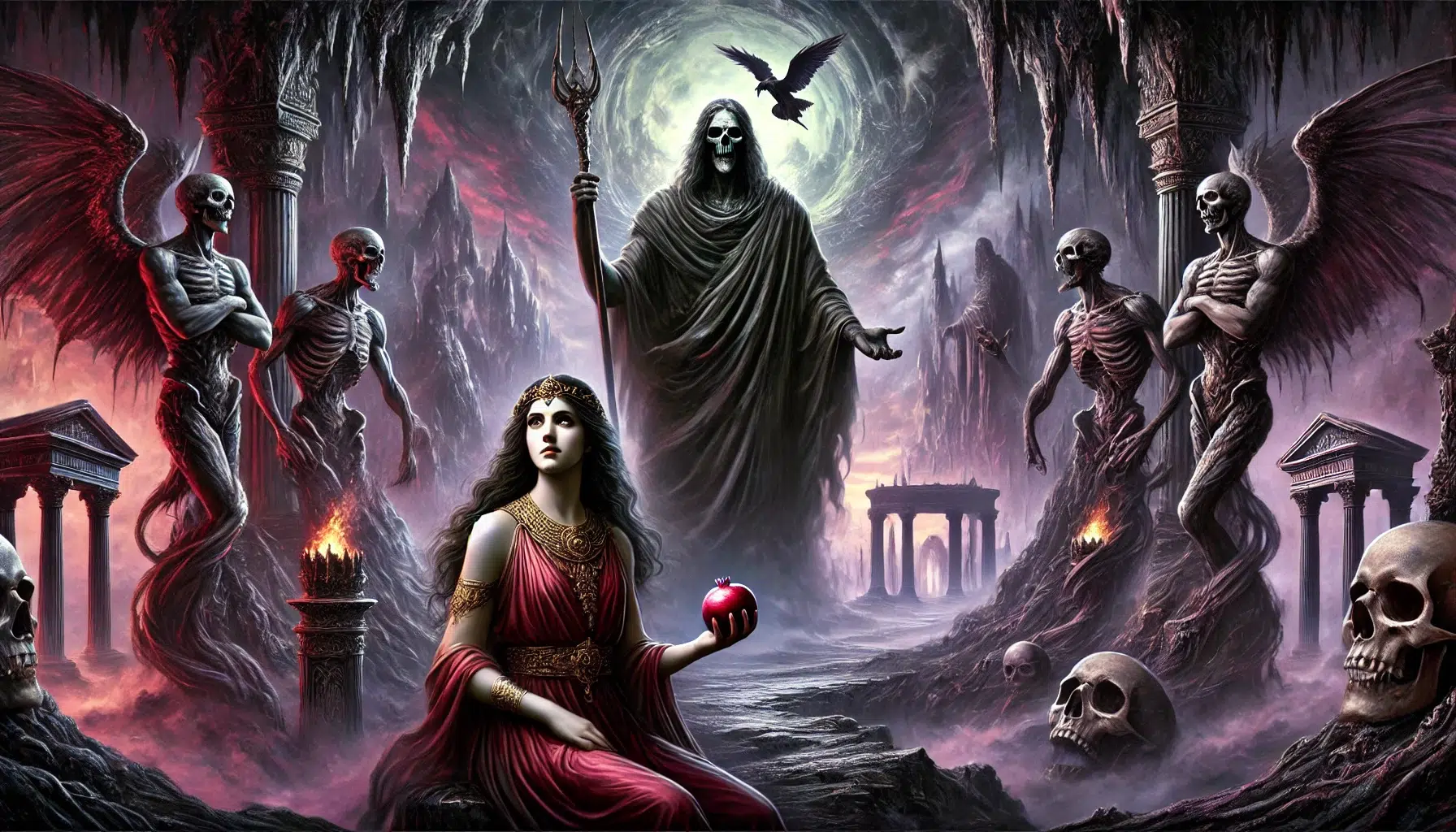
Persephone, the daughter of Demeter, the goddess of harvest and fertility, is a beautiful and lively maiden who loves to play in the meadows. One day, while picking flowers, she catches the eye of Hades, the god of the Underworld. Enchanted by her beauty, Hades decides to make Persephone his queen.
Hades emerges from the Underworld in his chariot and abducts Persephone, taking her to his dark realm. Demeter, devastated by the disappearance of her beloved daughter, searches the earth tirelessly. She neglects her duties, causing the earth to become barren and lifeless. Crops fail, and famine spreads across the land, threatening the survival of humanity.
Zeus, the king of the gods, realizes the severity of the situation and intervenes. He sends Hermes, the messenger god, to the Underworld to negotiate Persephone’s release. Hades reluctantly agrees but tricks Persephone into eating a few seeds of a pomegranate, the fruit of the Underworld. This act binds her to the Underworld, as anyone who consumes food there must remain.
The Changing Seasons Explained
A compromise is reached: Persephone will spend part of the year with Hades in the Underworld and the rest with her mother, Demeter, on earth. During the months when Persephone is with Hades, Demeter mourns and withdraws her blessings, causing winter to fall upon the earth. When Persephone returns, Demeter rejoices, and the earth blooms again with the arrival of spring and summer.
This cyclical pattern explains the changing seasons and the balance between life and death. Persephone’s dual role as the queen of the Underworld and the goddess of spring growth symbolizes the eternal cycle of nature’s death and rebirth.
Key Characters and Lesson of Famous Greek Myths
- Key Characters:
- Persephone: The maiden abducted by Hades to become queen of the Underworld
- Hades: God of the Underworld who abducts Persephone
- Demeter: Goddess of harvest and fertility, mother of Persephone
- Zeus: King of the gods who intervenes in the situation
- Moral Lesson:
- The Cycle of Life and Death: The myth explains the natural cycle of the seasons, highlighting the balance between life, death, and rebirth.
Pygmalion and Galatea
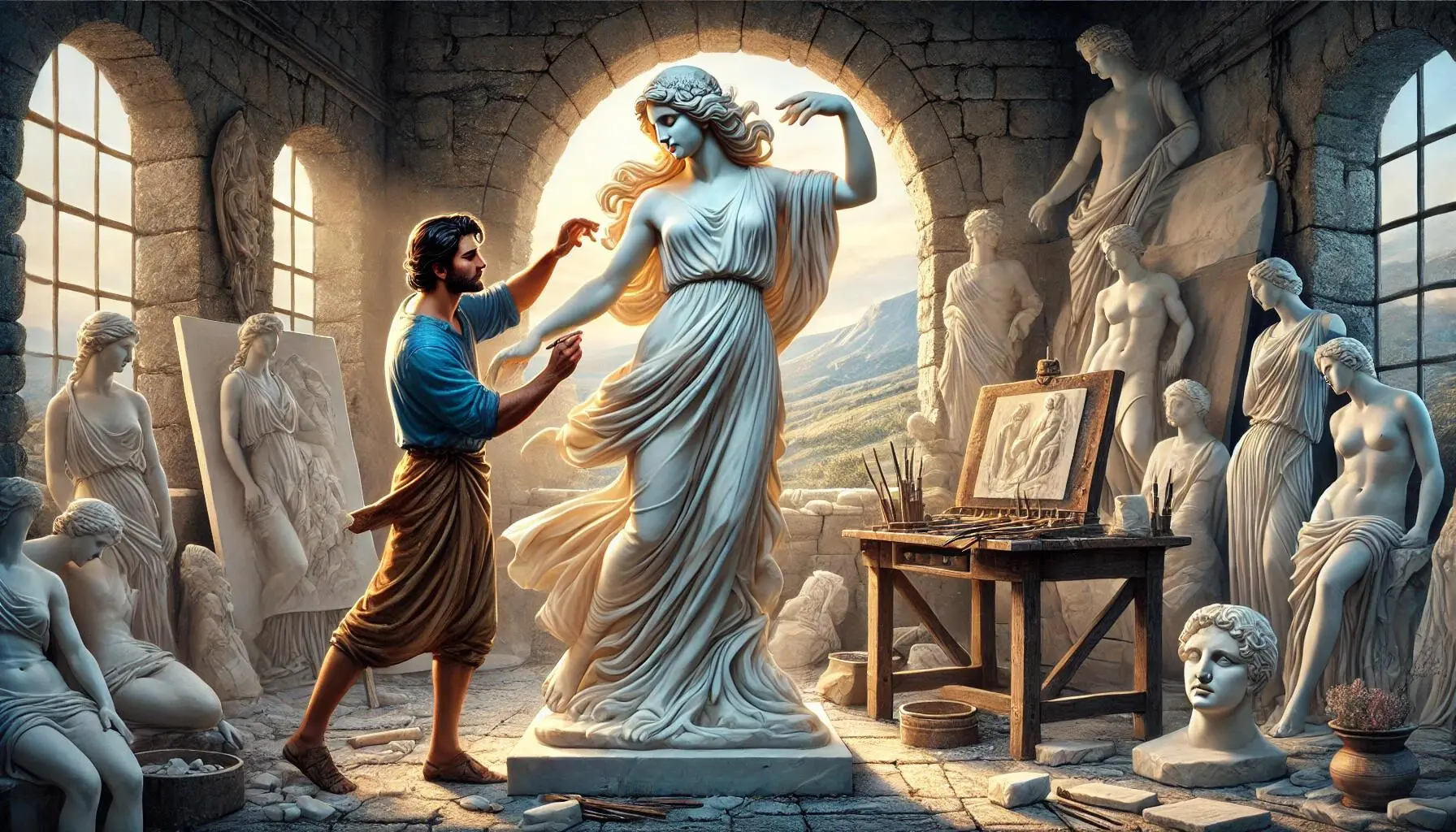
Pygmalion, a gifted sculptor from Cyprus, becomes disillusioned with women, believing them to be flawed and immoral. He dedicates himself to his art, vowing never to marry. Pygmalion pours all his passion and skill into creating a statue of a woman, sculpting it with such perfection that it surpasses any living being in beauty.
The statue, which he names Galatea, embodies his ideal of womanhood. Pygmalion falls deeply in love with his creation, treating her as if she were alive. He dresses Galatea in fine clothes, adorns her with jewelry, and speaks to her lovingly. However, his heart aches with the knowledge that she is merely a lifeless statue.
Pygmalion Prays for a Wife
During the festival of Aphrodite, the goddess of love, Pygmalion prays fervently at her altar, asking for a wife as perfect as his statue. Moved by his sincere devotion and the purity of his love, Aphrodite decides to grant his wish. When Pygmalion returns home and kisses Galatea, he feels her lips grow warm. To his astonishment, the statue transforms into a living woman.
Overwhelmed with joy, Pygmalion thanks Aphrodite for her divine intervention. Galatea, now a real woman, reciprocates Pygmalion’s love, and they marry. Aphrodite blesses their union, and they live a happy life together. The couple is said to have had a son, Paphos, who later founded the city named after him in Cyprus.
The myth of Pygmalion and Galatea highlights the power of love and the belief that true devotion can bring the impossible to life. It also explores themes of creation, transformation, and the idealization of beauty.
Key Characters and Lesson of Famous Greek Myths
- Key Characters:
- Pygmalion: The sculptor who falls in love with his creation
- Galatea: The statue brought to life by Aphrodite
- Aphrodite: Goddess of love who grants Pygmalion’s wish
- Moral Lesson:
- The Power of True Love: Sincere and devoted love has the power to transcend boundaries and create miracles.
Daedalus and Icarus

Daedalus, a master craftsman and inventor, is renowned for his genius in ancient Greece. He and his son, Icarus, are imprisoned by King Minos of Crete in the labyrinth that Daedalus himself designed to contain the Minotaur. Desperate to escape, Daedalus devises a plan to flee the island.
Using feathers and wax, Daedalus constructs two pairs of wings, one for himself and one for Icarus. Before their flight, Daedalus warns Icarus to follow his path closely and not to fly too high, as the sun’s heat will melt the wax, nor too low, as the sea’s moisture will dampen the feathers.
They take flight, and initially, their escape goes smoothly. Icarus, exhilarated by the sensation of flying, becomes overconfident and disregards his father’s warnings. He flies higher and higher, drawn by the allure of the sun. As he ascends, the heat of the sun melts the wax holding his wings together. The feathers fall away, and Icarus plummets into the sea, where he drowns.
The Loss of a Son
Daedalus, heartbroken by the loss of his son, continues his flight and eventually reaches Sicily. There, he mourns Icarus and names the sea where his son fell the Icarian Sea in his memory. Daedalus’s grief and the tragic fate of Icarus serve as a powerful reminder of the consequences of hubris and disobedience.
Although there are no direct interventions by gods in this story, Daedalus’s ingenuity and craftsmanship are often attributed to the favor of Athena, the goddess of wisdom and crafts, who is known to support skilled artisans.
The myth of Daedalus and Icarus explores themes of human ambition, the desire for freedom, and the dangers of overreaching. It underscores the importance of heeding wise counsel and understanding one’s limitations.
Key Characters and Lesson of Famous Greek Myths
- Key Characters:
- Daedalus: The ingenious inventor who creates the wings
- Icarus: Daedalus’s son, who flies too close to the sun
- Moral Lesson:
- The Dangers of Hubris: Overconfidence and disregard for guidance can lead to tragic consequences.
Conclusion
Greek myths are more than just stories. They show us human strengths, flaws, and the quest for meaning.
From the love story of Eros and Psyche, the adventures of Bellerophon and Icarus, to the tragic tale of Oedipus, each myth often is a lesson on reflection.
The tales remind us of the consequences of our actions. These myths continue to fascinate and teach us, proving that their wisdom is timeless. As we reflect on these ancient tales, we see their lasting impact on our culture and imagination.