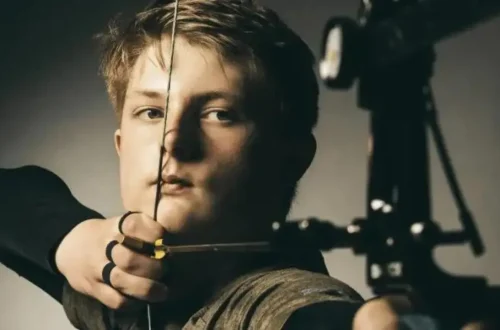

Eye Dominance in Archery Can Impact Accuracy
Eye dominance in archery plays a crucial role, much like how being right or left-handed affects daily activities.
In the context of archery, understanding whether you have right eye dominance or left eye dominance can significantly impact your shooting accuracy and overall performance.
Eye dominance is often overlooked by beginners in archery.
However, it’s essential to know that the dominant eye, not the dominant hand, should guide the aim in this sport. This means that a right-handed archer with left eye dominance might face challenges aligning their shots accurately.
Left Eye Dominance in Archery: Challenges and Adaptations
For archers who are left eye dominant but right-handed, known as cross-dominant, adapting their stance and equipment is vital. These archers might need to learn to shoot left-handed or use specific techniques and tools to align their dominant eye with the bow.
Left eye dominance in archery presents unique challenges, especially for archers who are right-handed. This condition, often referred to as cross-dominance, can affect various aspects of the archer’s technique and performance. Here’s a closer look at some of these challenges:
Alignment and Aiming Difficulties
- Misalignment with the Bow Sight: For a right-handed archer who is left eye dominant, aligning the dominant eye with the bow sight is tricky. This misalignment can lead to inaccuracies in aiming and shooting.
- Difficulty in Judging Distance and Depth: The dominant eye plays a crucial role in depth perception. Left eye dominance can complicate distance judgment for right-handed shooters, impacting their precision.
Physical Strain and Discomfort
- Awkward Body Posture: Trying to align the left eye with the bow while using the right hand can result in awkward and uncomfortable body postures. This can lead to strain and fatigue, especially in the neck and shoulders.
- Eye Strain: Left eye dominant archers may squint or close their right eye to compensate, leading to increased eye strain and fatigue.
Equipment Challenges
- Incompatibility with Standard Equipment: Standard archery equipment is typically designed for right eye dominant shooters. Left eye dominant archers may struggle with standard sights and may need specialized equipment.
- Limited Choices in Left-Eye Dominant Gear: There can be fewer equipment options available for left eye dominant archers, particularly if they are right-handed.
Training and Technique Adaptation
- Learning Curve: Left eye dominant archers often face a steeper learning curve. They may need to invest more time in training to adapt their technique effectively.
- Relearning Shooting Techniques: In some cases, left eye dominant archers might choose to shoot left-handed, which requires relearning many aspects of archery from a different perspective.
Psychological Impact
- Frustration and Confidence Issues: The added difficulties of left eye dominance in archery can lead to frustration, which may impact an archer’s confidence and overall enjoyment of the sport.
- Concentration Difficulties: The extra focus needed to compensate for eye dominance can be mentally taxing, potentially affecting concentration and performance under pressure.
Adaptations and Solutions
Despite these challenges, left eye dominant archers can still excel in the sport with the right adaptations and training. This includes using specialized equipment, adopting new shooting techniques, and incorporating specific exercises to strengthen the non-dominant eye’s role in aiming.
Right-Handed, Left Eye Dominant: Brain Function and Archery
The phenomenon of being right-handed but left eye dominant involves interesting aspects of brain function. It reflects how the brain processes visual information and motor coordination, impacting how one aligns and aims in archery.
Interestingly, some theories suggest that eye dominance might correlate with certain personality traits. For archers with left eye dominance, understanding these traits can offer insights into their approach to learning and mastering archery.
Cross Dominance in Archery
Cross-dominant archers, who have a mismatch between their dominant hand and eye, face unique challenges. They need to either adapt their shooting technique or train themselves to use their non-dominant eye. This requires tailored training methods and sometimes, equipment adjustments.
Changing eye dominance is not a simple process. It involves consistent practice and sometimes, the use of training aids. The duration varies from person to person, but it’s a gradual process that requires patience and perseverance.

Right Eye Dominance in Archery: Techniques and Advantages
For right eye dominant archers, aligning their dominant eye with the bow comes more naturally, especially if they are also right-handed. This section explores techniques that maximize the advantages of right eye dominance in archery.
Optimizing Stance and Positioning for Right Eye Dominant Archers
1. Aligning the Stance: Right eye dominant archers should ensure their stance allows for easy alignment of their right eye with the bowstring and sight. A slightly open stance, where the feet are perpendicular to the target but the body is slightly turned towards it, can facilitate this alignment.
2. Adjusting the Bow Grip: The grip on the bow can influence how naturally the right eye aligns with the sight. Experimenting with grip positions to find one that allows for a comfortable and steady aim is key.
Enhancing Aiming Techniques
1. Fine-Tuning the Sight Picture: Right eye dominant archers have the advantage of a more intuitive alignment with the bow’s sight. They should practice focusing on the sight picture, where the target, sight pin, and eye form a straight line, to improve accuracy.
2. Consistent Anchor Points: Finding and maintaining consistent anchor points on the face (such as the corner of the mouth or the jawline) can help in stabilizing the bow and ensuring that the right eye is in the optimal position for every shot.
Equipment Adjustments
1. Choosing the Right Peep Sight: A peep sight that aligns well with the dominant right eye can significantly improve accuracy. Archers should choose a peep sight size and position that complements their eye dominance.
2. Bowstring Configuration: The configuration of the bowstring, including its tension and position, can be adjusted to better suit right eye dominant shooters. This includes ensuring that the string doesn’t obstruct the view of the right eye when drawn.
Training and Practice Routines
1. Drills Focused on Right Eye Dominance: Incorporating specific drills that focus on strengthening the right eye’s aiming ability can be beneficial. For instance, closing the left eye occasionally during practice can help reinforce the dominance of the right eye.
2. Video Analysis: Using video analysis to review and adjust shooting technique can be particularly helpful. This allows right eye dominant archers to visually understand and refine their alignment and aiming process.
Mental Preparation and Focus
1. Visualization Techniques: Visualization can play a crucial role in archery. Right eye dominant archers should practice visualizing the perfect shot, aligning it with their dominant eye perspective.
2. Concentration Exercises: Since the right eye plays a key role in focusing on the target, exercises that enhance concentration and focus can be beneficial. This includes techniques like mindful breathing or focused meditation before shooting.
Adaptation for Cross-Dominant Archers
For archers who are right-handed but left eye dominant (or vice versa), adapting these techniques to suit their cross-dominance is crucial. This might involve training the non-dominant eye or adjusting their shooting style to accommodate their eye dominance.
Archers facing cross-dominance can explore various solutions, from training exercises to specialized equipment. These solutions aim to help them overcome the challenges of having a dominant eye opposite to their dominant hand.
In summary, right eye dominant archers can utilize a combination of stance adjustments, equipment optimization, targeted training, and mental focus techniques to maximize their performance in archery. These techniques leverage the natural alignment advantage of the right eye, leading to improved accuracy and consistency in shooting.
The Impact of Eye Dominance on Shooting Accuracy
Eye dominance significantly affects shooting accuracy in archery. Understanding and aligning your dominant eye with your shooting style is key to achieving precision and consistency in your shots.
Conducting an Eye Dominance Test in Archery
Determining eye dominance is the first step for any archer. This can be done through simple tests, which are crucial for beginners to ensure they start training with the correct eye-hand coordination.
Adapting Archery Techniques for Eye Dominance
Adapting archery techniques to suit your eye dominance is crucial. Whether it involves changing the way you aim or adjusting your stance, these adaptations can make a significant difference in your performance.
Eye Dominance and Mental Focus in Archery
The role of eye dominance extends beyond physical alignment; it also impacts mental focus. Aligning your dominant eye with your target helps in maintaining concentration and achieving better shot accuracy.
Learn more about: Enhancing Focus with Mindful Archery Practices
Youtube: How to test your dominant eye
A Simple Guide to Eye Dominance Tests for Archers
Test 1: The Mile-High Eye Test
- Extend your arms forward, creating a small triangle between your thumbs and the first knuckles of your index fingers.
- Choose a small object in the distance (like a doorknob or a light switch) and center it within the triangle.
- Without moving your hands, close one eye at a time. The eye that keeps the object centered in the triangle is your dominant eye.
Test 2: The Point-and-Wink Test
- Point at an object in the distance with your index finger.
- Close one eye at a time.
- The eye that keeps your finger pointed directly at the object, without it seeming to jump to one side, is your dominant eye.
The Miles Test and the Porta Test are two common methods used to determine eye dominance, and they are indeed similar to the tests I previously described. Let’s take a closer look at each:
The Miles Test
The Miles Test is akin to the “Mile-High Eye Test” I mentioned earlier. It’s a straightforward method to determine eye dominance:
- Create a Triangle: Extend both arms out in front of you and bring your hands together to form a small triangular opening using your thumbs and index fingers.
- Select a Distant Object: Choose a small object in the distance (like a clock or a picture on the wall) and view it through the triangle.
- Close One Eye at a Time: Close one eye and then the other. The eye that keeps the object centered in the triangle is your dominant eye.
The Porta Test
The Porta Test is similar to the “Point-and-Wink Test” described earlier. It’s another simple way to determine which of your eyes is dominant:
- Point at an Object: Extend one arm and point at a distant object with your index finger. Keep both eyes open and ensure the object is directly behind your finger.
- Close Each Eye Separately: Close one eye at a time. The eye that keeps your finger aligned with the object is the dominant eye. If you close your dominant eye, the object will appear to jump to one side.
Comparing the Miles and Porta Tests
Both these tests are effective ways to determine dominance. They are particularly useful in sports like archery, where knowing which eye is dominant can significantly impact performance. While they follow a similar principle of aligning a distant object with a gesture (forming a triangle or pointing), they provide slightly different approaches to achieve the same goal.
The Miles and Porta tests are indeed similar to the tests I mentioned earlier. They are both simple, reliable methods to ascertain eye dominance, which is a critical factor in activities requiring precise alignment, such as archery.
Interpreting Your Test Results
Once you’ve determined your dominant eye, it’s crucial to align this with your archery practice. If your dominant eye and hand are the same, you’re likely to have a more straightforward time aiming. However, if you’re cross-dominant, you might need to adjust your technique.
Eye Dominance Chart: Understanding the Impact on Archery
| Eye Dominance | Hand Dominance | Implications in Archery |
|---|---|---|
| Right Eye | Right Hand | Natural alignment, easier aiming |
| Left Eye | Left Hand | Natural alignment, easier aiming |
| Right Eye | Left Hand | Potential cross-dominance challenges |
| Left Eye | Right Hand | Potential cross-dominance challenges |
Adapting Archery Techniques for Eye Dominance
Adapting your archery technique based on your eye dominance is essential. For cross-dominant archers, consider techniques such as changing your stance, using a bow suited for your dominant eye, or training to use your non-dominant eye for aiming.
The Role of Eye Dominance in Fine-Tuning Your Archery Skills
Understanding and adapting to your eye dominance is more than just physical alignment; it’s about fine-tuning your skills for optimal performance. Embrace this knowledge to enhance your focus, accuracy, and overall enjoyment of archery.