
Dalnim: Korean Moon Goddess of Light and Balance
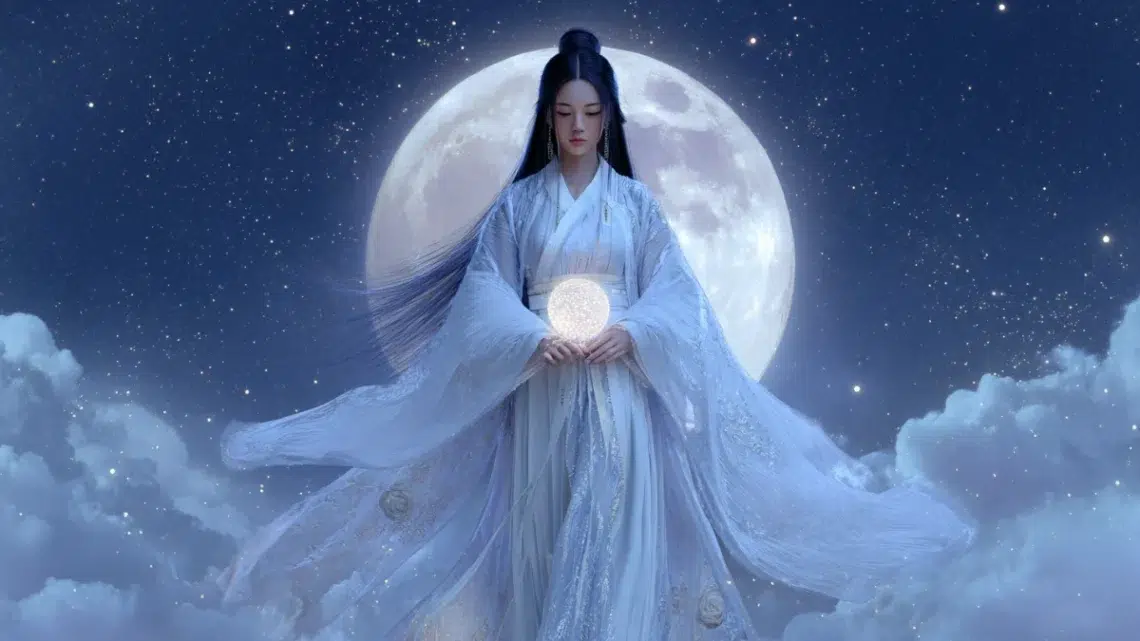
Dalnim is the Korean Moon Goddess, a symbol of calm, beauty, and balance. She shines above the world, watching over the night with a quiet strength. In Korean stories, she stands for more than just the moon. She brings peace, protects the good, and keeps darkness away.
Her name means “moon,” and she often appears in folktales, shining with kindness and wisdom. While not as well known outside Korea, she holds an important place in traditional beliefs.
Some compare her to moon goddesses like Artemis or Chang’e, but Dalnim has her own unique role and meaning.
Origins and Role of Dalnim in Korean Belief
Dalnim comes from Korean shamanic tradition and old folk beliefs. She is not part of a single written myth like Greek or Roman gods. Instead, people pass down her story through oral tradition, family tales, and seasonal festivals.
These stories often show her as gentle but powerful, a quiet force who lights the night and keeps balance in the sky.
In some versions, Dalnim is the sister or rival of the sun god Haemosu. The two chase each other across the sky, explaining the movement of the sun and moon. Some versions say they once lived together in harmony, but now move separately to keep day and night apart.
She is also tied to family, farming, and the lunar calendar. Korean farmers once followed the moon’s cycle to decide when to plant and harvest. During full moons, especially the harvest moon festival called Chuseok, people honour the moon with food and prayers.
Dalnim, as the moon, becomes a quiet guest at these events, watching over families and blessing the land.
Though not part of modern religion, Dalnim still lives in Korean art, poetry, and seasonal traditions. Her presence reminds people of nature’s rhythm, the quiet power of the moon, and the comfort of light in the dark.
What Dalnim Looks Like and How She Appears in Tradition

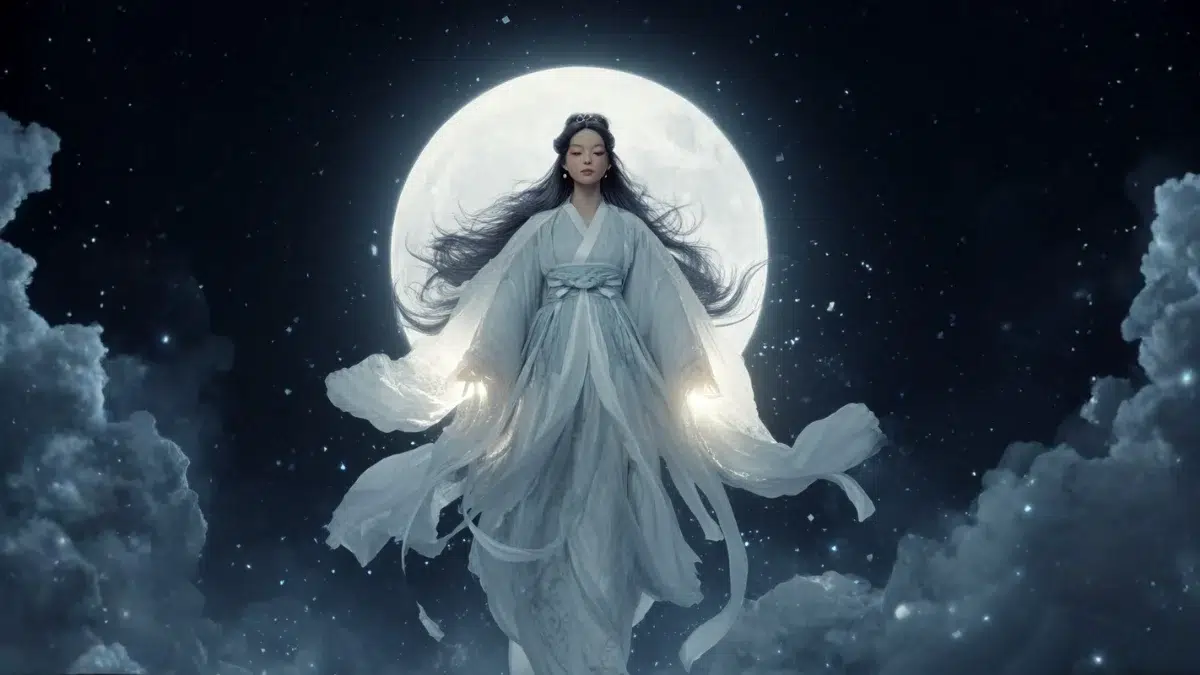
Dalnim’s image changes depending on the region or storyteller. Since she is part of oral tradition, there are no fixed pictures of her like in other mythologies. Still, many describe her as a calm and graceful woman dressed in white or silver robes. These colours match the moonlight and reflect purity, calm, and peace. Sometimes, her robes shine like the surface of a quiet lake, glowing under the night sky.
Her face often looks serene, with a gentle smile and wise eyes. Artists sometimes paint her holding a round mirror or an orb. This round shape connects her directly to the full moon. In some stories, she also carries a branch of bamboo or a white lotus, both symbols of purity and stillness.
Dalnim moves with quiet grace, just like the moon rising slowly in the night. When she appears in dreams or stories, she often rides across the sky in a silver chariot or floats on clouds made of soft mist.
Symbols linked to Dalnim include rabbits, moon cakes, water jars, and night flowers. The moon rabbit, which appears in many East Asian myths, sometimes joins her. In Korean tradition, people believe the rabbit lives on the moon, pounding rice cakes, and Dalnim watches over it.
These images help people connect with the moon and feel her quiet strength.
The Tiger and the Siblings: Dalnim’s Rise to the Moon
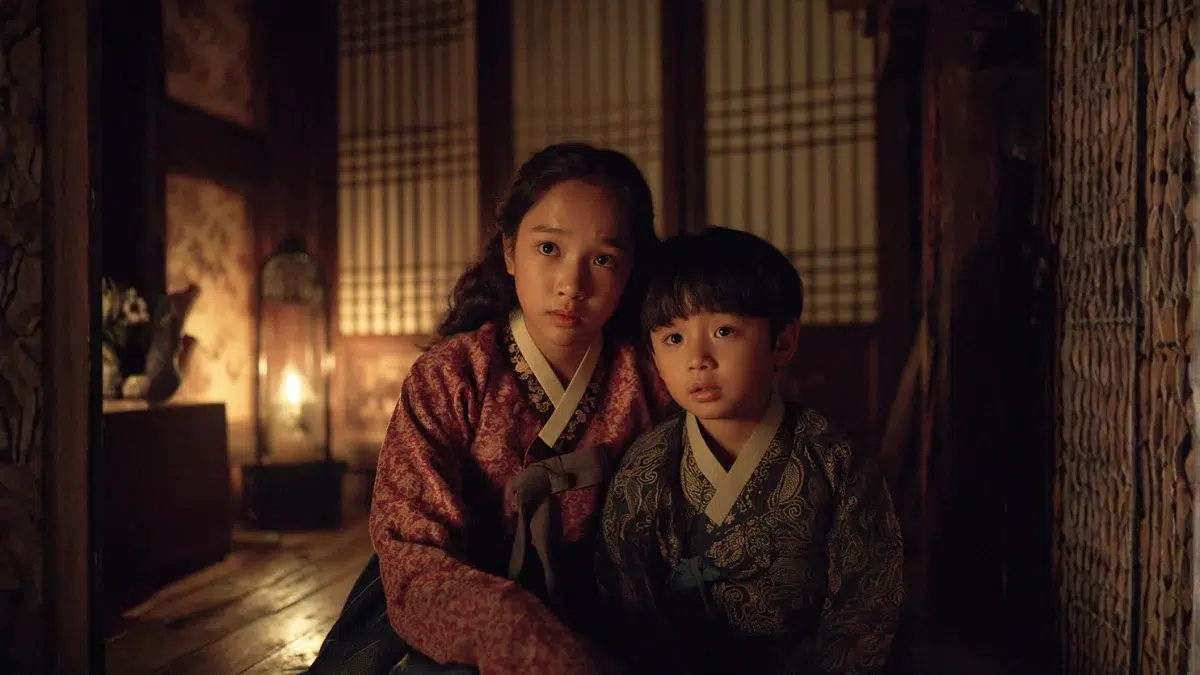
Long ago in Korea, a mother lived with her two children—a daughter and a son. The daughter, Dalnim, was the older and more responsible one.
One day, the mother left for work, telling the children not to open the door for anyone.
Later that day, a tiger came to the house. It tricked the children by pretending to be their mother.
One version says it ate their mother and wore her clothes. Another says the tiger simply chased after the children, hungry and wild. When the tiger’s voice gave it away, the children knew they had to run.
Dalnim grabbed her little brother, and they fled into the woods. They climbed a tree to escape. The tiger clawed at the trunk but couldn’t reach them. The children prayed to the heavens for help.
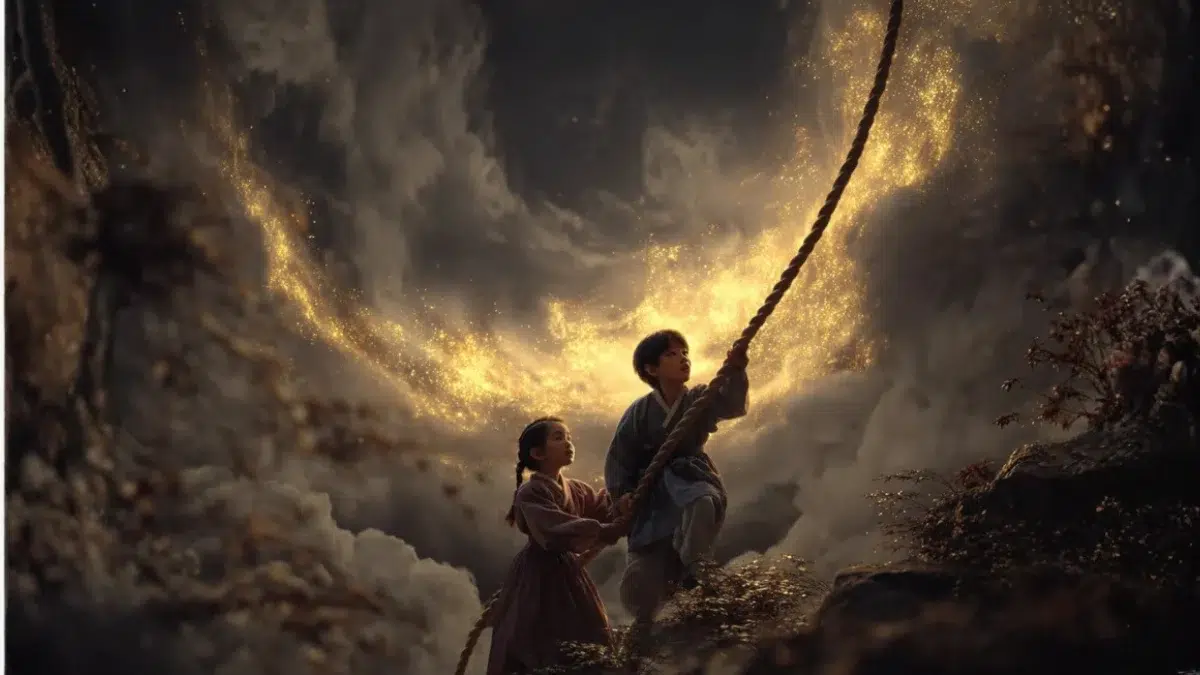
Suddenly, a golden rope dropped from the sky. The siblings climbed it, rising into the stars.
The heavens rewarded their bravery. The girl became the Moon, calm and watchful. Her brother became the Sun, bold and bright. Together, they now travel across the sky, always apart but forever connected.
Some say Dalnim lights the night so lost souls can find peace. Others say her quiet glow honours the mother they lost. This myth explains why the sun and moon take turns crossing the sky and shows how love, courage, and quick thinking can lead to something greater.
Symbolism and Meaning of Dalnim
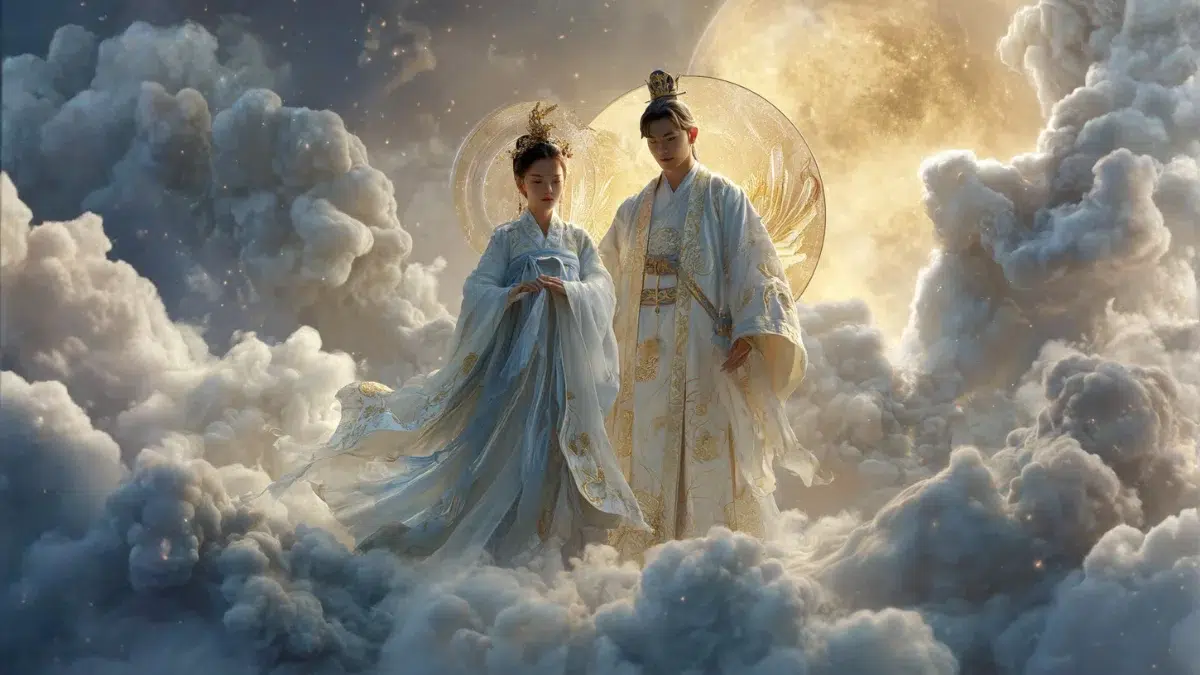
Dalnim, the Moon Goddess, stands for protection, hope, and light during dark times. In her myth, she saves herself and her brother from danger by staying calm and clever. This makes her a symbol of bravery and wisdom.
The moon’s soft glow represents gentle strength. Unlike the sun, which shines boldly, Dalnim watches quietly. She guides people at night, helping travellers and lost souls find their way. Many people in Korean culture see the moon as a guardian spirit, and Dalnim is part of that belief.
The story of Dalnim also reminds people of the bond between siblings. Even when scared, she looks after her younger brother. Their journey into the sky shows how love and courage can lead to greatness. The fact that they take turns in the sky shows the balance between yin and yang, day and night, feminine and masculine energy.
In traditional Korean art and folklore, the moon is tied to women, birth, and dreams. Dalnim fits all these ideas. She is strong, caring, and filled with quiet power.
Her story reminds us that light can rise out of fear and that even a child, with courage, can become a goddess.
Other Similar Goddesses
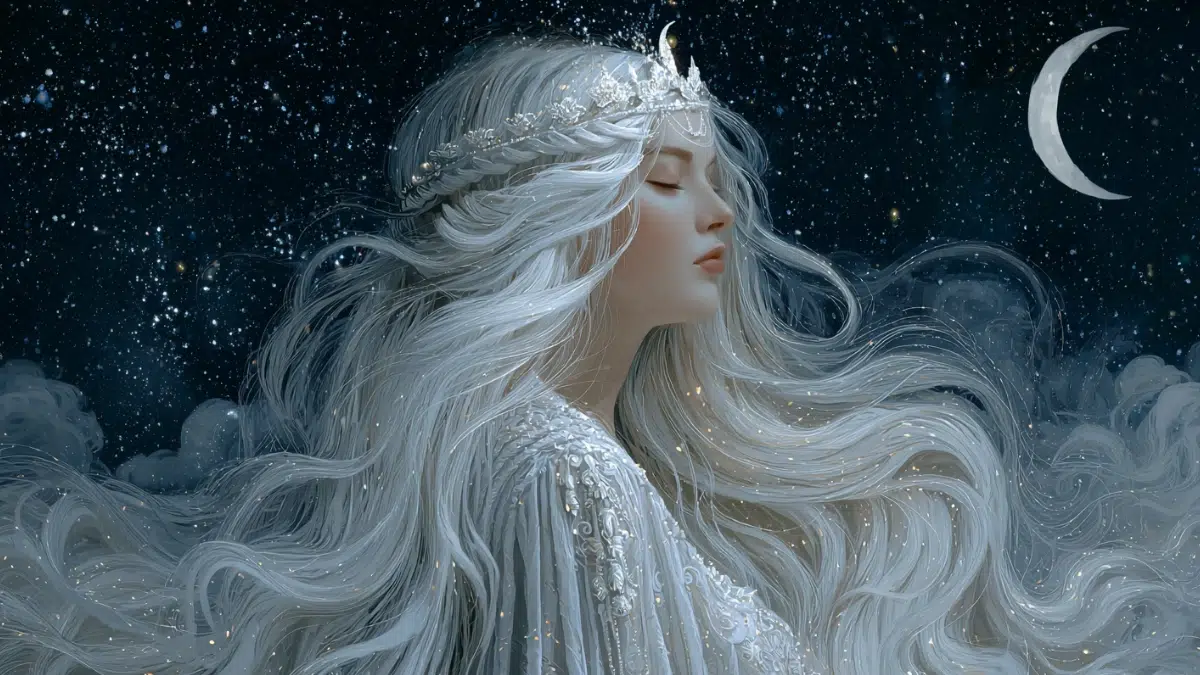
Dalnim, the Korean Moon Goddess, shares traits with other lunar deities across cultures.
Like the Greek goddess Selene, she embodies calm, light, and mystery. Both are symbols of guidance through darkness. In Japanese mythology, Tsukuyomi represents the moon’s order and reflection, while Dalnim carries a softer, nurturing energy.

Unlike Artemis, who ties the moon to the hunt and independence, Dalnim reflects peace, purity, and quiet strength. She also resembles the Chinese goddess Chang’e, who lives in the moon after a tale of sacrifice and immortality.
Each goddess connects the moon to emotion and renewal, but Dalnim’s stories often highlight harmony with nature and the rhythm of life. Her spirit reminds people to find balance, wisdom, and serenity beneath the moon’s gentle glow.
Conclusion
Dalnim, the Korean Moon Goddess, shines as a symbol of survival, courage, and transformation. Her story, rooted in a dramatic escape from a tiger, blends fear with wonder.
Alongside her brother, she rises into the sky, turning danger into divinity. Today, she reminds us that even the darkest moments can lead to light.