
Common Types of Archery Bows – Part 2
Archery bows used to shoot arrows, dates back thousands of years. This was essential for survival, used in hunting and warfare. It was pivotal skill for ancient humans, which eventually became a ceremonial and competitive practice.
In modern sportsmanship, archery is embraced in the Olympics and beyond, symbolizing a blend of ancient technique and contemporary precision. Let’s look into the common types of archery bows.
Anatomy and Terminology of Archery Bows
Understanding archery bows means getting familiar with its parts:
- Riser: The bow’s central part where the archer grips.
- Limbs: Extend from the riser to generate power.
- Bowstring: Connects the limb tips, launching the arrow.
- Nocking Point: The spot on the bowstring where the arrow rests.
- Brace Height: Distance from the deepest part of the grip to the string.
- Arrow Rest: Where the arrow sits on the riser.
- Cam: A wheel-like device on compound bows that controls the draw length and weight.
- Cables: On compound bows, these join the cams to the limbs.
- Sight: Attached to the riser, it helps with aiming.
Understanding these terms is crucial for archers to communicate effectively and master their equipment.
Common Types of Archery Bows
Recurve Bows: Traditional Form Meets Modern Precision
Recurve archery is the most common of all bow styles. This is likely to be the bow you will start archery on. A recurve bow has a limb at the top and the bottom that curve, giving the name.
Recurve bows are used in the Olympic Games.
Olympic Recurve
The bow Olympians use, and used by recreational archers worldwide, is the Olympic Recurve. Recurve shooting is a challenging discipline, combining exercise and mental discipline.
These bows can be used for 3D, target, indoor and field archery. In outdoor target tournaments, including the Olympics, adults shoot targets at 70 meters. To shoot that far accurately, your Olympic bow needs different accessories than those used on other recurves.
Olympic recurves have three main pieces: a riser and two limbs.
The bow easily disassembles for customization and transportation.
You grip the bow’s riser, which is also where its sight and arrow rest attach. The bow’s limbs create its power, and bend together when drawn. When the bowstring is released, the arrow propels to the target.
There are long rods that pop out from an Olympic bow’s riser. These are stabilizers and they help archers steady the bow for better aiming.
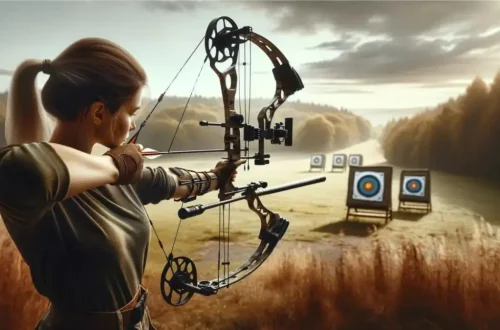
Compound Bows: The Technological Evolution in Archery
These bows represent a significant innovation in archery technology. Compound bows have a better accuracy than any other bow style, due to being faster. They are smaller and easier to carry and can be held at full draw more easily for longer.
They use a system of pulleys, usually known as cams, which assist archers in holding a heavy draw weight at full draw. This mechanical advantage allows for improved accuracy and increased arrow speed.
Different compound bows have different uses.
Target compound bows have one job: accuracy.
Materials such as aluminum and carbon fiber are commonly used in their construction, giving these bows remarkable strength and durability while also being lightweight.
The adjustability in draw length and draw weight makes compound bows highly versatile, suiting archers of various sizes and skill levels. Their design has also evolved to include advancements in vibration dampening and reduced noise, making them a favorite among bowhunters and target archers alike.
Longbows: The Classic English Warfare Bow
Longbows, the quintessential medieval English weapon, were pivotal in historical battles such as Agincourt. Made mostly from yew, these tall bows could exceed the height of a man. Their range and power, capable of penetrating armor at significant distances, made them feared on the battlefield. Requiring years of practice, longbowmen honed their skills from a young age.
Their proficiency a result of rigorous training. Despite modern advancements, the longbow remains a symbol of English military heritage and a beloved icon among traditional archery enthusiasts.
Longbows, by their name, are longer than most bows. There are no stabilizers or accessories except a rubber band that is used for sighting. It is the most traditional version of the sport with a long history going back to when archery was used in warfare.
Crossbows: A Different Breed of Archery Bows
Crossbows stand apart with their horizontal bow assembly mounted on a stock. This configuration allows the archer to fire bolts with mechanical assistance, which is distinct from the traditional vertical bow’s reliance on the archer’s strength and skill.
A key feature of crossbows is the locking mechanism that holds the string drawn until released by the trigger. This design enables higher draw weights and consequently more powerful shots.
Commonly used for hunting and target shooting, crossbows represent a blend of archaic charm and modern engineering, catering to archers seeking efficiency without the exhaustive physical demand of traditional bows.
Learn more about: Crossbows and Longbows – Pros and Cons
The Yumi Bow: Unveiling Japanese Kyudo
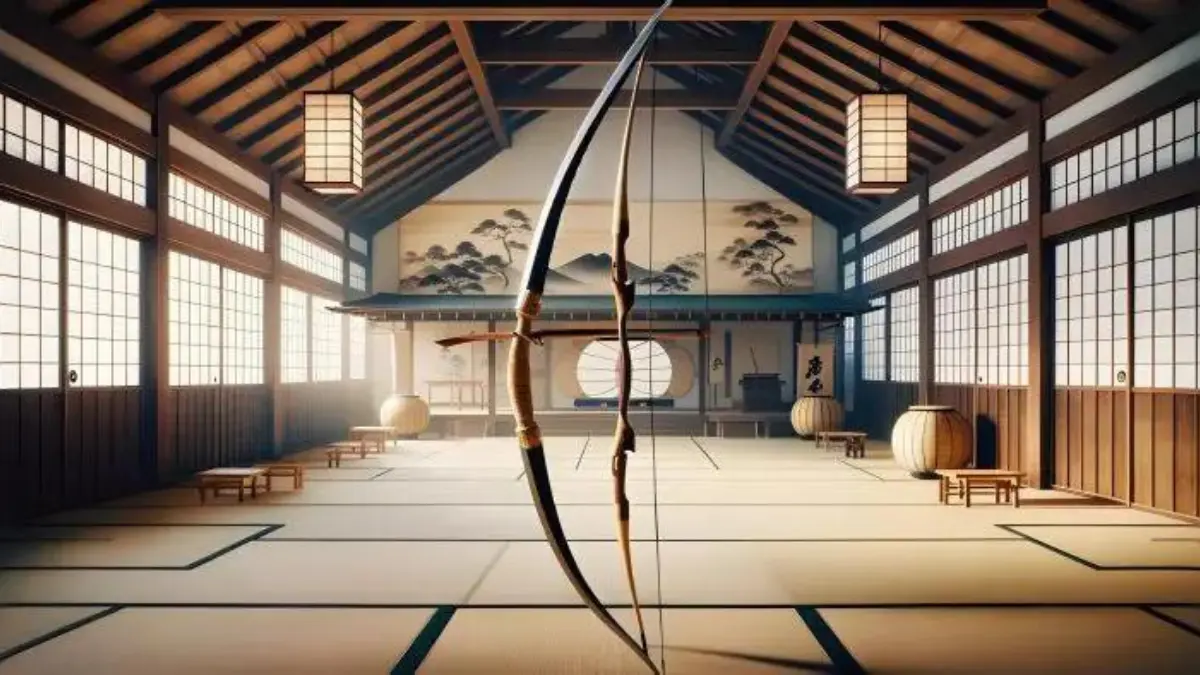
The Yumi bow, intrinsic to the Japanese martial art Kyudo, stands out due to its asymmetry. It’s upper limb is significantly longer than the lower. Traditionally crafted from bamboo, wood, and leather, its construction has evolved to incorporate modern materials.
Kyudo, which means “Way of the Bow”, is less about precision and more oriented towards spiritual and personal development.
Kyudo practitioners, or kyudoka, aim for a state of shin-zen-bi, which signifies truth, goodness, and beauty. Unlike Western archery, the Yumi bow is utilized in a ceremonial manner, emphasizing posture, rhythm, and smooth, controlled movements that reflect distinct philosophical underpinnings.
Bow Variants: Horse Bows and Mongolian Styles
Horse bows and Mongolian bows are traditional Asian archery instruments known for their distinct designs and historical significance.
Horse bows, compact and highly maneuverable, were crafted for use on horseback, featuring a symmetrical, recurved shape that allowed for effective shooting while moving at speed.
The Mongolian bow, a type of horse bow, stands out with its large, rigid siyahs (tips) and string bridges that help stabilize the bowstring.
Both bow styles typically employ composite materials such as wood, horn, and sinew, which confer resilience and power. Their curvature contributes to a smooth draw and a swift release, making them popular choices for those fascinated by archery’s cultural heritage and in activities like mounted archery.
Choosing Your Bow: Factors to Consider for Your Archery Journey
When embarking on your archery journey, selecting the right bow is crucial. Here are factors to consider:
- Experience Level: Beginners may start with a simple recurve or compound bow, while experienced archers might look for advanced features.
- Purpose: Decide whether the bow is for target shooting, bowhunting, or competition. Each activity has bows with characteristics suited to it.
- Draw Weight: Ensure the draw weight is manageable; too heavy and you risk injury, too light and the bow may not perform as desired.
- Bow Size: The bow’s length should be appropriate for your height and arm span. Incorrect sizing can affect accuracy and comfort.
- Budget: Bows vary widely in price, from affordable starter models to high-end equipment. Consider what you are willing to spend.
- Accessories: Some bows come with necessary accessories, while others require separate purchases. Factor in the cost of add-ons like sights and stabilizers.
- Brand Reputation: Research different manufacturers and read reviews to find reliable, quality products.
- Personal Comfort: Ultimately, how the bow feels in your hands is paramount. Always test various models to find the best fit.
Choose wisely, as the right bow can greatly enhance your archery experience.
Learn more about: Five Popular Archery Bows for Beginners
Arrows and Accessories: Complementing Your Bow Choice
Choosing the right arrows is crucial—they must match the bow type and your intended use. Arrow length and stiffness (spine) are key factors, directly impacting accuracy and safety. Components such as:
- Fletching: Feather or plastic vanes guide the arrow in flight.
- Nocks: Connect the arrow to the bowstring.
- Points: Field points for practice, broadheads for hunting.
Accessories enhance the archery experience. Important items include:
- Quivers: For arrow transport and accessibility.
- Armguards and gloves: Provide protection.
- Bow sights: Improve aiming precision.
- Stabilizers: Reduce bow movement upon release.
Maintenance and Care for Long-Lasting Bow Performance
To ensure durability and optimal function, regular maintenance of archery bows is essential. The key areas of focus should include:
- String Care: Apply bowstring wax frequently to protect against wear and environmental damage.
- Limb Inspection: Check limbs for cracks or splinters and ensure they are straight.
- Hardware Tightness: Regularly inspect and tighten bolts and screws to avoid rattling or instability.
- Cleanliness: Keep the bow clean from dirt and debris, which can affect its performance.
- Storage: Store your bow in a dry, temperature-controlled environment to prevent warping and moisture damage.
- Usage: Follow the manufacturer’s guidelines for draw length and weight to prevent overstraining the bow.
Adhering to these maintenance steps will prolong the life and efficiency of any archery bow.
Archery Communities and Resources for Enthusiasts
Archery enthusiasts can find camaraderie and support through various communities and resources:
- Online Forums: Websites like Archery Talk offer a platform for discussions, advice, and buying or selling equipment.
- Local Archery Clubs: Joining a club provides hands-on experience and guidance from seasoned archers.
- Social Media Groups: Facebook and Reddit have archery groups for sharing experiences and tips.
- Competitions: Engaging in local, national, or international archery competitions can be a motivational and educational experience.
- Archery Associations: Organizations like USA Archery offer resources, training programs, and certification for archers of all levels.
Connecting with like-minded individuals enhances knowledge and enjoyment of the sport.
Conclusion: Integrating Knowledge and Skill in Archery Practice
Understanding the common types of archery bows is just the beginning. Successful archers integrate this knowledge with skill through persistent practice. They appreciate that each bow—recurve, compound, longbow, and others—requires a specific technique.
Regular training enhances muscle memory, leading to consistent accuracy. Archers also learn to adapt to varying bow dynamics and environmental factors.
True proficiency is achieved when the knowledge of the bow’s characteristics and the skill of handling them in practice become second nature, harmonizing the archer with their chosen bow.