Chinese Gods in Mythology: Powers, Roles, and Influence
Chinese mythology features a fascinating world of gods and deities, each with unique powers and responsibilities. These figures govern nature, protect families, and guide souls in the afterlife.
Major gods like the Jade Emperor, the supreme ruler, oversee the heavens and all other deities. Guanyin, the goddess of mercy, brings compassion and hope, while Zao Jun, the kitchen god, watches over families.
Gods of nature, like Gonggong, control water and floods, while Yan Wang judges the souls of the dead. Each deity teaches lessons about balance, justice, and harmony.
People honour these gods through prayers, festivals, and offerings, seeking their guidance and blessings. The stories of these gods inspire courage, kindness, and respect for the natural world.
Chinese gods connect humanity to the spiritual and cosmic order, reminding people of their place in the universe.
Chinese Gods Supreme and Heavenly Rulers
These are supreme rulers and central figures in the celestial hierarchy, making them “main gods” in the cosmology.
Jade Emperor (Yuhuang Dadi): Supreme Ruler of Heaven and Earth

The Jade Emperor, or Yuhuang Dadi, rules as the supreme god in Chinese mythology. He governs heaven, earth, and all other gods. People believe he watches over the universe and ensures harmony among all beings.
The Jade Emperor holds the highest position in the celestial hierarchy. He assigns roles to other gods, such as controlling rivers or guiding souls. His fair and wise leadership keeps the heavens and earth in balance.
Legends describe him as compassionate and just. He listens to prayers, rewards good deeds, and punishes wrongdoing. Many festivals honour him, especially during the Lunar New Year.
In art, the Jade Emperor often appears in royal robes, seated on a grand throne. His image reflects authority and divine power.
People pray to the Jade Emperor for blessings, guidance, and protection. Temples dedicated to him attract worshippers seeking help in life’s challenges. His role as a leader and protector makes him one of the most respected figures in Chinese mythology.
Queen Mother of the West (Xiwangmu): Goddess of Immortality
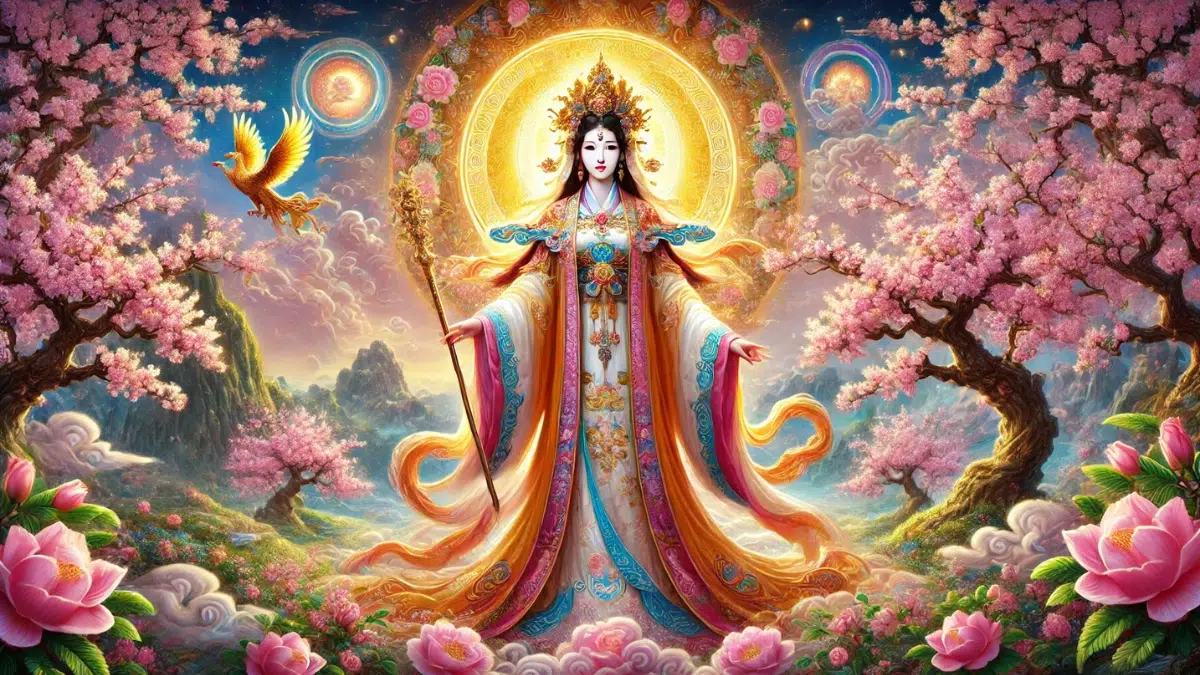
The Queen Mother of the West, or Xiwangmu, stands as a powerful goddess in Chinese mythology. She rules over immortality and serves as the matriarch of the heavens.
Legends describe her as a divine leader who protects the peach trees of immortality. These trees produce magical peaches that grant eternal life to those who eat them. She oversees these treasures and ensures only the worthy receive their gifts.
Xiwangmu represents balance, wisdom, and strength. Her role as a guide and protector inspires people to seek harmony in their lives. She also governs the flow of time, seasons, and cosmic order.
In art, she appears in elegant robes, often with a phoenix or crane symbolising longevity. Her crown, decorated with jade and gold, highlights her royal status.
People honour Xiwangmu in festivals and prayers, asking for health, wisdom, and longevity. Temples dedicated to her attract those seeking her blessings and guidance. As a mother figure in the heavens, she offers hope and inspiration to all who revere her.
Chinese Gods of Nature
As creators of humanity and the world, they hold a foundational role in Chinese mythology, akin to primordial deities.
Fuxi and Nuwa: Creators of Humanity
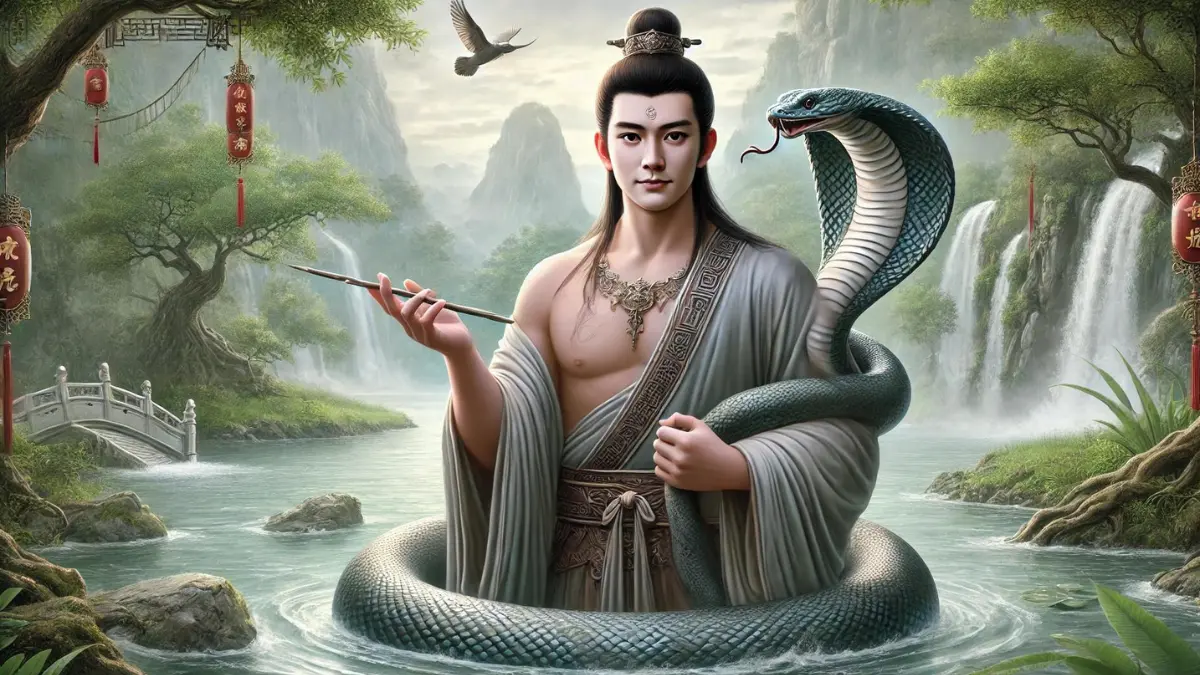
Fuxi and Nuwa stand as creators of humanity and important figures in Chinese mythology. Together, they shape the world and guide its order.
According to legends, Fuxi brings knowledge and skills to humans. He teaches people how to hunt, fish, and write. He also introduces the first system of governance, helping communities grow and thrive.
Nuwa, his partner, focuses on creation and protection. She forms humans from clay and gives them life. When the heavens tear apart, she repairs the sky with stones and saves the world from disaster.
Fuxi and Nuwa represent balance and harmony. Their union symbolises the connection between human progress and nature’s stability. People see them as loving and wise, always working for humanity’s survival and well-being.
In art, they often appear together, holding tools like compasses and squares. These tools represent their ability to create order in chaos.
People honour Fuxi and Nuwa for their gifts of life and knowledge. Their story inspires hope and teaches the importance of working together to overcome challenges.
Gonggong: God of Water and Floods
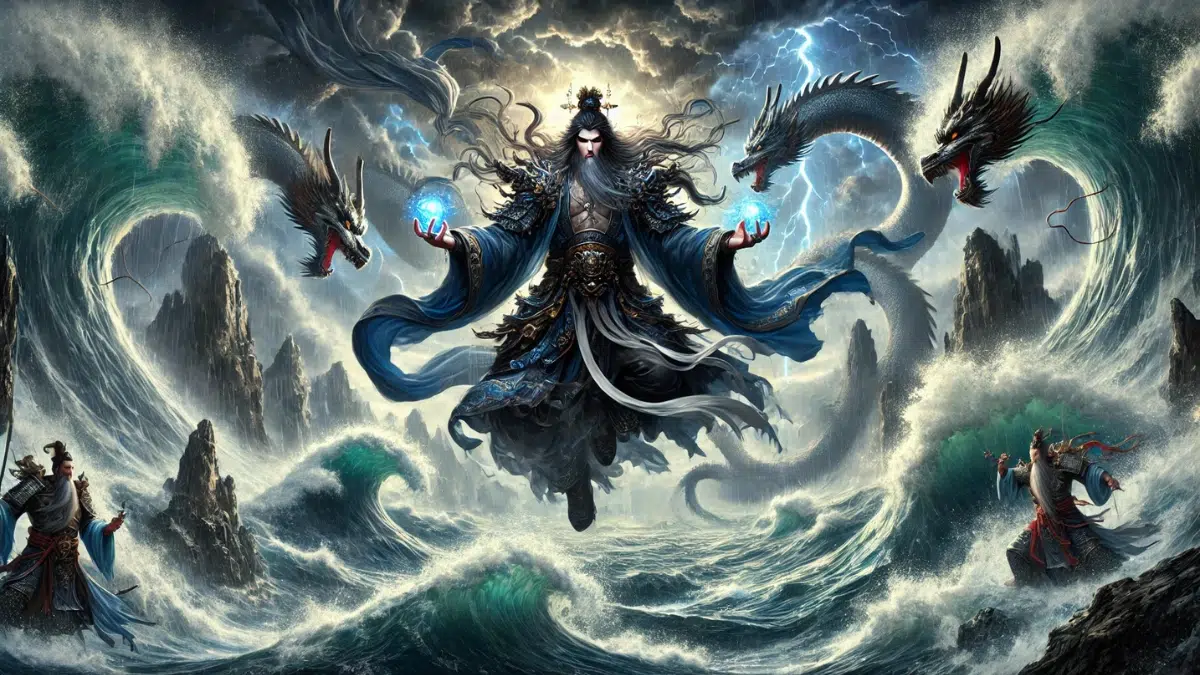
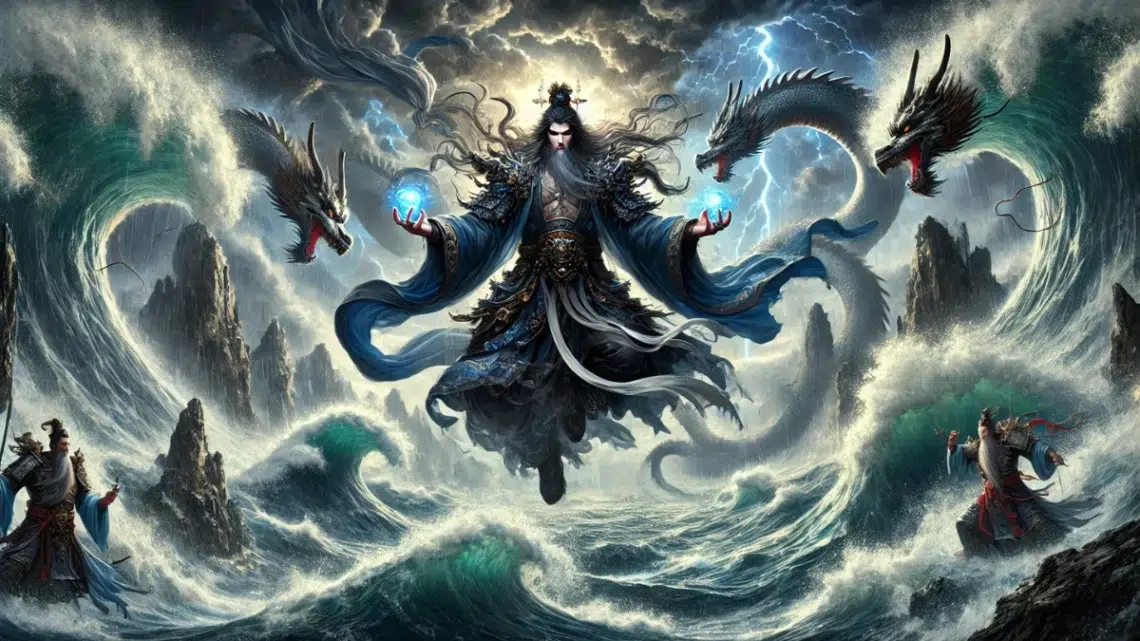
Gonggong, a powerful figure in Chinese mythology, controls water and floods. He represents the destructive force of nature.
Known for his temper, Gonggong often challenges other gods, causing chaos. His actions bring storms, rising waters, and destruction.
In one famous story, Gonggong battles the god of fire, Zhu Rong. Their fight shakes the heavens and damages the world.
Legends say Gonggong once hit Mount Buzhou, a pillar holding up the sky. This act tilts the earth and creates natural disasters.
Gonggong’s stories serve as warnings about respecting nature’s power. People see him as a reminder of how water can bring both life and destruction.
In art, Gonggong appears with a dragon-like tail, showing his connection to water and chaos. His fierce expression reflects his role as a god of floods.
Although feared, Gonggong also symbolizes the need to balance power and control. His legend teaches the importance of managing nature’s forces wisely.
People honour water gods like Gonggong to avoid floods and disasters. His stories continue to inspire awe and caution when dealing with the power of water.
Chinese Gods of Popular Worship
Widely worshipped across China, their influence extends deeply into everyday life, making them highly significant.
Guanyin: Goddess of Mercy
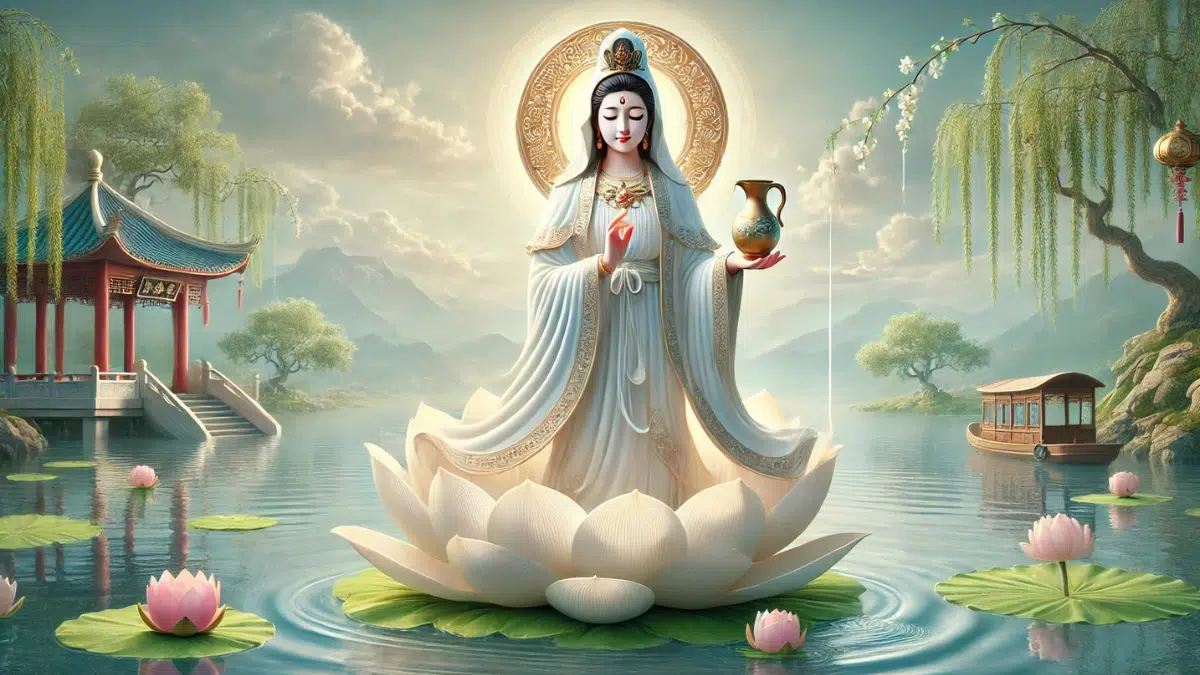
Guanyin, the goddess of mercy, stands as one of the most beloved figures in Chinese mythology and spirituality.
People turn to Guanyin for compassion, guidance, and protection. She listens to prayers and helps those facing struggles or pain.
Her name means “One who hears the cries of the world.” She offers comfort to anyone seeking kindness and understanding.
Legends describe her as a protector of sailors, mothers, and the weak. She brings hope and peace to those in need.
In temples, Guanyin often appears seated or standing gracefully. She wears flowing robes and holds a vase that pours pure water.
Her gentle expression shows her endless compassion for all beings. Many statues include lotus flowers, symbolising purity and spiritual growth.
People celebrate Guanyin with festivals and offerings, asking for health, safety, and happiness. She also inspires acts of kindness and generosity.
Guanyin reminds everyone of the importance of mercy and love. Her message encourages people to care for others and find peace within themselves.
Zao Jun: Kitchen God, overseeing family welfare

Zao Jun, the kitchen god, holds a special place in Chinese mythology. He oversees family welfare and harmony.
People believe Zao Jun watches over the household, keeping track of each family member’s actions and choices. Traditionally, Zao Jun lives in the kitchen, symbolizing his connection to the family’s daily life and nourishment.
During the Lunar New Year, families honour Zao Jun with offerings of food, incense, and sweets. They ask for blessings and protection.
Legends say Zao Jun reports to the Jade Emperor at the end of each year. His report affects the family’s fortune.
In art, Zao Jun often appears seated near a stove, wearing traditional robes and holding a scroll or writing brush. Families place his image or shrine in the kitchen as a reminder of his presence and influence on their lives.
Zao Jun represents responsibility, kindness, and the importance of family bonds. His story encourages people to act with care and respect.
People continue to honour Zao Jun as a protector of the home, seeking his guidance for peace and prosperity.
Chinese Gods – Underworld and Judgment
Essential to the afterlife and cosmological order, they oversee the realms of death and reincarnation.
Yan Wang (King of Hell): Judge of the Underworld
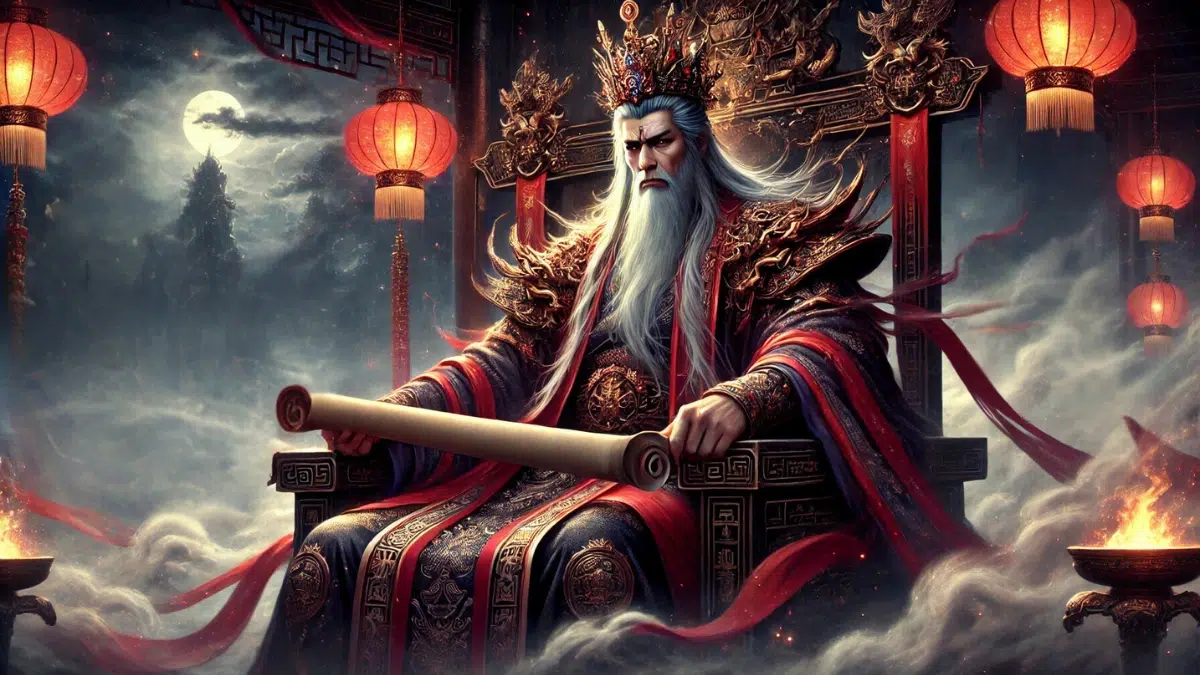
Yan Wang, the King of Hell, serves as the judge of the underworld in Chinese mythology. He oversees the realm of the dead.
As the ruler of the afterlife, Yan Wang decides the fate of souls based on their actions during life. Legends describe him as a fair but strict judge. He rewards good deeds and punishes wrongdoing to maintain balance.
Yan Wang works with a court of other judges and spirits to ensure justice for all souls passing through his realm.
In art, Yan Wang often appears seated on a throne, wearing a crown and robes that show his authority. He holds a scroll or book that lists the deeds of each soul, reflecting his role as a meticulous record-keeper.
People honour Yan Wang to seek forgiveness for past mistakes and guidance for their future actions.
His stories remind people of the importance of living a virtuous life and treating others with kindness. Yan Wang represents justice and the power of redemption. He encourages people to reflect on their choices and strive for good.
Meng Po: Goddess of Forgetfulness in the Afterlife

Meng Po, the goddess of forgetfulness, plays a key role in the afterlife in Chinese mythology. She helps souls prepare for reincarnation.
Souls encounter Meng Po at the Bridge of Forgetfulness before entering their next life. She offers them a special tea. Her tea erases memories of past lives, ensuring souls start fresh in their new existence without burdens or regrets.
Meng Po ensures balance and fairness in the cycle of life, death, and rebirth by helping souls let go of their past.
Legends describe her as kind and wise, guiding souls with patience as they take their next steps in the journey of life.
In art, Meng Po often appears as an elderly woman with a serene expression, holding a bowl or teapot.
Her presence reminds people of the importance of renewal and letting go of what no longer serves them.
Meng Po symbolizes the power of release and the gift of new beginnings. She encourages people to embrace change and transformation. Her role in the afterlife offers comfort, helping souls transition peacefully into their next chapter.
Chinese Gods of War and Protection
Renowned as protectors and heroes, they are central to folklore and spiritual life, embodying loyalty, courage, and divine justice.
Guan Yu – God of War and Loyalty
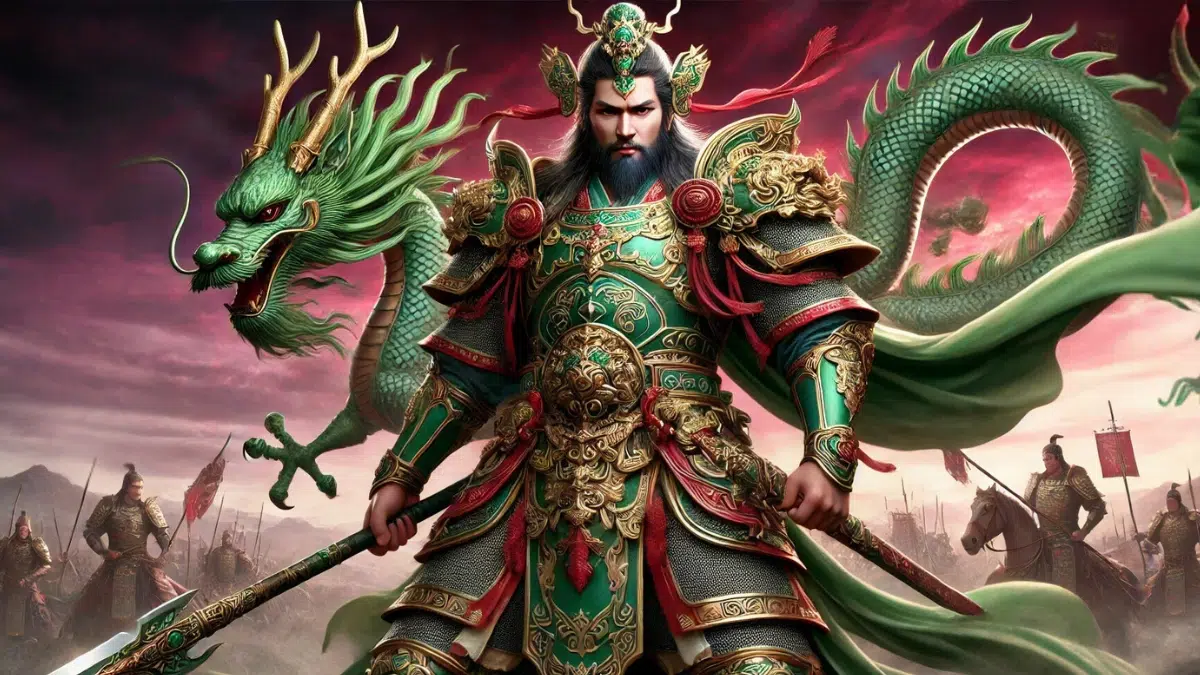
Guan Yu is one of the most famous gods in Chinese mythology and holds a significant place in Chinese mythology and culture. He represents courage, honour, and devotion.
As a protector of justice, Guan Yu inspires people to stand strong in their beliefs and act with integrity.
Legends describe Guan Yu as a skilled warrior who defends righteousness and supports those in need of protection.
In temples, Guan Yu often appears wearing armour, holding a large blade called a Green Dragon Crescent Blade. His expression shows strength and determination.
He serves as a symbol of loyalty, often worshipped by soldiers, police officers, and businesspeople seeking guidance and success. Guan Yu also represents brotherhood and commitment, reminding people to stay true to their promises and values.
People honour Guan Yu with offerings and prayers, asking for protection, courage, and guidance in facing life’s challenges.
His legacy inspires acts of bravery and loyalty, encouraging people to live with honour and uphold justice.
Guan Yu’s story continues to resonate as a reminder of the importance of standing firm in what is right.
Nezha: A Youthful Protector Deity
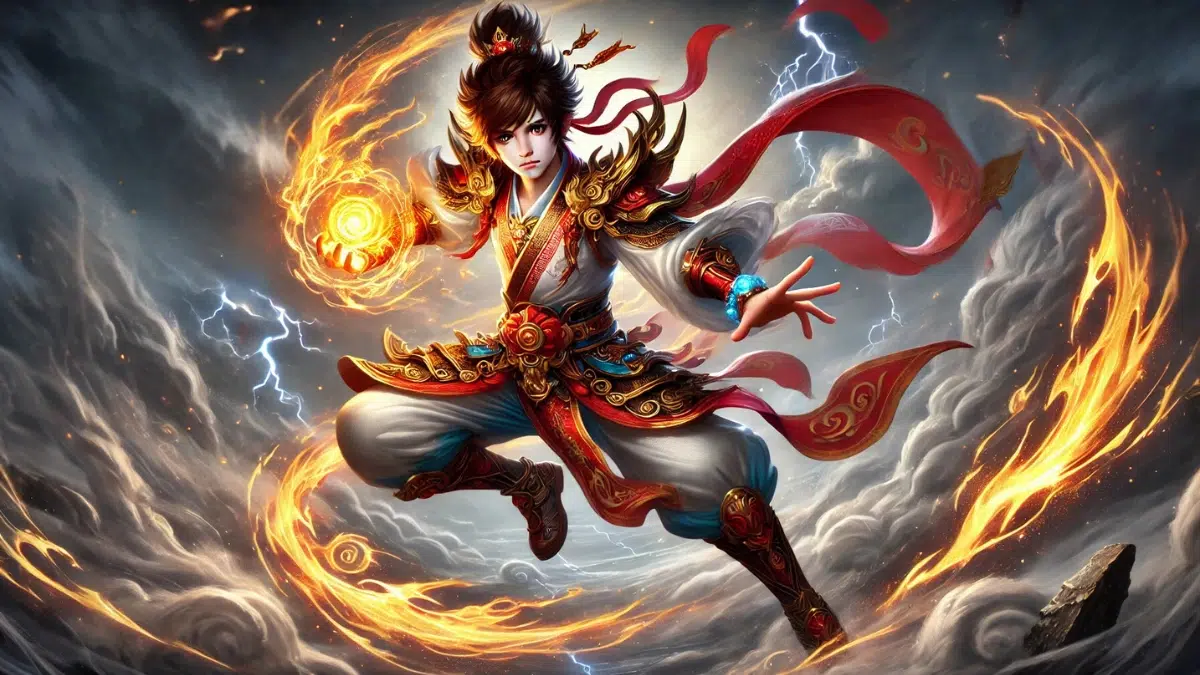
Nezha, a youthful protector deity, holds an important role in Chinese mythology and Taoist folklore. He symbolises courage and resilience.
Legends describe Nezha as a defender of the innocent and a fighter against evil forces threatening harmony and balance.
He often appears as a young warrior with a fiery spirit, ready to protect others and uphold justice. Nezha uses powerful weapons, such as his Wind Fire Wheels, a fiery spear, and a magical bracelet, to fight his enemies.
As a symbol of transformation, Nezha overcomes great challenges, teaching people the importance of perseverance and self-growth.
In temples and festivals, people honour Nezha, seeking his protection and guidance in overcoming obstacles in their lives.
Nezha’s youthful energy inspires hope, especially for those facing difficult situations or striving to make positive changes.
In art and stories, Nezha often rides on his Wind Fire Wheels, symbolizing his speed and power as a protector.
Nezha reminds people to face challenges with bravery and believe in their ability to create change. His story encourages strength, determination, and the value of helping others, making him a beloved figure in Chinese mythology.
Celestial Bureaucracy Chinese Gods
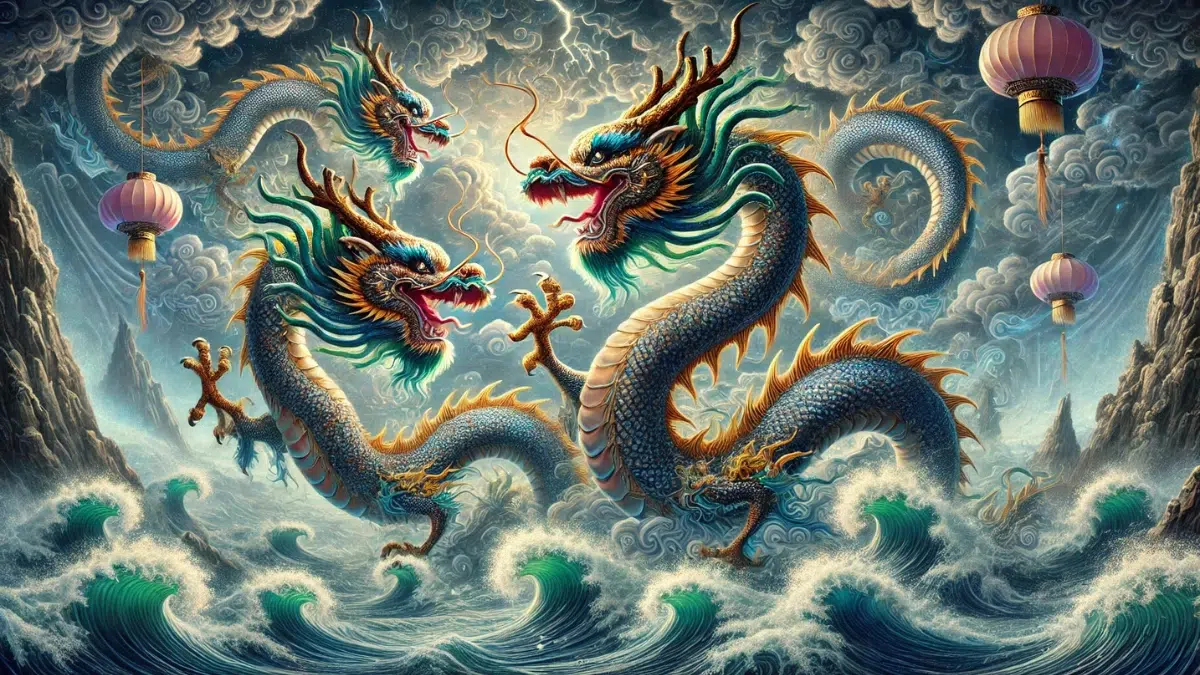
Celestial Bureaucracy gods are certainly important, especially in folk religion and Taoism.
However, their worship is more practical and localized, while deities like the Jade Emperor, Guanyin, or Fuxi and Nuwa embody broader, more universal aspects of Chinese spiritual life.
This difference in scope makes the latter more prominent in mythology and national identity.
Notable Examples of Celestial Bureaucracy Gods
- Dragon Kings (Longwang): Masters of water bodies, crucial for agriculture and weather
- Cheng Huang: Guardians of cities, ensuring protection and justice for inhabitants
- Tu Di Gong: Earth gods responsible for local land and crops
- Lei Gong: God of thunder, enforcing divine justice
- Feng Bo and Yu Shi: Gods of wind and rain, respectively
Conclusion
Chinese mythology features a rich tapestry of gods and deities, each symbolizing important aspects of life and the universe. These gods guide, protect, and inspire people with their unique stories and roles.
From the Jade Emperor’s leadership to Guanyin’s compassion, each figure teaches lessons about balance, justice, and harmony. Deities like Zao Jun, the kitchen god, focus on family welfare, while Yan Wang ensures fairness in the afterlife.
These gods reflect values such as loyalty, courage, and wisdom. They connect people to nature, spirituality, and the cycles of life and death.
Chinese gods continue to inspire through festivals, art, and worship. Their timeless stories remind us to live with integrity, kindness, and respect for the world around us.
By honouring these deities, people seek guidance, protection, and blessings in their everyday lives. Their influence remains strong and meaningful today.