Celtic Mythology Gods & Legends in Archery
Celtic mythology is full of rich and complex myths and legends. It belongs to the Celtic peoples, a diverse group spread across Europe.
This mythology includes the worship of many gods. These gods and goddesses are linked to different aspects of life and nature.
Christian monks wrote much of what we know about Celtic mythology in medieval manuscripts. They often changed these stories to reflect their own religious ideas.
Celtic mythology divides into several regional traditions. The most popular being Irish and Welsh mythologies. These traditions share common themes and gods but often have unique myths and legends.
Celtic myths often explore themes of heroism, adventure, romance, and the supernatural. Common features include the underworld, magic and transformation, and nature.
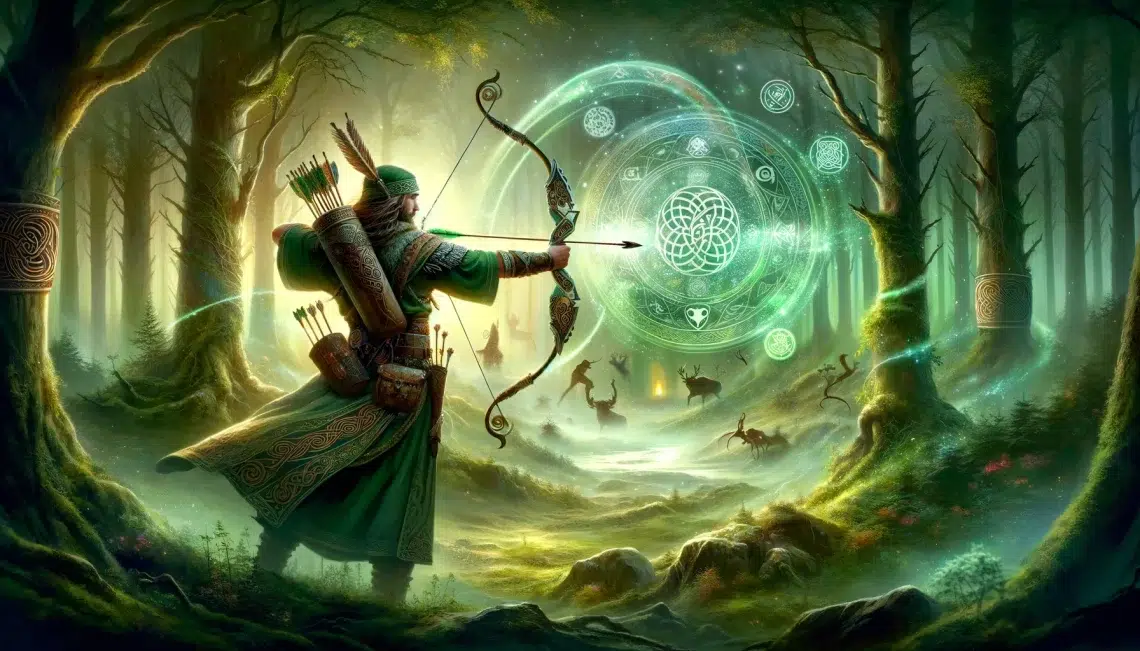
Archery was practical for hunting and warfare and held deeper symbolic meaning in myths. It often has links to key deities and legendary figures.
The bow and arrow symbolize divine power and human skill.
The Historical Roots of Archery in Celtic Society
Archery has deep historical roots in Celtic society, playing a significant role in both survival and warfare.
Archery in Celtic society traces back to prehistoric times. The Celts, known as fierce warriors, use bows and arrows as essential tools for both hunting and battle.
During the medieval period, archery became more prominent in Celtic warfare. In Ireland, archery was part of military tactics during the Viking invasions in the 9th century. Archery did not dominate the battlefield in Celtic regions as it did in England with its famed longbowmen.
Archers were used in battles up until the late 17th century in Scotland. Scottish Highlanders used bows in combat.
Archery in Celtic society was not only a martial skill but also a part of daily life for hunting and survival. However, there is a notable absence of archery in Celtic folklore and legends, particularly in Ireland.
As firearms became more prevalent in Europe, the use of bows in warfare declined. By the late medieval period, archery was replaced by gunpowder weapons.
Symbolism of the Bow and Arrow in Celtic Lore
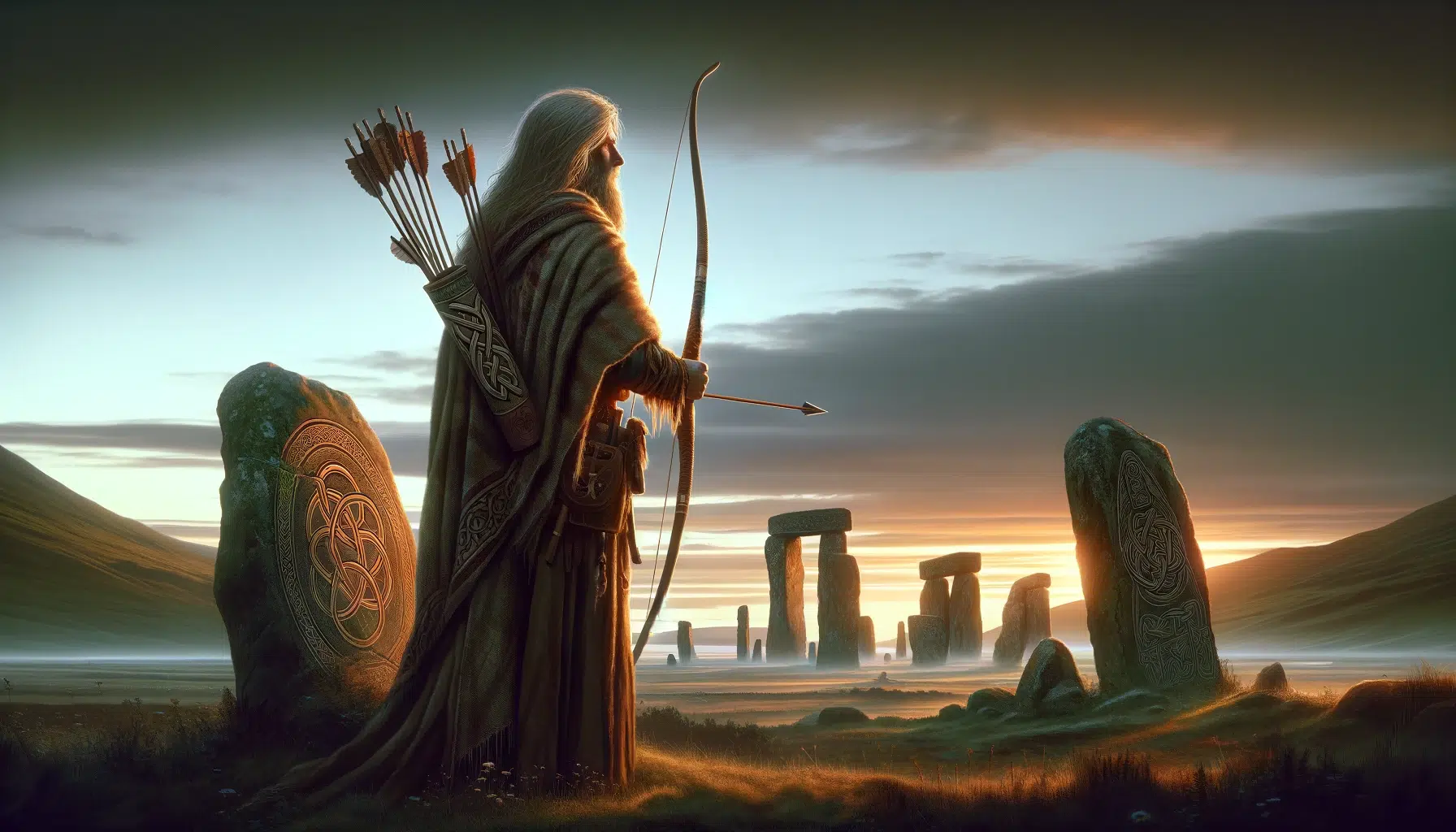
The bow and arrow symbolize agility and cunning, essential traits for both hunters and warriors and qualities highly valued in Celtic culture.
The bow and arrow are emblematic of the warrior characteristics in Celtic society. This respect was extended to their portrayal in myths, embodying ideals of honour.
In Celtic mythology, the bow and arrow are often linked to deities and legendary figures, symbolizing a blend of divine power and human skill.
In some tales, deities wielded enchanted bows, emblematic of divine power over life and death, capable of striking down supernatural foes or bestowing blessings.
The bow and arrow are seen as symbols of protection and transformation. In some tales and myths, gods wield enchanted bows, highlighting their role in maintaining cosmic balance.
The bow’s curved form symbolizes the moon, feminine energy, and the flow of life. While the straight arrow signifies male energy, direction, and penetration. Together, they represented harmony and the unity of opposites.
Rituals sometimes involved shooting arrows into the air to predict future events, seen as a form of communication with the divine realm.
The bow and arrow held profound meaning, intertwining warfare, gender, divinity, and cosmology in Celtic belief systems.
Through their portrayal in myths and rituals, the Celtic bow and arrow show the spiritual and the practical are intricately connected.
Legendary Archers in Celtic Mythology
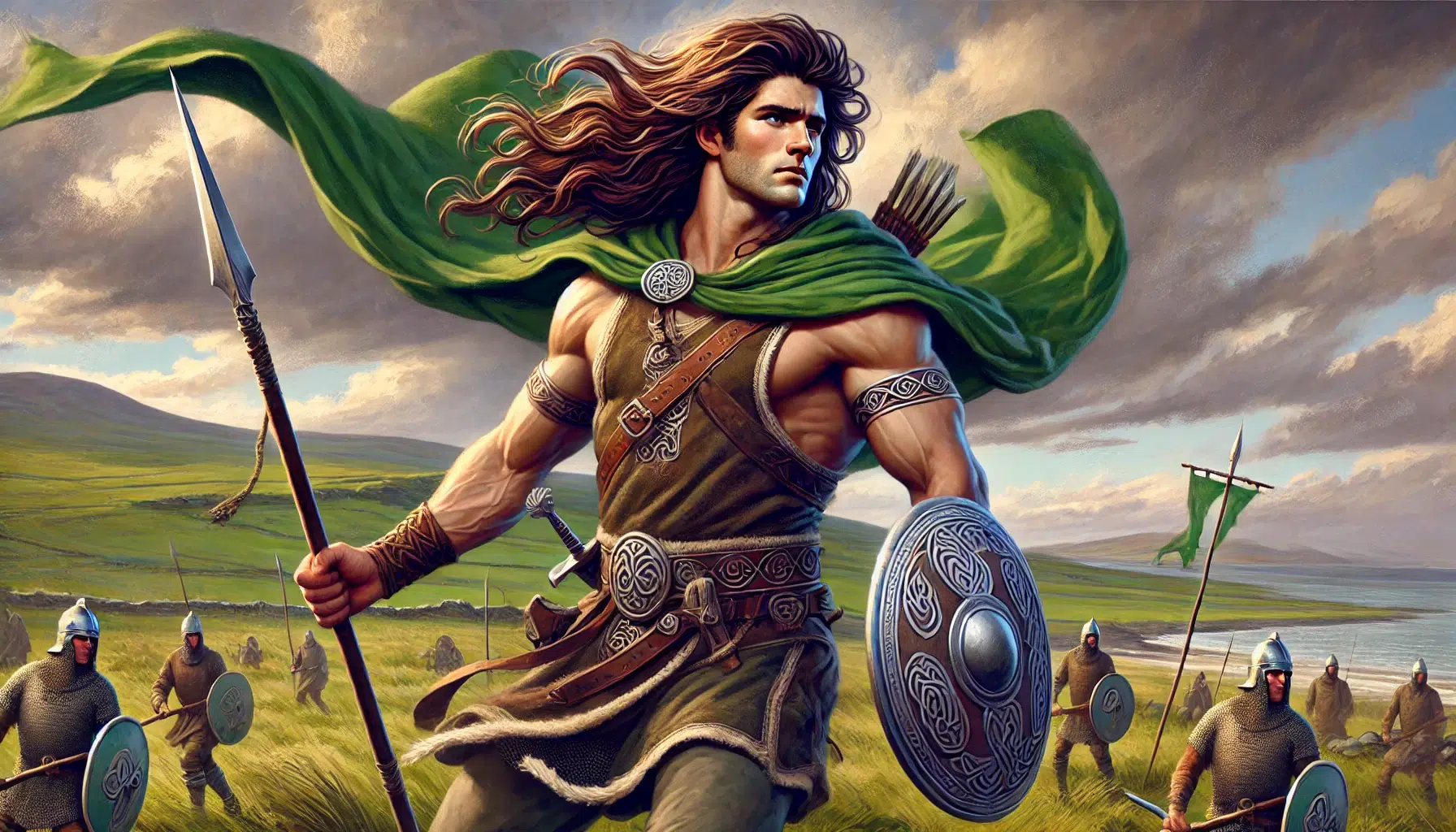
Cú Chulainn
Cú Chulainn, an iconic Irish mythological figure, is famous for his superhuman strength, skill, and warrior spirit. He plays a central role in the Ulster Cycle as Ulster’s ultimate defender, performing legendary feats.
Cú Chulainn is particularly noted for his use of the gae bolga, a deadly spear. He is also celebrated for his exceptional skills in various forms of combat, including archery.
Born as Sétanta, he earns the name Cú Chulainn, or “Hound of Culann,” by heroically replacing a guard dog he kills in self defense.
In his most famous story, the Táin Bó Cúailnge (The Cattle Raid of Cooley), he demonstrates unmatched bravery in battle. He would fight Connacht’s armies alone to protect Ulster at the age of 17.
Divine interventions, epic battles, and tragic love stories mark Cú Chulainn’s life. His death, as heroic as his life, involves him standing tied to a stone, courageously facing his foes until death.
Cú Chulainn’s legacy celebrates his bravery, loyalty, and the complex nature of heroism.
Learn more about: Cu Chulainn: Tale of Ireland’s Greatest Hero
Finn Mac Cumhaill
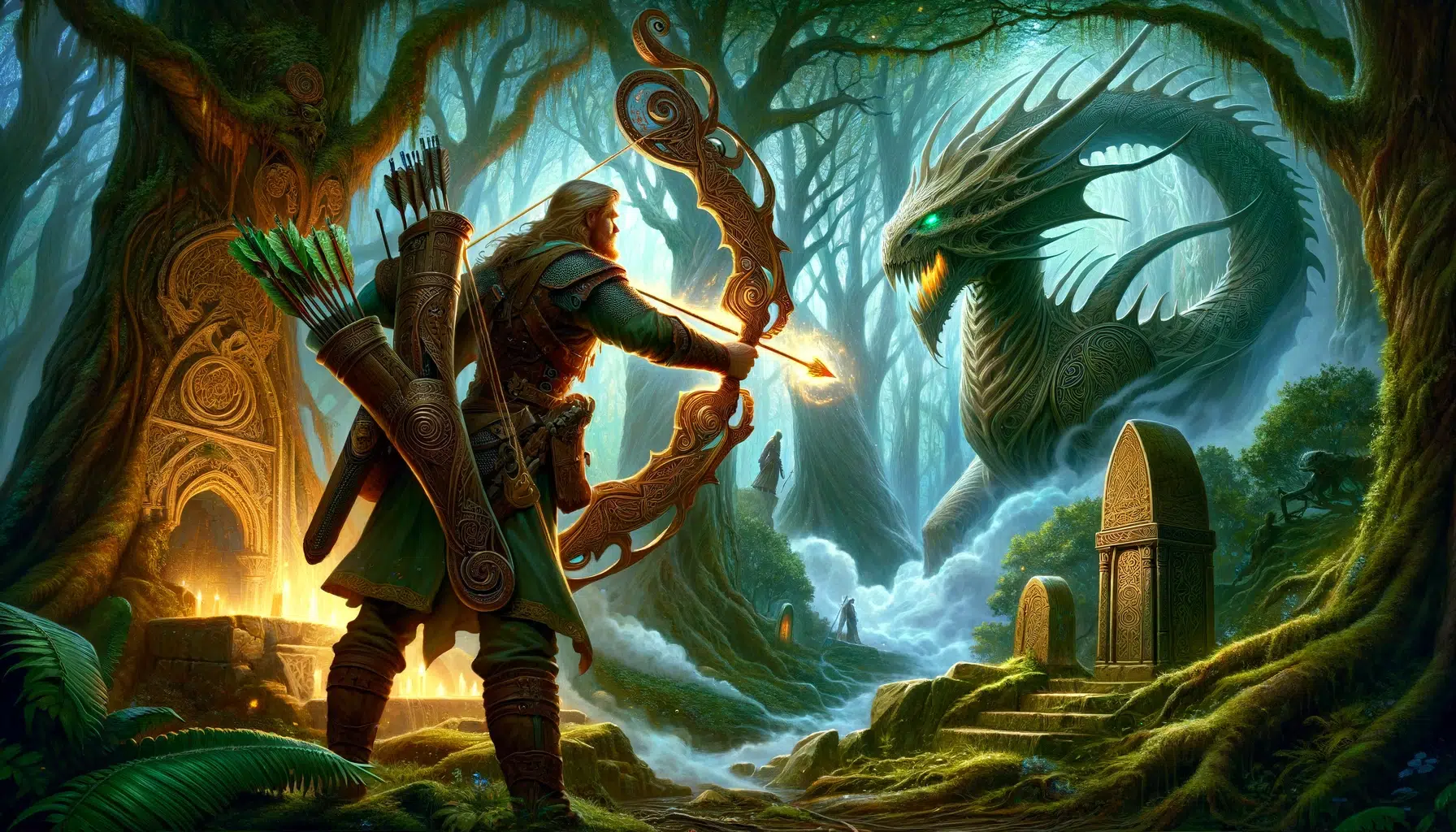
Finn Mac Cumhaill, the legendary Irish hero, famously led the Fianna, the warriors who protected the High King of Ireland.
He is more commonly associated with his wisdom and leadership. However he is also depicted as a master of various weapons, including the bow and arrow. Adventure, bravery, and wisdom mark his tales in the Fenian Cycle. He often uses his archery skills to protect his people and hunt magical creatures
A prophecy of greatness shaped his youth, as he learned warfare and wisdom from druids and warriors. By accidentally tasting the Salmon of Knowledge, Finn gained unparalleled wisdom.
He defended Ireland from invaders, hunted magical beasts, and explored the realms of Irish gods.
Finn’s legacy extends beyond warfare to wise leadership, celebrated in Irish folklore for embodying courage, leadership, and wisdom.
Scáthach

Scáthach is a legendary warrior woman from Irish mythology. She lives on the Isle of Skye in Scotland. Scáthach is known for her great skills in battle and magic. She runs a training school for heroes and warriors.
Scáthach teaches many important skills, including archery. Her students learn to use a bow and arrow with precision. Scáthach herself is an excellent archer and her exceptional combat skills. Her skills inspire many stories and legends.
Scáthach is also famous for training the hero Cú Chulainn. She helps him become a strong and brave warrior. Her wisdom and strength guide many heroes.
Scáthach’s legend shows her as a powerful and wise figure. She stands as a symbol of skill and courage. Her connection to archery adds to her impressive legacy.
Her comprehensive knowledge of martial arts, including proficiency with the bow and arrow, make her an influential figure in the context of archery training.
Learn more about: Scáthach – Mystic Warrior Goddess of Celtic Lore
Caílte mac Rónáin
Caílte mac Rónáin is a hero from Irish legends. He is part of the Fianna, a group of warriors and a companion of Finn Mac Cumhaill. Caílte is known for his remarkable speed and skill in battle. He often acts as a scout due to his quickness.
Caílte also has skills in archery. His ability to hit targets from far away helps the Fianna in many fights. Stories tell of his bravery and clever thinking. He remains calm in tough situations, always finding a way to win.
Caílte’s adventures include many magical encounters. He meets various mythical beings and faces many challenges. These stories show his strength and loyalty to his people.
Overall, Caílte mac Rónáin stands out as a brave and skilled warrior. His talent with a bow and arrow is an important part of his legend.
Lleu Llaw Gyffes
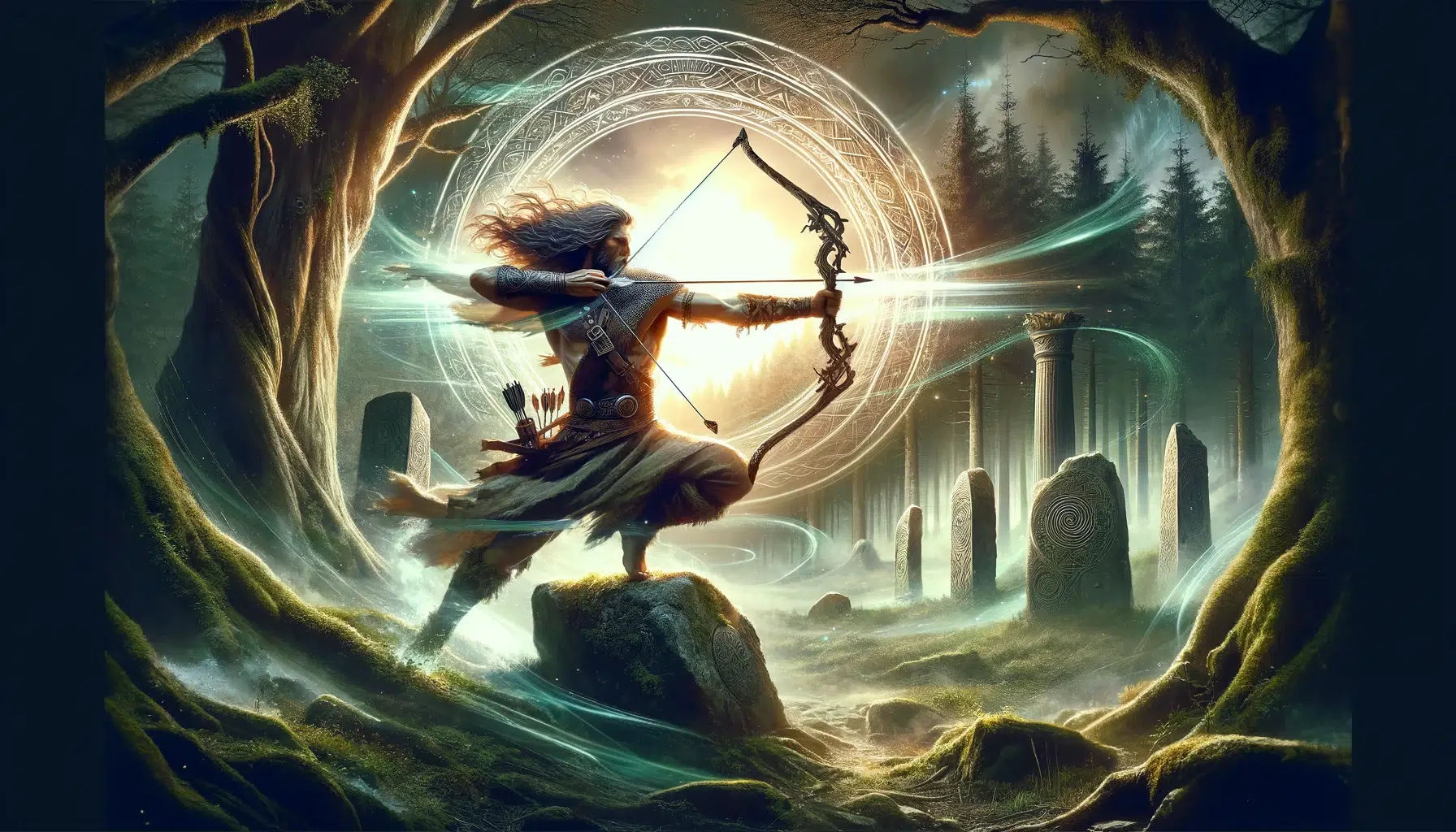
In Welsh mythology, Lleu Llaw Gyffes stands out. His skill with the bow is central to his narrative, symbolizing his prowess and cunning.
Lleu Llaw Gyffes stars in Welsh mythology, especially in the Mabinogi’s Fourth Branch. His story weaves through magic, betrayal, and transformation.
Arianrhod’s magical birth brought Lleu to life, facing early challenges like curses delaying his name, arms, and marriage. With his uncle Gwydion’s aid, Lleu overcomes these, becoming a formidable warrior and magician.
Tragedy strikes when Blodeuwedd, his flower-made wife, betrays him, turning him into an eagle. Gwydion later restores Lleu to human form, after which Lleu seeks revenge. This tale highlights resilience, redemption, and life’s cyclical nature.
Lleu’s journey, rich in symbolism, underscores growth, transformation, and kinship and cleverness’s lasting strength.
Learn more about: Legendary Archery Mythology
Celtic Mythology: The Goddesses and Gods
In Celtic mythology, numerous deities have links to the skill of archery. They embody various aspects of this revered practice.
Lugh: Guardian of Cosmic Order
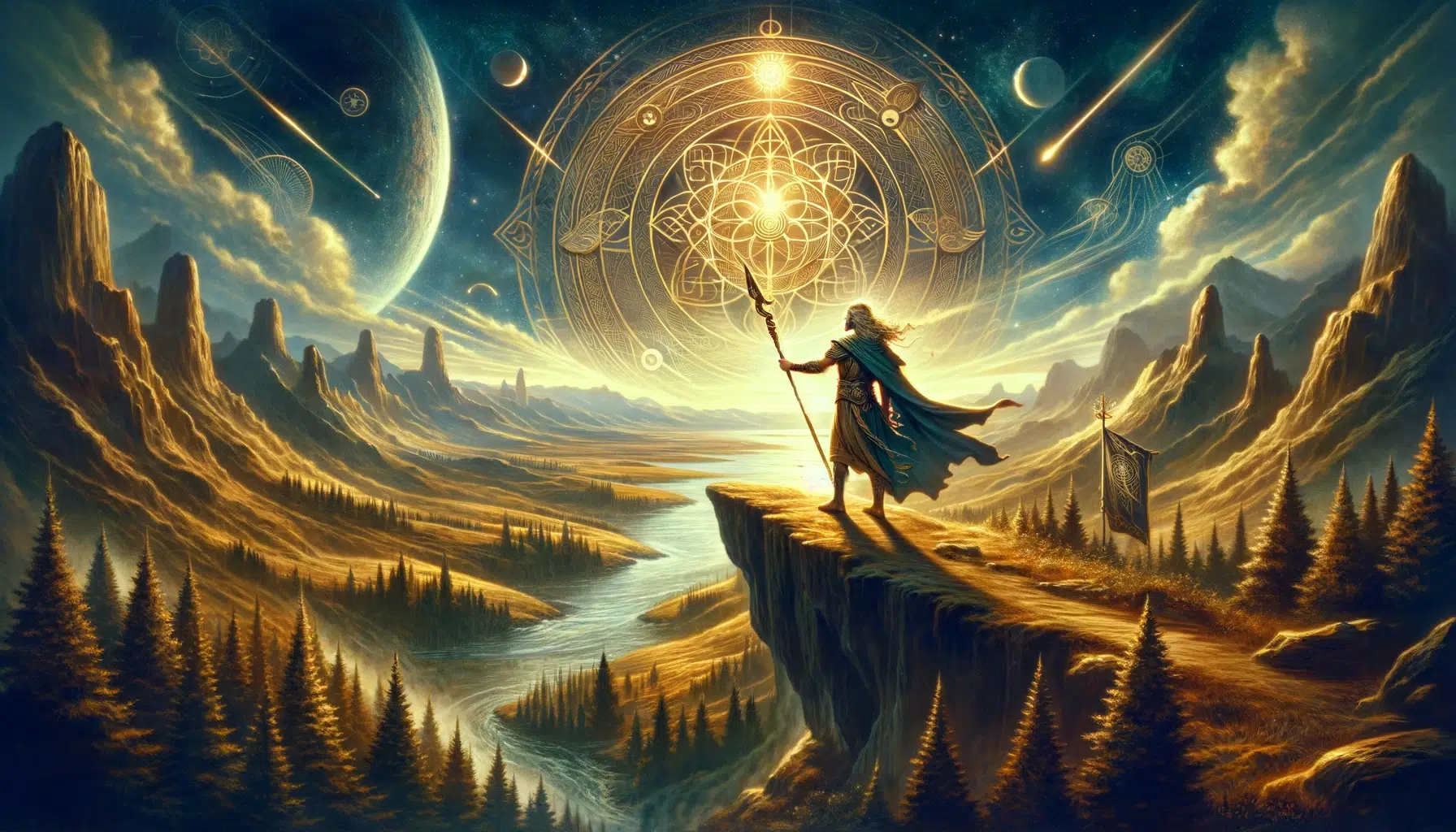
Lugh, a prominent deity in Celtic mythology, is associated with many skills, including archery.
As the god of the sun, war, and arts, Lugh often has a spear. He is also celebrated for his versatility and mastery of various weapons. His association with archery symbolizes precision, skill, and strategic thinking.
He often connects with the sun and light, emphasizing his archery link. Sun rays, like arrows, embody penetration, speed, and directness, highlighting Lugh’s role in illuminating paths and targeting challenges.
His archery mastery symbolizes focus, balance, and environmental awareness. Lugh’s long-distance targeting suggests foresight and visionary leadership.
Lugh defends the Celtic gods and their realms with his bow, embodying protection, justice, and righteous combat. His stories depict him as a guardian, using archery to maintain cosmic order and people’s well-being.
Lugh’s archery blends artistry, wisdom, and spirituality, showcasing his physical, mental, and spiritual harmony. His multifaceted nature and archery’s deep symbolism in Celtic lore inspire admiration.
He is often associated with skill, crafts, and a celebrated festival Lughnasadh.
Dagda: Father-figure and God of Life and Death
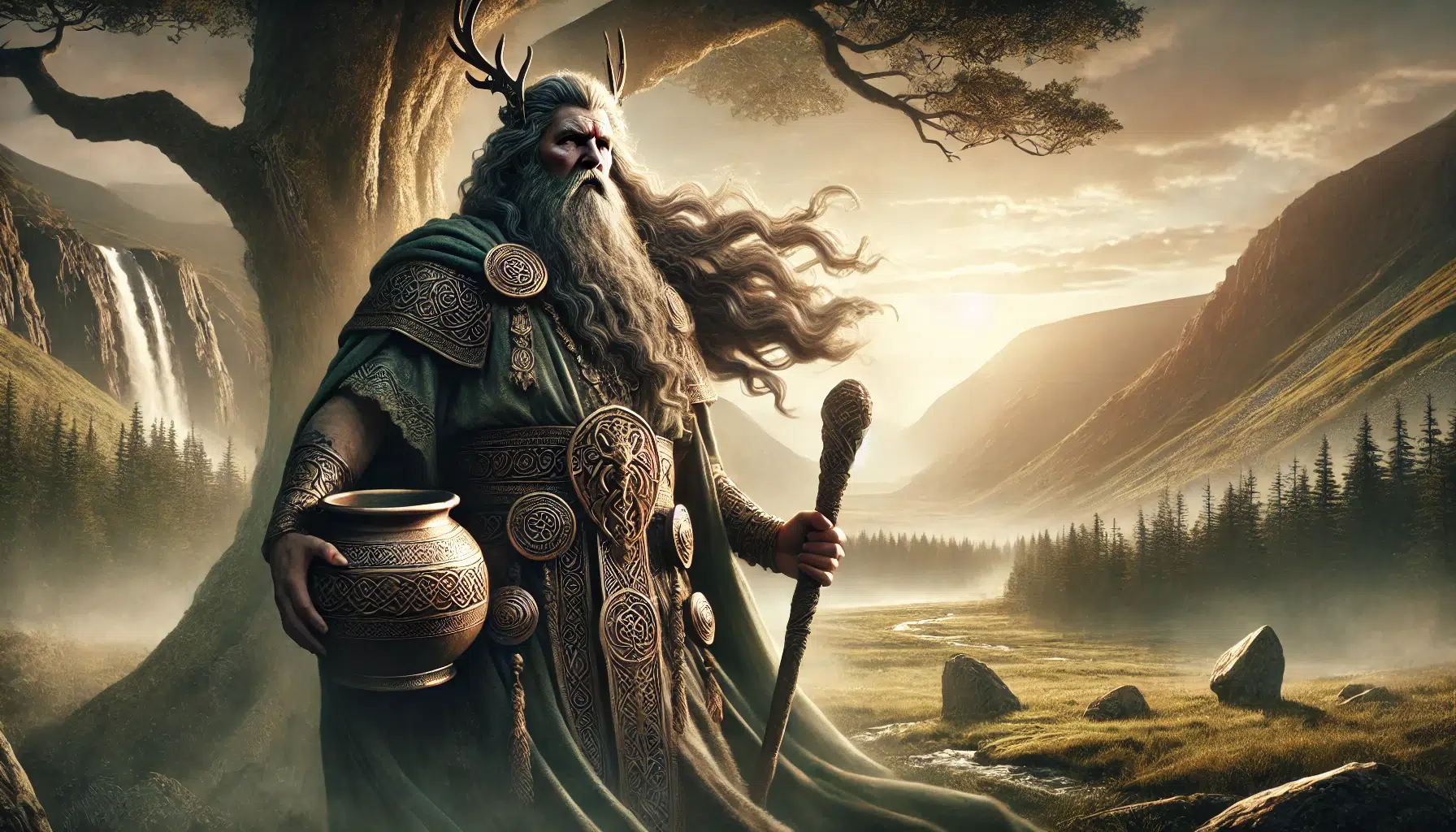
Dagda is a powerful figure in Irish mythology. He is known as the father-figure and god of life and death. He holds great strength and wisdom, leading the Tuatha Dé Danann, a group of ancient gods.
Dagda carries a magical club that can kill with one end and bring life with the other. This club shows his control over life and death. He also owns a cauldron that never runs out of food, showing his power to provide and nourish.
Dagda is a fair and kind leader. He helps his people in many ways, using his strength and magic. He often uses his powers to protect and care for his followers.
Dagda’s role in myths highlights his importance. He balances life and death, showing his deep connection to both. His stories teach about the circle of life and the need for balance.
Dagda stands as a key figure in Irish legends. He represents strength, wisdom, and the balance between life and death. His caring nature and powerful abilities make him a respected leader and god.
Arawn: King of Annwn, the Otherword

Arawn reigns as the king of Annwn, the Otherworld, in Welsh tradition, embodying life, death, and the afterlife in Celtic mythology.
In Annwn, a paradise and realm of the dead, he is a god of sovereignty, hunting, and war, intertwining with life’s cycles and world transitions.
Known for crossing between the mortal world and Annwn, Arawn facilitates soul passage and governs ancestral spirits. He leads the supernatural Cŵn Annwn hounds, believed to hunt lost souls or guide the deceased, linking him to life and death cycles.
In the Mabinogi’s tale of Pwyll, Prince of Dyfed, Arawn exchanges places with Pwyll for a year and a day to defeat Hafgan. This swap fosters deep friendship. Pwyll defeats Hafgan and earns Arawn’s rewards and alliance. This highlights themes of friendship, honour, and life-death interconnection.
Arawn is associated with the Welsh god of death and fertility. It reflects the Celts’ cyclical view of life, emphasizing rebirth and regeneration. Annwn acts as a space for soul preparation for reincarnation.
Arawn symbolizes the integration of spiritual and material realms, showing Celtic reverence for nature and unseen forces. His stories teach respect, balance, and the value of understanding life’s mysteries.
Arawn’s legacy illustrates the ancient Celts’ deep connection to the land, life-death cycle, and spiritual dimensions, showcasing their rich beliefs and values.
Brigid: Goddess of Healing, Poetry, and Smithcraft
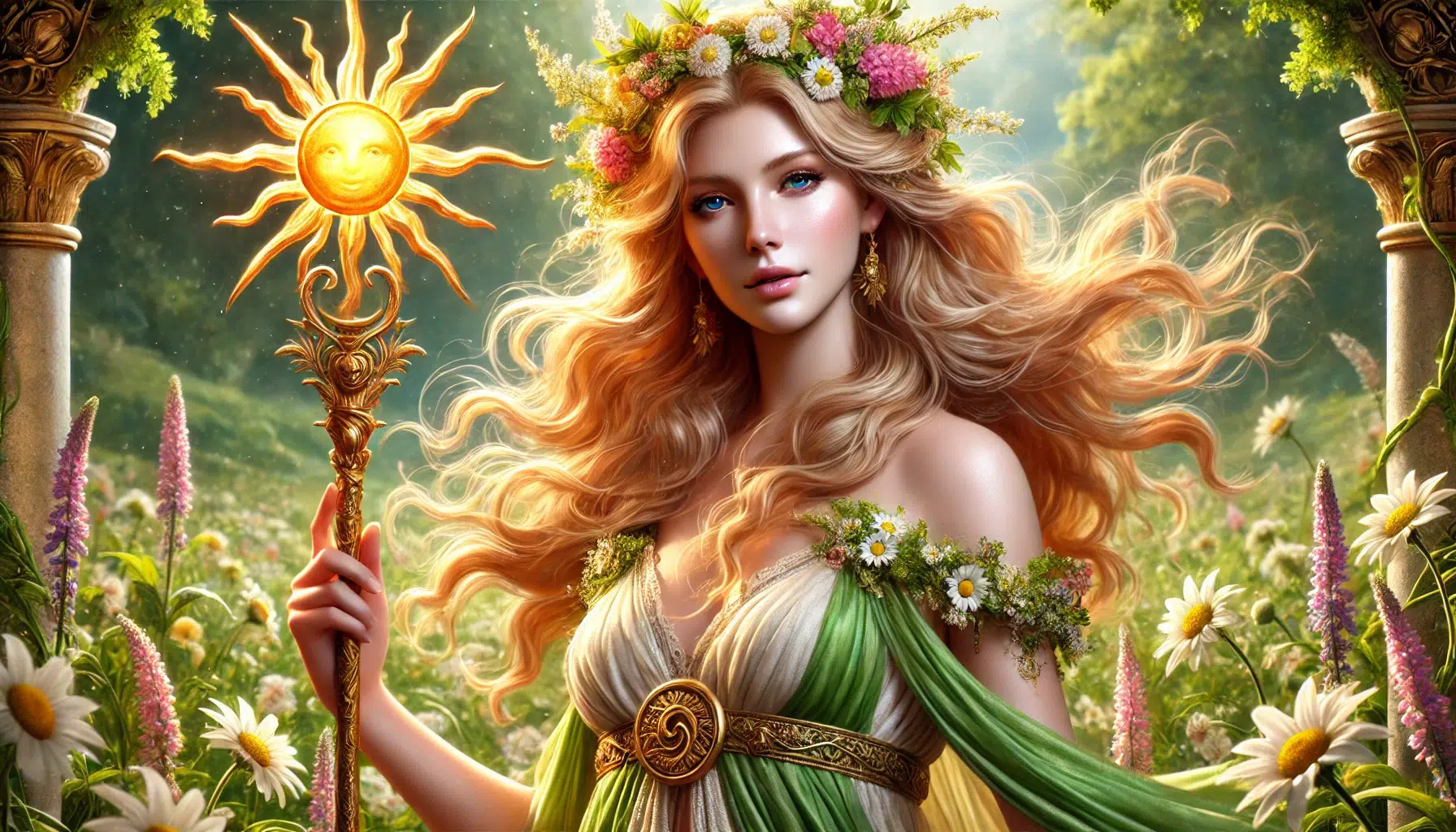
Brigid is an important goddess in Irish mythology. She is the goddess of healing, poetry, and smithcraft. Brigid is known for her kindness and wisdom.
As the goddess of healing, Brigid helps people recover from illnesses and injuries. Many look to her for comfort and strength during tough times. Her healing powers bring hope to those in need.
Brigid also inspires poets. She helps them create beautiful poems and songs. Her influence makes words come alive, touching the hearts of many.
In addition, Brigid has skills in smithcraft. She teaches people how to work with metal and create useful tools. Her knowledge in this craft is highly valued and respected.
Brigid is a caring and creative goddess. She brings light and hope to everyone she touches. Her talents in healing, poetry, and smithcraft show her diverse abilities and importance.
Brigid stands as a beloved figure in Irish mythology. Her wisdom and compassion make her a powerful and inspiring goddess. People continue to honour and celebrate her gifts in many ways.
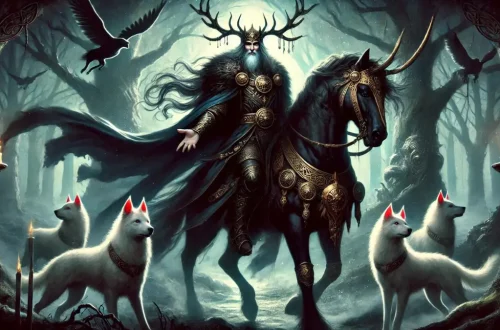
Morrigan: Goddess of War and Fate
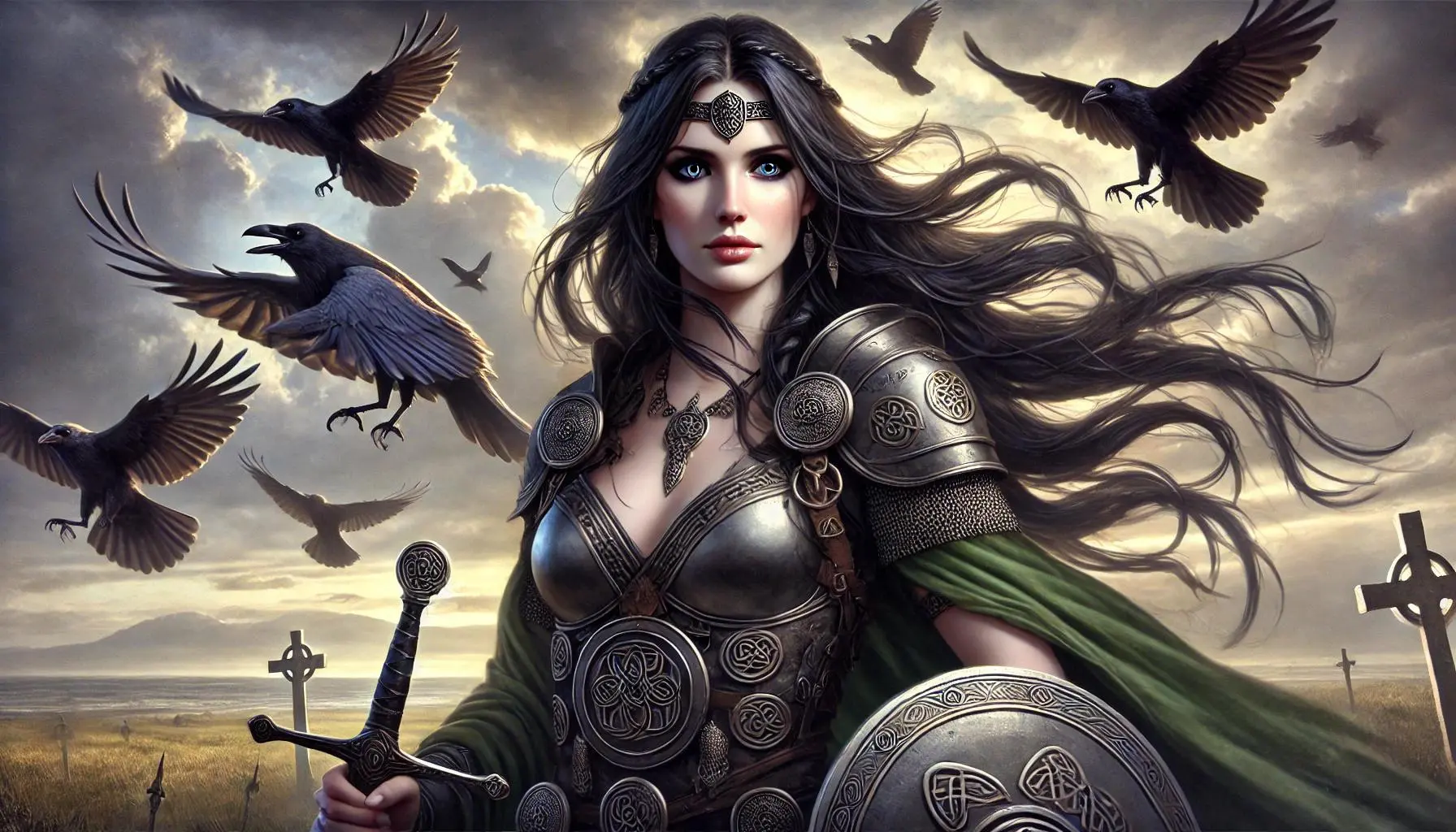
Morrigan is a powerful goddess in Irish mythology. She is the goddess of war and fate. Morrigan is known for her mysterious and fierce nature.
As the goddess of war, Morrigan influences battles and warriors. She can change the course of a fight with her presence. Morrigan often appears as a crow on the battlefield, watching over the warriors.
Morrigan also controls fate. She decides the destiny of both gods and humans. Her knowledge of fate makes her a feared and respected figure.
Morrigan has a complex personality. She can be both protective and destructive. Her actions often depend on what she sees as just and fair.
Many stories show Morrigan’s power and wisdom. She uses her abilities to shape the world around her. Her connection to war and fate makes her a central figure in many myths.
Overall, Morrigan stands as a strong and influential goddess. Her role in war and fate highlights her importance in Irish legends. People respect and fear her, knowing she holds great power over their lives.
Danu: The Mother Goddess
Danu is the mother goddess in Irish mythology. She is the mother of the Tuatha Dé Danann, a group of ancient gods. Danu is known for her nurturing and protective nature.
As the mother goddess, Danu brings life and fertility to the land. She helps crops grow and supports all living things. Many people look to Danu for guidance and support.
Danu also represents wisdom and knowledge. She teaches her people important skills and lessons. Her wisdom helps them thrive and succeed in their lives.
Danu’s power extends to water as well. Rivers, streams, and wells often connect to her. This connection shows her influence over life and growth.
Danu’s nurturing spirit and strength make her a beloved figure. She supports her people through challenges and helps them prosper. Her guidance and protection are central to many myths.
Danu stands as a powerful and caring mother goddess. Her influence on life, wisdom, and water highlights her importance. People honour and respect her for her endless support and love.
Abnoba: Celtic Goddess of the Hunt
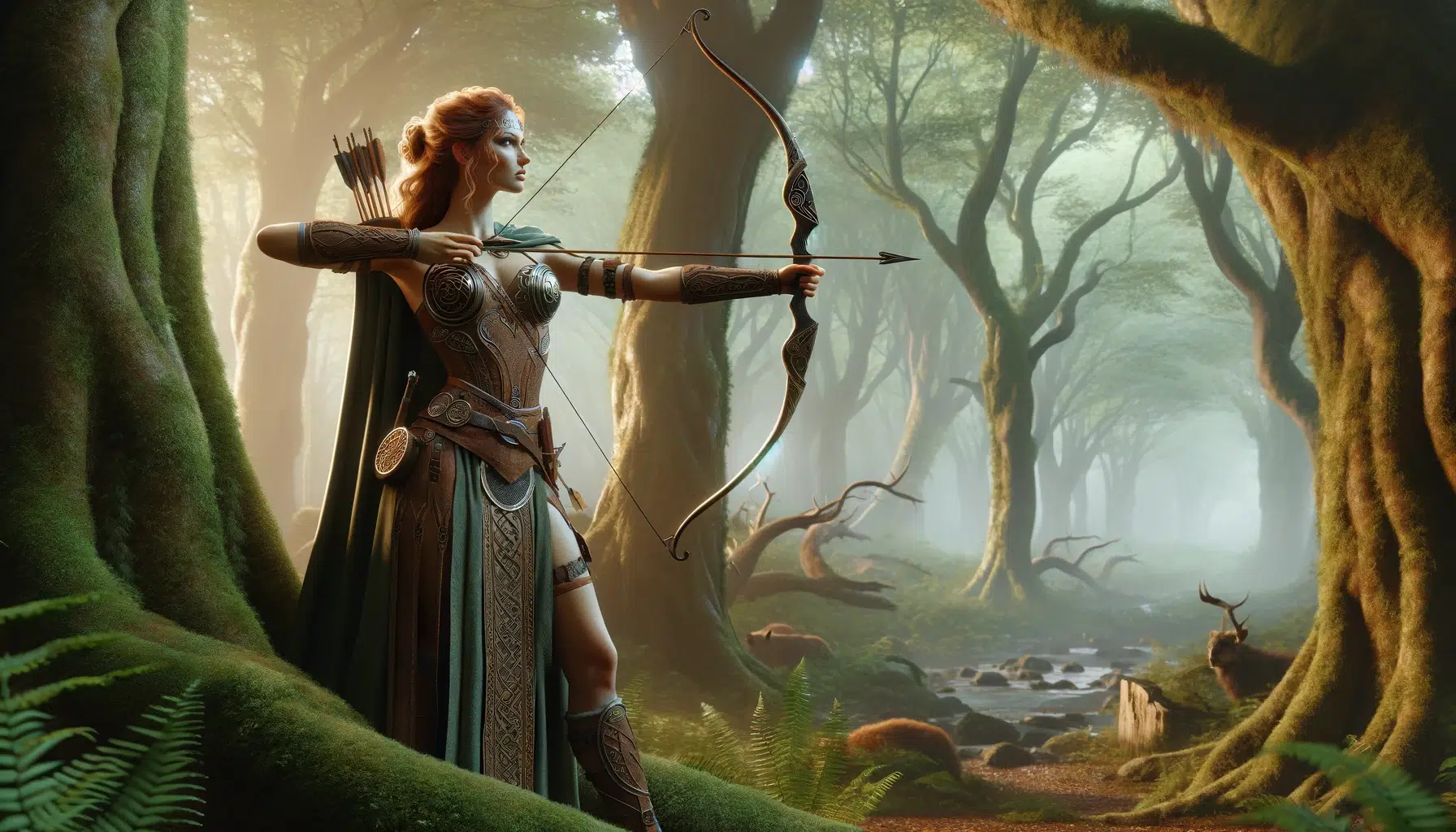
Abnoba, a Celtic goddess, reigns over hunting, forests, rivers, and mountains. There was widespread worship in what is now Germany, France, and Britain. She acts as wildlife’s protector and the natural world’s guardian, showing how all living things in the forest connect.
As the hunt goddess, Abnoba oversees hunting and symbolizes the balance between nature’s gifts and the need for respectful hunting that maintains ecosystem harmony.
She protects animals and wilderness, advocating for conservation and balance. Abnoba nurtures wildlife, providing fresh water and shelter, especially in sacred places like Germany’s Black Forest.
With links to healing and protection, Abnoba’s association with springs and rivers are thought to heal. Thus drawing people seeking health. This worship highlights the Celtic respect for water as a life and healing source.
Art and inscriptions show Abnoba with hunting symbols, such as bows and arrows or hunting dogs.
Unlike other hunting deities focused on the chase, she nurtures the forest and its dwellers, emphasizing her role as life and growth’s guardian.
In Celtic mythology, Abnoba forms a crucial link between humans and nature, stressing the need for respect, balance, and environmental stewardship.
Learn more about other women and archery: Artemis: Ancient Greek Goddess of Archery
Archery in Celtic Mythology Gods and Legends
Celtic mythology still captivates and inspires with its archery legacy. The bow symbolizes a link between people and gods.
Stories of archers like Cú Chulainn highlight heroism, honour, and mysticism. By retelling these tales, archery remains a strong symbol of Celtic culture and spiritual goals.
It shows our deep wish to aim high and go beyond the ordinary, just like an arrow from a Celtic warrior’s bow.