Avid Archer
  • Home
  • Mythology
    • Greek Mythology
    • Norse Mythology
    • Celtic Mythology
    • Indigenous Mythology
    • Hindu Mythology
    • African Mythology
    • Egyptian Mythology
    • Chinese Mythology
    • Japanese Mythology
    • Korean Mythology
  • History
    • Warrior Women
  • Gaming & Pop Culture
    • Gaming Characters & Archers
    • Archery Books & Movies
  • Archery
    • Archery Equipment
    • Archery Skills
    • Archery Events
  • Home
  • Mythology
    • Greek Mythology
    • Norse Mythology
    • Celtic Mythology
    • Indigenous Mythology
    • Hindu Mythology
    • African Mythology
    • Egyptian Mythology
    • Chinese Mythology
    • Japanese Mythology
    • Korean Mythology
  • History
    • Warrior Women
  • Gaming & Pop Culture
    • Gaming Characters & Archers
    • Archery Books & Movies
  • Archery
    • Archery Equipment
    • Archery Skills
    • Archery Events

Mythology

Dive into powerful myths and timeless legends from around the world. Explore gods, heroes, monsters, and the stories that still speak today.

  • A historical depiction of Sequoyah creating the Cherokee syllabary in the 1820s. The image should show Sequoyah, a distinguished Cherokee man, sitting at a desk with papers scattered around, deeply focused on his work. He is drawing and analyzing symbols, which are the beginnings of the Cherokee syllabary. Include representations of the 86 unique symbols he developed, each symbolizing a different sound in the Cherokee language.
    History,  Indigenous Mythology

    Understanding Cherokee Symbols and Meanings

    May 30, 2024 /
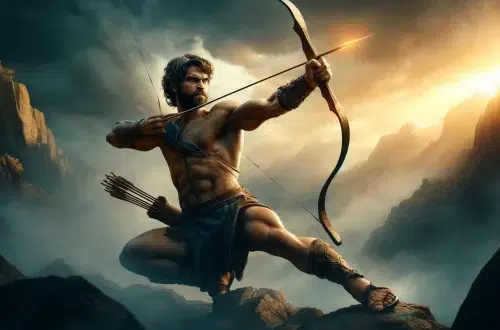
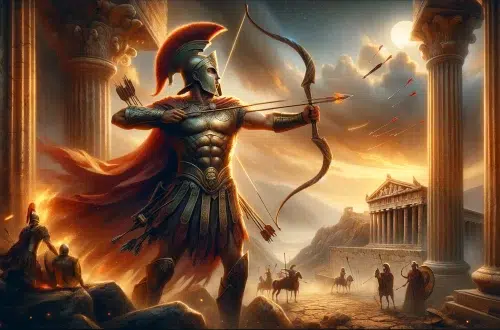
  • Philoctetes, a rugged Greek warrior in his 30s, demonstrating his exceptional archery skills. He is standing on a rocky terrain, wielding the legendary bow and arrows given to him by Heracles. Philoctetes is captured in mid-action, drawing the bow with great focus and precision, aiming at an unseen target. His muscular build and intense expression highlight his skill and determination.
    Greek Mythology

    Philoctetes: Legendary Greek Archer & Healer

    May 27, 2024 /
  • Achilles, the legendary hero of Greek mythology, depicted as exceptionally handsome. The image features Achilles standing on a rocky terrain with a heroic pose, overlooking a battlefield. He has striking features, with chiseled facial structure, short curly hair, and piercing eyes. He wears ornate Greek armor that shines brilliantly in the sunlight, holding a spear and a shield. The background includes a dramatic sky and distant mountains, emphasizing his noble and commanding presence in a breathtaking landscape.
    Greek Mythology

    Achilles: Greek Warrior Hero’s Journey

    May 25, 2024 /
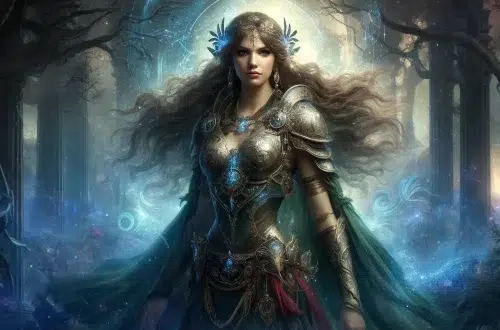
  • Penthesilea, the legendary Amazon Queen from Greek mythology, is depicted with a mystical aura. She stands tall, draped in an armor that blends traditional Greek elements with fantastical details, such as glowing runes and ethereal motifs. Her hair flows majestically, enhanced by subtle magical glimmers. Her expression is both regal and fierce, embodying her reputation for courage and strength
    Greek Mythology

    Penthesilea: Amazon Queen Who Died in Trojan War

    May 24, 2024 /
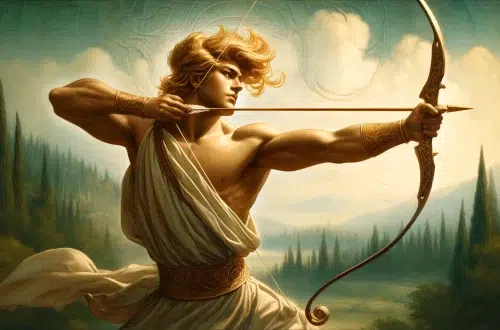
  • A majestic portrayal of Apollo, the Greek god of archery, in a dynamic pose. Apollo is depicted as a powerful and graceful figure, with golden hair and wearing traditional Greek attire.
    Greek Mythology

    Apollo Greek God of Archery and Prophecy

    May 23, 2024 /
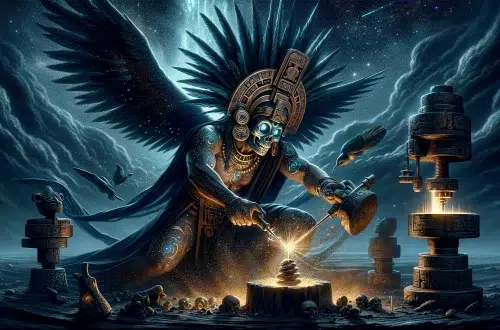
  • transformation of Mixcoatl into Tezcatlipoca, the Aztec god of obsidian and the night sky. The scene captures Mixcoatl, adorned in the dark, reflective attire symbolizing obsidian, as he undergoes a mystical transformation. He is shown inventing the fire drill, an ancient tool, and presenting it to humanity, symbolizing his role as a benefactor. The background is a dramatic night sky, enhancing the theme of obsidian and celestial power, emphasizing Mixcoatl's connection to Tezcatlipoca and his gift to the people.
    Indigenous Mythology

    Mixcoatl: Aztec God of Hunting and Celestial Realm

    May 22, 2024 /
  • Jumong, a legendary Korean hero, is a noble warrior in traditional Korean armor, which is intricately detailed and decorated with symbols of dragons and tigers. Jumong wields a bow, poised to shoot an arrow. The background features an ancient Korean landscape with rolling hills and a few traditional Korean houses, under a sky painted with the hues of twilight.
    History,  Korean Mythology

    Jumong: Archer King and Founder of Goguryeo

    May 21, 2024 /
  • Sagittarius, depicted as the Archer, set against a cosmic backdrop with the planet Jupiter captures the themes of an unquenchable thirst for knowledge and a profound need for exploration, emphasizing Sagittarius's essence of adventure and discovery
    Greek Mythology

    Sagittarius the Archer Who Aims Beyond the Horizon

    May 19, 2024 /
  • Indigenous Mythology

    Kanati the Archer: Cherokee Tales of the Wind

    May 12, 2024 /
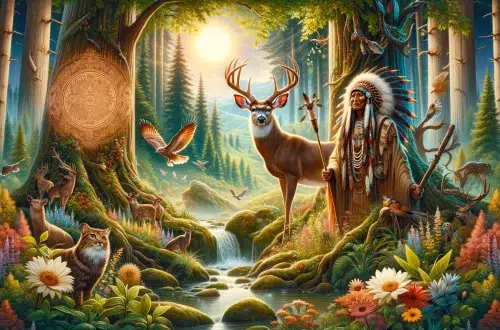
  • The Legend of Awi Usdi: Understanding Cherokee Tales of the Little Deer Here's an overview: Introduction to Cherokee Mythology and the Significance of Awi Usdi An Ethnographic Look at Awi Usdi: Understanding the Little Deer Interpreting the Lessons of Awi Usdi: Environment and Ethics Awi Usdi in Cherokee Storytelling: The Role of Animals in Traditions Investigating the Symbolism: Awi Usdi as a Figure of Justice Comparing Cross-Cultural Animal Legends: Awi Usdi's Universal Themes Preservation of Cherokee Tales: The Importance of Oral Histories and Myths Introduction to Cherokee Mythology and the Significance of Awi Usdi Cherokee mythology is a vibrant tapestry of stories, beliefs, and traditions that define the cultural and spiritual framework of the Cherokee people. These narratives often serve as moral compasses, guiding individuals through the complexities of life and nature. A central figure in Cherokee lore is Awi Usdi, or the Little Deer. Through tales of Awi Usdi, the Cherokee convey profound respect for the animal kingdom, emphasizing the sacred bond between humans and nature. Lessons of harmony, balance, and ethical hunting practices are intrinsic to these legends, as they articulate deep ecological wisdom and a call for conscientious living. An Ethnographic Look at Awi Usdi: Understanding the Little Deer Ethnographic research reveals Awi Usdi, or Little Deer in Cherokee folklore, as a spiritual guardian of the wild. This deer spirit teaches respect for life through a lore that interweaves morality with nature's laws. Awi Usdi appears to hunters who lack reverence for their prey, reminding them of the importance of prayer and thanksgiving. The Cherokee perceive this interaction as a covenant, upholding a harmonious relationship between humankind and the animal kingdom. Rituals and stories about Awi Usdi offer insight into this crucial ecological balance, reflecting the tribe's deep environmental wisdom and ethical hunting traditions. Interpreting the Lessons of Awi Usdi: Environment and Ethics The Cherokee tale of Awi Usdi, the Little Deer, conveys deep environmental and ethical teachings. Key lessons include: Respect for Nature: Indigenous wisdom highlights living in harmony with the earth, acknowledging that every being has a role and purpose. Karmic Consequences: The story illustrates that actions against nature have ramifications, suggesting a moral obligation to take only what is needed. Stewardship: It underscores human responsibility to protect wildlife, embodying the concept of caretaking for future generations. Interconnectedness: Awi Usdi's narrative fosters understanding of the interconnected web of life, where animals, plants, and humans are intrinsically linked. Ethical Hunting Practices: The legend upholds ethical hunting principles, where hunters are reminded to pray and ask for forgiveness, highlighting a tradition of reverence. Through these perspectives, Awi Usdi's legend offers a timeless ecological ethic, teaching respect and sustainable practices for the natural world. Awi Usdi in Cherokee Storytelling: The Role of Animals in Traditions Within Cherokee storytelling, animals are not mere characters but symbols and teachers. Awi Usdi, the Little Deer, is a prime illustration. This creature represents respect and coexistence within nature. Through Awi Usdi's tales, the Cherokee convey crucial lessons: Respect for Life: Animals remind humans of the sanctity of life, with Awi Usdi often teaching hunters to honor the creatures they hunt. Cycles of Nature: Awi Usdi underscores the importance of understanding and participating in nature's cycles, not disrupting them. Moral Guidance: Stories of animals like Awi Usdi serve as parables for ethical conduct and community values. In these narratives, animals impart wisdom essential for maintaining balance in the world. Awi Usdi's role in these tales weaves a deeper connection between the Cherokee people and the animal kingdom, highlighting that every creature has a vital role in the tapestry of life. Investigating the Symbolism: Awi Usdi as a Figure of Justice In Cherokee narratives, Awi Usdi, the Little Deer, is emblematic of justice and harmony within nature. This mystical deer is not merely an animal but a guardian spirit ensuring ethical hunting practices. When a Cherokee hunter sought game: They must ask for permission from the spirits. Awi Usdi, as a representative, would offer an animal for sustenance. If the hunter wasted or disrespected the gift, Awi Usdi would avenge the spirit of the hunted. Thus, Awi Usdi is the balancer of the ecosystem, ensuring that respect and responsibility underscore every interaction within the forest. His presence reinforces the critical principle that one must only take what is needed and always with gratitude. This ethos of fairness is central to understanding the role of Awi Usdi in the Cherokee cosmology, serving as a foundational symbol of the community’s justice system and its interconnection with nature. Comparing Cross-Cultural Animal Legends: Awi Usdi's Universal Themes Cultural myths often share common themes despite geographical distances. The Cherokee legend of Awi Usdi, the Little Deer, reverberates with tales from different cultures. It accentuates a respect for nature, a common trope in animal folklore worldwide. For instance: In African myths, stories of Anansi, the spider, underline the wisdom and trickery found in nature. Native American Coyote legends also emphasize balance and respect between humans and the animal kingdom. Similarly, Asian dragon lore often represents power and natural forces, demanding respect and understanding. Each narrative, while distinct in characters and settings, converges on the reverence for life and the consequences of human actions on nature. Preservation of Cherokee Tales: The Importance of Oral Histories and Myths Cherokee oral histories and myths carry the essence of tribal culture, morality, and ancient wisdom, crucial for preserving identity. Oral traditions, like Awi Usdi's tale, serve as vital educational tools, instilling values and history in younger generations. They encapsulate the collective memory of the Cherokee people, binding them to their ancestral lineage and offering insights into their relationships with nature and each other. Such myths also enhance cultural continuity, ensuring that the richness of Cherokee heritage endures amidst the challenges of modernity.
    History,  Mythology

    Cherokee Legend of Awi Usdi: Little Deer

    May 7, 2024 /
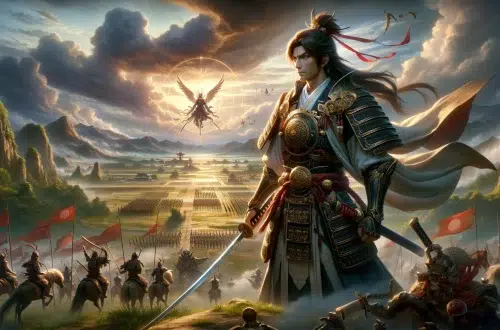
  • the essence of Yamato Takeru, celebrated for his courage and strategic brilliance. This scene places him on a grand battlefield, highlighting his leadership and tactical genius
    Japanese Mythology

    Yamato Takeru: Japan’s Legendary Folk Hero

    March 31, 2024 /
  • Atalanta, the legendary Greek heroine, in action. This scene showcases her as a formidable and independent figure, emphasizing her significance in Greek mythology and her role as a symbol of female empowerment and prowess
    Greek Mythology,  Mythology

    Atalanta: Fabled Archer to Legendary Heroine

    March 29, 2024 /
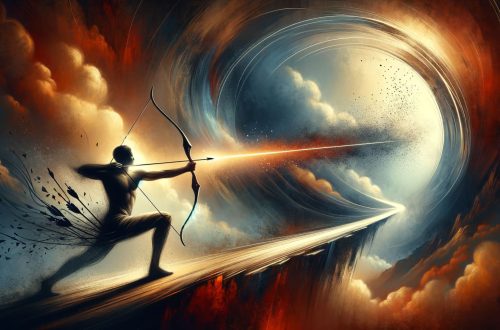
  • The Bow and Arrow symbolism, depicting the metaphorical journey of overcoming personal challenges and achieving victory, designed to evoke a sense of empowerment and resilience
    Mythology

    Bow and Arrow Symbolism in Mythology

    March 29, 2024 /
  • Hector, the legendary Trojan Prince, portrays Hector in a moment that reflects his nobility, bravery, and significant role in the Trojan War, set against a backdrop that merges ancient Troy
    Greek Mythology

    Hector of Troy: Legendary Trojan Warrior

    March 27, 2024 /
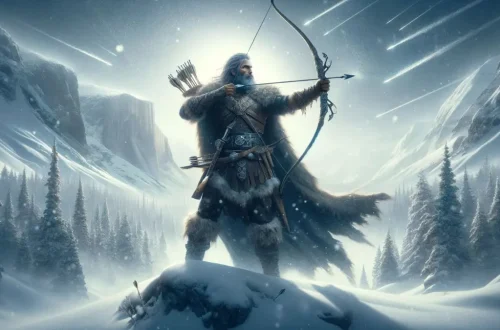
  • Ullr, the Norse God of Archery and Winter, highlighting his majestic presence in a wintry landscape, embodying the essence of Nordic mythology
    Norse Mythology

    Ullr: The Norse God of Archery and Winter

    March 26, 2024 /
7891011
LATEST POSTS
  • global mythology scene featuring figures from many cultures, Greek warrior, Norse giant in mountains, Egyptian goddess with golden headdress, Chinese archer aiming at the sun, Celtic druid near stone circle, Native American spirit figure beside glowing buffalo, mystical sky filled with stars and ancient symbols, cinematic lighting, dramatic atmosphere50 Unique Myths from Around the World Across Mythologies
    Mythology
  • Japanese gods Izanagi and IzanamiIzanagi and Izanami: The Divine Creators of Japan
    Japanese Mythology
  • three images of Greek women who had children with ZeusThe Wives of Zeus: Children, Myths, and Power
    Greek Mythology
  • Pallas, Titan of warcraft, discipline, and strength, towering figure in ancient Greek armor, muscular build, stern and commanding expression, holding a long spear and shield, wearing a bronze breastplate with intricate engravings, windswept battlefield in the background, stormy skiesTitan Pallas: Warcraft in Greek Mythology
    Greek Mythology
  • Close-up portrait of Sayyida al-Hurra, the feared pirate queen of Morocco, standing on the deck of a ship at sea. She wears a dark embroidered cloak with gold trim, a jewelled headscarf, and piercing eyes that scan the horizon.Western Asian Women Warriors: Brave Leaders in Battle
    Warrior Women
  • Celtic goddess with flowing dark brown hair standing deep within an ancient forest, with a stag stands nearbyAbnoba: Celtic Goddess of Forests and Rivers
    Celtic Mythology
2026 Avid Archer ©
  • Mythology
  • Greek Mythology
  • History
  • Gaming & Pop Culture
  • Archery