Cailleach: Ancient Celtic Goddess of Winter
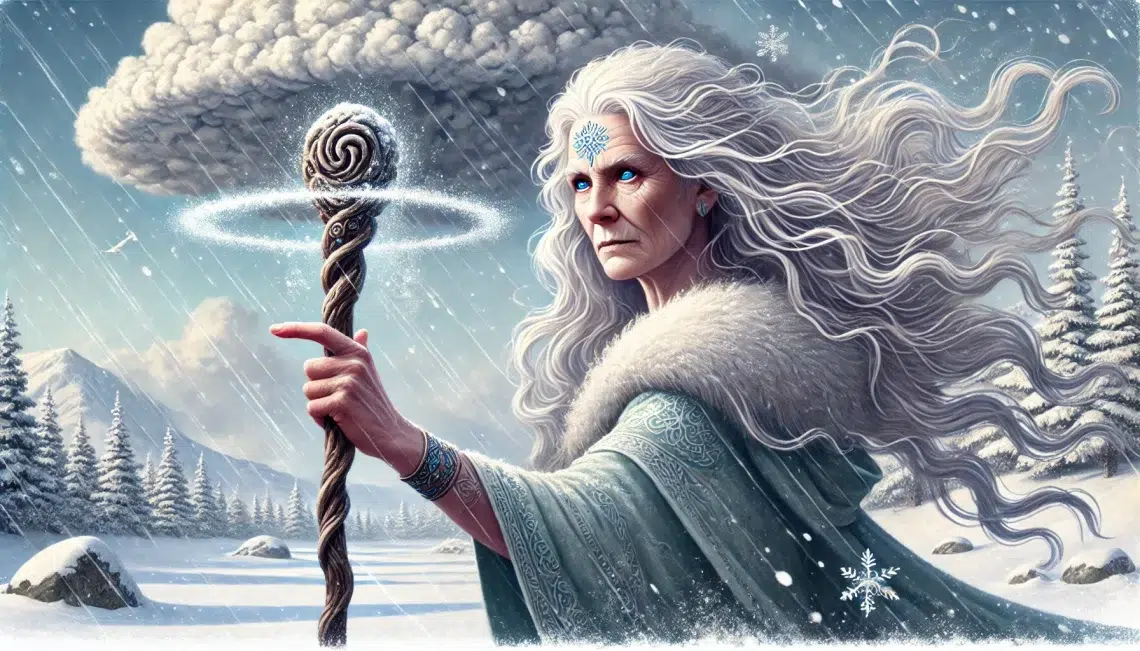
In contemporary folklore and mythology, the Cailleach represents winter, storms, and the natural landscape. People often depict her as a veiled old woman or crone, symbolizing winter’s harsh and barren aspects. In Irish folklore, she goes by Cailleach Bhéara or the Hag of Beara. In Scotland, she is known as Beira, Queen of Winter.
Cailleach in Modern Irish and Scottish Gaelic
The Cailleach serves as both a mythological figure and a cultural symbol. Her presence in place names and local legends across Ireland, Scotland, and the Isle of Man underscores her importance in the Celtic worldview.
For example, in Ireland, the southernmost tip of the Cliffs of Moher is known as Hag’s Head (Ceann Caillí), directly referencing the Cailleach.
The Cailleach embodies the natural cycles of the seasons, the transformative power of nature, and the wisdom of age. Her roots in language and her presence in Gaelic cultures highlight her significance as a mythological and cultural icon.
Definition of Cailleach
The term “Cailleach” comes from Gaelic languages, including Old Irish, Scottish Gaelic, and Manx Gaelic. It means “old woman” or “hag” and suggests age, wisdom, and sometimes malevolence.
The word comes from Old Irish “caillech,” which means “veiled one” or “hooded woman.” This term itself comes from “caille,” meaning “veil,” which is an early loan from the Latin “pallium,” meaning “woollen cloak” or “veil.”
In modern Irish and Scottish Gaelic, “Cailleach” keeps its meaning and describes an old women, nuns (“cailleach-dhubh”), and even owls (“cailleach-oidhche”). The plural forms are “cailleacha” in Irish, “cailleachan” in Scottish Gaelic, and “caillaghyn” in Manx.
Physical Appearance of Cailleach
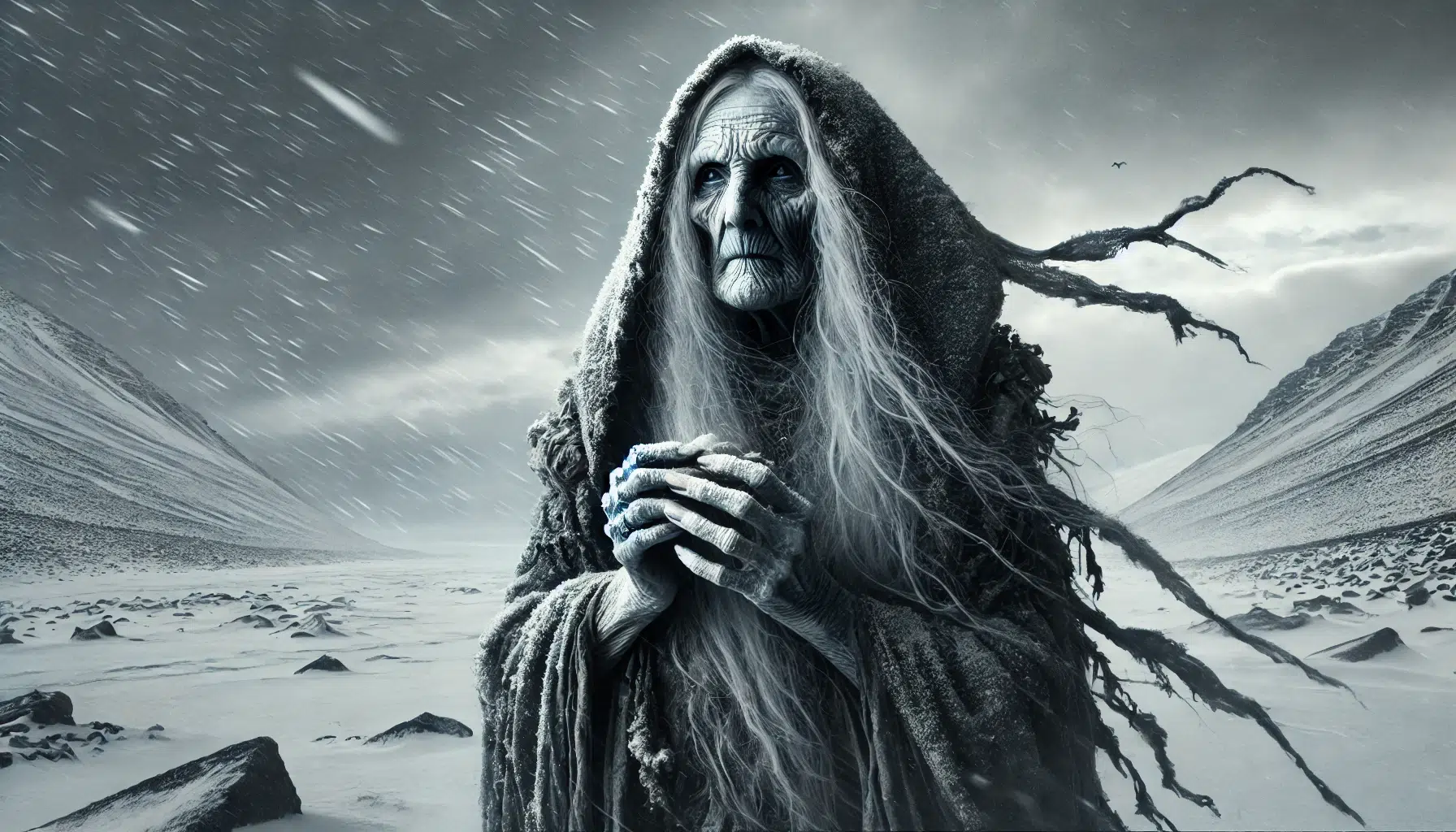
The Cailleach features distinctive and fearsome traits that emphasize her connection to nature and her role as an ancient figure.
- veiled old one-eyed woman
- pale or blue skin
- wears ragged or ancient clothing, often described as a long, tattered cloak
People often portray the Cailleach as a veiled old woman, aligning with the etymology of her name. The veil symbolizes her connection to the mysterious and unseen, and her role as a guardian of ancient wisdom. It can also represent the shroud of winter, covering the land in cold and darkness.
In many depictions, the Cailleach has only one eye, underscoring her otherworldly nature and role as a seer or prophetess. This single eye symbolizes her insight and ability to see beyond the physical world into the spiritual or mystical realms.
Descriptions often include her having deathly pale or blue skin, tying her to the cold, harsh aspects of winter and natural elements. The blue skin evokes the chill of frost and ice, reinforcing her dominion over winter weather.
The Cailleach typically wears ragged or ancient clothing, often described as a long, tattered cloak. This attire reflects her age and connection to the earth and elements. Her clothing may also include natural elements like leaves, stones, or animal skins, emphasizing her role as a nature deity.
Family of the Cailleach
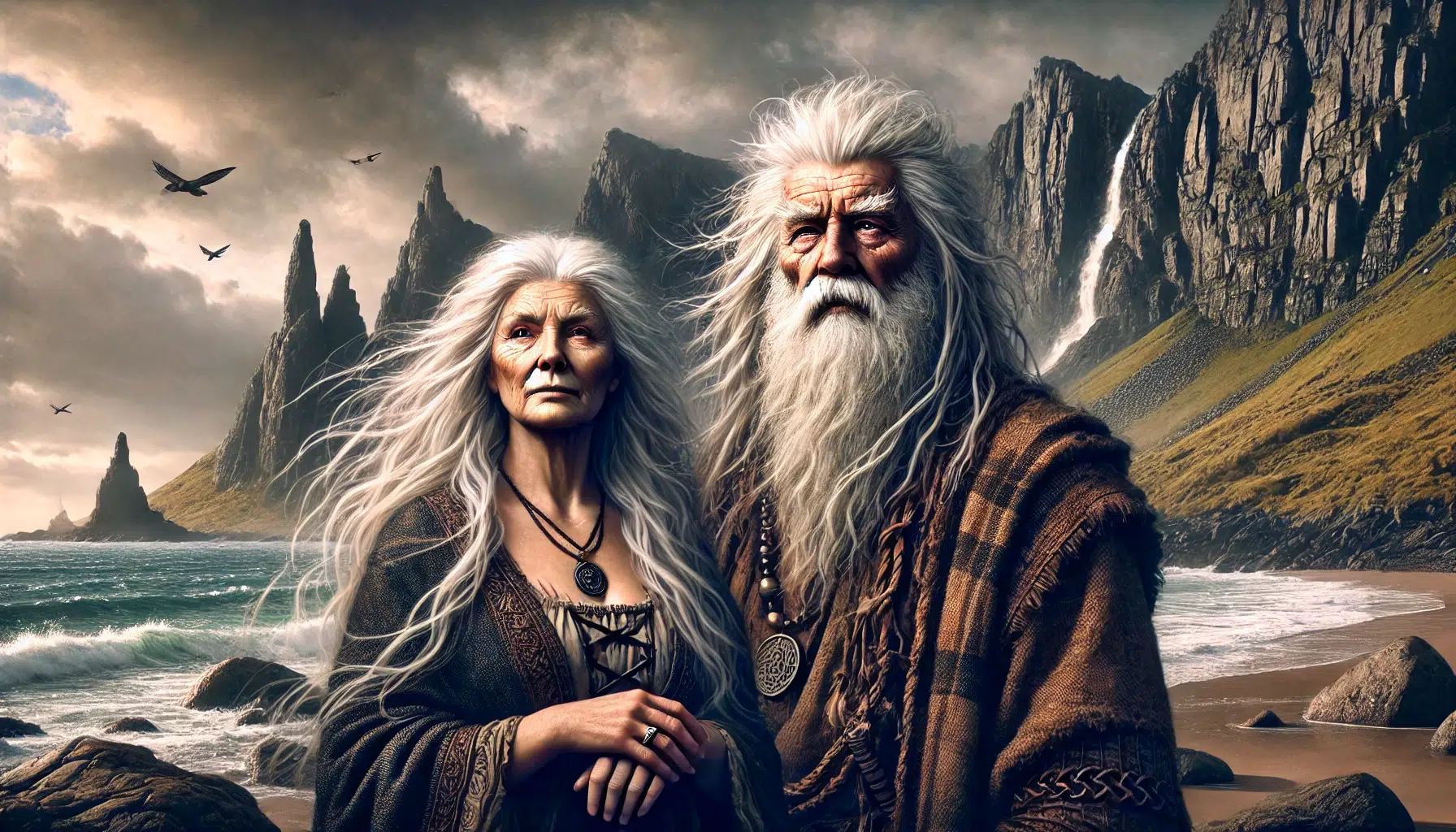
The Cailleach is sometimes depicted as having a family, though these depictions can vary widely:
In some Scottish traditions, the Cailleach is said to have a husband and children. For example, at the Tigh nan Cailleach (House of the Old Woman) in Glen Cailleach, Scotland, there are stones representing the Cailleach, her husband, and their children. These stones are moved in and out of a shrine at specific times of the year as part of local rituals.
The legend suggests that the Cailleach and her family bring fertility to the land as long as they are cared for.
In other stories, the Cailleach is married to a figure known as Bodach, which means “old man” in Gaelic. Bodach is often depicted as a counterpart to the Cailleach, sharing in her dominion over the landscape and the natural world.
Overall, the Cailleach’s family connections, whether through her husband Bodach or her children, emphasize her role as a creator and nurturer, as well as her deep ties to the land and its fertility. These familial aspects add another layer to her complex character, blending themes of creation, protection, and the cyclical nature of life and death.
Cailleach and Symbolism
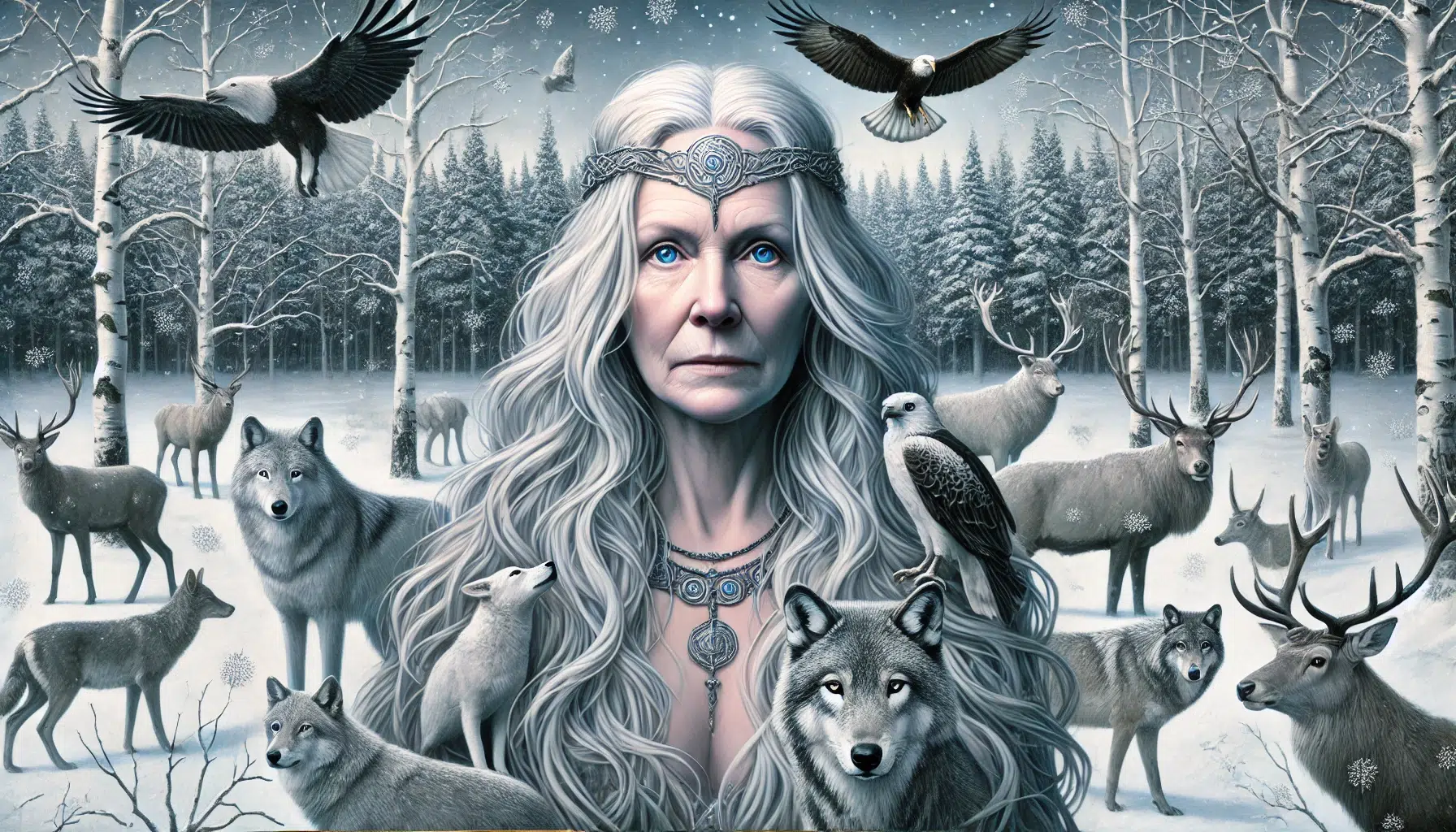
The Cailleach is rich in symbolic meaning, representing various natural and elemental forces.
Winter, Storms, and Wilderness
The Cailleach connects strongly with winter and its harsh, barren landscapes. She often brings storms and cold weather, wielding her power to shape the land with ice and snow. Her connection to the wilderness highlights her role as a guardian of untamed nature, embodying wild, unpredictable, and often destructive natural forces.
Hammer and Staff
The Cailleach’s hammer is a common symbol she uses to shape the landscape. Myths say she uses it to create mountains, valleys, and other geological features. The hammer symbolizes her power to mould and transform the earth.
The Cailleach frequently carries a staff, which she uses to control the weather. In some stories, she strikes the ground with it to summon storms or freeze the land. The staff represents her authority over the elements and her ability to command nature’s forces.
Animals
The Cailleach often associates with animals that thrive in winter conditions. For example, she sometimes appears with wolves, deer, or birds of prey, symbolizing her role as a protector of wildlife during harsh winter months.
In summary, the Cailleach’s physical appearance and symbolism are deeply intertwined with her role as a powerful, ancient figure connected to the natural world. Her attributes emphasize her dominion over winter and the wilderness and her ability to shape and transform the landscape with her formidable powers.
Regional Variations of Cailleach
The Cailleach appears prominently in the folklore and mythology of several Celtic regions, particularly Ireland, Scotland, and the Isle of Man. Her influence spans these areas, where people revere her as a powerful deity associated with the natural landscape and seasonal cycles.
Ireland: Cailleach Bhéara
In Ireland, people often refer to the Cailleach as the Cailleach Bhéara or the Hag of Beara. She plays a central role in Irish mythology, shaping the land and controlling the weather. Her legends weave deeply into the cultural fabric of various Irish communities, especially in the southwest region.
The Beara Peninsula, located in County Cork, Ireland, stands as one of the most famous locations associated with the Cailleach. The peninsula takes its name from her, with numerous legends telling of her exploits in this region.
One notable site is the Hag of Beara statue, a stone figure representing the Cailleach. According to legend, she transformed into stone while waiting for her husband, the sea god Manannán mac Lir, to return.
The Cailleach Bhéara appears as a wise and ancient figure who has lived through countless cycles of time, witnessing the rise and fall of many generations.
Scotland: Beira, Queen of Winter
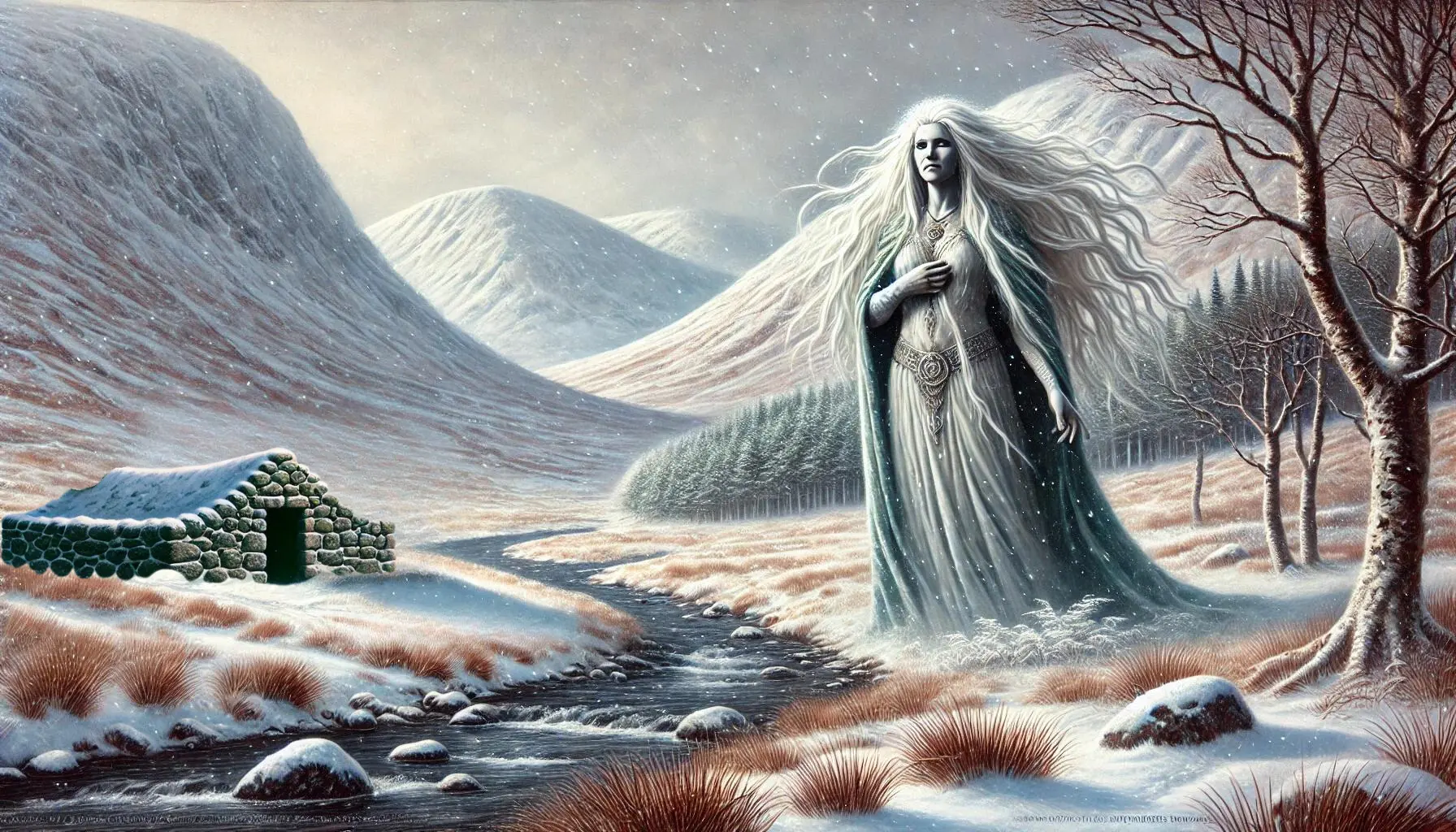
In Scottish folklore, the Cailleach is sometimes known as Beira, Queen of Winter. She holds significance in Scottish mythology, linked to creating many natural landmarks. Her stories prevail throughout the Highlands and other rural areas, where she guards the wild and brings winter.
- Cailleach’s Chair
- This rock formation in Scotland is believed to be a seat used by the Cailleach as she surveyed her domain. The chair links to stories of her resting after tirelessly shaping the landscape.
- Glen Cailleach (Scottish Highlands)
- Glen Cailleach is a glen named after the Cailleach. It holds significant cultural heritage, with local legends describing it as her dwelling place. The glen also has a small bothy (a simple shelter) known as the Tigh nam Bodach, has links to ancient rituals honouring the Cailleach and her family.
- Ben Cruachan
- Another significant location is Ben Cruachan, a mountain in Argyll and Bute, Scotland. According to legend, the Cailleach created the mountain and its surrounding landscape. She supposedly resides in a bothy on the mountain during the winter months.
Beira, Queen of Winter is depicted as a giantess, wielding a hammer to create mountains and valleys. Known for her fierce temper, she controls the weather, bringing storms and snow. Her legends are particularly prevalent in the Scottish Highlands, where she resides during winter.
Isle of Man: Caillagh ny Groamagh
On the Isle of Man, the Cailleach is known as Caillagh ny Groamagh, meaning “Old Woman of Gloom.” She features in local legend, associated with the island’s rugged landscape and harsh weather. Her influence appears in the island’s folklore and place names.
Local legends describe her roaming the hills and valleys, bringing gloom and cold to the land. She links to various natural landmarks on the island, shaped by her actions.
Mythological Roles and Legends of Cailleach
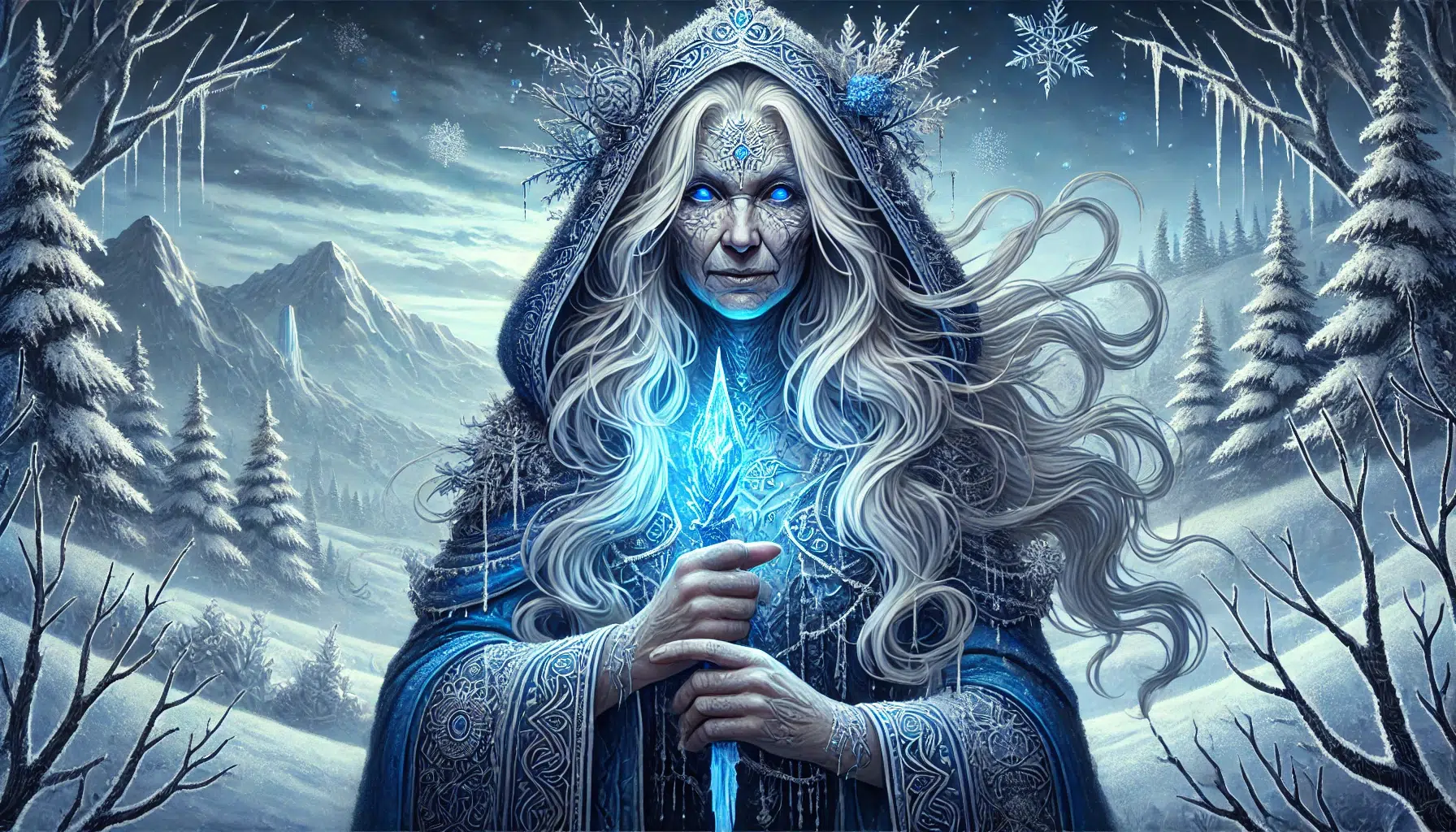
Creator of Landscapes & Mountains
The Cailleach, renowned in Celtic mythology, stands as a formidable creator of landscapes. Her role as a shaper of the natural world remains central to many legends across Ireland and Scotland.
The Cailleach creates various geographical features with her immense power. In Scottish folklore, she forms mountains and hills by dropping large stones from her apron or striking the ground with her hammer or staff.
For instance, she supposedly created Ben Nevis, the highest mountain in the British Isles, by accidentally dropping a massive boulder. In Ireland, legends associate the Beara Peninsula with her, where she shapes the rugged terrain through divine actions.
Weather and Control Over Winter
The Cailleach holds significant sway over the weather and changing seasons, particularly winter.
As the personification of winter, the Cailleach controls the onset and severity of the season. She wields a magical staff to freeze the ground and summon storms. In Scottish mythology, she appears on Samhain (October 31st), marking winter’s beginning by striking the ground with her staff, causing it to freeze. Her power over the weather also includes the fierce winds and storms of spring, known as the Storm Hags.
Learn more about:
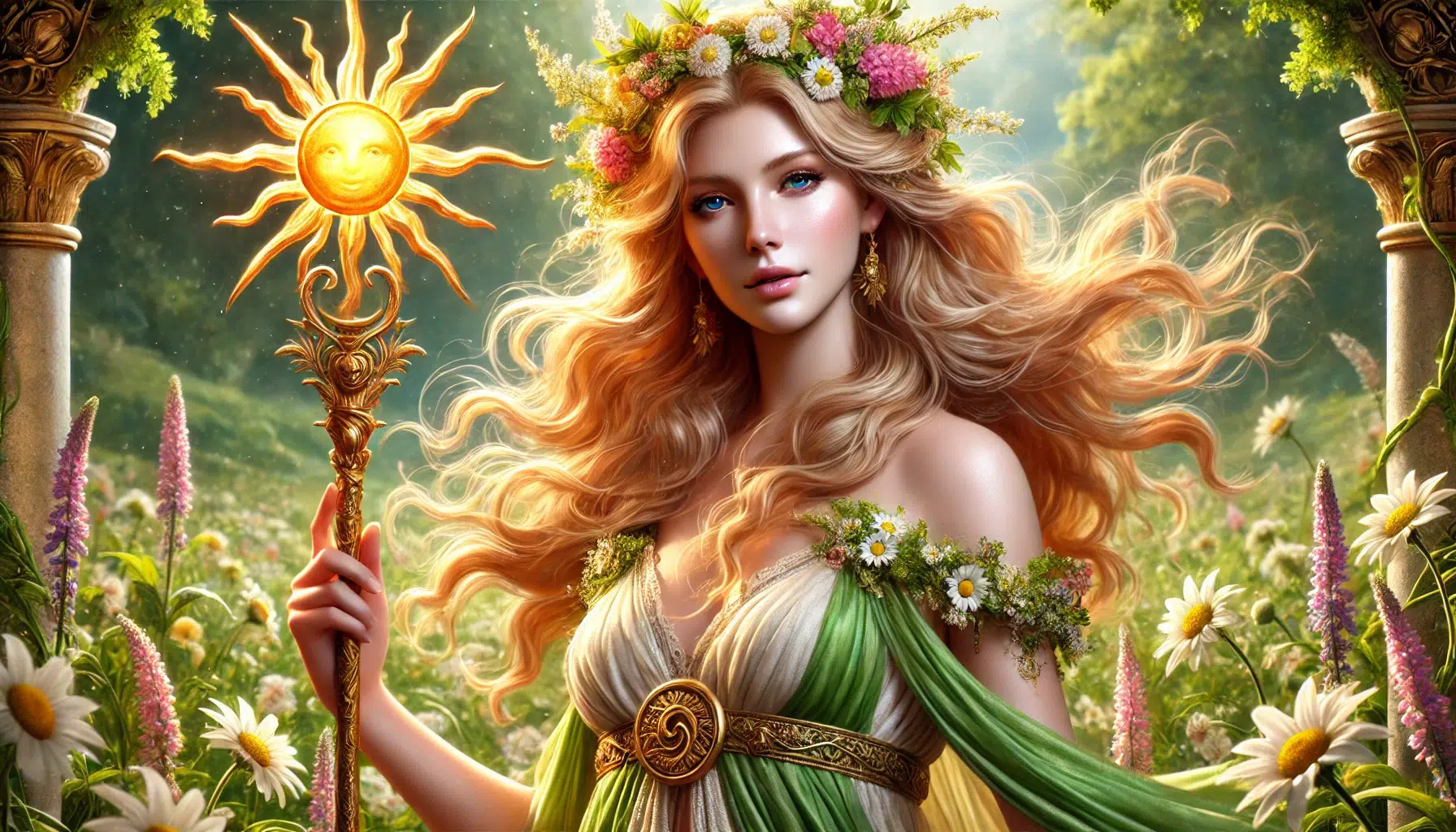
The Cailleach’s influence wanes with spring’s arrival, often symbolized by the goddess Brigid. In some traditions, the Cailleach transforms into a young woman by drinking from the Well of Youth, signalling the end of winter and the beginning of spring. This transformation occurs on Bealltainn (May 1st), marking summer’s arrival. In other versions, the Cailleach and Brigid are distinct entities, with the Cailleach relinquishing her power and turning to stone until the next winter, while Brigid ushers in the warmer months.
Protector of Animals
The Cailleach also serves as a guardian of animals, particularly during harsh winter months.
The Cailleach closely associates with wildlife, especially animals emblematic of winter. She often herds deer, protecting them throughout winter. In Irish myths, she links to wolves and sometimes takes the form of a wolf herself. Her role as a protector extends to wild and domestic animals, ensuring their survival during cold months when resources are scarce.
Learn more about:
Cailleach: Legends and Myths
The Cailleach features in numerous myths and stories across Celtic cultures. These tales often highlight her formidable powers, her wisdom, and her integral role in the natural world.
The Legend of the Cailleach Bhéara
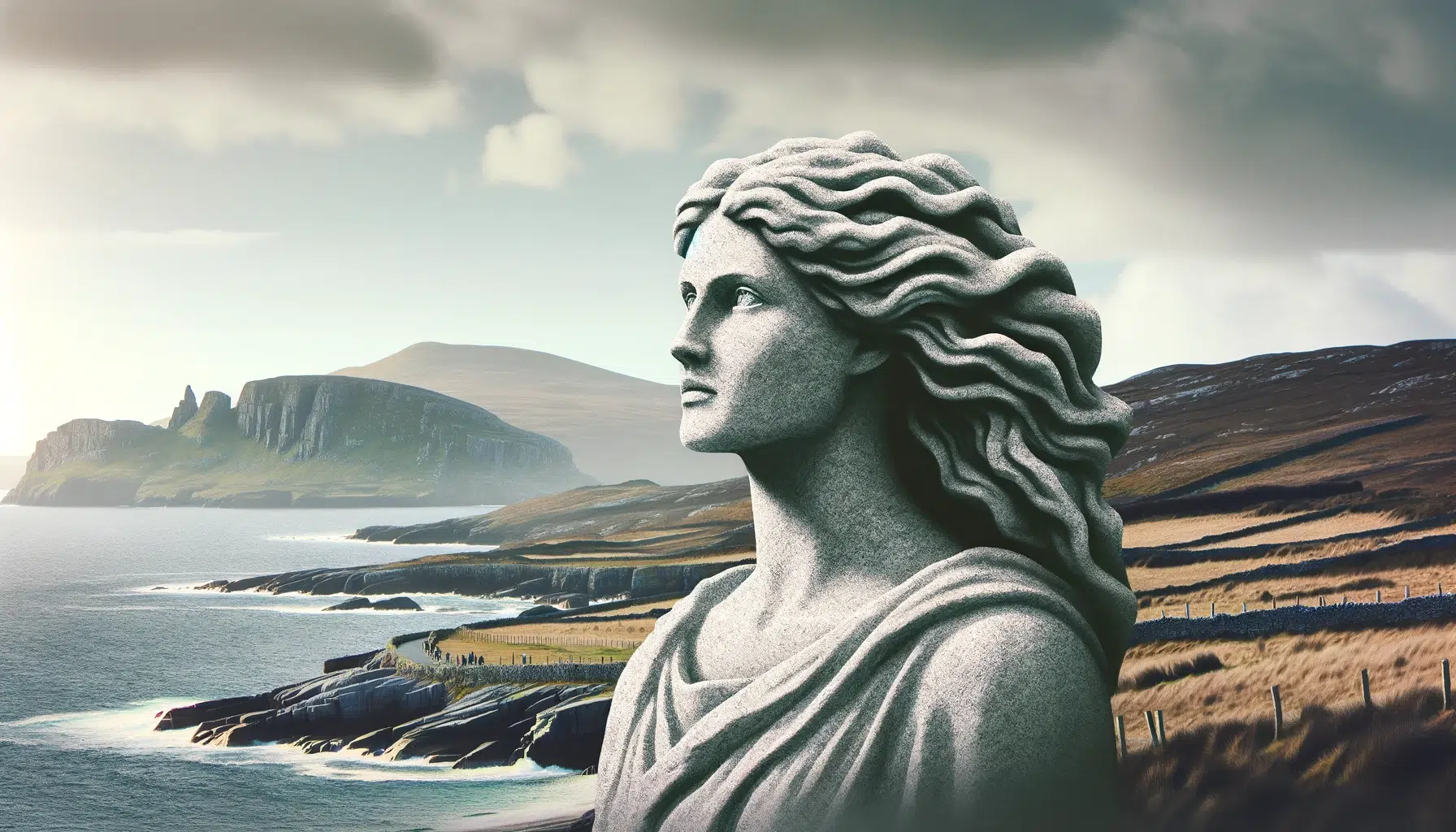
According to legend, the Cailleach Bhéara transformed into stone while waiting for her husband, the sea god Manannán mac Lir, to return. She stood on the Beara Peninsula, gazing at the sea every day, hoping to see his ship.
The Cailleach Bhéara, an ancient goddess of the land and weather, loved Manannán deeply. She waited for him through countless seasons, her hope unwavering. She believed he would come back to her, no matter how long it took.
As years passed, her patience grew legendary among the local people. They saw her as a symbol of eternal love and faithfulness. However, as her waiting stretched on, her body began to change. Her skin turned to stone, and her hair became like moss. She stood rooted to the spot, becoming part of the landscape she loved.
Eventually, her transformation completed. The Cailleach Bhéara became a stone statue, forever facing the sea. The people of Beara honoured her memory, telling her story to remind them of love’s enduring power.
Even today, the stone figure of the Cailleach Bhéara stands on the Beara Peninsula. Visitors come to see her, feeling the weight of her unwavering love and patience. The legend of the Cailleach Bhéara teaches us about devotion, hope, and the timeless nature of love. Her story remains a powerful reminder of the deep connections that bind us to each other and to the land.
The Tale of the Wandering Friar and the Ox Bones
Encounter with Fintan the Wise
The Story of the Huntsmen and the Stag
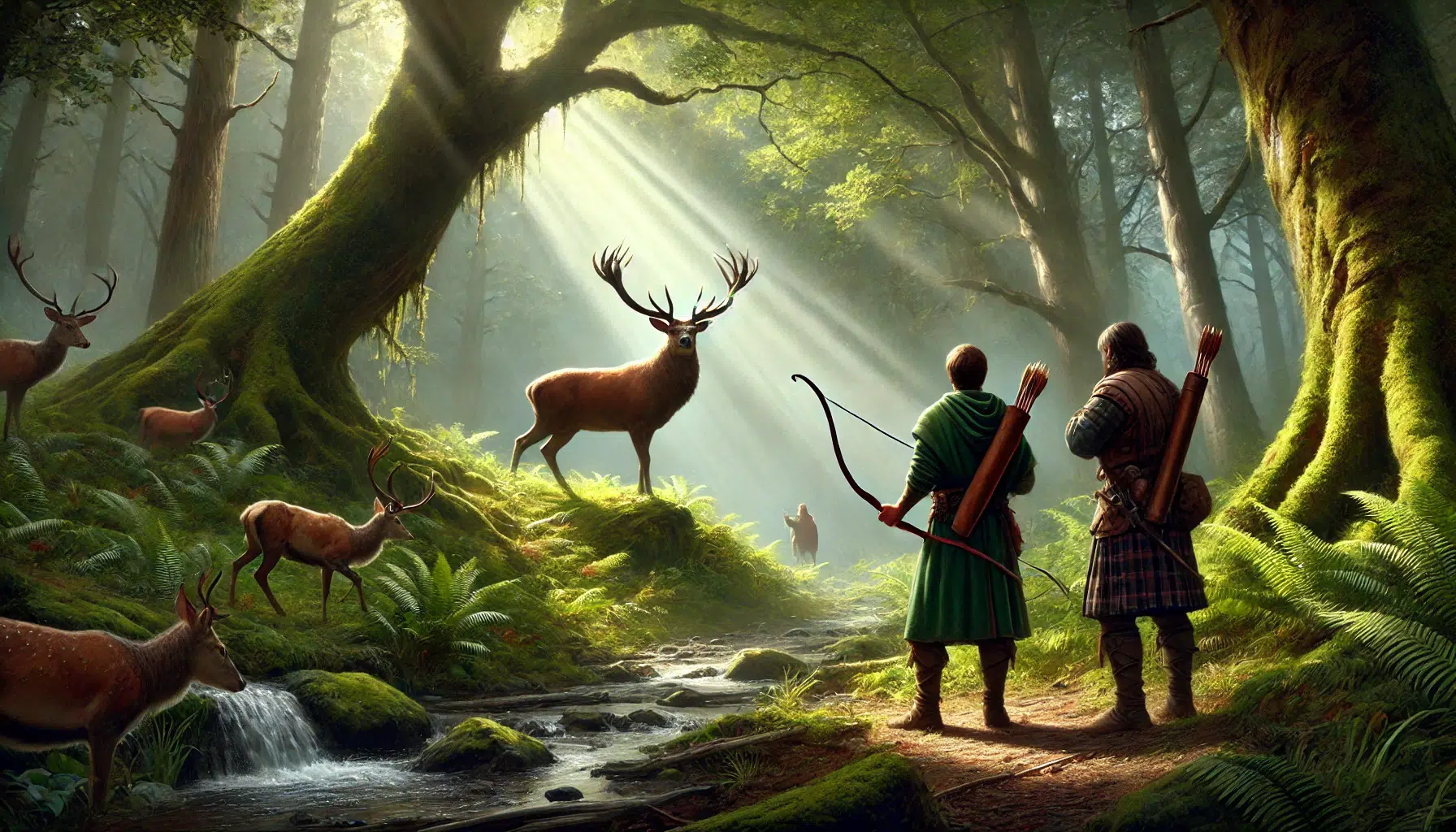
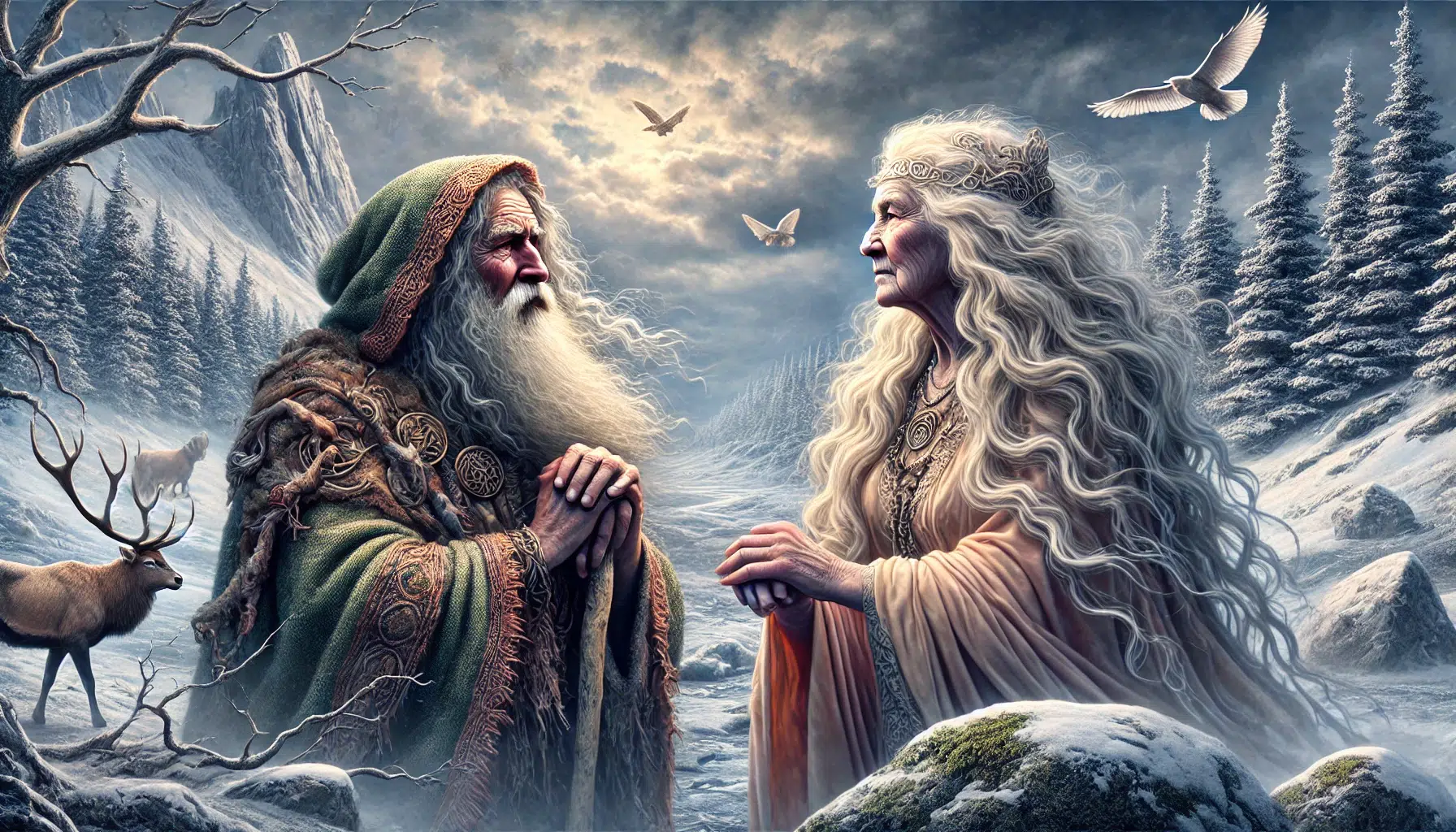
In Scottish folklore, people revere the Cailleach as a powerful guardian of wildlife, particularly deer. One popular tale shows her protective nature and shape-shifting abilities.
A group of huntsmen sets out to capture a magnificent stag. This prized quarry would provide much-needed sustenance during the harsh winter months. As they track the stag through the rugged landscape, they meet an old crone who offers guidance.
The crone, unknown to the huntsmen, is the Cailleach in disguise. She directs them to a prime hunting ground, where they successfully kill an immense stag.
Exhausted but triumphant, they drag the stag back to their cottage, eager to present their catch to their father. However, upon reaching home, they find the stag has mysteriously vanished, leaving only an empty rope behind.
The old man scolds the huntsmen for failing to bless the meat as the Cailleach instructed. This oversight allowed the fairies to reclaim the stag.
In truth, the Cailleach transformed into the stag to lead the hunters astray, showing her ability to shape-shift and protect the animals under her care.
This story highlights her role as a guardian of wildlife and her power to deceive and outwit those who threaten the natural order. The Cailleach ensures the balance between humans and nature is maintained.
Learn more about Celtic Mythology:
- Morrigan: Celtic Goddess of War, Fate and Death
- Scáthach: Mystic Warrior Goddess of Celtic Lore
- Celtic Mythology Gods & Legends in Archery
- Cu Chulainn: Tale of Ireland’s Greatest Hero
Conclusion
The Cailleach, a powerful and multifaceted figure, deeply influences Celtic mythology and culture. As a creator of landscapes, she shapes mountains, hills, and valleys.
She also controls the weather governing winter and the transition to spring. As a protector of animals, she safeguards wildlife during harsh winters. Known by various names across Ireland, Scotland, and the Isle of Man, her legends highlight her adaptability and deep connection to nature.
Despite regional differences, the Cailleach consistently embodies power over nature, wisdom, and guardianship of the natural world. Her enduring presence underscores her significance as a symbol of natural cycles and transformative power in Celtic tradition.