
Brigid: Celtic Goddess of Fire, Healing, and Poetry
What if the same goddess ruled the forge, the healing well, and the poet’s tongue?
In Celtic myth, that goddess is Brigid.
She is not just fire. She is the spark that shapes iron into weapons, the warmth that keeps a home alive, and the flame of inspiration that turns thought into verse. Warriors call on her strength. Healers seek her blessing. Poets credit her for the words that feel too powerful to be their own.
Brigid stands at the edge of winter and spring. She carries both destruction and renewal in her hands. Where she walks, frost begins to thaw.
She is not loud like thunder gods or fierce like war goddesses. Her power glows.
And in ancient Ireland, that glow changes everything.
Brigid of the Three Flames

Brigid belongs to the Tuatha Dé Danann, a group of ancient gods in Irish mythology.
She is the daughter of the Dagda, one of the most powerful gods. Her father is known as the “Good God” because he ruled over life, death, weather, and the land.
Brigid had two sisters, also named Brigid. Each represented a different gift:
- healing
- poetry
- smithcraft
Some stories say they were three separate sisters. Others say they were just different sides of one powerful goddess. This idea shows how many roles Brigid played.
Brigid is a triple goddess, a symbol of life in all its stages.
She cared for mothers, children, and crops. She inspired poets, healed the sick, and protected homes. Her deep connection to fire, water, and earth made her sacred in many ways.
Even after the rise of Christianity, Brigid stayed important. People didn’t forget her.
Instead, they honoured her as Saint Brigid, blending the old beliefs with new ones. Her story shows how the power of a goddess can last for centuries.
Sacred Symbols of Brigid
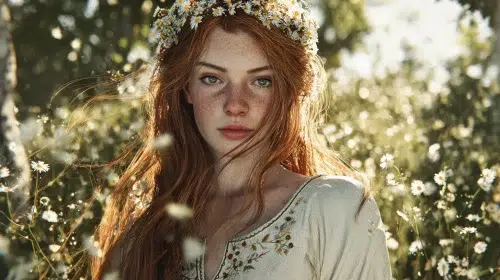
Brigid is deeply connected to fire and water. These two forces might seem opposite, but together they show her power to create, heal, and protect.
One of her most famous symbols is the eternal flame.
It was kept burning by priestesses in Kildare, Ireland. This flame stood for hope, warmth, and inspiration. Fire also links her to blacksmithing, poetry, and transformation.
Water is another important symbol.
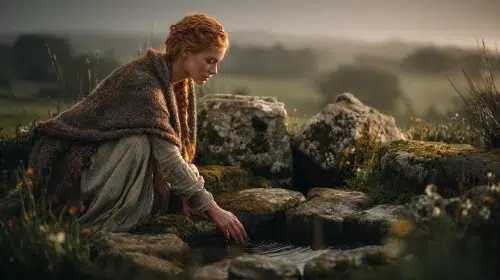
Sacred wells and springs were dedicated to Brigid. People believed these waters could heal the sick and bless the land. Even today, visitors leave offerings at these sites.
Brigid is often shown with a sheep or cow, which ties her to fertility, farming, and motherhood.
She was also a goddess of spring and renewal, and people celebrated her during the festival of Imbolc, marking the start of new life after winter.
Another strong symbol is the Brigid’s cross, made from rushes or straw. People placed it in their homes to keep away evil and bring blessings.
Brigid’s mix of fire and water, earth and sky, shows how balanced and powerful she is. Her symbols are still used today to honour healing, creativity, and protection.
Myth: The Birth of Brigid and Her Triple Nature
Brigid was said to be the daughter of Dagda, the great father god of the Tuatha Dé Danann, the powerful race of gods in Irish mythology. Her mother may have been a goddess or a human woman, depending on the version.
From the moment of her birth, Brigid stood out. She rose into the sky with flames on her head, a sign of her future power over fire and inspiration.
What makes Brigid truly unique is her triple aspect.
She is one goddess, but she represents three roles:
- the goddess of poetry and wisdom, of healing, and of the forge and craftsmanship
Some say this means she had three sisters, all named Brigid, while others believe she was one goddess with three powerful gifts. Either way, her triple nature made her one of the most honoured deities in the Celtic world.
In ancient times, bards, healers, and smiths all called on Brigid for help. Poets asked her to guide their words.
Blacksmiths believed she gave strength to their hands. And those who were sick or suffering prayed for her healing touch.
This myth shows how Brigid became a goddess who brought together art, skill, and compassion. She wasn’t just a single-force goddess. She touched every part of life and creativity.
Myth: The Sacred Flame of Kildare
Long after the myths of the Tuatha Dé Danann faded, Brigid’s influence remained.
She became so important that when Christianity spread in Ireland, her legend evolved into Saint Brigid, blending pagan and Christian beliefs.
One powerful story that connects both versions is the eternal flame of Kildare.
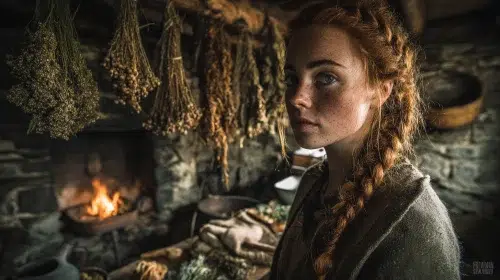
In ancient times, a group of women tended a sacred flame at Kildare (Cill Dara, meaning “church of the oak”), a place strongly tied to Brigid.
This fire symbolized life, warmth, and inspiration, all of which she ruled over.
The flame was said to burn continuously, never going out. Only women could care for it, and it protects with great respect.<
As Christianity spread, the flame remained.
It became part of Saint Brigid’s legacy, showing how deeply rooted her role was in Irish culture. The nuns of Kildare continued to keep the fire alive for centuries.
Even after it was extinguished during the Reformation, it was relit in the 20th century as a symbol of peace, renewal, and female strength.
This myth shows how Brigid’s light carried through generations. Her flame reminds people of the power of care, creativity, and divine inspiration, making her one of the few goddesses who remained truly beloved across time.
Myth: Brigid and the Festival of Imbolc
Brigid’s deep connection to the changing seasons comes alive during the festival of Imbolc, which marks the start of spring.
Celebrated around February 1st, this ancient festival honoured Brigid as a goddess of renewal, fertility, and hope.
In Irish tradition, Imbolc celebrated the return of light and life after the cold darkness of winter.
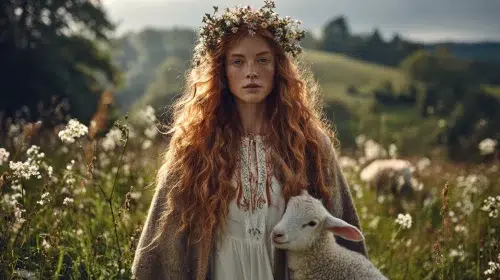
Farmers watched for signs of Brigid’s blessings. The first lambs, buds on trees, or snowdrops poking through the soil. These signs meant the earth was waking up, and new life was on the way.
People lit fires and candles to invite Brigid’s light into their homes. They left offerings of food or cloth outside for her, hoping she would bless their families and animals. Girls often made Brigid’s crosses from rushes, a symbol said to protect the home from fire and harm.
Brigid was also known to walk the land during Imbolc. Some legends say she would visit homes in the night, so people laid out clothes or rags for her to touch, giving them healing powers.
Through Imbolc, Brigid became more than just a goddess. She was a seasonal guide, bringing warmth, healing, and fertility to the world. This connection made her one of the most cherished figures in Irish folklore, with her festival still celebrated by many today.
Similarities to Other Goddesses
Several goddesses from other mythologies share qualities similar to Brigid. Particularly in her roles as a goddess of healing, fertility, poetry, fire, and the hearth.
Hestia – Greek Mythology
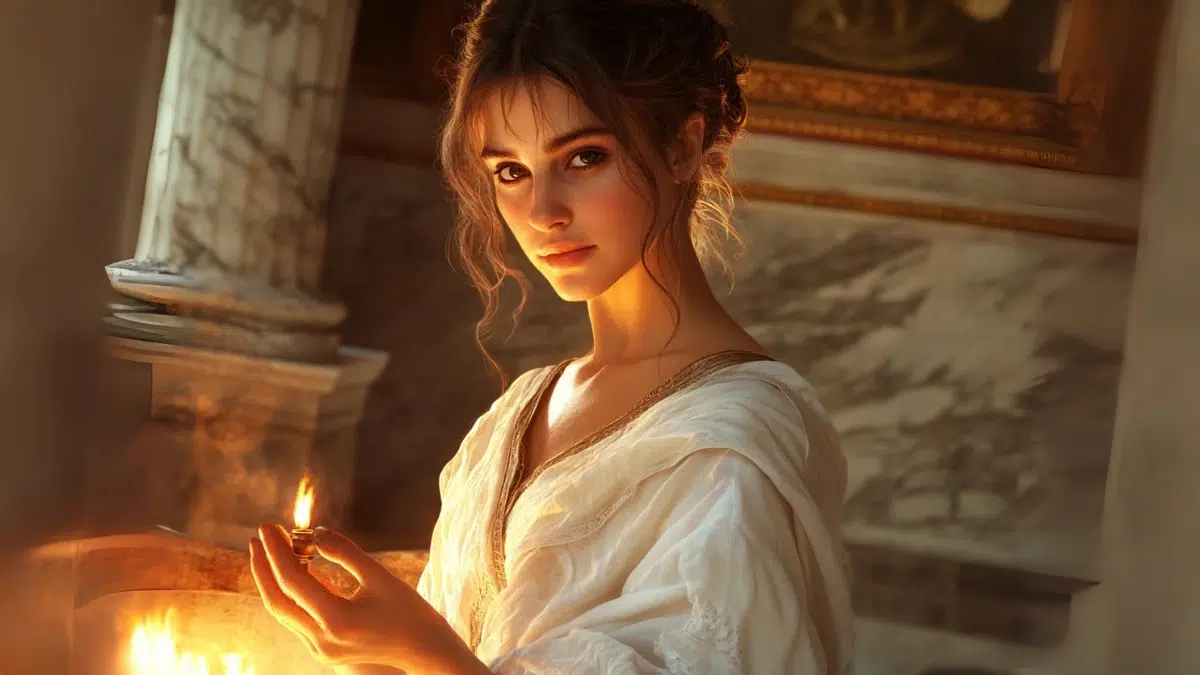
Hestia is the goddess of the hearth, home, and domestic life. Like Brigid, she represents peace, stability, and warmth. Both are revered for protecting households and are often honoured at the centre of the home through the fire.
However, Hestia is more passive and gentle, while Brigid also carries the spark of creation and inspiration.
Vesta – Roman Mythology
Vesta is the Roman equivalent of Hestia and shares similar traits. She also represents the sacred hearth and was honoured by the Vestal Virgins, who kept her eternal flame burning.
Brigid’s association with sacred flames and perpetual fires echoes this role, especially through the priestesses who tended her flame at Kildare in later traditions.
Freya – Norse Mythology
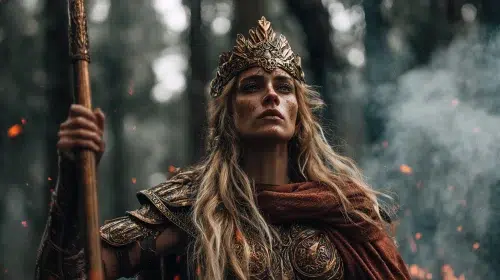
Freya is a Norse goddess of fertility, beauty, love, and war. She’s not a direct match for Brigid, but she shares Brigid’s strong dual nature — nurturing and powerful. Both are central figures have ties to the changing seasons and female strength.
Sulis – Celtic-Roman Mythology
Sulis was worshipped in Bath, England, and connected to healing waters and the sun. The Romans merged her with Minerva, the goddess of wisdom.
Like Brigid, Sulis was associated with healing, sacred springs, and wisdom, showing a blend of natural and intellectual power.
The Everlasting Flame of Brigid
Brigid’s story stands as a powerful blend of strength and compassion.
She is a goddess of many gifts, fire, healing, fertility, and poetic wisdom. Her presence touches both the land and the heart, offering warmth in winter and renewal in spring.
More than a myth, Brigid became a symbol of hope, creativity, and resilience. Her legacy continues in Irish culture, folklore, and even in the Christian figure of Saint Brigid, showing how deeply she shaped belief across time.
Whether calling forth new life or sparking the flame of inspiration, Brigid reminds us of the strength in both nurturing and creating. Her story still lights the way for those who seek balance between the practical and the mystical, the gentle and the fierce.
Other Celtic Goddesses: