
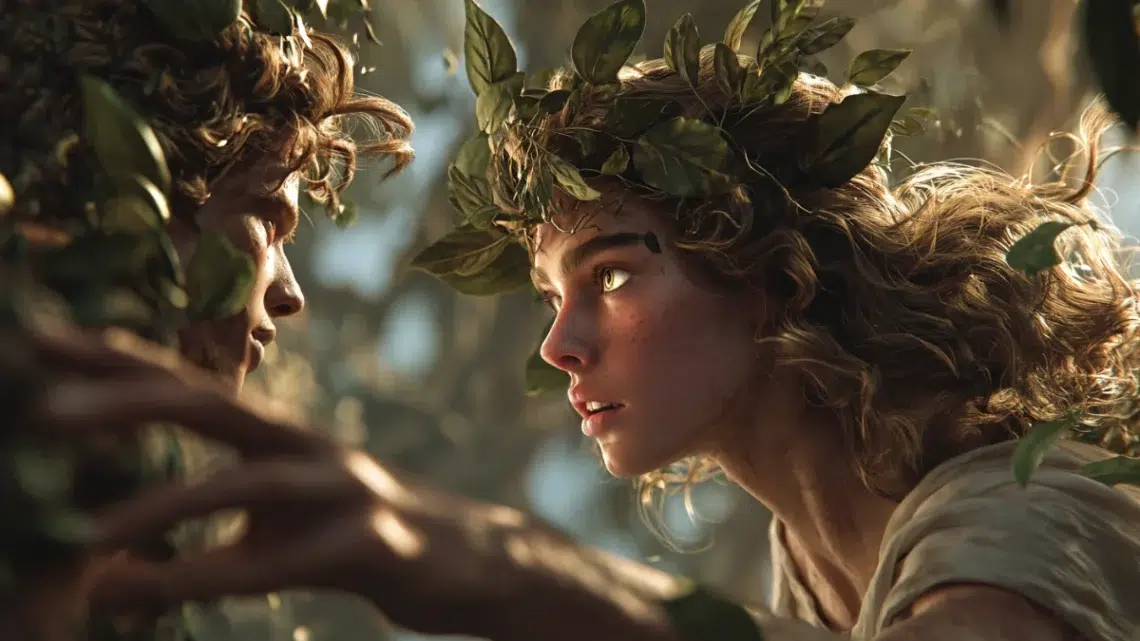
Apollo and Daphne: Beauty, Pursuit, and Transformation
In Greek mythology, few stories capture the clash between love and freedom as powerfully as the tale of Apollo and Daphne.
Background of Apollo and Daphne
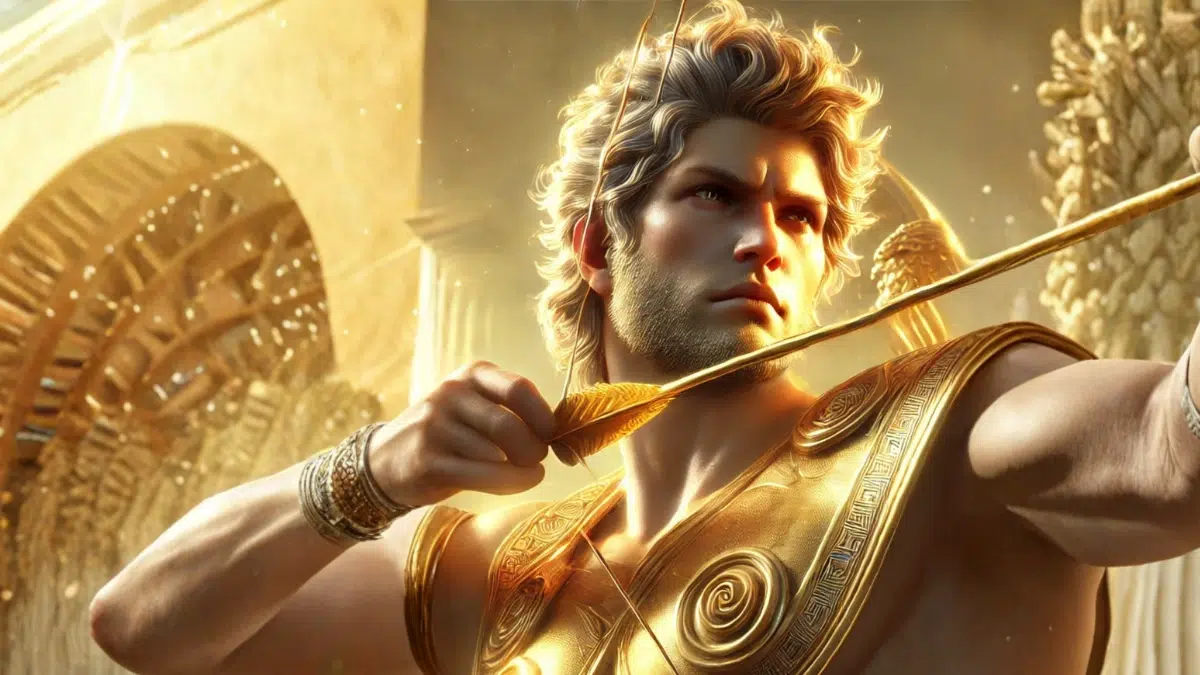
In Greek mythology, Apollo stands among the Olympian gods as the radiant deity of the sun, music, prophecy, and archery. He is the son of Zeus, king of the gods, and Leto, a gentle Titaness associated with motherhood and modesty.
After a long and painful search for refuge, Leto gives birth to Apollo and his twin sister, Artemis, on the island of Delos.
From a young age, Apollo displays extraordinary beauty, skill, and power, claiming many roles across the divine realm.
Daphne, in contrast, is a mortal naiad, a type of water nymph.
Most stories name her father as Peneus, a river god in Thessaly, although in some versions, her father is Ladon, another river deity. Daphne is closely tied to the wilderness, devoted to Artemis, and chooses a life of purity, independence, and solitude.
She wants nothing to do with marriage or romance, preferring to run free among the trees.
While Apollo represents radiant control and desire, Daphne symbolizes wildness and the untamed spirit of nature. Their opposing energies set the stage for one of mythology’s most tragic and symbolic pursuits.
The Story of Apollo and Daphne

One day, the mighty Apollo mocked Eros, the god of love, for playing with a bow and arrow. “Leave archery to real warriors,” he said.
Insulted, Eros shot two arrows. One golden and sharp for Apollo, to ignite love. And one blunt and leaden for Daphne, to repel it.
Struck by the golden arrow, Apollo burned with desire. He wandered the woods until he saw Daphne, her hair tangled with leaves, her limbs strong and graceful. To him, she was radiant.
But to Daphne had vowed to remain free, untouched, and loyal to Artemis. His approach felt like a trap.
The Chase
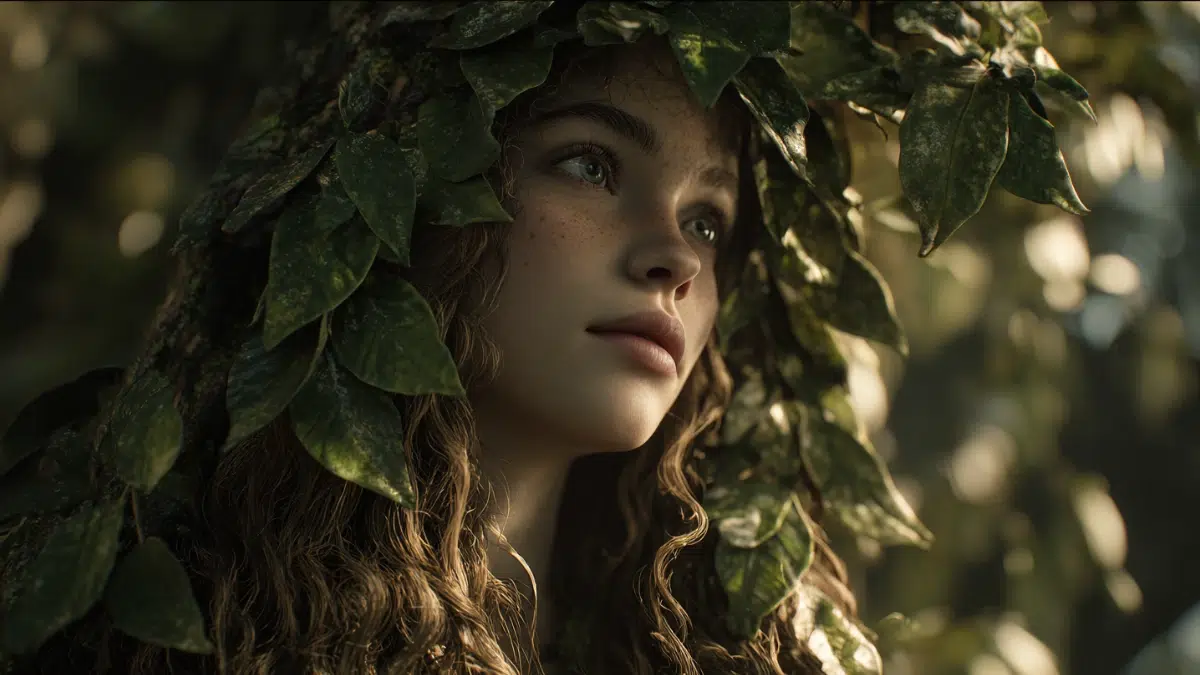
Apollo chased her, calling out his love. He promised her safety, honour, even the stars. But she ran faster, the forest blurring past her. Her heartbeat pounded in her chest, not from love, but from fear.
She begged her father, Peneus, the river god, to save her.
Just as Apollo reached for her, Daphne’s body began to change. Her skin hardened into bark and h arms stretched into branches. Her legs rooted to the earth. Before his eyes, she became a laurel tree.
Apollo stopped, stunned. His love had become untouchable. He wept, embraced the tree’s trunk, and swore he would never forget her. To honour her, he declared the laurel his sacred tree. Wreaths of its leaves would crown poets, heroes, and victors from that day forward.
Though Apollo gained nothing of her love, Daphne’s transformation became legend. Her escape was complete. In the end, she chose the forest over the god.
Symbolism and Themes
This myth shows the danger of forced love.
Apollo represents power and desire without consent. Daphne stands for freedom and choice. The chase becomes a warning, love without respect brings loss.
The laurel tree also holds meaning. It stands for honour, poetry, and victory but it comes from sorrow. The myth reminds us that beauty can grow from pain, but not all stories end in joy.
Similar Stories in Other Cultures
Daphne’s tale of transformation to escape unwanted love is not unique. Across Greek mythology and beyond, women, especially nymphs, often turn into nature to preserve their autonomy or escape violence.
These stories reflect deep themes of female agency, loss, and the boundary between mortal and divine.
Other Nymphs Transformed into Trees or Plants

In Greek mythology, transformation often serves as escape, punishment, or memorial. Daphne’s story is not the only one where a nymph becomes part of nature.
Leuce – The White Poplar
Leuce was an Oceanid nymph loved by Hades, the god of the Underworld. After her death, Hades transformed her into a white poplar tree. Her tree was planted in the Elysian Fields and became sacred to him.
Leuce’s story stands apart from Daphne’s. It isn’t about fleeing love, but about preserving love after death. Her transformation symbolizes remembrance and honour.
Philyra – The Linden Tree
Philyra was a sea nymph who bore the centaur Chiron after being seduced by Cronus. Ashamed of her child’s form, she asked the gods to change her. They turned her into a linden tree. Her transformation was rooted in shame and grief, a deeply personal twist on the escape theme.
Lotis – The Lotus Tree
Lotis was a dryad who fled the lustful advances of Priapus. She was transformed into a lotus tree to escape him. Her tale mirrors Daphne’s the closest both flee unwanted attention and find safety in nature.
Clytie – The Heliotrope or Sunflower

Clytie was another water nymph who loved Helios, the sun god. When he left her for another, she wasted away. She watching the sun all day. The gods eventually took pity and turned her into a flower that turns to follow the sun’s path across the sky.
Her story reflects devotion, heartbreak, and longing. An emotional echo of Daphne, but driven by sorrow instead of fear.
Dryope – The Black Poplar
While picking flowers, Dryope unknowingly plucked a blossom from the transformed nymph Lotis. As punishment, she slowly turned into a black poplar. Her voice faded and her limbs stiffened. Her family stood by, helpless, as she became part of the forest.
These stories show that for many Greek nymphs, trees and plants were more than scenery. They were salvation, grief, memory, or escape.
Through transformation, these women found permanence in a world where they were often powerless. Their stories endure and are rooted deeply in myth and nature alike.
Cross-Cultural Parallels
- Chinese mythology: In some versions of the Jingwei myth, the daughter of the Flame Emperor drowns and becomes a bird. She forever tries to fill the sea with twigs and stones. It’s a metaphor for grief turning into endless resistance, much like Daphne’s eternal stillness.
- Celtic mythology: The selkies of Scottish and Irish folklore shed their seal skins to become women. If their skins are stolen, they remain trapped in human form, mirroring the loss of agency seen in nymph stories.
- Aztec mythology: Xochitl, the flower maiden, is associated with blooming after tragedy—flowers sprouting where she dies, echoing the theme of life springing from pain or resistance.
Across cultures, these stories remind us that transformation often comes at a cost—but can also become legacy, survival, or resistance etched into the landscape.
Conclusion
Apollo and Daphne’s myth is not just a love story.
It is a tale of choice, power, and loss. Apollo learns too late that desire means nothing without respect. Daphne becomes more than a nymph. She becomes a symbol of nature, freedom, and quiet strength.